This site is supported by our readers. We may earn a commission, at no cost to you, if you purchase through links. This content is for general informational and educational purposes only and is not a substitute for professional medical, dermatological, or nutritional advice.

A mustache can look sharp at breakfast and crooked by noon after one rushed pass with a clipper. The mistake usually starts before the blade touches hair: using the wrong guard, trimming while it’s damp, or chasing one uneven corner too far.
A clean result comes from control, not aggressive cutting. Pick a shape for your face, start longer than target length, and define the lip line only after the bulk is even.
This trimming mustache with clippers guide puts decisions in order, from comb direction to final corner strokes, so you keep the shape you meant to grow.
Table Of Contents
- Key Takeaways
- Choose Your Mustache Style and Length
- Gather The Right Mustache Trimming Tools
- Wash, Dry, and Comb Your Mustache
- Trim Your Mustache Evenly With Clippers
- Define The Lip Line and Edges
- Adjust Clipper Technique for Each Style
- Prevent Mistakes and Maintain Your Mustache
- Frequently Asked Questions (FAQs)
- How far down should you trim your mustache?
- Should I trim my moustache wet or dry?
- How to trim a mustache with a hair trimmer?
- Should the mustache go past the corner of the mouth?
- How often should I trim my mustache?
- How can I prevent ingrown hairs afterward?
- When should I replace my clipper blades?
- Can I use clippers on sensitive skin?
- How do I clean clippers between users?
- Conclusion
Key Takeaways
- Choose your mustache style first, then begin with a longer guard so you can remove length gradually without cutting away the shape.
- Wash, fully dry, and comb your mustache into its natural growth pattern before trimming, since damp hair can lead to an uneven or overly short cut.
- Trim with the grain using light pressure and short overlapping passes, stopping after each pass to compare both sides in the mirror.
- Set the bulk length before removing the guard to detail the lip line, corners, and stray hairs, then clean and oil your clippers after use.
Choose Your Mustache Style and Length

Your style determines where you trim, how much length you keep, and which guard you start with. Choose the shape before you switch on the clippers, or you’ll cut away hair you need. Use these points to set a clear target.
Check this guide to hair clipper sizes and haircut numbers to match each guard to your desired finish.
Choose your mustache shape before trimming, or you may cut away the hair needed to create it
Match Style to Face Shape
Study your facial shape before choosing a mustache style. Round faces have soft jawlines, similar width and length, and widest cheekbones. Use styles that build vertical lines and sharper angles.
Choose a pyramid, pencil, chevron, or horseshoe shape to reduce visual width. Keep symmetrical shaping and crisp lip line definition. Select clipper guard size only after choosing the shape that gives your face more structure. A horseshoe moustache can create lengthening vertical definition with lines that descend past the mouth.
Compare Walrus, Handlebar, Chevron Styles
Face shape sets direction; maintenance level chooses the mustache style.
- Walrus Mustache: thick, drooping, and powerful. Let it grow over the lip, comb it often, and trim lightly with a longer clipper guard size.
- Handlebar Mustache: long ends need daily wax and precise control.
- Chevron Mustache: thick, wide, and cleaner. Trim regularly to hold its defined upper-lip shape.
Plan Pencil and Horseshoe Shapes
For a pencil mustache, mark a clean gap between your nose and the hairline. Use a short guard attachment, then trim the outside edges into a thin, straight band.
A horseshoe mustache needs commitment. Keep the upper lip connected, then shape equal vertical extensions from each mouth corner downward. Comb first with a mustache comb, trim the outside edges slowly, and compare both sides before taking more off.
Set Width Beyond Mouth Corners
From the horseshoe corners, set your width with control. Comb outward, then trim the outside edges about 1 cm past each mouth corner for a balanced look.
Keep chevrons wide but above the lip line. Let walrus and handlebar styles run farther. Use a T-blade for clean angles, check both sides in the mirror, and maintain the width with weekly touch-ups.
Choose Your Target Clipper Length
Start with a longer guard, usually #3 or #4, to set an even baseline without taking off too much. Guard numbers map to cutting lengths, but your clipper’s taper lever changes the result. Lever up cuts closer; lever down leaves more length.
Move down slowly. Remove the guard only for lip-line detailing. Clean, oil, and brush blades after every trim.
Gather The Right Mustache Trimming Tools

Clean, reliable tools give you control over every pass. Set up your clippers and supporting gear before you start, so you won’t rush or improvise around your lip line. Here’s what to have within reach.
Select Cordless Precision Clippers
Cordless precision clippers keep your hand free, so you can follow the lip line.
- Motor Speed Performance: 6,000–9,000 strokes a minute.
- Battery Life and Charging: 60–120 minutes, five-minute quick charge.
- Overload Protection Features prevent dense-growth stalling.
- Cordless Maneuverability Benefits: an electric trimmer accepts a guard attachment, guard size, for precision trimming.
Blade Sharpness Maintenance matters, so clean after use.
Choose Stainless Steel Blades
Choose stainless steel blades for clean, controlled work around the lip line. Their chromium-rich surface resists rust, staining, and moisture from a humid bathroom, which keeps your electric trimmer hygienic between uses.
Edge retention depends on alloy and heat treatment. Look for 400-series or 440C steel for precision trimming. Dry, brush, and oil blades after every session. Good clipper blade care protects sharpness regardless of guard size.
Gather Guards, Comb, and Scissors
Keep these tools within reach before you touch the mustache:
- Guard set: Use 3 mm for main length; 1–2 mm shorter guards soften edges.
- Mustache comb: Fine teeth detail; comb downward before every pass.
- Grooming scissors: Rounded-tip stainless steel scissors catch single strays.
- Hair clippers: Fit guards firmly before cutting.
- Bright mirror lighting exposes uneven spots and gives you control.
Prepare Blade Oil and Brush
Blade cleaning first: brush electric trimmer. The tiny drop method means oil application points get one dot, never a bead across teeth. Run it, then work taper lever repeatedly for lever motion spread. Prevents corrosion.
For tougher facial hair, these beard trimming techniques for coarse hair help keep every pass smooth and controlled.
| Item | Move | Purpose |
|---|---|---|
| Brush | Clean blades afterward | Oil-ready surface |
| Oil | Dots, run | Thin even coat |
| Beard oil | Separate from blades | Mustache comb, grooming scissors, mirror use |
Set Up Bright Mirror Lighting
Bright mirror lighting exposes every uneven edge. Mount a distortion-free mirror at eye level, centered in front of you. Use front-lit, diffused LEDs around the mirror, not a harsh overhead bulb, so your electric trimmer and hair clippers don’t cast shadows.
Set neutral 4000K light for daily work. Dim it for comfort, then raise brightness for lip-line detail. Anti-fog glass keeps your grooming routine clear after washing.
Wash, Dry, and Comb Your Mustache

Prep work determines how clean and even your trim will look. Take a few minutes to get the hair and skin ready before turning on the clippers. Follow these steps to set your mustache in its natural position for an accurate cut.
Clean With Gentle Beard Shampoo
A clean base gives you control before a mustache trim. Wet your facial hair with warm water, then work a small amount of beard shampoo through the mustache and down to the skin. Build a gentle lather, not a heavy foam.
Rinse thoroughly. A quality formula delivers oil-free cleansing without stripping natural moisture, supporting skin hydration and reducing itch or frizz. Use this step regularly in your grooming routine for cleaner mustache maintenance.
Dry Completely Before Clipping
After rinsing, use towel drying until your mustache shows no visible moisture. Clippers cut a dry mustache more predictably. Damp hairs shift as they dry, turning a sharp line into an uneven mustache trim.
Keep hair clippers, cords, and the counter dry. Moisture affects hair control, can cause tugging, dull blade performance, and invites rust. This simple safety precaution protects both your facial hair grooming results and your tools.
Comb Hairs Into Natural Shape
Use a fine-tooth comb and follow your natural growth pattern. Keep every stroke gentle, steady, and in the same hair direction.
- Comb from center outward.
- Align both sides evenly.
- Work left, center, then right.
- Recomb before each clipper pass.
- Stop if hairs snag.
This facial hair combing gives you mustache length control and exposes uneven hairs.
Soften Coarse Hairs Lightly
After combing, soften rough hairs without weighing them down. Choose a moisturizing beard conditioner made for coarse, dryness-prone hair. Let it sit 3 to 5 minutes, then rinse well.
Blot with a microfiber towel, never rub. While conditioner absorbs, detangle gently with fingertips or a wide-tooth comb. Finish with one or two drops of beard oil for controlled facial hair combing and moisturizing skin.
Avoid Trimming a Wet Mustache
Wait until your mustache is fully dry before clipping. Wet hairs lie flat, clump together, and spring back as they dry, so a cut that looks even can become patchy or too short.
Comb it into place, then trim. Clippers glide better through dry hair and give you a clearer view of the lip line. Dry skin also reduces friction, helping with avoiding irritation during facial hair maintenance.
Trim Your Mustache Evenly With Clippers
Clippers can give your mustache a clean, balanced length when you control the first pass. Take your time and resist the urge to cut aggressively. Use the steps below to build an even trim without losing your shape.
Start With a Longer Guard

Start with a longer guard, usually one or two sizes above your target length. Lock it onto your hair clippers before you begin.
- Make one even pass across both sides.
- Check density and natural growth.
- Compare symmetry in the mirror.
- Drop one guard size if needed.
- Stop before thin patches appear.
This length assessment preserves control. Keep trimming scissors nearby, but don’t chase strays yet.
Clip With Hair Growth
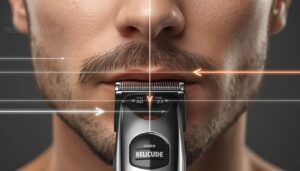
Follow the hair growth from nose toward lip, letting hair clippers glide with the grain. This keeps hairs aligned, removes bulk cleanly, and reduces pulling, nicks, and skin irritation.
| Area | Direction | Result |
|---|---|---|
| Center | Downward | Uniform cut |
| Left side | Downward/outward | Natural alignment |
| Right side | Downward/outward | Balanced shape |
Keep beard clippers moving with each mustache’s pattern. Resist upward passes; they disrupt control.
Use Even Pressure and Speed

Use even pressure and speed like you’re mowing a clean, level line. Let hair clippers rest lightly on the mustache; don’t press them into skin. Heavy pressure cuts too close, causes patchy spots, and irritates the upper lip.
Keep beard clippers moving steadily from center outward. Match pressure on both sides for symmetry and sharper edge definition. Smooth motion also prevents pulling, blade heat, motor strain, and premature dulling.
Work in Short Overlapping Passes

Work in short overlapping passes, covering 1–2 centimeters at a time. Let each clipper stroke overlap the last by about 50 percent. This prevents missed hairs, visible lines, and uneven bulk reduction.
Keep hair clippers flat, move from the center outward with the grain, and guide them with your forearm, not your wrist. Finish one direction before changing angle for final blending and edge definition.
Check Symmetry After Each Pass

Control comes from constant comparison. After every clipper pass, pause and perform a Mirror Check Technique: relax, step back, and view the mustache straight on.
Use a Side-by-Side Comparison of height, width, mustache shape, and lip line. During the Guard Adjustment Process, make one correction with trimming scissors, then match it. This Stroke-by-Stroke Review makes Lip Line Verification accurate.
Define The Lip Line and Edges

With the length set, switch your focus to the lines that give the mustache its shape. Work slowly here, since small cuts make a big difference around the mouth. Use the following steps to clean up the lip line, corners, and stray hairs.
Remove Guard for Precise Detailing
Switch to the bare blade only after length is set. Guard free control turns every pass into a precision cut, so slow the clipper and keep a light touch near the upper lip.
- Align blade edge.
- Keep skin distance.
- Feed slowly.
- Detail corners.
- Check symmetry.
Make micro passes on stray hairs, re-aligning each time. Finish strays with facial hair scissors.
Create a Clean Smiley Line
Trace the smiley line, the natural curve from mouth corners toward cheeks, with bare blade. Hold one angle, pull lip down slightly, and make short controlled strokes. Keep lip line separate from beard growth. Check symmetry after each pass; reserve strays for trimming scissors or facial hair scissors for clean definition.
| Area | Stroke | Check |
|---|---|---|
| Corners | Short | Even |
| Curve | Follow | Match |
Trim Hairs Above Upper Lip
With the smiley line set, clear hairs that hang over the upper lip. Comb downward, then use the bare blade in the hair growth direction. Keep strokes short and overlapping.
- Start at center.
- Match both sides.
- Stop before skin shows.
Check symmetry after each pass. Use facial hair scissors only for stray hairs.
Shape Corners With Small Strokes
With the lip line clean, shape each corner using small overlapping strokes. Follow the natural mustache edge, using your smile line and lip boundary as guides.
Tilt the clipper flatter for a soft mix into the main section. Hold it more upright for a tighter corner line. Keep it moving and don’t press hard.
Check both sides from front and slight side views. Match thickness and height with micro adjustments. For a Chevron Mustache, keep corners broad. For a Handlebar Mustache, preserve length for mustache wax and shaping.
Snip Remaining Strays With Scissors
Comb hairs downward, then target only stray hairs past the lip line or sticking out from the bulk. Hold rounded-tip scissors with your thumb and ring finger, pinky on the finger rest. Keep blades parallel to your upper lip.
Snip under 2 mm at a time. Alternate sides and recheck symmetry. Wipe scissors dry afterward, and store these precision grooming tools in a dry case.
Adjust Clipper Technique for Each Style

One clipper method won’t suit every mustache shape. Adjust your guard choice, stroke direction, and edge work to protect the look you’re building. Use the approach below for your chosen style.
Preserve Walrus Length and Bulk
Use a 6–10 mm guard to protect walrus length and mustache volume control. Let it reach terminal growth, often six to twelve months, before serious shaping.
Comb hairs downward, then clip with growth. Keep outer whiskers longer and trim no more than 1 cm below each mouth corner. These mustache trimming techniques preserve bulk; aggressive beard trimming techniques destroy the walrus silhouette.
Keep Chevron Thick and Wide
Keep the Chevron thick and wide. Let natural Chevron growth build for two to three months, then trim only strays outside its outline.
Keep width from nostril edge to nostril edge, extending to or just beyond the mouth corners. Preserve central chevron mustache fullness.
Shape clean diagonals from the nose toward each corner. Keep length just over the upper lip, never into the mouth. Light beard trimming techniques protect mustache volume control.
Leave Handlebar Ends Longer
Directional hair brushing extends a handlebar mustache. Brush ends outward and upward before clipping. For end length preservation, level the center with a longer guard, leaving hair past mouth corners.
Remove the guard along the lip line. Check lip line balance, snip strays, finish mustache shaping with mustache wax application. A handlebar curl technique completes mustache styling and mustache end styling.
Buzz Pencil Mustache Short
Set Pencil Mustache Length with a longer comb first, then trim evenly. Remove it only after the hair matches across the lip.
- Buzz to a Short Buzz Trim
- Leave a clear nose gap
- Define a narrow mouth-width line
- Check both corners twice
For Thin Facial Hair, bare-blade Lip Line Definition creates control. Make short strokes, then use trimming scissors for Precision Edge Shaping.
Shape Horseshoe Extensions Evenly
A horseshoe mustache needs matched vertical bars to frame the upper lip cleanly.
Start with the same 3–5 mm guard on both sides. Trim both sides in short, overlapping passes, following an imaginary line from each mouth corner toward the chin. Make sure even width, about ½–1 inch, from top to bottom.
Check symmetry frequently. Detail bottom edges bare-blade, then finish your grooming routine with mustache wax if needed.
Prevent Mistakes and Maintain Your Mustache

A clean trim depends on knowing when to stop and how to correct small flaws. Work with control, not speed, so one uneven spot doesn’t turn into a full reset. Use these habits to protect the shape and keep your mustache looking sharp between trims.
Correct Uneven Spots Gradually
Correct uneven spots with patience, not panic. Comb hairs down, then step back and compare each side against your mouth corners and nose.
- Snip one or two hairs from the longer side.
- Match that amount on the other side.
- Use short, overlapping clipper passes.
- Check the lip line again.
Use scissors for stray hairs. For walrus and chevron styles, don’t thin out your mustache too aggressively.
Avoid Cutting Too Much
Use a less is more approach. Trim your mustache only when fully dry, under bright mirror lighting. Wet hairs look longer, then shrink, which can leave the upper lip too bare.
Start with a longer guard. Make one short pass, then stop and inspect.
For stray hairs, use small scissors and cut a few hairs per snip. Alternate sides. Regular light touch-ups prevent the urge to thin out your mustache in one heavy trim.
Rinse and Moisturize Afterward
Once you’ve stopped trimming, begin posttrim care:
- Rinse your mustache and skin with lukewarm water, not hot.
- Pat dry with a towel. Don’t rub.
- Apply face moisturizer within minutes while skin is slightly damp.
- Choose a dryness-focused moisturizer with humectants and emollients.
- Work one drop of beard oil through mustache hairs for lasting softness.
Moisturizing protects your freshly trimmed skin.
Style With Wax or Balm
With skin moisturized, mustache styling locks in shape. Warm a pea-sized balm or mustache wax between palms. Work from center outward, then comb.
| Best for | Finish |
|---|---|
| Short | Balm, soft |
| Chevron mustache | Light wax |
| Walrus mustache | Balm |
| Handlebar mustache | Wax, firm |
Balm hydrates with oils and shea butter. Wax, often beeswax-based, gives defined all-day hold. Build wax slowly; excess feels heavy.
Clean and Oil Clippers
After each trim, brush hair from blades and body. Disinfect blade and head with clipper spray or 70% isopropyl alcohol; air-dry. Add clipper oil to teeth, sides, center, and head holes. Run, wipe excess. Oil after cleaning, or when noise, tracks, or skipped hairs appear.
This keeps your personal grooming routine, beard shampoo, conditioner, razor work, and hair-trimming techniques controlled.
Frequently Asked Questions (FAQs)
How far down should you trim your mustache?
Shape, control, definition: keep the lip line just above your upper lip. Trim downward with a longer guard, then smooth edges, nostril area grooming, cheek line cleanup, and corners using short strokes. Remove hairs touching your lips.
Should I trim my moustache wet or dry?
Trim your moustache dry. Wet hair stretches and looks longer, then shrinks as moisture evaporates, so you can cut too much. Wash first, dry completely, comb naturally, then groom for precise clipper control and even trim.
How to trim a mustache with a hair trimmer?
Don’t attack your face like a lawn mower. Wash, dry, comb, choose a longer guard, then clip with growth in overlapping passes. Detail lip edges bare-blade, compare sides, and brush, oil, and store your trimmer.
Should the mustache go past the corner of the mouth?
Let style lead. Chevron stops at the corner of the mouth; handlebar, walrus, and horseshoe need Growth Beyond Corners. Keep Lip Line Precision, perform a Corner Symmetry Check, and use mustache thickness adjustment to preserve Style Boundary Definition.
How often should I trim my mustache?
Wild growth dulls control; small trims build it. Check mustache length daily, then trim every three to five days, adjusting for growth rate and thickness. Growing out? Weekly maintenance works. Moisturize afterward to prevent irritation.
How can I prevent ingrown hairs afterward?
Prevent ingrown hairs: exfoliate skin regularly, use a warm compress, and avoid picking hairs. Moisturize after trimming with fragrance-free lotion. Clean tools properly for facial hair hygiene, mustache hygiene, and mustache moisturizing after trim session.
When should I replace my clipper blades?
Replace blades before trim becomes a battlefield: snagging, heat, noise, rust, or damaged teeth mean now. Oil, brush, dry after grooming. Replace at 6–12 months. For hair trimming techniques, a bare blade needs razor-clean glide.
Can I use clippers on sensitive skin?
Yes. Use hypoallergenic stainless or ceramic blades, clean dry skin, and a longer guard. Don’t press hard or clip over cuts. Afterward, rinse, pat dry, and apply a gentle non-comedogenic conditioner or moisturizer.
How do I clean clippers between users?
Picture facial hair hiding between the teeth: unplug clippers, brush blades, then coat blade and head with disinfecting spray. Rinse only water-safe parts. Dry blades, apply oil, reassemble, and store dry beside comb and razor.
Conclusion
Treat your mustache like a fine line in a map: every pass should lead somewhere. Follow this trimming mustache with clippers guide by starting long, cutting with the grain, and checking both sides before removing more. Control beats speed.
Keep the lip line deliberate, soften only the strays, and stop when the shape looks balanced. Clean your clippers, maintain the length, and your mustache will hold firmly its ground from morning coffee to closing time.