This site is supported by our readers. We may earn a commission, at no cost to you, if you purchase through links. This content is for general informational and educational purposes only and is not a substitute for professional medical, dermatological, or nutritional advice.
You step out of the tanning bed with that warm, glowing feeling, ready to show off your color. Then you jump straight into a hot shower or forget to moisturize, and by tomorrow your bronze fades faster than it should, or worse, your skin feels tight and irritated.
Here’s the truth: what you do after tanning bed sessions matters as much as the session itself. Your skin just took on real stress, and how you treat it in the next 48 hours determines whether you get a smooth, lasting tan or a peeling, patchy mess.
Good news, though. A few simple habits, done in the right order, protect your skin and lock in that glow.
Table Of Contents
- Key Takeaways
- What to Do Immediately After Tanning
- Wait 2–4 Hours Before Showering
- Protect Your Skin for 48 Hours
- Soothe Tanning Bed Redness or Burns
- Maintain Your Tan Without More UV
- Frequently Asked Questions (FAQs)
- What not to do after a tanning bed?
- How long should you wait to shower after tanning bed?
- Should you put lotion on right after tanning bed?
- What are the rules after tanning?
- How does indoor tanning lotion differ from outdoor lotions?
- What is the safest frequency for tanning bed use?
- How does cocktail tanning enhance tanning results?
- Can medications affect tanning bed sessions?
- Why is protective eyewear crucial in tanning beds?
- Can I wear makeup after tanning bed?
- Conclusion
Key Takeaways
- Wait 2-4 hours (ideally 4-5) before showering, then keep it brief and lukewarm to let your tan fully develop and protect your skin’s natural oils.
- Moisturize with a fragrance-free formula containing aloe, glycerin, or ceramides right after cooling down and again after every shower, aiming for at least twice a day.
- For 48 hours after your session, skip scrubs, hot showers, saunas, chlorine, and active skincare ingredients like retinol or acids, since your skin is more sensitive and prone to irritation.
- Watch for warning signs like spreading rash, fever, blistering, or waxy/white skin, and seek medical care right away if you notice trouble breathing, confusion, or blue or blotchy skin.
What to Do Immediately After Tanning

Those first few minutes after stepping out of the tanning bed matter more than you’d think. Your skin is warm, thirsty, and a little vulnerable—how you treat it now sets the stage for how your tan develops. Here’s exactly what to do first.
Even that post-session care routine can’t offset the deeper risks, so pairing it with essential safety guidelines for indoor tanning is worth doing before your next session.
Cool Down for 10–15 Minutes
Since your skin just soaked up serious heat, don’t bolt for the shower right away.
Ease out of it instead. Sit or stand somewhere cool for 10 to 15 minutes, letting your body temperature drift down gradually rather than dropping all at once. This gentle skin cooling calms heat stress and lets your breathing settle, kind of like a mental exhale before your next move.
Check for Redness or Burning
While you’re cooling off, give your skin a quick once-over. Check for redness, tenderness, or a burning feeling, plus any swelling or blisters. Watch for itching or early peeling too. A little pink is normal, but a rapidly spreading rash or fever means skip the DIY route and call a doctor.
Persistent burning without visible skin changes can also point to underlying nerve dysfunction, which is worth mentioning to your doctor if the sensation lingers.
Drink Water or Electrolytes
Once your skin check is done, grab a glass of water. Tanning pulls moisture from your body, so rehydrating fast matters for fluid balance and skin hydration.
Plain water covers most people just fine. Sweated a lot under the lamps? Reach for electrolyte water instead, since sodium and potassium help you actually retain what you drink.
Apply Fragrance-Free Moisturizer
With water in hand, it’s time to lock that hydration in. Grab a fragrance-free moisturizer with ceramides, glycerin, or hyaluronic acid, and apply within minutes of stepping off the bed.
Fragrance-free formulas skip the irritants that trigger reactive skin. Ceramides support your barrier, humectants pull in moisture. Smooth on a thin layer, let it absorb, and plan to moisturize twice daily from now on.
Wear Loose, Breathable Clothing
Comfort is your last step before bed. Swap tight clothes for something loose, cotton or another breathable weave, so air can actually reach your skin.
- Loose fits let sweat evaporate instead of pooling
- Breathable, woven fabrics reduce friction on warm skin
- Skip synthetics that trap heat and moisture
Loose, breathable clothing keeps you cool and protects your fresh tan overnight.
Wait 2–4 Hours Before Showering
Patience pays off here—give your tan a solid two to four hours to develop before you even think about water. That warm, glowing feeling on your skin is normal, but rushing to rinse can undo your session fast. Once you’re ready to shower, a few simple habits make all the difference.
Use Lukewarm Water
Think "just-right" porridge, not a hot spring soak. Aim for 98–105°F, warm on your wrist but never steamy.
If a dip does happen, rinsing off quickly and following these tips for preventing pool-related skin irritation can help keep chlorine and pH imbalances from flaring up sensitive skin.
No thermometer? Test it: if it feels neutral, not hot, not cold, you’ve nailed it.
- Preserves your skin’s natural oils
- Keeps hydration balance intact
- Prevents shock to sensitive, freshly-tanned skin
Gentle cleansers plus lukewarm water equal a routine your glow will thank you for.
Keep Your Shower Brief
Once you’re in, don’t linger. Keep it to 2-3 minutes, tops, a quick rinse rather than a soak.
| Rinse Step | Timing | Why It Matters |
|---|---|---|
| Water only | First 2-3 min | Protects developing pigment |
| Gentle wash | After rinse | Avoids stripping oils |
| Pat dry | Immediately | Prevents friction |
Your tan keeps developing for hours after you step out, so brief beats thorough here.
Choose Gentle Body Wash
Not every body wash deserves a spot on freshly tanned skin. Grab a gentle cleanser with a fragrance-free formulation, pH-balanced and packed with hydrating ingredients like glycerin or ceramides for barrier support.
Skip anything with a heavy scent or sulfates. Check skin-friendly labels before buying.
Lukewarm water plus gentle cleansing equals happy skin. Pat dry skin after for friction reduction.
Skip Scrubs and Loofahs
That loofah hanging in your shower? Leave it alone tonight.
Fresh tanned skin is inflamed, even without visible burn, so scrubbing tools add friction your skin barrier doesn’t need. Loofahs also trap moisture, breeding bacteria between uses.
Stick to gentle cleansing methods: hands, soap, done. Consider it your 48-hour exfoliation pause, skip harsh exfoliants entirely, and let irritation calm down naturally.
Pat Dry and Moisturize
Out of the shower, grab your towel and pat, don’t rub.
Rubbing creates friction and heat your skin doesn’t need right now.
Apply a rich, fragrance-free moisturizer within 3 minutes, while skin’s still damp. That’s when hydration locks in best.
Look for aloe, glycerin, or ceramides. Gentle cleansers plus quick moisturizing keeps your posttanning bed aftercare simple and your skin genuinely hydrated.
Protect Your Skin for 48 Hours

You showered, you moisturized, and your skin already feels calmer. But that fresh tan is still settling in, and the next two days matter just as much as the first few hours. Here’s exactly what to watch for and steer clear of to keep your color even and your skin happy.
Avoid Heat and Heavy Sweating
For the next 48 hours, treat heat like your tan’s worst enemy. Skip saunas, steam rooms, hot yoga, and long hot baths, they trigger heavy sweating that breaks down hydration fast.
Stick to loose, breathable fabrics and cooler indoor spaces instead of peak-sun workouts. Sip water often, even before you’re thirsty, and let your skin stay calm and dry.
Limit Chlorine and Long Soaks
Pools and hot tubs are next on your no-fly list. Chlorine strips moisture and can trigger redness or itching on skin that’s already working hard to recover.
Keep soaking time short and rinse off chlorinated water when you can.
- Skip hot tubs for 48 hours
- Rinse after any pool exposure
- Avoid long baths or soaks
- Watch for redness or itchiness
- Moisturize right after water contact
Pause Retinoids and Strong Acids
Your skincare cabinet needs a break too. Retinoids and strong acids like glycolic or salicylic can worsen burning, peeling, and dryness on skin already stressed by UV exposure.
Give yourself a 72-hour active ingredient pause. Skip retinol, acne treatments, and toners with acids until redness fades and your skin barrier feels calm again, not tight or reactive.
Prevent Friction and Scratching
Freshly tanned skin is sensitive, so scratching or rubbing can cause real irritation.
- Wear loose, breathable clothing (cotton or silk)
- Skip tight waistbands and rough seams
- Try an anti-chafe balm on high-friction spots
- Keep skin hydrated so it glides, not drags
Gentle movement matters too. Dry, moisturized skin resists friction better than skin left to sit sticky or dehydrated.
Apply Broad-Spectrum Sunscreen Outdoors
Heading outside within 48 hours? Grab broad-spectrum sunscreen, SPF 30 or higher, non-negotiable. Freshly tanned skin is photosensitive, so UV protection matters even more now.
Apply 15 minutes before you step out, using a full ounce for your body. Choose water resistant formulas and reapply every 2 hours, more often if you’re sweating or swimming. This isn’t optional, it’s how you dodge premature aging and skin cancer risk.
Soothe Tanning Bed Redness or Burns
Sometimes skin overreacts, even when you play it safe. Redness or a mild burn doesn’t mean you did something wrong—it just means your skin needs a little extra TLC right now. Here’s exactly how to calm things down and help your skin bounce back.
Apply Cool Compresses
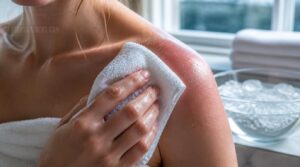
Skin feeling hot and tight? Grab a cool, damp washcloth and press it gently against irritated spots for 15-20 minutes, re-soaking every few minutes.
- Never rub, just hold it there
- Wrap ice packs in cloth first
- Wait 1-2 hours before reapplying
Watch for numbness or odd discoloration, and stop cooling immediately if either shows up.
Use Fragrance-Free Aloe Gel
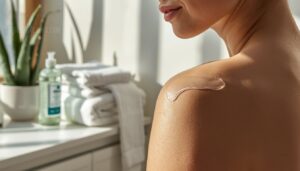
Reaching for aloe vera afterward? Smart move. Grab a fragrance-free gel, check that colorants aren’t lurking near the top of the ingredient list (neon green usually means dye), and apply a thicker layer directly onto burns or chafed spots. Reapply 2-4 times daily.
This soothing gel calms irritation fast without adding fragrance-based irritants to already-sensitive, post-tanning skin.
Moisturize Peeling Skin Gently
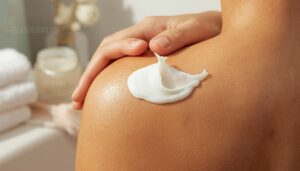
Peeling skin needs moisture, not more irritation. Pat the area dry first, never rub, then apply a thick, fragrance-free moisturizer onto slightly damp skin to lock in hydration.
Look for occlusive ingredients like petrolatum for barrier support. This seals moisture in while skin repairs itself, easing flaking without added friction or sting.
Watch for Severe Burn Symptoms
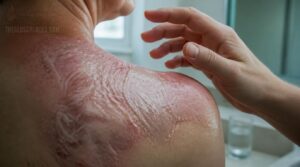
Not all redness is created equal. Learn to recognize burn severity: mild pinkness settles down, but waxy, white, or leathery skin signals something deeper.
Watch for blistering, worsening pain, or skin texture changes over the next day. If photosensitizing drugs are in play, symptoms can hit harder. Fever or chills means it’s gone systemic, not just skin deep.
Know When to Seek Care

Here’s your line: home care has limits, and knowing where that line sits keeps you safe.
Home care has its limits—knowing where that line sits is what keeps you safe
Get urgent medical attention for:
- Trouble breathing or swelling lips/throat
- Confusion or slurred speech
- Fever, chills, or dizziness
- Blue, pale, or blotchy skin
These are emergency symptoms, not wait-and-see ones. If you’re unsure, call a provider. Severe reaction? Get medical advice immediately, don’t second-guess it.
Maintain Your Tan Without More UV
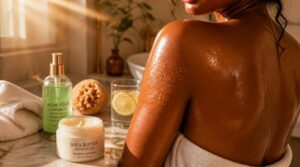
Your tan looks best when your skin stays hydrated, not when you chase more sun exposure. Good news: keeping that glow alive comes down to a few simple habits you can start today. Here’s exactly what your skin needs to hold onto its color longer.
Moisturize at Least Twice Daily
Think of moisturizer as your tan’s best friend, morning and night, no skipping allowed. Apply after cleansing, using clean hands and gentle pressure, never rough rubbing.
Consistency helps moisture retention and barrier repair, keeping post-tanning recovery on track. Missing a session? Your skin notices, so build it into your routine like brushing your teeth.
Choose Aloe, Glycerin, or Ceramides
Not all moisturizers pull their weight. Look for aloe vera for cooling relief, glycerin to draw in moisture, or ceramides to rebuild your skin barrier.
Fragrance-free formulas matter most here, sensitive post-tan skin doesn’t need extra irritants. Layering these three, aloe first, then glycerin, then a ceramide cream, gives you real moisture retention that lasts.
Stay Hydrated Throughout The Day
Layering on moisturizer only does half the job, your skin needs water from the inside too.
Sip on a set schedule instead of chugging one glass and forgetting the rest of your day. Try:
- A glass upon waking
- One before each meal
- Refills every 2 hours
- A bottle by your bed
Use a hydration reminder app or add lime to water for skin hydration that actually sticks.
Eat Water-Rich, Antioxidant Foods
Water isn’t the only hydration tool on your plate. Snack on water-rich foods like cucumber, watermelon, or grapefruit (88% water) for a daily hydration boost.
Pair those with antioxidant-rich berries like blueberries and strawberries, plus vitamin C and vitamin E sources like citrus and nuts. Toss them into nutrient-packed smoothies for easy skin hydration from the inside out.
Consider a Gradual Self-Tanner
Once your real tan starts fading, a gradual tanner can stretch the glow without more UV. It works through a slow DHA reaction, building color with each layer instead of one dose.
Smooth at wrists, knees, and ankles for a streak-free finish. Look for formulas doubling as a tan extender with hydrating, barrier-repairing moisturizer.
Frequently Asked Questions (FAQs)
What not to do after a tanning bed?
Think of fresh color like wet paint, touch too soon and it smudges. So skip hot showers, scrubs, and tight clothes for 4–5 hours, skip deodorant, makeup, shaving, and don’t pop any blisters.
How long should you wait to shower after tanning bed?
Give it 4 to 5 hours, or a full day if you can swing it. Your skin needs time to regenerate natural oils. Rinse too soon with lukewarm water and gentle cleanser, and you’ll strip moisture, not your color.
Should you put lotion on right after tanning bed?
Yes, but let your skin cool for 10-15 minutes first. Once it feels cool and dry, apply a fragrance-free moisturizer with aloe vera or hyaluronic acid to lock in hydration before it escapes.
What are the rules after tanning?
Cool down, then moisturize while skin’s still slightly damp. Wait 2 to 4 hours before showering, keep it lukewarm, and skip harsh exfoliants. Hydrate well, dress loose, and rest your skin, no new sessions or hot soaks for 48 hours.
How does indoor tanning lotion differ from outdoor lotions?
Mixing them up is like wearing ski boots to the beach: it just won’t work. Indoor tanning lotion skips SPF and acrylic-damaging oils for bed safety, while outdoor lotions bring sun protection and bronzers built for daylight, not booth glass.
What is the safest frequency for tanning bed use?
There’s no truly safe frequency. Follow manufacturer guidelines and space sessions 48 hours apart minimum for UV exposure recovery. Track redness and skin type honestly, and consult a dermatologist before starting any gradual tanning schedule.
How does cocktail tanning enhance tanning results?
Think of it as layering paint while the base coat is still tacky. Cocktail tanning pairs your UV base layer with a spray session right after, when pores are open, for enhanced color depth and longer-lasting results.
Can medications affect tanning bed sessions?
Yes. Photosensitizing medications, like antibiotics, retinoids, antihistamines, and psychiatric meds, heighten skin sensitivity to UV radiation, raising burn risk and disrupting your skin barrier function. Check with your doctor before booking that session.
Why is protective eyewear crucial in tanning beds?
Your eyes are far more vulnerable than your skin in there. UV rays can cause corneal burns and cataracts over time, so 100% UV-blocking eyewear stays on the entire session, no exceptions, no peeking.
Can I wear makeup after tanning bed?
Dermatologists note UV exposure can trigger oil production for up to 24 hours, so hold off on makeup. Wait 4-5 hours until skin feels cool and dry, then choose lightweight, non-comedogenic products to prevent clogged pores and irritation.
Conclusion
Your tan is a candle flame, easy to blow out if you’re careless, steady and lasting if you truly shield it right.
What to do after tanning bed sessions comes down to simple timing: cool skin, wait before showering, moisturize like it’s your daily job. Skip the harsh scrubs, skip the heat, and give your skin 48 hours to settle. Follow that rhythm and your glow stays smooth, even, and yours for weeks, not days.