This site is supported by our readers. We may earn a commission, at no cost to you, if you purchase through links. This content is for general informational and educational purposes only and is not a substitute for professional medical, dermatological, or nutritional advice.
By noon, your skin looks like a glazed donut. You blot, you powder, you blot again, and somehow the shine still wins. If this sounds familiar, the problem probably isn’t your skincare routine. It’s your sunscreen.
Most formulas load up on heavy emollients that clog pores and trigger breakouts within hours. The right sunscreen lotions for oily skin work differently: they control sebum, skip pore-clogging oils, and dry down to a matte finish that actually holds up. Dermatologists know exactly which formulas deliver on that promise and which ones just look good on the label. Here’s what to buy instead.
Table Of Contents
- Key Takeaways
- Top 10 Sunscreen Lotions for Oily Skin
- 1. EltaMD UV Clear Face Sunscreen SPF 46
- 2. EltaMD UV Daily Tinted Sunscreen SPF 40
- 3. Eucerin Clear Skin Face Sunscreen SPF 50
- 4. La Roche Posay Anthelios UV Sunscreen SPF 50
- 5. Neutrogena Ultra Sheer Invisible Gel Face Sunscreen
- 6. Supergoop Mineral Mattescreen SPF 40
- 7. TiZO3 Tinted Mineral Sunscreen Primer SPF 40
- 8. La Roche Posay Anthelios Clear Skin SPF 60
- 9. Neova SmartSkincare Tinted Sunscreen SPF 40
- 10. Paulas Choice Resist SPF 30 Mineral Sunscreen
- How We Chose These Oily Skin Sunscreens
- Choose The Right Sunscreen Formula
- Ingredients and Labels Worth Checking
- Match Sunscreen to Your Skin Needs
- Prevent Sunscreen Pilling Under Makeup
- Apply Sunscreen for Lasting Protection
- Frequently Asked Questions (FAQs)
- Conclusion
Key Takeaways
- Look for oil-free, non-comedogenic sunscreens with mattifying ingredients like silica and niacinamide instead of heavy emollients that clog pores and cause breakouts.
- Mineral sunscreens with zinc oxide and titanium dioxide tend to be gentler on acne-prone and sensitive skin than chemical filters, while still delivering solid broad-spectrum protection.
- Applying sunscreen the right way matters just as much as picking the right formula, so use about a teaspoon for your face, let it set before makeup, and reapply every two hours.
- Layering thin coats of skincare and letting each one set before the next helps prevent pilling, so your sunscreen stays smooth and effective under makeup all day.
Top 10 Sunscreen Lotions for Oily Skin
Oily skin doesn’t have to mean choosing between sun protection and a shine-free face, but the right formula makes all the difference.
Look for lightweight, mattifying sunscreens designed specifically for breakout-prone skin, and check out these affordable skin care treatments for oily skin to build a routine that controls shine without draining your wallet.
As a dermatologist, I’ve tested and vetted dozens of options based on how well they control oil, sit under makeup, and protect without clogging pores.
Here are the ten sunscreens worth adding to your routine this year.
1. EltaMD UV Clear Face Sunscreen SPF 46
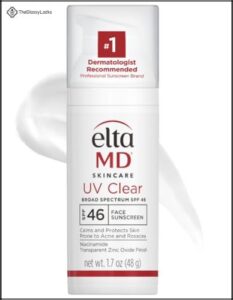
Consider this the top recommendation your dermatologist probably already suggests. It pairs 9% zinc oxide with niacinamide and hyaluronic acid, calming inflammation while hydrating skin that’s often stripped by harsh acne treatments.
The oil-free, non-comedogenic formula won’t clog pores or trigger breakouts, and it layers beautifully under makeup without pilling. At 1.7 ounces for $41, it’s pricier than drugstore options, but for sensitive, acne-prone skin, that investment often pays off.
| Best For | People with acne-prone, sensitive, or rosacea-prone skin who want daily sun protection without breakouts, irritation, or a greasy feel. |
|---|---|
| SPF | 46 |
| Skin Type | Acne-prone, sensitive |
| Finish | Non-greasy |
| Fragrance-Free | Yes |
| Non-Comedogenic | Yes |
| Under Makeup | Yes |
| Additional Features |
|
- Contains niacinamide and hyaluronic acid to calm and hydrate skin often irritated by acne treatments
- Oil-free, non-comedogenic formula that layers smoothly under makeup without pilling
- Broad-spectrum SPF 46 protection with a moisturizing feel that can replace a separate morning moisturizer
- Higher price point than drugstore facial sunscreens
- Not water-resistant, so it needs reapplying after swimming or heavy sweating
- Some users report irritation or allergic reactions despite the fragrance-free formula
2. EltaMD UV Daily Tinted Sunscreen SPF 40
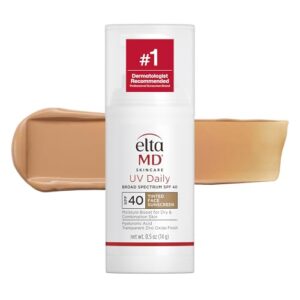
If you want that sunscreen-slash-BB-cream hybrid, EltaMD’s tinted version delivers. Zinc oxide provides the SPF 40 protection while hyaluronic acid keeps things hydrated, and the sheer tint evens out redness without looking like makeup.
It blends into light-to-medium tones nicely, though deeper skin tones may find it lacking. At 0.9 ounces, it’s a smaller bottle than the original UV Clear, so budget accordingly if you’re using it daily.
| Best For | People with sensitive or acne-prone skin who want daily facial sun protection with a light, hydrating tint instead of a separate moisturizer and sunscreen. |
|---|---|
| SPF | 40 |
| Skin Type | Sensitive, dry |
| Finish | Lightweight |
| Fragrance-Free | Not specified |
| Non-Comedogenic | Yes |
| Under Makeup | Yes |
| Additional Features |
|
- Zinc oxide delivers broad-spectrum SPF 40 protection while hyaluronic acid keeps skin hydrated
- Sheer tint evens out redness and blends nicely under makeup for a natural look
- Non-comedogenic formula is gentle enough for daily use on sensitive or acne-prone skin
- Small 0.9 oz bottle means you’ll be repurchasing often, especially with daily use
- Tinted shades may not match deeper skin tones as well as lighter ones
- Higher price point than similar tinted sunscreens on the market
3. Eucerin Clear Skin Face Sunscreen SPF 50
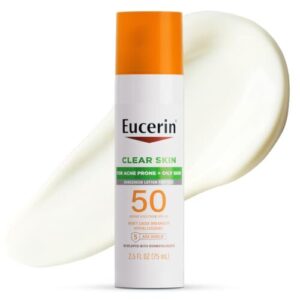
Prefer a lotion over a tint? Eucerin’s Clear Skin formula uses oil-absorbing minerals for an immediate matte finish, paired with five antioxidants and SPF 50 broad-spectrum coverage.
It’s fragrance-free, non-comedogenic, and hypoallergenic, so acne-prone and sensitive skin types tolerate it well. Some users notice a slightly heavier feel in humid climates, so blotting or a light powder helps lock in that matte look through the day.
For a compatible cleanser, explore this guide to the best face washes for acne-prone skin.
| Best For | People with oily or acne-prone skin who want daily SPF protection with a matte, non-greasy finish. |
|---|---|
| SPF | 50 |
| Skin Type | Oily |
| Finish | Matte |
| Fragrance-Free | Yes |
| Non-Comedogenic | Yes |
| Under Makeup | Yes |
| Additional Features |
|
- Delivers an immediate matte finish thanks to oil-absorbing minerals
- Packed with 5 antioxidants plus SPF 50 broad-spectrum protection
- Fragrance-free, non-comedogenic, and hypoallergenic, so it won’t clog pores or irritate sensitive skin
- Can feel heavy or turn dewy/shiny in high humidity
- May require blotting or a setting powder to keep the matte look going
- Texture can feel inconsistent depending on skin type or conditions
4. La Roche Posay Anthelios UV Sunscreen SPF 50
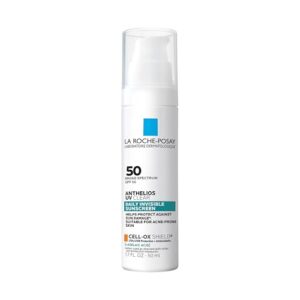
If matte finish tops your list, La Roche-Posay Anthelios delivers with Cell-Ox Shield technology plus perlite and silica for a dry-touch feel. SPF 50 broad-spectrum coverage controls both UVA and UVB rays, and the fluid texture absorbs fast without grease.
It’s non-comedogenic, water-resistant for 80 minutes, and gentle enough for sensitive skin. Sweaty workouts or humid days? This one holds up, blotting shine while your makeup glides on smoothly overtop.
| Best For | This sunscreen is best for anyone with sensitive or acne-prone skin who wants lightweight, fragrance-free SPF 50 protection that layers easily under makeup. |
|---|---|
| SPF | 50 |
| Skin Type | Sensitive, acne-prone |
| Finish | Non-greasy |
| Fragrance-Free | Yes |
| Non-Comedogenic | Not specified |
| Under Makeup | Yes |
| Additional Features |
|
- Broad spectrum SPF 50 protects against both UVA and UVB rays
- Lightweight, non-greasy formula that absorbs quickly without leaving a white cast
- Available in three specialized formulas (niacinamide, hyaluronic acid, or azelaic acid) to suit different skin needs
- Some users notice a slightly greasy or dewy finish, especially on oily skin
- Priced higher than many drugstore alternatives relative to bottle size
- Takes a few minutes to fully absorb before it sets into the skin
5. Neutrogena Ultra Sheer Invisible Gel Face Sunscreen
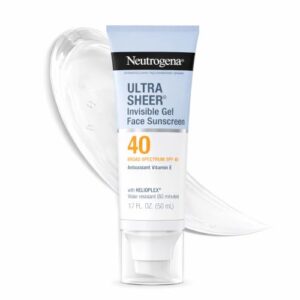
When you want a sunscreen that practically disappears, Neutrogena’s Ultra Sheer gel earns its name. SPF 40 with Helioplex technology covers both UVA and UVB rays, while the water-light texture absorbs fast and skips the white cast entirely.
It’s oil-free, non-comedogenic, and water-resistant for 80 minutes, so workouts won’t wreck your coverage. Vitamin E adds a antioxidant boost, and the matte finish means you’ll genuinely forget it’s there, until reapplication time reminds you.
| Best For | Anyone with sensitive or acne-prone skin who wants a daily sunscreen that doubles as a makeup primer without leaving a greasy or white residue. |
|---|---|
| SPF | 40 |
| Skin Type | All, acne-prone |
| Finish | Matte |
| Fragrance-Free | Not specified |
| Non-Comedogenic | Not specified |
| Under Makeup | Yes (primer) |
| Additional Features |
|
- Lightweight gel formula absorbs quickly with no white cast
- Broad-spectrum SPF 40 protection with Vitamin E and Helioplex Technology
- Water-resistant for up to 80 minutes, making it great for workouts and outdoor activities
- Can feel oily or slick right after application before it sets to a matte finish
- Some users report stinging or irritation if it migrates into the eyes
- SPF 40 may not be enough for prolonged intense sun exposure or highly photosensitive skin
6. Supergoop Mineral Mattescreen SPF 40
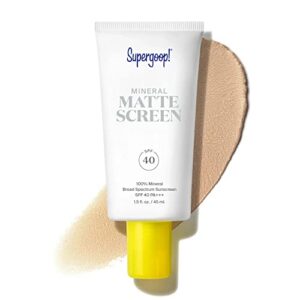
A powder-primer hybrid, Supergoop’s Mineral Mattescreen swaps chemical filters entirely for zinc oxide (17.42%) and titanium dioxide (1.33%), giving oily skin broad-spectrum coverage without a hint of grease.
Since it’s also non-comedogenic, this mattescreen pairs well with other pore-friendly staples, like the best vitamin C serums for oily skin, for a lightweight morning routine.
The matte finish dries powdery, not chalky, and doubles as a makeup primer that blurs pores before foundation. Wild butterfly ginger and bamboo extract round out the oil-free, non-comedogenic formula. If your T-zone shines by noon, this one’s built to intercept that, no oily sheen, no heavy feel.
| Best For | Anyone with oily or combination skin who wants mineral SPF 40 protection that doubles as a shine-controlling makeup primer. |
|---|---|
| SPF | 40 |
| Skin Type | Oily, sensitive |
| Finish | Matte |
| Fragrance-Free | Yes |
| Non-Comedogenic | Yes |
| Under Makeup | Yes (primer) |
| Additional Features |
|
- 100% mineral formula (zinc oxide) offers broad-spectrum UVA/UVB protection without a white cast
- Oil-free, matte finish smooths pores and helps makeup apply and last longer
- Fragrance-free, non-comedogenic, and gentle enough for most sensitive skin types
- Some users still report irritation or itching despite the sensitive-skin claims
- Tint may not offer enough color correction for deeper skin tones
- Water/sweat resistance only lasts 40 minutes, so frequent reapplication is needed
7. TiZO3 Tinted Mineral Sunscreen Primer SPF 40
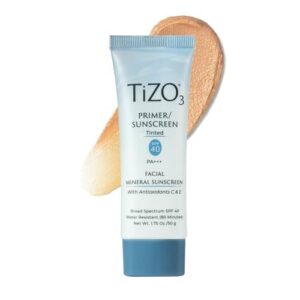
Two-in-one products often disappoint, but TiZO3 pulls off its dual role well. Titanium dioxide and zinc oxide handle broad-spectrum SPF 40 protection while the tint blurs redness and evens tone, no separate primer needed.
The silky matte texture blends fast without residue, and the fragrance-free, oil-free base keeps sensitive or acne-prone skin calm. Shake it first, since mineral formulas settle. If you want sunscreen and makeup base in one step, this covers both.
| Best For | People with sensitive, acne-prone, or rosacea-prone skin who want mineral sun protection and a makeup primer in a single easy step. |
|---|---|
| SPF | 40 |
| Skin Type | Sensitive, rosacea |
| Finish | Matte |
| Fragrance-Free | Yes |
| Non-Comedogenic | Not specified |
| Under Makeup | Yes (primer) |
| Additional Features |
|
- Broad-spectrum SPF 40 with PA UVA protection from gentle mineral filters (titanium dioxide, zinc oxide, iron oxides)
- Fragrance-free, oil-free formula that’s non-irritating and won’t sting eyes, plus a matte finish that controls shine
- Doubles as a tinted primer, evening out skin tone and smoothing texture before makeup
- Premium price of $47.00 for just 1.75 oz
- Universal tint may not suit every skin tone perfectly
- Needs reapplication every 2 hours (or after swimming/sweating), and some buyers report inconsistencies from third-party sellers
8. La Roche Posay Anthelios Clear Skin SPF 60
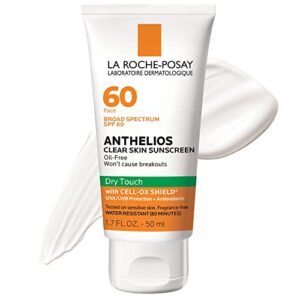
If shine is your main battle, this one plays defense hard. SPF 60 with a dry-touch matte finish absorbs excess oil fast, thanks to silica particles that keep working through the day.
It’s oil-free, non-comedogenic, and fragrance-free, so acne-prone or sensitive skin tolerates it well. Cell-Ox Shield antioxidant technology adds a layer of protection beyond UV filtering alone. Expect water resistance up to 40 minutes, plenty for errands, workouts, or a sweaty commute.
If your skin barrier feels easily compromised, these skin care tips for easily irritated skin can help you build a gentler, more protective routine.
Pair it with a gentle cleanser that lifts oil without stripping skin, as outlined in this daily skin cleansing routine for acne.
| Best For | This sunscreen is best for people with oily, acne-prone, or sensitive skin who want strong daily sun protection without a greasy feel. |
|---|---|
| SPF | 60 |
| Skin Type | Oily, sensitive |
| Finish | Dry-touch |
| Fragrance-Free | Yes |
| Non-Comedogenic | Not specified |
| Under Makeup | Yes |
| Additional Features |
|
- Oil-free, dry-touch formula that controls shine and layers well under makeup
- Broad spectrum SPF 60 with antioxidant protection and an oxybenzone-free formula
- Fragrance-free and paraben-free, making it gentle enough for sensitive skin
- Can leave a visible white cast on medium to deep skin tones
- Texture may feel heavy or drying depending on your skin type
- Moisturizing results are inconsistent, with some users finding it too dry and others not hydrating enough
9. Neova SmartSkincare Tinted Sunscreen SPF 40
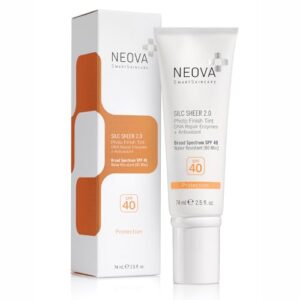
Want sun protection and light coverage in one step? This tinted mineral formula pairs zinc oxide and titanium dioxide with a sheer color-correcting tint, so you get SPF 40 broad-spectrum defense plus an evened-out complexion.
The finish stays velvety matte, not greasy, and it’s non-comedogenic, so oily and acne-prone skin won’t clog up. It layers under makeup without pilling and includes hydrating humectants and antioxidants, keeping skin comfortable rather than tight or stripped.
| Best For | People with oily, acne-prone, or sensitive skin—including fair to medium skin tones—who want daily sun protection and a sheer makeup base in one lightweight, non-comedogenic step. |
|---|---|
| SPF | 40 |
| Skin Type | Oily, sensitive |
| Finish | Semi-matte |
| Fragrance-Free | Yes |
| Non-Comedogenic | Yes |
| Under Makeup | Yes |
| Additional Features |
|
- Broad-spectrum SPF 40 protection with mineral filters (zinc oxide and titanium dioxide) suitable for sensitive and post-procedure skin
- Lightweight, oil-free, fragrance-free formula with a silky semi-matte finish that blurs imperfections without greasy residue
- Up to 80 minutes of water resistance, making it practical for outdoor activities, sports, or beach use
- Tint may not match deeper skin tones, limiting its use as a universal makeup base
- Higher price point ($69 for 2.5 oz) can be costly for everyday, long-term use
- Pump packaging may malfunction before the product is fully used, and its shorter shelf life means more frequent repurchasing
10. Paulas Choice Resist SPF 30 Mineral Sunscreen
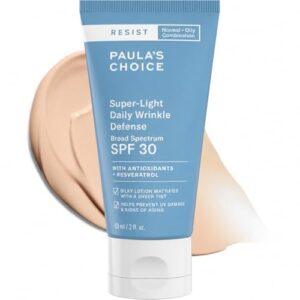
Rounding out the list is a mineral formula built for skin that’s both oily and easily irritated. Paula’s Choice Resist blends zinc oxide with a lightweight, non-comedogenic base that won’t clog pores or trigger breakouts.
The tinted sheer coverage evens tone with minimal white cast, and the soft matte finish controls shine without feeling chalky. SPF 30 meets the baseline dermatologists recommend for daily broad-spectrum protection, making this a smart, fragrance-free pick for sensitive, blemish-prone skin.
| Best For | Those with oily, sensitive, or blemish-prone skin who want daily broad-spectrum sun protection without clogged pores or added irritation. |
|---|---|
| SPF | 30 |
| Skin Type | Oily, combination |
| Finish | Matte |
| Fragrance-Free | Yes |
| Non-Comedogenic | Yes |
| Under Makeup | Yes |
| Additional Features |
|
- Lightweight, non-comedogenic formula that won’t clog pores or trigger breakouts
- Matte finish controls shine without feeling chalky
- Fragrance-free formula suited to sensitive skin
- May leave a visible white or pale cast on deeper skin tones
- Some users notice dryness or increased oiliness after several hours
- Needs thorough mixing before each use to avoid separation
How We Chose These Oily Skin Sunscreens

Not every sunscreen labeled "oil-free" actually behaves that way on your skin, so we didn’t take marketing claims at face value.
Instead, we looked at real formulation details, from active ingredients to finish, to figure out which ones truly hold up.
Here’s exactly what we checked before adding anything to this list.
Broad-spectrum SPF Protection
Every sunscreen on this list starts with broad-spectrum SPF filters, meaning it blocks UVA and UVB rays, not just one. SPF 30 stops about 97% of UVB, SPF 50 nudges that to 98%, but SPF numbers alone say nothing about UVA defense. In fact, only broad-spectrum labeling standards established by FDA regulations since 2011 guarantee that a sunscreen has actually been tested for meaningful UVA protection.
That’s why I only trust oil-free, noncomedogenic formulas with confirmed broad-spectrum labeling, plus consistent SPF reapplication every two hours.
Oil-control and Matte Performance
Broad-spectrum coverage means nothing if your face looks like a grease slick by lunch.
Broad-spectrum protection is worthless if your face turns into a grease slick by lunchtime
Silica particles absorb excess sebum on contact, setting oily zones into a soft matte finish within minutes. Lightweight gel textures deliver this shine control without heavy residue, and pore-blurring polymers keep skin looking smooth. Reapplication simply reactivates that matte layer, no chalky buildup involved.
Non-comedogenic Breakout-friendly Formulas
Matte finish is only half the battle. If your sunscreen clogs pores while it mattifies, you’re trading shine for breakouts.
Noncomedogenic labeling means the formula skips heavy oils and waxes known to trap bacteria. Look for:
- Oil-free, noncomedogenic bases with glycerin for hydration
- Niacinamide to balance sebum
- Silicones like dimethicone that block friction, not pores
- Fragrance-free formulas for sensitive, acne-prone skin
Texture, Finish, and White Cast
Ingredients matter, but how a sunscreen actually feels and looks on your skin decides whether you’ll wear it daily.
Gel textures absorb fast, settling into a dry-touch finish that resists shine for hours. Silica smooths texture, while tinted mineral formulas go on without white cast.
| Texture | Best For |
|---|---|
| Gel | Fast absorption |
| Lotion | Lightweight, oil-free |
| Tinted mineral | No white cast |
| Dry-touch | All-day matte |
Value, Versatility, and Wear
A tube that lasts is worth more than one you toss after a week. We tested cost per use, wear time, and sweat resistance level to find real value.
- Oil-free, noncomedogenic formula
- Broad spectrum SPF coverage
- Layers well with skincare
- Matte finish under makeup
- Lightweight, oil-absorbing texture
Choose The Right Sunscreen Formula
Not all sunscreens work the same way on oily skin, and the formula you pick matters just as much as the SPF number. Some sit on top of your skin, others melt right in, and each type comes with its own trade-offs for shine and breakouts. Here’s what you need to know before you choose.
Mineral Sunscreens for Oily Skin
Think of mineral sunscreen as a physical shield sitting on skin instead of soaking in.
Zinc oxide reflects UVA and UVB rays while calming oily, reactive skin.
| Trait | Benefit for Oily Skin |
|---|---|
| Mineral UV filters | Broad protection, less irritation |
| Mattifying texture | Oil absorption, matte finish |
| Noncomedogenic sunscreen | Won’t clog pores |
| Oilfree formula | Lightweight, sensitive-skin friendly |
Chemical Sunscreens for Oily Skin
Chemical filters work by absorbing UV rays and converting them to heat, which means they need smart formulation to stay oil-friendly.
Look for avobenzone stabilization with octocrylene, oil-absorbing filters, and non-comedogenic chemical formulas in lightweight gel textures.
Why chemical sunscreens work for oily skin:
- Fast-absorbing, non-greasy finish
- Fragrance-free sensitive skin options
- Oilfree formula prevents clogging
- Matte finish sunscreen controls shine
- Oilabsorbing sunscreen reduces midday grease
Hybrid Formulas and Tradeoffs
Can’t decide between mineral and chemical? Hybrid formulas split the difference, pairing mineral filters with chemical ones for broad-spectrum coverage in a lighter texture. You’ll get solid oil control without sacrificing protection.
The tradeoff: hybrids can leave slightly more residue or white cast than pure chemical sunscreens, though a micronized base helps minimize that. They also handle humidity better than dry heat.
Gel, Lotion, and Fluid Textures
Not all oil-free sunscreens feel the same on skin, and texture makes a real difference.
Gel formulas absorb fastest, often over 70% water, for a weightless feel ideal layering under makeup.
Lotions spread easier with light, quick-dry finish.
Fluids dry almost instantly, controlling shine without residue, great for reapplication during sweaty, water resistant sunscreen days.
Tinted Formulas for Sheer Coverage
Skip the makeup step some mornings? A sheer tint sunscreen matches your skin tone, giving light coverage while staying oil-free and noncomedogenic. Mineral tints spread evenly, no pooling in pores, and dimethicone keeps things glide-y, not tacky. Look for four-plus shades for a true match.
Bonus: it wears beautifully under makeup, all day.
Ingredients and Labels Worth Checking
Picking the right sunscreen isn’t just about SPF number, it’s about what’s actually in the bottle. Certain labels and ingredients can tell you a lot about how a formula will behave on oily, breakout-prone skin. Here’s what to look for before you check out.
Non-comedogenic and Oil-free Labels
When a label says non-comedogenic, it means the formula won’t clog pores, your best defense against breakouts.
Pair that with oil-free, and you’ve got real pore safety.
Trust dermatologist recommended, water-based or gel formulas with clear ingredient lists:
- Lightweight, water-light gels
- Matte, powder-finish lotions
- Fragrance-free fluids
- No greasy esters
- Dermatologist-tested seals
Niacinamide for Balanced Sebum
Ingredient lists matter too, and niacinamide is one worth circling. This vitamin B3 derivative helps sebaceous gland regulation, calming oil production without stripping skin.
Studies show 2% concentrations reduce facial sebum over 4-6 weeks, with oil balance benefits peaking near 2-5%. It also strengthens your barrier, so oil-free, non-comedogenic formulas with niacinamide give you real, lightweight sebum control.
Silica and Mattifying Powders
Niacinamide calms oil from within, but silica controls shine on the surface. This mineral works as a mattifying powder, physically absorbing excess sebum the moment it touches skin.
Hydrophobic-treated silica resists moisture, keeping formulas smooth even in humid, oil-prone conditions. Silica microspheres scatter light across texture, giving you that soft-focus finish. Cosmetic-grade silica is amorphous, meeting strict safety standards, so it’s a trusted choice for daily, noncomedogenic wear.
Hyaluronic Acid Without Heaviness
Silica mattifies, but oily skin still needs moisture, and that’s where hyaluronic acid comes in. It creates hydration light texture by forming a thin film that locks in water without weight.
Low molecular weight HA, around 0.5 to 2 percent, gives you pore friendly hydration in a gel texture that layers beautifully for matte finish layering under sunscreen.
Antioxidants for Added Protection
Under and beyond your SPF, antioxidants quietly mop up what sunscreen misses. Sunscreen blocks roughly 55% of UV free radicals, so pairing it with 20% vitamin C, vitamin E, green tea, and ferulic acid closes that gap.
Apply water-based antioxidants first, let them absorb, then follow with an oil-free, noncomedogenic, lightweight formula sunscreen for real antioxidant layering protection.
Match Sunscreen to Your Skin Needs
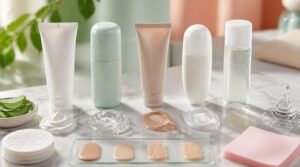
Not all oily skin is the same, and your sunscreen should reflect that. Whether you’re battling breakouts, sensitivity, sweat, or a stubborn white cast, there’s a formula built with your exact concerns in mind. Here’s how to match your skin’s specific needs to the right pick.
Acne-prone and Clogged Pores
Breakouts usually start with sebum overproduction clogging pores, so your sunscreen shouldn’t add fuel to that fire.
Look for:
- Noncomedogenic, oilfree labeling
- Lightweight formula, gel or fluid texture
- Niacinamide or salicylic acid for acneprone skin protection
Neutrogena Clear Face and EltaMD UV Clear both fit the bill, giving you sunscreen that prevents breakouts while still delivering solid congestion solutions.
Sensitive or Reactive Oily Skin
When oily skin turns reactive, redness and stinging often follow, especially after sun exposure or heat. Choose a sunscreen for sensitive oily skin that’s fragrance-free, alcohol-free, and oil-free, since dyes and preservatives commonly trigger flare-ups.
Mineral options with zinc oxide tend to soothe irritation and redness better than harsh chemical filters. Always patch test new formulas first, and support your barrier with gentle, consistent care.
Dehydrated Yet Oily Skin
Shiny yet tight? That’s the hydration paradox at play, oily on the surface, parched underneath.
- Flaking under shine
- Makeup that beads or slides
- Tightness post-cleansing
- Sudden sensitivity
Choose an oil-free, noncomedogenic lightweight sunscreen formula with hyaluronic acid or glycerin. These humectants restore hydration balance, aid barrier repair, and support natural oil regulation, without heaviness.
Sweat-resistant Outdoor Protection
Hiking, tennis, a sweaty run at noon? Your sunscreen needs to keep pace. Look for film-forming polymers that lock formula onto skin through sweat resistance testing.
| Activity Level | Water Resistance | Reapply After |
|---|---|---|
| Light (walking) | 40 minutes | Towel drying |
| Heavy (sports) | 80 minutes | Every session |
Choose lightweight gel textures, oil-free, noncomedogenic, and mattifying, for broad-spectrum protection that won’t slide off with you.
No-white-cast Options for Deeper Tones
That gray, ashy film on deeper skin? A dealbreaker, and a fixable one.
Look for tinted mineral blends with iron oxide pigments and micronized dispersion for a near invisible finish:
- Adjustable tint levels
- Reduced titanium dioxide
- Warm undertone matching
- Broad-spectrum protection intact
These dermatologist recommended, nonwhitecast formulas prove tinted sunscreen for oily skin can disappear beautifully on medium to dark complexions.
Prevent Sunscreen Pilling Under Makeup
Pilling happens when product sits on top of your skin instead of soaking in, and it can turn a smooth makeup routine into a frustrating mess. The good news is that a few small tweaks to how you layer and apply things can fix this for good. Here’s exactly what to change.
Apply Skincare in Thin Layers
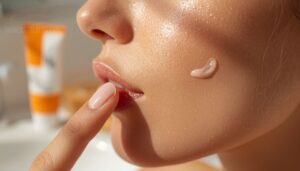
When your skincare routine feels heavy by 10 a.m., the culprit is usually too much product, not too much oil. Use a pea-sized amount per step, patting rather than rubbing, so each layer stays thin and oilfree.
This thin layer application preserves makeup compatibility later, since bulky layers pill, slide, and undo an otherwise noncomedogenic, shine-reducing formula before foundation even goes on.
Allow Each Layer to Set
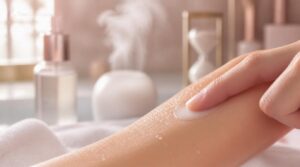
Patience pays off here. Give lightweight formulas 15 to 60 seconds to set, and heavier textures up to two minutes, before layering on.
Room temperature and humidity can slow things down, so do a quick touch test. Rushing this step is why sunscreen that wears well under makeup suddenly pills or peels by lunchtime.
Pair Compatible Primer Textures
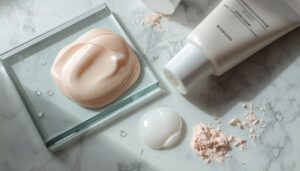
Once your sunscreen sets, the primer you choose matters just as much. Silky gel compatibility works best with matte, oil-free sunscreens for a breathable base.
Water based lotions pair well with powdery primers to cut tack, while silicone based primers and silica lightweight primers boost glide and smoothness under gel formulas, all lightweight, dry-touch, and mattifying.
Choose Lightweight Makeup Formulas
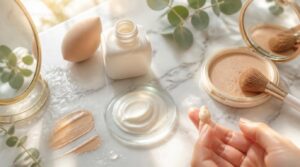
Your primer earns its keep, but the makeup layered on top decides whether your sunscreen survives the day. Pick lightweight foundation options or sheer coverage makeup over heavy liquids that grab onto sunscreen and pill.
Mineral matte powders work beautifully for touch-ups, while tinted moisturizers with SPF give buildable color without smothering your oil-free, non-comedogenic base underneath.
Blot Without Disturbing Sunscreen
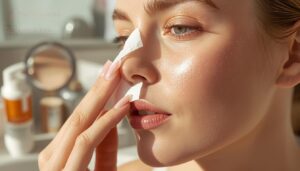
When shine creeps back by midday, reach for blotting papers instead of more product. Press, don’t wipe, so the sunscreen film stays intact underneath.
Blotting sheet technique:
- Press gently, hold two seconds
- Lift straight up, no dragging
- Target T-zone oil first
- Re-blot small sections only
- Skip broad sweeping motions
Apply Sunscreen for Lasting Protection
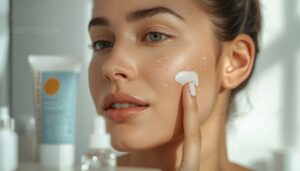
Picking the right sunscreen is only half the job, how you apply it matters just as much. Even the best oil-control formula can’t protect you if you’re using too little or reapplying too rarely. Here’s exactly how to apply and reapply for protection that actually lasts all day.
Use Enough for Full Coverage
Even the best oilfree, noncomedogenic formula fails if you skimp. Aim for one teaspoon to fully cover your face and neck, extending to ears and jawline. Skipping spots invites sunburn and uneven aging.
A dermatologist recommended sunscreen only works with proper application amount and even layer technique, giving broadspectrum protection its full lightweight, matte punch.
Apply Before Daily Sun Exposure
Timing matters as much as the formula itself. Apply your broadspectrum protection 15 to 30 minutes before heading out, letting filters bind to skin.
Your morning application steps:
- Cleanse with oilfree cleanser
- Layer noncomedogenic sunscreen last
- Wait before makeup or primer
This daily SPF layering habit is what makes a dermatologist recommended sunscreen actually work, giving you that matte finish and real protection.
Reapply Every Two Hours
That morning layer won’t last all day, no matter how good the formula. Reapply every two hours during sun exposure, sooner if you’re sweating.
For makeup wearers, pat on a gel or powder SPF to avoid pilling. Set a phone reminder, keep a portable sunscreen in your bag, and choose oilfree, noncomedogenic formulas that reduce shine between applications.
Reapply After Swimming or Sweating
Water resistant doesn’t mean waterproof, and that 40 or 80 minute rating only covers active swimming time.
Sweat breaks down active ingredients within 30-60 minutes, while towel drying strips off up to half your remaining SPF.
Reapply immediately after swimming or heavy sweating, even with sports formulations.
Skip toweling; pat dry instead to protect that lightweight, oilfree layer.
Cleanse Thoroughly at Day’s End
That mineral sunscreen you applied all day won’t rinse off with water alone. Double cleansing works best: a gentle water-based cleanser first, then a soft washcloth with warm water to lift stubborn particles from pores.
Massage for 20 seconds, rinse until residue-free, and follow with an oil-free moisturizer. This nightly reset keeps your oily skin barrier balanced without clogging pores.
Frequently Asked Questions (FAQs)
Does sunscreen make oily skin worse over time?
Funny enough, the sunscreen you’re avoiding might be the fix. The right, noncomedogenic formula actually improves long-term oil control, regulating sebum and reducing shine, while poorly chosen chemical formulas can worsen breakouts and oiliness over time.
Should oily skin skip moisturizer before sunscreen?
Not necessarily. Skipping it can leave your barrier health compromised, causing rebound oil. A lightweight, oil-free, non-comedogenic moisturizer helps hydration and layering compatibility, letting sunscreen absorb quickly and control shine without clogging pores.
Can sunscreen alone replace makeup primer daily?
A patient once swapped her primer for sunscreen and watched her foundation crease by noon. Sunscreen alone won’t replace primer daily. It lacks silicones for makeup longevity and grip, though dry-touch, oil-free formulas minimize pilling and shine.
Is mineral or chemical sunscreen better for acne?
For breakout-prone skin, zinc oxide and titanium dioxide win out. They’re naturally non-comedogenic, calm inflammation, and won’t clog pores like some chemical filters can, making mineral formulas gentler for both acne and rosacea-prone complexions.
Conclusion
Oily skin isn’t a flaw to fight, it’s a compass pointing you toward the right formula. The best sunscreen lotions for oily skin don’t just protect, they balance, mattify, and behave under makeup like they were made for your face, because they were.
Stop settling for greasy trade-offs. Pick a formula with proven ingredients, apply it generously, and reapply on schedule. Your skin will thank you with a clear, calm, shine-free glow that lasts long after noon.