This site is supported by our readers. We may earn a commission, at no cost to you, if you purchase through links. This content is for general informational and educational purposes only and is not a substitute for professional medical, dermatological, or nutritional advice.
Your skin barrier is thinner than a sheet of plastic wrap, and a 105°F shower can strip it in minutes. That tight, stinging, flaky feeling isn’t dryness. It’s damage.
Ceramides, cholesterol, and fatty acids lock your skin cells together like mortar between bricks. Hot water, harsh acids, and retinoids dissolve that mortar, and even a cloudy morning lets up to 80% of UV rays through to inflame what’s left. Avoiding irritants during skin barrier recovery matters more than any product you add.
Mild damage heals in 2 to 4 weeks, but only if you stop sabotaging it. Start by learning what to skip.
Table Of Contents
- Key Takeaways
- What Your Skin Barrier Does During Recovery
- Everyday Habits That Keep Irritating Your Skin
- What to Pause During a Barrier Reset
- Gentle Swaps to Use Instead
- How Long Barrier Recovery Takes
- How to Restart Actives Safely
- Frequently Asked Questions (FAQs)
- How long does it take to heal a disrupted skin barrier?
- What is the fastest way to heal a damaged skin barrier?
- How to calm down an irritated skin barrier?
- How do I know if I ruined my skin barrier?
- Can fragrance-free products still irritate my skin?
- Is it safe to wear makeup while recovering?
- Should I avoid touching my face during healing?
- Do dry indoor air and wind slow recovery?
- Can stress or poor sleep delay barrier repair?
- Conclusion
Key Takeaways
- Hot water above 105°F, over-exfoliating, retinoids, and skipping sunscreen on cloudy days (when up to 80% of UV still gets through) all break down the lipids that hold your skin barrier together.
- Pause retinoids, acids, scrubs, fragrance, and benzoyl peroxide until cleansing and moisturizing no longer sting, then use a gentle, fragrance-free cleanser, a ceramide-rich moisturizer, and a daily SPF 30 or higher.
- Mild damage heals in 2 to 4 weeks, moderate damage takes 4 to 8, and severe damage can take months, so don’t restart your actives just because your skin looks calm.
- When you do restart, add one product at a time, begin with niacinamide, bring retinol back at low strength once or twice a week, and stop at the first sign of burning or tightness.
What Your Skin Barrier Does During Recovery
Several repair processes run at once while your skin recovers, and each one depends on the others. Your skin barrier function relies on a tight lipid layer between dead cells, like mortar between bricks. Ceramides make up about 50% of that mortar. Cholesterol and free fatty acids fill the rest, and the ratio matters. Those three lipids sit in an approximately 1:1:1 equimolar ratio, and all three are needed for the barrier’s layered structure to reassemble.
Barrier repair starts fast. Your keratinocytes ramp up lipid production, and lamellar bodies deliver it to the surface. This drives TEWL reduction, so less water escapes and fewer irritants get in.
Keeping rinses lukewarm protects those lipids, and a gentle morning routine that helps prevent bumps shows how small habits keep your barrier intact.
Meanwhile, your skin rebuilds its natural moisturizing factor, restores a pH near 4.5 to 5.5, and calms the inflammatory response. Don’t interrupt this. Your job is simple: protect the process and stay consistent every day.
Everyday Habits That Keep Irritating Your Skin
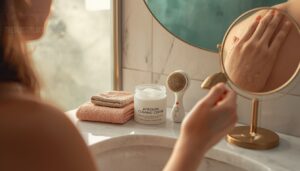
You’re doing the right things, but a few daily habits can quietly undo your progress. Most people don’t realize these routines are the problem, because they feel normal or even helpful. Here are four habits to check before you blame your products.
Hot Water and Long Showers
You might think a steaming shower soothes irritated skin, but hot water does the opposite. Anything above 105°F dissolves the ceramides and fatty acids holding your barrier together, driving up water loss and redness. A handy shower water temperature gauge lets you confirm your water stays lukewarm and well under 105°F instead of guessing by feel.
Keep showers under ten minutes and lukewarm. Skip harsh cleansers, too. Choose gentle cleansing, then pat dry and moisturize within three minutes.
Over-Exfoliating a Dull Complexion
Hot water isn’t your only culprit. Overexfoliation strips the protective layer, and a dull complexion tempts you to scrub harder. Check whether you’re stacking any of these:
Once you’ve eased off the scrubbing, natural ways to hydrate skin quickly can help rebuild your barrier, though real improvement usually takes days to weeks.
- AHAs and BHAs on the same night
- Harsh cleansers followed by scrubs
- Retinoid overuse alongside acids
- Daily peels or brushes
Pause them all. Smooth skin needs patience, not friction.
Retinoids on Irritated Skin
Retinoids belong on that list too, especially when you’re already irritated. They thin the barrier and raise water loss, so stacking them over exfoliants and fragranceheavy products pours fuel on a fire.
Stop retinoids completely until redness, stinging, and flaking fade. Moisturize instead. Your skin will take them back later.
Sunscreen Only on Sunny Days
Why does skipping sunscreen on gray days hurt your recovering skin? Because up to 80% of UV rays pass through clouds. That UV still triggers inflammation and slows barrier repair.
Pairing a lightweight, broad-spectrum SPF 30 with your morning routine is easiest when you pick from these sunscreen lotions for daily wear that feel comfortable on healing skin.
Apply fragrancefree sunscreen every morning, rain or shine. Pair it with a gentle cleanser at night. For sensitive skin care, consistency matters more than sunshine.
What to Pause During a Barrier Reset
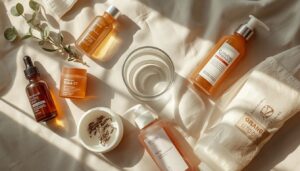
Several products on your shelf work against you right now. Pause them all until your skin stops stinging.
Start with retinoids. Retinol, tretinoin and adapalene speed up cell turnover, which stops your lipid matrix from settling. Skip them for at least 2 to 6 weeks.
Next, stop chemical exfoliants. AHAs like glycolic and lactic acid, and BHAs like salicylic acid, strip a barrier that’s already compromised. Wait 2 to 4 weeks. Scrubs and peels go too.
Drop fragranced products, essential oils, L-ascorbic acid serums and benzoyl peroxide as well. Each one inflames damaged skin. Keep hot water off your face too.
Your test is simple. If a gentle cleanser or moisturizer still stings, keep pausing. Consistency always beats speed here.
Gentle Swaps to Use Instead
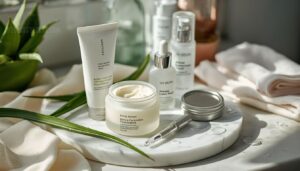
Your skin doesn’t need more products right now. It needs better ones, and fewer of them.
Healing skin needs fewer products, not more, so choose better ones and let your barrier rebuild itself
Start with a gentle cleanser, ideally a cream or gel with glycerin and ceramides. Foaming formulas strip lipids you’re trying to rebuild. Choose fragrancefree, pHbalanced products close to 4.5 to 5.5. If you wear makeup or SPF, remove it first with a balm or oil.
Next, swap your light lotion for a bland moisturizer with ceramides, cholesterol, and fatty acids in a 3:1:1 ratio. Apply it over damp skin. A hyaluronic acid serum underneath can boost hydration retention by up to 30%. Seal everything with occlusive ingredients like petrolatum at night.
Replace alcohol toners with aloe or centella mist. Use niacinamide at 5 to 10% instead of vitamin C. Choose a mineral SPF 30 to 50 every morning.
How Long Barrier Recovery Takes
Maya, 54, stopped her retinol and acid toner on a Monday. By Thursday, the stinging had eased. By day ten, she assumed she was healed and restarted everything. Two days later, she was red and flaky again.
Don’t make Maya’s mistake. Your skin barrier recovery follows a schedule, and age sets the pace.
Mild damage clears in two to four weeks. Moderate damage takes four to eight. Severe damage can take three to six months. Over 50, add roughly 50 percent more time.
Here’s what you’ll notice along the way:
- Day 3: the lipid layer starts rebuilding and tightness fades
- Days 7 to 10: flaking drops and your moisturizer absorbs smoothly
- Weeks 2 to 4: redness settles and barrier function steadies
Stay consistent. One harsh product resets your progress.
How to Restart Actives Safely
Your skin isn’t ready for actives just because it looks calm. It’s ready when cleansing and moisturizing no longer sting and every trace of redness and flaking is gone.
A slow restart protects your progress. Keep your barrier-friendly routine simple, then add one product at a time:
- Start with niacinamide or peptides, which support your barrier without disruption.
- Reintroduce retinol at 0.025% to 0.05%, ideally encapsulated, once weekly in week 3 and twice weekly in week 4.
- Apply moisturizer before and after the active to buffer it.
Wait at least one week between new products. That’s how you build real active ingredient tolerance.
Stop immediately if burning or tightness returns. Then go back to cleanser, moisturizer, and SPF for 2 to 4 weeks.
Frequently Asked Questions (FAQs)
How long does it take to heal a disrupted skin barrier?
Say you scrubbed your face daily for a week and now it stings. Most mild damage heals in 7 to 14 days with a gentle cleanser and bland moisturizer. Severe cases take 4 to 8 weeks.
What is the fastest way to heal a damaged skin barrier?
Strip your routine. Use a gentle cleanser, then apply a bland moisturizer with ceramides, cholesterol, and fatty acids to damp skin within 60 seconds. Pause actives. This speeds barrier repair and protects skin barrier health.
How to calm down an irritated skin barrier?
Strip your routine down to three steps. Wash with a gentle cleanser that’s pH-balanced and fragrance-free. Follow with a bland moisturizer rich in ceramides. Pause every active. Be consistent, and your skin settles within weeks.
How do I know if I ruined my skin barrier?
Check for persistent dryness and tightness that moisturizer doesn’t fix. Watch for stinging or burning from products you once tolerated. Rough, flaky patches on your cheeks or jawline confirm barrier disruption and skin sensitivity.
Can fragrance-free products still irritate my skin?
Fragrance free products can still torch your skin. Preservatives, plant extracts, and alcohol denat. trigger skin irritation, especially in sensitive skin.
During skin barrier recovery, pick a gentle cleanser and patch test each new product.
Is it safe to wear makeup while recovering?
You can, if you choose carefully. Pick mineral-based, fragrancefree products that sit on top of your skin barrier. Skip heavy matte formulas.
Remove makeup with a gentle cleanser. Sensitive skin needs barrier repair, not scrubbing.
Should I avoid touching my face during healing?
Your hands carry thousands of bacteria per square centimeter. Yes, avoid touching your face. Sensitive skin in barrier recovery has no irritant protection, so every touch adds bacteria and friction. Keep your hands off.
Do dry indoor air and wind slow recovery?
Yes, both environmental stressors slow repair. Wind and low-humidity environments strip lipids and pull water from your skin, causing dry patches. Thermal cycling between cold outside and heated rooms deepens barrier vulnerability.
Humidify to 30-40%.
Can stress or poor sleep delay barrier repair?
Yes, they can. Stress and cortisol shifts slow barrier repair, and sleep deprivation delayed recovery in controlled studies. Evidence shows a possible delay, not a timeline. Treat both as contributors to your skin strength, not sole causes.
Conclusion
Think of your skin barrier as a brick wall with wet mortar. Every hot shower and harsh acid is a wrecking ball swinging at it.
Avoiding irritants during skin barrier recovery works because healing needs quiet, not effort. Keep water lukewarm, wear SPF daily, and pause your actives. Your skin will rebuild itself in 2 to 4 weeks.
Be boring. Be consistent. Let the mortar fully set, and your skin won’t let you down again.