This site is supported by our readers. We may earn a commission, at no cost to you, if you purchase through links. This content is for general informational and educational purposes only and is not a substitute for professional medical, dermatological, or nutritional advice.

Your bathroom shelf probably holds a retinoid already, and you might not know it. Retinol, tretinoin, and adapalene all belong to the same vitamin A family, yet they hit your skin with very different force.
That gap explains why one friend glows after a month while another peels like a sunburn. Strength and conversion steps decide everything. Retinol needs two conversions before your skin can use it, while tretinoin needs none.
So what is the difference between retinol and retinoid? Once you see how the ladder works, you can pick a formula that fits your skin, and the six picks below get easier to choose.
Table Of Contents
- Key Takeaways
- Retinol Vs Retinoids: Definitions, Types, and Strength
- Retinol Vs Prescription Retinoids: Benefits and Results
- Which Retinoid Suits Your Skin and Needs?
- How to Use Retinoids Safely and Effectively
- Top 6 Retinol and Retinal Skincare Products
- Frequently Asked Questions (FAQs)
- Should beginners use retinol or retinoid?
- Is retinoid better than retinol?
- What works 11 times faster than retinol?
- Can I put retinol on my crows’ feet?
- Can you use retinoids while pregnant or breastfeeding?
- Can retinol be layered with vitamin C?
- Is it safe to combine retinoids with exfoliating acids?
- Do retinoids thin the skin over time?
- Can retinoids be used around the lips and nose?
- Conclusion
Key Takeaways
- Retinoids are the whole vitamin A family, and retinol is just the gentlest over-the-counter member, while tretinoin and adapalene (apart from the 0.1% over-the-counter version) are prescription-strength.
- Strength comes down to conversion steps: retinol needs two to become active retinoic acid, retinal needs one, and tretinoin needs none, so it’s the most potent and the most irritating.
- Your best pick is the one your skin can comfortably tolerate, so start with a low-strength retinol or retinal if you’re a beginner or sensitive, and consider adapalene or tretinoin for stubborn acne and dark spots.
- Ease in with a pea-sized amount at night twice weekly, wear SPF 30+ every morning, and give it about three months, since results build slowly and retinoids aren’t safe during pregnancy.
Retinol Vs Retinoids: Definitions, Types, and Strength
Confusion between retinol and retinoids trips up almost everyone. Here’s the simple version.
Retinol is just one gentler member of the retinoid family, and if you’re also using acne treatments, this guide on how to use retinol with benzoyl peroxide together explains how to avoid canceling out your results.
Retinoids are the whole vitamin A family. Every derivative that binds retinoic acid receptors belongs to it. Retinol is just one member, and it’s the over-the-counter option you’ll find in cosmetics. Tretinoin and adapalene are different. They’re prescription retinoids, not retinol. Adapalene 0.1% is available over-the-counter in the US, though.
Strength comes down to conversion. Retinyl esters are weakest, then retinol, then retinaldehyde, then retinoic acid. Your skin converts each form step by step until it reaches retinoic acid, the active one. Retinaldehyde needs one step. Retinol needs two. Retinoic acid skips conversion entirely. That’s exactly why retinoid strength climbs as you move up the whole ladder.
Retinol Vs Prescription Retinoids: Benefits and Results
You’ve probably wondered whether retinol can really match a prescription retinoid. The answer depends on what you want your skin to do, and how much patience you’ve got. Here are the five points that show where each one shines, so you can judge realistic results for yourself.
Potency And Conversion
Potency comes down to retinol conversion. Your skin must turn retinol into retinoic acid, and that process is slow.
| Form | Conversion Steps |
|---|---|
| Retinol | Two |
| Retinaldehyde | One |
| Tretinoin | None |
Tretinoin works at prescription strength because it needs no conversion, which makes it the strongest retinoid potency available.
Acne Treatment Benefits
That strength matters for acne treatment. Retinoids unclog pores by keeping dead cells from sticking together.
| Retinoid | Acne Use |
|---|---|
| Adapalene | Over the counter, ages 12+ |
| Tretinoin | Prescription |
| Retinol | Milder option |
Adapalene and tretinoin calm pimples and clear comedones. Retinol works too, just more gently. Expect a temporary flare at first. Weeks two to four can look worse. Hang in there.
Wrinkles And Dark Spots
Clearing pimples is one win. Fading the marks they leave is another.
Retinoids boost collagen production, which softens fine lines from beneath. They also ease hyperpigmentation by shedding pigmented cells faster.
If dark spots are your main concern, pairing retinoids with a step-by-step hyperpigmentation treatment routine can help you see results within those first few weeks.
| Concern | Result |
|---|---|
| Fine lines | Softer |
| Dark spots | Fainter |
Retinol offers gentle antiaging support, though it works more slowly. Your dark spots won’t vanish overnight, so keep your routine steady.
Results And Timelines
Most people expect fast antiaging magic. Skip that hope. Skin cell turnover and collagen production take time, so your adjustment period matters. Build retinoid tolerance and stay consistent.
| Goal | Early sign | Clearer change |
|---|---|---|
| Acne | 4–8 weeks | About 12 weeks |
| Fine lines | Months | 12–24 weeks |
| Pigmentation | 24 weeks | Mottling improved |
Pausing or skipping nights can delay progress, so keep showing up.
Irritation And Tolerability
Most people notice some irritation early on, and that’s normal. Retinol is gentler, while stronger forms can bring more dryness and side effects. Your retinoid tolerance builds with time, but skin sensitivity varies.
| Retinoid | Irritation Level |
|---|---|
| Retinol | Lowest |
| Retinaldehyde | Moderate |
| Tretinoin | Highest |
Still red after six weeks? Cut back or stop, then check with your dermatologist about a lower strength.
Which Retinoid Suits Your Skin and Needs?

The strongest retinoid isn’t always the smartest pick. The right one is the one your skin can actually handle.
The best retinoid isn’t the strongest one, but the one your skin can comfortably tolerate
Start with your skin type. If you’re oily and acne-prone, adapalene or tretinoin usually works well. Dry or sensitive? Encapsulated retinol or retinaldehyde is gentler on your barrier. Rosacea-prone? Skip retinoids during active flares.
Then look at your goal. Clearing breakouts calls for adapalene or tretinoin. Fine lines and texture respond nicely to retinol or retinal. Dark spots do best with tretinoin.
Age matters too. In your mid-20s, low-strength retinol is plenty. By your 40s, a dermatologist recommendation for prescription tretinoin or tazarotene often makes sense. Whatever you choose, begin at 0.025% tretinoin or 0.1–0.3% retinol.
How to Use Retinoids Safely and Effectively
Think retinoids are too harsh for you? Not if you ease in. Most retinoid side effects, like dryness and flaking, fade once you pace yourself.
Start with a patch test on your inner forearm for seven days. Then follow this routine: While you wait out the patch test, stock up on a fragrance-free moisturizer for sensitive skin so it’s ready to buffer your first application.
- Apply a pea-sized amount to dry skin at night, twice weekly for two weeks.
- Buffer with moisturizer first, especially if your skin type runs sensitive or you use a prescription strength.
- Move to every other night only when your skin stays calm.
Expect an adjustment period of several weeks. Add one active at a time, and skip benzoyl peroxide, acids, and vitamin C on retinoid nights.
Wear broad-spectrum SPF 30+ sunscreen every morning. Retinoids make your skin sun-sensitive.
Top 6 Retinol and Retinal Skincare Products
You’ve learned how retinoids work and how to use them, so now it’s time to shop. Below are six retinol and retinal picks, ranging from gentle starters to stronger options. Read each one with your own skin’s tolerance in mind, and you’ll choose with confidence.
1. Murad Retinol Youth Renewal Night Cream
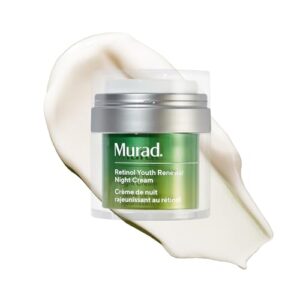
Want a retinol that doesn’t feel like a gamble? Murad’s night cream is built around Retinol Tri-Active Technology. It pairs a fast-acting retinoid with time-released retinol and a booster, so you get staggered action.
Niacinamide and picolinamide help support your barrier. The jar holds 1.7 oz and costs $94. You can use it on your face, neck, and chest.
Keep in mind, dry skin may need extra moisturizer. If you’re sensitive to scent, the synthetic fragrance could still bother you.
| Best For | Anyone with normal, oily, or combination skin who wants an overnight retinol cream for fine lines and wrinkles that also supports the skin barrier and can be used on the face, neck, and chest. |
|---|---|
| Active Ingredient | Retinol Tri-Active |
| Size | 1.7 oz |
| Price | $94 |
| Format | Cream (jar) |
| Fragrance | Synthetic fragrance |
| Skin Suitability | All skin types |
| Additional Features |
|
- Retinol Tri-Active Technology combines a fast-acting retinoid, time-released retinol, and a booster for staggered action.
- Niacinamide and picolinamide help strengthen the skin’s protective barrier, and the formula is free of parabens, sulfates, and phthalates.
- It visibly reduces fine lines and wrinkles overnight, boosts radiance, and can be applied to the face, neck, and chest.
- At $94 for 1.7 oz, it is a pricey option.
- The niacinamide may cause dryness for very dry skin, and the cream isn’t ultra-moisturizing, so extra moisturizer may be needed.
- The synthetic fragrance can irritate people who are sensitive to scent.
2. Medik8 Crystal Retinal 1 Serum
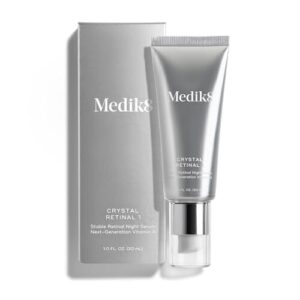
Think of this as retinal’s gentle handshake. Medik8 Crystal Retinal 1 contains 0.01% retinaldehyde, the lowest strength in the brand’s six-step ladder. Yet retinaldehyde works up to 11 times faster than retinol, so don’t underestimate it.
The 30 mL serum also includes hyaluronic acid, glycerin, and vitamin E, which keep skin hydrated and comfortable. It’s gluten-free and absorbs quickly without feeling greasy.
The catch? Some users mention a misshapen tube and shipping dents. Expect results over several weeks, not overnight. It costs $56.
| Best For | Skincare beginners and people with sensitive skin who want a gentle, hydrating introduction to retinaldehyde for smoother, brighter skin. |
|---|---|
| Active Ingredient | 0.01% Retinaldehyde |
| Size | 1 oz (30 mL) |
| Price | $56 |
| Format | Lightweight tube |
| Fragrance | N/A |
| Skin Suitability | Sensitive skin, beginners |
| Additional Features |
|
- Contains 0.01% retinaldehyde, which works up to 11 times faster than retinol while staying gentle enough for beginners.
- Includes hyaluronic acid, glycerin, and vitamin E for deep hydration, and it is gluten-free.
- Absorbs quickly with a lightweight, non-greasy feel, and helps brighten and even out skin tone.
- The packaging is described as cheap and awkward, with a misshapen tube.
- Some users report shipping damage, such as dented tubes and a missing box.
- Results take several weeks to show, and at $56 for 1 oz it is not an overnight fix.
3. Avene Retrinal 0.1% Anti-Aging Cream
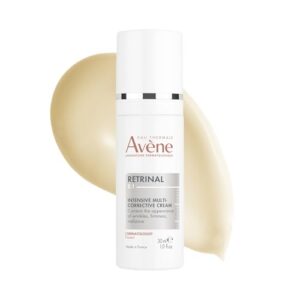
Ready for a stronger step up? Avene Retrinal 0.1% Anti-Aging Cream packs 0.1% retinaldehyde into a lightweight, fragrance-free formula made for sensitive skin. It targets fine lines, uneven texture, and dull tone, and it may help with dark circles and adult acne too.
Start twice weekly, then build up slowly. Pair it with daily sunscreen.
The 30 mL tube costs €60.59, which some find pricey. A few users report pilling, irritation, or an odd smell, so always patch test first.
| Best For | People with sensitive skin who want a gentle, fragrance-free retinaldehyde cream to target fine lines, uneven texture, and dull tone, and who are willing to use sunscreen every day. |
|---|---|
| Active Ingredient | 0.1% Retinaldehyde |
| Size | 1 fl oz (30 mL) |
| Price | €60.59 |
| Format | Lightweight cream |
| Fragrance | Fragrance-free |
| Skin Suitability | Sensitive skin |
| Additional Features |
|
- Contains 0.1% retinaldehyde in a lightweight, fragrance-free formula made for sensitive skin.
- Helps smooth fine lines and deep wrinkles, improve skin texture, and brighten overall tone.
- May also help with dark circles and adult acne while supporting skin elasticity and hydration.
- Some users report irritation or pilling, especially when it is used more often.
- A few reviewers notice an unpleasant odor despite the fragrance-free claim.
- At €60.59 for 30 mL, some customers find it expensive, and it needs daily sunscreen for the best results.
4. La Roche-Posay Redermic R Cream
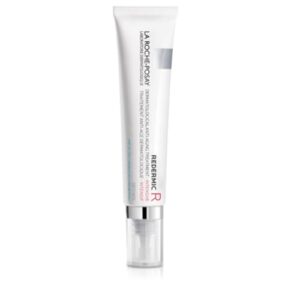
Prefer a gentler route? La Roche-Posay Redermic R Cream pairs pure retinol with a Retinol Booster Complex to boost results and ease discomfort. Its micro-exfoliating LHA smooths the surface cell by cell, so forehead lines and crow’s-feet look softer. The texture is lightweight and velvety, never greasy.
Use it at night, layer moisturizer over it, and wear sunscreen by day. Sensitive skin copes well, but the fragrance can bother some people, and the brand doesn’t list the exact retinol strength.
| Best For | People with sensitive skin who want a gentle nighttime retinol to soften wrinkles, fine lines, and uneven texture without a greasy feel. |
|---|---|
| Active Ingredient | Pure retinol |
| Size | 1 oz (28.35 g) |
| Price | N/A |
| Format | Tube |
| Fragrance | Heavy fragrance |
| Skin Suitability | Sensitive skin compatible |
| Additional Features |
|
- Pairs pure retinol with a Retinol Booster Complex to boost results and reduce discomfort.
- Micro-exfoliating LHA smooths the surface cell by cell, softening lines on the forehead, upper lip, and around the eyes.
- Lightweight, velvety, non-greasy texture leaves skin soft and luminous, and layers well under moisturizer.
- The heavy fragrance may irritate some users, and there is no fragrance-free version.
- Best used at night, and daytime use requires sunscreen to avoid sun sensitivity.
- The exact retinol concentration is not disclosed on the packaging.
5. The Ordinary 0.5% Retinol Squalane Serum

Ready for more strength? The Ordinary 0.5% Retinol Squalane Serum is a step up for people who’ve already built tolerance to lower retinol. It fades age spots and dark discoloration on your face and body, while the squalane base adds moisture to offset dryness.
A 1 fl oz bottle costs just $9.30. Store it in the fridge once opened, and never pair it with another retinoid. First-timers should skip it and start lower. Wear broad-spectrum sunscreen every single morning, too.
| Best For | People who have already built tolerance to lower-strength retinol and want a moderate step up to fade age spots and dark discoloration on the face and body. |
|---|---|
| Active Ingredient | 0.5% retinol |
| Size | 1 fl oz (30 mL) |
| Price | $9.30 |
| Format | Serum (bottle) |
| Fragrance | N/A |
| Skin Suitability | Intermediate users |
| Additional Features |
|
- Fades age spots and dark discoloration on the face and body while improving skin texture and tone
- Squalane base adds moisture to offset retinol-induced dryness
- Can be used on the face, neck, chest, hands, and arms, and costs just $9.30 for 1 fl oz
- Not suitable for first-time retinol users, who should start with a lower concentration
- Must be refrigerated after opening to preserve potency
- Cannot be combined with other retinoids, and daily sunscreen is essential
6. Neutrogena Rapid Wrinkle Repair Serum
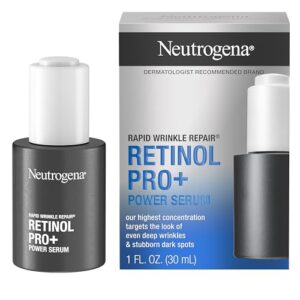
Neutrogena’s Rapid Wrinkle Repair Serum is another one for experienced users. It’s the highest concentration pure retinol serum in the Neutrogena line, so it isn’t a starter product.
Used nightly, it targets deep wrinkles and stubborn dark spots, and you may notice better radiance and firmness within two weeks. A soothing complex helps minimize irritation, though burning or itching can still happen. The 1 fl oz bottle is fragrance-free and dye-free.
Apply it at night, and wear sunscreen every morning.
| Best For | Experienced retinol users who want a strong nightly serum to target deep wrinkles and stubborn dark spots. |
|---|---|
| Active Ingredient | Pure retinol |
| Size | 1 fl oz (30 mL) |
| Price | N/A |
| Format | Serum |
| Fragrance | Fragrance-free |
| Skin Suitability | Experienced users |
| Additional Features |
|
- Highest concentration pure retinol serum in the Neutrogena line, aimed at deep wrinkles and stubborn dark spots
- May improve radiance and firmness within two weeks of nightly use
- Fragrance-free, paraben-free, mineral-oil-free, and dye-free, with a soothing complex to help minimize irritation
- Can still cause burning or itching for some users
- Not meant for retinol beginners
- Needs nightly application and daily sunscreen to avoid photosensitivity
Frequently Asked Questions (FAQs)
Should beginners use retinol or retinoid?
Start with over-the-counter retinol. It’s gentler, so you’ll face fewer side effects like peeling and redness. Adapalene is another easy entry point. Prescription retinoids like tretinoin hit harder, so save them for later.
Is retinoid better than retinol?
Say your friend Maya has stubborn jawline breakouts. Her retinol cream did nothing, so her dermatologist prescribed adapalene. Within weeks, things calmed down. Better isn’t universal, though. For acne, prescription retinoids usually win; for gentle aging care, retinol works.
What works 11 times faster than retinol?
Think of retinal as the espresso shot of retinoids. It works up to 11 times faster than retinol on skin cells, because it skips a step. Retinol needs two conversions. Retinal needs just one.
Can I put retinol on my crows’ feet?
Think of your crow’s feet as a delicate silk scarf.
Yes, you can use retinol there, but go gently. Choose an eye-specific formula, apply a pea-size amount, and skip eyelids. Stop if persistent stinging appears.
Most people notice improvements within 4–6 weeks of consistent nightly use, with more visible results after 3–6 months.
Can you use retinoids while pregnant or breastfeeding?
Think of pregnancy as a no-retinoid zone. Retinoid pregnancy safety is clear: stop immediately if you suspect you’re pregnant, and ask your dermatologist about breastfeeding. Try azelaic acid or bakuchiol instead.
Can retinol be layered with vitamin C?
You’d think mixing them could start a skincare war. It won’t. Retinol and vitamin C can share a routine, though your skin type matters. Sensitive skin may react, so try vitamin C by day, retinol at night.
Is it safe to combine retinoids with exfoliating acids?
Think of your skin as a freshly sanded table. Adding more sanding, or stripping it again, just rubs it raw. Retinoids plus exfoliating acids can be done, but they’re a risky pair on one night.
Do retinoids thin the skin over time?
No, retinoids don’t thin your skin long term. They thicken it. Collagen production climbs, and the living epidermis builds up.
What feels like thinning is peeling, a skin barrier side effect at a higher concentration.
Can retinoids be used around the lips and nose?
Picture the skin around your mouth: thin as tissue paper, always damp, always moving. Retinoids can go on the perioral skin and nasal sidewalls, but keep them off your lips and inner nostrils.
Conclusion
Retinol is often estimated to be about 20 times weaker than tretinoin, and that single gap shapes everything you’ve just read. So, what is the difference between retinol and retinoid? It comes down to conversion steps and strength, not good versus bad.
Start low, go slowly, and let your skin set the pace. Pick the formula that matches your tolerance, protect it with sunscreen, and give it three months. Patience is the real active ingredient.