This site is supported by our readers. We may earn a commission, at no cost to you, if you purchase through links. This content is for general informational and educational purposes only and is not a substitute for professional medical, dermatological, or nutritional advice.

Most store-bought toners contain ingredients you’d need a chemistry degree to pronounce—and a decent salary to keep buying. The skin on your face doesn’t care about fancy packaging. It cares about pH balance, hydration, and protection from daily oxidative stress.
Here’s what most people don’t realize: some of the most effective toning ingredients sit in your kitchen right now. Rose water, witch hazel, apple cider vinegar—each one does a specific job, and each one costs pennies per use. The 10 best homemade skin toners for glowing skin aren’t complicated formulas. They’re smart combinations of ingredients that actually work, built exactly for your skin type.
Table Of Contents
- Key Takeaways
- Benefits of Using Homemade Skin Toners
- Essential Ingredients for DIY Skin Toners
- Refreshing Cucumber and Aloe Vera Toner
- Brightening Lemon and Honey Toner
- Calming Chamomile and Lavender Toner
- Antioxidant-Rich Green Tea and Ginseng Toner
- Nourishing Rosewater and Glycerin Toner
- Clarifying Apple Cider Vinegar and Tea Tree Toner
- Rejuvenating Frankincense and Myrrh Toner
- Balancing Witch Hazel and Peppermint Toner
- Frequently Asked Questions (FAQs)
- Which homemade toner is best for glowing skin?
- Should you make your own homemade facial toner?
- How to use face Toner?
- Are homemade toners good for your skin?
- What is the best toner for acne?
- What are the benefits of homemade face Toner?
- How to make your own toner for skin?
- Which toner gives glowing skin?
- What is the most natural toner for face?
- Can I use milk as a homemade skin toner?
- Conclusion
Key Takeaways
- Kitchen staples like rose water, witch hazel, apple cider vinegar, and green tea do the same job as pricey store toners — for pennies per use.
- Every DIY toner works best when matched to your skin type: witch hazel for oily, glycerin for dry, chamomile and lavender for sensitive.
- Dilution isn’t optional — ACV and tea tree oil need precise ratios (1:3 and 1% respectively) to deliver results without damaging your skin barrier.
- Homemade toners stay fresh for only 7–10 days, so small batches, sterile bottles, and refrigeration aren’t extras — they’re the rule.
Benefits of Using Homemade Skin Toners
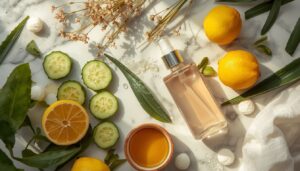
Switching to homemade toners isn’t just a trend — it’s a genuinely smarter way to care for your skin. You get to control exactly what goes on your face, which changes everything.
These natural skin toner recipes make it surprisingly simple to mix up something tailored exactly to your skin type.
Here’s why so many people are ditching the store-bought stuff.
Natural Ingredients for Healthier Skin
What you put on your skin matters — and nature has a lot to offer. Ingredients like rose water, cucumber, Aloe vera, and green tea work with your skin instead of against it. Apple cider vinegar balances pH. Aloe vera soothes and hydrates. Green tea delivers antioxidant protection. Here’s why natural toners simply make sense:
- Anti-Inflammatory properties calm redness and irritation.
- Licorice Root Brightening fades uneven tone naturally.
- Papaya Enzyme Exfoliation gently resurfaces without harsh scrubbing.
- Jojoba Oil Balancing and Shea Butter Hydration nourish without clogging pores.
These toners also provide anti-inflammatory activity benefits(https://www.trvst.world/sustainable-living/natural-skin-care-ingredients/) for acne and redness.
Cost-Effective Skincare Solutions
Great skin doesn’t have to cost a fortune. Natural ingredients like witch hazel, rose water, and apple cider vinegar run just pennies per application — a fraction of what department store toners charge. That’s the real power of DIY toners and cost‑effective skincare solutions.
- Bulk Ingredient Purchasing stretches your budget across dozens of batches.
- Reusable Glass Bottles eliminate single‑use packaging costs entirely.
- Minimalist Formulations mean fewer products, less spending, more glowing skin.
Smart DIY Batch Scaling and Seasonal Ingredient Swaps keep your DIY Skincare Recipes fresh and affordable year‑round.
Customizable for Different Skin Types
One formula doesn’t fit every face. That’s where DIY Skincare Recipes shine — you control everything.
Ingredient Ratio Modulation and Acidity Level Tuning let you dial in exactly what your skin needs.
Oily skin? Reach for witch hazel. Dry? Glycerin-based Base Carrier Variation works beautifully.
Seasonal Ingredient Swaps keep your Customizable Skin Care Formulations fresh.
Targeted Oil Regulation, Natural Ingredients, glowing skin — all on your terms.
Avoiding Harsh Chemicals and Additives
Customizing your formula is enabling — but knowing what to leave out matters just as much as what you put in.
Commercial toners often hide synthetic fragrance, parabens, and drying alcohols behind fancy labels. Alcohol-Free Toners and Fragrance-Free Formulas cut through that noise entirely.
With Minimalist Ingredient Lists, you know exactly what’s touching your skin. Here’s what you skip:
- Synthetic fragrance and parabens — common irritants that sensitive skin simply doesn’t need.
- Harsh preservatives — Preservative-Free Recipes stay fresh with refrigeration instead.
Respect Essential Oil Limits, use natural ingredients wisely, and glowing skin follows naturally.
Essential Ingredients for DIY Skin Toners
The right ingredients make all the difference between a toner that actually works and one that just sits on your shelf. A handful of simple, natural staples can tackle everything from oily skin to dryness — no pharmacy trip needed.
Here are the five essential ingredients every DIY toner starts with.
Apple Cider Vinegar for PH Balance

Apple cider vinegar is quietly one of the hardest-working natural ingredients in DIY toners. Its pH measurement generally sits between 2 and 3 — genuinely acidic, which is why proper dilution isn’t optional.
A 1:3 ACV-to-water ratio activates Acidic Buffering that helps your Skin Barrier Impact without stripping it. Contact Duration matters too — leave‑on toners need careful dilution, since your skin absorbs exposure longer.
Stay within a Safety pH Range by never going stronger than 1:3. The result? A simple, cost‑effective toner delivering real pH balance and glowing skin benefits.
| Skin Concern | ACV Ratio | Application Frequency |
|---|---|---|
| Acne‑prone | 1:3 with water | 2–3x weekly |
| Oily skin | 1:3 with witch hazel | Every other day |
| Uneven texture | 1:4 diluted | Start 2x weekly |
| Sensitive skin | 1:5 or avoid | Patch test first |
Witch Hazel as a Natural Astringent
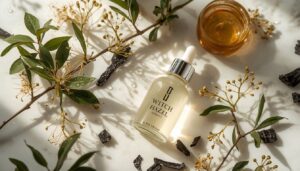
Witch hazel earns its place in DIY toners because it genuinely produces outcomes. It’s a natural astringent packed with tannins — and that Tannin Astringency Mechanism is what contracts your pores and tightens skin tissue on contact.
Always choose Alcohol-Free Witch Hazel to protect skin pH balance and avoid unnecessary dryness.
Here’s why it belongs in your formula:
- Tightens pores by drawing out excess oil without stripping skin
- Calms redness through natural anti-inflammatory polyphenols
- Balances sebum for a cleaner, healthier-looking complexion
Follow Dilution Ratio Guidelines, always do Safety Patch Testing first, and pair it with a Moisturizer Follow-Up for glowing skin.
Rose Water for Hydration and Soothing

Rose water might just be the most underrated ingredient in DIY skincare. It’s gentle, effective, and works on almost every skin type. Think of it as pH Balancing and Barrier Support in one simple bottle.
If you want to put it to the test, this non-irritating face mask recipe for sensitive skin is a great place to start.
It delivers Cooling Mist hydration, addresses Redness Reduction, and offers real Sensitive Relief — no harsh chemicals needed.
| Benefit | Skin Concern | How to Apply |
|---|---|---|
| pH Balancing | Tightness after cleansing | Cotton pad toner |
| Cooling Mist | Post-sun irritation | Direct face spritz |
| Redness Reduction | Reactive, sensitive skin | Rose water toner base |
Add it to your rose water toner for instant glowing skin hydration.
Green Tea for Antioxidant Properties
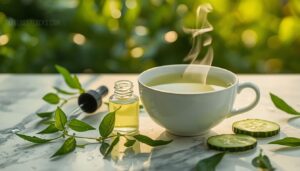
Green tea is one of the hardest-working ingredients you can add to a homemade toner. Its catechin profile — especially EGCG — donates electrons to neutralize free radicals before they break down your skin cells.
That’s cellular protection you can actually brew at home. Steeping temperature matters for polyphenol extraction: hotter water pulls more antioxidants from the leaf.
Cool your green tea toner before applying. The antioxidant benefits are real, and your skin shows it.
Essential Oils for Targeted Skin Benefits
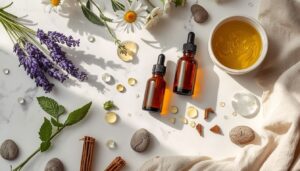
Think of essential oils as the specialists in your toner lineup — each one hired for a specific job. A few drops go a long way, so follow dilution guidelines: 2–3 drops per ounce of toner base. Always pair them with a carrier oil or water base for safe skin sensitivity testing before full use.
- Lavender essential oil calms redness and soothes irritated skin
- Tea tree essential oil fights acne-causing bacteria effectively
- Frankincense essential oil helps firmer, more youthful-looking skin
- Peppermint essential oil refreshes oily, congested skin with a cooling effect
- Chamomile reduces inflammation for sensitive complexions
Beyond skin perks, you’ll love the aromatherapy benefits during your routine. For shelf-life management, use within 7–10 days and refrigerate. Smart carrier oil pairing keeps every drop working safely.
Refreshing Cucumber and Aloe Vera Toner
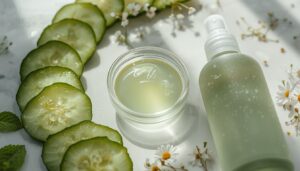
Cucumber and aloe vera might just be the most underrated duo in your skincare lineup.
Together, they cool, calm, and hydrate without clogging pores or irritating sensitive skin.
Here’s what makes this toner worth adding to your routine.
Cooling and Hydrating Properties
Cucumber and aloe vera are a dream team for hot, thirsty skin. Cucumber delivers instant evaporative cooling — your face literally feels the temperature drop. Aloe vera follows with humectant hydration, locking in moisture the way glycerin and beta glucan barrier ingredients do.
Add rose water for gentle pH balance, green tea for antioxidant backup, and a touch of mint for extra cooling, mists, freshness.
Panthenol moisture support rounds it all out, keeping skin comfortable and dewy — not tight or stripped.
Soothing Irritated and Inflamed Skin
When skin gets red and reactive, aloe vera goes to work fast. Its anti-inflammatory compounds calm irritation at the source — no harsh steps needed. Pair it with cucumber’s cooling herbal extracts and rose water’s gentle pH support, and you’ve got solid barrier repair strategies in one bottle.
- Aloe vera reduces redness and aids skin healing
- Chamomile and lavender offer anti-inflammatory essential oil benefits
- Rose water stabilizes pH without stripping moisture
- Gentle cleansing techniques prep skin before applying
- Always follow with a moisturizer follow-up to seal in relief
Balancing Oily Skin Types
Calming irritation is only half the battle — oily skin needs sebum regulation techniques too. That’s where this toner really earns its place.
Cucumber and aloe vera are standout natural ingredients in DIY toners because they deliver oil control without triggering rebound oiliness. No tight, stripped feeling afterward.
- Cucumber acts as a gentle astringent, shrinking pores visibly
- Aloe’s lightweight gel hydrates without greasiness
- Witch hazel aids nighttime oil control overnight
- Pairs beautifully with a lightweight moisturizer pairing post-application
- Safe under non-comedogenic sunscreen during the day
Sebum regulation never felt this revitalizing.
Recipe and Application Instructions
Ready to make it? Blend half a cucumber with 2 tablespoons of aloe vera gel until smooth, then strain through a fine cloth. That’s your mixing technique done.
Pour into a dark glass bottle and refrigerate — your storage guideline is 7–10 days max.
Before going full-face, follow the patch test procedure on your inner arm for 24 hours. Apply with a cotton pad after cleansing. Glowing skin, incoming.
Since imports carry a premium, it’s worth reading this tsubaki oil vs argan oil comparison to see which one fits your budget and skin type best.
Brightening Lemon and Honey Toner
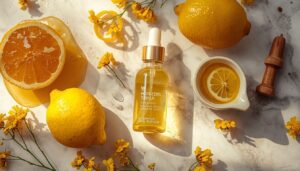
Lemon and honey make a surprisingly powerful team for dull, uneven skin. Together, they exfoliate, fight bacteria, and gently brighten — all without a single synthetic ingredient.
Here’s what makes this toner worth adding to your routine.
Natural Exfoliation With Citric Acid
Lemon juice is a quiet overachiever. Its natural citric acid exfoliation works by loosening the bonds holding dead skin cells together — no scrubbing required.
Think of it as a gentle acidic peel that resets your surface.
This acidic skin reset fades dull patches and helps radiant skin renewal over time.
Add a few drops to your DIY toner, diluted 1:1 with water, and use it twice weekly.
Antibacterial Properties of Honey
Honey isn’t just sweet — it’s a skincare workhorse. When you add it to your DIY toner, you’re layering in several natural antibacterial mechanisms that genuinely protect your skin. Its low pH acidity creates a hostile environment for acne-causing bacteria. Osmotic pressure pulls moisture from bacterial cells, effectively stopping them in their tracks. Then come the phenolic antioxidants, hydrogen peroxide activity, and even bee defensin-1 — an antimicrobial peptide bees produce naturally.
Here’s what honey brings to your glowing skin routine:
- Fights bacteria through multiple pathways simultaneously
- Delivers hydrogen peroxide without harsh bleaching effects
- Phenolic antioxidants neutralize free radicals
- Bee defensin-1 disrupts bacterial membranes directly
- Natural ingredients that won’t strip your skin barrier
Promoting Even Skin Tone
Dark spots don’t fade overnight — but consistency does the work.
The citric acid in lemon acts as a gentle acid exfoliation, nudging dull surface cells away so brighter skin shows through.
Honey assists that process while keeping your barrier intact, much like ceramide barrier repair does in commercial formulas.
Together, they function as a spot targeted toner that gradually evens tone.
Think of this duo as your natural ingredients for glowing skin — simple, steady, and surprisingly effective.
Cautions for Sun Exposure
That brightening duo comes with one big caveat — citric acid makes your skin more photosensitive. Translation: sunburn and new dark spots come faster, even on cloudy days. Here’s stay protected:
- Apply broad-spectrum SPF 30+ every morning — window UV penetration is real, even indoors near glass.
- Wear UV-blocking clothing and a wide-brimmed hat during peak sun hours, roughly 10 AM to 4 PM.
- Watch out for reflective surface risk — sand, water, and snow increase exposure greatly.
- Follow sunscreen reapplication timing: every two hours outdoors, no exceptions.
Smart photoprotection keeps your results working for you.
Calming Chamomile and Lavender Toner

If your skin is constantly red, reactive, or just plain cranky, this toner might be new best friend.
Chamomile and lavender work together to calm irritation, ease stress, and treat sensitive skin with the gentleness it deserves.
Here’s everything you need to know to make and use it right.
Reducing Redness and Inflammation
Redness doesn’t have to run your morning. Chamomile and lavender work as Anti-Inflammatory Extracts that calm overworked skin without stripping it bare.
Pair them with rose water and aloe vera for a real Hydration Boost and Barrier Strengthening effect.
A Cooling Spritz of cucumber water adds instant relief.
Keep your mix at a Low-pH Dilution to stay anti-inflammatory and gentle.
| Ingredient | Benefit | Best For |
|---|---|---|
| Chamomile | Reduces visible redness | Sensitive skin |
| Lavender | Calms surface irritation | Reactive skin |
| Rose water | Soothes dryness-linked blotchiness | Dry or combo skin |
| Aloe vera | Cools and hydrates | Inflamed skin |
| Cucumber | Relieves tight, hot sensation | Oily, irritated skin |
Stress-Relieving Aromatherapy Benefits
Your skincare routine can double as a stress reset. The lavender’s calming scent signals your nervous system to slow down — science backs that up. Chamomile follows suit, gently easing anxiety through consistent aromatherapy benefits. Think of it as a bedtime aromatherapy routine built right into your toner.
For a soothing evening ritual, explore how to use an essential oil diffuser to extend those calming aromas beyond your skincare.
- Lavender and frankincense together create a grounding, spa-like moment
- Bergamot mood boost lifts your energy without overwhelming sensitive skin
- Diffuser inhalation relaxation works similarly — this toner brings that effect directly to your face
Always follow essential oil safety: dilute properly, always.
Suitable for Sensitive Skin
Sensitive skin needs a toner that works with it, not against it.
chamomile and lavender blend checks every box — alcohol-free, fragrance-free, and built on pH balanced formulas that hover right in your skin’s comfort zone (4.5–5.5).
Barrier-boosting additives like glycerin and aloe lock in moisture without triggering reactions.
| Ingredient | Benefit for Sensitive Skin |
|---|---|
| Chamomile tea | Calms redness, reduces inflammation |
| Aloe vera | Hydrates, soothes irritated barrier |
| Glycerin | Retains moisture, eases dryness |
patch test protocol before applying these DIY skin toners fully.
Preparation and Storage Tips
Once your chamomile-lavender blend is ready, storing it right makes all the difference.
- Mix in sanitized containers and pour into a sterile glass spray bottle immediately.
- Use light-protective bottles — dark glass shields your preservative-free formula from breakdown.
- Smart refrigeration practices: store toward the back of the fridge, not the door.
- Commit to shelf-life monitoring with batch labeling — discard after 7–10 days.
Antioxidant-Rich Green Tea and Ginseng Toner
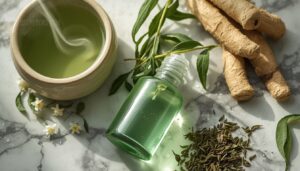
Green tea and ginseng are a powerhouse duo that your skin will thank you for. Together, they fight the daily damage that quietly ages your skin before its time.
Here’s what makes this toner worth adding to your routine.
Fighting Free Radicals and Premature Aging
Every sip of green tea fights aging — and so does wearing it.
Green tea’s polyphenols neutralize free radicals before they break down collagen or trigger inflammation, while ginseng aids mitochondrial repair at the cellular level. Together, these natural ingredients act like a UV protection strategy in a bottle, preserving skin elasticity and keeping your complexion on the right side of the anti‑aging conversation — genuinely glowing skin, not just hopeful thinking.
Green tea polyphenols and ginseng team up to neutralize free radicals and preserve skin elasticity from the inside out
Boosting Skin’s Natural Defenses
Fighting free radicals is only half the story. Your skin also needs a stronger defense system from the inside out.
That’s where green tea and ginseng really shine. Together, they support your skin barrier through antioxidant benefits and anti‑inflammatory action that calm everyday damage. Think of it as Lipid Barrier Repair and Microbiome Balance working quietly in the background.
Here’s what this toner helps deliver:
- Antimicrobial Peptide Boost to guard against bacteria
- UV Defense Support that buffers environmental stress
- Ceramide Enrichment to seal moisture in
- antibacterial protection that keeps breakouts in check
These natural ingredients strengthen what’s already there.
Energizing and Revitalizing Properties
Green tea does more than defend — it genuinely wakes your skin up. The catechins in brewed green tea deliver a real Caffeine Boost effect, improving how energized and bright your complexion looks.
Pair that with ginseng’s circulation support, and you’ve got a toner that fights dullness from two angles.
Add a drop of peppermint or eucalyptus essential oils for Eucalyptus Invigoration that makes application feel invigorating, not routine.
Want extra radiance? A pinch of Turmeric Radiance or a splash of rose water rounds things out beautifully. Tired skin doesn’t stand a chance.
Incorporating Into Daily Skincare Routine
Once you’ve made this toner, the real magic comes from using it consistently. Apply it after cleansing on damp skin — that’s your Morning Layering Order sorted. Gently pat it in before serums and moisturizer for maximum Skin Barrier Support and Hydration Boost Steps.
- Morning: Apply for glowing skin, then finish with Sunscreen Pairing — acidic ingredients increase sun sensitivity.
- Evening Application Timing: Use before heavier creams to lock in skin hydration overnight.
- Twice daily use: Start once daily, then build up if your skin feels comfortable.
Nourishing Rosewater and Glycerin Toner
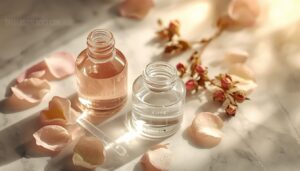
If your skin feels tight, dull, or thirsty by midday, this toner was basically made for you. Rosewater and glycerin are a simple pair that punch well above their price tag.
Here’s what this combo can do for your skin.
Deep Hydration for Dry Skin
Dry skin doesn’t just feel tight — it’s actually losing moisture faster than it can hold it. That’s where glycerin steps in as a true Humectant Boost, pulling water into your skin for real moisture retention.
Rosewater adds NMF Support, gently reinforcing your skin’s natural balance.
Use the Layering Technique: apply this toner on damp skin, then seal with moisturizer for lasting Barrier Repair.
Balancing Skin’s Natural Oils
Balancing skin’s natural oils starts with understanding what oily skin actually needs — not stripping, but smarter hydration.
Rosewater and glycerin work together for true sebum regulation without over-drying. Glycerin acts through jojoba oil mimicry, attracting moisture similarly to your skin’s own lipids. Rosewater helps pH stabilization and gentle oil control.
Together, they deliver barrier hydration using simple, natural ingredients — making this one of the most effective DIY toners for achieving genuinely glowing skin daily.
Enhancing Skin’s Natural Glow
Want that lit-from-within look without a cabinet full of serums? Rosewater and glycerin deliver it simply. Glycerin pulls moisture into your skin cells — think Hydration Layer Optimization in a bottle — leaving skin plumper and more light-reflective.
Here’s how this duo brightens your complexion naturally:
- Glycerin attracts environmental moisture, supporting skin brightening from the inside out.
- Rosewater’s antioxidant rich compounds act like gentle Micro-Exfoliation Techniques, clearing dullness.
- Together, they mimic Radiance-Boosting Peptides by smoothing texture for natural glowing skin.
Simple natural ingredients. Real results.
Long-Term Benefits for Skin Health
Consistency is where rosewater and glycerin really shine. Use this toner daily, and your skin starts working with you instead of against you.
- Barrier Strengthening locks in Hydration Retention, reducing dryness and fine lines over time.
- Microbiome Balance keeps skin calm, supporting Acne Prevention and Antioxidant Longevity.
- Antioxidant benefits protect your skin barrier, delivering glowing skin and real anti-aging results.
Clarifying Apple Cider Vinegar and Tea Tree Toner

If your skin often breaks out and shines by noon, this toner was practically made for you. Apple cider vinegar and tea tree oil work as a tag team against acne, excess oil, and stubborn blemishes.
Here’s what you need to know to use it safely and get real results.
Combating Acne and Blemishes
Think of this toner as skin’s reset button.
Apple cider vinegar restores pH balance while tea tree oil delivers powerful inflammation reduction right at the source.
Together, their essential oil synergy targets acne treatment without stripping your barrier.
Apply it as a spot treatment timing strategy — dab it on after cleansing, follow with a non-comedogenic moisturizer, and let this natural astringent DIY skincare combo do its work.
Regulating Sebum Production
Oily skin isn’t random — hormonal influence and insulin impact both drive your sebaceous glands into overdrive.
That’s where this toner earns its keep.
Apple cider vinegar targets sebum regulation by restoring your skin’s pH, while tea tree oil controls oil at the surface.
Together, they calm gland density hotspots like your T-zone without stripping moisture.
Proper Dilution for Skin Safety
Getting the dilution ratios right is non‑negotiable here. Apple cider vinegar goes in at 1:3 with water — not stronger. Tea tree oil stays at or below 1% for leave‑on facial use. Measurement accuracy matters every single batch; eyeballing concentrations risks damaging your skin barrier.
- Always patch test on your inner arm first
- Use distilled water for batch consistency
- Measure in teaspoons or milliliters — never guess
- Monitor skin pH with strips if possible
- Label each preservative‑free bottle with its prep date
Frequency of Use for Best Results
Now that dilution is dialed in, frequency is the next thing to master. Start with once daily — evening works best since your skin repairs overnight. After a week of no irritation, add a morning application.
For your skin type frequency guide: oily skin can handle twice daily, while dry or sensitive skin does better every other day.
Patch test timing matters too — wait a full 24 hours before committing to a routine.
Seasonal frequency adjustments help, since winter skin needs less acid exposure than summer.
Rejuvenating Frankincense and Myrrh Toner
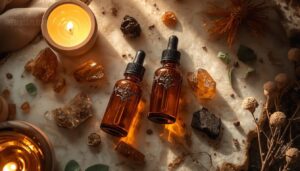
Frankincense and myrrh aren’t just for ancient rituals — they’re serious skincare ingredients that mature skin genuinely loves.
This toner works hard to firm, smooth, and restore that youthful bounce you thought was gone for good. Here’s what makes it worth adding to your nightly routine.
Anti-Aging Properties for Mature Skin
Mature skin deserves more than guesswork. Frankincense and myrrh are among the most powerful AntiAging Natural Ingredients you can add to your DIY Facial Toner Guide arsenal.
These botanicals drive a real Collagen Boost, supporting skin elasticity from the inside out. Think of them as nature’s answer to Peptide Infusion — minus the lab price tag.
Here’s what they bring to your routine:
- Stimulate collagen synthesis for noticeably firmer, glowing skin
- Deliver Natural Antioxidant Sources that neutralize free-radical damage daily
- Support Lipid Barrier Repair to reduce dullness and rough texture
- Encourage Micellar Renewal for smoother, more even-looking mature skin
Improving Skin Elasticity and Firmness
Frankincense and myrrh act like Elastin Strengthening Antioxidants and Collagen Stimulating Peptides in one bottle. They support collagen synthesis and help skin bounce back with real firmness.
Add Barrier Reinforcing Humectants like glycerin, and you get a hydrating, antiaging toner that works on multiple levels. These Anti-Inflammatory Botanicals calm irritation while Mild AHA Exfoliation keeps texture smooth — so your skin looks tighter, not just treated.
Reducing Appearance of Fine Lines
Fine lines show up louder when skin loses moisture and smoothness. That’s where frankincense earns its reputation — it promotes collagen synthesis and gentle exfoliation, keeping texture even. Myrrh adds antioxidant protection that shields against daily damage. Together, they work toward real moisture plumping and glowing skin over time.
- Dehydrated skin makes fine lines look sharper — consistent antiaging toners help.
- Antioxidant-rich ingredients slow the surface damage that deepens creases.
- sunscreen friendly routine locks in every brightening, irritation reduction benefit you’ve built.
Luxurious Aromatherapy Experience
Close your eyes for a second — that warm, resinous scent rising from your frankincense and myrrh essential oil toner? That’s scent layering doing real work.
Base notes settle slowly, deepening the aromatherapy benefits with every mist.
Pair mindful breathing with a temperature sensory boost by chilling your elegant bottle design overnight. Add rose water for mood-enhancing blends that leave skin genuinely glowing.
Balancing Witch Hazel and Peppermint Toner
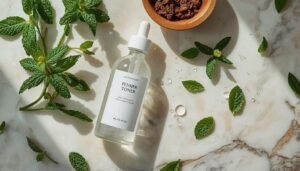
Witch hazel and peppermint might just be your skin’s new best friends — especially if oily, congested skin is your daily struggle. toner combo works hard: tightening, invigorating, and calming all at once.
Here’s how to make it work for you.
Tightening Pores and Reducing Oiliness
Oily skin isn’t just annoying — it’s your skin’s way of asking for balance, not punishment. That’s where Witch Hazel Pore Tightening Toner shines.
Witch hazel is a Natural Astringent that contracts pores and manages Oil Control without stripping your barrier. Pair it with a Niacinamide Boost to regulate sebum at the source, or add a Salicylic Acid Treatment to clear congestion inside pores.
Here’s what this toner actually does:
- Shrinks the look of enlarged pores through natural astringent action
- Controls shine without the rebound oiliness that over-stripping causes
- Barrier Repair Hydration so skin stays balanced, not tight
- Works beautifully after Clay Mask Integration to deep-clean and improve texture
- Silica Powder Finish can extend that matte effect throughout the day
DIY Toner Formulations with Natural Ingredients give you real Pore Tightening results — no harsh chemicals needed.
Refreshing and Invigorating Skin
Think of this toner as your morning espresso — minus the caffeine crash.
Peppermint’s menthol wakes up circulation instantly, giving skin that sought-after Sea Breeze Mist freshness. Add cucumber cooling tones, green tea antioxidants, and a splash of rose water, and you’ve got a Berry Burst of benefits in one spritz.
Ice Cube Spritz method amplifies that Coconut Refresh feeling. Mint and Watermelon Hydration round it out beautifully.
Soothing Minor Skin Irritations
Witch hazel paired with peppermint does more than refresh — it actively calms angry skin.
Witch hazel reduces redness without stripping moisture, while aloe vera and cucumber deliver a Beta-Glucan Relief effect that eases inflammation fast.
Add a splash of rose water or chamomile, and you’ve got a natural Allantoin Enriched Toner that rivals any drugstore formula.
For persistent irritation, an Oatmeal Soothing Mask or Licorice Root Calmer layered after toning gives sensitive skin the Niacinamide Hydrating Spray support it genuinely needs.
Incorporating Into Morning Skincare Routine
After calming irritated skin, your next move is locking in that work every morning. Apply your DIY facial toner within one to three minutes of cleansing — that Cleansing-to-Toner Interval matters.
Use the Hand-Press Application method for gentle absorption, then follow with moisturizer and sunscreen for full Sunscreen Compatibility. It’s a simple skin routine that delivers real hydration boost and lasting pH balance.
Frequently Asked Questions (FAQs)
Which homemade toner is best for glowing skin?
For glowing skin, ingredient synergy matters most. A rose water and glycerin toner hits the sweet spot — hydrating, pH-balancing, and gentle enough for daily use.
Simple, effective, and honestly hard to beat.
Should you make your own homemade facial toner?
Yes — if you know your skin and take basic precautions. DIY toner formulations with natural ingredients give you real control, cut costs, and skip harsh additives. Just patch test first.
How to use face Toner?
After cleansing, pat skin slightly damp. Apply toner using a cotton ball application or use a spray bottle.
Wait one minute — that absorption wait matters.
Then layer your serum and moisturizer right on top.
Are homemade toners good for your skin?
Think of your skin barrier as a bouncer — it decides what gets in and what doesn’t. Homemade skin toners, when made right, support that job.
Gentle ingredients like witch hazel and rose water help maintain skin pH balance without stripping moisture.
Just patch-test first and refresh your batch every week for microbial safety.
What is the best toner for acne?
For acne-prone skin, witch hazel and tea tree oil make the ideal team.
Witch hazel acts as a natural astringent, while tea tree oil addresses bacterial targeting — keeping breakouts and excess oil in check.
What are the benefits of homemade face Toner?
Homemade toners give you full control — over ingredients, strength, and cost.
You skip harsh additives, balance your skin’s pH naturally, and get fresher, more individualized results than most store-bought options ever deliver.
How to make your own toner for skin?
Making your own toner is simpler than you’d think.
Mix equal parts witch hazel, rose water, and distilled water, then add 2–3 drops of tea tree or lavender oil. Apply with a cotton pad after cleansing.
Which toner gives glowing skin?
Rose water and glycerin toners top the list for glowing skin. They deliver a Hyaluronic Acid Boost effect naturally, pulling moisture in and reflecting light for that lit-from-within look.
What is the most natural toner for face?
Pure rose water is your most natural toner option. It’s a pH balanced formula straight from nature — no fillers, no synthetics.
Just a botanical water base that hydrates, soothes, and enhances natural skin care effortlessly.
Can I use milk as a homemade skin toner?
Yes — and it works better than you’d expect.
Cold milk delivers lactic acid exfoliation plus milk moisturizing benefits in one swipe. Use pasteurized over raw milk, patch testing milk first, and refrigerate for a three-day DIY milk shelf-life max.
Conclusion
Why spend more on toners that promise everything and deliver little? skin deserves better—and now you have the recipes to prove it.
The 10 best homemade skin toners for glowing skin aren’t just budget-friendly swaps. They’re smarter choices built from ingredients your skin actually recognizes.
Pick the formula that fits your skin type, mix it fresh, and stay consistent. Real results don’t come from expensive labels.
They come from the right ingredients, used right.