This site is supported by our readers. We may earn a commission, at no cost to you, if you purchase through links. This content is for general informational and educational purposes only and is not a substitute for professional medical, dermatological, or nutritional advice.
Most people know tanning beds carry risk—but "I’ll keep my sessions short" rarely holds up without understanding what short actually means for your skin. UVA radiation, which makes up roughly 95% of the UV light reaching Earth’s surface, penetrates far deeper than a sunburn suggests, quietly degrading collagen and generating DNA damage before you feel a thing.
Cumulative exposure from indoor tanning triples melanoma risk compared to non-users—a number that deserves more attention than it gets.
Learning how to use a tanning bed safely means working with specific session limits, your Fitzpatrick skin type, your medications, and a consistent pre- and post-care routine.
Table Of Contents
- Key Takeaways
- Know Tanning Bed Risks First
- Check Your Skin Type
- Review Health and Medications
- Prepare Skin Before Tanning
- Choose Indoor Tanning Products
- Protect Eyes and Sensitive Areas
- Set Safe Session Limits
- Care for Skin Afterward
- Frequently Asked Questions (FAQs)
- How do I use a tanning bed?
- Is it safe to tan in a tanning bed?
- What are the best tanning bed tips?
- Do tanning beds cause a tan?
- Can You Tan in a tanning bed without eye protection?
- How to get the most out of a tanning bed session?
- Is there any way to safely use tanning beds?
- What is 10 minutes on a sunbed equivalent to?
- How to use a tanning bed for beginners?
- Am I supposed to flip over in a tanning bed?
- Conclusion
Key Takeaways
- UVA radiation makes up 95% of UV exposure and silently breaks down collagen and DNA with every session—damage you won’t feel until it’s already compounding beneath the surface.
- Your Fitzpatrick skin type isn’t just a starting point; it determines your session length, escalation pace, and whether indoor tanning carries an acceptable level of risk for you at all.
- Photosensitizing medications—including common antibiotics, hormonal contraceptives, and chemotherapy agents—can turn a routine session into a serious skin emergency, so reviewing your medication list before tanning isn’t optional.
- Tripling your melanoma risk compared to non-users is the documented trade-off for indoor tanning, and no combination of session limits, lotions, or precautions eliminates that cumulative UV burden.
Know Tanning Bed Risks First

Before you step into a tanning bed, it’s worth understanding exactly what you’re exposing your skin to. Tanning beds aren’t simply a controlled version of sunbathing.
They actually emit UV rays far more intense than natural sunlight, which is why knowing how UV radiation accelerates skin cancer risk can change how you think about that "healthy glow.
The radiation profile is meaningfully different, and the risks are well-documented.
Here’s what the evidence shows.
UVA Skin Damage
Unlike UVB, UVA radiation reaches deep into your dermis through deep dermal penetration, quietly triggering reactive oxygen species and oxidative stress long before any redness appears. This subclinical DNA damage is cumulative — collagen breakdown happens session after session, accelerating wrinkles and sagging.
Tanning bed hazards aren’t always visible, but UV radiation health effects accumulate silently beneath the surface every time you lie down.
UVA constitutes 95% of the UV radiation that reaches the Earth’s surface, underscoring its deep‑penetrating impact.
Skin Cancer Risk
Subclinical DNA damage doesn’t stop at wrinkles. Cumulative UV dose is directly tied to melanoma risk — tanning bed users are nearly three times more likely to develop it than non-users. Genetic susceptibility amplifies this further; family melanoma history and phenotype vulnerability mean your baseline risk isn’t everyone’s baseline.
Tanning bed users are nearly three times more likely to develop melanoma, and your genetics may make that risk even higher
Prior skin cancer makes these tanning bed hazards especially serious. UV radiation health effects compound with every session, escalating dangers for those with a history of the disease.
The interplay of UV radiation health effects and individual vulnerability underscores the critical need for avoidance, particularly for high-risk groups.
Premature Aging Signs
Beyond cancer, UV-induced skin damage reshapes how your skin looks and feels — often years before you expect it. Collagen breakdown and elastin degradation drive deep wrinkles, elastosis sagging, and roughened texture.
Hyperpigmentation spots cluster on sun-exposed areas, while dryness and redness signal a compromised barrier.
This photoaging is cumulative — premature skin aging from tanning beds doesn’t reverse.
Indoor Tanning Limits
Knowing these limits won’t reverse existing damage, but they do stop it from compounding.
Indoor tanning guidelines require sessions spaced at least 48 hours apart, with strict time limit guidelines tied to your skin type. The FDA mandates Risk Acknowledgement before your first session and every six months after. Tracking tanning session frequency and cumulative UV exposure keeps your weekly dose cap from silently creeping into dangerous territory.
Age Restrictions prohibit anyone under 18.
Safer Glow Options
If you want color without the carcinogen exposure, you have real options. DHA-based self-tanners and DHA-Based Self-Tanners react with dead skin cells to produce a natural-looking tan—no UV required.
Airbrush Spray Tan and spray tanning services deliver even, professional results in minutes.
Bronzing Makeup, Sunless Powder, and tinted moisturizers offer same-day color you control completely.
Check Your Skin Type
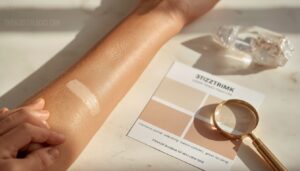
Your skin type is the starting point for everything that follows. It determines how long you should stay in the bed, how quickly you can progress, and whether indoor tanning is even a reasonable option for you.
Before booking that first session, consider these critical factors to ensure safety and effectiveness.
Fitzpatrick Skin Type
Your Fitzpatrick skin type is the foundation of every tanning bed safety guideline worth following. This six-tier skin type classification maps your genetic pigmentation directly to your melanin response—and your burn risk.
Types I and II require the steepest UV dose adjustments, while Types V and VI tolerate more. Risk stratification by type isn’t optional; it’s the starting point.
Fair Skin Precautions
If your Fitzpatrick score places you in Type I or II, UV dosage demands real respect. Start with session lengths of just 5–7 minutes. Apply fragrance-free barrier products to protect reactive skin, and commit to gentle cleansing afterward with lukewarm water.
Patch test any new lotion before a session and avoid harsh actives entirely. Never skip protective goggles—fair skin leaves almost no margin for error.
Burn History Matters
A burn history reshapes your UV dosage calculation entirely. Prior burn sensitivity means your skin carries biological memory—scarring, pigment unevenness, and compromised barrier function do not simply vanish when redness fades.
- Delayed redness can appear hours after a session, masking overexposure
- Scar reactivity intensifies under UV, worsening texture and discoloration
- The risk of melanoma amplification climbs with each cumulative burn episode
Adjust your session length and follow strict UV exposure guidelines accordingly.
Base Tan Expectations
A base tan isn’t armor — it’s roughly SPF 3 to 4 protection. That burn delay myth misses the point: melanin has a hard ceiling, and UV damage accumulates silently beyond it. Patchy development is common, especially over dry areas.
Follow your tanning bed time chart, respect UV exposure guidelines, and build gradually using your Fitzpatrick scale rating.
| Fitzpatrick Type | Gradual Build Timeline | Melanin Limit |
|---|---|---|
| Type I | 5 min → no true base | Very low ceiling |
| Type II | 5–7 min over 4 weeks | Low, burns easily |
| Type III | 7–10 min over 3 weeks | Moderate protection |
| Type IV | 8–12 min over 3 weeks | Higher, still limited |
| Type V–VI | 10–15 min, monitor closely | Elevated but not UV-proof |
Salon Skin Assessment
A good salon doesn’t just hand you goggles and wave you in. A proper skin assessment covers your Fitzpatrick scale classification, burn history, lesion mapping, hydration status, and irritation assessment.
Staff will ask about recent tanning history, medication-induced photosensitivity, and any active skin treatments. Some salons offer a patch test.
Following tanning salon guidelines from that assessment protects your skin health session after session.
Review Health and Medications

Before you step into a tanning bed, your health history and current medications deserve an honest look. Certain conditions and drugs can turn a routine session into a real skin emergency.
Here’s what to check before you go.
Photosensitizing Medications
Before stepping into a tanning bed, check every medication in your cabinet. Many common drugs trigger medication-induced photosensitivity—meaning UV exposure becomes dangerous. Tetracycline photosensitivity, quinolone UV risk, and sulfonamide skin reactions are well-documented, as are phototoxic medications like chemotherapy agents. Oral contraceptives also increase sensitivity.
Three drug classes requiring extra caution:
- Antibiotics — doxycycline, ciprofloxacin, sulfamethoxazole
- Hormone therapies — oral contraceptives, estrogen
- Chemotherapy agents — 5-fluorouracil, dacarbazine
Chemical Peel Recovery
Medications aren’t the only reason to pause before tanning. If you’ve recently had a chemical peel, your skin barrier recovery isn’t complete — and UV exposure can cause serious damage.
Prioritize Gentle Cleansing, Barrier Repair, and an Irritant-Free Routine during this period. Post-Peel Sunshield protection matters more than a tan right now.
Resume tanning only after full healing, following your dermatologist’s Activity Restart Timing guidance.
Skin Cancer History
A prior skin cancer diagnosis changes everything. UV-induced DNA damage is cumulative, and UV radiation carcinogenic effects compound with each exposure — making recurrence monitoring non-negotiable.
If any of these apply, skip indoor tanning entirely:
- Prior diagnosis of melanoma or any skin carcinogenesis
- Known genetic susceptibility or first-degree family history
- Interrupted surveillance schedule requiring active dermatologic oversight
- UV radiation carcinogenic risk elevated by prior treatment
Consult your dermatologist first.
Pregnancy Medical Advice
Pregnancy adds a layer to your medication review that your dermatologist and OB should address together. UV radiation affects skin sensitivity, and photosensitizing medications common in prenatal care can exacerbate that reaction.
First trimester counseling is the right time for a full prenatal risk assessment — including any planned UV exposure.
When fetal safety guidelines are at stake, a dermatology consult isn’t optional.
Prepare Skin Before Tanning
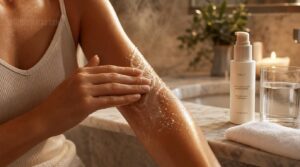
What you do before you ever step into a tanning bed matters more than most people realize. Properly prepped skin tans more evenly, holds color longer, and experiences far less irritation during UV exposure.
These five steps will get your skin ready to go.
Follow each one carefully, and this shaving prep routine for sensitive skin will help you avoid the irritation that comes from cutting corners.
Exfoliate 24–48 Hours Before
Exfoliating 24–48 hours before your session is one of the simplest pre-tanning preparation steps you can take. This timing allows your skin to complete its sensitivity recovery before UV exposure. Choose a mild exfoliant—nothing abrasive—to clear dead cells and enhance exfoliation benefits.
Avoid fresh irritation by skipping same-day scrubbing; freshly stressed skin may react unpredictably under a tanning bed’s intensity.
Moisturize Dry Areas
Dry elbows, knees, and ankles absorb UV unevenly, producing patchy results. In the days before your session, moisturize lightly using a hydrating lotion built around these three priorities:
- Ceramide Boost — barrier cream selection with ceramides restores the skin’s protective layer
- Humectant Choice — glycerin or hyaluronic acid enhances deep skin hydration
- Shea Butter Benefits — seals moisture effectively with damp skin application
Avoid heavy ointments day-of.
Arrive Clean and Dry
When you step into the tanning bed, your skin should be a clean slate. Shower beforehand, then practice proper towel hygiene—pat dry with a fresh towel, never one that’s collected gym sweat.
Residue-free skin matters: soap film, oils, and old moisturizer trap heat unevenly.
Do a quick surface dryness check and rash inspection before lying down. Tacky or irritated skin means wait.
Skip Perfume and Makeup
Perfume and makeup don’t belong on bare surface tanning skin. Fragrance chemicals—often unlisted beyond the umbrella term "fragrance"—can trigger phototoxic reactions when exposed to UV light, causing redness or uneven color. Deodorant compounds carry the same risk.
A minimalist cosmetic approach isn’t about skipping your routine forever; it’s about adopting scentless pre-session discipline. Makeup-free skin ensures UV reaches your skin surface cleanly, without interference from products that could disrupt the tanning process.
Wear Loose Dark Clothing
What you wear out of the bed matters just as much as what you wear into it. Loose, dark cotton clothing fulfills multiple functions.
It reduces friction against warm, sensitized skin, aids heat dissipation after UV exposure, and acts as a UV barrier over areas you don’t intend to tan.
Dark fabric also helps with glare minimization under bright salon lighting. Keep garments freshly laundered to assist basic infection prevention.
Choose Indoor Tanning Products
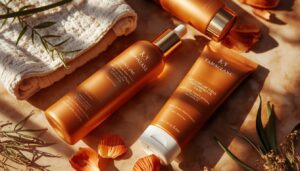
What you put on your skin before a session matters more than most people realize. The wrong product can block UV absorption, irritate sensitized skin, or even interfere with the tanning process entirely.
Here’s what to reach for—and what to leave on the shelf.
For instance, natural remedies for oily hair like 5% tea tree oil shampoo and 2-7% green tea extract can cut greasiness by up to 27% in just weeks.
Salon-approved Lotions
Not all lotions belong in a tanning bed. Indoor tanning lotions are formulated specifically to work with UV exposure, not against it. Look for these features when choosing your tanning bed lotion or accelerator lotion:
- Humectant Blend Benefits like glycerin and hyaluronic acid to draw moisture in
- Barrier‑Supporting Ceramides to protect skin integrity during exposure
- Aloe‑Based Conditioning for soothing, post‑tanning care
- Fragrance‑Free Formulas with fast‑absorbing texture to minimize irritation and absorb evenly
These are safe indoor tanning practices worth building into every session.
Avoid Outdoor Tanning Oils
Outdoor tanning oils are Oil UV Boosters by design — they intensify UV exposure, not reduce it. False SPF labels on many bottles create a dangerous illusion of protection.
Their Reflection Amplification effect and Indoor Formula Mismatch inside tanning beds significantly increase Irritation Risk. These factors make outdoor formulas unsuitable for indoor use.
Stick to salon-approved indoor formulas; your skin cancer prevention strategy depends on it.
Hydrating Lotion Ingredients
Smart aftercare skincare starts before you leave the bed. Once outdoor formulas are ruled out, prioritize humectant blends pairing glycerin and hyaluronic acid—both draw moisture into UV-stressed skin. Squalane benefits barrier comfort without clogging pores, while ceramide synergy reinforces UV-depleted skin.
Check preservative safety labels; unstable formulas degrade quickly. Ensure ingredient quality aligns with these criteria for effective protection and repair.
SPF for Sensitive Spots
Even with the right moisturizing lotion in place, certain spots need extra shielding. Apply a fragrance-free SPF with SPF 30 or higher—and strong UVA-PF emphasis—to tattoos, scars, and surgical sites before your session.
For eyelid coverage, use an SPF stick technique: trace gently, staying about 1 cm from your lash line.
Reapply frequency matters too—every two hours if you’re doing extended sessions.
Lip Balm Protection
Your lips don’t tan—they burn. That’s why a lip balm with SPF 30 containing zinc oxide SPF delivers meaningful UV radiation protection where tinted lotions can’t reach.
Look for occlusive moisture agents like beeswax or petrolatum paired with antioxidant support from vitamin E.
Choose a water-resistant balm and commit to frequent reapplication, since eating and drinking strip coverage quickly.
Protect Eyes and Sensitive Areas
Stepping into a tanning bed without protecting your eyes and sensitive skin is a risk that compounds with every session. Certain areas of your body need a physical barrier between them and UV radiation, not just lotion or luck.
Here’s what to cover before you close that lid.
FDA-approved Tanning Goggles
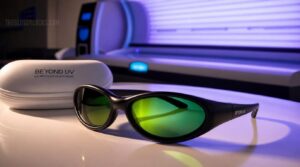
Your eyes have zero natural defense against tanning bed UV—that’s why FDA regulations mandate protective eyewear that blocks over 99% of both UVA and UVB rays. Look for compliance certification standards on the packaging.
FDA-approved goggles come in various frame material options and lens tint types, including green-tinted lenses. Most include a storage case design for hygienic cleaning practices between sessions, meeting tanning bed safety guidelines.
Keep Goggles on Always
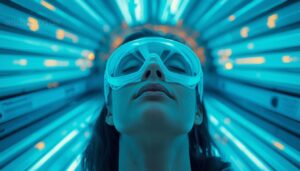
Wearing goggles isn’t something you do just at the start—continuous wear throughout every session is what actually prevents UV eye damage. A secure strap fit keeps lenses sealed against your face without shifting.
- Adjust strap tension before entering the bed
- Perform lens condition check before each session
- Prioritize fog prevention with clean, dry lenses
- Never lift goggles mid-session
- Follow proper storage guidelines to preserve protective eyewear standards
Cover Tattoos and Scars
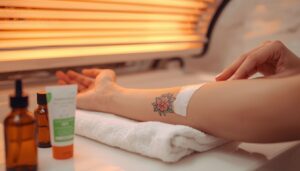
Tattoos and scars need deliberate UV protection before you step into the bed. UV damage accelerates ink fading, so tattoo UV shielding with sunscreen with SPF 30 is non-negotiable. Apply a protective bandage over healing scars—active scar camouflage strategy starts here, not after.
For older scars, UV exposure can disrupt color matching guidance by altering surrounding skin tone through post-tanning care neglect.
Shield Lips and Nipples
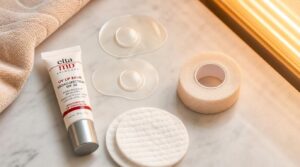
Two areas most people forget are the lips and nipples—both lack the melanin density to handle tanning bed UV safely.
To protect these vulnerable areas:
- Apply Lip Barrier Materials like SPF 30+ balm before the session starts
- Choose Nipple Cover Options such as medical tape or adhesive pads
- Use Secure Fit Techniques—position shields before lamps activate
- Confirm Skin-safe Shielding stays in place throughout
- Pre-Session Application is non-negotiable; repositioning mid-session risks direct UV exposure
Protect Treated Skin

Skin recovering from a chemical peel, retinoid treatment, or surgical procedure is genuinely compromised — UV exposure risks burning, redness, or irritation that can set recovery back considerably. Cover those areas completely before any session.
Afterward, postcare protocols matter: apply a ceramide boost moisturizer for barrier repair, and seal in hydration after UV exposure with gentle cleansing and cool compress application. This supports skin barrier adaptation throughout recovery.
Set Safe Session Limits
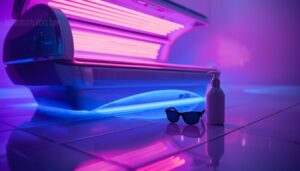
Time in the sunbed is where most people go wrong—too much, too soon, and your skin pays for it. Getting the timing right isn’t complicated, but it does require a little structure.
Here’s what to follow.
Start With Short Sessions
Your first session is a UV dose assessment, not a color goal. Beginners should start at 5–7 minutes—or just 1–2 minutes for Fitzpatrick Type I. This session time standard exists because tanning bed timer accuracy and lamp strength vary by facility.
Think of it as your skin’s orientation day: a burn prevention strategy that protects you before gradually building anything meaningful.
Increase Time Gradually
Once your skin tolerates the baseline session, add only 1–2 minutes per visit—incremental minute additions that follow a dose escalation plan, not guesswork. This approach ensures controlled progression.
Gradual exposure scaling prevents your burn threshold from creeping up unnoticed. Reference a tanning bed time chart by skin type to guide adjustments safely.
Track your progressive session length weekly to maintain measurable, controlled tanning duration. This consistency helps avoid overexposure while optimizing results.
Reduce High-pressure Times
High-pressure beds (Level 5+) deliver a concentrated UV radiation dosage that demands real respect. That’s why you should reduce your tanning session length by 40–50% compared to standard beds.
Think of it as an adapted UV dosage—Lower Lamp Levels and Incremental Time Cuts work together with precise Safety Timer Settings to adjust bed pressure and keep your tanning dosage within a safe, controlled range.
Wait 48 Hours Between
After high-pressure beds, your Recovery Time Assessment begins immediately. A 48-hour minimum isn’t arbitrary—it’s core to Cumulative UV Management and Burn Risk Mitigation.
Watch for these Skin Healing Indicators before scheduling again:
- No lingering redness or tenderness
- Skin feels hydrated, not tight
- No peeling has begun
- Irritation has fully resolved
Your Session Scheduling Strategy and tanning bed safety depend on honest self-checks, not convenience.
Track Every Session
Honest self-checks only work when you’re writing things down. Log session duration, record bed settings, and track skin reaction after every visit—along with documenting products used and any missed sessions notes. These consistent records eliminate ambiguity.
A simple tanning schedule diary, paired with a tanning bed levels guide, a time chart tailored to skin type, and a week-by-week progression tracker, transforms uncertainty into a clear, manageable pattern you can trust.
Care for Skin Afterward

What happens in the 30 minutes after you step out of the bed matters more than most people realize. Your skin is still reacting to UV exposure, and a few simple habits can make a real difference in how it recovers.
Here’s what to do right after each session.
Moisturize Within 30 Minutes
Apply moisturizer within your two-minute window after leaving the bed—UV exposure strips moisture fast. Use the damp-skin method: pat dry, leave skin slightly moist, then smooth on a thin layer of fragrance-free, aloe-based lotion. For post-tanning care, the spot-seal technique targets elbows and knees with extra product.
- Hydrating lotion types: Choose aloe vera, ceramide, or hyaluronic acid formulas for post-tan moisturization
- Thin layer application: Smooth evenly to avoid clogged pores or residue buildup
- Spot-seal technique: Add a second pass on rough, dry zones only
Drink Extra Water
UV exposure pulls moisture from the inside out, so hydration after UV exposure isn’t optional—it’s part of your post-tanning care routine.
Sip water steadily rather than gulping large amounts at once; safe water limits matter for kidney and heart health. If you sweat during sessions, consider electrolyte support to restore fluid balance.
Watch for dehydration symptoms like headache or dizziness as your cue to hydrate more.
Avoid Heat and Sweating
After tanning, your skin is already dealing with UV stress—adding heat and sweat makes it worse. Skip hot showers, saunas, and hard workouts for at least two hours. Poor airflow optimization and temperature scheduling turn minor redness or irritation into real discomfort.
Part of smart post-tanning care is moisture control: let your skin breathe, stay cool, and avoid anything that triggers unnecessary sweating.
Pause Exfoliating Actives
Your skin’s barrier is already compromised after UV exposure—adding AHAs, BHAs, or retinoids on top is a stress it doesn’t need. Schedule acid-free days around every session, and factor in retinoid washout time, since retinoids can sensitize skin for weeks.
Barrier recovery depends on gentle cleansing only. Follow these timing guidelines until any tightness or flaking fully resolves.
Check Moles Regularly
UV exposure accumulates DNA mutations quietly—monthly self-exams are your early-warning system. Use the Mirror Technique to scan hard-to-see areas and apply the ABCDE Checklist consistently.
Regular self-exams—conducted every one to three months—are critical. Prioritize these key steps:
- Check Self-Exam Frequency: Every one to three months
- Flag the Ugly Duckling Sign: Any mole looking drastically different from the rest
- Use Photo Tracking: Same angle, same lighting, add a ruler
- Consult a dermatologist if any ABCDE feature appears or evolves
Frequently Asked Questions (FAQs)
How do I use a tanning bed?
Using a tanning bed safely starts with understanding UV exposure limits, wearing protective eyewear, following tanning bed guidelines, and practicing post-tanning care — all covered step-by-step in this guide.
Is it safe to tan in a tanning bed?
No tanning bed is truly safe. Every session adds to your lifetime UV burden, raising skin cancer and photoaging risk. Safer glow options exist without any UV radiation exposure.
What are the best tanning bed tips?
Smart tanning starts with protective eyewear, strict burn risk management, and solid pre-tan skin prep.
Follow your tanning bed time chart by skin type and respect the session timer.
Never skip post-tan moisturization.
Do tanning beds cause a tan?
Yes — tanning beds do cause a tan. UVA pigment response triggers melanin activation, producing immediate bronzing followed by delayed melanin synthesis.
However, this UV-induced skin damage is your body sounding an alarm, not a health signal.
Can You Tan in a tanning bed without eye protection?
Technically, yes — but you shouldn’t. Eyelids don’t block UV radiation, and unprotected exposure risks photokeratitis, cataracts, and irreversible damage. FDA-approved goggles aren’t optional; they’re your only reliable defense.
How to get the most out of a tanning bed session?
Getting the most out of a tanning bed session comes down to pretanning preparation, smart lamp intensity selection, deliberate body position shifts, and consistent posttanning care — all tracked carefully in a UV dose log.
Is there any way to safely use tanning beds?
No amount of indoor tanning fully eliminates UV radiation health risks—
But risk-benefit counseling, tanning bed regulations, salon certification standards, UV safety practices, and smart post-tanning care can meaningfully reduce harm.
What is 10 minutes on a sunbed equivalent to?
Ten minutes on a sunbed are often compared to roughly two hours in direct sunlight.
However, UV dose variance, lamp irradiance differences, and seasonal UV levels make any single sun exposure equivalence figure unreliable.
How to use a tanning bed for beginners?
Start with a Pre-Session Consultation, clean skin, and FDA-approved goggles. Follow tanning safety guidelines: begin at 5–7 minutes, wait 48 hours between sessions, and apply posttan moisturization immediately after.
Am I supposed to flip over in a tanning bed?
Flipping halfway through your tanning session helps ensure both sides receive equal UV exposure.
Follow your salon staff instructions and manufacturer guidelines, as bed layout variations differ. Always prioritize evenness over comfort.
Conclusion
Think of UV exposure like a savings account working against you—small deposits accumulate silently until the balance demands repayment in collagen loss, DNA damage, or worse.
Knowing how to use a tanning bed safely means you are managing that account deliberately: tracking sessions, respecting your Fitzpatrick type, protecting your eyes, and moisturizing consistently afterward.
The goal isn’t flawlessness—it’s informed control. Every precaution you follow now is a debt your skin won’t have to settle later.