This site is supported by our readers. We may earn a commission, at no cost to you, if you purchase through links. This content is for general informational and educational purposes only and is not a substitute for professional medical, dermatological, or nutritional advice.

Most patients who walk into my office aren’t dealing with rare skin conditions. They’re dealing with the same five habits, done wrong, every single day. A harsh cleanser here, a skipped sunscreen there, and years later, that damage shows up as fine lines and dark spots they can’t quite explain.
Your skin renews itself constantly, but it needs the right inputs to do that job well. Healthy skin habits aren’t complicated or expensive. They’re small, consistent choices that protect your barrier, calm inflammation, and keep your skin doing what it’s built to do.
Let’s build a routine that actually works, one habit at a time.
Table Of Contents
- Key Takeaways
- Build a Simple Daily Skin Routine
- Protect Your Skin From Sun Damage
- Maintain a Healthy Skin Barrier
- Improve Skin Through Lifestyle Habits
- Avoid Habits That Harm Skin
- Frequently Asked Questions (FAQs)
- What are 5 healthy habits for the skin?
- What 7 habits are off limits for dermatologists?
- What are 5 superfoods for glowing skin?
- How do I make my skin healthier?
- How can i Improve my Skin Health?
- How can I prevent skin aging?
- How to maintain a healthy skin?
- How do you keep your skin healthy during the day?
- How can i Improve my Skin & mental health?
- How do you take care of your skin?
- Conclusion
Key Takeaways
- Your daily routine doesn’t need ten steps, just a gentle cleanser, a moisturizer applied while skin’s still damp, and broad-spectrum SPF 30 reapplied every two hours.
- Sun protection is your skin’s best defense, so pair sunscreen with UPF clothing, shade during peak hours, and monthly mole checks using the ABCDE rule.
- Your skin barrier keeps damage out and moisture in, so avoid over-washing, over-exfoliating, and skip products with unnecessary fragrance if your skin’s sensitive.
- What you eat, how much you sleep, and how you handle stress all shape your skin just as much as any product you put on it.
Build a Simple Daily Skin Routine
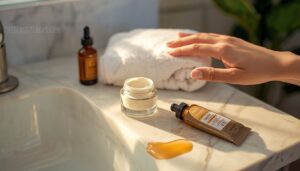
Good skin health doesn’t require a ten-step routine or expensive products. It comes down to three simple habits, done consistently, day after day. Here’s what your daily routine should actually include.
For an easy example of this less-is-more approach in action, check out this guide to natural after-shave skin care routines that keeps things gentle and uncomplicated.
Choose a Gentle Cleanser
Every routine starts with a gentle facial cleanser, one that removes oil and grime without stripping your skin. Look for mild surfactants, a balanced pH, and fragrance-free formulas. Gel, cream, or foaming textures all work if they rinse clean and skip harsh actives. If skin feels tight afterward, it’s too harsh, choose comfort as your guide.
Understanding how surfactants interact with skin is key to selecting a truly gentle formula. gentle cleansing best practices
Moisturize While Skin is Damp
Once your cleanser rinses clean, timing takes over. Pat skin dry, don’t rub, leaving it slightly damp, then apply a fragrance-free moisturizer within three minutes.
Why? Humectants like hyaluronic acid pull that surface water into skin before it evaporates.
- Pat, don’t rub
- Layer while damp
- Skip heavy occlusives alone
Identify Your Skin Type
Products only work if they match your skin. Right after cleansing, check for tightness (dry), shine (oily), or T-zone shine with dry cheeks (combination).
| Skin Type | Key Sign |
|---|---|
| Dry | Tight, flaky |
| Oily | Shiny, blotting paper picks up oil everywhere |
| Combination | T-zone shine, dry cheeks |
Redness or burning signals sensitive skin, regardless of oil level.
Protect Your Skin From Sun Damage
If your daily routine is the foundation, sun protection is what keeps that foundation from cracking. UV rays cause damage at the cellular level, and that damage adds up fast without the right defenses in place. Here’s what actually works, five habits that give your skin real, lasting protection.
Apply Broad-Spectrum SPF 30

Sunscreen is your best defense against skin cancer, and timing matters as much as the product itself.
Choose broad-spectrum SPF 30 or higher, blocking roughly 97% of UVB rays.
For more on choosing safe, effective options while expecting, check out this guide to sun protection during pregnancy.
Mineral formulas with zinc oxide suit sensitive skin well.
Apply a quarter teaspoon to your face, waiting 15 minutes before sun exposure so the protective film fully binds.
Reapply Sunscreen Every Two Hours

That morning layer wears thin faster than most people think. Reapply broad-spectrum sunscreen every two hours, sooner if you’re swimming or sweating, since water resistance only lasts so long.
Towel drying rubs SPF 30+ protection right off your skin. Use a full ounce for your body, covering ears and neck, to keep UV rays from undoing your skin cancer prevention efforts.
Wear Sun-Protective Clothing

Fabric can back up your sunscreen when reapplication slips your mind. Look for a UPF 50 rating, blocking about 98% of UV radiation, especially with tight weaves and dark colors.
Widebrimmed hats and neck-to-knee swimwear add full body coverage. Keep sunsafe clothing dry, since wet fabric loses much of its protective power against the sun.
Avoid Peak UV Hours

Timing matters as much as sunscreen. UV rays peak between 10 a.m. and 4 p.m., delivering nearly half your day’s exposure in that window.
Seek shade during those hours, and schedule walks or workouts for morning or evening instead. Even cloudy days carry burn risk, so don’t let timing replace your broad-spectrum SPF 30+ and UPF clothing. It’s one more layer, not a substitute.
Check Skin for Changes

Your skin keeps a diary, and monthly self-examination is how you read it. Once a month, after a shower, check moles using the ABCDE rule: asymmetry, border irregularity, color variation, diameter over 6mm, evolving shape.
Don’t skip high-risk areas like ears, scalp, and feet. Photograph anything suspicious, and see a dermatologist if a spot changes or a sore won’t heal.
Maintain a Healthy Skin Barrier

Think of your skin barrier as a wall that keeps the good in and the bad out. When that wall breaks down, your skin gets dry, irritated, and more sensitive to everything around it. Here’s how you protect it, one habit at a time.
Prevent Excessive Cleansing
Can you scrub your way to clear skin? Not quite, over-washing just strips your barrier. Stick to twice daily with a gentle, fragrance-free cleanser. Watch for tightness, redness, or new breakouts, those signal overcleansing.
- Wash morning and night only
- Use lukewarm water, not hot
- Moisturize within three minutes after washing
Never use oil on your scalp as a "fix.
Choose Barrier-Supporting Moisturizer Ingredients
Not all moisturizers are created equal. Look for ceramides (fats that rebuild your barrier), cholesterol, fatty acids, humectants like hyaluronic acid, and occlusives like petrolatum.
| Ingredient Type | What It Does |
|---|---|
| Ceramides | Restore lipid balance |
| Humectants | Pull in water |
| Occlusives | Seal moisture |
| pH-Balanced | Helps enzymes work well |
Reduce Transepidermal Water Loss
Ingredients only work if water actually stays put. Transepidermal water loss (TEWL) is moisture escaping through your skin into the air.
Try layering: humectant serum first, ceramide cream next, occlusive last. This "moisture sandwich" seals hydration in.
Keep bedroom humidity between 40-60%. Below 30%, humectants pull water from your own skin instead of the air, worsening dryness.
Limit Harsh Exfoliation
Sealing moisture in only helps if you’re not scrubbing it back out. Over-exfoliating triggers an inflammatory skin response and worsens transepidermal water loss.
Exfoliate less frequently than you think you need to, once or twice weekly for most skin types. Choose enzyme exfoliants over abrasive scrubs, use circular motions sparingly, and always test new products gently before committing your whole face.
Protect Sensitive Skin
Sensitive skin needs fewer ingredients, not more products. Choose a fragrance-free moisturizer and gentle skin care products without added dyes, since fragrance often triggers irritation.
Take warm showers instead of hot ones, and cleanse only needed areas like your underarms. Always patch test new products behind your ear first. This simple approach helps barrier repair without overwhelming reactive skin.
Improve Skin Through Lifestyle Habits

Great skin isn’t built with products alone. What you eat, how you sleep, and even how you handle stress all show up on your face. Here are five daily habits worth building into your routine.
Eat Nutrient-Dense Whole Foods
Your skin is built from what you eat. Focus on a nutrient-dense diet: fatty fish like salmon for omega-3s, walnuts and olive oil for healthy fats, leafy greens for vitamin K.
- Vitamin-rich vegetables and fruits
- Fiber-rich legumes and whole grains
- Balanced protein from fish, eggs, or beans
These healthy diet choices supply the building blocks your skin barrier depends on daily.
Drink Enough Water
Water plumps skin from the inside out, working alongside your moisturizer, not instead of it.
Aim for 9 to 13 cups daily, adjusting for your size and activity.
| Habit | Benefit |
|---|---|
| Morning glass | Kickstarts hydration |
| Water-rich foods | Adds moisture |
| Urine color check | Tracks status |
| Steady sipping | Prevents dryness |
| Pre-meal water | Builds consistency |
Light yellow urine means you’re doing it right.
Sleep Seven to Nine Hours
While you sleep, skin repairs itself: skin regeneration and collagen synthesis peak overnight. Aim for 7-9 hours nightly, and keep timing consistent.
Short sleep impairs immune function, slows healing, and raises accident and error risk. Quality rest also reduces oxidative stress, protecting your barrier. Good hydration habits support deeper sleep too, so that glass of water pays off twice.
Exercise for Healthy Circulation
Get your heart pumping, and your skin feels it too. Exercise can double skin blood flow, delivering oxygen straight to cells while flushing out free radicals.
- Cardio boosts skin flow
- Strength training aids circulation
- Yoga improves microcirculation
Nitric oxide expands vessels, supporting collagen production and fibroblast activation. Move regularly, and cutaneous perfusion improves even at rest.
Manage Everyday Stress
Stress shows up on your face before you even feel it, tightening jaw muscles and dulling that healthy glow. Cortisol spikes disrupt collagen and antioxidant delivery to skin cells.
Stress reaches your face before you feel it, tightening your jaw and dulling your glow
| Technique | Effect |
|---|---|
| Box breathing | Calms stress response |
| Mindfulness | Lowers cortisol |
| Digital detox | Resets nervous system |
Try progressive relaxation or guided imagery nightly, pair with quality sleep and hydration for visible results.
Avoid Habits That Harm Skin

Good habits build healthy skin, but bad ones can undo that work just as fast. Some of the most damaging behaviors are also the easiest to overlook in daily life. Here’s what to watch for, and what to change.
Stop Picking Acne
That satisfying pop comes at a cost. Picking wounds skin more deeply than letting a pimple heal alone, pushing pus and inflammation further in and raising your risk of permanent scarring and dark marks.
Instead, treat spots with benzoyl peroxide or adapalene, keep hands off, and let your skin barrier repair itself naturally.
Identify Personal Skin Triggers
Why does your skin flare up some days and not others? The answer often lies in patch testing new products and keeping a simple skin diary to track symptoms, timing, and exposures.
Watch for known irritants like retinol or fragrance, note environmental triggers, and check reaction timing (usually within an hour). Fragrance-free products and a dermatologist consult help pinpoint your sensitivities.
Limit Sugar and Processed Foods
That soda habit does more than add calories. Sugar spikes insulin, which raises IGF-1 and boosts oil production, fueling acne. Blood sugar surges also trigger glycation, damaging collagen and aging skin faster. While you’re cutting back on sugar internally, a gentle sugar scrub versus salt scrub comparison can help you choose the right exfoliation for irritated, breakout-prone skin.
- Cut sugary drinks and snacks
- Choose whole foods over processed ones
- Watch for inflammation and breakouts
- Support collagen with a nutrient-dense diet
Visit a Dermatologist Regularly
Diet keeps skin healthy from within, but nothing replaces a trained eye.
Schedule an annual skin exam, or more often with personal risk factors like fair skin or family history.
Between visits, do monthly self-exams using the ABCDE rule, checking moles for asymmetry, border, color, diameter, and evolution. Track changes with photos, and bring questions to your appointment.
Frequently Asked Questions (FAQs)
What are 5 healthy habits for the skin?
Cleanse gently, moisturize daily, apply SPF 30+ sunscreen, stay hydrated, and sleep seven to nine hours. These five habits protect your skin barrier, prevent premature aging, and keep your complexion resilient against daily environmental stress.
What 7 habits are off limits for dermatologists?
Dermatologists draw a firm line on seven habits: don’t smoke, limit alcohol, skip tanning beds, and never pick or pop acne. Reduce stress, choose fragrance-free and noncomedogenic products, and moisturize within three minutes of showering.
What are 5 superfoods for glowing skin?
Think of your plate as a paint palette for your skin. Red bell peppers, citrus fruits, and berries deliver vitamin C; fatty fish bring omega3s; tomatoes offer lycopene, all working together for a genuine glow.
How do I make my skin healthier?
Start with the basics: gentle cleanser, daily moisturizer, and SPF 30+ sunscreen. Support your skin barrier with hydration, sleep, and stress management. Eat well, stay active, and see a dermatologist for suited guidance.
How can i Improve my Skin Health?
Real progress comes from consistency, not complexity. Gentle cleansing, damp-skin moisturizing, and daily SPF 30+ sunscreen protect your barrier. Add balanced meals, hydration, and an evening skin reset, and adjust routines seasonally as your skin’s needs shift.
How can I prevent skin aging?
Imagine your skin aging a decade every year, sun and sugar left unchecked. Slow it down: daily SPF 30+, vitamin C serum, moisturize within three minutes of showering, eat antioxidants, sleep well, and reduce stress.
How to maintain a healthy skin?
Cleansing, moisturizing, and daily SPF 30 form your foundation.
Support your skin barrier with gentle exfoliation, steady hydration, nutrient-dense meals, and 7-9 hours of sleep.
Manage stress, since it disrupts nighttime repair, and skin often reflects how well you’re caring for your whole body.
How do you keep your skin healthy during the day?
You don’t need a ten-step ritual. A gentle cleanser morning routine, fragrance-free moisturizer, and broad-spectrum SPF 30 cover the basics. Hydrate midday, reapply sunscreen every two hours, and support your barrier protection with brief stress-relief breaks.
How can i Improve my Skin & mental health?
Skin and mood connect closely. Try a mindful skincare routine, gentle facial massage, and stress reduction techniques. Pair daily moisturizing, vitamin C serum, and SPF 30+ with hydration, a healthy diet, and positive self-talk for lasting results.
How do you take care of your skin?
My routine stays simple: gentle cleansing, moisturizing while skin’s damp, and daily broad-spectrum sunscreen.
I prioritize hydration, antioxidant-rich foods, and consistent sleep, protecting my barrier while managing stress, since skin health reflects habits built night after night.
Conclusion
Two patients walked into my office the same week, both 45, both worried about the same fine lines. One had skipped sunscreen for a decade. The other followed these habits daily and looked ten years younger. That’s not luck. It’s proof that healthy skin habits compound over time.
Small choices, repeated daily, become your skin’s story. Start today, and let consistency write the ending you actually want.