This site is supported by our readers. We may earn a commission, at no cost to you, if you purchase through links. This content is for general informational and educational purposes only and is not a substitute for professional medical, dermatological, or nutritional advice.
Your hair follicles work overtime in summer, and most people wash that effort right down the drain. Sebum production climbs 20-30% in warmer months, yet the average person keeps the same cleansing routine year-round. That mismatch alone stalls growth before it starts.
Follicles don’t fail from neglect alone—they fail from the wrong kind of care. Scrub too hard, and you strip the barrier that protects new growth. Skip washing too long, and clogged follicles stop producing altogether.
Real scalp care tips for hair growth start with reading your scalp’s signals, not following generic advice. Get the fundamentals right—cleansing, circulation, protection, nutrition—and thicker, faster growth follows naturally.
Table Of Contents
- Key Takeaways
- Build a Hair-Growth-Friendly Cleansing Routine
- Use Scalp Massage to Encourage Growth
- Apply Natural Scalp Treatments Safely
- Protect Hair Follicles and New Growth
- Support Follicle Health From Within
- Frequently Asked Questions (FAQs)
- How can I improve my scalp hair growth?
- How can I stimulate my scalp hair growth?
- What should I put on my scalp to help my hair grow?
- How to make your scalp healthy for hair growth?
- How to care for scalp for hair growth?
- What is the best thing to put on your scalp for hair growth?
- What is a good scalp routine?
- What helps scalp hair growth?
- How do you stimulate the scalp for hair growth?
- What not to put on the scalp?
- Conclusion
Key Takeaways
- Match your washing routine to your scalp type and use lukewarm water, since summer sebum production jumps 20-30% and most people never adjust their habits.
- Massage your scalp daily with fingertips (never nails) for 4-10 minutes to boost circulation and wake up sluggish follicles.
- Dilute essential oils like rosemary to 2% in a carrier oil and always patch test first, since undiluted oils can burn your scalp.
- Protect new growth by wearing low-tension hairstyles, sleeping on silk, and feeding your body enough protein, iron, and omega-3s.
Build a Hair-Growth-Friendly Cleansing Routine
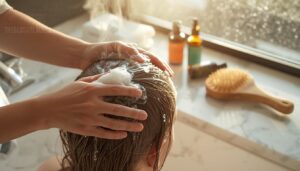
Your cleansing routine sets the stage for everything else you do for your scalp. Get this step wrong, and you’ll fight buildup, irritation, or dryness no matter how many oils you apply later. Here’s how to build a routine that actually works for your scalp type.
If you’re dealing with an oily scalp or noticeable product buildup, it’s worth adjusting how often you wash based on your specific hair type and scalp health needs.
Match Washing to Scalp Type
Before picking a shampoo, figure out your scalp type. It dictates everything else.
Oily scalp needs daily or every-other-day washing to stop buildup, especially in summer when sebum rises 20-30%. Normal scalp thrives on washing every 2-3 days. Dry scalp should stretch to every 3-4 days, protecting the scalp barrier from moisture loss.
Choose Gentle, PH-Balanced Shampoo
Once you know your scalp type, match it to the right formula.
Your scalp’s natural pH balance sits between 4.5 and 5.5. Choose a pH balanced shampoo with gentle surfactants like decyl glucoside, not sodium lauryl sulfate.
A sulfate free, hypoallergenic formula in pH stable packaging protects scalp health and helps hair follicle health long-term.
Use Lukewarm Water
The right shampoo means little if your water temperature sabotages it.
Keep water between 98 and 105°F. This range boosts blood circulation by 12%, dissolves sebum without triggering oil overproduction, and keeps your cuticle sealed for stronger, breakage-resistant strands.
It also improves product absorption—active ingredients penetrate 30% deeper, so your gentle shampoo actually reaches the follicles it’s meant to protect.
Double Cleanse Heavy Buildup
Temperature’s only half the battle—buildup needs a double cleanse. Start with an oil cleanser (jojoba, argan) massaged into dry scalp for 60 seconds, rinse, wait 30 seconds, then follow with a sulfate-free, salicylic acid shampoo.
- Oily scalp: 3x weekly
- Normal scalp: once weekly
- Skip if scalp’s irritated
Consistent double cleansing often cuts oil production by 20% within a month.
Exfoliate Without Overstripping
Think of exfoliation as unclogging follicles, not scrubbing skin. Use fine rice bran scrubs or salicylic acid (0.5–1%) two to three times weekly—oily scalps tolerate four, dry ones stick to one.
Follow with a hydrating serum or argan oil. Watch for burning, redness, or shedding over 100 hairs daily—those signal over-exfoliation and a needed break.
Use Scalp Massage to Encourage Growth
Your hands are one of the most underrated tools for hair growth. Scalp massage boosts circulation and wakes up sluggish follicles, but technique matters more than effort. Here’s exactly how to do it right.
Pairing consistent scalp massage with a diet rich in key vitamins and minerals for hair growth gives your follicles both the stimulation and building blocks they need to thrive.
Use Fingertips, Not Nails
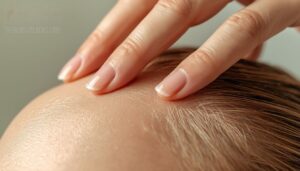
Your nails aren’t massage tools, they’re scratch hazards. Fingertip pads distribute pressure evenly and mobilize skin without cutting, while nails can carve scratches up to 1 millimeter deep.
Gentle fingertip pressure boosts circulation and lets active ingredients penetrate 10-15% deeper. Nails compress vessels and push products away instead. Protecting your scalp barrier now means healthier follicles later, so keep those nails clipped and let fingertips do the work.
Massage Four to Ten Minutes
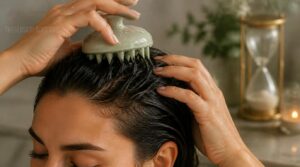
Four minutes is your floor, ten is your ceiling. A four-minute session lifts local blood flow by 25%, while stretching to ten raises scalp temperature roughly 3°C for deeper nutrient delivery.
Apply steady pressure, about 150-250 grams per square centimeter, using a silicone massager or your fingertips.
- Four minutes: fine hair, daily use
- Ten minutes: weekly, thorough sessions
- Never exceed ten minutes
- Stay within pressure range
- Rest scalp two minutes post-massage
Cover The Entire Scalp
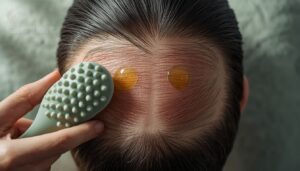
Skipping sections starves half your follicles of blood flow. Use scalp sectioning techniques: divide hair into four quadrants, temples to crown.
Spend equal time per zone, moving temples clockwise then counterclockwise. This uniform product application ensures rosemary oil or serum reaches the nape, not just the top.
A silicone massager with raised nodules covers spots fingers miss entirely.
Target Thinning Areas Gently
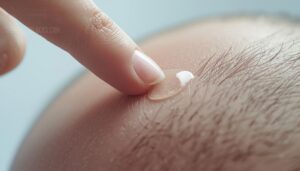
Thinning patches need restraint, not force. Use 2-3 grams of pressure—about the weight of a fingertip resting on skin—in small circular motions for 20-30 seconds per spot.
Add light pressure tapping at 60 taps a minute to wake up sluggish follicles without irritating them.
Keep serum application light too: massage it in for just 10 seconds per zone.
Choose Scalp Tools Carefully
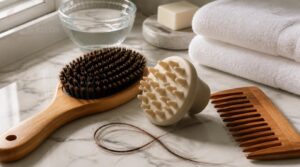
Your fingertips aren’t your only option. A boar bristle brush lifts dead skin gently, while silicone massagers with raised nodules boost circulation for up to ten minutes.
Choose tools that match your goal: combs for detangling, massagers for stimulation, brushes for scalp exfoliation.
Clean tools weekly with mild soap. Replace bristles every three months to avoid bacterial buildup.
Apply Natural Scalp Treatments Safely
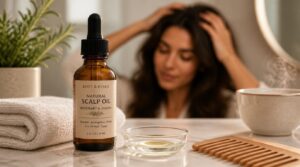
Natural oils can boost your scalp health, but only when you use them correctly. The wrong concentration or a skipped patch test can irritate skin instead of helping it. Here’s how to apply these treatments safely and get real results.
Dilute Essential Oils Properly
Undiluted essential oils burn scalp tissue, so always mix with a carrier oil first. Jojoba oil matches your scalp’s natural sebum best.
Aim for a 2% dilution: 2 ml essential oil per 100 ml carrier. Sensitive scalp? Cut that to 1%.
Stir gently with a glass rod, rest five minutes, then store in amber glass bottles, labeled and dated.
Try Rosemary Oil Safely
Once your dilution’s ready, patch test before use on your inner arm. Wait 24 hours, watching for irritation signs like redness or itching.
If you notice any reaction, stop use immediately and check out this guide on treating age spots safely with apple cider vinegar for more tips on adjusting your dilution ratio.
If everything looks calm after that waiting period, you’re good to apply it, since this grapefruit oil hair removal aftercare method works best on skin that’s already tolerated the diluted mixture.
If everything looks clear after 24 hours, you’re good to go, though it’s worth spacing out treatments since how long it takes to bleach black hair often depends on giving your strands 4 to 6 weeks to recover between sessions.
Clear skin? Apply once daily to your scalp, working it in with scalp massage for stimulation. Store in cool, dark spots to protect potency and support follicle health long-term. It also helps boost collagen production for healthier skin supports collagen production.
Use Peppermint and Lavender Cautiously
Peppermint and lavender bring extra potency, so treat them with respect. Dilute peppermint to 1-2% and lavender to 0.5-1%, then patch test both.
- Apply max 3x weekly, 24 hours apart
- Watch for redness or burning
- Skip peppermint if you’re on blood thinners
- Store oils in amber glass bottles
Choose Scalp-Friendly Carrier Oils
Your carrier oil choice matters as much as the essential oil itself. Jojoba oil absorbs in 2-3 minutes, mimics sebum, and suits oily scalps perfectly.
Want faster penetration? Grapeseed oil absorbs within 1-2 minutes and carries a non-comedogenic rating of 1. Coconut oil takes longer, but its antibacterial punch makes it worth the wait for dry scalps.
Patch Test Every Treatment
Before any oil touches your scalp, test it. Apply a quarter-sized amount to your inner elbow, wait 24 hours, then check for redness or itching.
Test one new product at a time. If your skin patch stays clear, proceed. If irritation shows up, skip that scalp care routine and consult a trichologist before trying alternatives.
Protect Hair Follicles and New Growth
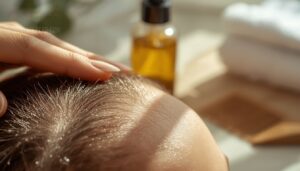
New growth is fragile, and daily habits decide whether it survives. Protecting your follicles means cutting the everyday stress you don’t even notice. Here’s what actually keeps breakage away.
Wear Low-Tension Hairstyles
Tight styles choke follicles. Loosen up, and you protect follicle health long-term.
- Loose braids cut scalp tension 25%
- Silk headbands lower pressure points 50%
- Adjustable ponytails drop breakage 45%
Try loose braids, protective updos, or soft headbands instead of tight ponytails. Detangle first with a wide tooth comb to prevent breakage.
These gentler styles also protect strands already weakened by leaving conditioner in too long, since overexposed hair is more prone to snapping under tension.
Rotate Hair Parts Regularly
Same part daily? You’re grinding one line of follicles into submission. Rotate every 14 to 21 days, shifting width by 1-2 cm and alternating sides.
Align the new part with your hair’s growth direction using a wide tooth comb. This cuts follicle stress up to 30%, protecting scalp health where it counts most.
Limit Heat and Chemical Damage
Heat and chemicals don’t just style hair, they stress follicles at the root. Keep dryers and irons under 150-180°C, capped at 15 minutes per session.
Apply heat protectant on damp hair first. Space relaxers 8-12 weeks apart, dye every 4-6 weeks. Try henna or indigo instead of harsh chemical dye.
Sleep on Silk or Satin
Cotton pillowcases drag on hair all night, cutting into strands with every turn of your head.
Switch to a silk or satin pillowcase and you cut friction dramatically, reducing breakage by up to 43%. Silk locks in scalp moisture, curbing dryness by 15%, while its smooth surface resists dust mites, cutting dandruff flare-ups by 25%. That’s better scalp health, less breakage, done while you sleep.
Swap cotton for silk or satin and cut hair breakage by up to 43 percent while you sleep
Detangle Hair Without Breakage
Every knot you rip out takes follicle cells with it. Detangle wet hair in sections, tips to roots, with a wide tooth comb. Apply pre-brush conditioner first, then microfiber towel dry before combing.
- Section hair into four parts
- Comb tips first, roots last
- Use a flexible bristle brush dry
- Keep hair hydrated throughout
- Never force a knot
Support Follicle Health From Within

Your scalp can’t build strong follicles out of thin air. What you eat and drink shows up in your hair within months, for better or worse. Here’s what your plate and glass need to include.
Eat Enough Quality Protein
Hair is built from keratin, so skimpy protein intake starves your follicles at the source. Aim for 0.8g per kilogram of body weight daily minimum, spread across meals—your body can’t store protein for later.
Eggs, fish, and lean meats supply complete amino acids for steady nitrogen balance. Can’t stomach that much? Mix protein sources to cover your bases.
Prioritize Iron and Vitamin D
Protein builds the structure, but iron and vitamin D power the machinery behind it. Low iron cuts oxygen delivery to follicles, slowing growth cycles and, in severe cases, causing brittle breakage.
Load up on lentils, lean beef, and lemon-spinach for absorbable iron. Pair with vitamin C to triple uptake. Take iron in the morning, vitamin D with dinner—consistency restores density within three to six months.
Add Omega-3-Rich Foods
Iron and vitamin D fuel the machinery; omega-3s calm the environment it runs in. These fats fight scalp inflammation directly, improving nutrient delivery to follicles.
For a full plan that pairs these nutrients with scalp massage and breakage prevention, this complete guide to hair growth techniques ties the whole routine together.
- Salmon: 2,300mg EPA/DHA per 100g
- Sardines: 1,800mg EPA/DHA per fillet
- Flaxseed: 2,350mg ALA per tablespoon
Aim for 250-500mg daily. Pair with fat to boost absorption by 50%.
Stay Consistently Hydrated
Fats calm inflammation; water carries everything else. Daily water intake matters more than most people realize—dehydration above 2% body loss cuts scalp blood flow by 15%.
| Habit | Scalp Benefit |
|---|---|
| Wake-up glass | +12% hydration |
| Pre-meal water | +10% absorption |
| 2L daily | +20% blood flow |
| Hourly sips | -45% itching |
| Post-workout | Fast recovery |
Seek Help for Persistent Hair Loss
When home care stalls, don’t wait it out—consult a dermatologist or trichologist. Get blood tests for ferritin, TSH, and vitamin D to catch hidden causes.
- Ask about prescription meds (finasteride, minoxidil)
- Try laser therapy for density gains
- Join support groups for real coping strategies
Stabilized hair loss often starts with one honest appointment.
Frequently Asked Questions (FAQs)
How can I improve my scalp hair growth?
Turning a bare scalp into a thriving garden takes more than luck. Combine daily scalp massage, essential oil blends, gentle detangling, and a protein-rich diet with steady hydration.
Follicle health responds fastest when stimulation meets nutrition, consistently, week after week.
How can I stimulate my scalp hair growth?
Combine daily scalp massage with diluted rosemary oil blends to boost circulation. Add loose protective styles, 2–3 liters of water daily, and protein-rich meals. Together, these habits encourage stronger follicle stimulation and steady growth over time.
What should I put on my scalp to help my hair grow?
Simple versus complex, both work. Three drops rosemary oil in jojoba, a biotin-rich peptide serum, or diluted lavender blends—all backed by scalp massage—feed follicle health and support real hair growth over time.
How to make your scalp healthy for hair growth?
Cleanse gently, then add daily scalp massage to boost circulation. Layer in nutrient-rich meals, steady hydration, and stress reduction. Together, these habits support follicle health and create the stimulation your scalp needs for real hair growth.
How to care for scalp for hair growth?
Your scalp works like garden soil feeding every root beneath it. Boost circulation with scalp massage.
Cleanse 2-3 times weekly using pH-balanced shampoo, apply diluted rosemary oil, and support follicle health with protein and iron-rich meals.
What is the best thing to put on your scalp for hair growth?
Rosemary oil takes the top spot, rivaling minoxidil in clinical trials with a twenty percent density boost. Massage it in daily with a jojoba carrier, then layer a biotin scalp serum for compounding follicle support.
What is a good scalp routine?
Want results that actually stick? Wash 2-3 times weekly with pH-balanced shampoo, massage with diluted rosemary oil for circulation, exfoliate monthly, protect strands nightly with silk, and stay hydrated for lasting follicle stimulation.
What helps scalp hair growth?
Growth favors follicles that get consistent care.
Scalp massage boosts circulation and delivery of nutrients, diluted rosemary oil helps thickness, sulfate-free shampoo keeps buildup low, and protective habits guard against breakage while new hair takes hold.
How do you stimulate the scalp for hair growth?
Circles build circulation, circulation builds growth, growth builds confidence. Use fingertips (never nails) in gentle circular motions for 4-10 minutes daily, covering your whole scalp, to boost blood flow and stimulate dormant follicles naturally.
What not to put on the scalp?
Skip harsh chemicals, heavy oils, alcohol products, and synthetic fragrance—they strip natural oils, causing scalp irritation and dandruff. Hot treatments damage follicles too.
Choose sulfate-free shampoo instead, and see a trichologist if hair loss persists despite gentler care.
Conclusion
Your scalp is like soil: neglect it and nothing grows, tend it well and roots take hold.
Real scalp care tips for hair growth aren’t complicated, but they demand consistency. Wash smart, massage daily, treat gently, protect your strands, and feed your body right. Skip one pillar, and progress stalls. Master all five, and your follicles respond on their own timeline. Give it 90 days. Your scalp remembers every choice—make the right ones.