This site is supported by our readers. We may earn a commission, at no cost to you, if you purchase through links. This content is for general informational and educational purposes only and is not a substitute for professional medical, dermatological, or nutritional advice.

Your scalp holds roughly 100,000 follicles, and most people neglect every one of them. A four-minute massage boosts scalp circulation by up to 120%, yet almost no one does it daily. That gap between what works and what’s actually practiced explains why so many people stall out on their hair growth journey.
Genetics matter, but they’re not the whole story. Blood flow, nutrient density, and gentle handling shape how fast and how strong hair grows back.
The best hair growth techniques combine scalp stimulation, targeted nutrition, and damage prevention into one routine. Get the order right, and patience starts paying off by week twelve.
Table Of Contents
- Key Takeaways
- Best Scalp Stimulation Techniques for Hair Growth
- Best Nutrition Strategies for Healthy Hair Growth
- Best Hair Care Routine for Growth
- Best Damage Prevention and Length-Retention Techniques
- Proven Hair Growth Treatments and Realistic Results
- Frequently Asked Questions (FAQs)
- What stimulates hair growth best?
- What is the Chinese secret for hair growth?
- What are the big 3 for hair regrowth?
- Can I reverse hair thinning?
- Which is the best method for hair growth?
- What is the best procedure for hair growth?
- Can I grow 6 inches of hair in 6 months?
- How do I grow my hair fast naturally?
- Can stress and anxiety cause hair loss?
- How does age affect hair growth speed?
- Conclusion
Key Takeaways
- Just four minutes of daily scalp massage can boost circulation by up to 120%, and studies show visible thickness improvements by week twelve.
- Real hair growth combines three things working together: scalp stimulation, solid nutrition (protein, iron, zinc, omega-3s), and gentle damage prevention.
- Rosemary oil rivals 2% minoxidil after six weeks, but for stronger, faster results, 5% minoxidil combined with finasteride and massage can boost improvement to over 94%.
- Protecting the hair you already have matters as much as growing new hair, since heat, tight styles, and friction from cotton pillowcases can undo months of progress.
Best Scalp Stimulation Techniques for Hair Growth
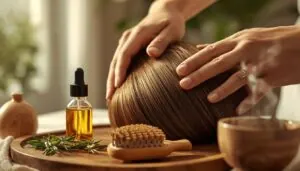
Think of your scalp as soil, not scaffolding. Stimulate it right, and you wake up dormant follicles instead of just coating strands. Here’s where to start, from massage to oils.
A few minutes of daily kneading can boost blood flow to the roots, and these simple scalp circulation techniques make it easy to build the habit.
Four-Minute Daily Scalp Massage
Consistency beats intensity here. Just four minutes daily boosts circulation up to 120%, delivering oxygen and nutrients to follicles 2-3 times faster than baseline.
A 2016 study tracked nine men doing daily 4-minute massages for 24 weeks. Thickness improved noticeably by week 12, proving patience, not pressure, drives results. Combining massage with a topical serum can further improve results, since enhanced absorption of serums occurs when the two are used together.
Proper Scalp Massage Technique
Technique matters as much as timing. Anchor your thumbs at the crown, cup fingers under the occipital bone, then pull up and press down five times.
Add compression at the hairline, squeezing inward five times, followed by effleurage tapping across each zone for 30 seconds. A silicone massager with light oil deepens stimulation without straining your hands.
Rosemary Oil Scalp Application
Massage gets ready the scalp, and rosemary oil adds fuel. Studies show it rivals 2% minoxidil after six weeks.
Dilute 3-5 drops per tablespoon of jojoba or argan oil, a 2-3% ratio. Patch test 24 hours first. Apply to dry scalp 2-3 times weekly, massage in, leave 30 minutes. Never overnight, it disrupts scalp microflora.
Peppermint and Lavender Oils
Rosemary works the roots, but peppermint and lavender bring balance. Peppermint’s menthol delivers a cooling scalp sensation, waking up circulation. Lavender’s calming aroma eases stress that often stalls the anagen phase.
Mix a few drops of each into your carrier oil, diluted properly, and massage in. Together, they turn a simple scalp massage into a mini therapy session for your follicles.
Essential Oil Safety Tips
Potent doesn’t mean safe straight from the bottle. Undiluted essential oils can irritate your scalp, so follow dilution guidelines and stay under 5% strength.
Always patch test first, watching 24 hours for skin reactions before wider use. Choose pure, verified oils, store them in dark amber bottles, and keep them away from eyes, nose, and mouth.
If you’re curious how peppermint’s menthol boost compares to other options, this guide to essential oils for beard thickness breaks down which ones actually stimulate growth.
Best Nutrition Strategies for Healthy Hair Growth

Your scalp works like soil, and soil needs the right nutrients to grow anything strong. What you eat shapes your hair from the inside out, feeding follicles long before results show on the surface. Here’s what your plate needs to prioritize for real, measurable growth.
Protein for Keratin Production
Think of hair as a protein factory that never clocks out. Keratin production depends entirely on dietary protein, supplying the amino acids your follicles assemble into fiber. Top sources include:
- Eggs
- Fish
- Lean poultry
Unlike collagen, keratin’s amino acid profile leans heavily on cystine. Skimp on protein intake, and hair protein synthesis slows, weakening strands from the root.
If you’re prepping a donation ponytail, boosting protein-rich foods beforehand can strengthen strands, so check this complete guide to donating hair to Wigs for Kids for full prep steps.
Iron, Zinc, and B Vitamins
A quarter of the world runs low on iron, and hair notices first. Ferritin below 30 ng/mL starves follicles of oxygen, causing diffuse shedding. Pair iron-rich foods with vitamin C for better absorption.
Zinc, 8-11 mg daily, builds keratin and prevents telogen effluvium. Zinc also boosts B vitamin uptake, so balanced intake outperforms scattered supplementation every time.
Omega-3 Foods for Follicle Health
Your scalp is soil, and omega-3s are the fertilizer. These fats calm inflammation and support nutrient delivery to the scalp, feeding hair follicles directly.
- Fatty fish: salmon, mackerel, herring
- Plant-based: walnuts, flax, chia, algae oil
- Frequency: 2-3 servings weekly
- Benefits: reduced shedding, better scalp condition
Evidence stays modest, but consistency matters more than flawlessness.
Biotin Foods Versus Supplements
Bottles promise thick hair, but food usually delivers it best. Adults need just 30 mcg daily, easily met through eggs, salmon, and almonds.
| Source | Biotin Amount | Best For |
|---|---|---|
| Food combo | ~11 mcg/meal | Daily intake |
| Supplements | 2,500-5,000 mcg | Deficiency only |
| Healthy diet | Meets RDA | Most people |
Deficiency is rare. Save supplements for actual gaps, not guesswork.
Hydration for Nutrient Delivery
Water is the delivery truck for every nutrient you just read about. Without it, protein and biotin sit in your gut going nowhere.
Aim for 2.5 liters daily, more on heat-styling days. Add lemon for taste, and check urine color: pale yellow means nutrient delivery to your scalp is on track.
Best Hair Care Routine for Growth
Your scalp is soil, and your routine is what feeds it. Small daily choices, from how you wash to how you comb, add up to real gains in strength. Here’s what a growth-focused routine actually looks like, step by step.
Gentle Sulfate-Free Shampooing

Five to six weekly washes with a sulfate-free shampoo balance hydration without stripping natural oils. Skip sodium lauryl and laureth sulfates, check labels closely. Gentle cleansing helps scalp sensitivity and hair follicles stimulation, encouraging healthier hair growth.
Match formula to hair type, moisturizing, clarifying, or volumizing. Consistency matters most, judge results over several washes, not one.
Conditioning to Reduce Breakage
Cleansing opens the cuticle, so conditioner right after each wash matters. It cuts breakage by 20-25% and rebuilds hair strength and elasticity.
Once weekly, deep condition 15-20 minutes for moisture. Twice monthly, add protein conditioner for 3-5 minutes, no more.
- Softer, stronger strands
- Fewer snapped ends
- Renewed confidence
Follow with leave-in, seal moisture, and choose pH-balanced formulas (4.5-5.5) for healthier cuticles.
Coconut Oil Before Washing

Before conditioner ever touches your strands, coconut oil sets the stage. Applied 15-30 minutes pre-wash, it penetrates the cuticle and forms a barrier that blocks protein loss during washing.
Use 1 teaspoon for fine hair, up to a tablespoon for thick, curly strands. Thin layer, scalp included: dandruff eases, circulation improves.
Damage-Free Detangling Techniques
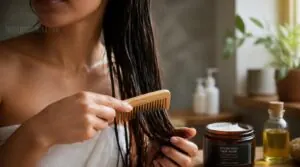
That oil coating you just massaged in also makes tangles slide apart easier.
Wet strands stretch and snap fast, so work gently. Section hair, apply conditioner, detangle ends-first with a widetooth comb.
- Dry oil first, comb with a wooden tool
- Wet? Use conditioner and gentle strokes
- Finish with a cold water rinse
- Never skip heat protectant before styling
Maintaining a Healthy Scalp
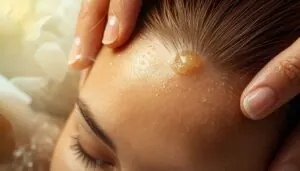
Picture your scalp as soil, since even the best hair struggles to grow in neglected ground. Weekly exfoliation with gentle scrubs lifts dead skin and dry shampoo residue, unclogging follicles and improving product absorption.
Balanced pH matters too. Your scalp thrives between 4.5 and 5.5, an acidic range that protects your microbiome balance and wards off dandruff-causing fungus.
- Exfoliate weekly using sugar, salt, or salicylic acid formulas
- Choose sulfate-free shampoo with pH near 5.5
- Massage in coconut oil to hydrate and boost circulation
Balance, not harshness, keeps your scalp’s balance thriving.
Best Damage Prevention and Length-Retention Techniques

Growth means nothing if breakage keeps erasing your progress. Length retention depends on protecting the hair you already have, not just growing more. Here’s what actually shields your strands from daily wear and tear.
Lower Heat and Heat Protectant
Heat above 150°C strips up to 30% of hair’s tensile strength. Apply protectant first, let it dry, then style at lower temperatures. This cuts moisture loss by half and prevents steam damage from wet strands. Think of protectant as a raincoat, not a cure.
Consistency, not intensity, protects your strands from thermal damage and breakage over time.
Low-Manipulation Protective Hairstyles
Tucking ends away and skipping daily styling gives strands a real break. Low manipulation means less pulling, less friction, less breakage, up to 80% less by some measures.
Keep hair moisturized underneath with leave-in conditioner. Cover it at night with silk. Aim for tension-free styling, since tight roots strain follicles and slow your hair growth routine.
Loose Hair Ties and Styles
Even a hair tie can undo months of progress if it’s too tight. Choose gentle hair tie materials, smooth and soft, and try loose ponytail techniques, two fingers should slide under the tie.
Rotate tie locations daily, avoiding tension points at the same section. This protects strand strength and helps your broader hair growth routine, alongside scalp massages and other protective hairstyles.
Silk Pillowcases for Less Friction
Cotton grabs at hair all night. Switch to silk or satin, and friction drops sharply, cutting tangles and breakage at the source.
Silk’s low absorbency keeps moisture in your strands, preserving elasticity and texture by morning. Look for Mulberry silk, 22 momme or higher, for real durability and results.
UV Protection for Hair
Sun damages hair the same way it ages skin: UV rays break down protein bonds, weakening hair shaft strength and elasticity.
Cover the scalp where parts expose skin directly. Try:
- Wide-brim hats
- UV protective sprays
- Protective hairstyles like braids
- Zinc oxide formulas
- Post-swim towel-drying
Keratin-treated strands resist UV damage better than untreated hair, preserving cuticle protection long-term.
Proven Hair Growth Treatments and Realistic Results

Lifestyle habits build a strong foundation, but some hair loss needs a clinical answer. Real growth comes from methods backed by data, not guesswork. Here’s what actually works, and what results you can honestly expect.
Topical Minoxidil Strengths
Minoxidil 2% vs 5% isn’t a coin flip. The 5% strength delivered 45% more regrowth by week 48, with earlier response times too.
Foam vs solution both work, but your enzyme conversion capacity (via sulfotransferase) shapes results. Poor converters sometimes try higher concentrations, though evidence beyond 5% stays thin, and irritation risk climbs.
Consistent Minoxidil Use
Picking a strength means nothing without discipline. Apply minoxidil directly to the scalp, not hair shafts, twice daily for solution or once for foam.
- Skipping doses stalls the hair growth cycle
- Irritation tempts people to quit early
- Results depend on months of consistent use
- Placement on affected scalp areas matters most
- Stopping reverses gains within months
Patience, not pressure, sustains regrowth.
Hair Growth Timeline Expectations
Discipline pays off, but only on hair’s own clock. Average monthly growth sits near 0.5 inches, since the anagen phase driving it can last 2 to 8 years.
Hair grows on its own clock, roughly half an inch a month, guided by an anagen phase that can last up to eight years
Only about 9% of follicles sit in telogen at once, so shedding stays steady, not sudden. Genetics, nutrition, and hormones shape your pace. Expect visible density shifts closer to month three or four. Patience wins here.
Trimming Split Ends Regularly
Patience with growth doesn’t mean ignoring damage. Split ends form when the shaft’s outer layer wears thin, then travel upward if left alone.
Regular trims stop that spread and protect length retention.
- Trim every 6–8 weeks
- Use sharp scissors on dry hair
- Cut small sections at a time
Dusting removes only frayed tips, curbing breakage before it worsens strand strength.
When to See a Dermatologist
Why push through alone when a dermatologist can pinpoint what home care can’t? See one for unexplained hair loss, sudden thinning, or scalp symptoms that won’t quit.
| Sign | Possible Cause | Action |
|---|---|---|
| Patchy thinning | Alopecia areata | Book evaluation |
| Itching/bleeding lesion | Skin concern | See promptly |
| New mole change | Requires screening | Don’t wait |
Hormones drive growth cycles too, so lasting answers often need professional insight.
Frequently Asked Questions (FAQs)
What stimulates hair growth best?
Your scalp thrives on consistent stimulation. Daily massage boosts scalp blood flow, waking dormant follicles into the anagen phase. Pair that with rosemary oil and steady nutrient delivery, protein, iron, zinc, and you’re feeding keratin synthesis right at the root.
What is the Chinese secret for hair growth?
Picture root reaching deep into dark soil, pulling up centuries of wisdom. That’s He Shou Wu, paired with Ginseng Scalp circulation and Dong Quai Balance, restoring Kidney Essence through Herbal Formulas that nourish follicles from within, not just the surface.
What are the big 3 for hair regrowth?
The big 3 combines minoxidil, finasteride, and ketoconazole shampoo. Minoxidil extends the growth phase, finasteride blocks DHT, and ketoconazole calms scalp inflammation, a combined treatment approach that outperforms any single option for hair follicles.
Understanding why your hair is thinning in the first place can help you get more from this protocol — explore proven methods to encourage new hair growth tailored to different underlying causes.
Can I reverse hair thinning?
An ounce of prevention beats a pound of cure. Yes, often. Reversibility depends on cause: treat the root condition and thinning may resolve, while pattern hair loss usually needs consistent, ongoing treatment rather than a one-time fix.
Which is the best method for hair growth?
No single trick wins. Combination therapy (minoxidil, finasteride, massage) drives the best results, reaching 1% improvement.
Daily scalp massage boosts circulation, rosemary oil rivals minoxidil, and steady protein intake fuels keratin, feeding follicles through every growth cycle stage.
What is the best procedure for hair growth?
Not every procedure demands downtime. Microneedling stands out for strong results with minimal side effects, creating micro-injuries that boost circulation and wake dormant follicles, while improving absorption of treatments like rosemary oil or minoxidil for better long-term growth.
Can I grow 6 inches of hair in 6 months?
Realistically, no. Hair grows 35–5 mm daily, capping most people near three inches in six months. The anagen phase, nutrition, age, and breakage all limit speed. Patience beats pressure here, biology sets the pace, not product promises.
How do I grow my hair fast naturally?
Think soil, not seed. Nourish the roots first, and growth follows.
Combine daily scalp massage with rosemary oil, steady protein intake, hydration, and gentle handling. Add a green tea rinse or aloe gel weekly for extra shine and strength.
Can stress and anxiety cause hair loss?
Yes. Elevated cortisol disrupts normal signaling, pushing follicles into early rest and triggering telogen effluvium shedding. Chronic anxiety can also worsen alopecia areata. Most stress-induced hair loss improves within 2 to 3 months once you get to the bottom of the problem.
How does age affect hair growth speed?
Your follicles never stop working, they just stop hurrying. Anagen phase shortening, hormonal shifts, and oxidative stress slow the growth cycle, dropping speed from half an inch monthly in your twenties to a fraction by your fifties.
Conclusion
Thinning strands aren’t a life sentence. Your follicles are dormant, not dead, and the best hair growth techniques wake them back up.
Massage builds circulation. Nutrition builds keratin. Gentle handling protects what you’ve already grown.
None of this works overnight, but by week twelve, the mirror starts telling a different story.
Treat your scalp like soil: feed it, tend it, and trust the season it needs.
Patience, not pressure, grows hair.