This site is supported by our readers. We may earn a commission, at no cost to you, if you purchase through links. This content is for general informational and educational purposes only and is not a substitute for professional medical, dermatological, or nutritional advice.
Porous hair drinks up moisture fast and loses it just as quickly, and if you’ve ever stepped out of the shower with soft, bouncy curls only to watch them turn brittle by noon, you know exactly how frustrating that cycle feels.
Raised cuticles let water rush in, but without the right sealant, it rushes right back out, taking your definition and shine along with it.
That’s why picking the best conditioners for porous hair matters far more than grabbing whatever’s on the drugstore shelf.
Below, you’ll find ten formulas that actually close the cuticle and lock hydration where it belongs.
Table Of Contents
- Key Takeaways
- 10 Best Conditioners for Porous Hair
- 1. Hydration Elation Intensive Conditioner
- 2. Shea Moisture Intensive Hydration Masque
- 3. Almond Avocado Deep Moisture Masque
- 4. Shea Moisture Protein Treatment
- 5. Mielle Organics Babassu Mint Conditioner
- 6. Briogeo Deep Conditioning Mask
- 7. Mango Avocado Restorative Hair Masque
- 8. Pumpkin Mint Deep Treatment Masque
- 9. Curls Blueberry Bliss Hair Mask
- 10. Bounce Curl Ayurvedic Deep Conditioner
- Quick Picks by Hair Condition
- What Porous Hair Needs From Conditioner
- Best Ingredients for Porous Hair
- Balance Protein and Moisture Correctly
- Choose Formulas by Hair Type
- Deep Condition Porous Hair Properly
- Avoid Porous Hair Conditioning Mistakes
- Maintain Moisture Between Wash Days
- Frequently Asked Questions (FAQs)
- Which conditioner is best for high porosity hair?
- What is the best way to treat porous hair?
- What hair conditioner doesn’t clog pores?
- How often should you deep condition high porosity hair?
- Can low porosity hair also benefit from these conditioners?
- Do leave-in conditioners work better than rinse-out masks?
- How do you test your hairs porosity at home?
- Are drugstore conditioners as effective as salon brands?
- Conclusion
Key Takeaways
- Porous hair needs conditioners that both pull moisture in (humectants like glycerin) and seal it in (fatty alcohols, oils, and butters), or hydration just evaporates as fast as it soaks in.
- Balancing protein and moisture is critical—too much protein leaves strands stiff and brittle, while too little leaves them weak, so alternating strengthening and hydrating treatments works best.
- Application technique matters as much as the product itself: use clean damp hair, focus on mids and ends, apply gentle heat, and leave treatments on for 10–30 minutes for real penetration.
- Avoid common mistakes like over-conditioning, overusing protein, leaving masks on overnight, or skipping clarifying washes, since these can cause hygral fatigue, buildup, and blocked moisture absorption.
10 Best Conditioners for Porous Hair
Porous hair is thirsty hair, and not every conditioner on the shelf can keep up with it. I’ve tested plenty of formulas on clients with damaged, gappy cuticles, and some genuinely outperform the rest. Here are ten I trust to actually seal in moisture instead of just sitting on top of it.
If you’re still not sure whether your strands lean high or low porosity, this breakdown of low porosity vs high porosity hair care can help you pick the right conditioner for your cuticle type.
1. Hydration Elation Intensive Conditioner
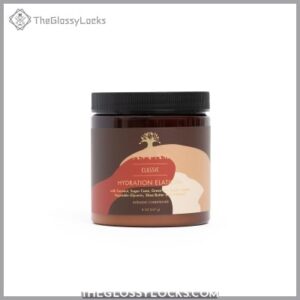
When a client’s porosity is high but her hair still feels weighed down by rich butters, this is what I reach for. Coconut oil and shea butter seal the cuticle while glycerin and betaine pull moisture into the strand, not just onto it.
Quaternium 91 gives real slip, so detangling porous, tangle-prone hair won’t tug at weak points. Applied wet with a plastic cap for 15-30 minutes, it restores elasticity and cuts frizz without that heavy, coated feeling fine curls often complain about.
| Best For | This conditioner is best for people with dry, curly, wavy, or color-treated hair who want extra moisture, better detangling, and stronger, more defined curls. |
|---|---|
| Weight | 227 g (8 oz) |
| Cruelty-Free | Yes |
| Hair Type | Curly/Wavy |
| Key Ingredient | Shea Butter |
| Use Frequency | As needed |
| Sulfate-Free | Not specified |
| Additional Features |
|
- Boosts combing ease by 60% and detangling by 75%, thanks to moisturizing emollients like coconut, shea butter, and vitamin E
- Strengthens weak strands, repairs split ends, and adds noticeable shine
- Vegan, cruelty-free, and versatile enough to use as a deep conditioner or leave-in treatment
- The 227 g container may run out quickly for those with long or thick hair
- Some users feel the price is a bit steep for the amount of product you get
- Can feel heavy or overly rich on fine or very low-porosity hair, and slip performance isn’t consistent for everyone
2. Shea Moisture Intensive Hydration Masque
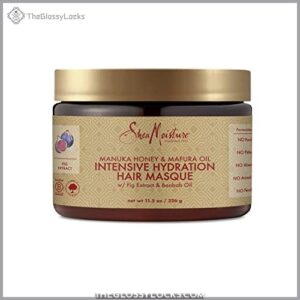
For hair that’s thirsty but still holding its shape, this masque earns its spot. Raw shea butter, manuka honey, and mafura oil work as a trio: shea seals, honey draws moisture in as a humectant, and mafura’s fatty acids strengthen the strand from within.
Baobab oil and African rock fig round out the cuticle-smoothing effect. Sulfate and paraben-free, it’s gentle enough for weekly use, applied to clean, wet hair for a quick five-minute reset when your strands need it most.
| Best For | People with dry, curly, 4c, fine, or thick hair who want a deep-conditioning boost to fight frizz and restore shine, especially those with damaged or color-treated strands. |
|---|---|
| Weight | 327 g (11.5 oz) |
| Cruelty-Free | Yes |
| Hair Type | Curly/4c |
| Key Ingredient | Shea Butter/Honey |
| Use Frequency | Weekly |
| Sulfate-Free | Yes |
| Additional Features |
|
- Packs in shea butter, manuka honey, and mafura and baobab oils for serious moisture and shine
- Flexible use as a quick 5-minute rinse-out or a longer 30-minute heat treatment for deeper results
- Free of sulfates, parabens, phthalates, mineral oil, and petrolatum, with no animal testing
- Rich, thick texture can weigh down very fine hair if you use too much
- Honey and nut oils may not sit well with people who have related allergies
- Needs a thorough rinse to avoid buildup, so it’s not meant to double as a leave-in conditioner
3. Almond Avocado Deep Moisture Masque
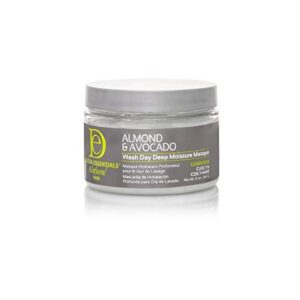
If shea and honey felt too rich, this masque leans lighter while still packing moisture. Avocado and almond oils penetrate the shaft, softening dry strands without the greasy finish some clients dread.
Lightweight film formers seal cuticles and cut frizz, so fine, porous hair doesn’t feel weighed down. Paraben-free and plant-based, it’s built for daily wear.
Best part? Those avocado vitamins actually calm scalp irritation too, something a lot of intensive masques overlook entirely.
| Best For | This masque is best for people with wavy, curly, coily, or kinky hair—including dry or color-treated strands—who want a weekly deep conditioning treatment to boost moisture and strength. |
|---|---|
| Weight | 362 g (12.8 oz) |
| Cruelty-Free | Yes |
| Hair Type | Curly/Coily |
| Key Ingredient | Avocado/Shea |
| Use Frequency | Weekly |
| Sulfate-Free | Yes |
| Additional Features |
|
- Infused with almond, avocado, and shea butter for intense hydration and improved elasticity
- Doubles as a hair mask and detangler, easing wash-day tangles and reducing breakage
- Cruelty-free and free from parabens, paraffins, petrolatum, mineral oil, silicones, and phthalates
- Some users notice an off-putting, slightly rotten smell
- Priced higher than many budget hair masks
- Thick consistency may feel too heavy for fine or low-density hair
4. Shea Moisture Protein Treatment
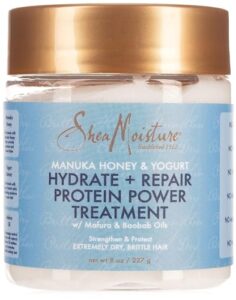
Some porous hair needs a strength boost, not just more moisture, and that’s where this treatment earns its spot. Hydrolyzed vegetable proteins penetrate the shaft and fill gaps along damaged cuticle, reducing breakage after just one 10 to 15 minute session.
Manuka honey and yogurt round things out so strands don’t feel stiff or straw-like afterward. Use it weekly or biweekly on color-treated or chemically processed hair, then follow with a moisture-rich conditioner to keep elasticity balanced.
| Best For | Anyone with over-processed, color-treated, or chemically damaged hair who needs real strength repair rather than just added moisture. |
|---|---|
| Weight | 227 g (8 oz) |
| Cruelty-Free | Not specified |
| Hair Type | Curly/Chemically Treated |
| Key Ingredient | Manuka Honey |
| Use Frequency | As needed |
| Sulfate-Free | Not specified |
| Additional Features |
|
- Hydrolyzed proteins penetrate the hair shaft to fill gaps in damaged cuticle, cutting down on breakage
- Manuka honey and yogurt keep strands soft instead of stiff or straw-like after treatment
- Works in just one 10 to 15 minute session, making it easy to fit into a weekly or biweekly routine
- Can weigh down fine or oily hair types
- Beeswax and carnauba wax in the formula may cause buildup over time
- Fragrance might be too strong for those sensitive to scent
5. Mielle Organics Babassu Mint Conditioner
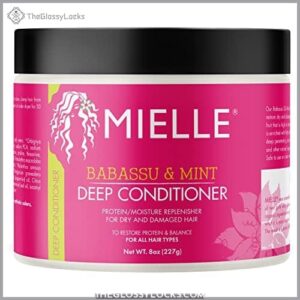
When protein treatments leave strands feeling stiff, this one restores balance instead. Babassu oil softens coarse or curly texture while peppermint and spearmint deliver a cooling tingle that clients notice immediately on the scalp.
At $12.97 for 8.01 ounces, it’s budget-friendly for weekly use. I recommend it for detangling-prone hair since the slip factor is excellent, though the thin consistency means longer hair needs a generous amount. Skip it if you’re avoiding mint sensitivity.
| Best For | People with coarse, curly, or color-treated hair who deal with frizz and tangling and want an affordable weekly deep treatment. |
|---|---|
| Weight | 237 ml (8.01 oz) |
| Cruelty-Free | Yes |
| Hair Type | Curly/Coarse |
| Key Ingredient | Babassu Oil |
| Use Frequency | Weekly |
| Sulfate-Free | Yes |
| Additional Features |
|
- Protein-rich babassu oil helps repair damage and restore balance without leaving hair stiff
- Cooling mint infusion makes detangling easier and leaves a fresh scalp feel
- Free from parabens, sulfates, paraffins, mineral oil, synthetic colors, and DEA
- Thin consistency may not satisfy those who prefer thicker, richer formulas
- Strong mint scent can be too intense for people with sensitive noses
- Long hair requires more product, so the bottle empties faster
6. Briogeo Deep Conditioning Mask
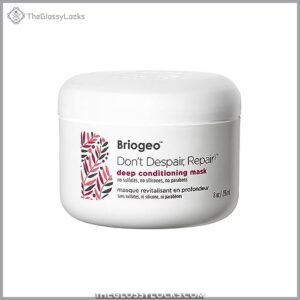
When clients want visible results without waiting days, this mask delivers minutes-fast hydration through avocado, almond, and argan oils. Biotin and panthenol back up the moisture with real strength support.
I love recommending it for color-treated hair since it won’t cause buildup, and the 5-10 minute wear time fits into any shower routine. For deeper repair, add a cap and heat for up to 30 minutes. It’s suitable for every texture, making it a reliable weekly staple.
| Best For | This mask is best for anyone with dry, damaged, or color-treated hair who wants a quick weekly treatment that boosts strength and shine without weighing hair down. |
|---|---|
| Weight | 227 g (8 oz) |
| Cruelty-Free | Yes |
| Hair Type | All Textures |
| Key Ingredient | Plant Proteins |
| Use Frequency | Weekly |
| Sulfate-Free | Yes |
| Additional Features |
|
- Strengthens and softens hair in as little as 10 minutes, with visible results after just a few uses
- Nourishing blend of plant proteins, biotin, algae extract, and rosehip, almond, and argan oils
- 97% naturally derived, vegan, and free from silicones, sulfates, parabens, and phthalates
- Can be drying if applied to the roots or on already oily hair
- Considered a premium product, and some users find the fragrance polarizing
- Meant for weekly use only, so it’s not a substitute for a daily conditioner
7. Mango Avocado Restorative Hair Masque
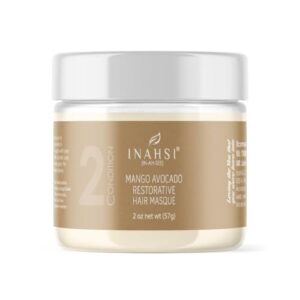
Avocado oil takes the lead here, sinking into porous strands to replace what daily wear strips away. Fruit-derived emollients add real slip, so detangling feels less like a fight.
Pairing that avocado oil with a protein-rich boost is easy when you try one of these DIY hair repair mask recipes for balanced, resilient strands.
Cuticles smooth out fast, which means shine shows up without any silicone coating hiding underneath. Fine-haired clients still love it since it hydrates without dragging curls flat.
I steer color-treated clients toward this one often. It fights frizz while letting your natural curl pattern stay intact, not stretched out or weighed down.
| Best For | This masque is best for people with curly, color-treated, heat-processed, or transitioning hair who need extra moisture, definition, and strength without weighing curls down. |
|---|---|
| Weight | 355 ml (12 oz) |
| Cruelty-Free | Not specified |
| Hair Type | Curly/Color-Treated |
| Key Ingredient | Mango/Avocado |
| Use Frequency | As needed |
| Sulfate-Free | Not specified |
| Additional Features |
|
- Deeply moisturizes and helps restore balance using a mango and avocado blend with ceramides
- Strengthens strands and replenishes lost protein thanks to silk amino acids
- Reduces breakage and split ends while keeping curl pattern soft, defined, and intact
- Not a leave-in treatment, so it must be rinsed out after each use
- May not be suitable for anyone with severe allergies to mango or avocado proteins
- Requires consistent, repeated use before noticeable results appear
8. Pumpkin Mint Deep Treatment Masque
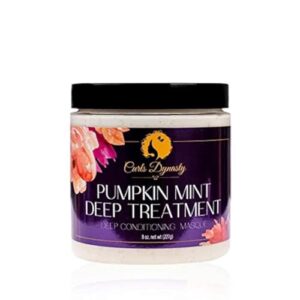
Peppermint wakes up a tired scalp fast, and that cooling snap is half the reason clients ask for this one by name. Pumpkin seed oil does the real work, delivering lightweight hydration without the heavy buildup porous hair hates.
Weekly use restores elasticity and knocks down frizz on strands that just can’t hold moisture otherwise. Cuticles smooth out, shine improves, and you get that refreshed, "just left the salon" feel between deep treatments.
| Best For | curly-haired clients with porous, moisture-hungry strands who want a weekly deep treatment to boost elasticity, softness, and shine without heavy buildup. |
|---|---|
| Weight | 8 oz |
| Cruelty-Free | Yes |
| Hair Type | Curly |
| Key Ingredient | Pumpkin/Mint |
| Use Frequency | Weekly |
| Sulfate-Free | Not specified |
| Additional Features |
|
- Pumpkin seed oil delivers lightweight hydration and strengthens cuticles to prevent breakage
- Peppermint gives an invigorating, salon-fresh scalp feel with every use
- 100% cruelty-free formula that enhances curl definition, smoothness, and shine
- The 8-ounce size may run out quickly for those with large or thick hair
- Packaging can leak if the lid isn’t sealed tightly
- May not provide dramatic enough moisture for extremely dry or 3C–4A curl types
9. Curls Blueberry Bliss Hair Mask
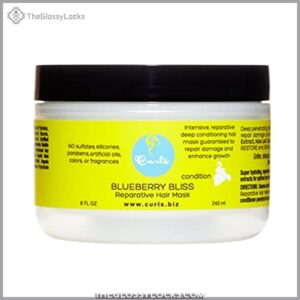
Blueberries aren’t just a smoothie ingredient anymore, they’re doing real work in this mask alongside aloe leaf juice and chamomile extract. The mix softens, detangles, and hydrates curls while targeting damaged sections prone to breakage.
Glycerin pulls in moisture, and polyquaternium esters give you that slip you need for easier combing on tangled, porous strands. Texture can run inconsistent between batches, thick one jar, watery the next, so don’t panic if yours feels different.
| Best For | curly-haired individuals looking to repair damage, prevent breakage, and boost moisture and manageability in their strands. |
|---|---|
| Weight | 8 fl oz |
| Cruelty-Free | Not specified |
| Hair Type | Curly |
| Key Ingredient | Blueberry Extract |
| Use Frequency | As needed |
| Sulfate-Free | Not specified |
| Additional Features |
|
- Softens, detangles, and deeply hydrates curls with blueberry, aloe, and chamomile
- Helps repair damaged hair while protecting against future breakage
- Supports healthier hair growth over time
- Consistency can vary from thick to watery between batches
- Some users notice their hair feels brittle after first use
- The jar lid can be tough to open without extra tools
10. Bounce Curl Ayurvedic Deep Conditioner
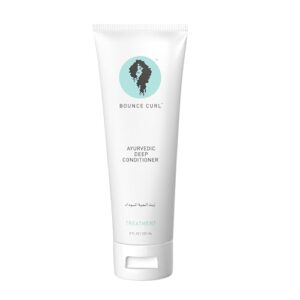
Amla, bhringraj, and shikakai make this one feel more like an Ayurvedic scalp treatment than a standard mask. It’s protein-free, so if your porous strands go stiff or straw-like with hydrolyzed proteins, this dodges that problem entirely while still delivering real strength benefits.
Baobab and sunflower oils keep things light, no weighing down curls here. At $23.29 for 8 ounces, it’s pricier per ounce, but works double duty as an instant conditioner or 10-minute deep treatment.
| Best For | People with low-porosity, protein-sensitive, or fine curly/coily hair who want a lightweight, moisturizing deep conditioner without the stiffness that protein-based treatments can cause. |
|---|---|
| Weight | 226 g (8 oz) |
| Cruelty-Free | Yes |
| Hair Type | Wavy/Curly/Coily |
| Key Ingredient | Amla/Baobab |
| Use Frequency | As needed |
| Sulfate-Free | Yes |
| Additional Features |
|
- Protein-free formula gently hydrates without stiffness or straw-like texture, even on protein-sensitive strands
- Lightweight Baobab and sunflower oils detangle and soften without weighing curls down
- Versatile use as either a quick instant conditioner or a longer 10-minute deep treatment
- Higher price per ounce compared to similar deep conditioners
- Light peach fragrance may feel too strong or overly sweet for scent-sensitive users
- Thicker consistency may need extra rinsing to fully remove residue
Quick Picks by Hair Condition
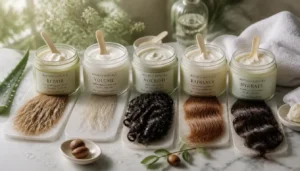
Not every porous strand has the same needs, and matching your conditioner to your specific hair condition makes all the difference.
Whether you’re dealing with brittle ends, fine strands, or color-treated hair that’s seen better days, the right formula changes based on what you’re working with.
Here’s where to start, broken down by exactly what your hair is going through.
Dry and Brittle Strands
Snap a strand gently and it breaks? That’s low elasticity and cortex protein loss talking, classic signs of high porosity hair crying out for Elasticity Repair.
Reach for a rich deep conditioner featuring hydrolyzed keratin for protein balance, paired with jojoba oil to lock moisture in without weighing strands down. Consistent moisture retention and gentle detangling keep breakage prevention on track. Left unaddressed, these signs can progress toward dry and brittle hair, so staying ahead of protein and moisture balance matters.
Fine or Low-density Hair
Where high porosity meets fine strands, richness backfires fast. Strand thickness under 60 micrometers means lightweight formulas win, delivering moisture retention without flattening root lift.
Look for cationic polymers offering detangling ease minus buildup.
- Mielle Babassu Mint for volume retention
- Weekly protein balance treatments
- Scalp care via gentle clarifying rinses
That’s fine hair care done right.
Thick Curls and Coils
Fine hair needs less; thick coils need more, and richer masks won’t weigh them down.
Coil pattern identification matters here: wider coils shrink 30-50%, so moisture retention and sealing with oil protects ends where scalp oil travels slowest.
| Product | Best For |
|---|---|
| Mango Avocado Masque | Curl definition, humidity resistance |
| Bounce Curl Ayurvedic | Shrinkage management, high porosity hair |
Bleached or Color-treated Hair
Bleaching lifts the cuticle even further than curl shrinkage stresses hair, leaving disulfide bonds weak and prone to breakage.
Color-treated hair needs bond repair and protein balance together, plus UV protection to stop color fading.
Roux Rejuvenating Porosity Control Conditioner (pH 4.5) closes cuticles fast.
Alternate with moisture-heavy formulas so high porosity hair doesn’t dry out between treatments.
Protein-sensitive Porous Hair
If your hair feels stiff or straw-like after a treatment, that’s a classic protein sensitivity sign. Skip heavy formulas and go proteinfree, or choose lightweight protein sources like hydrolyzed soy.
Protein balance matters most here, since your moisture-protein ratio should lean hydrating. Gentle protein application, spaced out, protects hair elasticity and prevents breakage without sacrificing flexibility.
What Porous Hair Needs From Conditioner

Porous hair isn’t picky by accident, it’s picky because the cuticle can’t hold onto what you give it. That means your conditioner has to work harder in a few specific ways, not just smell good and rinse clean. Here’s exactly what those raised cuticles are asking for.
Porous hair isn’t picky by accident—its cuticle simply can’t hold onto what you give it
Moisture Retention and Softness
Think of your strands as tiny sponges with cracked lids. Humectant benefits come from ingredients pulling water into the shaft, while lipid sealants lock it there. This water binding fights humidity swings that leave high porosity hair frizzy one hour, limp the next.
A good deep conditioner uses emollients for flake-free moisture, real humidity resistance, and lasting softness you can actually feel.
Cuticle Smoothing and Shine
Raise a lifted cuticle to the light and it scatters everything, that’s the frizz you’re fighting. Smoothing agents flatten those edges for real cuticle alignment shine and light reflection boost.
- Fatty alcohols soften rough edges
- Quaternary compounds cut static, boost shine
- Plant oils add natural oil luster
- Heat activated sealing locks smoothing agents in
- Slip improves, frizz control follows
Strength Without Excessive Stiffness
Ever wonder why some "strengthening" masks leave curls feeling like straw? Too much hydrolyzed protein does that, stiffening what should stay pliable. Better formulas act like flexible hold springs, reinforcing weak spots without rigidity.
Cationic conditioning agents smooth cuticles while elastic fiber blends and lightweight humectants preserve bounce, improving hair elasticity and breakage reduction. Result: pliable gels creams finish with a soft matte finish, strong yet springy.
Slip for Easier Detangling
A tangled comb-out shouldn’t feel like a tug-of-war.
Slip enhancing ingredients like behentrimonium methosulfate and cationic polymers coat the shaft, cutting friction between strands. On damp hair, glide improves dramatically, so detangle at 60-70% wet with a wide-tooth comb. Warmer water softens cuticles further, boosting slip. Skip heavy oils; they weigh porous hair down instead of easing snags.
Frizz and Breakage Control
Frizz on porous hair isn’t random, it’s raised cuticles grabbing humidity like a sponge. A good deep conditioner seals that cuticle down, blocking moisture-driven swelling while cushioning strands against snapping.
- Lightweight polymers repel humidity without weighing curls down
- Fatty alcohols cushion fibers during brushing and styling
- Protein moisture balance prevents both stiffness and breakage
Get cuticle sealing right, and frizz control follows naturally.
Best Ingredients for Porous Hair
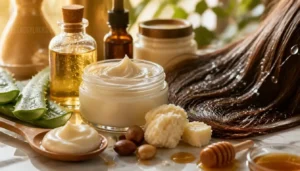
Not every ingredient on a label is doing something for your hair, and once you know which ones actually matter, you’ll never shop the same way again. Porous strands respond to a specific set of players, from the agents that smooth your cuticle to the molecules that pull moisture in and keep it there. Here’s what to actually look for.
Cationic Conditioning Agents
Porous hair has raised cuticles, and cationic conditioning agents fix that through simple charge interaction: their positive charge binds damaged, negatively charged strands. This creates surface smoothing and film formation, boosting slip and moisture retention.
Look for behentrimonium methosulfate, behentrimonium chloride, quaternium-91, or cetearyl alcohol on labels. I always check ingredient lists first, it’s the fastest way to spot real conditioning power.
Hydrolyzed Proteins and Amino Acids
Cationic agents smooth the surface, but proteins rebuild from within. Hydrolysis breaks proteins into peptides and amino acids, small enough for real protein absorption rate gains porous hair actually uses. This fuels cuticle repair, peptide signaling, and hair elasticity improvement.
Look for hydrolyzed rice protein or keratin, they prevent hair breakage without the stiffness whole proteins leave behind. Amino acid benefits add up fast.
Humectants for Lasting Hydration
Proteins rebuild strength, but humectants pull the water in. Glycerin, hyaluronic acid, and sorbitol draw moisture into porous hair, then pair them with an occlusive oil so it doesn’t evaporate by noon.
In humidity above 60%, they work overtime; in dry rooms, buffer with a deep conditioner first to protect moisture retention.
Fatty Alcohols, Oils, and Butters
Once glycerin’s pulled water in, you need something to trap it there. That’s the job of fatty alcohols like cetearyl alcohol, plus shea butter, coconut oil, jojoba, and argan oil. These aren’t drying like the alcohol in hairspray. They form an emollient mix, sealing the cuticle and locking moisture in for hours, not minutes.
Silicones Versus Silicone-free Formulas
When your ends feel coated instead of conditioned, silicone buildup is likely the culprit blocking moisture uptake. Dimethicone smooths cuticles and boosts detangling slip, but water-insoluble types trap themselves onto porous strands.
Silicone-free alternatives lean on fatty alcohols and humectants for shine and slip without residue. For heat protection, silicones outperform, but if buildup keeps you clarifying weekly, switching formulas restores natural moisture retention.
Balance Protein and Moisture Correctly
For years, I believed more protein always meant stronger hair, until I watched clients’ strands snap right where I’d added it.
Porous hair walks a tightrope between protein and moisture, and tipping too far either way undoes your progress.
Here’s how to read your hair’s signals and know exactly which one it’s asking for.
When Porous Hair Needs Protein
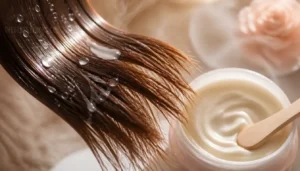
Here’s the truth I tell every client: porous hair has literal gaps in the cuticle, and hydrolyzed keratin or wheat protein fills them, boosting hair elasticity and cutting breakage.
If strands feel rough, snap easily, or lose curl definition fast, that’s porosity talking.
Treat every 2-4 weeks, always followed by moisture, never as a standalone fix.
Signs of Protein Overload
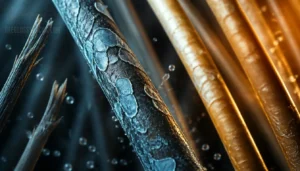
When your strands feel stiff instead of soft after a treatment, that’s protein overload knocking. Watch for a hard coating, brittle texture, and dull shine, all signs high porosity hair rejected what it couldn’t absorb.
Reduced elasticity means less stretch before snapping. Excessive buildup blocks your deep conditioner from working. Skip protein treatments (even hydrolyzed rice protein) until moisture restores balance.
When to Choose Moisture
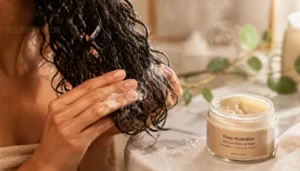
Straw-like, dull, frizzy: that’s your cue for moisture, not protein. High porosity hair needs a deep conditioner rich in humectants and emollients whenever it feels parched.
Reach for moisture:
- Post clarify wash
- After color aftercare
- Styling day refresh
- Scalp dryness flares
- Low humidity timing
Moisture retention starts with reading these signals correctly.
Alternating Strengthening and Hydrating Masks
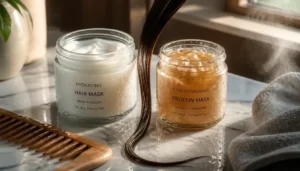
Think tennis, not tug-of-war. Your Weekly Mask Sequence volleys between a protein treatment and a deep conditioner, each answering what porous hair actually lacks that week.
| Week | Mask Type | Goal |
|---|---|---|
| 1 | Hydrating | Moisture retention |
| 2 | Strengthening | Cortex reinforcement |
This Moisture Protein Swap keeps hair porosity balanced, never overloaded, never parched.
Adjusting Frequency by Hair Response
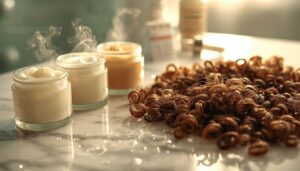
Your hair talks back, so listen. Run a simple Conditioner Interval Testing week: track shine and softness after each wash.
- Weighed down? Stretch to every 4th wash
- Still thirsty? Condition every 2–3 washes
- Stripped or color-treated? Increase briefly, then taper
This Hair Feedback Loop builds your own Porosity Adaptation Schedule, an Adjustable Wash Plan matching real moisture retention, not guesswork.
Choose Formulas by Hair Type
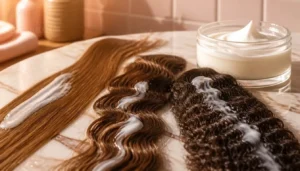
Porosity tells you how your hair drinks in moisture, but hair type decides how it should hold onto it. A fine strand and a coarse coil need completely different amounts of product, even if both are equally porous. Here’s how to match your formula to what your hair’s actually working with.
Fine Hair: Lightweight Conditioners
If your fine, high porosity hair feels weighed down fast, richness isn’t the answer. Choose lightweight hydration with low molecular weight emollients, panthenol, and hydrolyzed proteins for body without film.
Cationic ingredients give gentle detangling and slip, while modest glycerin prevents limpness.
Favor silicone alternatives or sulfate-free conditioners, keeping formulas protein-light and scalp-friendly to support moisture retention without buildup or flattening.
Coarse Hair: Richer Masks
Flip the script for coarse strands: richness works in your favor. Rich mask hydration fills cortex gaps with emollients, shea butter, and coconut oil, locking moisture in longer.
Balanced protein moisture prevents limpness while reinforcing structure. Weekly deep treatment sessions boost coarse hair slip for tangle-free detangling, and scalp comfort formulas keep things soothed, never greasy or weighed down.
Curly Hair: Slip and Definition
Coils crave slip above almost everything else. High porosity hair snags easily, so a deep conditioner rich in cationic agents and humectants smooths the cuticle, aiding gentle detangling with wide-tooth combs.
Even moisture distribution locks curl definition from root to tip. Finger-coil while product’s in, then air dry, this cuticle seal protection keeps coils bouncy, not crunchy.
Color-treated Hair: Repair Support
Bouncy coils are one thing, but bleached or color-treated strands need a different rescue plan. Look for Bond Restoration Therapy to rebuild disulfide bonds, plus a sulfate-free conditioner with silicone-free sealant for cuticle repair.
Weekly use boosts strength 20%, while Color Fade Protection and Protein-Moisture Balance keep dye vibrant, hydrated, and frizz-free without stiffness.
Gray Hair: Softness Without Buildup
Since gray strands lift their cuticle easily, high porosity hair here needs emollients and humectants without weight. Choose a sulfate free conditioner with light silicone free shine boost for gloss sans buildup.
A Gray Softening Routine means gentle detangling methods, scalp hydration balance, and moisture locking techniques, sealing softness while keeping fine grays bouncy, never greasy or dulled.
Deep Condition Porous Hair Properly
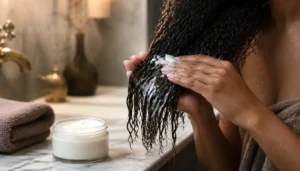
Buying the right conditioner only gets you halfway there, how you apply it decides whether your porous hair actually holds onto that moisture. Timing, technique, and even temperature all play a role in getting these formulas to work the way they’re supposed to.
Here’s exactly how I walk my clients through the process, step by step.
Start With Clean, Damp Hair
Skip clean, damp prep and you’re setting deep conditioner up to fail before it starts.
Gently towel dry after washing, never wring, so hair stays damp, not soaking wet.
- Better product penetration
- Faster absorption
- Less dilution
- Reduced tangling
- True moisture retention
Finger-comb first. Soaking wet hair dilutes formulas and stalls processing time, undermining your hair porosity test results.
Focus on Mids and Ends
Your roots rarely need help, your mid-lengths and ends do all the suffering. Concentrate deep conditioner there for real Midshaft Moisture Delivery and cuticle smoothing where high porosity hair loses the most.
This targeted approach boosts Slip Enhancement Strategies, easing detangling, while emollients and humectants sink into damaged shafts instead of greasing your scalp. Regular Trimming for Efficacy keeps treated ends worth treating.
Use Heat When Beneficial
Warmth is your friend here, not your enemy. Gentle heat application, think warm towel or hooded dryer, temporarily lifts the cuticle so your deep conditioner actually penetrates instead of sitting on top.
This is heat enhances absorption in action, and blow dry distribution moves product evenly through high porosity strands for a genuine thermal seal moisture effect.
Leave on 10–30 Minutes
Ten minutes barely scratches the surface; thirty is where high porosity hair really drinks in. That’s your Moisture Penetration Window, the stretch where a deep conditioning treatment moves past the surface and into the fiber. Don’t exceed it, or you risk hygral fatigue.
Rich masks need the full range; lighter formulas do fine at ten. Timing your mask application matters as much as the product itself.
Rinse and Seal Moisture
How you rinse matters almost as much as what you applied. A cool rinse closes the cuticle, locking in humectants and boosting shine.
If your scalp tends to run oily between washes, try a natural hair mask for oily scalp to help balance oil production before you even reach for the rinse.
Follow with sealant application timing that counts: while hair’s still damp, smooth in a few drops of sealing oil. That’s your moisture barrier, emollients trapping hydration before air-drying steals it back. This post-rinse seal is what separates soft, bouncy strands from thirsty, frizzy ones.
Avoid Porous Hair Conditioning Mistakes
More conditioner isn’t always better for porous hair, and that surprises a lot of people. Your good intentions can actually backfire if you’re not paying attention to how your strands respond. Here are the habits worth breaking before they undo all your hard work.
Over-conditioning and Hygral Fatigue
When you fall for "more conditioner equals more moisture," your strands pay the price. Hygral fatigue hits high porosity hair fastest since open cuticles let water flood in past the point of no return.
- Swelling weakens protein bonds
- Elasticity drops
- Breakage follows
Cap deep conditioner at 30 minutes. Moisture balance isn’t about volume, it’s about timing and cuticle protection.
Using Protein Too Frequently
Timing matters, but so does frequency. Reaching for protein treatment for hair every wash creates protein buildup risks, especially for high porosity hair craving moisture, not more strengthener.
The result? A moisture barrier block, stiffness, and real elasticity loss. If detangling turns into a wrestling match, that’s your cue.
Space treatments out, and follow overload with clarifying after overload to restore your hair’s protein balance.
Leaving Masks on Overnight
Just leave it on all night" sounds tempting, but most deep conditioners aren’t built for that. Formulas designed for rinse-out use can cause residue buildup, transfer onto pillows, and oversaturate high porosity hair, leading to hygral fatigue instead of hydration.
Choose sleep-friendly formulas made for overnight wear, patch test first, and let thick masks set before bed to protect moisture retention and your pillowcase.
Skipping Regular Clarifying Washes
Overnight masks aren’t your only risk. Skipping clarifying washes lets product buildup and mineral deposits coat high porosity hair, causing moisture barrier blockage that no deep conditioner can penetrate.
Watch for dull color, oily roots, or scalp health decline. A monthly clarifying wash resets porosity, protects color vibrancy, and restores real moisture retention.
Maintain Moisture Between Wash Days
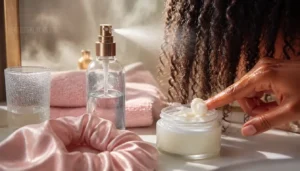
Wash day isn’t the only day your porous hair needs attention, it’s just the biggest one. Between shampoos, you’re managing moisture loss with smaller, smarter moves instead of a full conditioning session. Here’s what that day-to-day upkeep actually looks like.
Apply Leave-in to Damp Hair
Damp hair is prime time for your leave-in conditioner. Cuticles sit slightly open, so product penetration boost happens fast, giving high porosity hair real moisture retention instead of surface-level hydration.
Apply mid-lengths to ends first. This method helps even moisture distribution and detangling slip, while humectants and shea butter lock everything in before styling even starts.
Refresh Dry Areas Lightly
Between wash days, patchy dryness doesn’t need a full leave-in redo, just a targeted Moisture Refresh Technique.
- Mist Dry Spots with a lightweight spray or diluted leave-in conditioner
- Smooth a lightweight serum over rough cuticles
- Finger comb distribution blends humectants and emollients evenly
Shea butter-based sprays work well here. Skip roots, and you’ll dodge buildup while keeping porous strands soft between washes.
Seal Vulnerable Ends Sparingly
Ends take the most abuse, so they deserve care, but more isn’t better here.
Light End Sealing with a pea-sized sealing oil locks in moisture without weighing down high porosity hair.
Adjust for humidity adaptation: less product in summer, slightly more in dry winter air. Do a weekly end check and keep minimal product use your rule, sealing only what’s genuinely dry.
Reduce Heat Styling Damage
Every hot tool widens your cuticle a little more, which is why porous hair and heat need a truce, not a breakup.
Apply a heat protectant to damp strands, look for silicones or lightweight oils, and reapply during touch-ups.
Choose ceramic tools, keep settings under 300°F for fine hair, and diffuse-dry on low.
Follow with your deep conditioner routine to rebuild what heat borrows.
Protect Hair Overnight With Satin
Cotton pillowcases pull moisture straight out of porous strands. Satin vs cotton matters here: satin keeps hydration locked in and cuts friction that causes breakage.
- Reduces tangling and edge stress
- Preserves your deep conditioner and leave-in conditioner results
- Helps with edge protection and laid baby hairs
- Maintains curl pattern overnight
- Machine washable for hygiene
Pair a satin bonnet with lightweight leave-in for real overnight moisture lock.
Frequently Asked Questions (FAQs)
Which conditioner is best for high porosity hair?
For high porosity hair, a deep conditioner rich in humectants and shea butter works best, since it locks in moisture while emollients seal the cuticle. Pair with heat application for deeper penetration, and choose silicone free formulas when buildup is a concern.
What is the best way to treat porous hair?
Think of it like patching a leaky roof: you seal before you soak. Layer a deep conditioner with humectants and emollients, rotate protein weekly, use steam for uptake, and finish with a pH balancing routine to lock in moisture.
What hair conditioner doesn’t clog pores?
Look for non-comedogenic formulas with a lightweight, water-based conditioner base, glycerin, and light silicones.
Choose fragrance-free, sulfate-free options for high porosity hair, letting humectants and emollients hydrate without the scalp buildup heavy oils cause.
How often should you deep condition high porosity hair?
Porous hair drinks fast and dries out faster, so consistency beats guessing.
Give high porosity hair a deep conditioner weekly, twice during harsh seasons, adjusting for damage assessment and climate shifts, since overdoing conditioning frequency risks hygral fatigue.
Can low porosity hair also benefit from these conditioners?
Not really. Low porosity hair does better with a lightweight formula, water-based, and a leave-in conditioner. Heavier deep conditioners just sit on top, causing buildup instead of true moisture retention.
Do leave-in conditioners work better than rinse-out masks?
Neither wins outright.
Leave-in conditioners handle daily moisture retention on high porosity hair, while rinse-out masks deliver deeper ingredient absorption during longer application duration.
For real long term effectiveness, layer both, matching each formula’s suitability to your hair type and needs.
How do you test your hairs porosity at home?
No fancy tools needed. After clean hair preparation, try the Water Float Test in room temperature water, the Flour Stick Test, or a simple wet test observation, sinking strands or clingy flour signal high porosity hair and cuticle damage.
Are drugstore conditioners as effective as salon brands?
Yes, when matched by ingredients. Ingredient efficacy equivalence matters more than brand tier for high porosity hair.
Drugstore conditioners with hydrolyzed proteins and humectants support real moisture retention and effective hair porosity management, often at better price performance than salon lines.
Conclusion
Your cuticles have weathered a thousand tiny storms, and it’s time they finally found shelter.
The best conditioners for porous hair aren’t magic, they’re chemistry: cationic agents, hydrolyzed proteins, and humectants working together to close what damage opened wide.
Pick your formula based on what your strands ask for, not what the bottle promises.
Master that balance, and brittle, thirsty hair becomes a distant memory.
Your curls were always capable.
Now they finally have the right tools.