This site is supported by our readers. We may earn a commission, at no cost to you, if you purchase through links. This content is for general informational and educational purposes only and is not a substitute for professional medical, dermatological, or nutritional advice.
Run a wet comb through high porosity hair and you’ll feel it: water disappears fast, strands soak it up like a sponge, yet by midday your curls feel dry again. That’s the paradox of raised cuticles. Gaps in the hair shaft let moisture rush in and escape just as quickly, leaving color-treated or heat-styled strands thirsty no matter how often you condition.
The fix isn’t more product. It’s the right oil, applied the right way.
Natural oils for high porosity hair work by filling those cuticle gaps and slowing water loss, and picking between lightweight options like grapeseed and rich ones like avocado can transform how your strands hold onto hydration.
Table Of Contents
- Key Takeaways
- Top 9 Oils for High Porosity Hair
- 1. Avocado Oil for Hair and Skin Care
- 2. Aura Cacia Pure Grapeseed Oil 16 fl oz
- 3. NOW Solutions Grapeseed Oil 16 Ounce
- 4. Just Hemp Foods All-Natural Hemp Seed Oil
- 5. Nutiva Organic Cold Pressed Hemp Seed Oil
- 6. Manitoba Harvest Organic Hemp Seed Oil
- 7. Aura Cacia Hemp Seed Skin Oil
- 8. Desert Essence Pure Jojoba Oil 4 fl oz
- 9. Leven Rose Jojoba Oil Organic Cold Pressed
- Why High Porosity Hair Needs Oils
- How Natural Oils Seal in Moisture
- Best Lightweight Oils for Porous Hair
- Best Rich Oils for Porous Hair
- Choose Oils by Hair Concern
- How to Use Oils Effectively
- Prevent Buildup and Moisture Imbalance
- Frequently Asked Questions (FAQs)
- Conclusion
Key Takeaways
- High porosity hair has raised, gapped cuticles that let water rush in fast and escape just as quickly, so your curls can feel dry again within minutes of drying.
- The right oil seals those cuticle gaps and slows moisture loss, with lightweight picks like grapeseed and jojoba suited for daily use and richer oils like avocado and coconut ideal for deeper conditioning.
- Applying oil at the right time matters just as much as the oil itself, so seal it in on damp hair within five minutes of washing for the best moisture-locking results.
- More oil isn’t better for high porosity strands, so start with just a few drops, watch for buildup signs like limp curls or waxy roots, and always pair oil with a water-based moisturizer first.
Top 9 Oils for High Porosity Hair
Not every oil on the shelf earns a spot in your high porosity routine, so knowing which ones actually work makes all the difference.
For hair that struggles to absorb heavier formulas, this guide to lightweight oils for low porosity hair breaks down which options soak in fast instead of sitting on the strand.
You need options that seal moisture, smooth the cuticle, and fit your specific hair goals without weighing you down.
Here are nine standout picks worth adding to your cart.
1. Avocado Oil for Hair and Skin Care
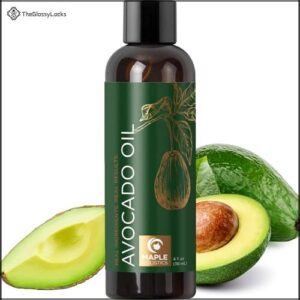
Think of avocado oil as the buttery workhorse of your hair care shelf. Its monounsaturated fats penetrate the shaft instead of just sitting on top, delivering vitamins A, D, E, plus biotin straight into damaged strands.
That fatty acid profile mirrors your scalp’s natural sebum, so it nourishes without clogging pores. With a smoke point near 520°F, it doubles as heat protection, shielding hair up to 450°F while calming frizz and boosting shine.
| Best For | Anyone looking for a natural, additive-free oil to moisturize dry skin, add softness and shine to hair, or strengthen brittle nails and cuticles. |
|---|---|
| Extraction Method | Cold-pressed |
| Volume | 4 fl oz |
| Purity | 100% pure |
| Skin Benefit | Moisturizes dry skin |
| Hair Use | Adds shine |
| Packaging Concern | Pump issues |
| Additional Features |
|
- 100% pure, cold-pressed avocado oil with no additives or synthetic fillers
- Deeply moisturizes dry skin and can help soothe eczema-prone areas
- Doubles as a lightweight carrier oil for essential oil blending
- Pump mechanism may dispense more oil than needed
- Spreads less easily than lighter oils like jojoba on dry skin
- Scent can vary slightly from batch to batch due to natural processing
2. Aura Cacia Pure Grapeseed Oil 16 fl oz
If avocado oil is the buttery workhorse, Aura Cacia’s grapeseed oil is the light, quick sidekick your routine’s been missing. Pressed from Vitis vinifera seeds, it’s fast-absorbing with practically no odor, so porous strands soak it up without that heavy, greasy weight.
Vitamin E tocopheryl acetate helps protect and moisturize, while Aura Cacia’s GC/MS testing confirms purity. Non-GMO Project Verified and gentle enough for sensitive skin, it’s a trustworthy carrier oil worth blending into your hair care lineup.
| Best For | Anyone with oily, acne-prone skin or porous, damaged hair looking for a lightweight, fast-absorbing oil that won’t leave a heavy residue. |
|---|---|
| Extraction Method | Cold-pressed |
| Volume | 16 fl oz |
| Purity | Non-GMO Verified |
| Skin Benefit | Moisturizes oily skin |
| Hair Use | Improves coat condition |
| Packaging Concern | Plastic bottle |
| Additional Features |
|
- Fast-absorbing and low-odor, making it comfortable for daily use on face, body, or hair
- Non-GMO Project Verified with GC/MS-tested purity for added peace of mind
- Versatile enough to blend with essential oils or aloe vera for homemade skin and hair treatments
- Packaged in plastic rather than dark glass, which some feel is less ideal for preserving oil quality
- Can leave a greasy residue if over-applied or spilled
- Bottle exterior may need occasional wiping to prevent oily buildup
3. NOW Solutions Grapeseed Oil 16 Ounce
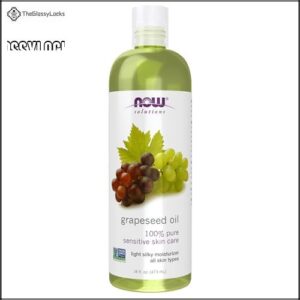
Another grapeseed option, but this one’s 100% pure and undiluted, sourced straight from grape seeds with no filler carrier oils mixed in.
The silky texture absorbs fast, leaving no heavy residue on strands or scalp, and its fatty acid profile (linoleic, oleic, stearic, palmitic, myristic, lauric) mirrors Aura Cacia’s nourishing benefits.
Made in the USA and never tested on animals, it’s budget-friendly for anyone stretching their hair care routine without sacrificing quality or purity.
| Best For | Anyone looking for an affordable, no-frills carrier oil to boost hair and scalp health without added fillers. |
|---|---|
| Extraction Method | Not specified |
| Volume | 16 fl oz |
| Purity | Non-comedogenic |
| Skin Benefit | Moisturizes sensitive skin |
| Hair Use | Conditions hair |
| Packaging Concern | Not specified |
| Additional Features |
|
- Lightweight, odorless texture that absorbs quickly without leaving residue
- Rich in nourishing fatty acids (linoleic, oleic, stearic, palmitic, myristic, lauric)
- Non-comedogenic and gentle enough for sensitive skin
- May not offer enough moisture for very dry areas like arms and legs on its own
- Some users notice a slight natural scent
- Needs careful dilution when mixed with essential oils to prevent skin irritation
4. Just Hemp Foods All-Natural Hemp Seed Oil
Grapeseed brings the shine, but if your strands need a heartier dose of fatty acids, hemp seed oil steps in nicely. Just Hemp Foods presses theirs cold, from Cannabis sativa seeds grown with low THC levels, keeping nutrients intact.
Expect a light green, nutty-smelling oil rich in omega-3 and omega-6 fatty acids, with linoleic acid leading the profile. Massage it into your scalp or mix a few drops into conditioner for extra slip and nourishment.
| Best For | Anyone looking for a plant-based hair and skin oil that delivers a strong dose of omega-3 and omega-6 fatty acids in one simple, all-natural product. |
|---|---|
| Extraction Method | Cold-pressed |
| Volume | 16.9 fl oz |
| Purity | USDA Organic |
| Skin Benefit | Soothes chapped skin |
| Hair Use | Not specified |
| Packaging Concern | Pouring difficulty |
- Cold-pressed and unrefined, preserving nutrients with a hexane-free extraction process
- Certified USDA Organic, Non-GMO Project Verified, and gluten-free
- Versatile use as a scalp treatment, skin moisturizer, or plant-based dietary fatty acid source
- Strong earthy or grassy scent may not appeal to everyone
- Thick viscosity can make pouring messy or imprecise
- Not evaluated by the FDA to diagnose, treat, cure, or prevent disease
5. Nutiva Organic Cold Pressed Hemp Seed Oil
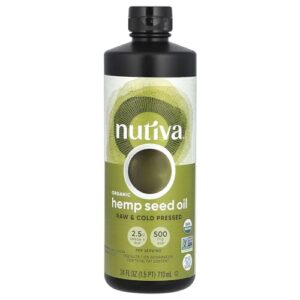
A pantry staple with real credentials, Nutiva’s hemp oil is USDA Organic certified and cold pressed from Canadian-grown, non-GMO seeds. Its 1:3 omega-3 to omega-6 ratio delivers about 8 grams of polyunsaturated fats per tablespoon, feeding brittle, porous strands from the inside out.
Beyond the fatty acids, you’re getting antioxidants and chlorophyll for cellular protection, plus a light green bottle that guards against light degradation. Massage a few drops into your scalp for added moisture and shine.
| Best For | Nutiva Organic Cold Pressed Hemp Seed Oil is best for anyone following a vegan, paleo, keto, or gluten-free lifestyle who wants an easy way to get more omega fatty acids into their diet or hair care routine. |
|---|---|
| Extraction Method | Cold-pressed |
| Volume | 24 fl oz |
| Purity | USDA Organic |
| Skin Benefit | Absorbs quickly |
| Hair Use | Not specified |
| Packaging Concern | Dark glass bottle |
| Additional Features |
|
- Cold-pressed from non-GMO, sustainably farmed Canadian hemp seeds and USDA Organic certified
- Packaged in a dark glass bottle that protects the oil from light degradation
- Versatile use in salad dressings, smoothies, low-heat cooking, or as a scalp treatment for added shine
- Not suitable for high-heat cooking or frying due to its low smoke point
- Needs refrigeration after opening and should be used within 3-4 months to avoid rancidity
- Nutty, grassy flavor and aroma may be too strong for some users
6. Manitoba Harvest Organic Hemp Seed Oil
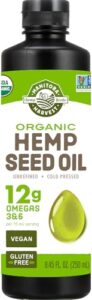
When quality control matters as much as nutrition, Manitoba Harvest earns its reputation. This brand has sourced hemp from controlled farm networks since the 1990s, and its cold-pressed extraction keeps oxidation low compared to heat-processed oils.
You’ll notice the amber glass bottle right away, a deliberate choice that shields the oil’s omega-rich profile from light damage. That balanced fatty acid ratio helps cell membrane integrity in each strand, meaning your porous hair holds onto the hydration it desperately craves.
| Best For | This oil is best for health-conscious shoppers who want a versatile, organic hemp oil for both cooking and skincare, especially those following vegan, gluten-free, keto, paleo, or kosher diets. |
|---|---|
| Extraction Method | Cold-pressed |
| Volume | 8.45 fl oz |
| Purity | USDA Organic |
| Skin Benefit | Topical moisturizer |
| Hair Use | Not specified |
| Packaging Concern | Arrives warm |
| Additional Features |
|
- Cold-pressed, unrefined, and hexane-free extraction preserves nutritional quality
- USDA Organic and Non-GMO Project Verified for peace of mind
- Versatile use as a finishing oil, in dressings and smoothies, or as a topical moisturizer
- May arrive warm during summer months, according to manufacturer notes
- Some customers report inconsistent taste
- A few reviewers have raised shelf-life concerns tied to the best-before date upon arrival
7. Aura Cacia Hemp Seed Skin Oil
While the last pick fed your strands, this one moonlights as a skin and scalp treatment. Aura Cacia’s version is cold-pressed from organic hemp with no heat or solvents, keeping that 3:1 omega ratio intact.
Massaged in nightly, its fatty acids help smooth lifted cuticles from the outside in, which is exactly the kind of fix explored in this homemade vs. store-bought hair moisturizer comparison.
Massage a few drops into your scalp before bed. The amber glass bottle protects potency, and the light, nutty oil sinks in fast, easing itchiness and dry patches without clogging pores.
| Best For | Anyone dealing with an itchy, flaky scalp or dry skin who wants a lightweight, fast-absorbing oil to soothe irritation and support healthier-looking hair, brows, and lashes over time. |
|---|---|
| Extraction Method | Cold-pressed |
| Volume | 4 fl oz |
| Purity | Organic hemp |
| Skin Benefit | Maintains skin barrier |
| Hair Use | Supports hair growth |
| Packaging Concern | Thick consistency |
| Additional Features |
|
- Cold-pressed with no heat or solvents, preserving a nutrient-rich 3:1 omega ratio
- Lightweight, fast-absorbing texture that soothes itching and dry patches without clogging pores
- Packaged in amber glass to help protect potency
- Texture can feel thicker than some users expect
- Earthy, nutty scent won’t appeal to everyone
- Needs consistent, regular use before hair growth results become noticeable
8. Desert Essence Pure Jojoba Oil 4 fl oz
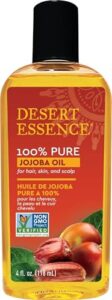
Your scalp actually produces something close to jojoba oil naturally, which is exactly why this pick works so well. Desert Essence keeps it simple: 100% pure, cold-pressed Simmondsia Chinensis, no fragrance, nothing synthetic added.
That liquid wax ester structure mimics sebum, balancing dry ends without drowning your roots in grease. Massage a few drops into your scalp to ease flakiness, or work it through strands as a lightweight pre-shampoo treatment. Vegan, cruelty-free, and gentle enough for sensitive skin too.
| Best For | Anyone dealing with a dry, flaky scalp or frizzy ends who wants a lightweight, natural oil that won’t leave hair looking greasy. |
|---|---|
| Extraction Method | Cold-pressed |
| Volume | 4 fl oz |
| Purity | 100% pure |
| Skin Benefit | Moisturizes without residue |
| Hair Use | Moisturizes hair |
| Packaging Concern | Spout pours excess |
| Additional Features |
|
- 100% pure, cold-pressed jojoba oil with no synthetic additives or fragrance
- Mimics your scalp’s natural sebum, so it moisturizes without clogging pores
- Versatile enough to use as a scalp treatment, makeup remover, or facial cleanser
- The bottle’s spout can pour more oil than needed, making it easy to overuse
- Requires a steady hand for precise, drop-by-drop application
- Low comedogenic rating doesn’t guarantee it’ll work for every skin type
9. Leven Rose Jojoba Oil Organic Cold Pressed
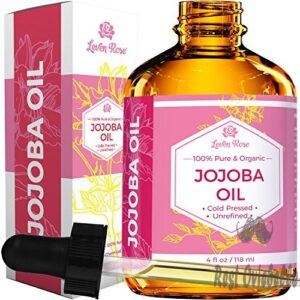
Two jojoba oils, two personalities. Where Desert Essence keeps things bare-bones, Leven Rose adds organic certification and a slightly nuttier, more noticeable scent some people genuinely prefer.
Cold-pressed and unrefined, it’s packed in a dark glass bottle to guard those fatty acids and antioxidants from light exposure. Work a few drops through damp ends before bed, or use it as a leave-in to seal cuticles overnight. Your strands wake up softer, less prone to snapping when you brush.
| Best For | People with dry skin, hair, or nails who want a pure, unrefined jojoba oil with organic certification and don’t mind a slightly nuttier natural scent. |
|---|---|
| Additional Features |
|
- 100% pure, organic, cold-pressed jojoba oil in a light-protective dark glass bottle
- Versatile use for skin, hair, cuticles, and nails, plus effective waterproof makeup removal
- Non-greasy, fast-absorbing formula that soothes eczema, acne-prone, and chapped skin
- Natural scent is more noticeable and may not suit those sensitive to smell
- May not be moisturizing enough on its own for very dry skin types
- Glass bottle requires careful handling to avoid breakage
Why High Porosity Hair Needs Oils

High porosity hair works against you at every turn, soaking up moisture fast and then losing it just as quickly. That constant back-and-forth leaves your strands vulnerable to damage in ways you can actually prevent. Here’s exactly what’s happening beneath the surface, and why oil deserves a permanent spot in your routine.
Rapid Moisture Loss
Ever notice your hair feels dry again minutes after towel-drying? That’s rapid moisture loss at work, high porosity hair absorbs water fast but can’t hold it.
Evaporation speed outpaces normal hair because open cuticles act like tiny escape hatches.
- Air-dries in under 5 minutes
- Humidity swings worsen dryness
- Heat damage speeds evaporation
- Chemical processing accelerates loss
This happens because raised, open cuticles allow moisture to easily leach out before it can be absorbed into the hair shaft.
Penetrating oils help slow that exit.
Raised Cuticle Gaps
Those escape hatches have a name: raised cuticle gaps, microscopic openings 50-200 microns wide between damaged scales. Heat, chemicals, and UV exposure curl edges outward into funnel-shaped holes instead of neat, flat layers.
Run fingers from ends to roots and you’ll feel the bumps. Oils fill these channels, creating a protective barrier that helps moisture retention and hair elasticity.
Frizz and Breakage
Humidity turns those cuticle gaps into open doors, letting moisture rush in unevenly and swell the hair shaft until curl patterns distort into frizz.
- Fibers absorb humidity fast, then swell unevenly
- Keratin bonds lose strength under swelling stress
- Unsealed strands invite uncontrolled moisture uptake
- Dry detangling multiplies breakage risk
- Winter air adds brittleness on top of frizz
Oils create a humidity protection layer, supporting breakage prevention and steady moisture retention.
Chemical and Heat Damage
Flat irons above 356°F lift and crack the cuticle permanently, while bleach lowers that threshold even further.
Heat damage signs include rough texture and dullness that won’t smooth out.
Avocado oil’s 520°F heat point makes it a solid thermal protection oil, coating strands before styling.
For more options, explore natural heat protectants for hair that help seal in moisture and minimize heat-related damage.
This hair moisture barrier helps chemical treatment recovery and keeps high porosity hair from drying out further.
Protein Loss Protection
Beyond heat, high porosity hair loses actual protein through raised cuticles, weakening strands from within.
Protein binding oils like coconut oil form lipid-protein bonds that reduce protein loss by up to 40%.
- Weekly protein masks rebuild strength
- Monthly protein treatments maintain keratin repair
- Collagen peptide products penetrate the cortex
- Oils seal in what protein treatments restore
This combo boosts hair elasticity and keeps your moisture barrier intact.
How Natural Oils Seal in Moisture
Now that you know why high porosity hair struggles to hold onto moisture, it’s time to look at how oils actually fix that problem.
Each oil works through a handful of specific mechanisms, from sealing the cuticle to shielding strands against outside stressors.
Here’s exactly what’s happening beneath the surface every time you apply one.
As vitamin C blocks the tyrosinase enzyme and fuels collagen production, understanding this science behind vitamin C serum benefits helps explain why consistent use gradually brightens skin and softens fine lines.
Occlusive Moisture Barrier

Think of oil as a raincoat for your strands. Heavy, occlusive oils create barrier film formation, a hydrophobic layer that physically traps water inside the shaft instead of letting it evaporate.
This occlusive oil function delivers real moisture retention enhancement, so your hair stays hydrated longer, feels stronger, and functions as a nongreasy moisturizer when applied correctly.
Cuticle Gap Smoothing

Picture your cuticle under a microscope: raised, jagged scales with gaps wide enough for moisture to escape. Fatty acids from oils like avocado and jojoba slide into those gaps, delivering true gap filling action that helps cuticle layer repair.
The payoff? Smoother strands, better hair protein retention, and a noticeable shine enhancement you’ll actually see in the mirror.
Reduced Water Evaporation

Once oil coats each strand, it forms a protective film layer that limits water vapor transmission, similar to how pool covers cut evaporation by up to 95%.
- Blocks direct water-to-air contact
- Slows evaporation rate reduction
- Creates a humid microenvironment
- Boosts nongreasy moisturizer benefits
That barrier function keeps your hair moisture retention steady, so strands stay hydrated instead of drying out hour by hour.
Improved Elasticity and Shine

Ever notice how healthy hair seems to bend without snapping? That’s strand flexibility at work. Coconut oil and argan oil boost hair elasticity by smoothing the cuticle, while flatter scales trigger better light reflection for real shine.
| Oil | Elasticity Boost | Shine Enhancement |
|---|---|---|
| Coconut | High | Moderate |
| Argan | Moderate | High |
| Olive | High | Moderate |
Environmental Damage Defense
Sun, smog, and styling tools all chip away at porous strands. UV protection oils like wheatgerm (SPF ~20) and raspberry seed guard against solar damage, while antioxidants fight free radicals.
- Wheatgerm oil: vitamin E, SPF 20
- Grapeseed oil: resveratrol repairs fibers
- Jojoba oil: blocks chlorine, minerals
- Coconut oil: lauric acid shields proteins
These pollutant barrier oils seal cuticles, preventing environmental breakdown.
Best Lightweight Oils for Porous Hair
Not every oil needs to feel heavy to get the job done, especially when your strands are already prone to soaking up too much and holding onto too little.
Lightweight oils absorb fast, skip the greasy residue, and still deliver real moisture where high porosity hair needs it most.
Here are five options worth adding to your routine.
Grapeseed Oil
Winemaking leaves behind grape seeds, and pressing them yields a pale, lightweight texture oil that soaks into high porosity hair without heaviness.
Rich in linoleic acid (65-75%) plus vitamin E and antioxidants like catechins, it helps with hair cuticle sealing and hair hydration.
Its high smoke point signals stable, gentle fatty acids that boost hair elasticity improvement and everyday shine.
Jojoba Oil
Grapeseed brings shine, but jojoba oil brings something closer to biology. Its jojoba sebum similarity means it reads as familiar to your scalp, absorbing rather than sitting on top.
Cold pressed extraction preserves its wax ester composition (roughly 98% wax), plus vitamin E for antioxidant stability. For hair porosity struggles, it seals the hair cuticle, locking in hair moisture and reinforcing hair strength without grease.
Marula Oil
If jojoba mimics your scalp, marula oil courts your hair’s chemistry directly. Its 70-78% oleic acid penetrates fast, boosting elasticity while g-tocopherol guards against damage.
- Absorbs quickly, no residue
- Resists oxidation naturally
- Nourishes without weighing hair down
For high porosity hair fighting constant moisture loss, marula oil’s stability makes it a dependable daily ally.
Moringa Oil
Moringa oil brings a fatty acid profile close to olive oil, rich in oleic acid for real hair moisture retention. Look for cold-pressed extraction, it keeps more nutrients intact than solvent-processed versions.
Pairing moringa oil with the right butter makes a real difference—yellow vs. white shea butter each offers distinct benefits worth understanding before building your routine.
Its antioxidant properties help defend high porosity hair from daily wear. For hair elasticity and breakage prevention, massage it into roots overnight, it even helps maintain scalp sebum balance.
Rosehip Oil
Rosehip oil packs over 92% unsaturated fatty acids, mostly linoleic and linolenic, for serious hair moisture retention in high porosity hair.
Its trans-retinoic acid (vitamin A) helps scalp moisturizing and sebaceous function, while vitamin C aids hair cuticle repair. Massage into strands for a smoothing, elasticity-boosting effect, thanks to its light, fast-absorbing texture that won’t weigh porous hair down.
Best Rich Oils for Porous Hair
Sometimes your hair needs more than a light touch, especially when porosity leaves it thirsty for real moisture. Rich, heavier oils step in here, coating strands with a thicker layer of protection that lighter formulas just can’t match. Here are five heavyweight options worth adding to your routine.
Coconut Oil
Coconut oil earns its reputation because it does something most oils can’t: it actually gets inside the hair cuticle instead of just sitting on top. Thanks to lauric acid and its low molecular weight, penetration runs deep, cutting protein loss and boosting moisture retention.
It’s solid below 77°F, liquid above, warm it in your palms first.
Olive Oil
Kitchen staple, cuticle savior: olive oil brings oleic acid (up to 83%) for deep conditioning and a hydrolipidic film that slows moisture loss all day.
| Property | Benefit | Best For |
|---|---|---|
| Oleic acid | Sebum-like sealing | Coarse hair |
| Polyphenols | Antioxidant protection | Damaged strands |
| Squalene | Scalp nourishment | Dryness |
Choose extra virgin, cold-pressed, for maximum hair repair power.
Avocado Oil
Pressed straight from the flesh, avocado oil delivers oleic acid (about 60%) for true deep conditioning and hair repair.
Its vitamin E and polyphenols nourish the cortex, while a high smoke point signals real heat resistance and shelf stability when stored properly.
For high porosity hair, this whole-fruit oil balances richness with genuine strand-strengthening power.
Baobab Oil
An amber-hued oil from Africa’s "tree of life," baobab brings a balanced fatty acid profile to high porosity hair: roughly 35% linoleic, 30% oleic, plus stearic acids for real hair strength improvement.
- Boosts moisture retention
- Softens strands
- Nourishes scalp
- Cold-pressed purity
- Lightweight feel
Its nutrient-dense composition helps cuticle protection while enhancing hair elasticity, without weighing porous strands down.
Castor Oil
Thick, dark, and packed with 85-95% ricinoleic acid, castor oil is the heavyweight champ for high porosity hair prone to breakage.
This unique fatty acid stimulates hair growth, balances scalp sebum, and seals cuticle gaps to lock in moisture. Massage it into your scalp weekly. You’ll notice thicker strands, less breakage, and real protein loss prevention over time, thanks to its deep conditioning power.
Choose Oils by Hair Concern
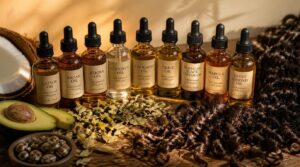
Not every strand of high porosity hair faces the same struggles, so your oil choice should match what you’re actually dealing with. Maybe it’s constant dryness, maybe it’s breakage, or maybe your scalp needs as much attention as your ends. Here’s how to pick the right oil for your specific concern.
Dryness and Moisture Loss
Your hair can lose 60-70% of absorbed water in just 10 minutes of air drying, that’s how fast moisture loss happens with wide cuticle gaps.
High porosity hair can lose up to 70% of its moisture within just 10 minutes of air drying
Oils like avocado and olive create a moisture sealing barrier, slowing evaporation.
Layering a leave-in with oil boosts retention from 25% to 55% within an hour, giving your strands real hydration balance.
Frizz and Dullness
Once moisture retention is handled, frizz and dullness are the next battle. Raised cuticles scatter light instead of reflecting it, leaving strands looking flat.
Grapeseed and jojoba oils smooth the surface for real Cuticle Smoothing and Shine Enhancement. A few drops offer Humidity Protection, keeping puffiness down while restoring genuine hair shine to porous, frizz-prone hair.
Breakage and Weak Strands
Snapping strands mean your cuticles are gapping open, letting protein leak out. Protein repair oils like avocado fill those gaps directly, while castor oil’s ricinoleic acid strengthens hair bonds.
Try hot oil reinforcement, warming oil opens the shaft for deeper penetration. Flaxseed offers elasticity boosting treatments too.
Add scalp strengthening massage with jojoba to cut breakage right at the root.
Heat and Color Damage
Blow dryers and flat irons dehydrate the cuticle fast, fading color and worsening high porosity hair damage.
- Argan oil protects up to 450°F
- Coconut oil limits protein loss
- Baobab oil helps with color protection
- Marula oil seals without weighing down
- Rosehip oil repairs UV damage
Apply heat protection oils before styling, always keeping tools below 300°F for safer cuticle sealing.
Scalp Dryness and Thinning
Once color and heat stress fade, attention often shifts upward, to the scalp itself. Tight, flaky skin signals rapid water loss, not just dandruff.
Jojoba oil mimics natural sebum, restoring scalp hydration balance fast. Castor oil helps follicle health and hair growth stimulation through ricinoleic acid, easing thinning hair causes tied to dryness and preventing further protein loss.
Together, these oils support jojoba oil’s moisture-sealing and cuticle-smoothing benefits for natural hair, reducing breakage while keeping strands elastic and frizz-free.
How to Use Oils Effectively
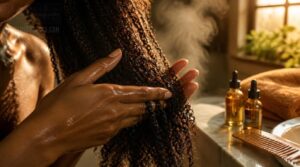
Picking the right oil is only half the equation, since how you apply it matters just as much for high porosity strands. Timing, layering, and technique all affect how well that oil penetrates versus just sitting on top of your hair. Here are five methods worth adding to your routine.
Pre-shampoo Oil Treatment
Think of prepoo as a buffer for high porosity hair. Apply oil to dry hair in sections, finger-detangle, and let it sit 30 minutes or overnight before shampooing.
- Coats hair before water rushes in
- Eases detangling, less breakage
- Helps cuticle alignment
- Buffers chemical or heat steps
- Allows real oil absorption time
Conditioner and Mask Booster
Boost your deep conditioning by stirring a booster oil into your mask right after rinsing conditioner, while hair’s still damp. This moisture lock technique fills cuticle gaps fast.
| Oil | Best For | Timing |
|---|---|---|
| Avocado | Coarse strands | Post-rinse |
| Jojoba | Daily use | Damp hair |
| Grapeseed | Fine hair | Leave-in seal |
Hot Oil Treatment
For deeper penetration, warm your oil to 100–110°F, just enough to open the cuticle without stripping it.
Massage in for 2–3 minutes, then cover with a shower cap for 30–45 minutes (thick hair tolerates the full range, fine hair needs only 20).
Rinse cool, shampoo thoroughly, and limit hot oil treatments to weekly or bi-weekly for lasting hair strength.
Damp Hair Moisture Seal
Timing is everything: apply your sealing oil within five minutes of washing, while hair’s still damp, not dripping.
Blot with a microfiber towel first, then smooth oil over slightly open cuticles for better absorption and cuticle smoothing.
- Traps moisture inside the cortex
- Reduces evaporation by up to 40%
- Shields against low humidity for 3-5 days
That’s real protection for high porosity hair, sealed in and ready to hold.
Dry Hair Finishing Oil
Your last styling step matters more than you’d think. Once hair’s fully dry, a few drops of lightweight oil (grapeseed or jojoba work beautifully) tame flyaways and lock in softness.
| Do This | Skip This |
|---|---|
| Warm oil, apply to ends | Pouring oil on scalp |
| 1-2 drops max | Heavy, greasy amounts |
| Focus on split ends | Ignoring frizz-prone spots |
Prevent Buildup and Moisture Imbalance

Oils work wonders for high porosity hair, but more isn’t always better. Getting the balance right takes a little know-how, especially when your strands are already prone to soaking up product fast. Here’s what to keep in mind so your hair stays nourished, not weighed down.
Start With Small Amounts
More oil doesn’t mean more moisture, especially with high porosity hair. Start small gradually, using just 2-3 drops of jojoba oil or argan oil on damp, towel-squeezed strands, avoiding the roots.
Layer after humectants like glycerin, then wait 24 hours. Monitor elasticity daily, and adjust based response, whether that’s coconut oil for deeper penetration or simply staying put at your current amount.
Adjust for Hair Density
Your amount from step one is just a starting point.
High density hair needs more oil per section, so part your hair into sections for even coverage from scalp to strand.
Low density hair? Go lighter, since fewer strands hold less oil before hitting buildup, leaving hair looking flat instead of nourished.
Clarify When Buildup Appears
Your scalp tells the truth even when your eyes doubt it. Watch for a waxy, sand-like coating at the roots, hair going limp within hours of washing, or that dull, darker tone from light bouncing off residue instead of shine.
Itching or odor after three to four weeks means buildup won out. Catch it early and your hair porosity management stays on track.
Balance Oils With Hydration
Buildup often means oil without water underneath. Hydration before oil always comes first: apply a water-based moisturizer or leave-in on damp hair, then seal with a penetrating oil using light strokes.
This layering respects your hair’s porosity and absorption rate, letting humectants hold moisture while oil locks it in, keeping high porosity strands balanced instead of coated.
Watch for Over-conditioning
Too much of a good thing still counts as damage. Watch for greasy roots with frizzy ends, limp curls, or hair that feels mushy and won’t hold a bun.
These are classic signs of over-conditioning, usually from heavy butters or daily deep treatments that overwhelm your hair’s porosity level. Clarify weekly, add protein, and give strands a hydration break to restore balance.
Frequently Asked Questions (FAQs)
How often should I oil high porosity hair?
Once a week works well for most routines, with a light daily mist and oil seal between washes. Watch how fast your strands drink it in and adjust your oil frequency guide from there.
Can oils alone fix high porosity hair?
Not by themselves. Oils work as a sealant, not a source, locking in moisture rather than supplying it. High porosity hair needs hydration layering plus occasional protein balance to truly repair the cuticle and curb breakage.
Do oils work better on wet or dry hair?
Both, depending on your goal. Damp hair boosts oil absorption rate and traps existing moisture before it evaporates, while dry hair sealing smooths raised cuticles and tames frizz, so match application technique to whether you’re chasing hydration or finish.
Is high porosity hair genetic or caused by damage?
Truth is, it’s both. Inherited hair traits shape your baseline cuticle structure, while heat, chemicals, and sun exposure widen those gaps further, meaning genetics loads the gun and damage often pulls the trigger.
How long until oils show visible results?
Softness shows up after that first wash, with real cuticle smoothing and frizz control building over several uses. Full moisture retention benefits usually appear within one to three days, while buildup risks emerge after two to six weeks of frequent application.
Conclusion
Worried oils will weigh your curls down? That’s only true when you skip the porosity match.
Choosing natural oils for high porosity hair based on your strand’s actual needs, not guesswork, changes everything. Grapeseed lifts, avocado nourishes, jojoba balances. Apply on damp hair, seal with your fingertips, and let the cuticle close around what it’s absorbed.
Your curls aren’t broken. They just needed the right key. Now you have nine.