This site is supported by our readers. We may earn a commission, at no cost to you, if you purchase through links. This content is for general informational and educational purposes only and is not a substitute for professional medical, dermatological, or nutritional advice.

Jojoba oil isn’t an oil. It’s a liquid wax, and that distinction changes everything for your hair. While most plant oils break down over time and sit heavy on your strands, jojoba’s wax ester structure mirrors your scalp’s own sebum so closely that your hair accepts it without resistance.
For natural hair especially, that chemical kinship matters. Coily and curly strands lose moisture faster than most hair types, and jojoba oil for natural hair helps by forming a hydrophobic film that seals hydration inside each strand. The strength shows up in your ends, your edges, and every style you build.
Table Of Contents
- Key Takeaways
- What is Jojoba Oil for Natural Hair?
- Benefits of Jojoba Oil for Natural Hair
- How to Use Jojoba Oil
- How Often to Apply Jojoba Oil
- Jojoba Oil Safety and Growth Limitations
- Frequently Asked Questions (FAQs)
- What are the disadvantages of jojoba oil for hair?
- Can I apply jojoba oil directly on hair?
- Is jojoba oil good for African hair?
- What oil is best for African American hair?
- What other benefits does jojoba oil provide?
- How often should jojoba oil be used on natural hair?
- Can jojoba oil help to prevent split ends?
- Are there any potential side effects of using jojoba oil?
- How long does it take to see results from jojoba oil?
- Can jojoba oil be mixed with essential oils?
- Conclusion
Key Takeaways
- Jojoba oil is actually a liquid wax, not a true oil, and its wax ester structure closely mimics your scalp’s sebum, so it spreads easily, resists rancidity, and forms a light hydrophobic film that seals moisture into each strand.
- Its main benefits for natural hair come from sealing and protection rather than feeding the hair: better moisture retention and elasticity, less breakage for improved length retention, a balanced and comfortable scalp, and smoother cuticles for shine and frizz control.
- Use it sparingly—2–3 drops warmed between palms on damp mid-lengths and ends, or mixed into masks and leave-ins—applying every 3 to 7 days (less often for fine hair), and reduce frequency if you notice waxy buildup, dullness, or coated-feeling hair.
- Jojoba won’t speed up follicle growth; apparent "growth" is really reduced breakage and length retention, and since allergic reactions like contact dermatitis are possible, patch-test on your inner arm for 24 hours before scalp use.
What is Jojoba Oil for Natural Hair?
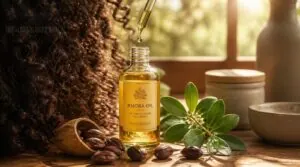
Jojoba oil isn’t technically an oil at all. It’s a liquid wax pressed from the seeds of the jojoba plant, and its chemistry is built on long-chain wax esters instead of the triglycerides found in most seed oils. That difference changes everything for your natural hair.
If you’re weighing it against other hair favorites, this argan oil versus jojoba oil comparison breaks down how each one behaves on natural hair.
Jojoba oil is actually a liquid wax whose sebum-like chemistry makes it uniquely suited to natural hair
Because it so closely resembles your scalp’s own sebum, jojoba oil feels familiar to your skin and spreads smoothly without that heavy, greasy drag. It coats each strand in a light hydrophobic film that slows water loss from the hair’s surface, supporting hair moisturization between wash days.
You’ll also love its stability. Wax esters resist rancidity far better than polyunsaturated oils, so your bottle lasts longer and performs consistently. For scalp health, that same film lubricates and buffers the skin’s surface, making jojoba oil a quiet workhorse for sebum regulation and everyday comfort.
Benefits of Jojoba Oil for Natural Hair
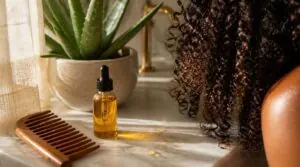
Here’s where jojoba oil earns its place on your shelf. This liquid wax doesn’t just sit on your strands; it works with them. Below, you’ll find the four biggest benefits for natural hair, from moisture and elasticity to frizz control.
Moisture and Elasticity
When your hair drinks in water but loses it fast, jojoba steps in as your moisture locksmith. Its wax esters seal hydration inside each strand, boosting hair elasticity and flexibility.
Try this:
- Apply to damp hair
- Seal your leave-in with a few drops
- Focus on ends for hair strand protection
- Refresh midweek
- Watch bend return, snap disappear
Scalp Balance and Comfort
That moisture you sealed in? Your scalp wants comfort too. Jojoba mimics your skin’s own sebum, so it spreads thin, never tacky, helping scalp balance without clogging. Its gentle film eases tightness and helps scalp hydration, while plain, cold-pressed versions help with scalp inflammation reduction. Skip fragranced blends, massage a few drops in, and let your scalp microbiome balance settle naturally.
If you’re dealing with product buildup alongside dryness, a rinse with one of the best hair clays for men can lift residue without stripping that fresh moisture.
Breakage and Length Retention
Here’s the secret: growth happens at your scalp, but length retention happens on your strands. Jojoba’s wax-ester film lowers friction, so fibers stop snapping mid-shaft.
- Hair breakage prevention at high-stress ends
- Hair elasticity improvement through slower water loss
- Hair strand fortification via lightweight slip
- Hair moisture retention between wash days
Less snapping means every growth checkpoint counts. That’s hair growth stimulation you can actually see: length you keep.
Shine and Frizz Control
Everything comes down to your cuticle. When it lies flat, light bounces back; when it lifts, frizz wins.
That’s also why a good conditioner matters—it smooths the cuticle down so shine has a fighting chance.
Jojoba oil works as a liquid wax ester, coating strands in a thin, hydrophobic film that delivers hair cuticle smoothing and real frizz control. Apply just two or three drops to damp length, distribute evenly, and watch your hair shine transform.
How to Use Jojoba Oil
You’ve got the oil. Now let’s make it work for your hair. There are four simple methods to master, and each one targets a different goal, from deep moisture to scalp health. Pick your favorite or rotate through all of them.
Direct Hair Application

Ready to feel the difference in one pass? Direct application is your fastest win.
- Warm 2–3 drops between your palms first
- Smooth over damp mid-lengths and ends, skipping the scalp
- Rake through with fingers for even coverage
- Use a pea-sized amount on fine or low-porosity strands
Jojoba oil’s wax esters seal in hydration, boost slip, and cut tangles. Less breakage, more length retention. That’s freedom in a bottle.
Warm Oil Treatment
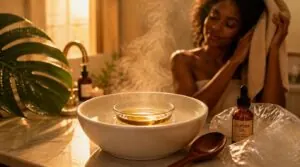
Imagine this: golden jojoba oil warmed in a bowl of hot water, steam curling upward, your coils waiting. That’s the magic of a warm oil treatment.
Gentle heat thins the oil, helping it glide along every strand and soak into your hair’s outer layers. Apply generously, cover with a shower cap, and wait 20 to 30 minutes. Insulation keeps warmth locked in, softening your natural hair for smoother, shinier results.
Skip the microwave scorch; lukewarm protects your cuticles. Rinse, and feel the hair hydration payoff.
Scalp Massage

Here’s a number worth remembering: just 4 minutes daily of scalp massage appears in well-known Japanese research on hair thickness. You don’t need an hour.
Warm a few drops of jojoba oil between your palms, place fingertips (never nails) on your scalp, and use small circular kneading motions. Work front to back, covering every zone so oil spreads evenly.
Gentle pressure wins; aggressive rubbing irritates follicles and sabotages your scalp health. Keep sessions short, stay consistent for weeks, and let improved circulation and comfort do the quiet work while your natural hair thrives.
Mixing With Hair Products
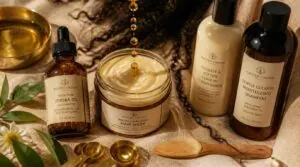
Want more mileage from one bottle? Mix it in. Jojoba oil mixes easily into your favorites:
- Hair mask: add 3 drops for deeper softness
- Leave-in conditioner: boosts slip and frizz control
- Prestyling treatment: light pre-wash protection
- Shampoo: counters stripping surfactants
Start small, since too much oil slows hair oil absorption and leaves residue. Water-based mixes may separate; shake before use.
How Often to Apply Jojoba Oil
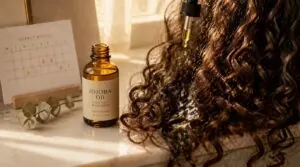
Here’s the truth: more oil isn’t more moisture. Jojoba coats your strands rather than soaking in, so every application layers on top of the last. Your sweet spot? Every 3 to 7 days, adjusting to how your hair actually feels.
Fine hair gets greasy fast, so stretch those intervals. Coarse or high-porosity strands can handle more frequent touch-ups. If you’re doing a scalp massage with jojoba, keep it to once or twice weekly so buildup never outpaces your wash routine.
Watch for these signals:
- Waxy flakes or persistent itch at the scalp
- Hair that feels coated but never supple
- Dullness appearing right after application
- Ends still tangling despite oil
- Needing more product each session for the same effect
Notice any of these? Reduce frequency, don’t add oil. Pair jojoba over a water-based moisturizer, and you’ll stretch the time between applications while locking in hair hydration.
Jojoba Oil Safety and Growth Limitations
Getting your frequency right is one part of smart jojoba use. Safety matters too.
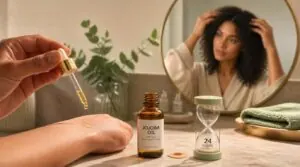
Allergic reactions are rare but real. Jojoba contains organic compounds that can cause contact dermatitis in sensitized users, ranging from mild redness to a full rash. If your scalp is already inflamed or you have a history of product reactions, do a patch test first: apply a small amount to your inner arm and wait 24 hours before committing to your scalp.
Here’s what jojoba can’t do: speed up follicle growth. What looks like new growth from an oil routine is usually reduced breakage, helping you retain length without changing your scalp’s biology. If hair thinning is tied to hormones, thyroid issues, or anemia, no oil corrects that. See a specialist.
Frequently Asked Questions (FAQs)
What are the disadvantages of jojoba oil for hair?
What are the disadvantages of jojoba oil for hair? Overuse causes buildup, leaving hair limp. Sensitive scalps may face an allergic reaction, so patch test. Results also vary with hair porosity balance, and growth claims remain unproven.
If you’re also coloring or bleaching while using oils, check whether you can dye your hair twice in one day before layering treatments.
Can I apply jojoba oil directly on hair?
Yes, and it’s one of the easiest ways to use it. Direct application works best with just a few drops on your mids and ends. This seals in hair hydration, boosts shine, and helps scalp health.
Is jojoba oil good for African hair?
Absolutely, and here’s why. Jojoba oil mimics your scalp’s natural sebum, so it balances moisture without greasy buildup. It soothes dryness, tames frizz, and reduces breakage, protecting your strands and supporting healthier scalp conditions.
For even deeper nourishment, pairing jojoba oil with targeted hair growth serums formulated for locs can further strengthen your scalp and encourage longer-lasting definition.
Rich in fatty acids, vitamins, and antioxidants, it also offers benefits of jojoba oil like heat protection and dandruff prevention.
What oil is best for African American hair?
What oil is best for African American hair? Jojoba oil tops the list. It mimics your scalp’s natural sebum, delivering moisture retention and scalp health without clogging follicles. Pair it with Jamaican Black Castor Oil for hair growth.
What other benefits does jojoba oil provide?
What other benefits does jojoba oil provide? Beyond moisture, it boosts hair shine improvement, eases detangling, helps scalp health, aids dandruff treatment comfort, and shields strands with a light protective film.
How often should jojoba oil be used on natural hair?
How often should jojoba oil be used on natural hair? Once or twice weekly works for most. Apply lightly on damp strands each wash day, massage your scalp occasionally, and dial back if buildup or greasiness appears.
Can jojoba oil help to prevent split ends?
Can jojoba oil help to prevent split ends? Indirectly, yes. It can’t repair already-split fibers, but hair strand sealing cuts friction and dryness, supporting hair strengthening and hair strength for better hair breakage prevention.
Are there any potential side effects of using jojoba oil?
Yes, though they’re rare. You might experience scalp irritation, allergic reactions, clogged pores, or buildup causing limp hair. Patch-test first, avoid rancid oil, keep it away from your eyes, and skip use over fungal issues.
How long does it take to see results from jojoba oil?
How long does it take to see results from jojoba oil? Expect softer, shinier hair within days to two weeks. Reduced breakage and better length retention take weeks to months of consistent use.
Can jojoba oil be mixed with essential oils?
Like a soloist joining a choir, your jojoba oil blends beautifully with essential oils. Dilute to 1–2%, shake gently, patch test first, and your scalp health and hair moisture stay protected.
Conclusion
Here’s a number worth remembering: your scalp produces roughly half the sebum at 50 that it did at 20. That’s why mature coils crave support.
Jojoba oil for natural hair steps in like a body double, mimicking what time takes away. Seal your ends, soothe your scalp, and watch breakage fade.
Your hair doesn’t need more products. It needs the right chemistry. Start tonight, and let every strand thank you.