This site is supported by our readers. We may earn a commission, at no cost to you, if you purchase through links. This content is for general informational and educational purposes only and is not a substitute for professional medical, dermatological, or nutritional advice.
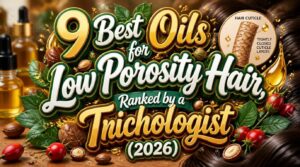
Most people with low porosity hair aren’t losing the battle because of what they’re doing wrong—they’re losing it because of what they’re putting on. The wrong oil doesn’t just fail to absorb; it parks itself on top of your cuticles, traps moisture out, and leaves your hair with that heavy, greasy film that no amount of washing seems to fix.
Low porosity hair has a structural reason for this. Its tightly packed cuticle scales lie so flat and close together that most oils simply can’t penetrate—they sit on the surface and oxidize, creating buildup that turns tacky over time.
The best oils for low porosity hair work with that biology, not against it. Molecular weight, viscosity, linoleic acid content—these aren’t just label buzzwords. They’re the variables that separate an oil that actually feeds your hair from one that suffocates it.
Table Of Contents
- Key Takeaways
- Best Oils for Low Porosity Hair: What to Look For
- Top 9 Oils for Low Porosity Hair Reviewed
- How Low Porosity Hair Absorbs Oils
- Oils to Use or Avoid for Low Porosity Hair
- How to Apply Oils to Low Porosity Hair
- Frequently Asked Questions (FAQs)
- What oils are good for low porosity hair?
- What is the difference between low-porosity and high-porosity hair?
- How often should I oil my low-porosity hair?
- What are the benefits of using oils for low-porosity hair?
- How can I tell if an oil is suitable for low-porosity hair?
- Are there any other treatments that can help low-porosity hair?
- Can I mix different oils for better results?
- How often should I oil low porosity hair?
- Does water temperature affect oil absorption rate?
- Should I apply oil on wet or damp hair?
- Conclusion
Key Takeaways
- Molecular weight and viscosity determine whether an oil penetrates low porosity cuticles or parks on the surface, making lightweight options like grapeseed and jojoba far more effective than denser oils like coconut or olive.
- Warming oil to around 104°F before applying it to damp hair measurably increases cuticle permeability and can boost absorption by up to 42%, turning technique into a clinical advantage.
- Heavy oils, waxes, silicones, and butters actively block moisture absorption on low porosity strands by creating occlusive surface films that resist rinsing and compound with every wash cycle.
- Clarifying every one to two weeks isn’t optional maintenance — it’s the reset that keeps your cuticle surface clear enough for any oil to work in the first place.
Best Oils for Low Porosity Hair: What to Look For
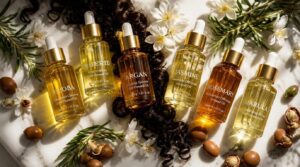
Not every oil belongs on low porosity hair — the wrong one just sits there, blocking the moisture you’re trying to lock in. Choosing the right formula comes down to a handful of non-negotiable factors that separate effective treatments from expensive buildup. Here’s what to look for before you commit to anything.
If buildup or scalp breakouts are part of the problem, gentle, non-irritating acne treatments can help clear the way so moisture actually reaches your strands.
Lightweight oils like squalane or grapeseed absorb fast without weighing curls down, which matters even more once you’ve shaped them with one of these best curling irons for salon-quality results at home.
If you want to go deeper, low porosity moisture sealing techniques can help you understand exactly how to layer products so your hair actually drinks them in rather than deflecting them.
Lightweight Carrier Oils
Lightweight carrier oils are your starting point. Low porosity hair repels moisture by default, so applying a dense oil only compounds the problem — it settles on the cuticle surface rather than penetrating it.
Oils with high linoleic or oleic acid content, like grapeseed or jojoba, flow thin, spread easily, and leave a dry, non-greasy finish that won’t accelerate buildup. Using these natural plant oils helps make sure moisture is effectively delivered without heavy residue.
Fast Absorption
Absorption speed comes down to molecular weight and viscosity. Thinner oils spread across the hair shaft faster, forming an even film instead of pooling. Warming oil to around 104°F reduces its viscosity further, letting it move between fibers with far less resistance.
Applying to damp hair helps too — water films on the strand encourage the oil to distribute in thin, uniform layers rather than sitting as a thick coat.
Low Buildup Risk
Speed means nothing if the oil just sits there. Low porosity hair resists absorption, so anything with water-insoluble silicones — check labels for suffixes like -one, -onol, or -xane — stacks up fast. Waxes like beeswax and nonpolar oils like mineral oil behave the same way.
Stick to non-comedogenic, lightweight oils and clarify every few weeks before residue hardens into a film you can’t wash out easily.
Scalp-friendly Ingredients
Residue-free oils mean little if they’re triggering scalp inflammation. Look for jojoba and argan — both non-comedogenic and structurally close to sebum — paired with soothing botanicals like aloe vera, chamomile, or rosemary oil.
Niacinamide and glycerin strengthen the barrier and lock in hydration. Tea tree and peppermint add antimicrobial coverage without destabilizing your scalp’s microbiome.
Heat-safe Formulas
When you warm oils to help hair cuticle permeability, formula stability matters more than most realize. Heat-induced separation can compromise emulsion integrity and degrade vitamins quickly. Choose formulas built to resist that.
Look for:
- Thermal stability at application temperatures
- Nutrient preservation of vitamin E
- Penetrating oils like grapeseed that stay stable under heat
- A heat protectant for low porosity hair
Top 9 Oils for Low Porosity Hair Reviewed
Not every oil plays nice with low porosity hair, so narrowing the field matters. The nine options below cover a range of formulas — some worth reaching for, others worth skipping entirely. Here’s how each one holds up under real scrutiny.
1. Nutiva Organic Virgin Coconut Oil
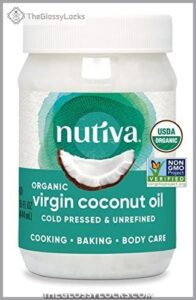
Coconut oil has a reputation problem in the low porosity world — and for good reason. Despite Nutiva’s cold-pressed, unrefined formula preserving its natural nutrient profile, the oil’s large molecular structure simply can’t slip past tightly packed cuticles. Instead of penetrating the cortex, it often settles on the hair shaft and builds up over time.
That said, it’s not entirely off the table. Research shows coconut oil can reduce protein loss and breakage by up to 41.8%, which matters. The key is using it as a pre-shampoo treatment — applied sparingly to damp hair, with gentle heat, once or twice a week. That combination temporarily lifts the cuticle enough to let some absorption happen before you wash it clean.
| Best For | People who follow vegan, paleo, keto, or gluten-free lifestyles and want a versatile, clean-label oil for cooking, skincare, and hair care. |
|---|---|
| Oil Type | Coconut Oil |
| Porosity Suitability | Poor fit |
| Extraction Method | Cold-pressed unrefined |
| Primary Fatty Acid | Lauric acid |
| Texture Weight | Semi-solid, medium |
| Recommended Use | Pre-shampoo treatment |
| Additional Features |
|
- Cold-pressed and unrefined, so it keeps its natural nutrients, flavor, and aroma intact
- Incredibly versatile — works in the kitchen, as a skin moisturizer, hair treatment, and even for oil pulling
- USDA certified organic, non-GMO, and packaged in BPA-free containers for peace of mind
- Solidifies below 76°F, which can make it tricky to measure or use straight from the jar in cooler climates
- The natural coconut scent is noticeable and may be too strong for some uses or preferences
- Can cause buildup on low-porosity hair and may curdle when added directly to cold liquids
2. Organic Extra Virgin Olive Oil
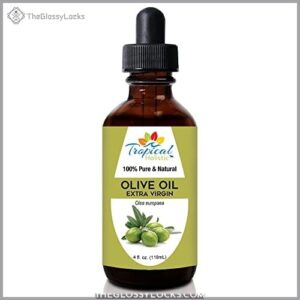
Olive oil earns its reputation as a nutrient powerhouse — oleic acid composing up to 80% of its fatty acid profile, alongside hydroxytyrosol, vitamin E, and polyphenols — but that density is exactly the problem for low porosity strands.
Its molecular weight works against you here. Rather than slipping through tightly sealed cuticles, it accumulates on the hair shaft, leaving strands feeling coated, heavy, and eventually resistant to moisture. That’s the buildup cycle you’re trying to avoid.
Even so, it’s not useless. Used sparingly as a pre-poo on damp hair with applied heat, it can condition and protect before shampooing clears the residue. Just don’t mistake occasional use for a daily routine.
For a deeper dive into which oils actually work with your hair’s absorption limits, best hair oils for low porosity hair breaks down why lighter application methods like this one tend to outperform heavy daily use.
| Best For | People with normal to high porosity hair, dry or mature skin, and anyone looking for a multi-purpose natural oil for moisturizing, massage, or scalp care. |
|---|---|
| Oil Type | Olive Oil |
| Porosity Suitability | Poor fit |
| Extraction Method | Cold-pressed unrefined |
| Primary Fatty Acid | Oleic acid |
| Texture Weight | Medium to heavy |
| Recommended Use | Pre-poo with heat |
| Additional Features |
|
- Cold pressed and unrefined, so it keeps its full nutrient profile — rich in oleic acid, vitamin E, and antioxidants that genuinely nourish skin and hair
- Versatile enough to use head to toe: scalp treatments, skin moisturizer, massage oil, nail care, even gentle enough for babies
- Sourced from premium Tunisian olives with a natural extraction process — no harsh chemicals or refining that strips out the good stuff
- Too heavy for low porosity hair — it tends to sit on the shaft rather than absorb, leading to buildup and that weighed-down feeling
- Only 4 ounces, which goes quickly if you’re using it regularly across multiple purposes
- The natural earthy scent isn’t for everyone and can vary batch to batch
3. Tropical Holistic Olive Oil
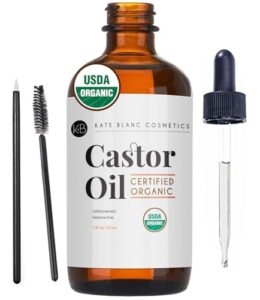
The Tropical natural formula is cold-pressed, unrefined, and rich in polyphenols — but that pedigree doesn’t solve the fundamental problem. Olive oil’s dominant fatty acid is oleic acid, and its molecular weight is simply too high to slip through tightly sealed cuticles. It parks on the hair shaft instead, creating that familiar heavy, coated feeling that compounds with every application.
That said, dismissing it entirely isn’t the right call either. Used as a pre-poo treatment on damp hair with gentle heat applied for 10 to 20 minutes, it can deliver conditioning benefits before your clarifying shampoo clears the residue. Sporadic and strategic — that’s the only framework that works here. Daily use will stall your moisture routine fast.
| Best For | Anyone looking for a versatile, pure organic oil to support hair growth, brow and lash fullness, skin hydration, and cuticle care — especially those who prefer clean, additive-free beauty products. |
|---|---|
| Oil Type | Castor Oil |
| Porosity Suitability | Poor fit |
| Extraction Method | Cold-pressed unrefined |
| Primary Fatty Acid | Ricinoleic acid |
| Texture Weight | Thick, heavy |
| Recommended Use | Pre-poo with heat |
| Additional Features |
|
- USDA certified organic and cold-pressed, preserving key nutrients like ricinoleic acid without hexane or synthetic fillers
- Comes with three applicators (spoolie, precision brush, and glass dropper), making it easy to use on lashes, brows, scalp, and skin
- Packaged in a protective amber glass bottle from an FDA compliant facility, ensuring quality and shelf stability
- Thick, viscous consistency can feel heavy or greasy, often requiring blending with a lighter carrier oil for comfortable daily use
- Results aren’t immediate — consistent, regular application over time is needed to see visible improvements in hair or skin
- Designed for external use only, which limits its versatility compared to some multi-purpose oils
4. Organic Avocado Oil for Skin and Hair
Avocado oil earns its spot here for one straightforward reason: its molecular structure actually fits through low porosity cuticles. With 54–60% monounsaturated oleic acid, it’s dense enough to condition but light enough to penetrate rather than park on the shaft.
That distinction matters more than most product labels admit. Oils that coat without entering create buildup; avocado oil delivers nutrients — vitamin E, lecithin, anti-inflammatory compounds — directly where the cortex can use them. Apply it to damp, slightly warmed hair, and absorption improves noticeably.
The GMP-certified, cruelty-free formula is 100% pure, which means no fillers diluting performance. For low porosity hair, purity drives penetration.
| Best For | Anyone with low porosity hair, dry or rough skin, or DIY beauty enthusiasts looking for a pure, versatile carrier oil that conditions without buildup. |
|---|---|
| Oil Type | Avocado Oil |
| Porosity Suitability | Excellent fit |
| Extraction Method | Pure unrefined |
| Primary Fatty Acid | Oleic acid |
| Texture Weight | Medium viscosity |
| Recommended Use | Damp hair direct |
| Additional Features |
|
- 100% pure avocado oil with no fillers, so you get the full benefit of oleic acid, vitamin E, and lecithin for both hair and skin
- Genuinely multi-purpose — works as a hair conditioner, skin moisturizer, carrier oil for essential oils, and even a soap-making ingredient
- GMP-certified and cruelty-free, with UV protection built into the bottle to preserve oil quality
- Heavier viscosity than lighter oils like almond or jojoba, which may feel like too much for fine hair or oily skin types
- The cap design has a known tendency to leak during shipping, so expect to check the seal when your order arrives
- If you’re applying it right before makeup, you’ll likely need a setting powder to avoid a greasy finish
5. Natural Avocado Oil Moisturizer
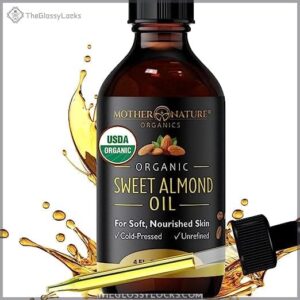
Sweet almond oil is the quieter performer here — not as talked-about as argan or jojoba, but clinically, it holds its own. At a polarity index of 20.3 nM/m and a smoke point of 420°F, its molecular weight sits in the ideal range for cuticle-level penetration without residue accumulation.
What makes it genuinely useful for low porosity hair is the combination of lightweight texture and heat-safe stability. Warm it slightly before application, and you get measurably better absorption — the kind of practical advantage that compounds over consistent use.
It’s also USDA certified organic, cold-pressed, and hexane-free, which matters when purity directly determines how clean your cuticle barrier stays between wash days.
| Best For | People with low porosity hair, sensitive skin, or anyone looking for a pure, lightweight carrier oil for skincare, hair care, or DIY beauty routines. |
|---|---|
| Oil Type | Sweet Almond Oil |
| Porosity Suitability | Excellent fit |
| Extraction Method | Cold-pressed hexane-free |
| Primary Fatty Acid | Oleic acid |
| Texture Weight | Light, non-greasy |
| Recommended Use | Warmed application |
| Additional Features |
|
- 100% USDA certified organic, cold-pressed, and hexane-free — as clean as it gets
- Lightweight and non-greasy, making it ideal for low porosity hair and sensitive or baby skin
- Incredibly versatile — works as a moisturizer, massage oil, carrier oil, and hair treatment all in one
- Glass dropper can be finicky and the bottle requires careful handling to avoid breakage
- Little to no natural scent, which some people prefer but others may find underwhelming
- Any strong or off smell signals the oil has gone rancid, so storage conditions matter
6. Organic Raw Shea Body Butter
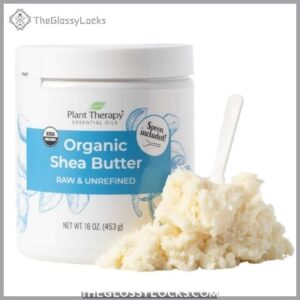
Shea butter earns its reputation on dry skin — the fatty acid profile (stearic and oleic acids dominating) delivers serious emollient power. For high porosity hair that drinks everything up, it’s a legitimate tool.
Low porosity strands, though, don’t play along. Those tightly sealed cuticles resist the butter’s dense, semisolid texture, leaving it to accumulate on the surface rather than penetrate the cortex. That’s the paradox here: a product rich in vitamins A and E, with genuine moisturizing chemistry, effectively becomes dead weight on hair that can’t absorb it.
Heavy butters belong in a different category entirely for your hair type.
| Best For | People with dry skin who want deep, lasting moisture for both face and body. |
|---|---|
| Oil Type | Shea Butter |
| Porosity Suitability | Poor fit |
| Extraction Method | Raw organic |
| Primary Fatty Acid | Stearic and oleic acid |
| Texture Weight | Solid, dense |
| Recommended Use | Skin use only |
| Additional Features |
|
- Made with organic raw shea ingredients for natural, effective hydration
- Works for both men and women, face and body
- Rich oil-based formula delivers intense moisture where dry skin needs it most
- Oil-based texture can feel heavy or greasy, especially on non-dry skin types
- Not ideal for low porosity hair, as the dense formula sits on the surface rather than absorbing
- Best suited only for dry skin — those with oily or combination skin may find it too rich
7. Usda Organic Grape Seed Oil
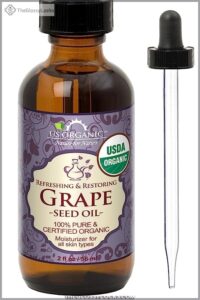
Where shea butter fails low porosity hair, grape seed oil does the opposite.
USDA certified organic grape seed oil earns its place near the top of this list because of what it’s made of: 66–75% linoleic acid, a polyunsaturated fatty acid with a small enough molecular structure to slip past tightly sealed cuticles rather than stack up on the surface.
The oil is genuinely lightweight — non-comedogenic, fast-absorbing, and cold-pressed to preserve its vitamin E and phenolic compounds. That antioxidant load matters for scalp health too, neutralizing free radical damage without introducing the heaviness your hair type can’t tolerate.
Use it on damp hair for best results.
| Best For | People with low porosity hair who need a lightweight, fast-absorbing oil that won’t sit on the surface or weigh strands down. |
|---|---|
| Oil Type | Grape Seed Oil |
| Porosity Suitability | Excellent fit |
| Extraction Method | Cold-pressed unrefined |
| Primary Fatty Acid | Linoleic acid |
| Texture Weight | Light, fast-absorbing |
| Recommended Use | Damp hair direct |
| Additional Features |
|
- High linoleic acid content (66–75%) penetrates tightly sealed cuticles, making it actually effective for low porosity hair
- USDA certified organic and cold-pressed, preserving vitamin E and antioxidants that support scalp health
- Non-comedogenic and fast-absorbing — no greasy residue or buildup
- Glass amber bottle can break if dropped, making it less travel-friendly
- Small 2.08 oz size means frequent repurchasing for regular users
- Requires careful storage to protect the glass packaging from accidental damage
8. Raw Organic Wheat Germ Oil
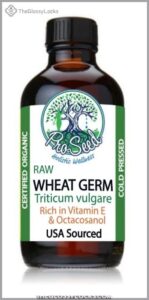
Grape seed oil’s lightness is hard to follow — but wheat germ oil earns its spot for different reasons.
Cold-pressed from Triticum vulgare, this oil delivers roughly 149 mg of vitamin E per 100g, one of the highest concentrations found in any vegetable oil. That tocopherol density actively combats oxidative stress at the scalp level, supporting a healthier follicular environment over time.
Its fatty acid profile — linoleic, oleic, and omega-3 linolenic acid — keeps it workable for low porosity strands without the heaviness that causes buildup. The phytosterols and carotenoids add antioxidant depth.
One catch: it’s perishable. Dark glass storage isn’t optional here — it’s what keeps the nutrients intact.
| Best For | Those with low porosity hair or oxidative scalp concerns who want one of the most vitamin E-dense carrier oils available, without the risk of heavy buildup. |
|---|---|
| Oil Type | Wheat Germ Oil |
| Porosity Suitability | Good fit |
| Extraction Method | Cold-pressed unrefined |
| Primary Fatty Acid | Linoleic acid |
| Texture Weight | Medium, unrefined |
| Recommended Use | Intentional scalp use |
| Additional Features |
|
- Exceptionally high vitamin E content (~149 mg per 100g) actively supports scalp health and fights oxidative stress
- Cold-pressed and unrefined, so the full nutrient profile — zinc, iron, selenium, omega fatty acids — stays intact
- Works well as a carrier oil for aromatherapy blends, doubling its versatility beyond hair and skin care
- Highly perishable and must be stored in dark glass to prevent nutrient degradation
- Unrefined texture and scent may feel unfamiliar compared to processed oils
- Not suitable for those looking for a lightweight, everyday oil — best used intentionally rather than as a daily staple
9. Natural Hair Growth Oil Treatment
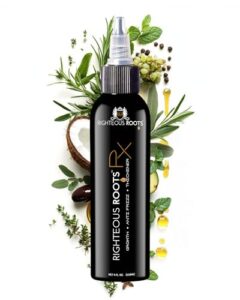
Wheat germ oil works quietly over time — this formula works fast.
The Natural Hair Growth Oil Treatment combines 11 oils, including jojoba, argan, grapeseed, peppermint, and tea tree, into one formula built for low porosity hair. Peppermint increases scalp circulation, which directly enhances how well the carrier oils absorb. Tea tree keeps the follicular environment clean.
Apply it warmed, to damp hair, sectioned into four to eight parts. That’s not optional — it’s what separates absorption from surface coating.
The bottle lacks a dropper, so go slow. A little spreads far. Oversaturation is the main risk here, not efficacy.
| Best For | Anyone with low porosity hair looking to boost scalp health, encourage growth, and reduce frizz using a natural, multi-oil formula. |
|---|---|
| Oil Type | 11-Oil Blend |
| Porosity Suitability | Moderate fit |
| Extraction Method | Blended formula |
| Primary Fatty Acid | Mixed fatty acids |
| Texture Weight | Light to medium |
| Recommended Use | Pre-wash and styling |
| Additional Features |
|
- Combines 11 natural oils in one bottle, covering everything from scalp stimulation (peppermint, tea tree) to deep moisture (argan, jojoba, avocado)
- Incredibly versatile — works as a pre-wash treatment, hot oil mask, styling finisher, or scalp massage oil
- A little goes a long way, making the 4.66 oz bottle last longer than expected
- No dropper means portion control is tricky, and it’s easy to over-apply and end up with greasy hair
- The peppermint and tea tree scent is strong — great for some, overwhelming for others
- Packaging can be inconsistent, with some users reporting leaks or cracks during shipping
How Low Porosity Hair Absorbs Oils

Low porosity hair doesn’t absorb oils the way most people expect — and that gap between expectation and reality is where most routines fall apart. The structure of your hair cuticles drives everything: how oil penetrates, how moisture behaves, and why buildup sneaks up on you faster than you’d think. Here’s what’s actually happening at each stage.
Tight Hair Cuticles
Every strand of your hair is wrapped in overlapping keratin scales — and in low porosity hair, those scales lie almost perfectly flat. Think of roof shingles pressed so tightly together that rain slides right off. That’s your cuticle.
Penetrating oils struggle to find an entry point, which is why absorption feels like a slow negotiation rather than an open door.
Moisture Resistance
When tightly sealed cuticles meet water, the hydrophobic barrier takes over. Oils that don’t evaporate quickly maintain film durability, reducing how easily water contacts the shaft. Even small gaps in coverage create entry points for moisture loss.
- Low-volatility oils hold their barrier longer between wash days
- Nonpolar components slow rewetting when humidity shifts
- Patchy application increases water access points on the cuticle
- Surface chemistry compatibility determines how evenly oil adheres and covers
Oil Penetration
Think of low porosity hair as a fortress — oil doesn’t simply pass through; it wicks along microscopic capillary gaps between the cuticle scales.
Low porosity hair is a fortress — oil earns entry only by wicking through microscopic gaps between cuticle scales
Molecular size and viscosity determine whether an oil reaches the cortex or stalls at the surface. Lightweight, low-viscosity oils spread more readily into these micro-spaces, while warming oil to around 104°F measurably increases fluidity, driving deeper hair shaft penetration before the treatment window closes.
Surface Buildup
When oil can’t penetrate the hair cuticle, it doesn’t disappear — it accumulates. Oil film thickness grows with every application, trapping airborne dust and sweat against the shaft.
- Oxidized oil residue leaves hair dull and rough
- Hard water minerals bond to surface oil, creating gritty coating
- Product layering compounds buildup each wash cycle
- Emulsification rinsing challenges mean residue survives multiple shampoos
- Low porosity hair retains surface films longest
That’s why lightweight oils matter.
Drying Time Signs
Your hair feeling dry on the outside doesn’t mean it actually is. Low porosity hair cuticle permeability is so restricted that oil absorption rate slows dramatically — surface dryness arrives hours before inner dryness catches up.
Watch for tacky hair texture, lint attraction, patchy shine, and curl reversion. Those are your real signals that moisture absorption is still incomplete.
Oils to Use or Avoid for Low Porosity Hair
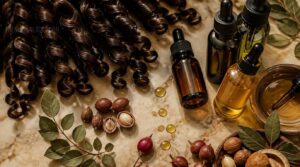
Not every oil earns a place in your low porosity routine — some absorb cleanly, while others just sit on the shaft and cause problems. Knowing which ones work with your cuticle structure, and which ones fight against it, makes all the difference. Here’s what you need to use, limit, or cut out entirely.
Best Lightweight Oils
Your best allies here are oils that move fast and leave nothing behind. Jojoba, grapeseed, and argan sit at the top — each offers low viscosity, high essential fatty acid content, and genuine sebum mimicry that low porosity hair actually accepts.
They deliver antioxidant protection, non-greasy finishes, and real moisture absorption without stacking residue on a cuticle that’s already working against you.
Heavy Oils to Avoid
Some oils actively work against low porosity hair. Dense, slow-rinsing options coat the cuticle rather than penetrate it — and that distinction matters.
- Castor oil: thick, non-water-soluble film that resists rinsing
- Olive oil: surface accumulation with little to no penetration
- Heavy butters: waxy buildup that locks moisture out
- Flaxseed oil: occlusive film that can cut hydration by up to 34%
- Mineral oil: a near-impenetrable barrier with zero absorption benefit
Coconut Oil Concerns
Coconut oil deserves its own category — not quite a heavy oil, but far from safe for low porosity hair. Its saturated fat content solidifies at cooler temperatures, leaving a waxy film that resists rinsing and compounds product buildup fast.
With a comedogenic rating of 4, it blocks moisture absorption rather than supporting it, making your cuticles work harder for nothing.
Shea Butter Buildup
Shea butter is a similar story, only denser. Its high stearic acid content causes it to firm up on contact with cooler hair, forming a waxy film that tightly bound cuticles won’t absorb. Rinsing it out requires proper emulsification — skip that step and residue accumulates fast.
Batch quality varies too, meaning some shea behaves worse than others straight out of the jar.
Protein-like Stiffness
Residue buildup doesn’t stop at waxy films. When heavy oils stack on low porosity cuticles without full removal, the accumulated coating restricts fiber mobility — mimicking the rigidity you’d expect from protein overload.
Oxidized oil residues are especially problematic, shifting texture from smooth to tacky and increasing cuticle friction drag. The result is stiff, less elastic strands that no amount of conditioner easily reverses.
How to Apply Oils to Low Porosity Hair
Knowing which oils to use is only half the battle — how you apply them matters just as much for low porosity hair. Because those tightly packed cuticles don’t open easily, your technique can mean the difference between real absorption and frustrating surface buildup.
These five methods are the most effective ways to get oils where they actually need to go.
Pre-poo Treatments
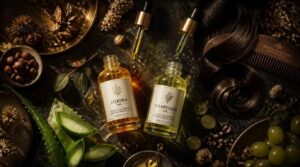
A pre-poo treatment is your first line of defense on wash day. Applying jojoba or grapeseed oil before shampoo creates a moisture barrier protection that limits the stripping effect of cleansing agents on low porosity hair.
It increases detangling slip, cuts breakage on dry strands, and — if you use aloe vera — helps ease scalp inflammation linked to dandruff.
Warm Oil Method
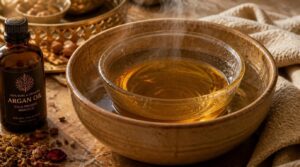
Heat is the key that unlocks low porosity hair. Use a double boiler method — set your oil in a heat-safe container inside hot water — to warm it gently to around 104°F without scorching.
Test it on your wrist first. It should feel comfortably warm, never burning. That temperature lifts the cuticle enough to boost absorption by 42%, then rinse thoroughly afterward with shampoo.
LCO Layering
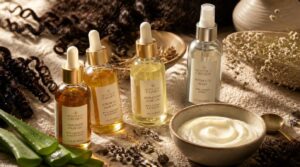
The LCO method — liquid, cream, oil — works with low porosity hair rather than against it. Water-based liquid adds initial moisture, cream supplies emollients that soften and bridge layers, and a lightweight sealing oil locks everything in by coating the exterior.
Each layer stays thin. Too much product, especially cream, leaves low porosity strands feeling coated and heavy.
Damp Hair Application

Timing matters more than most people realize. Applying oils to slightly damp hair — around 70–80% dry — keeps cuticles just receptive enough to accept lightweight oils without diluting them into uselessness.
Overly wet hair thins your product, reducing how evenly it coats each strand. Damp conditions improve detangling efficiency and support cleaner styling finishes as the hair dries naturally around the oil layer.
Clarifying Buildup Removal
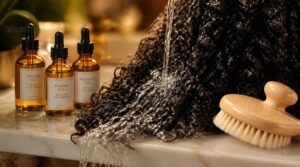
Buildup is the silent enemy of moisture absorption in low porosity hair — when product buildup coats the cuticle, even the right oils can’t penetrate.
- Use a hair clarifying shampoo every 1–2 weeks to clear residue
- Apply circular scalp massage techniques to mechanically lift buildup
- Try a baking soda paste massaged briefly for heavy accumulation
- Rinse thoroughly — incomplete rinsing redeposits film
- Add a scalp brush for deeper mechanical lift
Frequently Asked Questions (FAQs)
What oils are good for low porosity hair?
Ironically, the oils that feel the least impressive — thin, almost watery — work hardest here. Lightweight, penetrating oils like grapeseed and jojoba slip past tight cuticles where heavier options simply sit and suffocate.
What is the difference between low-porosity and high-porosity hair?
It comes down to cuticle structure. Low porosity hair has tightly compressed cuticles that resist moisture entry but retain it well. High porosity hair absorbs water fast through raised, open cuticles — then loses it quickly.
Because of that selectivity, oils like coconut oil can sit on low porosity strands rather than sink in — this guide on coconut oil for low porosity hair explains how to use it without buildup.
Because low porosity strands can be stubborn about letting moisture in, a gentle, buildup-free conditioner works best — here’s how often you should condition low porosity hair to keep it balanced without weighing it down.
How often should I oil my low-porosity hair?
Think of oiling low porosity hair like watering a cactus — once weekly is your baseline. Over-oiling triggers buildup fast, so track strand heaviness and adjust frequency only when your hair signals it needs more.
What are the benefits of using oils for low-porosity hair?
Oils do more than add shine — they reduce surface friction, slow moisture evaporation, and help curls look more defined. For low porosity hair, that means softer strands, better moisture retention, and a calmer scalp without the heavy load.
How can I tell if an oil is suitable for low-porosity hair?
The wrong oil can lock moisture out of your strands forever. Check molecular weight — oils under 300 Daltons penetrate better. Watch for surface residue after application; prolonged greasiness signals a clear mismatch with your cuticle structure.
Are there any other treatments that can help low-porosity hair?
Yes. Humectant moisture treatments, steam conditioning, clarifying shampoos, deep conditioning with heat, and hydrating surface serums all improve moisture absorption in low porosity hair by opening cuticles and removing buildup that blocks hydration.
Can I mix different oils for better results?
Two heads are better than one — and that holds for oil blending. Mixing lightweight carrier oils like jojoba and grapeseed combines their penetration strengths, but keep heavier oils minimal to prevent surface buildup.
How often should I oil low porosity hair?
Start at once weekly. Low porosity hair builds up fast, so less is usually more. In drier seasons, bump to twice weekly, focusing on the ends. Greasy roots signal it’s time to scale back.
If your hair leans wavy rather than straight, a wavy hair routine that balances moisture and definition can help you fine-tune how often you wash and condition.
Does water temperature affect oil absorption rate?
Water is a gatekeeper. Warm water lowers viscosity, lifts cuticles, and can boost oil absorption by up to 42%. Cold water seals moisture but limits penetration — a real trade-off for low porosity hair.
Should I apply oil on wet or damp hair?
Damp hair — not dripping wet — is the sweet spot. Blot excess water first, then apply oil. The residual moisture inside the strand is already doing its job; oil at this stage acts as a moisture-sealing layer, reducing frizz as water evaporates.
Conclusion
Like water off a waxed surface, the wrong oil never stood a chance on your cuticles. Choosing the best oils for low porosity hair isn’t guesswork — it’s structural logic.
Molecular weight matters. Lightweight, fast-absorbing oils like grapeseed and argan slip through where heavier ones stall. Warm your oil, apply to damp hair, and clarify regularly.
Your hair isn’t difficult. It just has standards — and now, so do you.