This site is supported by our readers. We may earn a commission, at no cost to you, if you purchase through links. This content is for general informational and educational purposes only and is not a substitute for professional medical, dermatological, or nutritional advice.
Drop a strand of hair in a glass of water and watch what happens. If it floats, your cuticle stays sealed tight. If it sinks fast, water rushed right through open, lifted edges.
That single test explains why the same conditioner works wonders for your friend and does nothing for you. Porosity, not curl pattern, controls how your hair drinks in moisture and holds onto it.
Once you know your hair’s porosity, picking a deep conditioner for porous hair becomes a lot less like guesswork and a lot more like actually solving the problem.
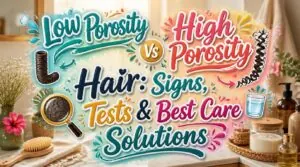
Once you know your type, low porosity vs high porosity solutions stop feeling like guesswork. You’ll pick products that actually match what your cuticle needs, not what the bottle promises.
Table Of Contents
- Key Takeaways
- What Hair Porosity Means for Moisture
- Low Versus High Porosity Signs
- How to Test Hair Porosity
- Best Low Porosity Hair Solutions
- Best High Porosity Hair Solutions
- Choosing Products by Hair Porosity
- Managing Mixed or Changing Porosity
- Frequently Asked Questions (FAQs)
- How to treat low vs high porosity hair?
- What’s the worst hair porosity to have?
- How do I tell if my hair is high porosity or low porosity?
- Is low porosity hair healthiest?
- Can hair porosity change over time naturally?
- Does diet or hydration affect hair porosity levels?
- Are certain porosity types more common in curly hair?
- Can you permanently change your hairs porosity type?
- Does hair porosity affect which hairstyles last longer?
- Conclusion
Key Takeaways
- Your hair’s porosity, not its curl pattern, determines how well it absorbs and holds onto moisture, so a simple float test can tell you more than any product label.
- Low porosity hair has tight cuticles that resist moisture and build up product, so it responds best to damp application, heat during conditioning, and lightweight, water-based formulas.
- High porosity hair has open cuticles that absorb and lose moisture fast, so it needs weekly deep conditioning, the LOC method, and regular protein treatments to stay strong.
- Porosity isn’t fixed for life since coloring, heat, and everyday wear can shift it over time, so retesting every few weeks keeps your routine matched to what your hair actually needs.
What Hair Porosity Means for Moisture
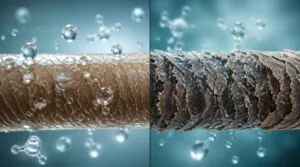
Your hair’s porosity level shapes how it takes in and holds onto moisture, and that starts with what’s happening at the cuticle. Once you understand this piece, the differences between low and high porosity hair make a lot more sense. Here’s what you need to know about how your hair actually works.
Knowing where your hair falls on that scale makes all the difference when picking out hydrating treatments for curly hair that actually work with your cuticle instead of against it.
Cuticle Structure and Absorption
Think of your cuticle as tiny shingles on a roof, that’s your cuticle barrier function at work. When the scale overlap pattern lies flat, water beads up (low porosity hair). If edge integrity breaks down, gaps open and moisture rushes in fast (high porosity hair). This hydrophobic surface, sometimes covered in micro wax films, controls all product absorption.
In plant leaves, a similar lipid-rich cuticle barrier governs how water and other substances pass through the surface, much like porosity governs moisture flow in hair.
Moisture Retention Differences
Once water gets past the cuticle, what happens next tells the real story.
Low porosity hair holds onto moisture for hours, while high porosity hair dries out fast, often within 30-45 minutes. Humidity, heat, and UV rays speed up moisture loss in high porosity strands.
Length matters too: ends lose moisture quicker than roots on high porosity hair.
Porosity Versus Hair Texture
Curly, straight, coarse, fine: none of that tells you porosity. Texture describes curl pattern and strand diameter, while porosity describes cuticle behavior with water.
Two curly-haired friends can compare notes and still need different routines:
- Fine strands with high porosity feel limp fast
- Coarse hair can be low or high porosity
- Density affects how thirsty hair feels overall
- Curl pattern won’t predict a hair porosity test result
- Texture-based porosity assumptions often mislead product selection
Is Either Type Healthier?
So, is one better? Not really. Neither porosity type is inherently healthier, since health comes from your care routine, not cuticle structure alone.
Neither porosity type is inherently healthier—real hair health comes from your care routine, not cuticle structure
Low porosity hair keeps moisture longer once it’s in. High porosity hair loses it fast and faces more damage susceptibility. Both can thrive with the right hair porosity test and matching routine.
Because low-porosity strands resist product absorption, it helps to know which styling habits cause buildup, and how bleaching can alter your hair’s porosity over time.
Low Versus High Porosity Signs
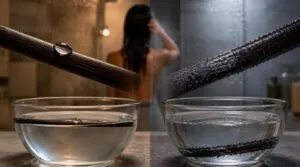
Your hair actually shows you which type you have, if you know what to look for. These signs show up in everyday moments, like showering or styling. Here are the five telltale clues that separate low porosity from high porosity hair.
Water Absorption Speed
Ever wonder why some hair drinks water while other strands seem to shrug it off? That’s hair porosity and drying speed at work. High porosity hair has a fast capillary absorption rate, soaking water in seconds. Low porosity hair resists it, since a tight pore throat diameter slows things down.
Try the water spray test:
- Mist a strand
- Watch it bead or absorb
- Time the soak-in
Drying Time Differences
Since cuticle tightness controls water flow, drying time tells its own story. Low porosity hair stays damp longer, trapping water near the surface. High porosity hair dries fast but unevenly, since water escapes quickly through open cuticles.
Humidity only makes this worse—this guide on how humidity affects low porosity hair explains why damp air leaves strands feeling sticky rather than hydrated.
| Hair Type | Typical Drying Pattern |
|---|---|
| Low Porosity | Slow, damp for hours |
| High Porosity | Fast, but patchy |
| Both | Airflow and heat speed evaporation |
| Low Porosity | Humidity worsens dampness |
| High Porosity | Dries quicker even in humidity |
Product Buildup
Tight cuticles cause product buildup on low porosity hair, since creams and oils sit on strands instead of soaking in.
Since low and high porosity hair need such different care routines, it’s worth taking a closer look at how to identify your hair’s porosity type before choosing products.
Watch for:
- Cakey or dull strands
- Sticky scalp feel
- Slower results from products
Weekly clarifying shampoo use clears polyquat and silicone residue. High porosity hair rarely builds up this way, since open cuticles absorb, not trap, product.
Frizz and Dryness
Frizz tells on your hair type fast. Low porosity hair stays smooth but resists moisture. High porosity hair frizzes from cuticle damage and rapid moisture loss.
| Sign | Low Porosity | High Porosity |
|---|---|---|
| Frizz cause | Buildup, not absorption | Humidity, open cuticle |
| Feel | Smooth, dry surface | Rough, poofy |
| Fix | Steam, light oils | Deep conditioning, sealants |
Elasticity and Breakage
Stretch a strand gently. Does it snap back, or just snap? That’s your elastic recovery answer.
Low porosity hair often has decent stretch tolerance, but stays stiff without protein. High porosity hair, weakened by open cuticles, has a lower stretch tolerance threshold. Skipping regular protein treatments raises breakage risk fast, especially with daily handling or heat.
How to Test Hair Porosity
Once you know the signs to look for, the next step is confirming what type you’re working with. You don’t need a salon visit to get real answers, just a few minutes and some simple tools. Here are five ways to test your hair’s porosity at home.
Hair Float Test
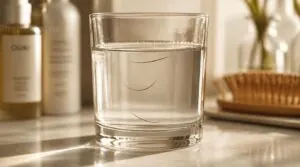
Drop a clean strand in water: floating means low porosity hair, sinking means high porosity, hovering means normal. Use room-temp water, wait 2-5 minutes, avoid touching the glass edges. Strand prep matters: skip product buildup first.
This hair porosity test hints at moisture retention, but treat it as a rough guide, not gospel.
Water Spray Test
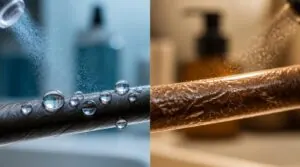
If the float test felt too passive, the spritz test gives you an active read. Mist water from a few inches away and watch it: quick absorption signals high porosity, beading means low.
Note the spray pattern and timing for a repeatable hair porosity assessment you can track on a simple chart.
Strand Texture Check
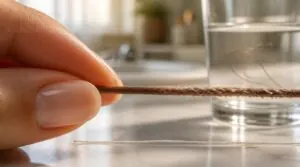
Your hands can tell you what water alone can’t. Run fingers from strand end toward your scalp: smooth means low porosity, bumpy and rough means high porosity cuticle lifting.
- Finger Sliding: end to scalp reveals cuticle texture instantly
- Tactile Density: pinch a strand to gauge thickness
- Thread Comparison: lay hair beside thread for width
Use clean, product-free strands only.
Wetting and Drying Clues

Watch how water behaves on your strands for more clues beyond the float test. Beading water that sits for minutes means low porosity; fast spreading with no beads means high porosity.
Drying time confirms it: low porosity air-dries in 8-12 hours, while high porosity finishes in under 90 minutes due to faster evaporation and moisture loss.
Professional Porosity Analysis

At-home checks only go so far, so a stylist can offer Salon Strand Evaluation for real answers. This often includes Microscopic Cuticle Inspection and Professional Moisture Mapping across your head, since porosity shifts zone to zone.
Some salons even run Laboratory Porosity Testing for a full hair porosity chart, giving you Custom Porosity Profiling to guide smarter product selection.
Best Low Porosity Hair Solutions
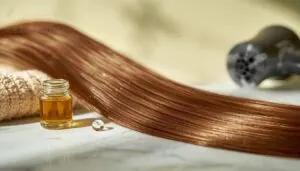
Low porosity hair isn’t hard to manage once you know what it actually needs. The trick is working with those tight cuticles instead of against them. Here’s what actually helps.
Apply Products to Damp Hair
Timing is everything with low porosity hair. Apply your leave-in conditioner while hair is still damp, not dripping, so cuticles stay open.
Try this:
- Squeeze excess water first
- Spread product in your palms
- Focus on mid-lengths
- Finger comb through
- Build even coating gradually
This beats guessing after a float test shows low porosity, before starting the LOC method.
Use Heat During Conditioning
Cracking open stubborn cuticles takes more than product, it takes heat. For low porosity hair, steaming during deep conditioning for 30-40 minutes works best, letting glycerin-based moisturizers absorb instead of sitting on strands.
No steamer? A warm towel wrap for 10-15 minutes lifts cuticles too. Keep rinse water around 100-110°F, and always use a heat protectant first.
Choose Lightweight Moisturizers
Weight matters just as much as heat. For low porosity hair, gel-based, water-based formulas absorb in seconds instead of sitting on strands.
Look for humectants like glycerin and fragrance-free labels, since they draw moisture in without irritating your scalp. Skip heavy creams and butters. They just build up on tightly closed cuticles instead of soaking in.
Clarify Product Buildup Monthly
Even light products pile up on tightly closed cuticles over time. A monthly deep cleanse with clarifying shampoos clears this residue and any hard water removal your strands need.
Look for chelating or citric acid clarifying shampoo options, since they dissolve buildup without over-drying. Follow with scalp soothing care to calm any tightness, since clarifying can feel harsh at first.
Limit Heavy Proteins
Protein and low porosity hair don’t mix well in heavy doses. Watch for protein overload signs: stiffness, squeaky strands, or lost curl pattern.
Stick with light protein options like amino acids, spaced 4-6 weeks apart. Try tomato fruit ferment extract, a protein-free alternative that hydrates without buildup. Gentle protein application on damp mid-lengths, followed by deep conditioning, keeps things balanced.
Best High Porosity Hair Solutions
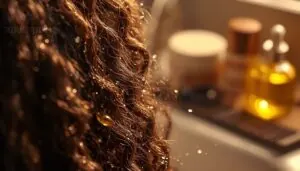
High porosity hair asks for a different game plan, one built around locking moisture in fast. Your cuticles are open, so every step matters more here than it does for other hair types. Here’s what actually works, step by step.
Deep Condition Weekly
High porosity hair drinks up moisture fast, but loses it just as quick. That’s why weekly deep conditioning matters so much here.
Pairing those treatments with the best holding gel for natural hair helps lock in all that hard-won moisture while keeping your style soft and defined.
Apply your treatment after shampooing, while hair is damp, and leave it on 20 minutes minimum. Look for ceramides, hyaluronic acid, or glycerin on the label. Sleeping with the treatment in overnight gives damaged cuticles extra time to soak up what they’re missing.
Layer Moisture With LOC
Deep conditioning sets the stage, but the LOC method locks that moisture in for days. Start with a water-based leave-in conditioner, then oil, then cream.
Fine hair or low porosity strands? Try the LCO variation instead, swapping cream before oil for lighter coverage and less buildup.
Seal With Rich Oils
Oil is where the LOC method really shines for high porosity hair. Warm your oil between your palms first, this opens the cuticle slightly for better absorption.
Focus application on your ends, where moisture escapes fastest. Argan, castor, or shea butter work well. Rinse with cool water after, then protect with a silk pillowcase overnight. Reseal weekly.
Schedule Protein Treatments
Once cuticles seal from your oil routine, protein steps in to strengthen them from within. Weekly protein treatments work well for damaged strands, tapering to every four to six weeks as strength returns.
Watch for protein overload signs: stiffness or increased breakage means back off. After rain or swimming, treat within 48 hours to repair broken bonds.
Reduce Washing and Heat
Once protein rebuilds strength, protect it by washing less. Limit washing to 1-2 times weekly and try co-washing to keep natural oils in place.
Skip heavy heat styling. Air dry when you can, and always use a heat protectant when you don’t. This heat-free hair care approach keeps high porosity cuticles from opening further.
Choosing Products by Hair Porosity

Your porosity type points you toward specific ingredients, not just general advice. Once you know your type, picking products gets a lot easier. Here’s what to look for on the label, based on what your hair actually needs.
Water-Based Low Porosity Products
Think of water as the delivery truck for your hair, not the cargo. Lightweight formulations carry short-chain humectants without heavy oils that cause surface buildup. Good rinseability matters too: residue-free formulas support real ingredient penetration.
For low porosity hair, this means better moisture absorption instead of product just sitting on strands, waiting for a wash day rescue.
Low Porosity Humectants
For low porosity hair, molecule size decides everything. Glycerin and propanediol work best since their small size boosts moisture absorption through tight cuticles.
Look for:
- Glycerin or propanediol as lead ingredients
- Panthenol for heat activated humectants benefits
- Film formers that hold water at the cuticle surface
Skip hyaluronic acid here, it’s too large to penetrate efficiently.
High Porosity Sealants
For high porosity hair, sealants matter most. They create a hydrophilic network for repeated moisture uptake, plus microcapillary action that pushes hydration into the cortex.
Look for:
- Rich oils for slip and detangling
- Lightweight esters balancing buildup
- Crosslinked polymers for heat tolerance
These form a protective film that locks in moisture and cuts frizz between washes.
Strengthening Hydrolyzed Proteins
Cracks in the cuticle need patching, not just moisture. Hydrolyzed keratin and silk proteins slip into damaged strands through protein penetration depth, bonding to weak spots and rebuilding strength from within.
Smaller molecular weight fragments (1000-1500 Daltons) work best for high porosity hair. This bond repair mechanism boosts tensile strength up to 15.85%, with added UV protection as a bonus film.
Oils for Each Type
Not all oils belong on your hair, and porosity tells you which ones do.
For low porosity hair, pick jojoba or grapeseed oil, they absorb without buildup.
For high porosity hair, seal with castor or argan oil to lock in moisture.
This porosity oil guide keeps application methods oils simple and effective.
Managing Mixed or Changing Porosity
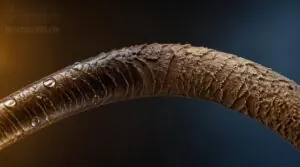
Your hair isn’t always one porosity from root to tip, and that’s completely normal. Coloring, heat, and everyday wear can shift things over time, so what worked last year might not work now. Here’s how to spot the changes and adjust your routine to match.
Identify Different Porosity Zones
Ever notice your crown drinks up water while your nape barely gets damp? That’s scalp zone mapping in action. Try the spray test on five spots for real hair porosity classification:
- Crown strands
- Nape sections
- Temple zones
- Mid-length shaft
- Hair ends
Crown nape comparison usually reveals faster absorption up top, since low porosity hair often collects buildup right where oils pool lowest.
Treat Roots and Ends Separately
Once you’ve mapped your zones, treat them like two different heads of hair. Roots need root hydration focus with lightweight, water-based leave-ins. Ends need end moisture sealing with rich butters or oils.
This split treatment routine respects hair porosity and moisture retention differences. Zone-specific product use beats a one-size-fits-all bottle every time.
Adjust After Hair Coloring
Dye jobs almost always raise porosity, since the chemical processing lifts your cuticle to deposit color.
Wait 48 hours before that first color wash timing, switch to sulfate-free shampoo, and rinse with cool water.
Before your first wash, it also helps to have prepped correctly—knowing how much henna powder you need for shoulder-length hair ensures an even application that holds color longer.
Add heat protectant before styling, UV spray outdoors, and a leave-in conditioner daily.
Save protein treatments for two weeks post-color, not sooner.
Prevent Damage and Breakage
Once color settles, focus shifts to breakage prevention overall. Stick with Gentle Detangling using wide-tooth combs on wet hair, and rotate in Protective Styling like low buns to cut manipulation.
Never skip heat protectant, keep tools under 350°F, and stay current on Regular Trims. Balance protein treatments with moisture weekly, since hair porosity levels shift easily when strands go unprotected.
Reassess Porosity Regularly
Protection only lasts if you keep checking your results. Run a home test schedule every 4-6 weeks, and reassess within a week after color, heat damage, or sudden dryness.
Book professional analysis quarterly for accuracy. Porosity isn’t fixed, it shifts with seasons and treatments, so testing regularly keeps your routine matched to what your hair actually needs.
Frequently Asked Questions (FAQs)
How to treat low vs high porosity hair?
Think of it as two locks needing different keys: low porosity hair wants heat activation and lightweight formulas, while high porosity hair craves protein treatment, cuticle sealing, and product layering with rich leave-in conditioner.
What’s the worst hair porosity to have?
Most stylists point to high porosity hair as the tougher one, since open cuticles cause fast moisture loss, ongoing frizz, and breakage risk, making retention harder than the slower absorption low porosity hair grips.
How do I tell if my hair is high porosity or low porosity?
One strand floats, another sinks. That contrast tells the story: try the float test, shower wet time, and cuticle feel. Quick absorption plus fast drying signals high porosity; slow wetting and buildup point to low porosity.
Is low porosity hair healthiest?
Not automatically. Low porosity hair often wins the healthiest hair debate for shine and strength, but the moisture retention myth trips people up: tight cuticles resist hydration and invite product buildup risk, so healthiest depends on your care routine, not porosity alone.
Can hair porosity change over time naturally?
Yes. While hair porosity genetics set your starting point, sun, heat styling, hard water, and coloring gradually raise porosity. This natural porosity evolution means your routine may need adjusting every few years as cuticles wear down.
Does diet or hydration affect hair porosity levels?
Your salad bowl won’t reshape your cuticles. Dietary mineral impact and hydration level influence hair moisture balance and strength, but porosity itself stays fixed by cuticle structure, not water intake or nutrient absorption alone.
Are certain porosity types more common in curly hair?
Curl pattern genetics don’t lock in porosity, but trends exist. Folks of African, Mediterranean, and Native American descent often show more cuticle irregularity, leading to higher porosity odds within tightly curled hair types.
Can you permanently change your hairs porosity type?
Not fully. Genetic porosity factors set your baseline, but chemical processing and heat styling can push hair toward higher porosity over time. True cuticle regeneration isn’t possible, so healthier new growth, not existing strands, is what actually resets porosity.
Does hair porosity affect which hairstyles last longer?
Think of curls as candles: low porosity hair holds its flame steady for hours, while high porosity hair burns bright, then fades fast, affecting style hold duration and overall hairstyle longevity.
Conclusion
Your hair could soak up an entire ocean or repel a rainstorm, depending on which cuticle you’re working with. That’s the real difference porosity makes.
Once you know your type, low porosity vs high porosity solutions stop feeling complicated and start feeling like simple, confident choices.
Test your strands, treat them right, and watch how they respond.
Your cuticle already told you what it needs.
Now you just have to listen, and give it exactly that.