This site is supported by our readers. We may earn a commission, at no cost to you, if you purchase through links. This content is for general informational and educational purposes only and is not a substitute for professional medical, dermatological, or nutritional advice.

Wash your hair in the morning, and by dinner your roots look like you skipped a shower. Sound familiar? Genetics load the gun, but your washing habits, product choices, and even the weather pull the trigger, sending sebum production into overdrive within 48 hours of a wash.
Here’s the good news: you don’t need a drugstore aisle of chemicals to fix it. A natural hair mask for oily scalp made from clay, apple cider vinegar, or tea tree oil can rebalance your scalp’s chemistry using ingredients already in your kitchen.
Get the ratios right, and you’ll see the difference by your next wash day.
Table Of Contents
- Key Takeaways
- Why Your Scalp Produces Excess Oil
- Best Natural Ingredients for Oil Control
- Natural Hair Mask Recipes for Oily Scalp
- How to Make and Apply Hair Masks
- Hair Mask Frequency, Aftercare, and Safety
- Frequently Asked Questions (FAQs)
- What is the best homemade hair mask for oily hair?
- What hair mask is good for an oily scalp?
- What are some good homemade hair masks for an oily scalp?
- How to treat an oily scalp naturally?
- What hair mask is best for oily hair?
- Is a hair mask good for an oily scalp?
- Can natural hair masks cause allergic reactions?
- How long do homemade hair masks last?
- Are hair masks safe during pregnancy?
- Can oily scalp masks damage colored hair?
- Conclusion
Key Takeaways
- Overwashing backfires because your scalp can’t sense surface oil, so stripping it triggers a rebound that raises sebum by 45% within 48 hours.
- Natural ingredients like bentonite clay, apple cider vinegar, and tea tree oil rebalance an oily scalp by absorbing excess sebum and restoring healthy pH without stripping moisture.
- Getting real results means sticking to simple rules: patch test new ingredients, dilute acids and essential oils, and apply masks no more than twice a week.
- Genetics, hormones, harsh products, humidity, and lifestyle habits like poor sleep or stress all combine to push your scalp’s oil production into overdrive.
Why Your Scalp Produces Excess Oil
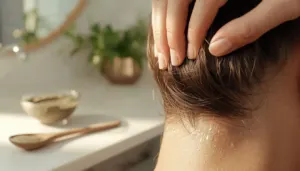
An oily scalp doesn’t happen by accident. Several factors work together, from your biology to your daily habits, to ramp up oil production. Here’s what’s really driving that shine.
Underlying conditions like seborrheic dermatitis or hormonal imbalances can also trigger overactive oil glands, so understanding the common causes of oily scalp and treatment options can help you pinpoint what’s really behind the greasiness.
Genetics and Hormonal Changes
Blame your bloodline first. Genetic predisposition raises your odds of an oily scalp by 60% when it runs in the family, and that’s just the starting point. Your sebaceous glands may simply be built bigger, some research points to glands up to three times larger in people with this inheritance, pumping out more oil no matter how well you wash.
Then hormones join in. DHT and testosterone drive sebum production, and your DHT sensitivity can make glands overreact even when hormone levels look normal. Add in methylation effects, which slow cell repair and trigger oil as a defense response, and you’ve got a scalp working against you on multiple fronts. In fact, six specific genetic variations have been identified that control the sebum production pathways behind all of this.
- Family history raises risk by 60%
- Testosterone and DHT stimulate glands directly
- Gland size can triple with inheritance
- DHT sensitivity spikes oil without hormone changes
- Methylation issues trigger protective oil surges
Overwashing and Rebound Oil Production
Genetics load the gun, but overwashing pulls the trigger. Your sebaceous glands can’t sense oil on the surface, so stripping it triggers rebound production through hormonal signals alone.
| Time After Wash | Scalp Response |
|---|---|
| 6 hours | Roots feel coated |
| 48 hours | Sebum rises 45% |
| Weeks 2-4 | Rebound calms down |
Lukewarm water and gentle cleansing help break this cycle.
Harsh Shampoos and Product Buildup
Sulfate shampoos strip oils fast, but that’s only half the problem. Leftover detergent residue coats strands, mixing with sebum, minerals, and pollutants into stubborn product buildup.
Signs? Stiff strands, flat roots, itchy scalp. Even sulfate-free formulas leave residue if they don’t rinse clean, so cleansing agent balance matters more than the sulfate label.
Sweat, Pollution, and Humidity
Your environment shapes your scalp more than you’d think. Humidity and sweat team up to slow sweat evaporation rate, trapping salt and oil against skin. Pollution deposits on hair add grime to the mix.
- Humid air raises scalp stickiness
- Sweat evaporates slower, leaving residue
- Pollution scalp impact adds buildup
- Skin barrier weakens with shifting humidity
- Scalp hydration drops as sebum lingers
Diet and Lifestyle Influences
What you eat and how you live shows up on your scalp too. Poor sleep schedule and high stress levels throw off hormone balance, ramping up sebum production. Low physical activity, poor hydration habits, and too much screen time don’t help either.
Small daily habits add up fast, which is why building a simple oily scalp care routine at home can make a real difference in keeping sebum levels in check.
Fix the basics first: sleep 7-9 hours, manage stress, move daily. Then let your hair mask frequency and gentle shampooing do the rest.
Best Natural Ingredients for Oil Control
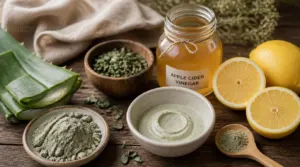
Now that you know what’s causing the excess oil, it’s time to fix it. Nature offers some surprisingly effective ingredients for pulling oil from your scalp and keeping it balanced. Here are the five worth adding to your routine.
Bentonite Clay and Multani Mitti
Think of clay as a magnet for oil. Once mixed with water, bentonite clay carries a negative charge that pulls oily buildup straight from your scalp, while Multani Mitti’s aluminum silicate soaks up grease without stripping natural moisture. Both fight dandruff-causing fungus and deliver minerals like iron and magnesium, restoring shine while keeping sebum production in check.
Apple Cider Vinegar for PH Balance
When your scalp feels greasy by day two, pH imbalance is often the hidden culprit. Apple cider vinegar (pH 2.4-3.4) restores natural pH balance, cutting oil production by 17%. Always dilute: 1-2 tsp per 8 oz water. This protects your scalp microbiome while normalizing sebum, without stripping essential moisture your hair actually needs.
Tea Tree Oil for Scalp Cleansing
Extracted from Melaleuca alternifolia, tea tree oil fights oily buildup through antimicrobial action, cutting oiliness by 30%. Its key compound, terpinen-4-ol, regulates sebum production.
Never apply undiluted. Mix 2-3 drops with a tablespoon of jojoba or coconut oil, massage in circles for 2-3 minutes, then rinse after 15-20 minutes.
Patch test first: apply to your inner arm, wait 24 hours, check for irritation.
Aloe Vera for Lightweight Hydration
An oily scalp still needs water, just not oil. That’s the paradox aloe solves.
Aloe vera gel is about 96-99% water, giving you lightweight hydration without clogging pores.
Its enzymes dissolve dead skin and excess oil while soothing irritation from clay or tea tree treatments.
Why aloe works:
- Hydrates without heaviness
- Calms scalp inflammation
- Delivers antimicrobial protection
- Blends easily into any hair mask recipe
Yogurt, Honey, and Activated Charcoal
Your kitchen already holds three oil-fighting ingredients. Yogurt’s fermentation creates lactic acid, balancing pH. Honey’s humectant film locks in moisture without grease. Activated charcoal adsorbs oil like a magnet.
| Ingredient | Role |
|---|---|
| Yogurt | Balances pH |
| Honey | Binds texture |
| Charcoal | Adsorbs oil |
| Combo | Full oil control |
Natural Hair Mask Recipes for Oily Scalp
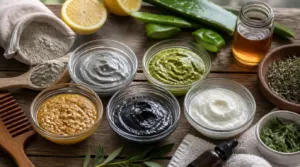
Knowing which ingredients work is one thing. Putting them together in the right ratios is what actually gets you results. Here are five recipes worth trying, each built for a different level of oil control.
ACV and Honey Balancing Mask
Two pantry staples, real results. ACV’s low pH (2-3) shifts your scalp toward its healthy 3.67-5.5 range, while honey’s antimicrobial action calms bacteria and fungus.
- Mix 1 tbsp ACV with 2-3 tbsp raw honey
- Add water if sensitive
- Apply to damp scalp
- Leave 15-20 minutes
- Rinse with mild shampoo
Expect sebum reduction within 2-3 weeks.
Banana and Yogurt Exfoliating Mask
Mash one ripe banana with half a cup of full-fat yogurt and a tablespoon of honey until smooth.
Yogurt’s lactic acid dissolves dead skin cells, while banana’s natural sugars add gentle physical exfoliation. Together they absorb up to 40% of surface oil in just 15 minutes, without stripping your scalp’s natural balance.
Tea Tree and Aloe Mask
For a sharper cleanse, try tea tree and aloe. Mix 1 tablespoon aloe vera gel with 1-2 drops tea tree oil, stirring until smooth.
Tea tree’s antimicrobial action targets sebum control directly. Massage into your scalp, leave on 20 minutes, then rinse with lukewarm water.
If you’re curious how curl-specific formulas stack up against straight hair shampoos, this breakdown of why curly shampoo works differently on straight hair explains what to look for before switching things up.
Dilute properly and avoid your eyes. Sensitive scalps should start small.
Bentonite Clay and Jojoba Mask
Bentonite clay pulls oil the way a magnet pulls iron filings, drawing out excess sebum through its negative ionic charge. Mix 2 tablespoons clay with 1 tablespoon jojoba oil and water until you get a smooth, spreadable paste.
Jojoba oil conditions while clay absorbs, so your scalp won’t feel stripped. Apply weekly, leave 15 minutes, then rinse.
Charcoal and Aloe Oil-Control Mask
Charcoal earns its reputation honestly. It adsorbs up to 200 times its weight in oil, pulling sebum straight from your follicles instead of masking it. If your scalp needs gentler exfoliation alongside oil control, pairing charcoal with a papaya enzyme face treatment can smooth buildup without disrupting your skin’s natural pH.
Activated charcoal adsorbs up to 200 times its weight in oil, drawing sebum straight from the follicles instead of just masking it
Mix 1 tablespoon activated charcoal with 1 tablespoon aloe vera gel, a 1:1 ratio that controls oil without over-drying. Apply to damp scalp, massage gently, leave 20 minutes. Rinse with lukewarm water for balanced, shine-free results.
How to Make and Apply Hair Masks
The right ingredients only work if you apply them correctly. Technique matters just as much as what goes into the bowl. Here’s exactly how to make and apply your mask, step by step.
Gather and Measure Fresh Ingredients
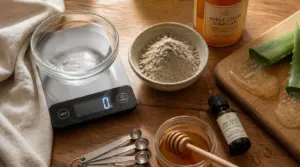
Precision starts before you mix anything. Weigh ingredients on a digital scale (0.1-gram accuracy), tare your bowl first, and portion each item separately.
- Bentonite clay
- ACV
- Fresh aloe
- Tea tree oil
- Honey
Use fresh aloe within 24 hours. Refrigerate extras 3-7 days, airtight, away from light. One fluid ounce equals 29.57 ml.
Mix to The Proper Consistency
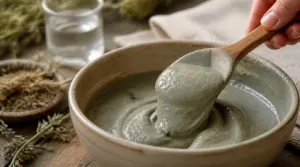
Once ingredients are measured, add water in small splashes, not all at once. Stir bentonite clay slowly until it forms a lump-free paste, thick enough to cling to your hand without dripping. Too thin weakens oil absorption; too thick leaves dry clumps. Aim for smooth, spreadable hair mask consistency, similar to yogurt, before moving to application.
Section Hair and Target Scalp
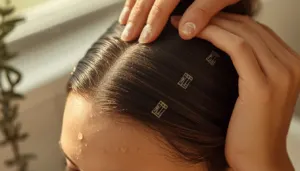
Your crown produces the most oil, so start there. Section hair into four parts, center part then ear-to-ear, and use clips to keep areas separate.
- Focus crown first, where sebum concentrates most
- Target roots section by section, not full lengths
- Apply mask with fingers, using circular motions
- Clip finished sections to prevent product transfer
Leave on for 15–20 Minutes

Set a timer. Fifteen to twenty minutes hits the peak absorption window, letting clay and vinegar penetrate pores without over-drying oily scalp.
| Hair Type | Minutes | Why |
|---|---|---|
| Fine | 15-18 | Prevents flattening |
| Curly | 20 | Full penetration |
| Sensitive | 15 | Minimizes irritation |
| Oily | 15-20 | Balances absorption |
A warm towel boosts penetration 30-40%, so weekly use stays effective without stripping natural oils.
Rinse Thoroughly Without Harsh Scrubbing

How you rinse matters as much as what you apply. Start with warm water to dissolve residue, working top-to-bottom so dirty runoff doesn’t recontaminate cleared sections.
Use gentle rinsing technique, not scrubbing. Adjust water pressure to loosen buildup, then finish with a cold water rinse to seal cuticles. Pat dry, don’t rub, to avoid triggering excess oil.
For color-sensitive routines like this, pairing gentle washing habits with proper shade selection can make all the difference — covering red hair dye with brown requires the same mindful prep to prevent unwanted undertones from bleeding through.
Hair Mask Frequency, Aftercare, and Safety
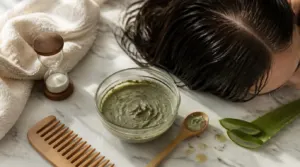
Making the mask is only half the job. How often you use it, and how you treat your scalp afterward, decides whether you get real results or irritation. Here’s what to keep in mind before you start.
Choose Weekly or Twice-Weekly Use
Start oily scalp masks once weekly, then bump to twice if oil returns fast.
- Greasy roots by day two
- Flat, lifeless strands
- Clogged, irritated follicles
- Confidence tanking before noon
- Constant washing that backfires
Adjust frequency for humidity, sweat, or pollution, but never exceed twice weekly. Your scalp balance depends on restraint, not repetition.
Patch Test Every New Ingredient
Restraint keeps oil balanced, but new ingredients bring their own risk. Before mixing any hair mask ingredients, test a quarter-sized patch on your inner arm. Apply twice daily for seven to 10 days, watching for burning, hives, or swelling.
Scalp sensitivity varies. If reactions hit, wash off with lukewarm water immediately and skip that ingredient from now on.
Dilute Acids and Essential Oils
Passing a patch test doesn’t mean full strength is safe. Dilute apple cider vinegar before scalp contact, since undiluted acid irritates skin.
Tea tree oil needs a carrier like jojoba or aloe, staying below 5% concentration, roughly 6 drops per ounce. This helps pH normalization and antimicrobial action without triggering irritation, keeping sebum control gentle and effective.
Moisturize Dry Lengths and Ends
Dilution protects your scalp, but your ends need the opposite: richer care. Oily roots and dry lengths can coexist, so moisturize dry lengths and ends separately.
Apply a lightweight cream or leave-in below the scalp line, then seal with a few drops of oil. This locks in moisture, prevents split ends, and keeps length hydrated without adding scalp oil.
Watch for Scalp Irritation
Burning, tingling, or prickly sensations mean stop and reassess. These are scalp sensitivity signs, often triggered by acids or tea tree oil.
Patch test new ingredients on your inner arm for 24 hours first. If itching or redness follows a new mask, that’s your irritation trigger, and a clear product reaction clue.
Persistent discomfort after patch testing new ingredients means it’s time to seek help from a dermatologist.
Frequently Asked Questions (FAQs)
What is the best homemade hair mask for oily hair?
Like a telegraph operator tapping out sebum’s secrets: bentonite clay mixed with jojoba oil wins. It absorbs oil without stripping your scalp, works fast, costs pennies, and delivers noticeable balance within one weekly treatment.
What hair mask is good for an oily scalp?
Your best bet combines bentonite clay for oil absorption, tea tree oil for antimicrobial cleansing, and aloe vera for hydration.
ACV rinses balance scalp pH, while activated charcoal boosts sebum control, together supporting a healthier, less greasy scalp.
What are some good homemade hair masks for an oily scalp?
Cutting to the chase, your best bets are ACV and honey, banana yogurt, and tea tree aloe masks. Each targets sebum production differently, giving you real options for a consistent scalp treatment routine.
How to treat an oily scalp naturally?
Target sebum production with clay or charcoal masks, weekly. Add apple cider vinegar for pH balance, gentle scalp massage to boost circulation, and cold-water rinsing.
Consistency matters more than intensity, your scalp reacts to steady, natural treatment over harsh, frequent washing.
What hair mask is best for oily hair?
Picture your roots by midday: flat, shiny, weighed down. A bentonite or kaolin clay mask blended with apple cider vinegar draws out sebum, restores scalp pH, and leaves hair genuinely lightweight instead of greasy.
Is a hair mask good for an oily scalp?
Yes. A hair mask genuinely helps an oily scalp by targeting sebum regulation at the source. Clay absorbs up to 40% excess oil, tea tree cuts oiliness by 30%, and consistent use helps long-term scalp treatment without stripping natural balance.
Can natural hair masks cause allergic reactions?
Absolutely, allergic reactions happen. Essential oil allergies show up with tea tree, lemon, and even egg proteins. Clay ingredients can irritate sensitive skin too. Always patch test on your forearm 45 minutes before applying, then recheck skin over 48 hours.
How long do homemade hair masks last?
Like herbs wilting in the sun, homemade masks fade fast. Refrigerate perishable batches in a sealed, sterilized container for up to one week, label the date, and skip application if smell or texture seems off.
Are hair masks safe during pregnancy?
Most natural remedies are pregnancy-safe since systemic absorption stays minimal. Skip essential oils like rosemary or peppermint, and choose gentle staples like yogurt, honey, and aloe vera. Always patch test first, and watch for scalp irritation.
Can oily scalp masks damage colored hair?
Strong acids or over-rinsing can rough up the cuticle, causing color fade and dullness. Patch test first, dilute acids, and pick gentler aloe vera or honey masks for safer, longer-lasting colored hair results.
Conclusion
Yes, this takes more effort than a bottle off the shelf. But effort is exactly why it works.
A natural hair mask for oily scalp doesn’t mask the problem, it corrects it, resetting your scalp’s oil production at the source. Stick with clay, ACV, or tea tree oil for four weeks, and you’ll notice fewer greasy roots by day two.
Your scalp isn’t broken. It’s just out of balance, and now you know how to fix it.