
This site is supported by our readers. We may earn a commission, at no cost to you, if you purchase through links. This content is for general informational and educational purposes only and is not a substitute for professional medical, dermatological, or nutritional advice.

Your skin doesn’t care what your moisturizer costs. A $9 ceramide cream rebuilds your barrier with the same ceramides NP, AP, and EOP found in products ten times the price.
Dry skin drains your wallet fast. Flaking, tightness, and itching push people toward luxury jars that promise miracles and deliver marketing. Dermatologists see the pattern daily, and the fix rarely involves a splurge.
The best affordable dry skin remedies come from drugstore shelves and your pantry: petroleum jelly, glycerin, colloidal oatmeal. Here’s how to pick them, use them safely, and spot the signs that mean it’s time to call a doctor.
Table Of Contents
- Key Takeaways
- Choose Affordable Moisturizers for Dry Skin
- Compare Low-Cost Natural Dry Skin Remedies
- Build a Simple Moisture-Locking Skincare Routine
- Prevent Dry Skin Without Overspending
- Recognize When Dry Skin Needs Medical Care
- Frequently Asked Questions (FAQs)
- What is the best remedy for extremely dry skin?
- What am I lacking if my skin is so dry?
- How can I hydrate my extremely dry skin?
- What hydrates skin the fastest?
- How do you treat dry skin?
- How to get rid of dry skin naturally?
- What is the best skincare routine for dry skin?
- Which natural oil is best for dry skin?
- What is the best moisturizer for dry skin?
- How to prevent dry skin?
- Conclusion
Key Takeaways
- You don’t need pricey products, since a $9 to $15 ceramide cream rebuilds your skin barrier with the same ceramides found in luxury jars.
- You’ll lock in the most moisture by applying a humectant like glycerin or a ceramide cream to damp skin within three minutes of cleansing, then sealing it with a thin layer of petroleum jelly.
- You can add low-cost natural options like colloidal oatmeal for itching, but you should skip coconut oil on acne-prone skin, patch test aloe and honey, and never give raw honey to babies.
- You should see a doctor if dryness comes with cracks, bleeding, pus, spreading redness, fever, or sudden widespread itching, because products alone can’t fix those.
Choose Affordable Moisturizers for Dry Skin
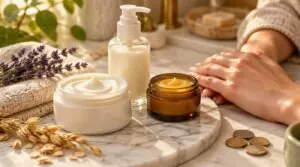
You don’t need a pricey jar to fix dry skin. The best affordable moisturizers for dry skin protect your barrier, lock in water, and keep your budget safe. Here are three proven options that deliver real results for your skin.
Pairing one of these moisturizers with a gentle skincare routine for dry skin helps ceramides and hyaluronic acid hold moisture in far longer.
Petroleum Jelly for Moisture Retention
Why does petroleum jelly top affordable dry skin remedies? It builds an occlusive seal that boosts moisture retention.
Use it right:
- Apply to damp skin
- Use a thin layer
- Dab on cracked heels
- Skip it under makeup
You’ll support barrier function restoration without overspending. Petroleum jelly seals in water your skin already holds, so apply it right after you wash. Because it’s hypoallergenic and noncomedogenic, it also suits sensitive and acne-prone skin when used in moderation.
Budget Ceramide Creams for Barrier Support
Petroleum jelly seals moisture in, but it doesn’t replace lost lipids. A ceramide cream does. Ceramides NP, AP, and EOP rebuild your skin’s barrier function, and drugstore tubs cost $9 to $15.
Pairing a ceramide moisturizer with the right skin care routine for hyperpigmentation helps a repaired barrier calm irritation and keep dark spots from lingering.
Apply it to damp skin within three minutes of cleansing, twice daily. Expect less flaking in two to three weeks.
Layer petroleum jelly on top only if your skin tolerates it.
Glycerin and Dimethicone Moisturizers
Ceramides rebuild your barrier. Glycerin and dimethicone moisturizers back them up. Glycerin is a humectant that pulls water into your skin. Dimethicone is an occlusive that locks it there, so you lose less moisture.
Look for 5 to 15% glycerin on the label. Apply twice daily, and expect softer, smoother skin within a week or two.
Compare Low-Cost Natural Dry Skin Remedies

You don’t need a pricey jar to fix dry skin. Three low-cost natural remedies can help your skin hold moisture, and each one has its own strengths and safety limits. Here’s how they stack up, so you can pick what’s right for your skin.
Colloidal Oatmeal for Dry, Itchy Skin
Picture a warm bath turning silky and milky, calming that tight, scratchy feeling the moment you step in. That’s colloidal oatmeal at work. It’s finely ground oats that cling to your skin and help with skin barrier repair.
If oatmeal baths aren’t enough on their own, these natural remedies for skin inflammation offer more gentle ways to calm redness and irritation.
Try oatmeal baths or a 1% to 5% lotion. It’s gentle, budget-friendly anti-inflammatory skincare. You’ll notice less itching within two weeks.
Coconut Oil Benefits and Limitations
Some people find coconut oil a handy natural moisturizer for rough patches. Its fatty acids soften skin and slow water loss, and small studies show better hydration. It’s no major source of essential fatty acids.
Skip it on acne-prone faces, since it clogs pores. Stop if itching or rash appears. Use it as barrier protection skincare, not skin barrier repair.
Aloe Vera and Honey Safety
Aloe vera and honey make a budget-friendly pair, and honey acts as a natural humectant that draws water into dry skin.
Both also have antimicrobial and wound healing reputations, but you still need to use them wisely:
- Never use it near a baby’s mouth; raw honey can carry botulism spores.
- Patch test first on your inner arm.
- Skip infected skin.
Build a Simple Moisture-Locking Skincare Routine
Think of your skin as a sponge wrapped in plastic. Water goes in first, then the wrap holds it there.
Your skin is a sponge wrapped in plastic: water goes in first, then the wrap holds it there
Start with gentle cleansing in warm water, then pat your skin damp. Don’t rub it dry. Apply moisturizer right away to protect your moisture barrier and keep skin hydration levels up.
| Step | Product | Job |
|---|---|---|
| Cleanse | Fragrance-free wash | Gentle cleansing |
| Hydrate | Glycerin cream | Humectant properties |
| Seal | Petroleum jelly | Occlusive seal |
| Repeat | Same cream | Refill after washing |
Use a thin layer of jelly only over cream, since it doesn’t hydrate on its own. Keep it off eyelids, and skip heavy layers on acne-prone areas.
Reapply to dry areas when tightness or flaking returns. Stop any product that burns or turns skin red.
Prevent Dry Skin Without Overspending

Spending more won’t fix dry skin, but spending smarter will. The best affordable dry skin remedies are habits, not products. Protect your moisture barrier, and you’ll buy less cream.
Start with gentle cleansing. Keep showers to 5-10 minutes in lukewarm water, under 40°C. Choose a fragrance-free, sulfate-free cleanser. Then moisturize within 3 minutes, while your skin’s still damp.
Add humidity control next. A $20 ultrasonic humidifier and a $10 hygrometer keep indoor air at 40-60% relative humidity. Your skin holds onto its natural moisturizing factors, so you need less heavy product in winter.
Fabric matters too. Wear cotton or silk next to your skin. Skip rough wool. Use fragrance-free detergent and double-rinse. Pair these with natural moisturizers like colloidal oatmeal.
Recognize When Dry Skin Needs Medical Care

Moisturizer isn’t magic, and your skin knows it. When dryness sticks around, your skin may be telling you something bigger.
Persistent dryness often signals compromised barrier function, inadequate moisture retention, or transepidermal water loss that products alone can’t fix. Fragrance sensitivity can mimic it too.
See a clinician if you notice cracks, bleeding, or pain, or if pus or yellow crusting appears. Spreading redness, warmth, or fever needs prompt care. Diabetes or a weakened immune system raises your risk, so don’t wait.
Sudden, widespread dryness, unusual thirst, or itching without a rash deserves a check too. Infants with inflamed patches need assessment. Protective clothing winter habits only help so much. Facial or tongue swelling, or trouble breathing, is an emergency.
Frequently Asked Questions (FAQs)
What is the best remedy for extremely dry skin?
Think coconut oil or aloe vera gel beats everything? Not quite. Their humectant properties help, but petroleum jelly wins for extreme dryness.
Apply it after oatmeal baths, while skin’s damp, and you’ll lock moisture in.
What am I lacking if my skin is so dry?
Your dry skin may signal missing nutrients. Low vitamin A, D, E, zinc, or omega-3s can weaken your moisture barrier. That’s compromised barrier function in action. Boost hydration with food first, then see a doctor.
How can I hydrate my extremely dry skin?
Picture your skin as parched, cracked earth. Soak in oatmeal baths, then smooth on aloe vera gel while damp. Seal it in with petroleum jelly.
Coconut oil and honey help too, but don’t skip patch-testing.
What hydrates skin the fastest?
Petrolatum cuts transepidermal water loss by up to 99%. Pair occlusive moisturizers with humectant ingredients like glycerin on damp skin for the fastest moisture retention.
Honey, a natural humectant, also helps you hydrate even faster.
How do you treat dry skin?
Dry skin feels like a desert, and you’re done suffering! Switch to gentle cleansers, then layer humectants like glycerin under petrolatum. That’s affordable natural skincare doing real moisture barrier repair.
Moisturize within minutes of bathing.
How to get rid of dry skin naturally?
Soothe dry skin with oatmeal baths, then seal in moisture. Use a plain natural moisturizer like petroleum jelly on damp skin. Coconut oil works too, but skip it on acne-prone areas. Go easy on honey.
What is the best skincare routine for dry skin?
Cleanse once nightly with a gentle, fragrance-free cleanser, then moisturize on damp skin. Layer a hyaluronic acid serum first for skin hydration. Seal it with a thick ceramide cream. Wear SPF 30+ every single morning.
Which natural oil is best for dry skin?
Think of your skin as a thirsty sponge. Jojoba oil mimics your natural sebum, so it’s your safest bet.
If your skin leans dry or sensitive instead, these organic skin care methods for different skin types can help you pick gentler, better-matched ingredients.
Coconut oil, sunflower seed oil, olive oil and avocado masks work too, but they’re noticeably heavier.
What is the best moisturizer for dry skin?
Your best moisturizer is a thick, fragrance-free cream with ceramides and hyaluronic acid. It rebuilds your skin barrier and holds water in all day.
Natural moisturizers can help too, but ceramides do the heavy lifting.
How to prevent dry skin?
Dry skin prevention starts with moisture retention. Run a humidifier above 30% humidity, keep showers short and lukewarm, and use fragrance-free skincare. Pat dry, then seal in hydration with petroleum jelly, protecting your barrier. Consistent skincare routine wins.
Conclusion
Picture a woman who spends $60 on a jar of cream, then still scratches her shins every night. Her friend uses a $9 tub of ceramide cream and petroleum jelly, and her skin calms within two weeks. Price never did the work. Consistency did.
Stick with affordable dry skin remedies, apply them to damp skin, and keep showers short. If cracking, bleeding, or constant itching persists, see your dermatologist. Your skin needs care, not luxury.