This site is supported by our readers. We may earn a commission, at no cost to you, if you purchase through links. This content is for general informational and educational purposes only and is not a substitute for professional medical, dermatological, or nutritional advice.

That dark spot from last summer’s breakout? It’s not stubborn, it’s patient. Hyperpigmentation lingers because melanocytes overreact and keep dumping pigment long after your skin has healed, and slathering on random serums won’t convince them to stop.
You need a strategy, not a shopping cart full of trending ingredients. The best skin care routine for hyperpigmentation pairs specific actives with the right timing, morning versus night, so they work with your skin’s biology instead of against it.
Here’s exactly how to build that routine, spot by spot.
Table Of Contents
- Key Takeaways
- Best Morning Skincare Routine for Hyperpigmentation
- Best Night Skincare Routine for Hyperpigmentation
- Best Ingredients for Fading Dark Spots
- How to Customize Your Routine
- How to Prevent Hyperpigmentation Returning
- Frequently Asked Questions (FAQs)
- What is the best skincare routine for hyperpigmentation?
- What is the 4 2 4 rule in skincare?
- What do Koreans use for hyperpigmentation?
- What fades hyperpigmentation quickly?
- What is the best skin care product for hyperpigmentation?
- What skincare gets rid of hyperpigmentation?
- What is the fastest way to cure hyperpigmentation?
- What skincare regimen is best for hyperpigmentation?
- What fades hyperpigmentation fast?
- What completely clears hyperpigmentation?
- Conclusion
Key Takeaways
- Pair morning actives like vitamin C with nightly ones like retinoids or tranexamic acid so you’re working with your skin’s repair cycle, not against it.
- Never skip daily broad-spectrum SPF 30+, since sun exposure undoes fading progress fast and is often the real reason dark spots keep coming back.
- Match your routine to what’s actually causing your dark spots (acne marks, melasma, or sun damage) since each responds best to different ingredients and care.
- Give your routine 8-12 weeks before judging results, and protect your skin barrier with gentle, fragrance-free products since irritation slows fading and can even make spots worse.
Best Morning Skincare Routine for Hyperpigmentation
Your mornings set the tone for how well your skin fights back against dark spots all day long. Think of this routine as your daily defense squad, each product with its own job to do. Here’s exactly what you’ll want on your bathroom shelf, in the order you’ll use it.
If you want the bigger picture beyond dark spot defense, this guide to building a daily skin care routine breaks down every step your skin actually needs.
Gentle Cleanser

Foundation first: a harsh cleanser undoes everything else. Choose a pH balanced formula (around 5.5) with gentle exfoliation, like COSRX Low pH Gel Cleanse or Thayers pH Balancing Cleanser.
Look for:
- Fragrance free
- Barrier support ingredients
- Sensitive skin tested
This step preps skin for Vitamin C serum, Niacinamide, Sunscreen, and Tranexamic acid to actually work.
For effective cleansing that helps the skin’s natural barrier, consider options with ceramides to help restore and maintain moisture balance. CeraVe Hydrating Cleanser
Vitamin C Serum
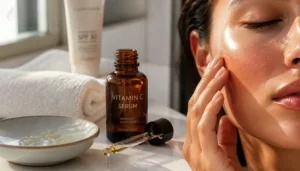
Once your skin is clean, apply vitamin C serum while it’s still damp. Look for 15-20% L-ascorbic acid in a dark amber bottle with vitamin E and ferulic acid for stability.
Wait a minute or two, then layer sunscreen. Skip clear packaging; light kills potency fast. This one step brightens tone within 4-6 weeks when you’re consistent.
Niacinamide or Alpha Arbutin
After vitamin C sinks in, layer on niacinamide or alpha arbutin—don’t guess which.
- Oily or acne-prone? Niacinamide (4-5%) curbs shine and blocks pigment transfer.
- Sensitive skin? Alpha arbutin (1-2%) inhibits tyrosinase gently.
- Mature spots? Alpha arbutin targets them directly.
- Want speed? Combine both.
- Dry skin? Lower niacinamide (2-3%), paired with hydrators.
Moisturizer for Barrier Support
Once your actives settle in, seal everything with a ceramide-rich moisturizer. Ceramides rebuild your lipid matrix and calm irritation from brightening ingredients.
| Ingredient | Benefit | Best For |
|---|---|---|
| Ceramide NP | Hydration, repair | All types |
| Squalane | Locks in moisture | Dry skin |
| Peptides | Boosts natural ceramides | Sensitive skin |
Think of it as reinforcing your walls before facing the sun.
Broad-Spectrum SPF 30+

Last but never least: sunscreen locks in every gain you made upstream.
Skipping it, even occasionally, undoes progress fast—which is why staying consistent with your skincare routine matters just as much as the products themselves.
Without daily broad-spectrum SPF 30+, dark spot fading stalls and hyperpigmentation rebounds.
- Blocks ~96.7% of UVB rays
- Look for critical wavelength above 370nm
- Mineral filters suit sensitive skin
- Reapply every 2 hours
Higher UVA Protection Factor means better long-term defense. Think of SPF as your daily insurance policy.
Best Night Skincare Routine for Hyperpigmentation

Nighttime is when your skin does its real repair work, so your routine should work with that rhythm, not against it. You’ll swap brightening actives for repair-focused ones that fade spots while you sleep. Here’s what to reach for once the sun goes down.
Double Cleanse When Needed
Wore sunscreen and makeup all day? Reach for an oil cleanser first to dissolve it, then follow with a gentle, water-based cleanser.
This double cleanse method suits nightly use, especially with heavy product days. Skip it if skin feels stripped — every other night works too. Clean skin means your tranexamic acid serum (next up) actually absorbs.
Retinoid Treatment
This is where dark spots meet their match. Tretinoin speeds up cell turnover, dispersing melanin and revealing fresher skin beneath.
Start low: 0.025% cream, 2–3 nights weekly, moisturizer after. Expect purging weeks 1–4, real fading by week 6-12. Pair with vitamin C serum by day, niacinamide for calming, and never skip SPF — retinoids raise photosensitivity, undoing your progress fast.
Tranexamic Acid
Originally an anti-bleeding medication, tranexamic acid now moonlights as a melasma fighter. It calms melanocyte-keratinocyte crosstalk and may curb tyrosinase activity, though its skin mechanism isn’t fully mapped.
Topically, it’s gentle enough for sensitive skin. Look for 2-5% serums, layered after niacinamide. Oral dosing exists but requires medical supervision—not a DIY project, given seizure risk in susceptible patients.
Azelaic Acid
Think of azelaic acid as the quiet multitasker of your routine. This naturally derived acid blocks tyrosinase, fades dark spots, and calms redness—handling pigment and irritation together.
Use a 15-20% cream or gel nightly. It pairs safely with vitamin C, niacinamide, or your gentle cleanser, and works well for acne-prone or sensitive skin without the harshness some actives bring.
Ceramide-Rich Moisturizer
All those actives you just layered on need backup. A ceramide-rich moisturizer rebuilds your skin barrier using Ceramide NP and AP, cholesterol, and fatty acids—the same lipids your skin naturally loses.
Look for hyaluronic acid for hydration, plus petrolatum or dimethicone to lock it in. Even sensitive, dry skin tolerates these formulas well, easing irritation while your gentle cleanser and treatments keep working overnight.
Best Ingredients for Fading Dark Spots

Not every ingredient works the same way on dark spots, and that’s actually good news for you. Some target melanin production directly, while others speed up cell turnover or calm inflammation underneath. Here’s what actually earns a spot in your routine.
Vitamin C
Once your skin gets used to it, vitamin C becomes your brightening workhorse. It suppresses tyrosinase to fade spots, offers real antioxidant protection, and helps collagen synthesis for firmer skin. Look for 10-20% concentrations.
Pair it with niacinamide, azelaic acid, kojic acid, or tranexamic acid for stronger results—like assembling a skincare dream team.
Retinoids
While vitamin C works the morning shift, retinoids own the night. They speed cell turnover, fading dark spots faster than vitamin C serum alone.
Start low—OTC retinol or prescription tretinoin—2-3x weekly to manage irritation. Apply after moisturizer using the sandwich method.
Mornings after? Non-negotiable SPF 30, since retinoids increase sun sensitivity greatly.
Niacinamide
Retinoids fade spots, but they can leave skin a bit cranky. Niacinamide steps in as the peacemaker—blocking pigment transfer while calming irritation.
Niacinamide concentration guide: use 2% for sensitive skin, 4-5% for general tone evening, 10% for stubborn hyperpigmentation.
- Barrier repair
- Acne control
- Pairs beautifully with vitamin C and tranexamic acid
Alpha Arbutin
Niacinamide calms things down; alpha arbutin plays a sneakier game. It mimics melanin, tricking tyrosinase into wasting its energy on a decoy instead of pigment.
Use it at 2-5% concentrations, paired with vitamin C or niacinamide for extra brightening power. Expect visible fading within 4 to 8 weeks—store products away from heat, since arbutin breaks down quickly otherwise.
Chemical Exfoliants
Dissolving dead, pigmented cells is basically an inside job for glycolic acid and salicylic acid.
- Glycolic acid resurfaces at 5-10% for at-home use
- Salicylic acid clears pore-clogging sebum
- PHAs suit sensitive types needing gentler exfoliation
Start 1-2 times weekly, alternating with your vitamin C serum or tranexamic acid nights. Skip niacinamide that same session—your skin barrier will thank you.
How to Customize Your Routine

Not all dark spots play by the same rules, and neither should your routine. Your skin type and the cause behind your hyperpigmentation both shape what you should reach for. Here’s how to fine-tune your approach based on what you’re actually dealing with.
Post-Inflammatory Hyperpigmentation
That angry red spot from your last breakout doesn’t just fade—it often morphs into brown. Post-inflammatory hyperpigmentation follows acne, cuts, or eczema, hitting darker skin tones hardest. Calm flares fast with gentle, fragrance-free products.
| Do | Avoid |
|---|---|
| Niacinamide, vitamin C | Picking, scrubbing |
| Daily SPF reapplication | Skipping sunscreen |
| Patience (weeks-months) | Harsh exfoliants |
Melasma
When brown patches show up symmetric and stubborn across your cheeks or forehead, you’re likely dealing with melasma, not typical hyperpigmentation. Hormonal triggers like pregnancy fuel it, and it loves recurring.
Tranexamic acid paired with niacinamide targets pigment production directly. Since melasma can sit deep (dermal) or shallow (epidermal), treatment gets tricky—work with a dermatologist. Daily sunscreen isn’t optional here; it’s your recurrence shield.
Sunspots
Years of sun exposure leave their mark—literally. Sunspots respond well to retinoids and glycolic acid, which speed cell turnover and fade discoloration over 8-12 weeks.
Your routine should include:
- Vitamin C serum
- Retinoid at night
- Chemical exfoliant
- Alpha arbutin
- Daily SPF 30+
Sunscreen prevents new spots from forming while treatments fade existing ones.
Dry or Sensitive Skin
Your barrier comes first, always. Skip actives that sting and reach for niacinamide and low-strength tranexamic acid—both calm inflammation while fading spots.
Use a pH-balanced, fragrance-free gentle cleanser, then layer a hydrating serum under a ceramide-rich moisturizer.
Patch test everything. Finish mornings with SPF 30, since irritated skin burns—and pigments—faster.
Oily or Acne-Prone Skin
Excess oil doesn’t mean you skip hydration—it means you choose smarter. Use a non-comedogenic moisturizer and cleanse with salicylic acid to unclog pores and control sebum.
Layer niacinamide and vitamin C serum for spot fading, then tranexamic acid at night. Never skip sunscreen reapplication; breakouts already inflame skin, and unprotected UV exposure makes dark marks stick around longer.
How to Prevent Hyperpigmentation Returning

Fading those dark spots is only half the battle. Keeping them gone is where the real work happens, and it comes down to daily habits, not one-time fixes. Here’s what actually keeps hyperpigmentation from making a comeback.
Daily Sunscreen Habits
Rarely does one habit do so much heavy lifting for pigment control as daily sunscreen. Apply broad-spectrum SPF 30 every morning, covering ears, neck, and hairline. Reapply after sweating or two hours outdoors, especially during peak sun hours.
Three non-negotiables:
- Broad-spectrum SPF 30+ daily
- Reapplication every 2 hours
- Consistent use, sun or clouds
Tinted SPF Benefits
Tinted SPF takes sun protection further. Iron oxides block visible light, including screen-emitted blue light that worsens melasma.
Adaptive pigments mix across skin tones, cutting white cast while simplifying your morning routine—often replacing foundation.
| Feature | Benefit |
|---|---|
| Iron oxides | Visible light protection |
| Adaptive tint | No white cast |
| Added actives | Extra antioxidant support |
Avoiding Skin Irritation
Sunscreen protects you, but irritation undoes your progress fast. Use fragrance-free products, patch test new ones behind your ear, and cleanse gently with lukewarm water.
Avoid overexfoliation and friction from rough fabrics.
- Stop actives if burning appears
- Rebuild barrier before restarting treatment
- Protect eyes, mouth corners, nostrils
Calm skin heals faster than irritated skin ever fades.
Calm skin heals faster than irritated skin ever fades
Tracking Skin Progress
Calm skin is only half the story—you also need proof it’s working. Snap a photo each morning in natural window light, log products daily, and let AI scans track dark spot fading.
Consistent use plus data beats guesswork for spotting real, gradual improvement in post-inflammatory hyperpigmentation.
When to See Dermatologist
When should you stop DIY-ing it? If dark spots come with painful skin changes, a rapidly spreading rash, or nonhealing sores, book a dermatologist consultation now.
Same goes for:
- Mole or birthmark changes
- Chronic skin not responding to treatment
- Fever or joint pain alongside your hyperpigmentation
You may need prescription-strength options or visible light protection suited to your skin sensitivity.
Frequently Asked Questions (FAQs)
What is the best skincare routine for hyperpigmentation?
Even Cleopatra’s beauty routine skipped one important step: broad-spectrum SPF 30+. Cleanse gently, layer vitamin C serum, add niacinamide, apply retinoids or tranexamic acid at night, moisturize consistently, and reapply sunscreen — your skin will thank you.
What is the 4 2 4 rule in skincare?
Picture a 4-minute oil cleanse, 2 minutes of foam cleansing, then 4 minutes rinsing lukewarm-to-cool. This double-cleansing ritual dissolves SPF and sebum, protects your skin barrier, and preps skin for serum absorption—ideal for evening routine consistency.
What do Koreans use for hyperpigmentation?
Think of K-beauty as pigment’s quiet dismantling crew: layered niacinamide, vitamin C serum, and tranexamic acid target dark spots daily, all sealed under diligent sunscreen—proof that consistency, not intensity, wins Korea’s brightening game.
What fades hyperpigmentation quickly?
For fast results, combine prescription hydroquinone with tretinoin, plus in-office laser therapy or chemical peels. Tranexamic acid and niacinamide speed things along too. Retinoids show visible fading by week 8—patience still pays off, even with the quick stuff.
What is the best skin care product for hyperpigmentation?
No single hero here: your best bet pairs a vitamin C serum by day with retinoids at night, plus niacinamide, tranexamic acid, gentle exfoliants, and daily non-comedogenic SPF 30+ sunscreen to lock in fading results.
What skincare gets rid of hyperpigmentation?
Layer vitamin C serum each morning to brighten skin, then apply retinoids or tranexamic acid at night for cell turnover. Weekly chemical exfoliants lift surface pigment. Pair with niacinamide and daily sunscreen to lock in results.
What is the fastest way to cure hyperpigmentation?
There’s no magic eraser here, but you can speed things along. Pair vitamin C and tranexamic acid with nightly retinoids and daily sunscreen. For stubborn cases, add laser treatments, chemical peels, or prescription topicals under dermatologist guidance.
What skincare regimen is best for hyperpigmentation?
Pair a gentle cleanser with morning vitamin C, nightly retinoids, and niacinamide to fade hyperpigmentation while rebuilding your barrier. Layer actives thoughtfully, adjust for seasons and hormones, and never skip sunscreen—consistency, not speed, delivers lasting results.
What fades hyperpigmentation fast?
Retinoids, Vitamin C, and niacinamide drive rapid pigment reduction, especially paired with glycolic acid exfoliation. For melasma, hydroquinone or laser resurfacing speeds things up. Daily SPF locks in results—skip it, and fading spots return fast.
What completely clears hyperpigmentation?
Like Sisyphus and his boulder, total, permanent clearance isn’t realistic. But consistent sun protection, targeted lightening agents like vitamin C and hydroquinone, plus retinoids and patience over months, get you remarkably close—sometimes even near-invisible results.
Conclusion
Wondering why your dark spots keep outlasting your patience? Melanocytes don’t quit overnight, but consistency rewires the outcome.
The best skin care routine for hyperpigmentation isn’t about chasing miracle ingredients; it’s about layering vitamin C, retinoids, and SPF like building blocks, each doing its job on schedule, every single day.
Give it 8-12 weeks. Your skin remembers everything you feed it, so feed it patience and protection. Fading spots isn’t magic. It’s consistent, evidence-based care.