This site is supported by our readers. We may earn a commission, at no cost to you, if you purchase through links. This content is for general informational and educational purposes only and is not a substitute for professional medical, dermatological, or nutritional advice.

Your kitchen fruit bowl might hold better exfoliating power than half the products in your bathroom cabinet. Papaya contains papain, an enzyme that digests dead skin cells the way it tenderizes meat, gently breaking down the proteins holding dull, flaky skin in place. No scrubbing, no scratching, just science doing the work while you relax.
That’s the magic behind a papaya enzyme face treatment: it works with your skin’s natural shedding cycle instead of fighting it. Estheticians have used this fruit for decades because it delivers real results without the redness or micro-tears that scrubs often leave behind.
Ready to see how this tropical fruit turns into one of skincare’s smartest secrets?
Table Of Contents
Key Takeaways
- Papain, the enzyme in papaya, gently digests the proteins holding dead skin cells together instead of scrubbing them off, making it a great option for sensitive skin that reacts to physical exfoliants.
- Beyond exfoliation, papaya delivers vitamin C, beta-carotene, lycopene, and fatty acids that brighten tone, boost collagen, and lock in hydration.
- If you have a latex allergy, patch test before trying papaya since papain shares proteins with latex and can trigger reactions ranging from itching to anaphylaxis.
- Stick to 1-2 uses a week for normal or oily skin (just once for sensitive or dry skin), always follow up with moisturizer and SPF 30, and expect real brightening results within 4 to 12 weeks.
What is a Papaya Enzyme Face Treatment?
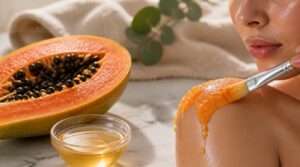
So what’s actually happening when you slather papaya on your face? It comes down to a few key players working together on your skin. Here’s what makes this treatment tick.
Papain and Enzymatic Exfoliation
Meet papain, the enzyme that does the heavy lifting in your papaya treatment. Pulled from unripe papaya, it gently breaks down keratin bonds holding dead cells together, no scrubbing required.
Since it targets dead cells rather than healthy skin, papain suits sensitive complexions that react to physical scrubs, one reason it’s a staple in at-home glowing skin routines.
That’s enzymatic vs acid exfoliation: papain digests proteins instead of dissolving your skin’s surface.
- Loosens dead cells naturally
- Mimics your skin’s own shedding process
- Skips harsh acidification
- Works at 0.1%–1% concentrations
Because papain acts through enzymatic exfoliation mechanisms rather than pH change, it stays effective across a broader range of skin conditions than typical acid exfoliants.
Papaya’s Skin-Supporting Nutrients
Papain isn’t the only thing papaya brings to your skin. Vitamin C fuels collagen production, while beta-carotene speeds cell renewal. Lycopene defends against UV and pollution damage. Essential fatty acids lock in moisture, and papaya’s 88% water content hydrates from within. Vitamin E rounds it out, calming and protecting as papain exfoliates.
Professional Versus At-Home Treatments
So how does a spa facial stack up against your bathroom counter version? Mostly it comes down to strength. Professional treatments use much higher enzyme concentration and longer application duration, plus professional supervision to adjust things on the spot.
At-home papaya enzymes still exfoliate and brighten, just more gently, with lower cost and easy customization for your own skin.
Papaya Enzyme Face Treatment Benefits
Now that you know what papaya enzymes actually do, let’s talk about why your skin will thank you. This little fruit packs some serious perks, from smoother texture to a brighter glow. Here’s what you can expect once papain becomes part of your routine.
Gentle Dead Skin Removal
Ever wonder how fruit can scrub without scrubbing? That’s the magic of Papain Keratin Breakdown. This enzyme hydrolyzes the protein bonds holding dead cells together, so they lift away on their own.
No grit, no friction, just a non-abrasive exfoliation method that respects your barrier. Your skin gets gentle skin smoothing and real dead skin cell removal, minus the redness scrubs often leave behind.
If ingrown hairs are part of your texture troubles, pairing this routine with a gentle razor made for thick, sensitive skin can help prevent irritation before it starts.
Brighter, More Even Skin Tone
Dark spots don’t stand a chance once you factor in vitamin C’s role here. This antioxidant blocks tyrosinase, the enzyme driving melanin production, giving you real hyperpigmentation reduction over time.
Papaya doesn’t stop there. Lignin peroxidase breaks down stubborn melanin deposits, while consistent exfoliation helps even tone improvement, fading discoloration for a genuinely uniform complexion.
Smoother Texture and Natural Radiance
Once dead cells lift away, skin feels different almost instantly, smoother, softer, glass-like under your fingertips. That’s the enzymatic glow boost at work.
Papaya enzymes exfoliate without scrubbing, clearing rough buildup so light reflects evenly instead of scattering off flaky patches. The result? A genuine light-reflective complexion and smooth skin renewal that looks like you, just better rested.
Clearer Pores and Fewer Breakouts
Since clogged pores are basically dirt, oil, and dead skin throwing a party they weren’t invited to, papain steps in as bouncer. It breaks down debris for pores unclogging while supporting papain sebum regulation.
This gentle enzymatic cleansing calms acne lesions and builds a real breakout reduction routine, cell turnover working steadily instead of stripping skin raw.
Antioxidant and Collagen Support
Think of free radicals as tiny troublemakers hunting for a fight with your skin cells. Papaya enzymes bring backup: vitamin C offers real antioxidant protection, working alongside lycopene to block free radical damage before it ages you.
That same vitamin C fuels collagen production, while papain’s cell turnover helps lipid barrier repair and steady UV stress defense over time.
Papaya Enzymes Versus Other Exfoliants
Not all exfoliants play by the same rules, and papaya enzymes have their own way of doing things. You might be wondering how they stack up against the scrubs and acids you’ve already got in your routine. Let’s break down exactly where papaya enzymes shine and why they might earn a permanent spot on your shelf.
Compared With Physical Scrubs
Ever scrub your face raw thinking harder equals cleaner? Papaya enzymes work differently. Instead of physical friction, papain dissolves the protein bonds holding dead cells together, gently.
Scrubs rely on pressure, risking microtears. Enzymes skip abrasion entirely, protecting your skin barrier while still delivering real exfoliation. Users report noticeably less redness, smoother texture, and skin that stays healthier long-term, without the sensitizing effects scrubbing often causes.
Compared With AHAs and BHAs
Chemistry class, real quick: AHAs need low pH (3.0-4.0) to work, which can sting. Papain stays happy at your skin’s natural pH of 5.0-6.5.
That’s enzyme specificity in action, papain targets keratin proteins only. AHAs and BHAs dissolve bonds indiscriminately. Result? Irritation risk stays low with papaya enzymes, even at daily-use concentrations.
Why Enzymes Feel Gentler
So why does papaya feel so mild? It comes down to how papain works. This enzyme only breaks down exposed keratin on dead cells, leaving living skin alone. That’s surface enzyme action at its finest.
Papain also runs out of steam once it clears the job, a self-limiting enzyme action that naturally stops over-exfoliation before it starts.
Benefits for Sensitive Skin
That gentle, self-limiting action makes papaya enzymes a natural fit if your skin flares up easily. Gentle exfoliation removes buildup without stripping your barrier, which helps barrier support enhancement and calmer, less reactive skin.
Many people notice redness reduction effects and soothing relief after regular use. Still, patch test first, even for safe daily use, since papaya sensitivities happen.
Choosing The Right Exfoliant
So how do you pick what’s right for you? Start with skin type matching: sensitive or reactive skin usually does best with papaya enzymes, while oilier skin might handle AHAs or BHAs.
- Check your skin’s reactivity level
- Match exfoliation strength to sensitivity
- Review product ingredients before buying
- Adjust frequency as skin responds
How to Use Papaya Enzymes Safely
Now that you know what papaya enzymes can do, let’s talk about doing it right. A little know-how goes a long way toward getting great results without irritating your skin. Here’s what you need to keep in mind, from picking your product to protecting your glow afterward.
If you’re building out a full brightening routine, pairing papaya enzymes with a vitamin C and hyaluronic acid serum can help lock in that post-exfoliation glow.
Cleansers, Masks, and Serums
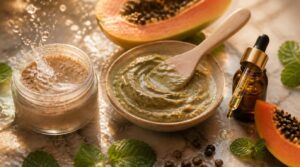
Not every papaya enzyme product works the same way, so knowing your format matters.
Powder cleansers stay dormant until water hits them, activating papain in seconds for fresh exfoliation each use.
Masks, including clay versions, sit longer for deeper cell turnover.
Serums pack papain alongside vitamin C for daily brightening.
Match the format to your routine and skin goals.
DIY Papaya Mask Precautions

Since kitchen counters don’t come with quality control, a homemade papaya mask deserves a little extra care before it touches your face.
- Patch test on your inner wrist and wait 24 hours for allergy risk, especially with latex sensitivities.
- Use ripe, mashed papaya, not the unripe stuff, which is harsher on sensitive skin.
- Skip cinnamon or lemon when mixing ingredients if your skin sensitivity runs high.
If you have sensitive skin, check out this guide on how to self-tan your face perfectly for extra prep tips before applying.
Recommended Treatment Frequency
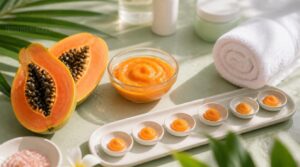
Frequency depends on your skin type. Normal or oily skin does well with papaya enzymes 1-2 times weekly, while sensitive or dry skin should stick to once. Combination skin often tolerates 2-3 sessions.
| Skin Type | Weekly Frequency |
|---|---|
| Oily/Normal | 1-2 times |
| Sensitive/Dry | Once |
| Acne-Prone | Twice |
Professional peels happen every 4-6 weeks for deeper cell turnover and brightening results.
Moisturizer and Daily Sunscreen
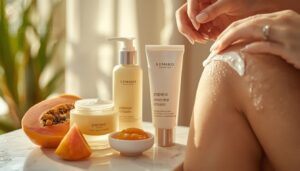
Fresh, exfoliated skin is thirsty and exposed, so don’t skip this step. Apply moisturizer first to lock in hydration, then follow with SPF 30 sunscreen every morning, non-negotiable.
Papaya enzymes brighten skin tone, but new cells need shielding from UV damage or you’ll undo your progress.
Reapply sunscreen every two hours outdoors for real protection.
Results, Side Effects, and Suitability
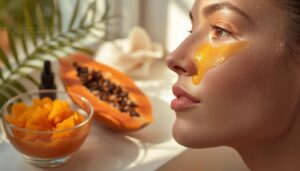
So you know the how-to, but what should you actually expect once papaya enzymes become part of your routine? Results build gradually, and yes, your skin might react a bit before it settles in. Here’s what’s normal, what’s not, and when it’s time to call in a pro.
Typical Brightening Results Timeline
Patience pays off here. Real skin brightening shows up after 4 to 6 weeks, with fuller results by 8 to 12 weeks as cell turnover cycles complete.
Snap weekly photos in the same lighting. You’ll spot edges softening on dark spots before overall tone evens out, proof that hyperpigmentation treatment is working gradually, not overnight.
Temporary Tingling and Redness
A little tingle isn’t a red flag, it’s your skin waking up.
- Light tingling starts 2-3 minutes in, fading by 5-10
- Mild redness covers 50-70% of skin, gone within an hour
- Thin layers cut tingling by 40%
Sensitive skin feels it faster. Cool compresses and quick moisturizing calm things down, no need to panic over normal enzyme activity.
Papaya and Latex Allergies
Here’s the one exception to "gentle for everyone": if you have a latex allergy, papaya can trigger real trouble. Papain shares proteins with latex, so reactions range from mild itching to anaphylaxis. Roughly 30-50% of latex-allergic folks react to papaya too.
If you’re allergic to latex, papaya isn’t gentle at all, it can trigger reactions from mild itching to anaphylaxis
Always patch test first, or skip papaya enzymes entirely and ask your allergist about safer alternatives.
Over-Exfoliation Warning Signs
Latex allergies aren’t the only red flag to watch for. Even gentle papaya enzymes can cause over-exfoliation with too-frequent use.
Watch for redness, burning, or tightness after applying. Dry flaking, rough patches, or sudden breakouts also signal trouble. Your skin’s barrier function needs recovery time, so if sensitivity spikes, scale back to once weekly and focus on hydration until things calm down.
When to Consult Dermatologist
Scaling back doesn’t always solve things. If redness or swelling sticks around past a couple days, that’s your cue to call in a dermatologist-approved plan.
Same goes for allergic reaction signs, latex allergy concerns, or prolonged irritation that won’t quit. Sensitive skin flaring into inflammatory acne? Skip the patch test guesswork and get expert eyes on it.
Frequently Asked Questions (FAQs)
Does papaya treatment work well on oily skin?
Yes, and yes. Papain breaks down keratin clogging pores, balances sebum, and calms breakouts, all without stripping your skin’s barrier, giving oily, acne-prone skin real pore unclogging and clarity.
How does papaya compare with pineapple enzyme treatments?
Both are protein-busting proteases, but papain tolerates a wider pH range than bromelain, giving steadier protein breakdown.
Bromelain can irritate more easily, while papaya’s gentler profile suits sensitive skin, though latex-allergic folks should patch test either enzyme first.
Can papaya enzymes be combined with retinol use?
Mixing these two turnover boosters is like inviting two exfoliating powerhouses to the same party, chaos guaranteed. Keep papain and retinol on separate days to protect your skin barrier, since layering both raises irritation risk and stresses skin instead of helping it glow.
Conclusion
Funny how the priciest skincare aisle can’t outdo a fruit sitting quietly in your kitchen bowl, ignored while you reach for pricier jars.
That’s the real payoff of papaya enzyme face treatment benefits: nature already handed you brighter, smoother skin, no lab required.
Papain works while you rest, dissolving dullness without drama.
Stay gentle, stay consistent, and let that humble fruit bowl outshine your whole cabinet.
Your glow was never this complicated.