This site is supported by our readers. We may earn a commission, at no cost to you, if you purchase through links. This content is for general informational and educational purposes only and is not a substitute for professional medical, dermatological, or nutritional advice.

You wash your hair in the morning, and by dinner it’s already limp and shiny. Skip a day, and it looks like you skipped three.
That frustration is common, and it rarely comes down to one thing. Hormones, heat, stress, short sleep, and a late-night bowl of pasta can all nudge your scalp to make more oil. Sometimes a yeast-driven skin condition is the real culprit, which changes the fix entirely.
Once you know the causes of oily scalp and treatment options that match them, you can stop guessing. Here’s what’s driving the grease and how to calm it.
Table Of Contents
- Key Takeaways
- What Causes an Oily Scalp?
- When Does an Oily Scalp Signal a Skin Condition?
- How to Treat an Oily Scalp
- Home Remedies and Habits That Help Manage Scalp Oil
- When to See a Dermatologist for Oily Scalp
- Frequently Asked Questions (FAQs)
- How do I stop my scalp from being so oily?
- How can I get rid of an oily scalp?
- Which vitamin deficiency causes oily scalp?
- What is the main cause of oily scalp?
- Why is my scalp oily?
- What causes dry hair with an oily scalp?
- Can oily scalp cause hair loss?
- Why is my hair oily?
- Can oily hair irritate your scalp?
- Why do people with thick hair have oily scalp?
- Conclusion
Key Takeaways
- Your oily scalp usually comes from a mix of triggers, with hormones (especially androgens) and genetics setting the baseline and heat, humidity, stress, poor sleep, and refined carbs pushing oil production higher.
- If you’ve got greasy, yellowish flakes with redness and itching, it may be seborrheic dermatitis, which is driven by yeast feeding on scalp oil and looks different from psoriasis’s thick, dry, silvery scales.
- You’ll get the best results by starting simple with gentle washing every one to two days using a pH-balanced or oil-control shampoo, then adding a ketoconazole or salicylic acid shampoo if flaking shows up.
- If a medicated shampoo hasn’t helped after a few weeks, or you notice pus, tender lumps, spreading redness, patchy hair loss, or fever, see a dermatologist for targeted treatment.
What Causes an Oily Scalp?
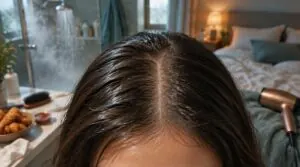
An oily scalp rarely comes down to one thing. Most of the time, a mix of internal and outside triggers is pushing your glands to make more oil than you need. Here’s what to look at, so you can figure out which ones apply to you.
Hormonal shifts are a common culprit behind both excess oil and thinning, so it helps to understand how hormonal imbalance can lead to hair loss in women.
If greasy roots keep coming back, these simple at-home treatments for an oily scalp can help you rebalance oil production without harsh products.
Hormones and Genetics
Because androgens switch your sebaceous glands into higher gear, hormonal influence on oil is often the biggest factor. Puberty, menstrual cycles, pregnancy, and postpartum shifts can all change how greasy your scalp feels.
Genetics matter too. If oily skin runs in your family, you likely inherit a genetic predisposition and stronger androgen sensitivity, so normal hormonal fluctuations hit harder.
Heat and Humidity
Hormones aren’t the only thing at play. Your environment matters too.
Heat ramps up sebum production, and it thins your oil so it spreads down the hair faster. Humidity adds to the problem because sweat can’t evaporate, so it mixes with oil on your scalp.
That moist film can feed yeast and worsen seborrheic dermatitis. Dermatologists note that excess oil and moisture promote Malassezia yeast overgrowth on the scalp. Try an oil control shampoo.
Stress
can make your scalp greasier too. When you’re tense, cortisol rises and nudges your oil glands into overdrive, so sebum production climbs. That shift can upset your scalp microbiome balance and feed an inflammatory skin response.
Since stress-driven oil can clog pores and fuel blackheads, a gentle routine built on skin cleansing techniques for blackheads helps keep buildup under control.
Habits matter as well. You may touch your hair more, or wash it unevenly. Both can hurt hair follicle health.
Sleep
Poor sleep and stress often travel together, so it’s no surprise your scalp notices. Short or irregular sleep disrupts your body clock, which can raise sebum production and shift hormonal influence on oil. It may also upset scalp microbiome balance.
Keep consistent sleep and wake times, and skip very hot showers right before bed. Gentle scalp exfoliation can help too.
and Diet
Your diet can nudge how oily your scalp gets, though not for everyone. Refined carbs like white bread and sugary snacks spike insulin, which can raise sebum production. That’s part of the hormonal influence on oil.
Omega3s from salmon or flaxseed may also help calm things down. Try swapping a few processed foods for whole ones and see what changes.
Seborrheic Dermatitis and Dandruff
Some people with an oily scalp also have seborrheic dermatitis, and dandruff is its milder form.
If you also have fine hair, choosing lightweight styling products for fine hair can help keep residue from piling up on your scalp.
Malassezia fungi feed on scalp oil. Their byproducts can inflame your skin, so flakes shed faster. More oil alone doesn’t guarantee flaking, though. It takes that yeast reaction too.
It often flares in colder months. Antifungal treatments calm it, but it often returns.
When Does an Oily Scalp Signal a Skin Condition?
Not every greasy scalp is just a case of oily hair. Sometimes it’s the tip of the iceberg, and something else is going on underneath.
A greasy scalp isn’t always just oily hair; sometimes it’s the tip of the iceberg, hinting at a skin condition beneath the surface
If you see yellowish, greasy scales along with redness and itching, you may be dealing with seborrheic dermatitis. It’s driven by Malassezia, a yeast overgrowth scalp problem that triggers scalp inflammation in oil-rich areas. Mild cases show up as dandruff.
Psoriasis looks different. Its scales are thicker, drier and silvery, with sharp borders, and they often creep past your hairline. Nail pitting or patches on your elbows and knees point that way too.
Keep an eye on symptoms that hang around after several weeks of medicated shampoo. That’s when a dermatologist consultation really makes sense.
How to Treat an Oily Scalp

Treating an oily scalp usually works best when you start simple and add steps only if you need them. Below, you’ll find three approaches, ordered from everyday washing habits to options for stubborn cases. Most people don’t need all three, so you can stop once your scalp feels balanced.
Washing and Conditioning
Washing is your first line of defense, but more isn’t always better. Shampoo your oily scalp every one to two days, massaging gently with your fingertips. Choose a pH balanced shampoo or oilcontrol shampoos, since harsh formulas can trigger extra sebum production.
Keep conditioner on your lengths and ends. Rinse well, and avoid overwashing your hair. Leftover product looks greasy.
Medicated Shampoos for Flaking
Flakes on an oily scalp can fool you. Greasy doesn’t rule out seborrheic dermatitis, so medicated shampoos often help where regular ones don’t.
Try ketoconazole to calm the yeast behind dandruff. If scale is thick and sticky, add salicylic acid to lift it. Leave the lather on for a few minutes, then rinse. Use it often at first, then less once things settle.
Treatment for Persistent Symptoms
Still greasy after weeks of trying? Then it’s time to look beyond store-bought fixes.
A doctor may prescribe ketoconazole 2% shampoo to calm the yeast behind stubborn flaking and oil. Severe cases can call for oral antifungals or spironolactone if hormones are involved. Clinics also offer a medical-grade salicylic acid scalp peel. Your dermatologist will match the treatment to your cause.
Home Remedies and Habits That Help Manage Scalp Oil

Once your routine is set, a few simple remedies can also help.
An apple cider vinegar rinse is a popular pick. Mix one part vinegar with two or three parts water, pour it on after shampooing, and use it once or twice a week.
Tea tree oil for scalp care works too. Rub in just a few drops once a week, ideally diluted in your shampoo.
For an aloe vera scalp soothe, apply the gel, leave it for 20 minutes, then rinse. It calms irritation and lifts buildup.
Clarifying shampoo benefits show up when you use it once or twice a month, clearing buildup. Scalp massage benefits aren’t well proven, so keep it gentle and avoid constantly touching your hair.
When to See a Dermatologist for Oily Scalp

Home care works for most people, but not everyone. Knowing when to see a dermatologist for oily scalp problems saves you weeks of guesswork.
Book an appointment if you’ve used a medicated shampoo regularly for a few weeks and nothing has changed. The same goes for thick, greasy scale that keeps coming back, which can point to seborrheic dermatitis, or silvery plaques that suggest scalp psoriasis. A dermatologist can tell them apart and may prescribe a prescription-strength shampoo.
Get seen quickly if you notice pus, tender lumps, spreading redness, patchy hair loss, or a fever. Burning that’s out of proportion to what you can see matters too.
Chronic scalp conditions respond best to targeted care, so don’t wait it out.
Frequently Asked Questions (FAQs)
How do I stop my scalp from being so oily?
Ironically, scrubbing harder often backfires. Your sebaceous glands work overtime.
Wash gently every day or two with a pH balance friendly formula, and use a clarifying shampoo weekly. Good scalp hygiene keeps sebum production manageable.
How can I get rid of an oily scalp?
Wash every two to three days with a gentle, sulfate-free shampoo, and use a clarifying shampoo weekly for scalp exfoliation. Keep conditioner on your ends. If flaking or itching shows up, try a ketoconazole shampoo.
Which vitamin deficiency causes oily scalp?
Four nutrients come up: vitamin D, zinc, B vitamins and vitamin A. Any vitamin deficiency can raise sebum production, but vitamin D leads. Test first. Nutritional supplements won’t fix hormonal fluctuations or stress-related scalp issues.
What is the main cause of oily scalp?
The main cause is hormonal fluctuations, mostly androgens like testosterone and DHT, which push your sebaceous glands to make more sebum. Genetic predisposition decides how strongly your glands react, and Malassezia fungi can add irritation.
Why is my scalp oily?
Think of your scalp as a tiny oil factory that never clocks out.
Your sebaceous glands drive sebum production, and hormonal fluctuations, genetic predisposition, or Malassezia fungi can push output noticeably higher than you’d like.
What causes dry hair with an oily scalp?
Your scalp is a flooded garden while the ends sit in a drought. Overactive sebaceous glands raise sebum production at the roots, but damaged, treated hair can’t carry that oil down, so ends stay parched.
Can oily scalp cause hair loss?
Not directly, but it can play a part.
An oily scalp doesn’t cause follicle miniaturization, which is genetic. Still, high sebum production can fuel seborrheic dermatitis, and that inflammation may trigger some temporary hair loss.
Why is my hair oily?
Your sebaceous glands make sebum, an oil that protects your hair, and some people just make more. Genetics, hormones, stress, and heat all push oily scalp output up, which is why your greasy hair shows fast.
Can oily hair irritate your scalp?
Yes, it can. An oily scalp lets sebum, product residue and sweat sit on your skin, and high sebum production can feed scalp inflammation. You’ll notice an itchy scalp. Scalp irritation relief starts with washing.
Why do people with thick hair have oily scalp?
Thick hair doesn’t raise sebum production. Your sebaceous glands do that, not the strand.
But dense hair spreads and hides oil, so it looks greasier. Hair follicle cleansing helps, and it protects scalp pH balance.
Conclusion
Picture your scalp as a faucet that’s been turned up a notch too high. Heat, hormones, stress, and a skipped night of sleep can all nudge the handle, and sometimes a yeast-driven flare-up holds it open.
Now that you know the causes of oily scalp and treatment steps that fit each one, you can turn it down. Wash gently, use a medicated shampoo for flakes, and see a dermatologist if symptoms linger. Oil is manageable.