This site is supported by our readers. We may earn a commission, at no cost to you, if you purchase through links. This content is for general informational and educational purposes only and is not a substitute for professional medical, dermatological, or nutritional advice.

Your scalp isn’t dirty. It’s coated. Wax, dry shampoo, and gel don’t rinse clean the way labels promise, and within days they fuse with sebum into a waxy film that clings to your roots. Shampoo alone won’t touch it.
That’s why hair can look freshly washed and still feel flat, greasy, or oddly heavy by afternoon. The buildup traps follicles, blocks light reflection, and sometimes triggers itching or irritation mistaken for dandruff.
Effective scalp treatment for product buildup requires more than a stronger shampoo. It calls for targeted exfoliation, the right acids, and a routine built around your scalp’s actual needs.
Table Of Contents
- Key Takeaways
- What Causes Product Buildup on The Scalp?
- How to Identify Scalp Product Buildup
- How to Remove Scalp Product Buildup
- At-Home, Medicated, and Professional Treatments
- How to Prevent Scalp Buildup
- Frequently Asked Questions (FAQs)
- How do I get rid of product buildup on my scalp?
- How to clarify scalp buildup?
- How to tell if you have product buildup on your scalp?
- What is the best product for scalp build up?
- How to get rid of plaque buildup on scalp?
- How do I stop skin buildup on my scalp?
- How long does scalp detox take?
- Can children use salicylic acid treatments?
- Does hard water worsen product buildup?
- Which ingredients cause worst buildup accumulation?
- Conclusion
Key Takeaways
- Everyday shampoo can’t dissolve product buildup because it fuses with sebum into a waxy film, so you need clarifying shampoo plus salicylic acid exfoliation to actually clear it.
- Buildup and dandruff look similar but aren’t the same thing—buildup flakes are waxy and cling to strands, while dandruff flakes are dry and shed freely, so treat them differently.
- Weekly clarifying washes, lightweight water-soluble styling products, and clean hair tools are your best defense against buildup creeping back.
- If itching, redness, or flaking sticks around after a few weeks of consistent clarifying and medicated treatments, see a dermatologist since it may be fungal or something beyond simple residue.
What Causes Product Buildup on The Scalp?
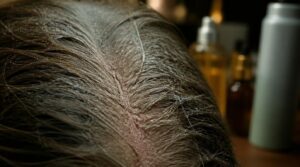
Product buildup doesn’t happen from one bad hair day. It’s the result of specific habits and conditions stacking up on your scalp over time. Here are the five main culprits behind that heavy, residue-coated feeling.
Before diving into the causes, it helps to spot the signs of hair product buildup so you can catch the problem early.
Heavy Styling Product Residue
Layer on wax, pomade, or gel day after day and your scalp starts wearing it. Rinse-resistant formulas built for hold don’t fully release in the shower, leaving a sticky film around each follicle. Multi-step styling routines compound this fast: more product applied means more residue left behind. That trapped layer is why hair feels dull and weighed down even minutes after washing.
Regular scalp exfoliation and clarifying shampoos can help strip away this buildup without stripping hair of moisture.
Excess Sebum and Dead Skin
Product isn’t always the culprit. Your glands play a role too. Sebum overproduction happens from hormones, genetics, or stress, and it mixes with dead skin cells shedding off the scalp.
That combination thickens fast, creating waxy, sticky residue.
- Oily roots within a day of washing
- Flakes that clump instead of scatter
- Dull strands despite clean hair
- Buildup along the hairline
Infrequent or Ineffective Washing
Skin cells and sebum don’t wait for your calendar. Skip wash day too often and buildup compounds fast.
| Habit | Effect | Fix |
|---|---|---|
| Skipping washes | Residue compounds | Adjust wash frequency |
| Rushed rinsing | Scalp under-cleansed | Massage 2 minutes |
| Same routine, oilier scalp | Roots stay greasy | Add clarifying shampoo |
Cleansing effectiveness depends on contact, not just water.
Hard Water Mineral Deposits
Water isn’t always the neutral rinse you think it is. Calcium and magnesium ions in hard water bind with product residue, forming a chalky mineral film across your scalp.
This film blocks clarifying shampoos from working fully, leaving hair dull and stiff. Chelating agents in your cleanser help dissolve deposits, but severe hardness may call for a water softener.
Pollution and Environmental Debris
City air leaves more than smog behind. Airborne pollutants like particulate matter bind to sebum, while heavy metal exposure and PAH accumulation coat strands with residue that resists rinsing.
VOC residue from paints and traffic fumes forms sticky films too. These environmental factors contribution means clarifying shampoos and regular scalp exfoliation aren’t optional, they’re your scalp treatment for product buildup essentials.
How to Identify Scalp Product Buildup
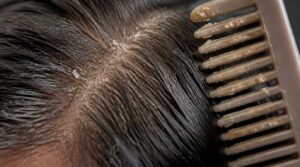
Buildup doesn’t always announce itself right away. Your scalp and hair send specific signals once residue starts accumulating, and knowing what to look for makes all the difference. Here are five clear signs you’re dealing with product buildup, not something else.
If flakes look waxy or gritty rather than powdery like dandruff, it’s worth revisiting how to build a hair care routine that actually clears residue instead of masking it.
Greasy Roots After Washing
Roots turning slick within hours of washing signals buildup, not dirty hair. Sebum rebound and oily film formation coat strands fast, especially on fine or straight hair.
Touching hair spreads oil further, and water hardness effect worsens residue. Even clean-feeling hair can turn greasy again if product transfer or trapped sebum lingers at the scalp.
Visible Flakes and Waxy Residue
Run a fingertip across the scalp and you’ll feel it before you see it: a coated, waxy film that clarifying shampoo alone won’t touch.
- White or yellow-tinted flecks clustered at the hairline
- Thick, sticky flakes that roll instead of powder
- Greasy residue concentrated where products are applied
Unlike dry scalp shedding, buildup clumps, clinging to strands until scalp exfoliation breaks it loose.
Itching, Redness, and Irritation
An itchy scalp isn’t always dandruff, it’s often trapped residue irritating the follicle.
| Sign | What It Means |
|---|---|
| Persistent itch | Product irritant reaction |
| Redness | Inflammation from clogged follicles |
| Tightness | Dryness and barrier disruption |
Scratching worsens things fast, causing micro-abrasions and infection risk. Switch to clarifying shampoos and scalp exfoliation before irritation escalates.
Dull, Heavy, Unmanageable Hair
Hair can look "clean" and still photograph flat. That’s light reflection loss: cuticle edges lift under residue, scattering shine instead of bouncing it back.
Signs to check:
- Roots feel oily by day two
- Strands resist volume or lift
- Hair feels weighted, not just oily
- Texture turns coarse, rougher to touch
- Styling tools glide poorly through strands
That heaviness signals buildup, not just excess oil.
Buildup Versus Dandruff
Two conditions, one confusing symptom. Buildup flakes look waxy and cling to strands; dandruff flakes look dry, uneven, and shed freely.
Buildup flakes cling waxy to strands, while dandruff flakes stay dry and shed freely
Try the water test: dandruff dissolves, buildup stays intact. Check itch pattern too. Persistent irritation points to dandruff and Malassezia, while buildup eases after one clarifying wash.
How to Remove Scalp Product Buildup
Once you’ve spotted the signs, removal comes down to method and consistency. Your scalp needs targeted exfoliation, not just another wash cycle. Here’s exactly how to strip away buildup, step by step.
Clarifying Shampoo Application

Wet hair fully with lukewarm water, then work a quarter-sized amount into your scalp using circular fingertip motions for a full minute.
Build a dense lather, focusing on buildup-prone areas, not just your part line. For hard water residue, let it sit a few minutes.
Squeeze lather through lengths, then rinse thoroughly.
Salicylic Acid Scalp Exfoliation
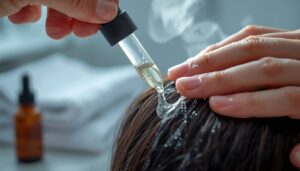
Clarifying shampoo lifts surface residue, but stubborn buildup needs deeper work. Salicylic acid, a beta hydroxy acid, penetrates and loosens dead skin cells bonded to your scalp.
Application technique: apply directly to scalp on wet hair, massaging with fingertips. Let it sit 3-5 minutes (contact time matters), then rinse thoroughly. Expect visibly reduced flaking within two to four weeks of consistent use.
For an extra nutrient boost, try pairing this routine with a buckwheat hair care regimen, which supports scalp health from root to tip.
Gentle Scrubs and Massagers
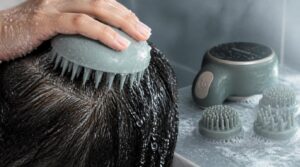
Chemical exfoliation isn’t your only option. Silicone scrub tools with textured bristles physically loosen bonded residue during shampooing.
An exfoliating massage brush with interchangeable massage heads lets you swap patterns for sensitive zones versus stubborn buildup areas. Look for a waterproof scalp massager rated for shower use.
Apply gentle fingertip massage in circular motions for 60 seconds. This lifts sebum without causing micro-tears.
Two-Minute Fingertip Massage
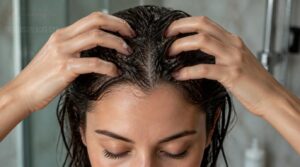
Once your massager work is done, finish with bare fingertips. Apply light, even pressure in small circles, moving from hairline to crown, covering every section for a full two minutes.
This boosts scalp circulation, aids sebum distribution, and stimulates follicles without dragging or snagging strands. Keep it gentle. You’re loosening residue, not scrubbing it out.
Post-Treatment Scalp Moisturizing

Because clarifying strips oils along with residue, your scalp needs moisture back fast. Apply a lightweight serum or scalp oil to damp skin, working it into sections for full coverage.
Look for glycerin, hyaluronic acid, or ceramides to support scalp barrier repair and moisture retention. This step prevents tightness, flaking, and rebound oiliness before your next wash.
At-Home, Medicated, and Professional Treatments
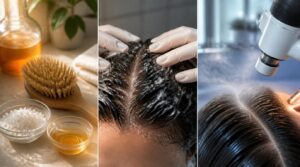
Not every scalp reacts to the same approach, and severity dictates your treatment path. Mild buildup often clears with kitchen-cabinet remedies, while stubborn cases need medicated or professional intervention. Here’s how to match the right treatment to your scalp’s condition.
Diluted Apple Cider Vinegar Rinse
Vinegar isn’t just a kitchen staple, it’s a legitimate scalp detox tool when diluted correctly. Mix at a 5-to-1 water-to-ACV ratio, spray onto the scalp after shampooing, and massage in with your fingertips. Leave it on for 60 to 90 seconds, then rinse with cool water. Expect reduced buildup, added shine, and balanced pH, but always patch-test first.
Clay and Aloe Scalp Masks
When ACV isn’t enough, reach for masks. Bentonite clay draws out excess oil, forming a paste that tightens as it dries, exfoliating dead skin. Aloe vera gel soothes and hydrates simultaneously.
- Clay paste for deep oil absorption
- Aloe gel for calming hydration
- Combined teamwork for balanced scalp detox
Leave on 20-30 minutes. Patch-test aloe first for sensitivity.
Ketoconazole Medicated Shampoos
Sometimes buildup isn’t just cosmetic, it’s fungal. Ketoconazole 2% shampoo targets Malassezia yeast overgrowth linked to dandruff and seborrheic dermatitis, delivering true antifungal action beyond standard clarifying shampoos.
Lather onto wet scalp, leave 5 minutes, rinse. Skip regular shampoo that day. If itching or flaking persists after two weeks of consistent medicated treatments, that’s your cue to consult a dermatologist.
Salon Scalp Detox Treatments
Want results DIY methods can’t touch? A professional salon scalp detox goes further than any home routine.
- Warm water prep softens debris
- Enzyme or salicylic solution applied in sections, massaged 2-3 minutes
- Chelating shampoo clarifies roots, rinsed 2-3 minutes
- Green clay mask with jojoba, tea tree absorbs residue
- pH-balanced conditioner restores comfort
Results: measurable buildup removal, professionally verified.
When to See a Dermatologist
Buildup isn’t always the culprit. If scalp exfoliation methods and clarifying treatments haven’t resolved symptoms after several weeks, book a dermatologist consultation.
Persistent scalp irritation, recurring scalp rashes, treatment-resistant flaking, or unexplained hair loss signal something beyond residue, possibly a seborrheic dermatitis concern. Dermatologists assess these using clinical diagnostics your salon routine can’t replicate. Don’t wait months hoping it resolves on its own.
How to Prevent Scalp Buildup

Removing buildup solves today’s problem, but prevention keeps it from coming back. Your scalp routine needs a few structural changes, not a complete overhaul. Here’s what actually helps long-term.
Follow a Consistent Wash Schedule
Consistency beats intensity here. Match your wash days to scalp type: oily scalps need daily to every-other-day cleansing, normal scalps do fine with 2-3 washes weekly, dry scalps stick to 1-2. Adjust for exercise, humidity, or hard water exposure.
Traveling? Keep your weekly wash count steady, even across time zones, to prevent oil spikes or sudden buildup.
Clarify Hair Once Weekly
Your regular wash keeps oil in check, but clarifying shampoos dissolve what daily cleansing leaves behind. Wash weekly with 98-104°F water, applying to dry hair first, rinsing, then repeating on wet strands. Massage two minutes, then moisturize after.
- Hair that finally feels light again
- Roots that stay fresh past day one
- Scalp exfoliation without dryness or sting
- Color and curls staying protected, not stripped
Limit Heavy Styling Products
Weekly clarifying only offsets so much. The real fix starts with what you’re applying between washes.
Reduce product frequency to three or four days weekly. Choose lightweight, water-soluble formulas over oil-based creams, and apply to ends only, never roots.
Schedule product-free days. Pick non-comedogenic formulas. Your follicles need room to breathe, not another layer sealing them shut.
Clean Hair Tools Regularly
Cutting product intake matters little if your tools redeposit residue right back onto clean strands. Clean hair tools regularly: soak brushes and combs in warm soapy water 10-15 minutes, scrub bristle bases with a toothbrush.
Wipe flat iron plates with alcohol once cooled. Clear dryer vents monthly. Wash accessories too. Dirty tools sabotage your entire scalp maintenance schedule.
Adjust Care for Scalp Type
Since no two scalps behave alike, your prevention plan shouldn’t either. Match care to your actual scalp type:
- Oily scalp care: clarifying shampoos, scalp scrubs
- Dry scalp routine: nourishing, sulfate-free formulas
- Sensitive scalp tips: fragrance-free, gentle scalp massage
- Balanced scalp approach: light clarifying, moderate hydration
Run the 24-hour wash test, then commit to custom product selection.
Frequently Asked Questions (FAQs)
How do I get rid of product buildup on my scalp?
Start with a clarifying shampoo application to strip residue, then follow with salicylic acid scalp exfoliation or gentle scrubs and massagers. A two-minute fingertip massage loosens debris, while post-treatment moisturizing restores balance after removal.
How to clarify scalp buildup?
Apply clarifying shampoo with a two-minute gentle scalp massage, then use a 2% salicylic acid treatment or DIY sugar scrub for exfoliation. Follow with an apple cider vinegar rinse, or book a professional detox treatment for stubborn buildup.
How to tell if you have product buildup on your scalp?
Your scalp tells on itself fast. Watch for waxy residue signs, hair that feels coated within hours, dull heavy roots, and itching after wash. Gentle scalp massage often reveals grime under your nails, a clear giveaway.
What is the best product for scalp build up?
No single product wins for every scalp. Oily, flake-prone scalps respond best to clarifying shampoo paired with a salicylic acid treatment, while sensitive or fungal-prone scalps need ketoconazole medicated shampoo for real, lasting relief.
How to get rid of plaque buildup on scalp?
Waxy "plaque" on the scalp improves with weekly clarifying shampoo paired with a 2% salicylic acid treatment. Massage thoroughly for two minutes, rinse completely, and skip heavy silicones that feed the cycle right back.
How do I stop skin buildup on my scalp?
Regular washing alone won’t cut it. Stopping dead skin cells accumulation requires salicylic acid exfoliation, weekly clarifying shampoos to strip product residue removal, and two-minute scalp massage, plus lighter styling products to support a gentler cleansing routine long-term.
How long does scalp detox take?
Duration depends on method. At-home scalp detox runs 2 to 4 weeks with weekly clarifying shampoos. Salon treatments finish in about 75 minutes. Visible flake reduction often starts within the first day of consistent treatment.
Can children use salicylic acid treatments?
Is your child’s scalp buildup safe to treat at home? Yes, with lower-concentration formulas (around 5-2%), careful application, and a pediatrician consultation first to confirm the strength and dosage suit their age and sensitivity.
Does hard water worsen product buildup?
Yes. Hard water minerals bind with styling residue, forming a film ordinary shampoo can’t fully rinse. This mineral residue buildup dulls hair and clogs follicles.
A water softener, shower filter, or chelating shampoo restores effective cleansing and residue removal.
Which ingredients cause worst buildup accumulation?
Some ingredients cling like cement. Silicone polymers, mineral oils, heavy polymers, acrylic resins, and alcohol denat form waterproof coatings your clarifying shampoo must break down, trapping sebum beneath layers of stubborn hair care product residue.
Conclusion
Clean hair can still be dirty hair. That’s the paradox of scalp health. Buildup hides beneath shine, masquerading as good hygiene while quietly suffocating follicles.
Effective scalp treatment for product buildup isn’t about washing more, it’s about washing smarter, with acids, exfoliation, and consistency doing the real work.
Your scalp mirrors your skin. Treat it that way, and you’ll trade dullness for density, flakes for follicular health, and guesswork for a routine you fully control.