This site is supported by our readers. We may earn a commission, at no cost to you, if you purchase through links. This content is for general informational and educational purposes only and is not a substitute for professional medical, dermatological, or nutritional advice.
You finish shaving, and a day later the skin that felt smooth starts to sting. Small red bumps rise along the bikini line, underarms, or jaw, and the problem keeps returning.
In clinic, I see this pattern often. Ingrown hairs rarely happen by chance. Dead skin can clog the follicle, close shaving can leave a sharp tip, and constant rubbing from tight clothing can push regrowth back into the skin and trigger inflammation. Understanding ingrown hair causes and prevention gives you more control. A few changes in how you remove hair and care for skin can stop bumps early, before they leave marks.
Table Of Contents
- Key Takeaways
- What Causes Ingrown Hairs?
- Who Gets Ingrown Hairs Most Often?
- How to Identify Ingrown Hairs
- Shaving Techniques That Prevent Ingrown Hairs
- Skin Care That Prevents Recurrence
- When Prevention Needs Professional Help
- Frequently Asked Questions (FAQs)
- What is the main cause of ingrown hairs?
- How to stop being prone to ingrown hairs?
- Do ingrown hairs ever go away?
- Why am I getting ingrown hairs if I don’t shave?
- What is the main reason for ingrown hair?
- Should I squeeze an ingrown hair bump?
- Can ingrown hairs cause permanent hair loss?
- Are ingrown hairs contagious between individuals?
- Can certain medications increase ingrown hair risk?
- Do ingrown hairs affect tattooed skin differently?
- Conclusion
Key Takeaways
- Ingrown hairs mostly start when dead skin clogs a follicle, trapping a sharp-cut hair tip beneath the surface and causing inflammation.
- Curly or coarse hair, thick follicles, frequent hair removal, and tight clothing friction all raise your risk, with hormonal shifts making growth thicker and harder to manage.
- You can prevent most flare-ups by shaving with the grain using a sharp razor, prepping skin with warm water, moisturizing after, and exfoliating two to three times a week.
- See a doctor if you notice spreading redness, pus, worsening pain, or a bump that lingers past four weeks, since these signal infection or a deeper cyst needing professional treatment.
What Causes Ingrown Hairs?
Ingrown hairs don’t just happen at random. Several everyday habits and body factors work together to trap hair beneath your skin. Here’s what actually triggers the problem.
Exfoliation habits matter too, and this guide to physical scrubs for ingrown hairs explains when scrubbing helps versus worsens irritation.
Clogged Hair Follicles
A traffic jam under your skin, that’s what a clogged follicle really is. Dead skin cells build up and trap sebum, blocking the pore. Hair can’t grow up and out, so it grows sideways instead.
Dead skin and trapped oil can clog a follicle, forcing hair to curl sideways beneath the skin
This pore obstruction disrupts normal hair regrowth direction. Regular skin exfoliation clears debris before it causes follicle inflammation, especially in curly or coarse hair prone to trapping. If left unmanaged, this buildup can lead to blocked hair follicles that progress into more painful, inflamed lesions.
Close Shaving and Sharp Tips
Cutting hair too short leaves a sharpened tip that pierces surrounding skin, especially in curly or coarse hair. A dull blade drags instead of slicing, raising irritation risk. Razor sharpness matters for a clean cut at skin level.
Close shave risks rise when dead skin blocks the follicle, trapping that sharp tip beneath the surface.
Waxing and Tweezing Trauma
Waxing and tweezing pull hair straight from the root, which stresses the follicle opening far more than close shaving does. That mechanical force can cause waxing skin damage and disrupt how the follicle heals.
Post-wax irritation often mimics early ingrown hairs: redness, small bumps, mild swelling. Repeated hair removal trauma at the same site raises your odds of follicle inflammation with each cycle.
Friction From Tight Clothing
Tight clothing keeps fabric pressed against freshly shaved skin, causing constant rubbing instead of occasional contact. Tight clothing increases friction, especially where seams sit close to skin, worsening postshave bumps.
Moisture buildup from reduced airflow raises friction further. Choose looser, smoother fabrics with fewer seams, and exfoliate your skin regularly to prevent clogged follicles from repeated contact and skin irritation.
Hormonal Hair Growth
When sex hormone levels rise, hair often grows faster and thicker, raising your ingrown hair risk. Androgens like testosterone drive this shift in the hair growth cycle.
Puberty, pregnancy, and PCOS can trigger elevated sex hormones. If you notice sudden coarse growth alongside bumps, your androgen sensitivity may be the root cause worth mentioning to your doctor.
Who Gets Ingrown Hairs Most Often?
Ingrown hairs don’t affect everyone equally. Certain hair types, habits, and body areas raise your risk far more than others. Here’s what puts you in the higher-risk category.
Curly or Coarse Hair
Genetic hair curvature is the biggest predictor here. Curly and coarse hairs grow at curved angles beneath the skin, so cut ends re-enter nearby follicles instead of exiting straight.
Tighter curl types (classified III-IV) carry thinner, weaker fibers prone to breaking during removal. High testosterone can also thicken growth.
Always shave in the direction of hair growth to limit this risk.
Thick Hair Growth
Follicle size explains most of this. Genetic variation gives some people follicles two to three times wider than average, producing coarse hair shafts more likely to snag beneath skin during regrowth.
Androgens boost the effect, thickening strands further and extending anagen phase length. This combination raises hair shaft trauma risk during removal, especially alongside curly, curved growth patterns.
Frequent Hair Removal
More removal means more risk. Each shave, wax, or epilator session traumatizes the follicle opening, and doing this every few days doesn’t give skin time to recover.
Multiblade razors cut closer, raising snag risk. Depilatory creams dissolve shafts without follicle trauma, a gentler option.
Ways to lower risk:
- Space out sessions
- Rotate razor blades weekly
- Try depilatory cream
- Watch skin of color for pigment changes
High-Friction Body Areas
Some body zones just take more abuse. Inner thigh friction, underarm chafing, groin area rub, and buttock pressure points all trap sweat and rub constantly against fabric.
| Area | Friction Source | Risk Factor |
|---|---|---|
| Inner thighs | Walking, tight pants | High |
| Underarms | Bra strap irritation | Moderate |
| Groin | Clothing seams | High |
Curly hair reacts worse here. An exfoliating brush used gently helps clear buildup in these high friction body areas.
Previous Ingrown Hair Problems
Once your skin has dealt with ingrown hairs before, it often repeats the pattern. Recurring bumps show up in the same spots, often with lingering tenderness after healing or faint skin discoloration marking old sites.
In curly hair especially, this cycle mirrors pseudofolliculitis barbae. Repeat episodes raise scar formation risk, so postshave care matters more with each flare-up.
How to Identify Ingrown Hairs
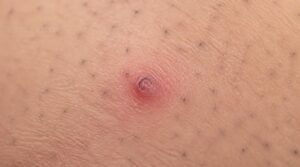
Not every bump on your skin is an ingrown hair, so knowing what to look for matters. Ingrown hairs tend to follow a pattern, showing up in specific spots with specific signs. Here’s what you should watch for.
Raised Red or Dark Bumps
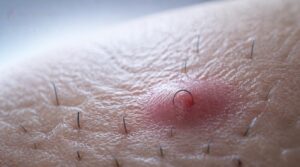
Look closely, and you’ll spot a small, raised bump where hair curls back into the skin, often called an ingrown hair or razor bump (pseudofolliculitis). Color varies:
- Pink or red on lighter skin tones
- Brown or black from postinflammatory hyperpigmentation
- Deeper, darker tones on richer skin
- Firm, mobile texture (normal)
- Hard, fixed lumps (see a doctor)
Itching, Tenderness, and Swelling
Bumps rarely stay silent. Itching often shows up first, sometimes within 2-4 days, as your immune response flags the trapped hair.
Tenderness and swelling follow, peaking around 48-72 hours. This inflammation timeline is normal, but scratching triples infection risk. Try a cool compress or 1% hydrocortisone for itch relief instead of nails.
Pus-Filled or Boil-Like Lesions
Not every ingrown hair stays small. When bacteria join in, the follicle can turn into a true boil (furuncle), forming a tender, pus-filled lump.
Watch for rapidly expanding redness, persistent pain, or pus with a foul odor. These signal bacterial infection and possible need for culture and sensitivity testing to guide treatment.
Common Hair Removal Areas
Some spots flare up more than others. Underarms top the list at laser clinics, thanks to sweat glands trapping hairs.
The bikini line follows closely, with hair curling inward at high rates.
Facial hair, legs, and the pubic region round out the pattern, each prone to follicle inflammation from friction or close removal.
Discoloration and Scarring
Marks left behind tell their own story. Deep follicle inflammation can trigger skin hyperpigmentation, leaving darker patches once the bump fades. Others develop pale, pigment loss patches instead.
Watch for red scar texture or a raised scar appearance, both common healing responses. Itching or tenderness (symptom-based discoloration) often lingers alongside color changes, and repeated irritation raises your risk of keloid or hyperpigmented scarring.
Shaving Techniques That Prevent Ingrown Hairs
Shaving doesn’t have to cause ingrown hairs. Small changes in your technique make a big difference in how your skin reacts. Here are five habits worth building into your routine.
Shave With Hair Growth
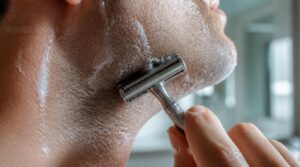
Which way does your hair actually grow? Find out before you shave, not after.
Shave in the direction of hair growth to keep tips blunt instead of angled. A singleblade safety razor cuts cleanly along that path with less drag.
- Check hair’s natural angle first
- Shave downward on most areas
- Rinse blade between strokes
Going against growth scrapes skin and invites hair follicle inflammation.
Prepare Skin With Warm Water

Cold water tightens skin. Warm water opens it up.
Wet skin with lukewarm cleansing water before you pick up a razor. This softens the surface and loosens dead skin that blocks the follicle. A warm compress for a minute or two adds extra pore readiness.
Skip hot water. It dries skin out and can undo your prep work before you even shave in the direction of hair growth.
Use Clean, Sharp Razors

A dull blade doesn’t cut, it tugs. That tugging drags hair below skin level, a setup for ingrown hairs.
Replace cartridges every five to seven shaves, disposables after seven uses. Rinse blades after each stroke. Store razors dry, never in a damp shower caddy.
- Sharp blades cut cleanly
- Rinse mid-shave
- Replace on schedule
- Store dry
- Skip shared razors
Whether electric razor or single-blade razor, always shave in the direction of hair growth.
Avoid Overly Close Shaves

Closer isn’t better. Shaving too near the skin lets the tip retract below the surface after cutting, a common ingrown hair trigger.
Keep shave light pressure, let the razor’s own weight do the work. Watch your razor angle control, keep the head flat against skin. Skip repeat strokes over the same patch. When in doubt, trim over shaving for sensitive zones.
Moisturize After Shaving

Shaving strips your skin’s natural oils, leaving the barrier exposed and prone to irritation. Pat dry, then apply moisturizer while skin’s still slightly damp to lock in hydration.
Pairing this with regular body exfoliation at home helps prevent ingrown hairs and keeps skin smooth between shaves.
- Choose alcohol-free balm over harsh aftershave
- Apply a thin, even layer
- Skip over-rubbing
- Reduces friction on sensitive skin
- Soothes and helps barrier repair
Dryness invites dead skin to block follicles, raising ingrown hair risk.
Skin Care That Prevents Recurrence

Good shaving habits stop new ingrown hairs, but your daily skin care decides if old ones keep coming back. A few simple habits build skin that resists clogged follicles and repeat flare-ups. Here’s what your routine needs to include.
Exfoliate Two to Three Times Weekly
Regularly, dead skin blocks the follicle and traps hairs beneath the surface. Exfoliate two to three times weekly using an exfoliating gel or scrub, spacing sessions a day apart for recovery. Gentle scrubbing in circular motions clears buildup without damaging skin. Start slow if you’re new to exfoliation.
This routine helps epidermal turnover and keeps follicles clear between removal sessions.
Choose Salicylic or Glycolic Acid
A physical scrub isn’t your only option. Chemical exfoliants work well too, and picking the right one depends on your skin.
Salicylic acid is oil soluble, so it works inside the pore, ideal for oily or acne-prone skin. Glycolic acid smooths the surface, better for dry or dull skin. Try salicylic acid pads for targeted areas prone to breakouts.
Keep Skin Properly Moisturized
Exfoliation clears dead cells, but skin still needs water. Humectants pull moisture in, occlusives seal it, and emollients smooth rough texture, supporting skin barrier repair.
| Ingredient Type | Function | Example |
|---|---|---|
| Humectant | Draws water in | Glycerin |
| Occlusive | Seals moisture | Petrolatum |
| Emollient | Softens texture | Shea butter |
| Combo | Full hydration | Ceramide cream |
| Barrier support | Reduces scaling | Hyaluronic acid |
Reduce Friction and Tight Clothing
Hydration protects skin, but fabric choice matters just as much. Friction from tight waistbands, seams, or damp clothing pushes hair back into the follicle, feeding new ingrown hairs.
Wear breathable fabrics, choose smooth underwear, and use moisture-wicking materials during workouts. Opt loose-fitting clothes over tight waistbands, especially at the bra line and inner thighs, where rubbing is constant.
Avoid Picking or Squeezing
Squeezing an ingrown hair feels satisfying, but it breaks the scab and lets bacteria in, raising infection risk. Picking also causes pitted or keloid scars and dark hyperpigmentation that outlasts the bump itself.
Instead, apply warm compresses to encourage release, or use a sterile needle only after cleaning skin with alcohol. Persistent cases deserve professional care rather than a fingernail.
When Prevention Needs Professional Help
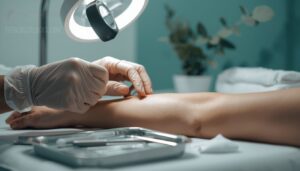
Most ingrown hairs clear up with home care and a little patience. Sometimes, though, your skin needs more than warm compresses and exfoliation. Here’s when it’s time to bring in a professional.
Signs of Infection
Not every ingrown hair heals on its own. Watch for these five warning signs:
- Redness spreading beyond the original bump
- Heat rising from the site
- Discharge present, especially pus with foul odor
- Pain worsening instead of easing
- Fever developing or body aches
Any of these signal bacterial infection. See a doctor promptly, especially with lack of healing after two weeks.
Persistent or Severe Bumps
A bump lingering past four weeks often means more than a stubborn ingrown hair. It may signal a deep follicular cyst, hyperpigmentation, or even HS mimicry.
Left alone, these can trigger keloid scarring or staph infection. If home care hasn’t worked, schedule a dermatological consultation. Surgical drainage might be needed to fully resolve it.
Prescription Retinoids and Antibiotics
Two prescriptions do the heavy lifting here.
- Topical retinoids speed cell turnover, unclogging follicles
- Topical antibiotics cut bacteria and inflammation
- Combo therapy targets multiple causes at once
- Corticosteroids calm severe swelling short-term
- Expect irritation early; results take 12 weeks
Apply antibiotic ointment as directed. This retinoid-antibiotic combo often outperforms either drug alone.
Laser Hair Removal
Laser hair removal offers permanent hair reduction through noninvasive hair removal. Wavelength Selection matches skin and hair, while Cooling Systems protect skin. Triple Wavelength Benefits include broader skin-type coverage and faster follicle targeting. Patient Satisfaction stays high.
Treatment Session Parameters usually mean 6 to 8 visits, spaced 6 to 8 weeks apart. Continue skin exfoliation, not a harsh exfoliating scrub.
Electrolysis for Recurrent Hairs
Still getting the same bumps? Electrolysis treats recurrent hairs one follicle at a time. A fine probe enters the follicle, then mild current causes hair follicle destruction, which stops regrowth and lowers future ingrown hairs.
Expect treatment planning over multiple visits. After treatment, brief redness or irritation can occur, but skin healing is usually straightforward and helps permanent hair reduction.
Frequently Asked Questions (FAQs)
What is the main cause of ingrown hairs?
Most start when dead skin buildup traps hair after hair removal methods like multiblade shaving, waxing, or tweezing. Sharp hair tips, friction pressure, hormonal growth, and coarse tightly curled hair with genetic curvature increase risk.
How to stop being prone to ingrown hairs?
An ounce of prevention beats a pound of cure. Use sharp razors, shave with growth, avoid close shaves, exfoliate regularly, and moisturize daily. If genetics cause coarse, curly hair, pause shaving periodically.
Do ingrown hairs ever go away?
Yes. Most clear up within 1 to 6 months once you pause shaving or waxing. Warm compresses and a sterile needle can speed release, but skipping self-care or restarting too soon risks bacterial infection and recurrence.
Why am I getting ingrown hairs if I don’t shave?
No razor, still a bump. Hair grows nonstop through natural regrowth cycles, and genetic hair curvature, hormones, friction, or plain skin cell buildup can trap it, no shaving required.
What is the main reason for ingrown hair?
Most cases trace back to clogged follicles trapping a hair beneath the skin, often worsened by sharp hair tips from shaving or waxing trauma. Curly hair regrowth and tight clothing friction make matters worse, especially for skin of color.
Should I squeeze an ingrown hair bump?
Relief now, regret later: don’t squeeze it. Squeezing raises infection and scarring risk. Instead, apply warm compresses, exfoliate gently, and let dermatological extraction handle stubborn hairs safely if the bump won’t resolve.
Can ingrown hairs cause permanent hair loss?
Most heal without lasting damage. But chronic follicle irritation, untreated infection, or recurrent scarring can disrupt regrowth in that spot. Persistent bumps deserve evaluation. Options like antibiotic ointment, laser removal, or electrolysis address the root trigger before scarring sets in.
Are ingrown hairs contagious between individuals?
No. Ingrown hairs aren’t contagious through skin contact transmission. But sharing razors risks bacterial contamination, raising infection or folliculitis odds. Good shared tool hygiene and personal care precautions protect your skin and support real bacterial infection prevention.
Can certain medications increase ingrown hair risk?
Like David facing Goliath, your skin battles unseen forces. Yes: hormonal meds, steroid pills, high testosterone, and prescription acne drugs raise risk. Anticoagulants slow healing, while retinoids and topical corticosteroids often protect against ingrown hairs.
Do ingrown hairs affect tattooed skin differently?
Yes. Fresh tattoo irritation and healing skin can make ingrown hairs look worse than usual. Ink-follicle interaction and swelling mask the bump, so any lesion that seems infected or won’t calm down deserves a clinician’s assessment.
Conclusion
Your skin behaves like soil: rough handling breeds irritation, steady care grows clarity. Mastering ingrown hair causes and prevention isn’t about one fix. It’s a routine: shave with the grain, exfoliate weekly, moisturize daily, and let clothing breathe. Small habits compound into visible results.
Bumps fade, texture smooths, confidence returns. When stubborn cases persist, professional treatment offers a reliable path forward. Consistency, not flawlessness, keeps skin clear.