This site is supported by our readers. We may earn a commission, at no cost to you, if you purchase through links. This content is for general informational and educational purposes only and is not a substitute for professional medical, dermatological, or nutritional advice.

That angry red bump on your thigh isn’t dirt or bad luck—it’s a hair curling back into skin that never got the chance to shed properly. Dead cells pile up, the follicle clogs, and a straight hair turns into a corkscrew trapped just beneath the surface. It’s mechanical, predictable, and completely fixable once you know what you’re working with.
The right physical scrub for ingrown hairs clears that debris and buffs a path for hair to exit cleanly, which is why estheticians reach for granular exfoliants before anything else. Grain size, frequency, and technique matter more than most people realize. Here’s how to choose one that actually works for your skin.
Table Of Contents
- Key Takeaways
- What Causes Ingrown Hair Bumps
- Physical Scrubs Versus Chemical Exfoliants
- Top 5 Ingrown Hair Exfoliators
- Best Scrub Ingredients to Look For
- Choose Scrubs by Body Area
- How to Use Physical Scrubs Safely
- Prevent Ingrowns After Hair Removal
- Common Scrub Buying Mistakes
- Frequently Asked Questions (FAQs)
- Will a body scrub get rid of ingrown hairs?
- What will draw out an ingrown hair?
- Which scrub is best for ingrown hair?
- What exfoliant is best for ingrown hairs?
- How long until scrub results become visible?
- Are physical scrubs safe during pregnancy?
- Can men use body scrubs for beard ingrowns?
- Do physical scrubs work on all skin tones?
- Conclusion
Key Takeaways
- Ingrown hairs form when a hair curls back into a clogged follicle, so physical scrubs work by clearing dead skin buildup to give the hair a clean exit path.
- Physical exfoliation works best on closed, non-inflamed bumps once hair has surfaced, while chemical acids like salicylic (BHA) and glycolic/lactic (AHA) reach deeper, oil-clogged follicles that scrubs can’t touch.
- Matching grain size and technique to body area matters, since bikini lines and underarms need ultra-fine, gentle grains while thicker skin on legs and thighs can handle coarser textures like pumice or volcanic sand.
- Safe use depends on timing and restraint: exfoliate 12–24 hours before shaving, limit scrubbing to 1–2 times weekly, avoid broken or actively inflamed skin, and moisturize immediately after rinsing to prevent barrier damage.
What Causes Ingrown Hair Bumps
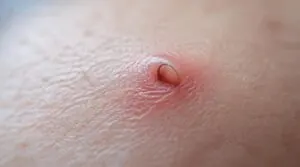
Those stubborn, itchy bumps don’t just appear out of nowhere—your skin is trying to tell you something.
Often it’s a sign of irritation or trapped hair beneath the surface, which is why learning how to prevent ingrown hairs along your beard neckline can make such a difference.
Several everyday habits and skin conditions team up to trap hairs beneath the surface, and knowing which ones apply to you changes how you treat the problem.
Here are the five most common culprits behind ingrown hairs, starting with what’s happening right under your skin.
Curled Trapped Hairs
Picture a hair that never grows straight out — it curls back, burrowing beneath your skin instead. This sub-surface loop formation happens when the tip reorients inward, especially with coily or tightly curled hair.
- A hair shaft bending mid-follicle
- Trapped follicle geometry blocking exit
- Friction-induced reentry after shaving
- Tiny bumps forming where hair loops
These occurrences can lead to knotted hairs forming when the hair curls back on itself.
That’s why physical exfoliation matters for smooth skin texture.
Dead Skin Buildup
Curled hairs aren’t the only culprit — sluggish cellular turnover plays a role, too. Cells form deep in the epidermis and shed once they reach the surface, but dryness, dehydration, or leftover cleansing residue can slow that process. Cells cling together instead, leaving dull, rough patches that trap hairs underneath.
Regular physical exfoliation clears this buildup, restoring smoother skin texture and cutting your odds of ingrown hairs.
Shaving Too Closely
Here’s where technique backfires: shaving too closely feels satisfying in the moment, but it strips the top skin layer along with hair, leaving sharp hair tips prone to curling inward.
That aggressive pass compromises your skin barrier, inviting:
- Razor burn and stinging
- Micro-cut risks
- Inflamed follicle bumps
A body scrub beforehand smooths skin texture, so blades glide instead of digging in.
Tight Clothing Friction
Your leggings aren’t the problem—the constant contact is. Tight fabric moves with your body instead of sliding over it, so fabric tension drags across the same follicles for hours. Seams at waistbands and inner thighs become friction hotspots, while sweat strips away glide, letting damp fabric grip skin texture and trap hairs mid-curl.
Keratosis Pilaris Bumps
Sometimes those stubborn bumps aren’t ingrown hairs at all—they’re keratin plug formation blocking follicle openings, a hereditary pattern called keratosis pilaris. These follicle-centered bumps look skin-colored or slightly darker, feeling sandpaper-rough. Seasonal dryness worsens texture every winter.
Regular physical exfoliation with a gentle body scrub helps smooth bumps and prevent them mimicking ingrown hairs, since both conditions respond to consistent, gentle buffing.
Physical Scrubs Versus Chemical Exfoliants
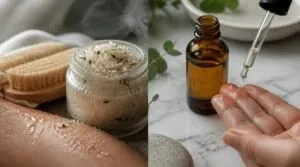
Not every ingrown hair reacts to the same treatment, and that’s exactly why exfoliation isn’t one-size-fits-all. Physical scrubs and chemical acids work through completely different mechanisms, each with its own strengths depending on your skin type and the stubbornness of your bumps. Here’s how to tell which approach deserves a spot in your routine.
Manual Buffing Benefits
Think of manual buffing as clearing a path for trapped hairs. Physical exfoliation lifts dead skin blocking follicles, smoothing texture and reducing clothing friction against inflamed bumps.
Benefits include:
- Smoothing rough patches
- Clearing hair paths
- Controlling pressure
- Improving moisturizer absorption
- Lowering irritation risk
Gentle, controlled pressure with physical particles keeps mechanical exfoliation safe—never harsh—for consistent skin smoothness.
AHA and BHA Benefits
Two acids do the heavy lifting where scrubs can’t reach. Surface exfoliation vs deep pore cleansing comes down to this: glycolic and lactic acid (AHAs) lift dead cells topically, while salicylic acid (BHA) dissolves oil-based debris inside follicles.
That’s real sebum reduction benefits salt or sugar granules simply can’t offer. Pairing both acids strategically targets ingrown hairs from two directions, improving texture at the surface and within the pore itself.
When Scrubs Work Best
Timing is everything with a body scrub. Physical scrubs work best on closed, non-inflamed bumps once hair has actually grown out, not the moment you spot one.
Reach for one:
- After hair has surfaced
- On hydrated skin, post-moisturizer
- Once or twice weekly
- Before over-irritation sets in
Frequency versus irritation matters most: consistent, gentle dead skin cell removal beats aggressive daily scrubbing every time.
When Acids Work Better
Grit isn’t always the answer—when bumps sit deep and inflamed, chemical exfoliants take over. Salicylic acid delivers deep pore penetration, dissolving oil and debris that trap hairs below the surface, while avoiding friction trauma on already angry skin.
Glycolic and lactic acids handle surface texture smoothing instead. That’s the real AHA vs BHA distinction: targeted follicle cleansing versus dullness control. Choose based on where your ingrown hairs actually live.
Sensitive Skin Considerations
Sensitive skin doesn’t tolerate guesswork. Before any physical scrub touches inflamed areas, patch test on your inner arm for 24 hours. Watch for stinging, redness, or heat sensitivity—AC and hot showers already stress your barrier.
Prioritize:
- Fragrance-free formulas
- Fine, low-friction grains
- Barrier-supporting oils
- Gentle cleansing bases
- Cooling, soothing agents
This combination delivers real irritation relief without triggering fresh ingrown hair flare-ups.
Top 5 Ingrown Hair Exfoliators
Not every scrub on the shelf earns a spot in your routine, so narrowing the field matters more than you’d think. The five picks below cover different skin needs, from sensitive bikini zones to stubborn keratosis pilaris bumps. Here’s what to look for on the label before you commit.
1. Kerapil Salicylic Acid Exfoliating Body Wash
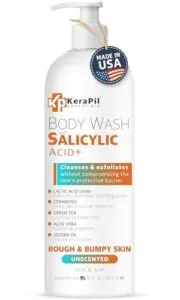
A wash that pulls double duty deserves a spot on this list. Kerapil’s formula pairs salicylic acid with lactic acid, so it dissolves sebum inside the pore while lifting dead cells that trap hair.
Ceramide NP and aloe barbadensis leaf juice keep the skin barrier intact, which matters since acids alone can leave you dry and reactive.
It’s sulfate-free and unscented, too—a smart pick if you’re prone to razor burn or breakouts along your legs and arms.
| Best For | People dealing with keratosis pilaris, body acne, or rough, bumpy skin on their arms and legs who want a gentle, unscented wash that won’t irritate sensitive skin. |
|---|---|
| Exfoliation Type | Chemical (AHA/BHA) |
| Vegan/Cruelty-Free | Not specified |
| Fragrance | Unscented |
| Paraben-Free | Yes |
| Targets Ingrown Hairs | Yes |
| Moisturizing Oils | Jojoba Oil |
| Additional Features |
|
- Dual AHA/BHA exfoliation clears clogged pores while smoothing rough texture
- Ceramides and aloe help protect the skin barrier so it doesn’t feel stripped
- Unscented, sulfate-free, and paraben-free formula suits sensitive skin
- Chemical exfoliants can make skin more sensitive to sun exposure
- Not labeled for specific age groups, so it may not suit every user
- Results depend on skin type and how consistently it’s used
2. Saltair Glycolic Acid Body Scrub
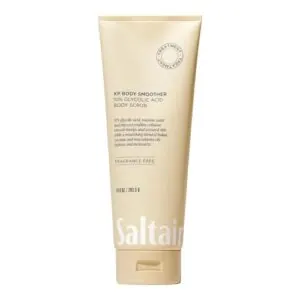
If you want texture along with actives, Saltair delivers both. Its scrub combines 10% glycolic acid with volcanic sand, pumice, and microcrystalline cellulose, so manual buffing and chemical exfoliation work together on rough, bumpy patches.
Niacinamide and licorice extract brighten uneven tone and dark spots left behind by old ingrown hairs, while kukui nut, coconut, and macadamia oils keep the barrier nourished. It’s fragrance-free, vegan, and best for experienced users tackling stubborn "chicken skin" texture.
| Best For | People with rough, bumpy skin or visible "chicken skin" texture who want an experienced-level scrub that pairs physical exfoliation with a 10% glycolic acid treatment. |
|---|---|
| Exfoliation Type | Physical + Chemical |
| Vegan/Cruelty-Free | Vegan, Cruelty-Free |
| Fragrance | Fragrance-Free |
| Paraben-Free | Yes |
| Targets Ingrown Hairs | Yes |
| Moisturizing Oils | Kukui, Coconut, Macadamia |
| Additional Features |
|
- Combines volcanic sand, pumice, and microcrystalline cellulose with glycolic acid for thorough dual-action exfoliation
- Niacinamide and licorice extract help fade dark spots and even out skin tone from past ingrown hairs
- Nourishing kukui nut, coconut, and macadamia oils keep skin hydrated while it’s being exfoliated
- Formulated for experienced users, so it may be too intense for those new to exfoliating acids
- Increases sun sensitivity, meaning daily sunscreen is a must while using it
- Can still cause irritation in some sensitive skin types despite its gentler ingredients
3. Medix Glycolic and Lactic Acid Body Wash
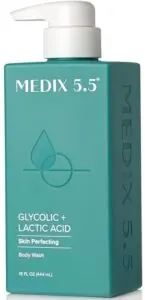
Prefer a wash over a scrub? Medix combines glycolic and lactic acids with salicylic acid, so it exfoliates the surface while penetrating pores to clear debris. Citric acid rounds out the formula for added acid support.
Peppermint and eucalyptus oils deliver a cooling sensation, while ceramide-supportive ingredients help offset dryness. It’s sulfate-free and works well for both face and body, making it a practical daily option for anyone managing recurring bumps without reaching for a separate scrub.
| Best For | Anyone dealing with keratosis pilaris, ingrown hairs, or recurring body breakouts who wants a daily wash that exfoliates without switching to a separate scrub. |
|---|---|
| Exfoliation Type | Chemical (Triple Acid) |
| Vegan/Cruelty-Free | Vegan, Cruelty-Free |
| Fragrance | Peppermint & Eucalyptus |
| Paraben-Free | Yes |
| Targets Ingrown Hairs | Yes |
| Moisturizing Oils | Not specified |
| Additional Features |
|
- Triple acid blend (glycolic, lactic, salicylic) exfoliates the surface while clearing out pores
- Sulfate-free formula with peppermint and eucalyptus oils gives a cooling, refreshing feel
- Clean, cruelty-free formulation works for both face and body
- Active acids may cause sensitivity for some skin types, especially without patch testing first
- Exfoliating formula may need to be paired with a body cream for extra hydration
- Not recommended for extremely sensitive skin without testing beforehand
4. AHA BHA Turmeric Bikini Scrub
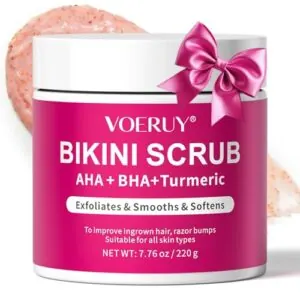
If a scrub texture appeals to you more than a wash, this bikini-specific formula pairs 8% glycolic acid with 2% salicylic acid, tackling surface buildup and clogged pores at once. Walnut shell powder adds manual buffing, while turmeric and vitamin C work toward evening out skin tone in a notoriously delicate area.
Shea butter and avocado oil soften the abrasive edge, keeping the formula comfortable enough for bikini-line use despite its dual-acid strength.
| Best For | Anyone wanting a deeper, buffing-style exfoliation to smooth ingrown hairs and razor bumps before shaving or waxing their bikini line. |
|---|---|
| Exfoliation Type | Physical + Chemical |
| Vegan/Cruelty-Free | Vegan, Cruelty-Free |
| Fragrance | Peach Scented |
| Paraben-Free | Not specified |
| Targets Ingrown Hairs | Yes |
| Moisturizing Oils | Shea Butter, Avocado Oil |
| Additional Features |
|
- Combines chemical (glycolic salicylic acid) and physical (walnut shell) exfoliation for thorough results
- Turmeric and vitamin C help even out tone in a sensitive area
- Shea butter and avocado oil soften the formula so it’s not overly harsh
- Walnut shell powder may be too abrasive for extremely sensitive skin
- AHA/BHA acids can increase sun sensitivity
- Requires gentle application to avoid irritation
5. Bikini Area Exfoliating Sugar Scrub
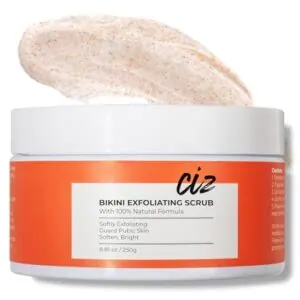
Sugar melts on contact with water, which makes it one of the gentlest textures you can use on bikini skin without sacrificing exfoliating power. Crystals soften as you massage, so friction stays minimal even in a sensitive zone.
Look for formulas blending sugar with coconut oil or shea butter — the fat content helps grains glide rather than drag. This combo lifts dead skin tied to ingrown hairs while leaving a light emollient film behind, so skin feels conditioned, not stripped, right after rinsing.
| Best For | Anyone who wants a gentle, plant-based sugar scrub to prep or soothe the bikini area before and after waxing, shaving, or epilating. |
|---|---|
| Exfoliation Type | Physical (Plant-based) |
| Vegan/Cruelty-Free | Vegan, Cruelty-Free |
| Fragrance | No Synthetic Fragrance |
| Paraben-Free | Yes |
| Targets Ingrown Hairs | Yes |
| Moisturizing Oils | Not specified |
| Additional Features |
|
- Sugar crystals soften on contact, keeping friction low on sensitive skin
- Non-comedogenic, vegan formula made without synthetic fragrances or harsh ingredients
- Helps prevent ingrown hairs and razor bumps while smoothing rough texture
- Not suitable for broken or highly inflamed skin
- Needs precise timing (24–48 hours) around hair removal to work best
- Results can vary depending on individual skin sensitivity
Best Scrub Ingredients to Look For
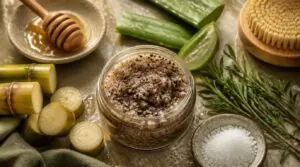
Not every scrub deserves a spot in your shower caddy, and the label tells you why. The right formula balances physical particles with active ingredients that actually address the bumps you’re trying to treat. Here’s what should be on that ingredient list before you commit to a jar.
Fine Sugar Granules
Not all grains are created equal, and crystal size matters more than you’d think. Fine granulated sugar, usually 0.3 to 0.55mm, offers greater surface area for faster dissolution against damp skin, meaning less friction and gentler contact for delicate zones like the bikini line.
Producers grade granulations through screening, so look for "fine" or "extra-fine" labeling and 99.85% sucrose purity when choosing your sugar scrub.
Pumice and Cellulose Beads
Two mineral-versus-plant options dominate physical scrubs: pumice and cellulose beads. Pumice is porous volcanic rock that provides genuine mechanical buffing against trapped hairs, rinsing away intact after use.
Cellulose beads work differently—they’re formulated to disintegrate during massage, breaking into fine powder as you rub. This means less abrasive residue to manage afterward, though pumice still delivers stronger friction for stubborn ingrown hairs.
Glycolic Acid Support
Pair your physical scrub with glycolic acid and you get chemical exfoliation working alongside manual buffing. As the smallest AHA molecule, it penetrates deeper, speeding cell turnover and smoothing texture around trapped hairs.
It also boosts hydration and helps with collagen stimulation—though it raises sun sensitivity, so daily SPF isn’t optional once you’ve added this to your ingrown hair prevention routine.
Salicylic Acid Support
Oil dissolves oil—that’s why salicylic acid outperforms water-based acids in bump-prone areas. Its lipid solubility grants true pore penetration, dissolving sebum where hairs get trapped.
Through keratolytic cell turnover, it loosens the debris binding dead cells together, while anti-inflammatory relief calms existing bumps. Add sebum regulation benefits, and you’ve got a body scrub for ingrown hairs that works from the follicle out.
Moisturizing Oils and Butters
Every good scrub needs a soft landing, and that’s where oils and butters come in. Jojoba oil absorbs fast for lightweight moisture without clogging pores, while shea and cocoa butter form an occlusive barrier that locks hydration in.
Why it matters:
- Prevents post-scrub tightness
- Softens rough, bump-prone skin
- Reduces irritation risk
- Helps with smoother shaving later
Choose fragrance-free formulas for sensitive zones.
Choose Scrubs by Body Area
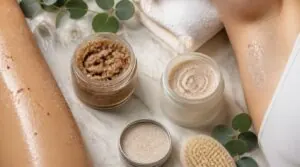
Not every patch of skin reacts to friction the same way, so your scrub choice should shift depending on where you’re using it. Thicker skin on your legs can handle coarser grains, while your bikini line and underarms need a much gentler touch. Here’s how to match the right formula to each area.
Legs and Thighs
Legs and thighs deal with constant friction from denim, leggings, and daily movement, which makes thigh bump prevention essential. Look for scrubs with volcanic sand or pumice for real lower body exfoliation—these buff away rough patches while glycolic acid dissolves keratin buildup. Two to three sessions weekly deliver smooth leg texture without over-stripping skin, giving you genuinely smooth clear skin and lasting thigh friction relief.
Bikini Line
Bikini line skin is thinner and more reactive than thighs, so what works on legs can sting here. Pubic hair also curls more sharply, raising ingrown risk.
Choose ultra-fine grains only, and go easy—24-48 hours before hair removal, never right after waxing.
- Fewer painful bumps
- Less redness and irritation
- Smoother, more confident skin
Underarms
Underarm skin is thinner than bikini-line tissue and takes a beating from arm friction, deodorant residue, and grooming stress daily. Combine that with dense sweat glands driving odor chemistry, and keratin plugs form easily, trapping hairs.
Use a gentle body scrub with fine granules, light pressure, and short strokes. This reduces friction-induced irritation, improves skin texture, and helps prevent ingrown hairs without over-stressing delicate axilla skin.
Face and Beard
Beard skin faces a different fight: hair curls back along its natural growth direction, and friction from masks, helmets, or constant touching keeps follicles irritated. Uneven shaving pressure worsens keratin plug buildup.
A fine-grain body scrub, used gently, smooths skin texture, clears blocked follicles, and helps prevent ingrown hairs without aggravating sensitive beard-line skin.
Butt and Body Bumps
Why do buttock bumps confuse so many people? Because they’re rarely one condition. Sitting for hours creates friction that traps hairs, but bacterial folliculitis, keratin-based keratosis pilaris, and contact dermatitis from detergents all mimic each other.
A body scrub for ingrown hairs with fine grains plus gentle acids exfoliates without provoking carbuncles or aggravating pilonidal irritation—always patch-test first.
How to Use Physical Scrubs Safely
The right scrub only works if your technique matches it. A few small habits around timing, pressure, and skin condition determine whether you get smooth results or irritation. Here’s exactly how to use physical exfoliants the safe way.
Exfoliate Before Shaving
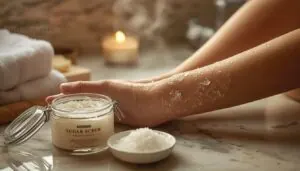
Timing is everything here: exfoliate 12–24 hours before you shave, not right beforehand.
This gives skin time to settle while still lifting trapped hairs near the surface.
- Reduces razor drag
- Minimizes blade clogs
- Optimizes follicle exit
A sugar scrub the night before shaving means fewer passes, better glide, and real progress toward preventing ingrown hairs.
Use Gentle Circular Motions

Technique matters as much as timing. Keep your motion radius small, tracing tight circles rather than wide sweeps that drag across bump-prone skin.
Pair that with pressure control—light contact only—and a steady circular rhythm for even coverage. Watch for irritation signals like stinging or redness; that’s your cue to ease off and let physical scrubs do their job smoothly.
Avoid Broken Skin
Here’s a rule worth tattooing on your mirror: never scrub over skin that’s already open, weeping, or freshly nicked.
Broken skin invites infection, and physical scrubs create microtears that turn small irritations into real problems. If you spot active bumps, redness, or bleeding, skip that area entirely. Barrier integrity matters more than consistency—gentle washing over compromised skin only worsens abrasions and delays healing.
Moisturize After Rinsing

The clock starts the second you rinse: skin left bare for more than a minute starts tightening and pulling moisture back out. The same urgency applies to hair, where raised cuticles let water escape fast, so if you’re also fighting frizz, these tips for locking in moisture on damaged hair are worth a look.
Apply your moisturizer to damp skin so humectants lock in surface water instead of fighting for it. Choose a lotion over a heavier cream for faster absorption, replenishing barrier lipids and improving skin texture without clogging follicles.
Limit Weekly Exfoliation
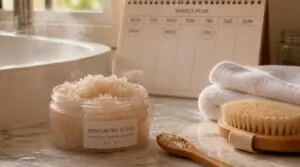
More isn’t better here—it’s how bumps get worse. Cap your body scrub for ingrown hairs at 1–2 weekly sessions; physical grit works fast, but overexfoliating invites skin barrier damage.
Watch for tightness, flaking, or stinging—those are over-exfoliation warning signs telling you to scale back. Adjust frequency based on your skin’s response, and give it rest days to prevent exfoliation fatigue from undoing your progress.
Prevent Ingrowns After Hair Removal

Exfoliating before hair removal only does half the job, since what you do afterward determines whether that bump actually forms.
Your technique, your clothing choices, and your skin’s recovery time all play a part in keeping follicles clear.
Here are five habits worth building into your routine right after you shave or wax.
Shave With The Grain
Run your fingers over the stubble first — that’s mapping grain direction before the blade ever touches skin. Shave with the grain using a light first pass technique, low angle, easy pressure. This cuts less aggressively, preventing ingrown hairs from forming. Only add a second pass if needed.
Since hair direction shifts across the body, this stubble texture management step matters most on curved, sensitive areas.
Use Sharp Clean Blades
Your grain-mapping only pays off if the blade itself is in good shape. A dull edge drags instead of cutting cleanly, forcing extra passes that irritate skin and worsen ingrown hairs.
- Rinse blades after every use
- Dry them fully to prevent corrosion
- Replace at the first sign of tugging
Clean, sharp blades mean fewer passes, less friction, smoother results.
Avoid Tight Clothing
Freshly shaved skin doesn’t need a fight with your waistband. Tight leggings and briefs compress hips and thighs, raising nerve pressure and constricting circulation, while trapped sweat and thigh friction aggravate already-inflamed follicles. Reduced blood flow slows healing and stresses the skin barrier further.
Choose breathable, looser fits for at least 24 hours post-shave. Your skin recovers faster without added compression working against it.
Resume Exfoliation Later
Once redness fades, restart with a weekly cadence rather than your old routine. Watch for identifying irritation signs—stinging or flaking means wait longer.
Reintroduce gradually:
- Once per week initially
- Increase only if skin tolerates it
- Pull back if redness returns
This pacing helps skin texture improvement without restarting the irritation cycle your body scrub for ingrown hairs just calmed down.
Soothe Irritated Skin
Redness after hair removal calms fastest with a cool compress, held gently for a few minutes without rubbing.
Follow with a fragrance-free barrier repair moisturizer containing ceramides or glycerin to seal hydration and ease razor bumps.
Skip harsh cleansing or scrubbing near active irritation. Gentle, friction-free care today means smoother skin—and fewer bumps—tomorrow.
Common Scrub Buying Mistakes
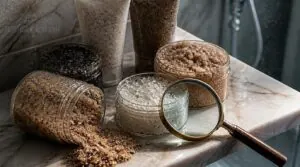
Not every scrub on the shelf deserves a spot in your shower. Picking the wrong formula can undo weeks of smooth, bump-free progress in a single use. Here are five buying mistakes worth watching for before you check out.
Choosing Harsh Grains
Bigger isn’t better with grit—harsher particles mean more micro-tears, not smoother skin.
Look for:
- Round, soft grains
- Fine sugar or jojoba beads
- Uniform particle size
- Water-soluble bases
- Gentle pressure feel
Sharp, angular abrasives increase friction and irritation, especially on already-inflamed, ingrown-prone skin.
Ignoring Fragrance Sensitivity
Scrolling past "fragrance-free" on a label doesn’t guarantee much—fragrance label confusion is real, since masking agents can create scented effects without listing "fragrance" outright. Essential oils count too.
For ingrown-prone, inflamed follicles, volatile scent exposure worsens irritation fast. Always patch test new sugar scrubs before full use, and choose true fragrance-free formulas when exfoliation targets sensitive skin.
Scrubbing Active Bumps
Would you grab a handful of physical grit and rub it straight over an angry, raised bump? Please don’t. Active ingrown bumps need soothing, not scrubbing—broken skin invites infection. Skip sugar scrubs entirely until inflammation calms down.
Active ingrown bumps need soothing, not scrubbing—broken skin invites infection
Instead, focus on gentle bump exfoliation around (not on) the area, manage redness with cool compresses, and let irritated follicles settle before reintroducing any exfoliation routine.
Overusing Exfoliating Acids
More acid isn’t always better—your skin has limits, and pushing past them backfires fast.
- Barrier damage: stripped oils, disrupted pH
- Redness and irritation that won’t calm down
- Dehydration and tightness, sometimes a shiny film
- Sun sensitivity risks, including burns and dark spots
- Worsened breakouts from imbalanced, reactive skin
Stick to 2-3% BHA or 5-10% AHA, a few times weekly. Your skin barrier isn’t a scrubbing project.
Skipping Barrier Repair
Rinsing off a scrub and calling it done? That’s how transepidermal water loss creeps in and undoes your progress.
Post-shaving sensitivity needs a fragrance-free moisturizer with ceramides to refill the depleted lipid matrix, not just water.
Skip that step and inflammation lingers, stinging worsens, and your skin barrier repair stalls—turning every future scrub session into a fresh irritation risk instead of relief.
Frequently Asked Questions (FAQs)
Will a body scrub get rid of ingrown hairs?
Body scrubs help, but they won’t cure everything. Physical grit clears surface debris and keratin plugs, smoothing bumps temporarily. Mechanical action can’t reach embedded hairs, though—friction and shaving technique matter just as much for lasting prevention.
What will draw out an ingrown hair?
A warm compress softens skin so trapped hairs surface faster. Follow with gentle exfoliation—sugar, oils, or physical grit—to loosen dead skin. If a hair loop is visible, use a sterile tool for gentle lifting, never forceful digging.
Which scrub is best for ingrown hair?
Funny thing—clients ask this weekly, and there’s no single winner. Saltair’s glycolic scrub suits oily skin, while a sugar-based grit fits sensitive bikini lines. Match granule size and acid strength to your skin’s tolerance, not trends.
What exfoliant is best for ingrown hairs?
Salicylic acid (BHA) wins for most ingrown hairs since its oil-soluble nature penetrates clogged follicles directly.
AHAs boost surface cell turnover but can’t dissolve deep debris.
Pair 2% BHA with gentle moisture-retaining exfoliants for pore-clearing results without stripping your skin barrier.
How long until scrub results become visible?
That first session mostly loosens surface flakes, not the trapped hair itself. Expect real smoothing within 2 to 4 weeks, matching your skin’s natural turnover cycle—patience here beats scrubbing harder or more often.
Are physical scrubs safe during pregnancy?
Can pregnancy really change how your skin reacts to pressure? Yes—hormonal skin sensitivity thins your barrier, so switch to sugar over salt, use gentle grit, avoid fragrance, and moisturize to prevent microtears and irritation.
Can men use body scrubs for beard ingrowns?
Yes, but choose gentle, fragrance-free formulas with fine granules—facial skin sensitivity and beard area friction demand caution. Skip harsh pumice; prioritize small scrub particle size, moisturization, and post-shave irritation prevention to support skin cell turnover safely.
Do physical scrubs work on all skin tones?
Not universally: melanin response varies, so identical grit can smooth one complexion while triggering friction-induced hyperpigmentation on another.
Particle shape safety matters most—choose rounded grains, light pressure, and shorter contact time to protect skin tone sensitivity and minimize micro-trauma risks.
Conclusion
Picture smooth skin catching the light, no red bumps breaking the line—that’s what consistent exfoliation delivers over time.
The right physical scrub for ingrown hairs won’t work overnight, but it clears the path hair needs to grow properly, week after week.
Grain size matters. Technique matters. Patience matters most.
Skip harsh scrubbing, respect your skin’s barrier, and let dead cells shed naturally.
Clear skin isn’t luck—it’s a habit built one gentle motion at a time.