This site is supported by our readers. We may earn a commission, at no cost to you, if you purchase through links. This content is for general informational and educational purposes only and is not a substitute for professional medical, dermatological, or nutritional advice.

Your skin sheds around 40,000 dead cells every hour. When that shedding process slows down, cells pile up, pores clog, and your complexion looks dull instead of radiant.
Glycolic acid fixes that pileup problem at its source. As the smallest alpha-hydroxy acid molecule, it slips into skin faster than its AHA cousins, dissolving the "glue" holding dead cells together so fresh, brighter skin can surface.
That’s the real story behind glycolic acid exfoliant benefits: smoother texture, fewer breakouts, fading dark spots, and better results from every product you layer on after it. Used correctly, it’s one of the most reliable tools you’ll ever add to your routine.
Table Of Contents
Key Takeaways
- Glycolic acid, the smallest alpha-hydroxy acid, penetrates skin quickly to dissolve the bonds holding dead cells together, revealing smoother, brighter skin underneath.
- Regular use delivers multiple benefits at once, including smoother texture, fewer clogged pores, faded dark spots, softer fine lines, and better absorption of other skincare products.
- Safe use means starting once weekly with lower concentrations, applying at night, moisturizing afterward, and avoiding combinations with other harsh actives until your skin builds tolerance.
- Daily SPF 30+ is essential since glycolic acid increases sun sensitivity, and visible results typically take 2–4 weeks for texture and 6–12 weeks for fading discoloration or fine lines.
What is Glycolic Acid Exfoliant?
Glycolic acid gets called out a lot in skincare, but you deserve to know what it actually is. It’s not magic, it’s chemistry, and that chemistry is worth understanding before you put it on your face. Here’s what makes this acid tick, broken down into four simple pieces.
If you’re curious how it stacks up against other options, this breakdown of different types of skin care acids shows where glycolic acid fits into the bigger picture.
Alpha-hydroxy Acid Basics
Think of alpha-hydroxy acids as nature’s gentle dissolvers. They’re organic acids with a hydroxyl group on the alpha carbon, sourced from sugarcane, fruit, or milk—natural or synthetic.
Glycolic acid, lactic acid, and citric acid all belong to this family. You’ll find them in peels, gels, and serums, each formulated for chemical exfoliation that lifts away dead cells for smoother skin texture. These ingredients act as chemical exfoliants by breaking down the bonds that hold dead skin cells together.
Small Molecule Penetration
Size is what gives glycolic acid its edge. As the smallest alpha-hydroxy acid, it slips through narrow spaces between skin cells more easily than larger acids can.
This molecular size advantage speeds up dermal penetration. Your skin’s pH also shifts the acid’s charge, affecting how well it partitions into lipid layers, deepening chemical exfoliation and setting up real skin resurfacing.
Chemical Versus Physical Exfoliation
That penetration edge puts glycolic acid in a different category than scrubs and brushes.
Mechanical exfoliation relies on friction and particle size, so pressure and technique determine results, sometimes unevenly. Chemical exfoliants work differently, dissolving bonds without scrubbing, so coverage stays more consistent and you avoid the barrier disruption that comes with heavy-handed physical exfoliation.
How Dead Cells Loosen
Here’s what’s actually happening at the cellular level: dead skin cells, called corneocytes, stick together using a natural "glue." Glycolic acid weakens that corneocyte adhesive bond, causing cells to loosen and shed.
This cellular glue breakdown speeds up epidermal turnover. Surface debris detaches faster, revealing smoother, brighter skin underneath as keratinized cells shed more efficiently.
Key Glycolic Acid Skin Benefits

Glycolic acid does a lot more than exfoliate. It works on multiple layers of your skin at once, from texture to tone. Here’s what you can expect once it becomes part of your routine.
Smoother Skin Texture
Ever run your palm across your cheek and feel little bumps that makeup just won’t smooth over? That’s dead skin buildup, and glycolic acid clears it fast.
It speeds cellular turnover, so cells shed instead of piling up. Benefits show up as:
- Less surface roughness
- Reduced pore congestion
- Even dead cell shedding
- Lasting texture consistency
Give it a few weeks—your skin will feel genuinely smoother.
At a safe, gentle concentration, glycolic acid also helps fade dark spots over time, making it worth exploring safe acne treatment options during pregnancy if you’re expecting.
Brighter-looking Complexion
Light bounces differently off even skin. That’s the science behind "glow," and it’s why uniform skin radiance beats any highlighter.
Glycolic acid smooths surface micro-texture and fades pigment contrast, so light reflects consistently instead of scattering off rough patches or dark spots. Faster cell turnover clears the dull buildup causing that washed-out look. The result: a genuinely luminous glow, not a filtered one.
Fewer Clogged Pores
Clogged pores start with a sticky problem: dead cells bonded together by cellular glue, mixing with oil until they plug the opening. That’s comedone formation in simple terms.
Glycolic acid’s keratolytic action dissolves that glue, speeding surface cell turnover. As a chemical exfoliant, it unclogs pores gradually, targeting congestion-prone zones like your nose and chin, reducing blackheads without harsh scrubbing.
Softer Fine Lines
Fine lines look worse under bad lighting because rough texture casts tiny shadows. Glycolic acid smooths microtopography, reducing that shadow effect while speeding cell turnover underneath.
It also stimulates collagen production, improving elasticity over time. Better moisture retention plumps the surface, so lines soften instead of deepening. Give it several weeks of consistent use before expecting visible change.
Better Product Absorption
Think of your serums as guests arriving at a clean house instead of a cluttered one. Glycolic acid clears cellular debris so active ingredients absorb deeper, reaching living skin instead of sitting on dead cells.
Glycolic acid clears away dead cells so serums can reach living skin and absorb deeper
Its low molecular weight boosts stratum corneum permeability, too. For best results, layer thin formulas first, letting each one settle before adding richer creams on top.
Acne, Dark Spots, and Scars
Acne doesn’t just show up as breakouts, it leaves behind marks that stick around long after. Glycolic acid targets this problem from a few different angles at once. Here’s what it can actually help clear up.
Blackheads and Whiteheads
Blackheads and whiteheads both start the same way: a pore clogs with sebum and dead skin. Comedone formation depends on whether that pore stays open or closed.
Open pores oxidize, turning dark—that’s your blackhead. Closed ones stay trapped underneath, showing up as whiteheads.
Glycolic acid helps with both by boosting surface cell turnover, helping unclog pores before they oxidize or seal shut.
Post-acne Marks
Post-acne marks come in different forms, and knowing which one you’re dealing with changes your approach. Hyperpigmentation happens when inflammation triggers excess melanin production. Persistent redness signals vascular changes, not pigment.
Raised keloid scars can develop three to 12 months later, while pitted, atrophic texture won’t fade alone. Glycolic acid aids skin regeneration and barrier recovery, helping fade discoloration over time.
Uneven Skin Tone
Uneven tone isn’t just about dark spots — it’s about melanin distribution across your whole face. Glycolic acid speeds up the keratolysis process, shedding pigmented surface cells faster.
Smoother texture also changes light reflection, so blotchiness looks softer. Pair this with steady barrier hydration and the right concentration frequency, and your tone gradually evens out without irritation setting you back.
Sunspots and Discoloration
Solar lentigines, those flat brown spots from years of sun exposure, form when chronic UV damage triggers excess melanin production. They cluster on your face, hands, and shoulders wherever sun hits most.
Glycolic acid clears the pigmented surface cells holding that discoloration, gently fading spots over time. It won’t erase deep sun damage overnight, but paired with daily SPF, it’s a solid targeted brightening ally against hyperpigmentation.
Rough Acne Texture
Fading spots is only half the job. Bumpy, uneven texture often has several causes hiding underneath: dead cell buildup, pore congestion, or lingering inflammation from healing bumps.
Glycolic acid smooths things out by dissolving that surface debris, unclogging pores, and softening shallow scarring. Skip harsh over-cleansing, though. Dryness-induced roughness only makes acne-prone skin feel tighter and rougher.
How to Use Glycolic Acid
Knowing what glycolic acid does is one thing—using it right is another. Your skin needs time to adjust, and the wrong routine can undo all the benefits. Here’s exactly how to introduce it safely, step by step.
Start Once Weekly

More isn’t always better with glycolic acid. Start once a week and let your skin adjust before doing more.
This pacing limits cumulative irritation while still supporting cellular turnover. Watch how your skin responds over several weeks—if it stays calm, you can gradually increase frequency. If you notice redness or sensitivity, hold steady. Consistency, not speed, builds real tolerance.
Choose Lower Strengths

Lower concentrations build strength tolerance gradually while protecting your skin barrier from unnecessary stress.
- Reduced stinging on first use
- Less redness or flaking
- Easier to gauge sensitivity
- Better compatibility with retinoids
- More predictable, controlled results
Always patch test before applying to your face. This keeps irritation risk low while you customize exfoliation intensity to what your skin can actually handle.
Apply at Night

Nighttime is exfoliation’s best friend. Glycolic acid temporarily raises skin sensitivity, and daytime UV exposure makes that risk worse. Applying before bed sidesteps that window entirely.
Your skin also gets uninterrupted hours to rest, with less friction from movement or makeup. Come morning, always follow with broad-spectrum SPF 30, since photosensitivity lingers even after overnight use.
Moisturize After Exfoliating

Think of moisturizer as the peace treaty your skin signs after exfoliation stirs things up. Glycolic acid temporarily disrupts your skin barrier, so applying moisturizer right after locks in moisture and calms sensitivity.
Look for:
- Humectants for hydration
- Occlusives to seal moisture
- Soothing ingredients like aloe
Pat it on gently while skin’s still slightly damp for better moisture retention and faster barrier repair.
Avoid Harsh Active Combinations
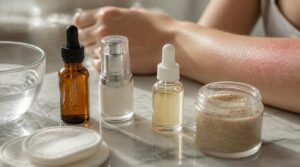
More is not always better. Stacking glycolic acid with retinoids, vitamin C, or physical scrubs creates layered acid irritation and barrier stress.
Skip combining active ingredients until your skin builds tolerance. Watch for fragrance sensitizers in other products too.
Patch test new pairings separately, and introduce one chemical exfoliant at a time to protect your skin barrier.
Safety Tips for Sensitive Skin

Glycolic acid works wonders, but sensitive skin needs extra care. Your safety comes down to a few smart habits, not complicated rules. Here’s what to watch for before you make this acid part of your routine.
Always Patch Test First
Skip the patch test, and you’re gambling with your whole face. Apply a small amount behind your ear or on your inner arm, wait 24 hours, then check.
This is especially worth keeping in mind before trying a new product like Olay’s formula—our fragrance-free Olay Micro Sculpting Cream review breaks down exactly what’s in it and how sensitive skin typically responds.
Once your skin gives the all-clear, follow this apple cider vinegar toner dilution guide to get the ratio right for your specific skin type.
Since ACV works best when properly balanced for your skin’s needs, pair it with guidance on how semi-permanent dye layers over permanent color if you’re also navigating hair care alongside your skincare routine.
If your skin passes the test, you’re ready to explore how a pumpkin enzyme mask targets acne-causing buildup without stripping your skin’s natural balance.
Whether you lean toward tsubaki or argan, this tsubaki oil vs argan oil comparison can help you figure out which one actually suits your hair before you commit.
- Redness or itching? Stop.
- Swelling or burning? Rinse immediately.
- No reaction? You’re clear to try it on your face.
This step protects your skin barrier and catches ingredient sensitivities before they spread.
Use SPF Daily
Passing your patch test doesn’t mean skin protection stops there. Glycolic acid makes skin more sun-sensitive, so broad-spectrum SPF 30+ is non-negotiable, guarding against both UVA (aging) and UVB (burning) rays.
Apply it every morning, even indoors or driving, since UVA penetrates windows and clouds. Reapply every two hours outdoors. Without this step, you’re undoing your antiaging skincare progress with every unprotected exposure.
Watch for Irritation
Even with SPF on board, your skin might still talk back. Mild tingling is normal, but stinging that lingers, visible redness, or skin tightness means it’s time to ease off.
Watch for persistent peeling or hives too. If irritation worsens with each use, your acid concentration or frequency is too high—dial it back before your barrier pays the price.
Avoid Broken Skin
Broken or compromised skin and glycolic acid don’t mix. Freshly exfoliated skin is more vulnerable, so avoid layering onto cuts, cracks, or raw patches.
Friction from tight clothing worsens shear stress on sensitized skin. Choose loose, breathable fabrics, keep skin moisturized, and apply products gently—never rub—to protect your barrier while it heals.
When to Stop Use
Your skin will tell you when to stop. Identifying skin irritation early prevents lasting damage.
- Redness, stinging, or swelling that lingers
- Tight, "paper-like" dryness (recognizing barrier damage)
- Itchy bumps or rash (managing contact rash)
- Repeated skipped applications (checking how often you use it)
If symptoms persist after stopping, get medical guidance—your skin barrier repair depends on you listening early.
Frequently Asked Questions (FAQs)
Can I exfoliate with glycolic acid every day?
Want smoother skin fast? Daily use isn’t ideal for most people. This alphahydroxy acid works best a few times weekly—daily application often disrupts your skin barrier, causing dryness, redness, and irritation instead of the glow you’re after.
What is glycolic acid exfoliator good for?
This alpha-hydroxy acid promotes skin rejuvenation through faster cellular turnover, boosting collagen synthesis and moisture retention.
You’ll notice smoother texture, decongested pores, softer fine lines, and fading hyperpigmentation—making it a true multitasker for healthier-looking skin over time.
How long until glycolic acid shows visible results?
Patience pays off here: your skin doesn’t transform overnight. Expect initial glow within days, smoother texture by 2-4 weeks, and real fading of hyperpigmentation or fine lines closer to 6-12 weeks with consistent use.
Can glycolic acid be used around the eye area?
Yes, but stick to the orbital rim, not the lash line or lid. That thin skin irritates easily, and product can migrate toward your eye with blinking or tears—so gentle placement matters more than strength here.
Conclusion
Skin renews itself like a garden that needs regular weeding, and glycolic acid is the tool that clears the way. Start slow, stay consistent, and protect your results with daily SPF.
That’s the whole system behind glycolic acid exfoliant benefits: fewer clogged pores, faded marks, smoother texture, and a complexion that keeps improving. Your skin isn’t static. It’s constantly rebuilding itself, and now you know exactly how to help it rebuild better.