This site is supported by our readers. We may earn a commission, at no cost to you, if you purchase through links. This content is for general informational and educational purposes only and is not a substitute for professional medical, dermatological, or nutritional advice.

That golden serum on your bathroom shelf starts breaking down the moment air hits it. L-ascorbic acid, the gold-standard form of vitamin C, oxidizes fast, and once it turns pale yellow or amber, its potency drops fast. Heat, light, and open air all speed up the process.
Most people store their serum in exactly the wrong spot: a steamy bathroom cabinet, right next to a sunlit window, cap left loose after every use. Small habits like these quietly drain a $40 bottle of its power.
Knowing how to store vitamin c serum properly changes everything. Temperature, light, packaging, and even how you dispense each drop all play a role in keeping that formula stable and effective from first use to last.
Table Of Contents
- Key Takeaways
- Store Vitamin C Serum Cool and Dark
- Choose The Best Storage Location
- Refrigerate Vitamin C Serum When Needed
- Use Light-Protective, Airtight Packaging
- Minimize Air and Contamination During Use
- Adjust Storage by Vitamin C Formula
- Check for Signs of Oxidation
- Track Shelf Life and Replace Promptly
- Frequently Asked Questions (FAQs)
- Conclusion
Key Takeaways
- Keep your vitamin C serum below 77°F, tightly capped, and away from light in a dark cabinet, since heat, air, and UV exposure all speed up oxidation and drain its potency.
- Refrigerating your serum between 36–46°F, especially during summer, can extend its potency by 50-100% compared to leaving it on a counter.
- Choose opaque or amber glass bottles with airless pumps over clear containers and droppers, since they block up to 99% of UV light and cut oxidation by up to 85%.
- Watch for dark yellow or brown color, a metallic smell, or gritty texture as clear signs your serum has oxidized and should be replaced right away, since most opened serums only stay effective for 3 to 6 months.
Store Vitamin C Serum Cool and Dark

Vitamin C serum is chemically fragile, and where you keep it matters just as much as how you use it. Heat, light, and moisture all speed up oxidation, turning your active ingredient into a weaker, less useful version of itself. Here’s exactly what to check and adjust to keep your serum stable and effective.
If you’re also layering a hydrating serum into your routine, it’s worth understanding how moisturizers and hydrating serums differ so you can store and apply each product correctly.
Keep Temperatures Below 77°F
Under 77°F is the number to remember: heat accelerates oxidation, turning active L-ascorbic acid useless fast.
Temperature Control Guidelines:
- Store below 77°F (25°C)
- Refrigerate during peak summer
- Avoid steamy bathrooms
- Watch for color change
Rule 1: store below 77°F. Rule 2: refrigerate during peak summer months. These thermal stability tips keep potency intact for months, not weeks. Keeping serum in a cool, dark spot also helps you avoid common vitamin C serum mistakes that lead to premature oxidation.
Protect From Direct Sunlight
Temperature isn’t the only enemy. Light does its own damage, and a serum sunlight loses potency fast once UV hits it.
Skip sun-facing shelves and transparent containers, even near a window. Reflective bounce off tile or mirrors adds up too.
Rule 4: use opaque or dark glass bottles, and store in a cool dark cabinet away from windows entirely.
Keep The Bottle Tightly Closed
Light isn’t the only leak point. Every time the cap sits loose, oxygen slips in and speeds oxidation.
Keep tightly capped after each use, checking that threads catch fully, not just resting on top. Wipe residue from the rim first; dried serum on threads stops a cap tight closure short. A loose seal or crusty buildup near the opening means the bottle didn’t seal.
Avoid Heat and Humidity
Heat and moisture team up fast. Every degree above 77°F speeds oxidation, and steam from showers pushes bathrooms to 90% humidity, ruining serum in a week.
Store in a cool dark cabinet, away from vents and windows.
- Watching a serum you paid for turn brown and useless
- Wasting money on antioxidants that never reach your skin
- Losing weeks of consistent results overnight
Follow Manufacturer Storage Directions
Your bottle’s label carries real data. Check the PAO symbol, a small jar icon with a number and "M", telling you exactly how many months the formula holds up once opened.
If your shampoo has changed in smell, texture, or color, this guide to shampoo expiration signs helps you decide when to toss it.
Follow label instructions and heed storage warnings from the brand. Review packaging specs too:
| Rule | Action |
|---|---|
| 1 | Store below 77°F |
| 2 | Refrigerate in summer |
| 3 | Keep tightly capped |
| 4 | Use opaque bottles |
Choose The Best Storage Location

Where you keep your serum matters just as much as the temperature itself. Some spots in your home naturally protect the formula, while others quietly work against it. Here’s what to look for when picking the right location.
Bedroom Drawer or Cabinet
A dresser drawer works well, provided it isn’t lined with cedar, since that scent can transfer to your bottle.
Choose one with soft close hardware to prevent jostling, and add removable dividers so bottles stay upright.
A lockable top drawer keeps curious hands out, while hidden false bottom storage offers extra discretion for pricier serums.
Cool Vanity Storage
A dedicated vanity cooler solves the guesswork entirely. Units like small skincare fridges hold six-plus bottles on one shelf, keeping temps steady between 42-65°F, well within Rule 1’s below-77°F threshold and covering Rule 2’s summer refrigeration needs.
Choose opaque or dark glass bottles per Rule 4, organize by formula type, and enjoy whisper-quiet operation plus cool, dry application results, all without crowding countertop space.
For a closer look at how one popular formula measures up, this in-depth TruSkin Vitamin C serum breakdown covers ingredients, texture, and real results before you commit.
Avoid Sunny Bathroom Shelves
That window above your bathroom sink is doing more damage than you think. Sunlight plus steam heat pushes bottles well past Rule 1’s 77°F limit, and humidity from every shower adds moisture that speeds oxidation.
Skip the shelf entirely. Store serum in a cool, dark cabinet, use opaque or dark glass bottles (Rule 4), and buy smaller sizes (Rule 5) you’ll actually finish.
Keep Away From Heat Sources
Kitchens and laundry rooms seem harmless until you count the heat sources: stoves, ovens, dryers, space heaters. Avoid heat sources entirely, and protect from warm air near vents or exhaust fans.
Stay clear of flames, too, no shelves above fireplaces. Follow heat labels on the bottle, and stick with a cool dark cabinet, well under Rule 1’s 77°F ceiling.
Maintain Stable Room Temperatures
Steady beats cold or hot. Set your thermostat with a 5°F deadband, heating at 70°F, cooling near 75°F, so systems stop fighting and swings stay minimal.
| Setpoint | Range | Result |
|---|---|---|
| Heat | 70°F | No overlap |
| Cool | 75°F | Stable air |
| Storage | 68-77°F | Rule 1 compliant |
Interior surfaces and even HVAC airflow protect temperature sensitivity, extending serum shelf life.
Refrigerate Vitamin C Serum When Needed
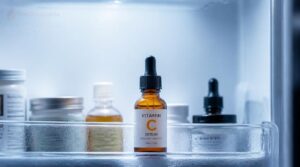
Room temperature storage isn’t always enough, especially when things heat up. Your refrigerator can become a powerful ally in slowing oxidation and keeping your serum active longer. Here’s what you need to know before you make that cold spot its new home.
Refrigeration Temperature of 36–46°F
Once your kitchen or bathroom runs warm, refrigeration becomes your best defense against oxidation.
The ideal cold range sits between 36–46°F, cool enough to slow molecular breakdown without freezing the formula. Don’t just trust the dial. A fridge thermometer confirms accuracy, since built-in settings often misread actual temperatures.
Keep serum away from the back wall where freezing risks rise.
Hot Homes and Summer Months
Summer changes the math entirely. At 35°C, serum degrades 56.4% in just seven days, versus 23.4% at 25°C, and humidity above 80% speeds the breakdown further.
Refrigerate during peak summer months, June through August, when indoor temps often climb past that 77°F ceiling. This single habit can extend potency by 50-100% compared to leaving bottles on a counter.
Check Formula Refrigeration Guidance
Not every serum needs a fridge. Formula type determines the need: L-ascorbic acid oxidizes fast and benefits most from cold storage, while ethyl ascorbic acid stays stable at room temp for 24-36 months.
Water-based formulas degrade quicker than anhydrous ones. Check your label. Manufacturers often specify refrigeration only for L-ascorbic acid variants, so read the PAO symbol before assuming your bottle needs chilling.
Prevent Freezing and Condensation
Once you’ve confirmed your formula needs cold storage, mind the fridge itself. Freezing splits the emulsion and ruins texture, so keep temps at 36–46°F, never lower.
Condensation is the other risk: trapped moisture invites bacteria and dilutes actives. Rule 3, keep the cap tightly closed. A sealed plastic bag adds a second moisture barrier against fridge humidity.
Store Upright Inside Refrigerator
Orientation matters more than people think. Keep the bottle upright, not on its side, so liquid stays clear of the pump and cap.
A steady middle shelf beats the door every time, temperature swings there are real. Keep it tightly capped (Rule 3) in an opaque bottle (Rule 4) to guard against light and air while refrigerated.
Use Light-Protective, Airtight Packaging
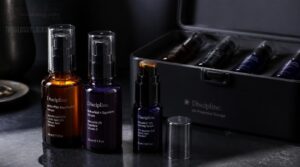
Temperature control only solves half the problem. The container itself plays a direct role in how fast your serum oxidizes, since light and air exposure both speed up that chemical breakdown. Here’s what to look for when you’re choosing or storing your bottle.
Amber or Opaque Bottles
Light is a hidden threat to L-ascorbic acid, breaking it down before you even notice discoloration.
Opaque or dark glass bottles block up to 99% of UV light, cutting oxidation risk a lot.
Rule 4: use amber or opaque packaging, then store in a cool dark cabinet. Glass also resists impact better than clear plastic, keeping your serum protected and stable longer.
Dark Glass Versus Clear Packaging
Clear glass looks elegant on a vanity, but it offers almost no protection. UV blocking effectiveness drops sharply without amber tinting, speeding oxidation and causing visible color change fast.
Dark glass masks that shift, so you can’t judge freshness by looks alone. That’s why Rule 5 matters: buy smaller bottles more frequently, and always store in a cool dark cabinet.
Airless Pumps Limit Oxygen Exposure
Why does that dropper let air rush in every time you use it? An airless pump relies on vacuum dispensing, pulling serum upward without oxygen entry. Studies show up to 85% less oxidation versus droppers.
- Blocks atmospheric oxygen
- Gives precise dose control
- Prevents contamination
- Preserves potency longer
- Cuts oxidation rates
Still, store in cool dark cabinet and follow Rule 3: keep tightly capped.
Keep Original Packaging When Possible
That original bottle isn’t just marketing, it’s engineering. Brands match cap, dropper, and glass to the exact formula, so keep original packaging whenever you can instead of switching containers.
Avoid transferring serum into new bottles. Preserve the dispenser, maintain headspace, and keep the original cap sealed tight. Store in a cool, dark cabinet, refrigerate during peak summer months, and buy smaller bottles more frequently.
Smaller Containers Reduce Headspace
Size matters more than you’d think. A 30ml bottle traps just 5-8ml of air versus 15-20ml in a 100ml bottle, cutting oxygen exposure by 60-70%.
Buy smaller bottles more frequently. You’ll finish serum in 4-6 weeks, not months, and each pump on airless pump packaging improves air displacement. Keep tightly capped between uses to protect serum stability.
Minimize Air and Contamination During Use
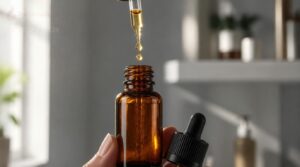
Good packaging only gets you so far—how you handle the bottle day to day matters just as much. Every twist of the cap and every dip of the dropper either protects your serum or speeds up its breakdown. Here’s what to watch for each time you reach for it.
Close The Cap Immediately
Twist that cap shut the second you finish applying, don’t set it down first. Oxidation happens faster with every open second, so immediate recapping protects potency.
- Tighten fully, not just rested on top
- Pair with airless pump packaging when possible
- Refrigerate in summer for extra insurance
Rule 3: keep tightly capped, always. This daily sealing routine takes seconds but preserves months of effectiveness.
Never Touch Dropper to Skin
That capping habit only works if what goes back in the bottle stays clean. Never touch dropper to skin, since skin oils and bacteria transfer straight into the serum, fueling contamination and pushing oxidation to happen faster.
Clean dispensing matters as much as tight lids. Combine Rule 3 (keep tightly capped) with Rule 4 (use opaque or dark glass bottles) for real protection.
Dispense Only The Needed Amount
Dosing right also protects your serum. Face-only needs 2 drops, face and neck takes 3, and spot treatments need just 1. Adjust for skin type too: oily skin uses 2 drops, dry or mature skin can use 2-3. Overpouring wastes fresh ingredient and speeds up air exposure, weakening serum stability. Rule 5: buy smaller bottles more frequently.
Limit Repeated Bottle Opening
Every twist of the cap invites fresh oxygen in, so open the bottle only when you’re ready to dispense.
Single-use ampoules sidestep this entirely, sealed oxygen-free until the moment of use.
A pump dispensing mechanism with pre-measured dosing limits openings further, while a vacuum refill system keeps backup stock protected until you need it.
Avoid Unnecessary Container Transfers
Because pouring vitamin C serum from bottle to bottle invites oxygen with every transfer, keep it in its original packaging whenever possible.
Splitting batches into smaller jars might seem practical, but each pour degrades potency.
If you want backups, buy smaller bottles more frequently instead of decanting.
Fewer transfers, sealed until use, means more active vitamin C reaching your skin.
Adjust Storage by Vitamin C Formula
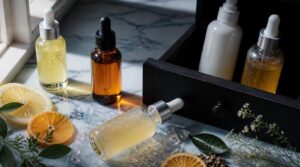
Not all vitamin C serums behave the same way once you open them. Formula, water content, and added antioxidants all change how fast oxidation sets in. Here’s what to check on your bottle before you decide how and where to store it.
L-ascorbic Acid Needs Extra Care
Not all vitamin C is created equal, and L-ascorbic acid is the diva of the bunch. It’s the most potent form, but also the least stable, sensitive to heat, light, oxygen, and even trace metal ions that trigger discoloration.
L-ascorbic acid is the most potent form of vitamin C, yet also the most fragile, undone by heat, light, and even trace metals
Follow Rule 1 (below 77°F) and Rule 4 (opaque, dark glass) closely here. Stable pH below 3.5 matters too, since drift accelerates breakdown.
Water-based Serums Oxidize Faster
Because water molecules interact directly with L-ascorbic acid, dissolved oxygen speeds oxidation fast. Headspace air volume and light exposure work together to make it worse.
- Follow Rule 1 (below 77°F)
- Apply Rule 2 in summer, refrigerate
- Use Rule 4 opaque bottles
Temperature acceleration factor matters too. That’s why refrigeration extends potency for water-based formulas very much.
Anhydrous Formulas Offer Greater Stability
No water, no problem. Water-free formulations cut hydrolysis risk and resist microbial growth, giving your serum real stability.
Oxygen still matters, so keep containers sealed and follow Rule 1: store below 77°F (25°C). Anhydrous options often mean longer intervals between purchases, though Rule 5 (buy smaller bottles) still protects freshness once opened.
Antioxidant Blends May Improve Stability
Not all serums rely on storage conditions alone. Many formulas add vitamin E, ferulic acid, or selenium to work alongside L-ascorbic acid, creating teamwork that enhances protection.
These combinations offer real metal chelation benefits, binding trace iron and copper before they trigger oxidation, while boosting the radical quenching effect and supporting oxidation marker reduction for stronger antioxidant stability.
Follow Brand-specific Storage Instructions
No two formulas behave alike, so check the label for storage guidance before assuming general rules apply. Some brands demand refrigeration after opening; others don’t.
Follow manufacturer temperature advice, note refrigeration requirements, and review shelf life symbols printed on packaging. When instructions seem unclear or contradictory, contact support for clarification rather than guessing with an active ingredient this unstable.
Check for Signs of Oxidation
Even with careful storage, vitamin C serum can still oxidize over time. Your best defense is knowing exactly what to look for before it happens. Here are the five warning signs that tell you your serum has turned.
That telltale shift from clear to golden isn’t just cosmetic—understanding why vitamin C serum turns brown can help you catch oxidation before it affects your skin.
Dark Yellow, Orange, Brown Color
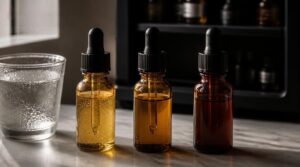
Color tells the truth fastest. A fresh serum stays clear or pale yellow, but oxidation pushes it toward dark yellow, then orange, then brown. That progression signals L-ascorbic acid breaking down.
Store below 77°F, refrigerate through summer, and use opaque or dark glass bottles to slow this shift and protect what’s left of the formula’s potency.
Metallic or Acrid Odor
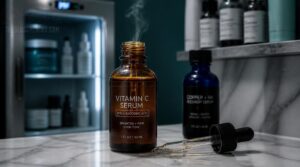
Your nose can catch what your eyes miss. Oxidation causes a metallic or acrid odor as vitamin C breaks down, often before color shifts fully. Trace metal ions in water or packaging speed this along.
That smell means vitamin loss. Opaque or dark glass bottles and refrigeration limit oxygen exposure and photodegradation. Detect a metallic scent? Discard the serum.
Separation, Grittiness, or Thickening
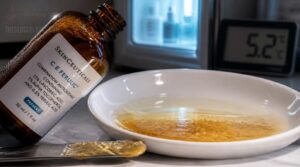
Texture tells a story too. Watch for phase separation, particle clumping, or rising viscosity, all signs of formulation breakdown:
- Clear liquid pooling on top
- Gritty or sandy feel
- Thicker, paste-like consistency
- Sediment settling at the bottom
- Texture that won’t mix back
Store below 77°F and refrigerate through summer to slow these changes before discoloration sets in.
Unexpected Irritation After Application

Sudden stinging or redness after a normal application often points to oxidized byproducts, not just concentration. Quinones and melanoidins irritate skin directly.
| Sign | Likely Cause |
|---|---|
| Burning on application | Oxidation byproducts |
| Redness beyond normal | Barrier compromise |
| Itching, no color change | Early degradation |
| Reaction to old favorite | Storage lapse |
If your usual serum suddenly stings, suspect the bottle before your skin.
Replace Visibly Degraded Serum
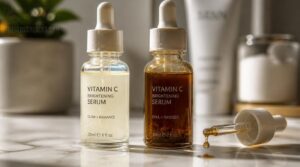
Trust your senses over the calendar. Once you spot dark yellow or brown color, catch a sour smell, or feel grit and separation, stop use and replace the serum immediately.
Even tested clean vitamin C serums degrade once opened. Discard oxidized serum rather than stretching it out, since a discolored batch won’t deliver antioxidant benefits, no matter how expensive it was.
Track Shelf Life and Replace Promptly
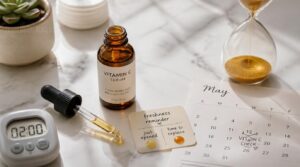
Even perfect storage has a limit, and vitamin C serum won’t last forever once it’s open. Tracking its age takes the guesswork out of knowing when it’s still working for your skin. Here’s how to stay on top of shelf life, from day one to disposal day.
Label The Bottle Opening Date
Once opened, your serum starts a countdown, so write that date down. Grab a permanent marker and mark the bottle’s side, or stick on a dated label at the bottom.
Some bottles include PAO symbols or QR codes linking to opening-date trackers and batch data. Whatever method you use, pair it with Rules 1 through 3: cool storage, summer refrigeration, tight capping.
Typical Three-to-six-month Lifespan
Most properly stored serums hold their potency for three to six months after opening. That range isn’t arbitrary; it reflects real degradation data on L-ascorbic acid stability over time.
Your actual mileage depends on three factors:
- Storage temperature (Rule 1: below 77°F)
- Summer refrigeration habits (Rule 2)
- Cap tightness between uses (Rule 3)
Check Period-after-opening Symbols
Flip the bottle over. That small open-jar icon is the PAO symbol, and the number inside tells you months of safe use once opened, like 3M or 12M.
It’s separate from the expiration date, which covers unopened stability. Mismatched PAO numbers on identical products can flag counterfeits, too, so check it alongside your labeled opening date from Rule 3.
Discard Oxidized Serum Promptly
Once vitamin C turns, there’s no bringing it back. Discard when oxidized, no exceptions.
- Color shifts to orange/brown
- Metallic, acrid odor
- Grittiness or separation
- Skin irritation appears
Discard upon odor change or after color change, since molecular degradation is irreversible. Dispose of degraded serum right away. Stop use if irritated, even before other oxidation signs surface.
Buy Sizes You Can Finish
A big bottle sitting half-full for months isn’t a bargain, it’s a liability. Buy smaller bottles more frequently instead. Look for Serum Twenty or Serum Fifteen in travel-friendly sizes you’ll finish in two to three months.
Same goes for E in C enhanced and E in C Lite. Smaller sizes cost a bit more per ounce, but they maintain potency and avoid waste.
Frequently Asked Questions (FAQs)
Should I store vitamin C serum in the fridge?
Cold storage is like a pause button on chemistry. Refrigeration benefits summer especially, holding your serum in the 36–46°F range slows oxidation, prevents heat spikes above 77°F, and keeps the formula stable until your next application.
How long does vitamin C serum last once opened?
Most opened serums hold up for 3 to 6 months with proper care. Check your POD symbol for exact timing, then follow Rule 1, Rule 2, and Rule 3 to stretch that oxidation timeline as far as it’ll go.
Does vitamin C need to be in a dark bottle?
Not strictly, but it helps a lot. Dark glass bottles block UV rays that speed up oxidation and serum discoloration. If yours is clear, store it in a closed cabinet for the same light protection.
How to keep vitamin C serum from oxidizing?
Picture amber glass shielding gold liquid from light’s slow burn. Keep temperatures below 77°F, cap tightly after each use, and refrigerate during summer months. These three habits, temperature, light, and air control, keep oxidation from stealing your serum’s potency.
Can vitamin C serum be stored in the freezer?
Freezing isn’t recommended, since temperature swings and condensation destabilize L-ascorbic acid. Stick with refrigeration instead, keep the bottle tightly capped, store it in dark glass, and follow manufacturer guidelines for peak summer months.
Does packaging color affect how fast serum expires?
Yes, color matters more than most shoppers realize. Amber glass blocks nearly all UVA light, slowing oxidation a lot, while clear bottles speed degradation. Pair opaque packaging with tight caps and refrigeration below 77°F for real protection.
Conclusion
That amber bottle will keep fading long after you stop noticing the smell change. Oxidation never announces itself loudly, it just steals potency one open cap at a time.
Mastering how to store vitamin c serum properly means treating it like the unstable compound it’s: cool, dark, sealed, and used up fast. Get the temperature right, limit air exposure, and replace it on schedule. Do that, and every drop still works the way it should.