This site is supported by our readers. We may earn a commission, at no cost to you, if you purchase through links. This content is for general informational and educational purposes only and is not a substitute for professional medical, dermatological, or nutritional advice.

Three applications in, your skin’s antioxidant levels can climb past 20 times baseline. That’s the kind of number that makes you rethink what a "gentle" morning habit actually does under the surface. So can you use vitamin C serum daily? Yes, and your skin builds a reservoir effect that keeps fighting UV rays, pollution, and oxidative stress long after you’ve rinsed your face.
The catch: daily doesn’t mean immediate. Tolerance builds gradually, and rushing it invites redness instead of radiance. Get the pacing right, and you’ll see why dermatologists treat this ingredient as a non-negotiable step, not a trend.
Table Of Contents
Key Takeaways
- Daily vitamin C is safe and effective for most skin types, but you need to build up gradually—starting every other day at 5-10% concentration before working toward daily use over several weeks.
- Consistent daily application creates a "reservoir effect," pushing antioxidant levels past 20 times baseline within three days and giving your skin ongoing protection against UV rays and pollution.
- Always apply vitamin C in the morning followed by broad-spectrum SPF 30+ sunscreen, since the two work together to neutralize free radicals and block UV damage.
- Visible results take time and patience, with early glow appearing in two to four weeks and fuller brightening or texture improvements showing up around eight weeks of consistent use.
Yes, You Can Use Vitamin C Daily

Yes, daily vitamin C is not just safe for most skin types, it’s actually the smarter way to use it. The key is building up the right way instead of jumping in at full strength. Here’s how to introduce it into your routine without overwhelming your skin.
Start with a few drops two or three times a week, then work up to daily use once your skin adjusts, and this guide to choosing the best vitamin C serum for your morning routine can help you pick a formula gentle enough for that transition.
Start Every Other Day
Rarely does skin tolerate a new active overnight, which is why starting every other day matters most for sensitive skin.
This gradual barrier strengthening lets you patch test and gauge skin tolerance before committing daily. Always remember to follow up with broad-spectrum SPF during daytime use, since Vitamin C can increase photosensitivity while your skin adjusts.
- Apply every 2-3 days initially
- Watch for redness or tingling
- Note antioxidant protection response
- Test ingredient compatibility slowly
- Confirm comfort before increasing
Increase Based on Skin Tolerance
Once your skin tolerates every-other-day use without redness or stinging, it’s time to increase. Follow a simple Frequency Adjustment Guide: add one application per week, watching tolerance monitoring signs like tightness or breakouts.
If skin stays calm for 4-6 weeks, progress toward daily use, dermatologist-recommended for building lasting skin tolerance through consistent application.
Occasional Missed Days Are Fine
Life happens, and skipping days safely won’t undo your progress. Traveled for a week? Had a barrier flare? Just resume where you left off.
- Relief knowing one missed day won’t reset progress
- Confidence returning to your routine without guilt
- Freedom to travel without skincare anxiety
- Trust that consistency, not flawlessness, builds results
Resuming routine easily matters more than obsessing over gaps.
Daily Use Maximizes Benefits
Consistency is where the real payoff lives. Daily application builds a reservoir effect, pushing vitamin C levels over 20 times normal after just three applications, sustaining antioxidant protection between uses.
Occasional gaps won’t hurt you, but daily use keeps that reservoir topped off for stronger free radical neutralization and steadier skin brightening.
| Use Pattern | Reservoir Effect |
|---|---|
| Daily | Maximized |
| Every Other Day | Moderate |
| Frequent Gaps | Diminished |
| Consistent Long-Term | Sustained |
Why Does Daily Vitamin C Work?

Daily consistency isn’t just a habit—it’s the mechanism behind every result you’re after. Your skin actually works differently when vitamin C shows up every single day instead of sporadically. Here’s what’s happening beneath the surface with each application.
Builds Antioxidant Skin Reserves
Think of your skin as a rechargeable battery. Each application of vitamin C serum tops off your skin reservoir, and after three straight days of a 15% formula, levels climb past 20 times baseline.
If you’re just starting out, easing in with a beginner-friendly vitamin C serum guide can help your skin adjust before ramping up strength.
Your skin is a rechargeable battery: three days of daily vitamin C pushes its reserves past 20 times baseline
This Vitamin C Reservoir Effect sustains free radical scavenging between applications, since the antioxidant lingers with roughly a four-day half-life, giving you real, ongoing protection.
Defends Against Environmental Stressors
Every day your skin faces invisible assault: UV rays, ozone, diesel exhaust, particulate matter. Vitamin C serum neutralizes these free radicals on contact, cutting environmental damage from ozone and diesel by up to 41%.
It also triggers Antioxidant Enzyme Support, boosting protective enzymes within 48 hours. That’s real pollution defense, working alongside your sunscreen rather than replacing it.
Supports Brighter, Even-Looking Skin
Because vitamin C targets pigment at its source, brightening isn’t cosmetic guesswork, it’s biology. Dark spot reduction happens as vitamin C interrupts melanin production while accelerating cell turnover.
Expect these changes:
- Even skin tone within weeks
- Gradual brightening of dull patches
- Hyperpigmentation reduction around old marks
- Smoother texture as cells renew
- Natural radiance replacing dullness
Helps Protect Skin Collagen
Your dermal matrix takes a daily beating from UV rays and pollution, both prime drivers of collagen degradation. Vitamin C serum works as antioxidant skin defense, neutralizing free radicals before they trigger breakdown. This UV collagen shielding effect helps ongoing collagen synthesis and dermal matrix support.
Paired with sunscreen, it strengthens environmental stress protection and skin barrier repair, keeping your skin’s structural foundation intact.
Gradually Improves Skin Texture
Rough patches don’t vanish overnight, but they do fade with patience. Daily use fuels collagen synthesis while boosting surface renewal, so dead cells shed faster and skin feel improves.
Pair it with gentle exfoliation once or twice weekly, and you’ll see refined, uneven texture smooth into something noticeably softer within weeks, not days.
Which Vitamin C Formula is Best?

Not every vitamin C serum on the shelf deserves a spot in your routine. The right formula depends on concentration, ingredient form, and even the bottle it comes in. Here’s what actually separates a serum worth your money from one that isn’t.
Start With 5% to 10%
Think of a 5% formula as your skin’s trial run. Patch test first, then build daily use over two to three weeks before considering 10-15 concentrations.
- Sensitive skin: start at 5% L-ascorbic acid
- Oily/combination skin: 5-10% water-based formulas
- Dry skin: pair 5-10% with hyaluronic acid
- Track redness or tingling closely
- Increase gradually, never all at once
Effective 10% to 20% Range
Once tolerance builds, 10% to 20% is where the real payoff lives. Absorption climbs steeply from 10% to 15%, then plateaus, your skin simply can’t use more.
At pH 3.0-3.5, L-ascorbic acid penetrates and blocks tyrosinase, fading dark spots while boosting skin brightness.
Pick based on skin type: 15% suits most; 20% fits oily, tolerant skin fighting melasma.
Avoid Concentrations Above 20%
More isn’t better here. Past 20%, you hit barrier disruption risk: redness lasting 10-15 minutes, flaking, and a pH gap that irritates skin.
Formulas also oxidize faster, turning sour within weeks, so packaging protection becomes non-negotiable.
Dermatologist recommended frequency for these strengths is every other day, not daily use.
Stick to 20% or explore alternative forms instead.
L-Ascorbic Acid Versus Derivatives
So which formula wins? L-ascorbic acid is the most potent, working best at low pH for deeper penetration, but it oxidizes fast and irritates easily.
Vitamin C derivatives like sodium ascorbyl phosphate trade some potency for serum stability and gentler tolerance, ideal if your skin reacts to the real deal.
Choose Dark, Airtight Packaging
Whichever formula you pick, packaging determines whether it stays potent.
Dark glass blocks nearly all UV light, preventing an oxidized serum before it touches your skin.
Air exposure degrades vitamin C fast too, so airtight caps matter for container stability.
Store your bottle in a cool dark place, away from windows, to protect packaging opacity and extend product longevity for months.
Should You Apply It Morning or Night?

Timing isn’t just a matter of preference, it actually changes how your vitamin C performs on your skin. Morning and night each offer distinct advantages, depending on what your skin needs most. Here’s how to decide when it works best for you.
Morning Maximizes Antioxidant Protection
Timing isn’t trivial here. Morning UV defense matters because free radical production spikes during daylight, not sleep.
Apply vitamin C serum after morning cleansing, when skin is clean and receptive, and you’re front-loading antioxidant protection exactly when pollution and UV exposure hit hardest, giving your antioxidant reserve buildup a genuine head start before the day’s damage even begins.
Always Follow With Sunscreen
Never skip this step. Vitamin C alone won’t shield you from UV rays, so layer sunscreen right after your serum absorbs, before makeup or moisturizer.
Look for broad-spectrum SPF 30 or higher. Together, antioxidant protection and SPF work synergistically, neutralizing free radicals while blocking UV rays. Make it a daily sunscreen habit, and set a reapplication reminder every two hours outdoors.
Nighttime Use is Also Effective
Prefer an evening regimen? Applying vitamin C at night works with your skin’s natural repair process, when cellular turnover ramps up for overnight recovery. Fewer products on your face means enhanced absorption, and skipping UV exposure entirely prevents daytime degradation.
You’ll also support collagen synthesis while you sleep, plus simplify your evening routine since sunscreen isn’t required afterward.
Twice-Daily Use May Irritate
More isn’t always better. Twice-daily vitamin C serum can outpace your skin’s recovery, especially at low pH or above 15% concentration.
- Stinging that lingers past a few minutes
- Redness signaling barrier compromise
- Yellow, oxidized serum triggering irritation
- Retinol layered too close, without spacing
If reactions appear, scale back and rebuild tolerance gradually before attempting twice-daily use again.
Consistency Matters Most
Morning or night matters less than showing up daily. Your skin doesn’t care which routine you pick, it cares about consistent daily application.
Skipping days breaks down maintaining skin reserves, forcing your skin to rebuild protection from scratch. Dermatologist recommended practice: pick one time, stick with it, and let sustained antioxidant benefits do the real work of building your protective shield.
What Can You Layer With Vitamin C?
Vitamin C doesn’t work alone in your routine, and what you pair it with matters just as much as the serum itself. Some ingredients boost its effects, while others need a little distance to avoid trouble. Here’s what plays well with vitamin C, and what deserves its own time slot.
Hyaluronic Acid for Hydration
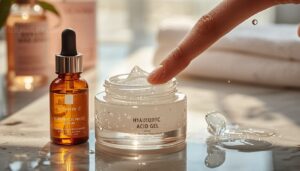
Think of vitamin C as your defender and hyaluronic acid as your hydration workhorse. As a humectant, it pulls water into skin, easing the dryness vitamin C can sometimes cause.
- Apply to damp skin first
- Follow with an occlusive moisturizer
- Layer thinnest to thickest
This hydration layering helps barrier function and daily moisture balance, keeping skin comfortable without disrupting vitamin C’s antioxidant work.
Niacinamide for Tone Support

Once hydration’s covered, niacinamide rounds out your morning routine by tackling skin tone itself. This B3 vitamin helps even skin tone, easing redness while promoting dark spot reduction for a genuine brightening effect.
Layer it after vitamin C serum for complexion evening and added skin barrier support, no irritation, just steady progress toward clearer-looking skin.
Sunscreen After Morning Application
Niacinamide sets the stage, but sunscreen closes it out. Apply it last, letting it form an even film over serum and moisturizer alike.
The FDA recommends applying about 15 minutes before sun exposure, choosing broad-spectrum SPF 30 or higher. This isn’t optional. Vitamin C and sunscreen work together, one neutralizing free radicals, the other blocking UV rays before damage starts.
Separate Retinol if Sensitive

Sunscreen locks in your morning routine, but retinol belongs somewhere else entirely: nighttime.
If your skin leans sensitive, keep vitamin C and retinol on separate schedules. Try a gentle retinol first, buffer it with the moisturizer sandwich method, and patch test before committing. This nighttime separation prevents cumulative irritation while still letting both actives do their job.
Alternate Exfoliating Acids When Needed
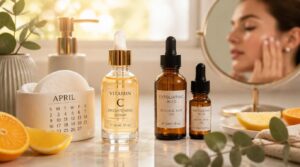
Exfoliating acids and vitamin C serum can coexist, but timing keeps skin irritation prevention front and center.
Alternate nights work best: BHA Monday, AHA Thursday, resting skin between sessions for barrier recovery.
- Choose gentle acid selection like lactic or mandelic acid
- Apply acids at night, vitamin C in morning
- Start once weekly, adjust acid frequency gradually
- Patch test new pairings first
- Watch ingredient compatibility closely
What Results and Reactions Are Normal?

Patience pays off with vitamin C, but knowing what to expect keeps you from second-guessing your routine. Your skin will send signals along the way, some good, some worth watching closely. Here’s what’s normal, what’s not, and how to tell the difference.
Glow Within Two to Four Weeks
Patience pays off fast here. Within two to four weeks, most people notice early skin brightening, a subtle radiance boost that signals your vitamin C serum is working beneath the surface.
| Week | What You’ll Notice |
|---|---|
| 1 | Skin feels smoother |
| 2 | First visible changes begin |
| 3 | Initial tone improvement |
| 4 | Beginning glow effects, better texture |
Dark Spots Fade Gradually
Rarely does hyperpigmentation vanish overnight, and dark spots are no exception. Vitamin C works through melanin inhibition, quieting the signals that drive overproduction, so fading happens gradually as skin cells turn over.
- Melanocyte activity slows over time
- Skin cell turnover reveals fresher tone
- UV protection prevents new pigment
- Ingredient compatibility affects fade speed
- Skin tone evening builds week by week
Fuller Results Take Eight Weeks
Eight weeks is where the real payoff shows up. Clinical data shows a 20% hyperpigmentation reduction and confirms Week 8 brightening progress, with fine line reduction and skin texture improvement following the same curve.
Collagen support development continues afterward, so staying consistent past this point is dermatologist recommended for a truly sustained glow duration.
Mild Tingling Versus Irritation
A little tingle when you first apply vitamin C? Totally normal, it’s your skin adjusting. Burning, stinging, or spreading redness is different, that’s irritation, not tolerance building.
Patch test new formulas on your inner arm first. If discomfort lingers past a few minutes or worsens, that signals sensitivity, not a phase you push through.
When to Reduce or Stop
Your skin will tell you when it’s had enough. Watch for flaking, tightness, or burning, these signal barrier compromise, not adjustment.
- Stop if serum turns yellow/brown (oxidation)
- Cut frequency if irritation follows acids or retinol
- Drop below 10% concentration if stinging persists
- Pause entirely during active flare-ups
When in doubt, scale back and let your barrier recover first.
Frequently Asked Questions (FAQs)
Why no vitamin C at night?
Timing is everything, as the old saying goes. Vitamin C’s morning antioxidant boost pairs best with sunscreen working together against daytime oxidative stress.
Some notice evening skin sensitivity or mild sleep disruption risk affecting their nighttime regimen and circadian rhythm skincare goals.
What should you not mix with vitamin C?
Avoid pairing it with retinol, AHAs, or BHAs in one application, since irritation risk climbs. Also skip benzoyl peroxide and copper peptides, which can destabilize it. Space these out, alternating mornings and nights instead.
Is there any downside to vitamin C serum?
Every rose has its thorn: irritation risk rises with high concentration or oxidized formula. Patch test first, watch for redness, and adjust frequency if sensitivity appears, since scaling back beats pushing through discomfort.
Can vitamin C serum be used around the eyes?
Yes, with care. Keep it on the orbital bone, never the eyelid, using a small dot tapped gently with your ring finger. Start every other day at 5-10%, since under-eye skin is thinner and more irritation-prone.
If you’re wondering why the gentle formulas worth applying so carefully tend to cost more, the real reasons behind high under-eye cream prices come down to the clinical testing and specialized ingredients that make them safe for such delicate skin.
Is vitamin C safe during pregnancy or breastfeeding?
Better safe than sorry: keep concentrations at 5% to 15%, always patch test on sensitive skin, and confirm trimester safety guidelines with your dermatologist. Good news, topical vitamin C stays breastfeeding compatible too.
Can you use vitamin C serum with makeup?
Application timing matters here. Press vitamin C serum into clean skin, wait about ten minutes for absorption, then layer primer or foundation. Rushing causes pilling and uneven texture, so patience protects both your radiance boost and your makeup’s finish.
Does vitamin C serum expire once opened?
Once opened, oxidation sets in, watch for darker amber color as your warning sign. Check the PAO symbol: most formulas last three to four months. Keep it cool, dark, and tightly capped to slow degradation.
Conclusion
Six months from now, your skin will show what today’s habits built. So, can you use vitamin C serum daily? Yes, once your tolerance allows it. Start slow, layer wisely, and protect that investment with sunscreen every morning.
Think of vitamin C as a brick, not a coat of paint. One application does little, but stacked daily, it forms a wall against sun damage and dullness. Your future skin is being decided right now.