This site is supported by our readers. We may earn a commission, at no cost to you, if you purchase through links. This content is for general informational and educational purposes only and is not a substitute for professional medical, dermatological, or nutritional advice.

Your pancreas produces roughly 8 cups of digestive juice daily, packed with enzymes that break protein, fat, and starch into forms your body can actually absorb. When that output falls short, the fallout shows up fast: bloating an hour after lunch, undigested food in your stool, heartburn that won’t quit.
Most people reach for antacids or skip meals instead of addressing the root cause. But your kitchen and spice rack hold real tools for this, from bromelain-rich pineapple to bitter herbs that trigger enzyme release through vagus nerve signaling.
Understanding natural enzyme treatments at home means learning which foods, habits, and warning signs actually move the needle, so digestion stops working against you and starts working for you.
Table Of Contents
- Key Takeaways
- Identify Possible Digestive Enzyme Problems
- Add Enzyme-Rich Foods Step by Step
- Support Digestion With Herbs and Probiotics
- Build Enzyme-Friendly Daily Habits
- Know When Home Treatments Fall Short
- Frequently Asked Questions (FAQs)
- What are some homemade enzyme cleaners I can make?
- What can I use for enzyme on my face?
- What’s a good natural enzyme?
- Is baking soda and vinegar an enzymatic cleaner?
- How long until natural enzyme remedies start working?
- Do natural enzymes interact with common prescription medications?
- Is it safe to combine multiple enzyme-supporting herbs?
- Conclusion
Key Takeaways
- Everyday foods like raw pineapple, raw papaya, fermented veggies, and raw honey contain real digestive enzymes, but heat and processing destroy them, so how you prepare and eat them matters as much as choosing them.
- Herbs like ginger, turmeric, gentian root, and artichoke leaf can nudge your body into producing more of its own enzymes and bile, but they work through different pathways and timing (before, with, or after meals) makes a real difference.
- Simple daily habits—chewing thoroughly, staying hydrated, eating calmly, and moving your body—support enzyme production just as much as what you actually eat.
- Warning signs like fatty floating stools, unexplained weight loss, jaundice, or persistent symptoms past two weeks mean it’s time to see a doctor, since natural remedies can’t replace prescribed enzyme therapy for diagnosed conditions.
Identify Possible Digestive Enzyme Problems
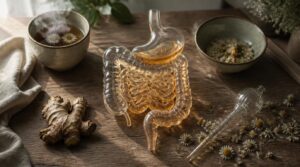
Before you reach for a single enzyme-rich food or herb, you need a clear picture of what’s actually going wrong in your gut.
Enzyme insufficiency shows up differently from person to person, and the clues are often hiding in symptoms you’ve written off as normal.
Here’s what to watch for as you start piecing together your own digestive puzzle.
Strains like Lactobacillus and Bifidobacterium quietly support gut diversity, and understanding their role can even inform how you approach natural remedies for eczema-prone skin, since gut health and skin health are closely linked.
Common Signs of Poor Digestion
When your gut lacks sufficient enzymes, the signs rarely stay quiet. Watch for persistent bloating, gas, or heartburn and acidity after meals. Nausea, early fullness, or undigested food in stools point toward enzyme deficiency too. Unexplained weight shifts round out the picture.
Together, these symptoms signal digestive imbalance, not isolated bad days, and deserve your attention. If symptoms persist, it’s worth reviewing the broader signs of poor digestive health to understand when professional evaluation may be needed.
Track Meals and Bowel Changes
Once symptoms register, patterns matter more than single bad days. Log meal timing, bowel onset, stool type (Bristol Scale), hydration, and stress levels daily.
Track for at least two weeks before drawing conclusions.
- Note meal-to-symptom lag (often 1-4 hours)
- Rate stress and sleep alongside stool changes
- Use a digital tracking app for timestamps and PDF reports
Correlations often reveal true enzyme deficiency versus temporary imbalance.
Rule Out Food Intolerances
Two weeks of data won’t mean much if food intolerance is muddying the picture. Since intolerance is non immune, unlike true allergy, try a short elimination diet: remove common triggers (dairy, gluten, eggs), then reintroduce one at a time.
| Step | Action |
|---|---|
| Exclude | Remove suspect foods 2-3 weeks |
| Reintroduce | Add back one at a time |
| Observe | Track symptom recurrence |
| Confirm | Discuss testing with your provider |
Know Pancreatic Warning Signs
An elimination diet rules out intolerance, but some warning signs point somewhere more serious.
Jaundice (yellowing skin or eyes), dark urine, and gray stools signal bile duct blockage. Watch for unexplained weight loss, persistent abdominal or back pain, and new blood sugar shifts too.
These aren’t candidates for home enzyme support; they warrant prompt medical evaluation, not herbs or probiotics.
Add Enzyme-Rich Foods Step by Step
Once you’ve pinpointed where your digestion is struggling, food becomes your first and safest line of intervention. Certain fruits, ferments, and staples carry naturally occurring enzymes that ease your gut’s workload from the very first bite. Here’s how to introduce them, one at a time, so your system can adjust without protest.
As your gut heals, pay attention to hydration too, since staying properly hydrated supports digestion and skin health alike, especially when your body’s working overtime to adjust.
Raw Pineapple for Bromelain

Bromelain isn’t one enzyme, it’s a whole proteolytic complex, and where you source it matters.
Stem bromelain (the usual supplement form) differs from fruit bromelain extracted from the flesh.
Fresh pineapple flesh still carries meaningful activity, just less concentrated.
Eat it raw and unheated: cooking denatures the very enzymes you’re after.
Raw Papaya for Papain
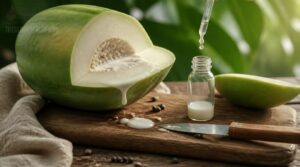
Where pineapple gives you bromelain, papaya offers papain, a cysteine protease found mainly in the milky latex of unripe fruit, not ripe pulp.
Ripe papaya tastes better but carries far less enzyme activity. Folk remedies tout papain for digestion, though evidence stays thin.
Papain also carries side-effect precautions worth researching before regular use.
Fermented Foods With Live Cultures
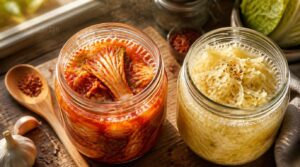
Kimchi and sauerkraut deliver live proteases, amylases, and lipases, but only when truly fermented, not vinegar-acidified. Check labels for "live active cultures" and refrigerate promptly; pasteurization kills them.
- Look for bubbling brine
- Choose refrigerated jars
- Verify "fermented" wording
- Skip vinegar-pickled items
- Note starter vs. wild strains
Lactobacillus and Bifidobacterium support gut microbiome balance and lactic acid’s preservative benefits.
Raw Honey in Moderation
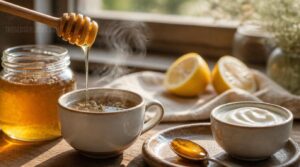
Sweet, but sparing: that’s the rule for honey here. Raw honey contains amylase and protease that support digestion, but it’s still roughly 80% sugar. Use it as a sweetener substitution, not an addition, a teaspoon in tea or yogurt, not both. Confirm "raw" on the label, since heat above 95°F destroys these enzymes entirely.
Safely Sprout Grains and Legumes
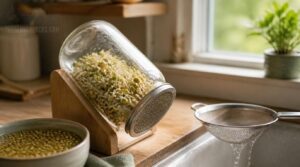
Germination unlocks enzyme activity dormant seeds can’t offer. Soak seeds in potable water, then rinse two to three times daily, draining fully each time to prevent bacterial buildup.
- Never sprout raw kidney beans (phytohemagglutinin toxin)
- Store finished sprouts at 40°F or below
- Use within 10 days of harvest
- Discard anything slimy, moldy, or off-smelling
Proper drainage and refrigeration make all the difference in nutrient bioavailability.
Support Digestion With Herbs and Probiotics
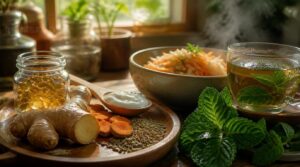
Food alone won’t always cover the gap, especially when your pancreas needs an extra nudge to keep enzyme output steady. That’s where certain herbs and targeted probiotic strains earn their place in your routine, working through distinct pathways to support secretion and gut balance. Here’s what to know before adding them to your daily habits.
Try Ginger Before Meals
Gingerol, ginger’s key bioactive compound, influences gastrointestinal motility, the speed food exits your stomach. Timing matters here: ginger works best taken shortly before or alongside meals, right when stomach emptying is most active.
There’s no rigid clock to follow. Try steeping fresh ginger tea before dinner, or stir it into soups. This pre-meal habit aids digestion without replacing needed enzyme supplementation for true deficiencies.
Use Turmeric With Food
Where ginger speeds things along, turmeric works deeper, calming acinar tissue and easing pancreatic strain. Pair it with fat: ghee or coconut oil in golden milk boosts curcumin’s bioavailability considerably.
- Stir into soups or curries
- Sip as warm golden milk
- Use in daily marinades
- Steep as simple tea
Watch for liver damage symptoms, fatigue or jaundice, and stop immediately if they appear.
Explore Gentian Root Cautiously
Turmeric soothes; gentian works differently, triggering bitter taste receptors that signal your vagus nerve to ramp up enzyme output before food ever arrives. Take it twenty minutes pre-meal, tincture or dried root, in small doses.
Correct identification matters: never confuse gentian with white hellebore, a toxic lookalike. Track symptoms closely, and stop if digestion worsens rather than improves.
Support Bile With Artichoke
Bile is where artichoke leaf earns its place. Its choleretic effects rival dehydrocholic acid, with cynarin-standardized extract boosting bile secretion 127% at 30 minutes and 151% by 60. Typical dosing runs 320-640 mg before meals.
- Stimulates bile flow
- Raises bile acid measurement
- Aids fat digestion
- Eases pancreatic support demand
- Complements whole-body treatment goals
Choose Strain-specific Probiotics
Bile flow is only half the picture. Once bitters and choleretics do their job, gut flora balance determines what happens next.
Skip vague labels: look for genus, species, and strain code, like *Bacillus subtilis DE111, a sporeforming probiotic with proven viability. Strain-specific benefits matter more than dose alone for true gut function matching.
Build Enzyme-Friendly Daily Habits
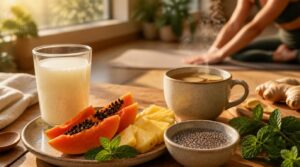
Enzyme production doesn’t happen in isolation — it changes based on how you eat, move, and manage stress throughout your day. The habits you build around meals matter just as much as what’s on your plate. Here are five daily practices that keep your digestive system working the way it’s designed to.
Chew Food Slowly and Thoroughly
Your mouth is the first digestive organ you actually control, so use it. Chewing food thoroughly triggers salivary amylase and eases pancreatic workload before food even reaches your stomach.
Practice bite size control, coordinate jaw and tongue movement, and run a chewing texture check on each mouthful, no lumps, no shortcuts, before swallowing. This simple habit helps enzyme activity and long-term gut health.
Stay Consistently Hydrated
Rarely do people connect their water bottle to enzyme output, yet every enzymatic reaction depends on adequate fluid. Aim for roughly half your body weight in ounces daily, sipping steadily rather than chugging.
Pale yellow urine confirms you’re on track. Add electrolytes during exercise or heat, and favor water-dense foods like watermelon or cantaloupe alongside plain water to keep digestion, and enzyme activity, running smoothly.
Practice Mindful, Relaxed Eating
When you eat calm, your parasympathetic nervous system takes over digestion, boosting enzyme secretion naturally.
Try bite spacing: pause between bites, notice texture, and check hunger-fullness cues before continuing. Eat distraction-free, no screens, and practice sensory awareness with each mouthful.
Brief gratitude reflection beforehand helps too. Even short breathwork or yoga before meals lowers cortisol, easing digestion from the very first bite.
Exercise for Healthy Gut Motility
Movement is medicine for your gut, quite literally, since gastrointestinal motility depends on it.
Bowel-sound studies show motility indices rise within 1-2 minutes of activity. Aim for:
- Brisk walking daily
- Cycling several times weekly
- Swimming for low-impact motility
- Gentle Tai Chi during flares
Yoga helps gut health too, engaging your vagus nerve through mindful eating and movement combined.
Consider Time-restricted Eating Carefully
Your pancreas needs downtime too. Time-restricted eating confines meals to a 6-10 hour window, aligning digestion with circadian rhythm.
| Approach | Effect |
|---|---|
| 8-hour window | Standard TRE |
| Consistent timing | Rhythm alignment |
| Digestive rest | Enzyme recovery |
| Fewer snacks | Less enzyme demand |
| Severe symptoms | Consult your doctor |
Results stay modest and individualized, so proceed cautiously.
Know When Home Treatments Fall Short

Natural approaches have real limits, and knowing where those limits sit protects your health. Some digestive issues point to something your kitchen simply can’t fix, no matter how many enzyme-rich foods you add. Here’s what should prompt you to look beyond home remedies and talk to a professional.
Monitor Symptoms and Bowel Movements
Numbers don’t lie, but only if you write them down. Track stool consistency using the Bristol scale, note frequency, and log bloating, gas, or indigestion daily.
Watch for patterns:
- Fewer than 3 BMs weekly
- Greasy, floating stools
- Persistent discomfort past two weeks
- Undigested food particles
This GI pattern recognition reveals what’s actually working.
Avoid Replacing Prescribed Enzymes
That log becomes dangerous if it tempts you to swap out a prescription. If you’ve been diagnosed with exocrine pancreatic insufficiency, pancreatic enzyme replacement therapy isn’t optional supplementation, it’s targeted medical treatment. Ginger and bitters support digestion holistically, but they don’t replicate PERT’s lipase activity. Never stop or reduce prescribed enzymes without your doctor’s guidance, even when symptoms feel manageable.
For diagnosed exocrine pancreatic insufficiency, prescribed enzyme therapy is targeted medical treatment, not something herbs or bitters can replace
Compare Supplements With PERT
Comparison matters because the gap is regulatory, not just marketing. PERT is FDA-approved, dosed by body weight, and enteric-coated for duodenal release. OTC blends, even ones featuring bromelain or papain, lack standardized potency and consistent clinical evidence.
- FDA approval vs. unregulated supplement status
- Weight-based dosing vs. guesswork capsules
- Proven trials vs. mixed, inconsistent data
For true exocrine pancreatic insufficiency, this distinction isn’t academic.
Recognize Malabsorption Warning Signs
Watch your bowel patterns closely. Fatty, floating stools, chronic diarrhea, and pale or greasy appearance signal fat malabsorption, not simple indigestion.
Persistent gas and bloating alongside weight loss, a sore tongue, or cracked lips point toward nutrient deficiency, not occasional discomfort.
These aren’t things a probiotic or ginger tea will fix, they’re signals your body needs closer evaluation.
Seek Medical Testing Promptly
Once those warning signs appear, testing beats guessing. Ask your doctor about fecal pancreatic elastase testing, or blood work checking lipase, albumin, and B12.
If symptoms persist past two weeks, or you’ve lost more than 5% body weight, escalate to a gastroenterologist. Severe symptoms like blue lips or breathing trouble need emergency care, not another supplement.
Frequently Asked Questions (FAQs)
What are some homemade enzyme cleaners I can make?
Funny how the same citrus peels you’d toss end up outcleaning bottled sprays. Ferment 1 part brown sugar, 3 parts scraps, 10 parts water for a month, loosen the cap daily, then strain into an airtight bottle.
What can I use for enzyme on my face?
Try bromelain and papain, pineapple and papaya’s proteolytic enzymes, in papaya honey blends or an enzymatic face peel. Fermented skincare ingredients offer gentle enzyme cleansing too, similar to a lactic acid face peel for exfoliation.
What’s a good natural enzyme?
An apple a day keeps the doctor away, but pairing it with real enzyme-rich snacks works better. Pineapple’s bromelain, papaya’s papain, ginger, turmeric, and probiotics offer whole food enzymes that genuinely support digestion.
Is baking soda and vinegar an enzymatic cleaner?
No. That fizzy reaction is just acid-base chemistry, carbon dioxide and sodium acetate, not organic soil breakdown. Unlike bromelain or papain in true digestive enzymes, this combo relies on abrasion and acidity, with zero actual enzymatic action involved.
How long until natural enzyme remedies start working?
A premeal enzyme shot or enzymeactive honey can ease bloating within 30 to 60 minutes. Fermented foods need weeks for measurable gut health shifts, while true pancreatic enzyme needs rarely resolve through food alone.
Do natural enzymes interact with common prescription medications?
A patient once bled for hours after surgery, unaware bromelain thinned her blood like an extra dose of aspirin. Yes: bromelain and papain can increase the effect of anticoagulants, while papain affects insulin, and serrapeptase demands surgical caution beforehand.
Is it safe to combine multiple enzyme-supporting herbs?
Combining ginger, turmeric, and other herbs carries real herb interaction risks, since effects aren’t always additive. Check label clarity, track symptoms carefully, avoid stacking full servings, and consult a professional before mixing herbal combinations or probiotics.
Conclusion
Nearly 90% of pancreatic function can be lost before standard testing detects a problem, which is why waiting for a diagnosis is a losing strategy.
Pineapple, ginger, and slow, mindful chewing won’t reverse pancreatic insufficiency, but they can meaningfully ease the daily grind of bloating and poor absorption. That’s the real promise of natural enzyme treatments at home: steady, root-cause support.
Pair these habits with medical testing when symptoms persist, and your gut stops fighting you.
- https://www.health.harvard.edu/healthy-aging-and-longevity/digestive-enzymes-how-supplements-like-lactaid-and-beano-can-help-with-digestion
- https://nutririse.com/products/adaptozen-digest-ease
- https://www.hopkinsmedicine.org/health/wellness-and-prevention/digestive-enzymes-and-digestive-enzyme-supplements