This site is supported by our readers. We may earn a commission, at no cost to you, if you purchase through links. This content is for general informational and educational purposes only and is not a substitute for professional medical, dermatological, or nutritional advice.

Some bamboo extracts can contain up to 70% silica. That’s more than horsetail, the plant most supplement makers reach for first.
Silica matters because your body uses small amounts of silicon to build collagen and connective tissue. That’s the theory behind the bamboo extract benefits printed on bottles: firmer skin, stronger nails, thicker-looking hair. The evidence is thinner than the marketing. One 90-day trial paired bamboo silica with biotin and saw faster hair growth. Claims about blood sugar and heart health rest on lab and animal work.
Here’s what’s supported, what isn’t, and how to judge a label before you buy.
Table Of Contents
- Key Takeaways
- Bamboo Extract’s Silica and Other Compounds
- Potential Skin Benefits of Bamboo Extract
- Potential Hair and Nail Benefits
- Other Bamboo Extract Benefits Lack Human Evidence
- Bamboo Extract Dosage, Expectations, and Safety
- Choosing Bamboo Extract Supplements Wisely
- Frequently Asked Questions (FAQs)
- Conclusion
Key Takeaways
- Bamboo extract can contain up to 70% silica, which is more than horsetail on paper, but horsetail may deliver more absorbable silicic acid, so the number alone won’t tell you which works better.
- Hair and nails have the best human evidence, but the main trial paired bamboo silica with biotin, so you can’t credit bamboo alone, and claims about skin, blood sugar, and heart health rest mostly on lab and animal work.
- Expect modest, slow results, possibly weeks for skin and months for hair, and talk to a doctor first if you’re pregnant, breastfeeding, have kidney problems, or take medication.
- Choose products with a third-party seal like USP or NSF and a certificate of analysis, and check whether the label lists elemental silicon, silica, or total extract weight, since they aren’t the same.
Bamboo Extract’s Silica and Other Compounds
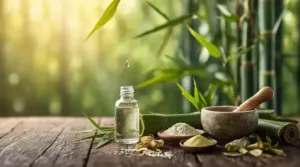
The silica in bamboo extract is the main reason it gets attention. Some products list up to 70% silica, which would make it a richer plant source than horsetail, possibly by about tenfold. It’s a ceiling, not a guarantee.
If you’d like to see how bamboo’s silica content translates into everyday use, this guide to bamboo tea for hair growth walks through how people actually work it into their routine.
Silica here means silicon dioxide, the form your body can absorb in small amounts. In theory, it helps collagen formation and connective tissue health. Human evidence is still limited. Absorption of plant-based silica also depends on digestive function, so liquid orthosilicic acid formulations may suit older adults or people with digestive issues better.
Bamboo extract also carries flavonoids such as orientin, isoorientin, vitexin and isovitexin. You’ll find p-coumaric acid, polysaccharides, amino acids and trace minerals too.
Don’t expect a fixed recipe. Composition shifts with the bamboo species, the plant part used (leaf, stem or shoot), the extraction method and how much the product is standardized.
Potential Skin Benefits of Bamboo Extract

That silica is why bamboo extract shows up in skin products and supplements. The theory is simple. Silicon may help your skin cells make collagen, and flavonoids may protect that collagen from damage.
Here’s what that could mean for you. Collagen synthesis booster claims, firmness, and skin elasticity enhancer language all trace back to this idea. Hydration and skin smoothness are the other common promises, and they’re plausible given the antioxidant and soothing compounds involved.
The catch is the evidence. Most support comes from lab work and from topical formulas, not from large human trials of oral bamboo extract. Results, if any, are likely modest.
If you want to try it, look for gradual changes over several weeks. Don’t expect dramatic ones.
Exfoliating with glycolic acid follows the same slow timeline, and these glycolic acid exfoliant benefits show how a clearer surface helps serums work.
Potential Hair and Nail Benefits

Hair and nails are where bamboo extract has its best human evidence, though it’s still limited. Keratin is the protein that makes up both, and silica may help your body produce it.
In one randomized, placebo-controlled trial, people took biotin with bamboo-derived silica for 90 days. They showed faster hair growth and less nail roughness. Another study found that bioavailable silicon for 20 weeks reduced hair brittleness in women with fine hair. Nails may also peel and split less.
Be careful with the claims, though. Direct evidence that it increases hair density or treats hair loss is lacking. Any benefit seems tied to the quality of hair you already have.
Biotin was part of the combination in these trials. That makes it hard to credit bamboo alone.
Other Bamboo Extract Benefits Lack Human Evidence
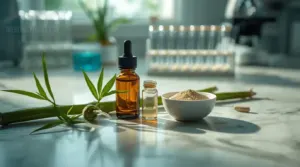
Hair and nails are one thing. The other claims you’ll see on labels are shakier.
Bamboo extract shows promise in lab and animal studies for blood sugar, antioxidant activity, gut bacteria, and liver and heart protection. In theory, those results are interesting. In practice, they haven’t been confirmed in people. Antioxidant strength in a test tube, for example, doesn’t mean the same thing happens in your body.
The same goes for collagen and skin firming. Large clinical studies are lacking, and no one has compared bamboo head to head with retinol or hyaluronic acid.
Small trials on bamboo shoots hint at better glycemic control, but that’s not enough to rely on. If you manage diabetes, don’t treat bamboo as a substitute for your medication or diet plan.
Bamboo Extract Dosage, Expectations, and Safety
Taking bamboo extract safely starts with knowing what a sensible dose looks like and what it can realistically do. You’ll also want to understand who should be more careful and when it makes sense to talk to a professional. The sections below cover each of those points in turn.
Dosage and Realistic Results
No official dose exists for silicon, so any exact number is a guess. Still, the research gives a rough range. One trial used 10 mg of silicon daily for nine months. Products often list 10-40 mg per serving.
Check whether the label shows elemental silicon, silica, or total extract weight. They’re not the same. Expect slow change, possibly weeks for skin and months for hair.
Side Effects and Higher-Risk Groups
A few possible side effects are worth knowing. Bloating, nausea, and gas are the most commonly reported, though hepatotoxicity isn’t an established concern.
Some groups need extra caution:
- Pregnant or lactating women: safety data is lacking, so avoid it.
- Kidney disease: silica may accumulate, possibly raising stone risk.
- Medication users: interactions are possible.
Start low and watch closely.
When to Consult a Healthcare Professional
It’s a plant extract, so it might seem harmless. But "natural" doesn’t mean risk-free, and the evidence on bamboo extract is thin.
A plant-based label isn’t a safety guarantee, especially when bamboo extract has so little solid research behind it
Check with a doctor first if you’re pregnant or breastfeeding, or if you take medication that affects mineral absorption. Same goes for osteoporosis or kidney disorders.
Already taking it? New or worsening symptoms are a reason to stop and seek advice.
Choosing Bamboo Extract Supplements Wisely
Not every bamboo extract product is worth your money. A few basic checks can help you pick one that’s safe and sensible. Below, we cover how bamboo compares with horsetail and what to look for on the label.
Bamboo Versus Horsetail Silica
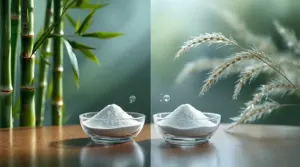
Which one gives you more silica, bamboo or horsetail? On paper, bamboo extract wins. It can reach 70% silica, while horsetail usually sits at 5-30%.
But the number isn’t the whole story. Horsetail often carries more soluble silicic acid, which your body may absorb better. Horsetail also contains thiaminase, which can break down vitamin B1, so caution is sensible.
Label Claims and Quality Checks
Does the front label tell you what’s inside? Often, not much. Look for a third-party seal like USP or NSF, and ask the brand for a certificate of analysis. It should list a batch number, the silica test method, and heavy metal limits for lead, arsenic, mercury and cadmium.
GMP certification is a good sign. Unclear units or missing results are unlikely to be accidents.
Frequently Asked Questions (FAQs)
Should bamboo extract be taken with or without food?
Most people take bamboo extract with breakfast, and that’s a sensible default. Silica dissolves in water, so food isn’t required for absorption. Still, a meal may ease stomach upset, especially with capsules if you’re sensitive.
Is bamboo extract the same as bamboo shoots?
No, they’re not the same. Bamboo shoots are the young, edible sprouts you eat as food. Bamboo extract is a concentrated product, usually made from leaves or stems, and usually standardized for silica.
What forms does bamboo extract come in?
Say you’re scanning a shelf and spot bamboo extract in a bottle of drops, a tub of powder, and a box of capsules. All three exist, though they aren’t interchangeable. Capsules offer precise servings.
Is bamboo extract suitable for vegans and vegetarians?
You might assume "plant extract" settles it. Not quite. The bamboo itself is plant-based, but the capsule can differ. Check the label for hypromellose or cellulose, not gelatin, and look for a vegan statement.
Which type of bamboo is used to make extract?
Many bamboo extract products are standardized to 70% silica, and that figure usually points to Bambusa vulgaris. You’ll also often see Phyllostachys edulis in bamboo leaf extract, since its leaves are reportedly rich in flavonoids.
Conclusion
Check the label. Check the dose. Check the evidence. Those three habits matter more than any promise on the bottle.
The realistic bamboo extract benefits are modest: possibly firmer skin, stronger nails, and hair that grows a bit better when paired with biotin. Everything else is unproven in people. If you’re pregnant, nursing, or on medication, ask a healthcare professional first. Buy from brands that test their products, set expectations, and give it three months.
- https://pmc.ncbi.nlm.nih.gov/articles/PMC10294923
- https://nutraceuticalbusinessreview.com/research-reveals-anti-inflammatory-properties-of-bamboo-plants-211089
- https://www.news-medical.net/news/20230613/Bamboos-hidden-treasures-unveiling-the-possible-health-boosting-powers-of-leaf-and-sheath-extracts.aspx