This site is supported by our readers. We may earn a commission, at no cost to you, if you purchase through links. This content is for general informational and educational purposes only and is not a substitute for professional medical, dermatological, or nutritional advice.
Adult acne hits differently. It’s not the forehead breakouts of your teenage years—it’s deep, painful jawline bumps that show up right before a big meeting, seemingly out of nowhere. Nearly 25% of women in their 40s deal with active acne, often tied to hormones, stress, or products that stopped working years ago.
Your skin at 35 isn’t the same as it was at 15, and treating it like it is only leads to irritation and disappointment.
Finding the best acne treatment for adults means matching the right active ingredient to your specific breakout pattern—whether that’s adapalene for stubborn blackheads or benzoyl peroxide for inflamed pustules. Below, you’ll find the products, ingredients, and routines that actually move the needle.
Table Of Contents
- Key Takeaways
- 10 Best Acne Treatments for Adults
- 1. Collagen Keratin Hair Mask Treatment
- 2. Differin Acne Treatment Gel 90g
- 3. CeraVe Foaming Facial Cleanser
- 4. Neutrogena Oil Free Acne Wash
- 5. La Roche Posay Benzoyl Peroxide Acne Cleanser
- 6. Paulas Choice Benzoyl Peroxide Acne Treatment
- 7. Neutrogena Rapid Clear Acne Treatment
- 8. Murad Rapid Relief Acne Spot Treatment
- 9. Proactiv Acne Treatment 30 Day Kit
- 10. Differin Acne Treatment Retinoid Gel
- Key Acne-Fighting Ingredients
- Match Treatment to Acne Type
- Adult Acne Skincare Routine
- When to See a Dermatologist
- Frequently Asked Questions (FAQs)
- What is the best treatment for adult acne?
- How do you get rid of adult acne asap?
- What is the #1 acne treatment?
- What do doctors prescribe for adult acne?
- What cured your adult acne?
- How to permanently cure adult acne?
- How long before adult acne treatments show results?
- Can diet changes alone clear adult acne?
- Why does adult acne differ from teenage acne?
- Should adults use same products as teenagers?
- Conclusion
Key Takeaways
- Your skin changes with age, so matching the active ingredient to your specific breakout type—adapalene for blackheads, benzoyl peroxide for inflamed pimples—works far better than reaching for whatever cleared things up in your teens.
- Adult acne along the jawline is often driven by hormones, not hygiene, which is why treatments like spironolactone or oral contraceptives can outperform topicals alone for cyclical breakouts.
- Give any new treatment real time to work—expect mild dryness or purging in the first few weeks, initial improvement around 4-6 weeks, and full results closer to 3 months.
- If breakouts persist past 1-2 months despite consistent care, or you’re dealing with painful cysts or nodules, it’s time to see a dermatologist rather than keep cycling through OTC products.
10 Best Acne Treatments for Adults
Adult acne calls for products that actually earn a spot in your routine, not just ones with flashy packaging.
This guide to treating hormonal acne in adults breaks down which ingredients target breakouts at the source, so you can skip the trial-and-error.
You need options that target everything from stubborn blackheads to painful cystic breakouts, backed by ingredients dermatologists trust.
Here are ten treatments worth adding to your skincare arsenal, starting with the essentials.
1. Collagen Keratin Hair Mask Treatment
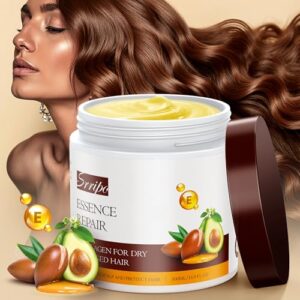
Finding a hair mask on an acne treatment list seems odd, but the connection makes sense: oily scalp product residue transfers to your face and clogs pores along your hairline. A collagen keratin mask conditions strands without weighing them down, and most formulas skip heavy silicones.
Look for sulfate-free, alcohol-free formulas to avoid scalp irritation that can migrate to skin. Keep application away from your hairline, and always rinse thoroughly before touching your face.
| Best For | People with dry, brittle, color-treated, or frizzy hair—especially those with fine or thin strands who want deep hydration without heaviness. |
|---|---|
| Fragrance Free | No |
| Active Ingredient | Hydrolyzed Proteins |
| Skin Type | Color-Treated Hair |
| Non Comedogenic | Not Stated |
| Daily Use | Regular Use |
| Net Weight | 1.23 lbs |
| Additional Features |
|
- Blends four hydrolyzed proteins with nourishing oils to repair, strengthen, and add shine
- Free from sulfates, parabens, and alcohol, and it’s cruelty-free
- Calendula and gentian root extracts help soothe the scalp and support healthier strands
- Fragrance can be strong and long-lasting, which may bother some users
- Needs careful application, since direct scalp contact can cause stinging or irritation
- Price has jumped from $20 to $35, which some shoppers see as a steep increase
2. Differin Acne Treatment Gel 90g
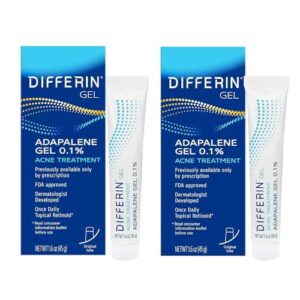
From hair care, we move to something with real clinical muscle: Differin Gel 0.1%, the first OTC retinoid approved in over 30 years. It penetrates pores within minutes, targeting clogs at the source rather than just the surface.
Clinical trials showed up to 87% fewer breakouts after 12 weeks of daily use. The 90g tube lasts roughly 180 days, water-based and fragrance-free. Expect mild dryness initially—that’s normal purging, not failure.
If you want to stretch your budget even further, this guide to affordable acne treatment products online shows how to build a full routine without spending more than $30.
| Best For | People dealing with persistent acne, blackheads, or clogged pores who want a proven, prescription-strength treatment they can stick with as part of a daily routine. |
|---|---|
| Fragrance Free | Yes |
| Active Ingredient | Adapalene 0.1% |
| Skin Type | All Skin Types |
| Non Comedogenic | Yes |
| Daily Use | Once Daily |
| Net Weight | 90g |
| Additional Features |
|
- Contains 0.1% adapalene, a clinically proven retinoid shown to cut breakouts by up to 87% after 12 weeks
- Water-based, oil-free, alcohol-free, and fragrance-free formula that won’t clog pores
- Also helps improve skin tone and texture while reducing the risk of scarring and hyperpigmentation
- Can cause dryness, redness, peeling, or purging during the first few weeks of use
- Increases sun sensitivity, so daily sunscreen becomes a must
- Not safe to use on eyelids, lips, or other thin, sensitive areas of skin
3. CeraVe Foaming Facial Cleanser
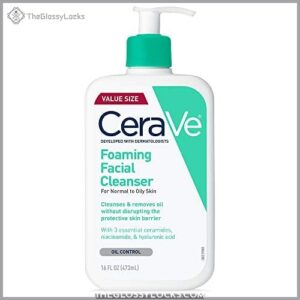
Retinoids clear pores, but they can leave skin dry and reactive—which is where cleanser choice matters. CeraVe’s Foaming Facial Cleanser pairs three essential ceramides with hyaluronic acid, so it lifts oil and makeup without stripping your barrier.
Niacinamide calms redness while the gel-to-foam formula lathers gently. Fragrance-free and non-comedogenic, it’s built for normal to oily, acne-prone skin. Use it morning and night alongside Differin to keep irritation in check.
| Best For | People with normal to oily skin who want a gentle daily cleanser that removes oil and makeup without disrupting the skin barrier. |
|---|---|
| Fragrance Free | Yes |
| Active Ingredient | Ceramides/Niacinamide |
| Skin Type | Normal to Oily |
| Non Comedogenic | Yes |
| Daily Use | Twice Daily |
| Net Weight | 16 fl oz |
| Additional Features |
|
- Contains three essential ceramides to help maintain and support the skin’s natural barrier
- Hyaluronic acid helps attract and retain moisture, keeping skin from feeling stripped
- Fragrance-free and non-comedogenic, making it gentle enough for daily morning and night use
- Not ideal for those with very dry skin, since it’s formulated more for normal to oily types
- Niacinamide may not agree with users who have specific ingredient sensitivities
- Foaming cleansers in general can feel less hydrating than cream-based alternatives for some users
4. Neutrogena Oil Free Acne Wash
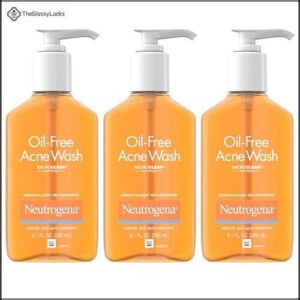
Sometimes you need a wash that does the scrubbing, not just the soothing. Neutrogena’s Oil-Free Acne Wash uses 2% salicylic acid to clear clogged pores and lift excess sebum, without added oils that could undo the work.
It’s noncomedogenic and rinses clean, so skin feels fresh, not tight. Good for oily, breakout-prone skin, though it won’t touch cystic lesions alone. Pair it with a moisturizer if dryness creeps in after daily use.
| Best For | People with oily or acne-prone skin who want a deep-cleaning wash that fights breakouts without leaving a greasy residue. |
|---|---|
| Fragrance Free | No |
| Active Ingredient | Salicylic Acid 2% |
| Skin Type | Oily/Acne-Prone |
| Non Comedogenic | Yes |
| Daily Use | Twice Daily |
| Net Weight | 9 oz |
| Additional Features |
|
- Contains 2% salicylic acid to treat and help prevent acne breakouts
- Oil-free, noncomedogenic formula rinses clean without clogging pores
- Trusted by dermatologists and suitable for twice-daily use
- May cause dryness with frequent use, so a moisturizer is recommended
- Not effective for cystic acne, which may need treatments like benzoyl peroxide
- Some users find the scent unpleasant and the pump requires firm pressure
5. La Roche Posay Benzoyl Peroxide Acne Cleanser
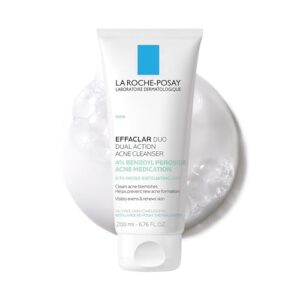
Dual action is the appeal here. This cleanser pairs 4% benzoyl peroxide with 0.1% micro-exfoliating LHA, a salicylic acid derivative, to clear pores while calming skin with La Roche Posay Thermal Spring Water.
By flooding pores with oxygen and breaking down bacterial cell walls, benzoyl peroxide works fast — check out this guide to the best skin care routine for acne-prone skin for pairing tips.
It’s non-comedogenic and oil-free, built for breakouts on the face, neck, chest, or back. Skip it if you have very sensitive skin or known benzoyl peroxide sensitivity. Otherwise, expect noticeably clearer skin with regular use.
| Best For | People with acne-prone skin, including hormonal or sensitive types, looking for a dual-action cleanser to treat breakouts on the face, neck, chest, or back. |
|---|---|
| Fragrance Free | Unspecified |
| Active Ingredient | Benzoyl Peroxide 4% |
| Skin Type | Acne-Prone/Sensitive |
| Non Comedogenic | Not Stated |
| Daily Use | Every Other Day |
| Net Weight | 8.15 oz |
| Additional Features |
|
- Combines 4% benzoyl peroxide with 0.1% micro-exfoliating LHA for gentle yet effective pore-clearing
- Helps reduce blemishes like pimples, blackheads, and whiteheads while removing excess oil and impurities
- Versatile use on multiple body areas to prevent and treat breakouts
- May cause dryness or irritation, especially on skin that isn’t acne-prone
- Sensitive skin users may need to limit use to spot treatment or every other day
- Requires follow-up moisturizer to offset drying effects
6. Paulas Choice Benzoyl Peroxide Acne Treatment
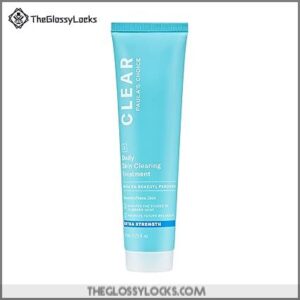
For patients who want strength without a prescription, Paula’s Choice offers 2.5% benzoyl peroxide in a gel that dries matte, so it layers cleanly under makeup.
The formula skips fragrance, oil, and alcohol, relying instead on soothing plant extracts to offset dryness. That’s a smart trade-off, since lower concentrations still clear breakouts while sparing your skin barrier.
One caution: benzoyl peroxide can bleach fabric and eyebrows, so let it dry fully before contact with towels or pillowcases.
| Best For | People with acne-prone skin, including cystic acne, who want an effective yet gentle non-prescription treatment that works under makeup. |
|---|---|
| Fragrance Free | Yes |
| Active Ingredient | Benzoyl Peroxide 2.5% |
| Skin Type | All Skin Types |
| Non Comedogenic | Not Stated |
| Daily Use | Daily |
| Net Weight | 2.25 oz |
| Additional Features |
|
- Minimizes existing breakouts while helping prevent new ones with regular use
- Non-fragrant plant extracts help hydrate and soothe skin, offsetting potential dryness
- Dries to an invisible matte finish, making it easy to layer under makeup
- Can bleach fabrics, towels, or eyebrow hair if it hasn’t fully dried before contact
- May cause dryness, redness, or irritation, particularly with overuse
- Requires patch testing and gradual introduction to avoid adverse reactions
7. Neutrogena Rapid Clear Acne Treatment
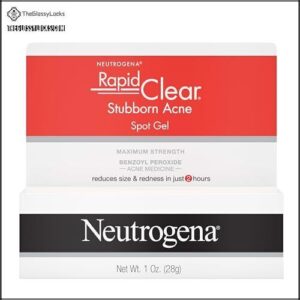
When breakouts flare before a big meeting, Neutrogena Rapid Clear brings 10% benzoyl peroxide to the fight, formulated to visibly reduce redness and swelling within two hours.
That speed comes at a cost. Benzoyl peroxide at this strength is drying, and it can bleach towels or pillowcases if you’re not careful.
Use it as a targeted spot treatment, not an all-over layer. Pair it with a noncomedogenic moisturizer, and always apply sunscreen the next morning, since photosensitivity rises during treatment.
| Best For | Anyone dealing with sudden, stubborn breakouts who wants a fast-acting spot treatment before a big event or meeting. |
|---|---|
| Fragrance Free | Unspecified |
| Active Ingredient | Benzoyl Peroxide 10% |
| Skin Type | Acne-Prone |
| Non Comedogenic | Not Stated |
| Daily Use | Daily |
| Net Weight | 1.6 oz |
| Additional Features |
|
- Visibly reduces pimple size and redness in as little as two hours
- Maximum-strength 10% benzoyl peroxide targets stubborn and cystic breakouts
- Compact spot-treatment design makes it easy to apply precisely where needed
- Can cause noticeable dryness, flaking, and irritation, especially with overuse
- May bleach fabrics, hair, or pillowcases if not applied carefully
- Increases sun sensitivity, requiring daily SPF 30 and moisturizer to offset side effects
8. Murad Rapid Relief Acne Spot Treatment
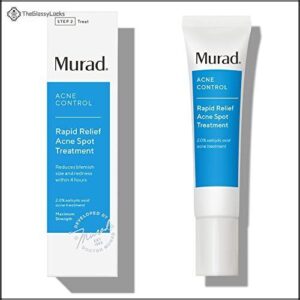
Four hours is the number that sets Murad’s spot treatment apart. It pairs 2% salicylic acid, the maximum OTC strength, with a patented pine and thyme botanical complex meant to calm irritation while it exfoliates clogged pores.
In brand testing, 97% of users noticed improvement within a day. A separate trial of 33 people found 82% saw less redness after eight weeks.
The clear gel dries invisibly under makeup, though dry or sensitive skin may find it too drying.
| Best For | Those with mild, occasional breakouts who want a fast-acting spot treatment that layers cleanly under makeup. |
|---|---|
| Fragrance Free | Unspecified |
| Active Ingredient | Salicylic Acid 2% |
| Skin Type | Mild Acne/Dry Caution |
| Non Comedogenic | Not Stated |
| Daily Use | Daily |
| Net Weight | 0.01 oz |
| Additional Features |
|
- Delivers maximum-strength 2% salicylic acid for rapid blemish control
- Clear gel formula dries invisibly and won’t flake or pill under makeup
- Fits easily into a full acne regimen alongside cleanser and moisturizer
- Can be too harsh or drying for dry or sensitive skin types
- Not formulated to handle moderate to severe acne
- Requires a patch test first, adding an extra step before regular use
9. Proactiv Acne Treatment 30 Day Kit
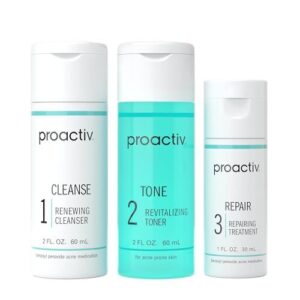
A three-step system beats a single tube when your skin needs a full routine, not just a spot fix.
Proactiv’s kit pairs a 2.5% benzoyl peroxide cleanser and treatment with a glycolic acid toner, plus witch hazel and aloe to offset dryness. Sodium hyaluronate and panthenol help maintain the skin barrier.
It’s built for normal to oily adult skin, morning and night, over 30 days. Not intended for severe cystic acne, but a solid daily option for mild to moderate breakouts.
| Best For | teens and adults with acne-prone or sensitive skin who want a simple, consistent three-step routine to manage mild to moderate breakouts over time. |
|---|---|
| Fragrance Free | Unspecified |
| Active Ingredient | Benzoyl Peroxide System |
| Skin Type | Teens and Adults |
| Non Comedogenic | Not Stated |
| Daily Use | Twice Daily |
| Net Weight | 1.17 lbs |
| Additional Features |
|
- Complete three-step system (cleanser, toner, treatment) simplifies daily acne care
- Uses finely-milled benzoyl peroxide to target acne-causing bacteria at the source
- Gentle enough for sensitive skin while still suitable for regular acne management
- May cause dryness, flaking, or irritation as skin adjusts early on
- Requires daily SPF 30 sunscreen due to increased sun sensitivity
- Takes several weeks of consistent use before visible results appear
10. Differin Acne Treatment Retinoid Gel
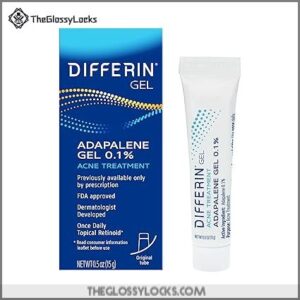
Adapalene 0.1% remains the standard among OTC retinoids, and this formula delivers it in a water-based, fragrance-free gel that won’t clog pores.
A 12-week study of 571 patients found 96.3% showed improvement, with 18% completely cleared. It works on comedones and inflammatory lesions alike, normalizing cell turnover rather than just masking breakouts.
Expect some dryness or peeling early on—that’s the purge phase. Apply nightly, use sunscreen daily, and give it three months before judging results.
| Best For | People dealing with persistent acne, blackheads, or clogged pores who want a proven prescription-strength retinoid without needing an actual prescription. |
|---|---|
| Fragrance Free | Yes |
| Active Ingredient | Adapalene 0.1% |
| Skin Type | All Skin Types |
| Non Comedogenic | Yes |
| Daily Use | Daily |
| Net Weight | 1.25 oz |
| Additional Features |
|
- Contains 0.1% adapalene, delivering real Rx-strength acne-fighting power
- Water-based, oil-free, fragrance-free formula that won’t clog pores
- Shown to reduce breakouts by up to 87% with consistent 12-week use
- Can cause dryness, peeling, or redness during the initial purge phase
- Makes skin more sensitive to sun, so daily sunscreen becomes a must
- Not ideal for delicate areas like eyelids or neck without extra care
Key Acne-Fighting Ingredients
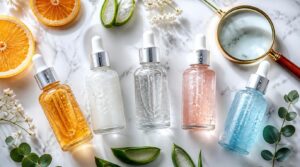
Not every acne product works the same way, and knowing what’s actually in the bottle makes all the difference. Once you understand what each ingredient does, you can pick treatments that match your skin instead of guessing. Here’s a closer look at the five ingredients doing most of the heavy lifting.
Adapalene and Retinoids
Think of retinoids as your skin’s reset button. Differin Adapalene Gel works by speeding cell turnover and dissolving clogged pores, but its rigid structure binds selectively, causing less irritation than tretinoin. It’s photostable too, so daytime use is fine. Expect mild dryness or peeling initially. Give it 8-12 weeks before judging results. Adapalene shows lower potential for irritation compared to tretinoin in comparative studies. Adapalene vs Retinol
Benzoyl Peroxide
While topical retinoids work by resetting cell turnover, benzoyl peroxide attacks bacteria directly, flooding pores with oxygen to kill anaerobic C. acnes. Effective for both comedonal acne and inflammatory lesions.
- Foaming cleansers for oily T-zones
- Overnight spot gels for angry pustules
- Lightweight lotions for barrier repair
Stick with 2.5-5% concentrations; higher strengths irritate skin without added benefit.
Salicylic Acid
Where benzoyl peroxide kills bacteria, salicylic acid works from the inside of the pore out. This oil soluble acid penetrates clogged follicles, loosening dead skin cells for smoother exfoliation and better pore unclogging.
Regular use improves texture and helps prevent new breakouts. Start slow, since dryness is common—pair it with moisturizer and daily sunscreen.
Niacinamide and Zinc
If salicylic acid clears the pore, niacinamide calms what’s left behind.
Paired with zinc at a 10:1 ratio, it curbs oil production and eases redness within days. That’s the logic behind The Ordinary Niacinamide 10% Zinc 1% Oil Control Serum and The INKEY List C50 Blemish Night Treatment—gentler than retinoids, yet effective for barrier support and fading old marks over several weeks.
Sulfur Treatments
That old-fashioned brimstone smell? It’s still earning its place in acne treatment.
Sulfur breaks down disulfide bonds to shed dead cells while generating hydrogen sulfide, killing bacteria. Precipitated sulfur formulations (2-6%) pair well with sodium sulfacetamide for inflammatory acne, or benzoyl peroxide for stubborn spot treatment. It’s dermatologist-recommended for sensitive, adult acne-prone skin, though expect mild dryness—and it’s considered pregnancy-safe.
Match Treatment to Acne Type
Not every breakout reacts to the same fix, and that’s the frustrating part. What clears a blackhead won’t touch a hormonal cyst, and what calms sensitive skin might do nothing for stubborn pustules. Here’s how to match what you’re seeing in the mirror to the treatment that actually works on it.
Whiteheads and Blackheads
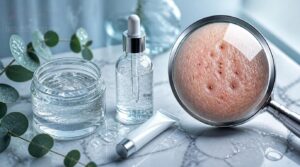
Clogged pores start it all: excess sebum mixes with dead cells, plugging the follicle. Stay closed and you get a whitehead; stay open to air and it oxidizes into a blackhead. Both are noninflammatory and painless.
Treat them with salicylic acid to dissolve the plug, benzoyl peroxide for bacteria, or retinoids like adapalene. Choose noncomedogenic products to prevent recurrence.
Papules and Pustules
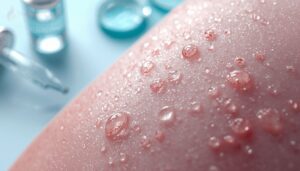
Redness signals trouble brewing beneath the surface. Papules form when oil, dead cells, and bacteria clog a follicle, triggering inflammation—small, firm, pus-free bumps under 5mm. Left alone, most become pustules within days as pus develops.
- Try benzoyl peroxide or salicylic acid first
- Add topical retinoids for prevention
- See a dermatologist for oral antibiotics if stubborn
Healing takes 2-4 weeks; picking risks scarring.
Nodules and Cysts
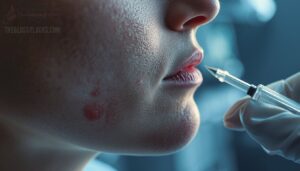
This is deep, painful trouble—nodules and cysts sit under the skin, resist OTC treatment, and often need real intervention.
| Lesion | Feel | Treatment |
|---|---|---|
| Nodule | Firm, hard | Biopsy, oral meds |
| Cyst | Soft, fluid-filled | Drainage, injection |
| Inflamed cyst | Red, tender | Antibiotics, drainage |
| Recurrent | Cyclical | Isotretinoin, Spironolactone |
For persistent cystic acne, ask about nodule biopsy guidance and cyst recurrence prevention before scarring sets in.
Hormonal Adult Acne
Breakouts along your jawline before your period? That’s androgen sensitivity at work, not poor hygiene.
Jawline breakouts before your period are androgen sensitivity at work, not poor hygiene
Triggers include menstrual cycles, pregnancy, postpartum shifts, and starting or stopping birth control. Persistent jaw acne with irregular periods may signal PCOS-related acne.
Dermatologist-recommended options include oral contraceptives and spironolactone, often paired with retinoids for lasting control.
Sensitive Acne-prone Skin
Angry, easily-triggered skin needs a lighter touch. If your acne flares with new products or weather shifts, focus on barrier repair first.
- Fragrance-free, noncomedogenic moisturizer
- Niacinamide for calming, oil balance
- Gentle, sulfate-free cleanser
- Patch-test new products
- Skip harsh scrubs and alcohol toners
Treat gently, hydrate consistently, and let soothing ingredients work alongside—not against—your acne care.
Adult Acne Skincare Routine
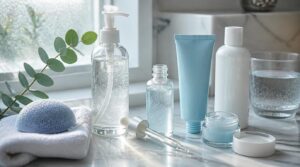
The right products only work if your daily routine fits them. Treatment alone can’t fix acne if the basics around it are off. Here’s what your skincare routine should actually include.
Gentle Daily Cleansing
How you wash matters as much as what you use. Stick to a gentle, non-irritating cleanser with lukewarm water, applying it with fingertips, not washcloths. Wash twice daily and after sweating. Consider double cleansing at night to dissolve sunscreen and oil first.
A fragrance-free formula protects your skin barrier while consistency—same times daily—improves results within weeks.
Noncomedogenic Moisturizer
Cleansing strips away oil, but it can also strip your barrier if you stop there. That’s why a noncomedogenic moisturizer matters next—look for hyaluronic acid, ceramides, or lightweight squalane in a gel texture that absorbs fast.
- Hyaluronic acid: hydrates without clogging pores
- Ceramides: repair the skin barrier
- Squalane: oil-free, weightless moisture
Skip heavy creams; fragrance-free, oil-free formulas keep acne-prone skin calm.
Sunscreen With Acne Treatments
Once your moisturizer sets, sunscreen isn’t optional. Retinoids and benzoyl peroxide raise photosensitivity, so daily broad-spectrum SPF 30 protects treated skin.
Choose mineral over chemical: zinc oxide works immediately, calms inflammation, and won’t irritate skin already adjusting to retinoids or antibiotics.
Pick lightweight, oil-free, noncomedogenic gel formulas, and reapply every two hours outdoors.
Spot Treatment Timing
Sunscreen protects treated skin, but timing your spot treatment correctly determines whether it works at all.
Apply in the morning before sunscreen, and at night after cleansing, before serums.
- Wait 1-2 minutes to dry
- Don’t layer under creams
- Use benzoyl peroxide or salicylic acid
- Give it 12 weeks
Catch blemishes early—before a visible head forms—for best results.
Breakout Prevention Habits
Small habits, done daily, often matter more than any product on your shelf.
Avoid touching your face, since hands transfer bacteria straight into pores.
| Habit | Why It Works |
|---|---|
| Cut back on dairy | Lowers insulin/IGF-1 spikes |
| Manage stress | Reduces androgen-driven oil |
| Consistent sleep | Stabilizes cortisol, hormones |
| Noncomedogenic products | Prevents clogged pores |
Sleep consistency and stress management regulate sebum production, quietly protecting the results your treatment routine is building.
When to See a Dermatologist
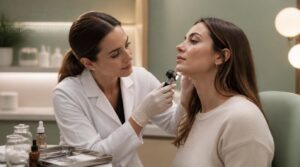
Sometimes over-the-counter products just aren’t enough, and that’s not a failure on your part. Certain signs mean it’s time to bring in a professional who can offer stronger options. Here’s what to know before you book that appointment.
Persistent Adult Breakouts
Why does acne cling on well past your teens? Often it’s hormonal acne wearing you down—inflammatory, sometimes cystic, resistant to standard products.
If breakouts persist over 1-2 months despite consistent care, see a dermatologist. Causes include:
- Hormonal triggers (PCOS, cycles)
- Genetic factors
- Treatment resistance
- Stress management gaps
- Recognizable breakout patterns (jawline, chin)
Prescription Acne Medications
Once OTC options fail, dermatologists reach for stronger tools. Topical retinoids like tretinoin or adapalene speed cell turnover; oral antibiotics calm deeper inflammation. Hormonal modulators such as spironolactone target androgen-driven breakouts in women.
Often these work best combined—combination therapies pairing a retinoid with an antibiotic address multiple causes at once, tackling clogged pores and bacteria together for faster, more lasting results.
Isotretinoin for Severe Acne
When nothing else touches severe cystic acne, isotretinoin is the heavy hitter.
Dosage guidelines run 0.5–1.0 mg/kg daily; most clear up by 16 weeks.
Expect side effects—dry skin, chapped lips—plus mandatory monthly bloodwork under strict monitoring protocol.
It’s a serious oral medication, but for relapse prevention, hitting the right cumulative dose matters most.
Pregnancy-safe Acne Care
Pregnancy rewires your skin overnight—surging hormones trigger fresh breakouts even if you’ve never struggled before.
Skip retinoids and oral isotretinoin entirely; both carry serious birth defect risks. Stick to pregnancy-safe options: azelaic acid, benzoyl peroxide, and low-strength salicylic acid.
Always loop in your OB or dermatologist before starting anything new. When breakouts worsen or feel unmanageable, that’s your cue to get evaluated promptly.
Acne Scars and Procedures
Long after breakouts fade, scars can linger—and treatment depends entirely on scar type. Icepick, boxcar, and rolling scars sit below the surface, while raised scars need different tools.
- Microneedling for collagen stimulation
- Laser resurfacing for deeper texture
- Chemical peels or dermabrasion for surface tone
- Subcision for tethered scars
- Punch excision for isolated pits
A dermatologist can match the right procedure to your scars.
Frequently Asked Questions (FAQs)
What is the best treatment for adult acne?
No single fix works for everyone. Topical retinoids like adapalene pair well with benzoyl peroxide for inflammatory breakouts, while spironolactone targets hormonal acne. A combination approach, matched to your specific acne type, consistently outperforms any solo treatment.
How do you get rid of adult acne asap?
Ironic truth: there’s no magic overnight cure, but a hydrocolloid patch with salicylic acid or benzoyl peroxide spot treatment shrinks blemishes fast, while retinoids prevent tomorrow’s breakout before it starts.
What is the #1 acne treatment?
No single winner exists. Adapalene offers proven, once-daily results for most adults; benzoyl peroxide fights bacteria fast. For hormonal flares, oral contraceptives often outperform topicals alone. The right pick depends on your acne type.
What do doctors prescribe for adult acne?
Depending on severity, dermatologists reach for prescription retinoids, oral antibiotics, or hormonal therapy.
Stubborn cases may need isotretinoin treatment or combination therapy—pairing topical retinoids with benzoyl peroxide for prescription-strength results that tackle clogged pores, bacteria, and inflammation together.
What cured your adult acne?
There’s no single fix. Most patients see real change combining spironolactone for hormonal balance, retinoids, and a consistent skincare routine. Others credit laser therapy, dietary shifts cutting dairy and sugar, or diligent spot treatment paired with skin barrier repair.
How to permanently cure adult acne?
True permanence is a unicorn, but lasting control is real: pair retinoids with hormonal therapy, oral medications when needed, consistent lifestyle changes, and skin barrier repair. Combination treatment plus long-term maintenance keeps hormonal adult acne quiet for good.
How long before adult acne treatments show results?
Most treatments need patience: expect initial changes in 4 to 6 weeks, real clearance by 3 months. Topical retinoids and combination therapy work faster together; treatment-resistant cases may need oral antibiotics or longer maintenance for lasting control.
Can diet changes alone clear adult acne?
Picture a plate of salmon and greens instead of soda and candy. Diet alone rarely clears acne, but low glycemic eating, omega-3s, and cutting dairy sugar can meaningfully calm sebum production and inflammation alongside your treatment routine.
Why does adult acne differ from teenage acne?
Hormonal fluctuations drive adult acne toward the jawline, causing deeper, slow-healing cysts and pitted scars. Teen acne, fueled by puberty’s androgen surge, hits the forehead and cheeks with comedones that clear faster and heal without lasting marks.
Should adults use same products as teenagers?
Not quite—your skin’s rules changed. Adult acne needs gentler formulation strength, hormonal support like spironolactone, and longer treatment duration than teens. Match products to your jawline breakouts and sensitivity, not your teenage medicine cabinet.
Conclusion
You don’t need ten products fighting your skin at once—you need the right one, used consistently. That’s the real secret behind the best acne treatment for adults: matching ingredient to breakout type, then giving it six to eight weeks to work.
Adapalene for texture, benzoyl peroxide for inflammation, a dermatologist for anything that lingers past three months.
Clear skin isn’t luck. It’s a routine built on patience, precision, and truly knowing your own skin well.
- https://www.aad.org/media/stats-numbers
- https://www.goodrx.com/isotretinoin?rvo_aff=1&rvo_brandid=GoodRx&rvo_prodid=2545fe51-8f98-4e39-b5f3-d03cd3894005&rvo_subid=2545fe51-8f98-4e39-b5f3-d03cd3894005&rvo_subid2=%2Fhealth%2Fskin%2Fwp-3879107&correlationId=null
- https://hersinc.pxf.io/banoRM?rvo_aff=1&rvo_brandid=Hers&rvo_prodid=84cbf15c-e8a8-4178-b304-3896f8a42fdb&rvo_subid=84cbf15c-e8a8-4178-b304-3896f8a42fdb&rvo_subid2=%2Fhealth%2Fskin%2Fwp-3879107&subid1=null&subid2=/health/skin/wp-3879107&subid3=c2d81563-9ade-4d90-893a-d3bc8637811c&correlationId=null