This site is supported by our readers. We may earn a commission, at no cost to you, if you purchase through links. This content is for general informational and educational purposes only and is not a substitute for professional medical, dermatological, or nutritional advice.
Most people reach for a face wash or spot treatment the moment a breakout appears. That instinct makes sense—but it also misses where acne often starts: inside the pore, beneath a layer of dead skin that routine cleansing can’t fully clear.
Chemical exfoliants for acne-prone skin work differently. Instead of scrubbing the surface, they dissolve the bonds holding dead cells in place, clearing the path for fresher skin underneath. Some acids—like salicylic acid—go deeper, cutting through the sebum plugging your pores before a blackhead even forms.
Knowing which acid to use, at what strength, and when to apply it changes everything about your results.
Table Of Contents
- Key Takeaways
- Chemical Exfoliants for Acne-Prone Skin
- AHAs, BHAs, and LHAs Compared
- Best Acids for Acne Concerns
- Top 7 Chemical Exfoliants
- Choosing The Right Strength
- Safe Application for Acne-Prone Skin
- Building an Acne Exfoliation Routine
- Results, Risks, and Skin Types
- Frequently Asked Questions (FAQs)
- Conclusion
Key Takeaways
- Salicylic acid is uniquely oil-soluble, letting it penetrate inside clogged pores to dissolve sebum plugs before blackheads form, while AHAs like glycolic and lactic acids work at the surface to smooth texture and fade post-acne dark spots.
- Matching acid strength to your skin’s tolerance matters more than chasing higher concentrations — sensitive or reactive skin consistently benefits more from gentler, lower-dose formulas used regularly than from aggressive peels used sporadically.
- Chemical exfoliation clears the path for clearer skin but doesn’t kill acne-causing bacteria or reduce inflammation, so it works best when paired with dedicated actives like benzoyl peroxide rather than used as a standalone treatment.
- Daily sunscreen is non-negotiable when using chemical exfoliants, since acids increase UV sensitivity and any unprotected sun exposure will deepen the hyperpigmentation you’re actively trying to fade.
Chemical Exfoliants for Acne-Prone Skin
Chemical exfoliants work by loosening the bonds that hold dead skin cells in place, which makes them especially useful when acne, clogged pores, and uneven tone are all part of the same problem.
For a deeper look at how these ingredients fit into a real routine, adult acne treatments that actually work often feature chemical exfoliants as a cornerstone step.
Knowing which acids target which concerns — and how to use them safely — takes the guesswork out of building a routine that actually works. Here’s what you need to know before picking your first (or next) exfoliant.
What Chemical Exfoliants Do
Think of your skin as a wall where dead cells act as stubborn old paint — chemical exfoliants work by dissolving the ionic bonds holding those cells together, allowing them to shed naturally.
- AHAs are water-soluble, targeting surface texture
- BHAs are lipid-soluble, reaching inside pores
- Both trigger faster cell turnover
Using beta-hydroxy acids can effectively help with pore decongestion.
That bond breakdown is what clears impurities and reveals fresher skin underneath.
Why Acne-prone Skin Benefits
Acne-prone skin is prone to accumulate surface debris and oil faster than other skin types, which makes chemical exfoliation particularly valuable. Regular use helps skin cell turnover, keeping pores from staying congested long enough to trigger new blemishes.
| Benefit | Mechanism | Key Acid |
|---|---|---|
| Pore decongestion | Dissolves debris inside follicles | Salicylic acid |
| Pigmentation fading | Accelerates cell renewal | Glycolic acid |
| Enhanced product penetration | Clears dead-cell barrier | Lactic acid |
Dead Skin and Clogged Pores
Dead skin cells don’t just sit on the surface — they mix with sebum inside follicles, forming a plug that blocks the pore opening. When that plug stays covered, it becomes a whitehead. Exposed to air, it oxidizes into a blackhead.
- Slower cell turnover keeps dead skin pressed against pores longer
- Oil traps debris, creating a compacted blockage
- Comedones signal persistent pore obstruction
- Chemical exfoliation dissolves this buildup at the source
Texture and Tone Improvement
Clearing blocked pores is only part of the story. Once that debris is gone, alpha hydroxy acids get to work on what’s left behind — uneven texture, dull patches, and post-inflammatory redness that lingers long after a breakout fades.
AHAs improve light reflection smoothness by dissolving the protein bonds holding dead cells in place. Paired with consistent sunscreen use, they prevent UV damage from deepening hyperpigmentation further.
Exfoliation Versus Acne Treatment
Exfoliation and acne treatment aren’t the same job. Chemical exfoliation clears the surface — removing dead cells, reducing pore blockage, and helping alpha hydroxy acids and salicylic acid reach deeper layers more evenly.
But it doesn’t kill bacteria or control inflammation. That’s why acne-prone skin routines usually pair exfoliation with dedicated actives like benzoyl peroxide — each doing what the other can’t.
AHAs, BHAs, and LHAs Compared
Not all chemical exfoliants work the same way, and that difference matters when your skin is already dealing with breakouts. AHAs, BHAs, and LHAs each target acne through a distinct mechanism — from surface texture to deep-pore congestion. Here’s how the key acids in each category actually compare.
Glycolic Acid for Texture

Glycolic acid earns its reputation by working at the molecular level. With the smallest molecular weight of all AHAs, it penetrates deeply, dissolving the protein bonds that hold dead cells in place. That accelerated epidermal turnover clears the rough, bumpy surface texture acne-prone skin often develops.
The result? Skin that reflects light more evenly and genuinely feels smoother over time.
Lactic Acid for Gentleness
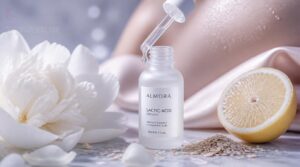
Think of lactic acid as glycolic acid’s more measured sibling. Its larger molecular size slows penetration, delivering gentle exfoliation that loosens keratin bonds without overwhelming acne-prone skin.
- Acts as a humectant, drawing moisture in while it works
- Helps ceramide production to protect skin barrier health
- Softens dead cell buildup that contributes to clogged pores
- Suitable for sensitive acne-prone skin needing consistent, low-irritation exfoliation
Mandelic Acid for Sensitivity
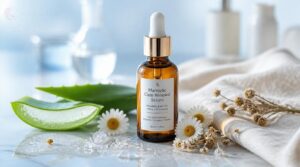
Of all the AHAs, mandelic acid has the largest molecular size — and that works in your favor when your skin reacts to everything.
| Feature | Detail | Benefit |
|---|---|---|
| Molecule size | Largest AHA | Slower penetration |
| Best for | Sensitive skin | Reduced irritation |
| Acne use | Gentle exfoliation | Fewer flare-ups |
Slow absorption limits stinging. Start a few times weekly, building frequency only if your skin stays comfortable.
Salicylic Acid for Pores
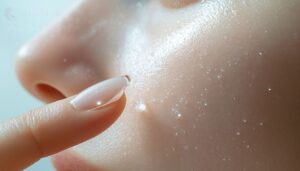
Unlike AHAs, salicylic acid is oil-soluble, which lets it slip past sebum and work directly inside clogged follicles — a big difference for acne-prone skin.
Once inside, its keratolytic action loosens the keratin bonds holding dead cells together, clearing debris before new comedones can form.
Consistent use reduces blackhead visibility and keeps pore openings clearer over time.
LHA for Slower Exfoliation
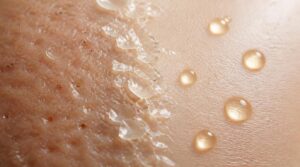
Lipo Hydroxy Acid — sometimes called beta-lipohydroxy acid — is a salicylic acid derivative that trades speed for precision. Its lipophilic structure targets sebum directly, yet penetrates far more slowly, accumulating in the stratum corneum and releasing gradually rather than hitting all at once.
That cell-by-cell shedding makes it ideal for acne-prone skin that can’t tolerate aggressive acids without flaring.
Best Acids for Acne Concerns
Not every acid works the same way for every skin concern, and that distinction matters more than most people realize.
The right match between your specific issue — whether it’s blackheads, oiliness, or stubborn dark spots — and the acid you choose can make or break your results. Here’s a breakdown of which acids actually work best for each concern.
Clogged Pores and Blackheads
Blackheads aren’t just a surface stain — they’re a sebum and dead skin plug sitting inside an open follicle, darkened by oxidation once air hits the trapped material. That’s what separates them from whiteheads.
Salicylic acid, a lipophilic beta hydroxy acid, cuts through that oily blockage directly, dissolving debris from within the pore rather than simply scrubbing the surface.
Oily Skin and Breakouts
Oily skin isn’t just about excess shine — it reflects a shift in sebum lipid composition, including elevated squalene that can oxidize into squalene peroxide, driving inflammation before a visible breakout even forms. Androgens make this worse, which explains why oiliness spikes hormonally.
Salicylic acid cuts through sebum directly, clearing follicular congestion while reducing bacterial growth — making it the most practical daily acid for breakout-prone, oily skin.
Post-acne Dark Spots
Once breakouts clear, they often leave behind post-inflammatory hyperpigmentation — flat dark marks caused by excess melanin deposited during skin inflammation. These aren’t scars; they’re a pigmentation response, and UV exposure deepens them a lot. Picking worsens the cycle by intensifying inflammation.
Skin tones with more melanin see these marks more prominently, and fading can take several months even with consistent brightening acids like azelaic or glycolic.
Acne Scars and Texture
Acne scars are a different problem than dark spots — they represent structural damage to the dermis, not pigmentation. Icepick, boxcar, and rolling scars each form differently, with depths that superficial exfoliation simply can’t reach.
AHA and BHA exfoliants can smooth out surface texture and soften shallow irregularities, but dermal tethering and collagen loss require targeted procedures. Think of acids as supportive, not curative.
Sensitive Acne-prone Skin
Sensitive, acne-prone skin is basically fighting on two fronts. Mandelic acid is often the smarter starting point here — its larger molecular size means slower absorption and far less risk of stinging or redness.
If salicylic acid triggers barrier reactivity, reduce frequency before abandoning it entirely. Tolerance tracking matters more than strength — consistent, gentle exfoliation outperforms aggressive treatment every time.
Consistent, gentle exfoliation always outperforms aggressive treatment — tolerance matters more than strength
Top 7 Chemical Exfoliants
With so many acid-based products out there, narrowing it down to what actually works for acne-prone skin takes some sorting. These seven exfoliants cover a range of strengths, formulas, and acid types — so whether you’re just starting out or ready to step things up, there’s something here for you. Here’s what made the cut.
1. Glycolic Acid 70 Percent Peel
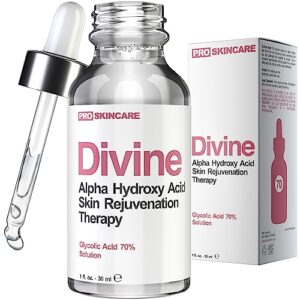
At 70%, this is one of the most concentrated glycolic acid formulas available without a clinical setting. It works by rapidly dissolving the protein bonds holding dead skin cells together, accelerating cell turnover and targeting acne scars and hyperpigmentation at the surface level. The formula includes cucumber and green tea extracts to offset irritation.
Because it’s a wash-off peel, contact time must stay brief — this isn’t a leave-on treatment, and careful monitoring is non-negotiable at this strength.
| Best For | Anyone dealing with acne scars, hyperpigmentation, or dullness who wants professional-grade results at home — especially those with oily, acne-prone, or aging skin. |
|---|---|
| Active Acid | Glycolic Acid (AHA) |
| Acid Concentration | 70% |
| Product Form | Liquid |
| Skin Types | Dry, Oily, Combination, Acne-Prone |
| Key Benefit | Anti-Aging & Resurfacing |
| Formula Highlight | Cucumber & Green Tea |
| Additional Features |
|
- 70% glycolic acid delivers serious exfoliation, visibly reducing fine lines, scars, and uneven tone faster than lower-strength formulas
- Cucumber and green tea extracts help calm the skin during treatment, making the formula more tolerable than a straight acid peel
- Fragrance-free and dye-free, so it’s less likely to trigger sensitivity reactions on reactive skin types
- At 70%, this is an intense formula — contact time must be strictly controlled, making it easy to over-peel if you’re not experienced
- Wash-off application adds a step and requires attention; it’s not a simple leave-on treatment you can apply and forget
- The high concentration may be too aggressive for beginners or those with sensitive skin without proper patch testing first
2. Prequel Multi Acid Milk Peel
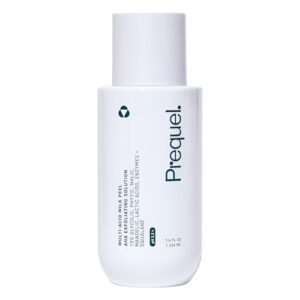
The Prequel Skin Milk Peel takes a different approach than the 70% glycolic formula above — trading intensity for precision. Its 15% multi-acid complex blends glycolic, lactic, mandelic, malic, and phytic acids, so exfoliation happens across multiple skin depths simultaneously.
What keeps it from being aggressive is the formula itself. Enzymes lipase and protease assist cell turnover, while squalane softens and hydrates throughout. This leave-on, milky texture suits acne-prone skin that needs consistent resurfacing without triggering barrier breakdown.
| Best For | Those with acne-prone or combination skin who want steady, multi-depth exfoliation without the harshness of a single high-strength acid. |
|---|---|
| Active Acid | Multi-Acid Complex |
| Acid Concentration | 15% Glycolic |
| Product Form | Liquid |
| Skin Types | All Except Sensitive |
| Key Benefit | Radiance & Clarity |
| Formula Highlight | Squalane & Milk Base |
| Additional Features |
|
- Blends five acids to resurface at multiple skin depths at once, making it more thorough than single-acid formulas
- Squalane and enzyme actives keep the formula hydrating, so skin doesn’t feel stripped after use
- Fragrance-free and pH-stabilized, reducing the risk of irritation for most non-sensitive skin types
- 15% glycolic concentration still requires a patch test and a slow introduction schedule (1–2x per week)
- Not suitable for sensitive skin, diagnosed skin conditions, or anyone under 18
- The leave-on milky format may not appeal to those used to rinse-off peels or more straightforward single-acid products
3. Paula’s Choice Anti Redness Exfoliating Solution
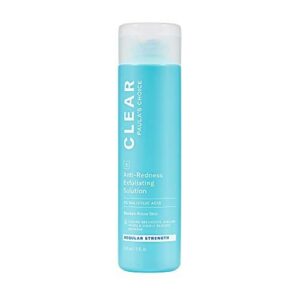
Paula’s Choice Anti Redness Exfoliating Solution keeps things straightforward where it counts. At 2% salicylic acid, it penetrates oily pores to dissolve the debris that causes blackheads and breakouts — without stripping your barrier.
What sets it apart is the supporting cast. Glycerin and sodium hyaluronate offset the exfoliation, while allantoin and dipotassium glycyrrhizate calm any redness. The lightweight, fragrance-free texture layers cleanly under serums. At $37 for 4 ounces, it’s built for daily use on sensitive, acne-prone skin.
| Best For | Anyone dealing with acne, blackheads, or redness-prone skin who wants a gentle but effective daily exfoliant — especially those with sensitive complexions. |
|---|---|
| Active Acid | Salicylic Acid (BHA) |
| Acid Concentration | 2% |
| Product Form | Liquid |
| Skin Types | Sensitive, Acne-Prone |
| Key Benefit | Acne & Pore Care |
| Formula Highlight | Hydrating Actives |
| Additional Features |
|
- 2% salicylic acid effectively unclogs pores, clears breakouts, and fades post-blemish marks
- Fragrance-free with hydrating ingredients like glycerin and sodium hyaluronate, so it exfoliates without stripping the skin
- Lightweight texture layers easily into any routine without feeling heavy or greasy
- Works best as part of Paula’s Choice’s full CLEAR regimen, which adds to the overall cost
- Chemical exfoliation can cause sensitivity, so new users should patch test and ease in gradually
- Formulated specifically for acne-prone and redness-prone skin, so it may not suit those with dry or non-acne concerns
4. Strong exfoliating chemical peel oil
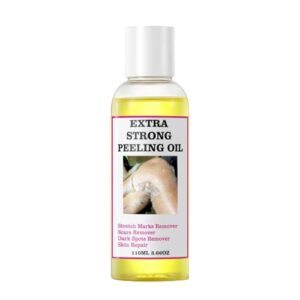
If you need results you can actually see, this peel oil delivers. It combines salicylic, malic, lactic, and citric acids — AHA and BHA pathways working together — to clear debris both on the surface and inside clogged pores.
The protocol is unconventional: three coats applied over one session, left on overnight, repeated for three consecutive nights without cleansing. Skin may darken or purge with white bumps — that’s the acids drawing out trapped sebum, not damage. Patch test first; sensitive skin should approach cautiously.
| Best For | Anyone dealing with dark spots, acne, clogged pores, calluses, or dull skin who wants a potent multi-acid peel that works on both the face and body. |
|---|---|
| Active Acid | Glycolic & Lactic Acid |
| Acid Concentration | Not Specified |
| Product Form | Liquid Serum |
| Skin Types | All Skin Types |
| Key Benefit | Dark Spots & Texture |
| Formula Highlight | Vitamin C & Hyaluronic Acid |
| Additional Features |
|
- Combines AHA and BHA acids (salicylic, malic, lactic, and citric) for deep surface and pore-level exfoliation
- Enriched with skin-loving ingredients like hyaluronic acid, vitamin C, licorice root, and chamomile to moisturize while it works
- Visible results within one week, tackling everything from fine lines and dullness to acne and rough texture
- Three applications daily (or per session) is a demanding routine that’s easy to fall behind on
- The overnight, no-cleanse protocol and potential skin purging (darkening, white bumps) can be alarming for first-time users
- High potency formula may be too aggressive for sensitive skin types — a patch test is a must
5. Glycolic Acid 35 Percent Exfoliating Pads
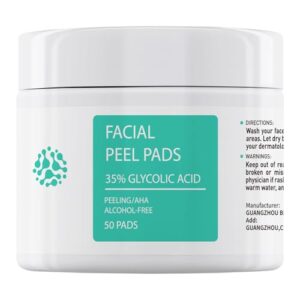
These pre-soaked pads deliver 35% glycolic acid in a controlled swipe — no measuring, no mess. Each pad saturates skin evenly, making the application far more consistent than liquid peels poured by hand.
The formula pairs glycolic acid with salicylic acid, vitamins B5, C, and E, plus calendula to buffer irritation. That’s meaningful, because 35% is substantially stronger than typical 10% daily AHA products. Start with one to two minutes, then rinse thoroughly. Patch test first — redness at this concentration isn’t unusual.
| Best For | Anyone dealing with acne, uneven skin tone, or early signs of aging who wants a stronger-than-average exfoliant without the guesswork of liquid peels. |
|---|---|
| Active Acid | Glycolic Acid (AHA) |
| Acid Concentration | 35% |
| Product Form | Exfoliating Pads |
| Skin Types | All Skin Types |
| Key Benefit | Texture & Brightening |
| Formula Highlight | Vitamins B5, C & E |
| Additional Features |
|
- Pre-soaked pads make application easy and consistent — no measuring or mess
- Packed with skin-soothing extras like vitamins B5, C, E, calendula, and salicylic acid to balance the high acid concentration
- Tackles multiple concerns at once: acne, dark spots, fine lines, and texture
- 35% glycolic acid is intense — beginners may find it too strong, and redness is common
- Must be rinsed off after use, so it’s not a simple leave-on treatment
- Requires a patch test before first use and close attention to timing to avoid irritation
6. Glycolic Acid AHA Facial Peel
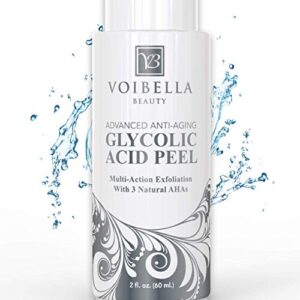
Where the 35% pads demand caution, this triple AHA formula — glycolic, lactic, and pyruvic acids at a combined 7.5% — takes a gentler approach. The microscopic exfoliation process works without visible peeling, which suits sensitive, acne-prone skin that can’t tolerate aggressive shedding.
That 7.5% concentration is practical for weekly at-home use, gradually reducing dark spots, smoothing texture, and clearing pores without stripping the barrier. It’s also paraben-free, sulfate-free, and dermatologist-tested — straightforward credentials that matter when your skin is already reactive.
| Best For | Sensitive and acne-prone skin types looking for a gentle, at-home weekly exfoliant to gradually fade dark spots, smooth texture, and clear pores without visible peeling. |
|---|---|
| Active Acid | Triple AHA Blend |
| Acid Concentration | 7.5% |
| Product Form | Liquid |
| Skin Types | Sensitive, All Types |
| Key Benefit | Scar & Pore Reduction |
| Formula Highlight | Paraben & Sulfate-Free |
| Additional Features |
|
- Triple AHA blend (glycolic, lactic, and pyruvic) delivers effective exfoliation at a skin-friendly 7.5% concentration
- No visible peeling means you can use it without downtime or obvious flaking
- Clean formula — paraben-free, sulfate-free, vegan, and dermatologist-tested
- Results aren’t instant; consistent weekly use over time is needed to see meaningful improvement
- Daily sunscreen becomes non-negotiable while using it, adding an extra step to your routine
- Not ideal for anyone wanting faster, more aggressive results — the gentle approach has a ceiling
7. Paula Choice BHA Liquid Exfoliant
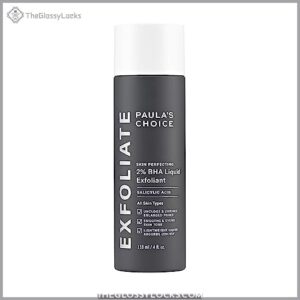
Switching from a multi-acid mix to a single-hero formula can actually be the smarter move for oily, breakout-prone skin. 2% salicylic acid is oil-soluble, meaning it cuts through sebum and clears debris from inside the pore — not just off the surface.
The leave-on liquid format lets it work continuously, and green tea extract keeps irritation minimal. Daily use is realistic for most skin types, though if your skin is sensitive, start every other day.
| Best For | Oily and breakout-prone skin types looking for a daily, no-fuss exfoliant that targets blackheads, clogged pores, and uneven texture without harsh scrubbing. |
|---|---|
| Active Acid | Salicylic Acid (BHA) |
| Acid Concentration | 2% |
| Product Form | Liquid |
| Skin Types | All Skin Types |
| Key Benefit | Blackhead Reduction |
| Formula Highlight | Paraben-Free Daily Formula |
| Additional Features |
|
- 2% salicylic acid goes deep into pores to clear out oil and debris — not just surface-level buildup
- Leave-on formula works continuously and pairs easily with makeup and sunscreen
- Fragrance-free and suitable for daily use across all skin types
- Can cause tingling, dryness, or flaking if used too often or in large amounts
- Daily sunscreen becomes non-negotiable since it increases sun sensitivity
- The dispenser can be tricky and wasteful, making it easy to use more product than needed
Choosing The Right Strength
Not every exfoliant is built for every stage of your skin journey, and using the wrong strength can do more harm than good. The right formula depends on how often you’re exfoliating, how your skin reacts to acids, and what you’re actually trying to fix. Here’s a breakdown of the main strength categories to help you find your fit.
Daily-use Exfoliating Toners
For acne-prone skin, daily-use exfoliating toners deliver low-dose acids consistently — without the intensity of a peel. Most rely on salicylic acid or glycolic acid at concentrations gentle enough for nightly use.
Apply yours by:
- Pressing a soaked cotton pad across clean, dry skin
- Patting — never rubbing — to minimize friction
- Leaving it on as a leave-on chemical exfoliant
That steady approach improves skin texture without triggering rebound breakouts.
Weekly Peel Treatments
Weekly peels work differently than daily toners — they deliver a stronger, concentrated dose of alpha hydroxy acids or salicylic acid once per week, giving your skin time to recover between sessions.
That recovery window matters. Doing peels more often weakens the skin barrier, which can trigger excess oil and worsen breakouts. After each session, apply ceramide-rich moisturizer and broad-spectrum sunscreen the next morning.
Professional-strength Acid Peels
Professional peels operate on a different level. Acid pKa values and solution pH — not percentage alone — control penetration depth, which is why providers choose acids matched to peel depth tiers: superficial, medium, or deep.
- Glycolic acid peels ranging 10%–60% for surface renewal
- TCA peels at 8%–30% targeting acne scars
- Jessner’s formula for layered chemical resurfacing
- Neutralization step applied after timed acid contact
- Recovery spanning 4–21 days depending on depth
Low-strength Beginner Formulas
Starting with a low-strength AHA BHA formula is the smarter move when your skin hasn’t used chemical exfoliants before. These buffered acid products deliver controlled exfoliation without overwhelming your barrier. Most are leave-on toners or serums paired with humectants like glycerin to cushion any dryness.
Apply two to three times weekly, watch how your skin responds, and adjust from there.
When Stronger is Risky
Stronger isn’t always better — especially on acne-prone skin that’s already inflamed. High-percentage acids can damage your skin barrier, triggering stinging, redness, and increased sensitivity that makes active breakouts look worse.
Cumulative irritation builds quietly. Each session raises your total exposure, and overexfoliation can cause a rebound surge in oil production. Your skin also becomes more vulnerable to UV damage, raising hyperpigmentation risk if sunscreen slips.
Safe Application for Acne-Prone Skin
Using a chemical exfoliant correctly matters just as much as choosing the right one. Acne-prone skin is reactive by nature, so a few simple habits can be the difference between clearer skin and a frustrating setback. Here’s what you need to keep in mind before and during every application.
Keeping skin well-moisturized between exfoliation sessions helps maintain your barrier, much like how shea butter seals moisture into skin and hair by smoothing over the surface gaps that cause dryness.
Patch Testing First
Before applying any chemical exfoliant to your full face, test it on a small, low-risk area — the inner arm or behind the ear works well. Apply the product, leave it undisturbed, and check at 48 hours for redness, stinging, or swelling.
One product at a time. If your skin stays calm, you’re clear to proceed.
Starting Slowly
Think of chemical exfoliation like strength training — you don’t max out on day one. Begin with once or twice weekly, using a lower-concentration formula, and hold that frequency until your skin feels stable with no persistent redness or stinging.
Only then increase frequency or strength — never both at once. That single-variable rule makes it easier to trace any reaction back to its source.
Avoiding Broken Skin
Acid on broken skin isn’t exfoliation — it’s injury. If you have an open lesion, a picked pimple, or any raw, crusted patch, skip the exfoliant entirely that day.
Broken skin barriers absorb actives faster and less predictably, turning a mild formula into a stinging setback. The same caution applies to sunburned skin, which reacts far more intensely than healthy skin would.
Sunscreen Every Morning
Chemical exfoliants increase your skin’s sun sensitivity, so skipping sunscreen after using acids isn’t just careless — it actively undoes the work. UV exposure can worsen hyperpigmentation on skin that’s already recovering from breakouts.
Use a broad-spectrum SPF 30 or higher every morning. Reapply if you’re outdoors for extended periods — sunscreen wears off with sweat and contact.
Signs of Over-exfoliation
Sunscreen protects your recovering skin — but even with that step covered, pushing exfoliation too hard creates a different problem.
Watch for these warning signs:
- Persistent redness that lingers hours after application
- Excessive flaking or a tight, paper-thin feeling
- Rebound oiliness as your disrupted moisture barrier overcompensates
Increased product sensitivity — stinging from your usual moisturizer — signals your skin barrier needs rest, not more acid.
Building an Acne Exfoliation Routine
Getting your exfoliation routine right comes down to more than just picking the right acid — it’s about how everything fits together.
A few simple steps can make the difference between skin that actually clears up and skin that stays stuck in a frustrating cycle. Here’s what your routine should include to keep acne-prone skin on the right track.
Cleanser Before Exfoliant
Your skin needs a clean slate before any acid touches it. Oil, sunscreen residue, and debris act as a physical barrier that reduces exfoliant contact with the outer skin layer — meaning your acids work unevenly, if at all.
Use a gentle, non-comedogenic cleanser first. Harsh or stripping formulas can compromise your skin barrier, making chemical exfoliation feel more irritating than it should for acne-prone skin.
Moisturizer After Acids
Once your exfoliant has done its work, your skin needs replenishment fast. Acids strip away dead cells, but they also pull moisture with them — so post-acid hydration isn’t optional.
Reach for a lightweight moisturizer containing hyaluronic acid or glycerin to draw water back in. Look for soothing ingredients like aloe or bisabolol to calm any lingering sensitivity without clogging pores.
- Choose non-comedogenic formulas for acne-prone skin
- Prioritize humectant-forward moisturizers over heavy creams
- Apply while skin is slightly damp for better absorption
- Look for ceramide-containing options to support barrier lipid replenishment
Barrier-supporting Ingredients
Three ingredients quietly do the heaviest lifting after acids: ceramides, niacinamide, and bisabolol. Ceramides strengthen your skin’s lipid structure, sealing gaps acids temporarily open. Niacinamide signals barrier repair while keeping acne-prone skin less reactive. Bisabolol calms irritation without clogging pores.
| Ingredient | Barrier Role |
|---|---|
| Ceramides | Restore lipid matrix |
| Niacinamide | Strengthen toughness |
Avoiding Retinoid Conflicts
Retinoids and chemical exfoliants don’t play well together on the same night. Using them on alternating nights prevents the stinging, peeling, and redness that overlap causes.
If irritation appears, space them further apart and let your barrier recover before reintroducing acids. A buffering moisturizer between actives softens contact stacking when full separation isn’t possible.
Hydration for Oily Skin
Oily skin still gets dehydrated — especially after AHA/BHA exfoliation strips surface lipids. Reach for lightweight humectants like glycerin or hyaluronic acid, which draw moisture in without clogging pores.
After cleansing, apply a water-based, non-comedogenic gel moisturizer while skin is slightly damp. Ceramides and squalane strengthen your barrier without heaviness, keeping oil production steady rather than triggering that rebound excess-oil response.
Results, Risks, and Skin Types
Knowing what to expect from chemical exfoliation — and when to pump the brakes — makes all the difference for acne-prone skin. Results don’t happen overnight, and your skin type plays a bigger role than most people realize. Here’s what you need to know before pushing forward.
Timeline for Smoother Skin
Skin doesn’t transform overnight. Chemical exfoliation works within your skin cycle — roughly 28 days — so patience isn’t optional here.
- Weeks 1–2: Surface feels slightly smoother as buildup clears
- Weeks 2–4: Small rough patches begin reducing
- Weeks 4–6: Visible texture refines noticeably
- Weeks 6–8: Deeper skin cell regeneration compounds results
- Weeks 8–12: Stable, long-term smoothness becomes your new baseline
Consistency beats frequency every time.
Dark Spot Fading Expectations
Post-inflammatory hyperpigmentation fades slower than breakouts clear. Pigmentation depth drives the timeline — surface spots resolve in months; deeper gray-blue discoloration can persist for years.
| Mark Type | Depth | Fade Time |
|---|---|---|
| Light brown | Surface | 3–6 months |
| Dark brown | Mid-layer | 6–12 months |
| Gray-blue | Deep | 1–3+ years |
UV exposure keeps dark spots stubbornly visible. Wear sunscreen daily and control inflammation to support skin brightening.
Purging Versus Irritation
Not every breakout after starting AHA BHA exfoliation signals a problem. Distinguishing the two reactions matters:
- Purging surfaces where you already break out and settles within weeks.
- Irritation appears in new areas with stinging, burning, or diffuse redness.
- Timeline tells the story — purging improves; irritation persists or worsens.
If discomfort follows every application, stop and reassess your skin barrier health.
Who Should Avoid Peels
Chemical peels aren’t right for everyone. If you’re pregnant or breastfeeding, have taken isotretinoin within six months, or have active infections, open lesions, or cold sores, peels should wait.
Rosacea, eczema, or keloid-prone skin also raises your risk of worsening irritation or abnormal scarring — conditions where controlled exfoliation can backfire badly.
When to See a Dermatologist
Over-the-counter exfoliants have real limits. If you’re dealing with severe acne scarring, spreading or painful rashes, or sores that won’t heal after two weeks, a dermatologist can offer targeted options no peel pad will match.
Watch for changing moles, unexpected hair loss, or acne that keeps worsening despite consistent care — those are signals that professional assessment matters more than any at-home routine.
Frequently Asked Questions (FAQs)
Can chemical exfoliants replace a prescription acne medication?
Wouldn’t it be nice if a toner could do a dermatologist’s job? For surface congestion, chemical exfoliants help — but they can’t replace the anti-inflammatory power of prescription acne medication for moderate to severe cases.
Do chemical exfoliants interact with hormonal acne treatments?
They don’t interfere chemically, but layering risks are real. Spironolactone, oral contraceptives, and benzoyl peroxide already stress the skin barrier — adding acids too frequently can trigger dryness and irritation that mimics a flare-up.
How do exfoliants affect active cystic acne lesions?
Active cystic lesions don’t always welcome exfoliants graciously. Salicylic acid dissolves pore debris effectively, but applied too aggressively, it triggers cystic lesion redness and barrier stress — worsening inflammation rather than easing it.
Are chemical exfoliants safe during pregnancy or breastfeeding?
Most chemical exfoliants are generally considered lower risk during pregnancy when used at cosmetic concentrations, but salicylic acid in leave-on products warrants caution and ideally clinician approval before continued use.
Can exfoliants be used alongside LED light therapy?
Yes, you can use both — but timing matters. Wait at least 12–24 hours after applying acids before your LED session to avoid compounding irritation on a temporarily sensitized skin barrier.
Conclusion
Choosing the right chemical exfoliants for acne-prone skin could be the single most game-changing decision your skincare routine ever makes. The difference between persistent breakouts and consistently clear skin often comes down to one well-chosen acid, used correctly and consistently.
Start low, go slow. Respect your skin barrier, apply sunscreen without exception, and resist the urge to layer aggressively. Done right, exfoliation doesn’t fight your skin—it finally works with it.