This site is supported by our readers. We may earn a commission, at no cost to you, if you purchase through links. This content is for general informational and educational purposes only and is not a substitute for professional medical, dermatological, or nutritional advice.

Your kitchen cabinet already holds better exfoliants than half the products on drugstore shelves. Brown sugar melts against skin instead of scratching it. Coffee grounds tighten while they buff. Sea salt carries minerals your skin actually recognizes.
That’s the appeal of homemade exfoliating scrub recipes: you control exactly what touches your face and body, down to the last grain. No mystery preservatives, no guessing at ratios.
But not every ingredient belongs everywhere. Salt on a freshly shaved leg stings for a reason, and knowing which scrub suits which skin makes the difference between glowing and irritated.
Table Of Contents
- Key Takeaways
- Best Ingredients for Homemade Scrubs
- Homemade Face Scrub Recipes
- Homemade Body Scrub Recipes
- Sugar Versus Salt Scrubs
- Safe Exfoliation and Storage Tips
- Frequently Asked Questions (FAQs)
- What is the best homemade exfoliating scrub?
- Is it better to exfoliate with a sugar or salt scrub?
- How to make Korean exfoliator at home?
- What is the best natural exfoliator for aging skin?
- Can exfoliating scrubs help reduce cellulite appearance?
- Do essential oils need a patch test first?
- Should coconut oil scrubs be refrigerated in summer?
- How does exfoliation improve other skincare product absorption?
- Can exfoliation actually boost collagen production over time?
- Conclusion
Key Takeaways
- Match your scrub to your skin type and body area: fine sugar or oatmeal for sensitive faces, coarser salt or coffee for tougher spots like elbows and heels.
- Skip salt scrubs on damaged, irritated, freshly shaved, or infected skin, and always patch test new ingredients on your wrist first.
- Exfoliate two to three times a week for oily or normal skin but only once a week for sensitive or dry skin, and moisturize right after rinsing while skin is still damp.
- Store homemade scrubs in airtight, sealed glass jars away from sunlight and humidity, and toss them after two to three weeks to prevent mold and spoilage.
Best Ingredients for Homemade Scrubs
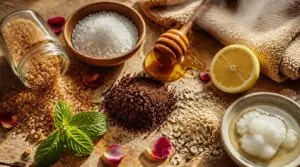
A great scrub starts in your kitchen, not a beauty aisle. Every ingredient brings its own texture and skin benefit to the mix, so the right pick depends on what your skin needs. Here’s what to reach for and why each one earns its spot in your routine.
If you’re not sure where to start, this guide on natural ways to exfoliate legs breaks down simple combinations that work for even the most sensitive skin.
Brown Sugar
A pantry staple does double duty here: brown sugar is one of the gentlest natural exfoliants for DIY body scrubs. Its molasses content keeps grains soft and slightly acidic, so it buffs away dead skin without scratching. This texture is achieved because brown sugar contains molasses.
- Soft, rounded granules
- Higher moisture than white sugar
- Mildly acidic pH
- Caramel-toned scent
- Great for sensitive skin
Perfect for a homemade body scrub when you want real skin texture improvement, minus the harshness.
Sea Salt
Sea salt brings coarser crystals than sugar, so it’s better suited to rough patches like heels and elbows rather than sensitive skin.
Harvested from evaporated seawater, it retains trace minerals like magnesium and calcium.
If you’re mixing a DIY body scrub, pair 1 cup sea salt with 1/4 cup jojoba or avocado oil.
Store it in a sealed jar—humidity causes clumping.
Ground Coffee
Coffee grounds do double duty: their gritty texture buffs away dead skin, while caffeine works as a vasoconstrictor, tightening skin and temporarily smoothing texture. They’re also rich in antioxidants that support healthy-looking skin.
Coarser grinds suit body scrubs; finer ones feel gentler. Bonus—used grounds don’t have to go to waste. Toss them in compost or use as odor absorbers once you’re done scrubbing.
Oatmeal
If your skin gets red or reactive fast, oatmeal is your gentlest option. Its saponins lift away oil and grime while leaving skin calm, not stripped.
Ground finely for a honey and oatmeal facial scrub—soothing, low-risk, and easy to fold into a regular skincare routine. Even sensitive or reactive skin usually tolerates it well.
Honey and Carrier Oils
Pairing honey with a carrier oil gives you the best of both worlds: honey pulls moisture into skin, while oil smooths and softens. They don’t mix easily, so stir well before each use to avoid separation.
For an extra layer of fragrance, try applying cologne without a spray for longer-lasting scent after your honey-oil blend soaks in.
- Honey acts as a natural humectant
- Carrier oils reduce friction and add slip
- Mix thoroughly to prevent oil-honey separation
- Leaves skin soft, hydrated post-rinse
Homemade Face Scrub Recipes
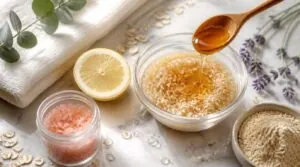
Your face needs a lighter touch than your body does, since the skin here is thinner and more reactive. That means swapping out coarse ingredients for gentler ones that clean without causing tiny tears. Here are four simple recipes that get the job done safely.
Gentle Brown Sugar Scrub
Melting granules make this the softest option on the list. Brown sugar dissolves as you rub it, so there’s no risk of microtears, just gentle exfoliation.
Mix with almond or coconut oil for a creamy texture that boosts skin hydration. Add honey for extra humectant power. Store sealed, and use it daily on normal to dry skin.
Soothing Oatmeal Honey Scrub
Redness-prone or reactive skin calls for something calmer than sugar or salt. This honey and oatmeal facial scrub delivers gentle exfoliation through finely ground oats, whose beta glucans soothe irritation on contact.
Mix oat powder with raw honey to form a thick paste. Honey builds a protective moisture barrier, supporting skin barrier repair while soothing oat textures work without microtearing—true DIY face scrub comfort using only natural ingredients.
Milk and Sugar Scrub
Milk isn’t just for drinking—it’s doing double duty as a natural exfoliant in this recipe. The lactic acid gently dissolves dull surface cells while granulated sugar buffs away roughness.
Use whole or goat milk for best results; mix with sugar into a paste, massage in circles, then rinse with warm water. Skin feels brighter and hydrated instantly.
Green Tea Sugar Scrub
Your afternoon cup can double as skincare. Green tea is rich in antioxidants that support skin brightening while sugar buffs away dullness.
You’ve got options for form:
- Torn-open tea bags
- Loose leaves
- Matcha powder
Mix with sugar and coconut or olive oil until paste-like, then add honey for stickiness. Store airtight, 2–3 weeks.
Homemade Body Scrub Recipes

Your body can handle a lot more scrubbing power than your face, so you can go bolder with texture and ingredients here. Think coarser grains, richer oils, and combos built for rough spots like elbows, knees, and heels. Here are four favorites worth keeping in your shower caddy.
Coffee Body Scrub
Coffee grounds are one of nature’s best skin-brightening exfoliants, and morning coffee waste won’t go to waste anymore. Grind beans fine for gentler texture, then mix with brown sugar, oatmeal, coconut oil, and olive oil to bind everything together. The oil helps grounds glide on wet skin instead of scratching.
Coffee’s antioxidant properties support healthy-looking skin, while a splash of vanilla adds warmth without overwhelming sensitive noses.
Sea Salt Body Scrub
Sea salt brings mineral skin benefits coffee can’t match, delivering magnesium and calcium for renewal while its natural antibacterial salt properties keep mixtures fresh longer.
- 1 cup sea salt
- 1/4 cup jojoba or avocado oil
- Optional: 10-20 drops lavender essential oil
- Store in a sealed glass jar
Mix well, then massage onto damp skin using circular motions to lift dead skin cells.
Cinnamon Vanilla Sugar Scrub
Where sea salt leans mineral, this one leans aromatic—warm cinnamon and sweet vanilla linger on skin for hours.
| Ingredient | Amount |
|---|---|
| Sugar | 3/4 cup |
| Brown sugar | 1/4 cup |
| Cinnamon | 1 tbsp |
| Almond oil | 1/2 cup |
Cinnamon’s natural salicylates support gentle exfoliation. Stir before each use to prevent oil separation, and adjust oil for your desired moisture level.
Coconut Oil Sugar Scrub
Simplicity wins here: just sugar and coconut oil, no fuss. A 2:1 sugar-to-oil ratio keeps texture grainy rather than dissolving. Softened (not melted) coconut oil makes for a creamy, scoopable base—brown sugar adds extra grit if you want it.
Mix sugar first, then fold in oil until blended. Add vanilla or citrus zest for scent, then pack into an airtight jar.
Sugar Versus Salt Scrubs
Sugar and salt both exfoliate, but they’re not interchangeable. One is gentle enough for your face, while the other can be too harsh for certain skin types and areas. Here’s how to tell which one your skin actually needs.
Best for Sensitive Skin
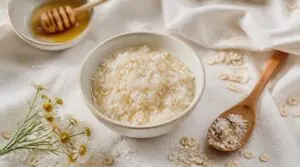
Your skin will tell you fast which base it prefers. For reactive or easily irritated skin, sugar and oatmeal beat salt every time—rounded granules mean fewer micro-scratches, and oatmeal’s soothing film adds gentle barrier support. Salt crystals feel harsher and more abrasive by comparison.
Stick with low irritation bases, keep formulas simple and unscented, and always patch test before using any new scrub on your face.
Best for Rough Areas
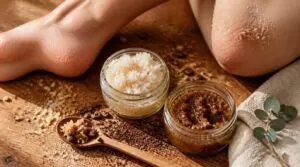
Rough patches on elbows, knees, and heels need more muscle than delicate skin does. Grab sea salt or coarse sugar for real buffing power:
- Coffee grounds lift dead buildup fast
- Sea salt’s sharp edges tackle calluses
- Brown sugar softens as it scrubs
- Oil bases cut friction, control pressure
Go slow, use light pressure, and let dissolution do the work before rinsing.
Face Versus Body Use

Why does the same scrub feel great on your arms but leave your cheeks blotchy? Skin thickness is the answer. Facial skin is thinner, more reactive, and holds more sebum, so it needs gentler exfoliation.
| Area | Texture | Best Approach |
|---|---|---|
| Face | Thin, hydrated | Fine sugar |
| Body | Thick, resilient | Coarse salt |
Body skin tolerates friction from clothing; your face doesn’t.
When to Avoid Salt
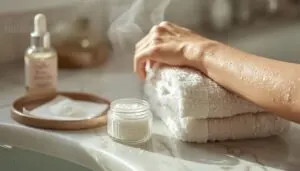
When should you skip sea salt entirely? Your skin will usually tell you.
- Damaged skin barriers or peeling from retinoids
- Inflamed acne lesions that are red or cystic
- Post-shaving sensitivity or fresh depilatory use
- Active skin infections like cold sores
If your skin condition feels off, do a patch test first, or skip it. Watch for over-exfoliation signs like tightness or flaking. When in doubt, ask your dermatologist.
Safe Exfoliation and Storage Tips

A great scrub only works if you use it the right way. Your skin can tell you a lot, and so can your storage jar, if you know what to watch for. Here’s what actually keeps your routine safe and your scrubs fresh.
How Often to Exfoliate
Your skin type sets the pace. Oily and normal skin handle two to three times weekly, while sensitive or dry skin does best starting once a week.
Face and body differ too, so treat them separately. Evening exfoliation pairs well with overnight skin renewal.
Tolerating it well? Increase gradually. Struggling? Scale back before irritation builds.
Avoid Irritated Skin
Some skin just isn’t up for a scrub that day, and that’s okay. Avoid irritated, sunburned, or broken skin, plus active rashes or breakouts.
Patch test new ingredients on your wrist first. If burning or redness shows up mid-scrub, stop right away—that’s your skin barrier asking for a break, not a challenge to push through.
Burning or redness mid-scrub isn’t a challenge to push through—it’s your skin barrier asking for a break
Moisturize After Scrubbing
That tight, squeaky feeling after rinsing? That’s your skin barrier losing water fast.
Moisturize while skin’s still damp—it locks in hydration better. Look for a mix of humectants (draw water in) and occlusives (seal it in), plus soothing agents like aloe or oatmeal.
Skip harsh actives today; keep your routine simple so your barrier can actually recover.
Store Scrubs Properly
Once your scrub’s made, storage matters just as much as the recipe. Airtight containers stop moisture from sneaking in, which prevents mold growth and keeps essential oils stable.
Keep jars in a cool, dry spot—humidity control is key.
Quick storage checklist:
- Use sealed glass jars, always
- Store away from sunlight and steam
- Label with the date made
- Keep scooping tools clean
- Toss after 2–3 weeks
Frequently Asked Questions (FAQs)
What is the best homemade exfoliating scrub?
Goldilocks had it right: not too rough, not too soft. The best scrub matches your skin type — fine sugar or oatmeal for sensitive faces, coarser salt or coffee for tougher body areas like elbows and knees.
Is it better to exfoliate with a sugar or salt scrub?
Neither wins outright — it depends on grain size and skin zone. Sugar dissolves fast, stays gentle for sensitive skin and sugar face scrub use, while sea salt’s coarser texture suits rougher body zones but risks more skin barrier irritation.
How to make Korean exfoliator at home?
Is fine grain always gentler? Not quite — it’s the pairing that matters. Mix rice powder with yogurt for brightening, milled oats for calming, or milk for soothing radiance. Rinse gently, then moisturize to lock in smoother, brighter skin.
What is the best natural exfoliator for aging skin?
A gentle oatmeal and honey mix suits aging skin best. Fine oat particles buff gently while honey’s humectant properties hydrate deeply, supporting collagen production and improved permeability without the harsh friction coarser salt or coffee grounds can cause.
Can exfoliating scrubs help reduce cellulite appearance?
Yes, but only temporarily. Massage and exfoliation smooth surface texture and boost circulation, creating a plumper look. Since cellulite involves deeper tissue, results fade quickly—think of it as a short-term touch-up, not true reduction.
Do essential oils need a patch test first?
Skipping a patch test feels harmless—until your skin disagrees. Dilute new essential oils in a carrier oil, test on a small area, and wait 24 hours. Watch for redness or itching before adding them to any DIY beauty recipes.
Should coconut oil scrubs be refrigerated in summer?
Coconut oil melts around 76°F, so refrigeration prevents oil separation in your DIY body scrub during summer.
Cooling restores texture consistency and helps prevent heat spoilage.
For natural ingredients that keep your skincare routine reliable and your skin hydration on point, a cool spot works best.
How does exfoliation improve other skincare product absorption?
Clearing away that veil of surface buildup opens dead cell barriers, letting products sink in deeper.
This boosts enhanced serum penetration, improves pore channel access, and helps nutrient delivery pathways—so your skincare routine actually works, giving skin real hydration.
Can exfoliation actually boost collagen production over time?
Gentle, consistent exfoliation can trigger fibroblast activity, encouraging real collagen signaling in the dermis. But results stay modest—smoother texture beats dramatic collagen gains. Pair scrubs with sunscreen and moisture for lasting skin barrier support, not scrubbing alone.
Conclusion
Picture a bride swapping her salon peel for a jar of brown sugar and honey the week before her wedding: calmer skin, zero redness, real glow. That’s the quiet power behind homemade exfoliating scrub recipes — they meet your skin on its own terms.
Match the ingredient to the job, rinse with warm water, then moisturize. Your cabinet already holds what pricey products promise. Consistency beats intensity. Glowing skin isn’t something you buy; it’s a habit you keep.