This site is supported by our readers. We may earn a commission, at no cost to you, if you purchase through links. This content is for general informational and educational purposes only and is not a substitute for professional medical, dermatological, or nutritional advice.
Most people grab an exfoliating acid off the shelf based on a friend’s recommendation or a glowing review—then wonder why their skin isn’t responding the way it should. The issue usually isn’t the product. It’s the chemistry.
AHA vs BHA chemical exfoliants solve fundamentally different problems. One works on the surface; the other works inside your pores. Using the wrong one for your skin type is like mopping the floor when the ceiling is leaking.
AHAs are water-soluble, which means they stay on top of the skin and dissolve the bonds holding dead cells together. BHAs are oil-soluble—they cut through sebum and slide directly into the pore lining. That single difference in solubility determines which acid belongs in your routine.
What follows breaks down exactly how each one works, which skin types benefit most, and how to use them without wrecking your barrier.
Table Of Contents
Key Takeaways
- AHAs are water-soluble and work on the skin’s surface to smooth texture and fade discoloration, while BHAs are oil-soluble and penetrate pores to dissolve sebum and clear congestion — making solubility the deciding factor in which one your skin actually needs.
- Your skin type is the clearest guide: dry or sensitive skin benefits most from AHAs like lactic acid, while oily, acne-prone, or congested skin responds better to BHA (salicylic acid) because it reaches where water-based acids can’t.
- Overexfoliation is the most common mistake — stinging, persistent redness, and sudden sensitivity to familiar products are signs your barrier is damaged, not adjusting, and mean you should stop immediately.
- Both AHAs and BHAs increase UV vulnerability, so daily broad-spectrum SPF 30+ isn’t optional — it’s the non-negotiable step that makes chemical exfoliation safe to sustain long-term.
AHA Vs BHA: Quick Comparison
AHAs and BHAs both exfoliate, but they work differently and aren’t interchangeable. Knowing where each one acts on your skin makes choosing between them a lot more straightforward. Here’s how they stack up across the factors that matter most.
If you’re curious about putting either acid to work at home, these homemade skincare tips for AHAs and BHAs walk through practical ways to use both safely and effectively.
If you’re still figuring out which approach suits your skin type, comparing chemical and physical exfoliation methods can help you build a routine that actually works for you.
Surface Exfoliation Versus Pore Clearing
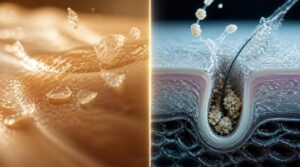
Think of chemical exfoliation as two jobs. AHAs dissolve dead cell bonds on the skin’s surface. BHAs go further — into the pore — loosening sebum debris and pore plugs that cause congestion. Both carry barrier disruption risks when overused. Regular use helps support the natural cell turnover cycle.
| AHA | BHA |
|---|---|
| Surface exfoliation | Pore clearing |
| Breaks dead cell bonds | Loosens pore plugs |
| Targets texture | Targets congestion |
| Outer skin layer | Inside follicle |
Water-soluble Versus Oil-soluble

Solubility determines where each acid actually works. Alpha hydroxy acids are water-soluble, so they stay at the skin’s outer, water-rich surface. Beta hydroxy acids are oil-soluble, letting them associate with lipids and travel into pores.
| Property | AHA | BHA |
|---|---|---|
| Solubility | Water-soluble | Oil-soluble |
| Delivery zone | Surface layer | Inside pore |
| Formulation need | Aqueous base | Emulsion system |
Mismatched phases cause separation — and inconsistent active delivery.
Best Skin Types
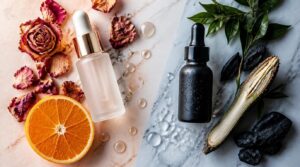
Where an acid works shapes who it works for.
| Skin Type | Best Acid |
|---|---|
| Dry or dull | AHA |
| Oily or congested | BHA |
| Acne-prone | BHA |
| Sensitive | AHA (low concentration) |
Dry skin benefits from AHAs’ surface smoothing. Oily and acne-prone skin responds better to BHA’s pore-clearing, oil-dissolving action. Sensitive types can cautiously use low-strength AHAs — patch test first.
Key Benefits Compared
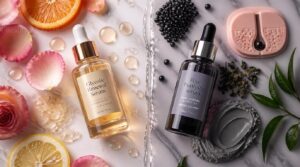
Each acid earns its place through a different specialty. AHAs smooth surface texture and support skin brightening by accelerating cellular turnover — useful for dullness, uneven tone, and fine lines. BHAs go deeper, clearing pore congestion and dissolving excess sebum where it builds.
| Benefit | Best Acid |
|---|---|
| Skin renewal process | AHA |
| Pore congestion | BHA |
| Hydration levels | AHA |
Main Irritation Risks

Both AHAs and BHAs can trigger irritant contact dermatitis — redness, stinging, or burning — especially when overused. Repeated exposure without recovery time builds cumulative sensitivity, making your skin barrier progressively weaker.
| Risk | AHA | BHA |
|---|---|---|
| UV sensitivity | High | Moderate |
| Barrier disruption | Yes | Yes |
| Mucosal irritation | Possible | Possible |
Overexfoliation is the most common mistake.
How Chemical Exfoliants Work

Chemical exfoliants don’t scrub your skin — they work smarter than that. They dissolve the bonds holding dead cells to your surface, triggering your skin’s own renewal cycle in the process. Here’s exactly how that happens, from cell shedding to the glow you’re actually after.
Dead Skin Cell Removal
Your skin sheds millions of cells daily, but they don’t always leave on their own. Chemical exfoliants — both AHAs and BHAs — work by dissolving keratinocyte bond dissolution, breaking the molecular "glue" that keeps dead cells clinging to the surface.
That buildup is what dulls your complexion. Once those bonds break, dead cell buildup clears, and skin texture visibly improves.
Skin Renewal Process
Think of your epidermis as a conveyor belt. Keratinocyte migration begins deep in the basal layer, where new cells form and push upward through distinct layers. As they rise, cornification stages transform them into flattened, keratin-filled corneocytes that eventually reach the stratum corneum and shed.
Chemical exfoliation accelerates this epidermal turnover, helping your skin resurface faster and more evenly.
Texture and Glow Benefits
Faster cell turnover leaves behind something visible: smoother, more even skin that reflects light consistently rather than scattering it in dull, irregular patches.
When dead buildup clears, your complexion stops looking flat or gray. Chemical exfoliation — whether AHAs targeting the surface or BHAs clearing pore congestion — reduces the texture irregularities that steal natural radiance, leaving skin looking clearer without needing extra shine.
Chemical Versus Physical Exfoliation
Scrubbing with a gritty cleanser feels satisfying, but it works through friction alone — and uneven pressure means uneven results. Unlike mechanical scrubbing, which risks micro-injury from abrasion,
Chemical exfoliation dissolves the bonds holding dead cells together, spreading uniformly across your skin regardless of technique. Alpha hydroxy acids and beta hydroxy acids work at a cellular level, making the process far more controlled.
What Are AHAs?
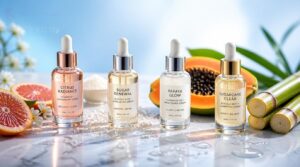
Alpha hydroxy acids aren’t a single ingredient — they’re a family of water-soluble acids, each with its own personality and skin job. Some penetrate fast and hit hard, others ease in slowly and bring moisture along for the ride. Here’s a closer look at the four you’ll most commonly find in your skincare lineup.
Glycolic Acid
Glycolic acid has the smallest molecular weight of all AHAs, letting it penetrate the epidermis more deeply than any other alpha hydroxy acid. That reach drives serious skin resurfacing. It works through four key mechanisms:
- Dissolves dead cells, revealing improved skin texture
- Stimulates collagen production over time
- Helps glycosaminoglycan synthesis for humectant water binding
- Delivers best results at pH 3.0–4.0
Lactic Acid
Unlike glycolic acid’s aggressive reach, lactic acid takes a gentler approach. Derived from milk lactose, it’s an Alpha Hydroxy Acid with a larger molecular size that slows penetration — reducing irritation while still delivering real exfoliation at the stratum corneum.
This makes lactic acid a smart pick for sensitive skin types, especially when paired with gentle Korean skincare techniques for glass skin that prioritize gradual, consistent exfoliation over intensity.
What sets it apart is lactate hydration: its ionized form binds water, making lactic acid one of the few AHAs that exfoliates and hydrates simultaneously — ideal for dry or sensitive skin.
Mandelic Acid
Derived from bitter almonds, mandelic acid carries a molecular weight of 152 Da — the largest among common AHAs. That size slows penetration considerably, which means less stinging and a lower irritation risk than glycolic or lactic acid.
- Tyrosinase inhibition gently fades dark spots and melasma
- Antibacterial properties support acne-prone, sebum-congested skin
- Works as a gentle chemical exfoliant for sensitive skin types
Citric Acid
Citric acid plays a quieter role than its AHA siblings. Rather than acting as a primary exfoliant, it earns its place as a pH buffer and stabilizer — its triprotic acid structure lets it donate protons in three stages, giving formulators precise control over acidity.
Its metal ion chelation also prevents ingredient degradation, keeping your product stable and your skin’s surface brighter.
Common Natural Sources
That supporting role is a reminder that most alpha hydroxy acids trace back to plants or fermentation:
- Sugarcane — yields glycolic acid, the smallest AHA
- Fermented dairy — natural source of lactic acid
- Almonds — starting point for mandelic acid
- Willow bark — natural root of BHA salicylates
Pine resin can support some formulas as a minor ingredient rather than a chemical exfoliant.
What AHAs Do for Skin
AHAs don’t just clear away dead skin — they actively work to improve what’s underneath. Depending on which acid you use and how often, the results can range from smoother texture to noticeably more even tone. Here’s what AHAs are actually capable of doing for your skin.
Fine Lines and Wrinkles
Collagen and elastin decline quietly over time, and skin gradually loses its structural bounce. Dehydration makes fine lines look sharper. AHAs speed up dead cell turnover, smoothing surface texture — and their antiaging benefits extend to fighting the oxidative stress that accelerates visible aging.
| AHA | Concern | Benefit |
|---|---|---|
| Glycolic | Collagen loss | Deep renewal |
| Lactic | Dehydration | Plumps lines |
| Mandelic | Expression lines | Gentle smoothing |
Sun Damage Improvement
Sun exposure leaves a paper trail on skin. AHAs tackle photoaging repair by clearing UV-damaged surface cells, revealing fresher texture beneath.
Three visible improvements:
- Smoother, less rough surface texture
- Brighter, more even overall tone
- Softer appearance of shallow lines
Always pair AHAs with broad-spectrum SPF 30+ — they increase UV sensitivity. Retinoids deepen renewal further, but AHAs are a strong starting point.
Hyperpigmentation and Dark Spots
Dark spots don’t all share the same origin. Post-inflammatory hyperpigmentation forms after acne heals, while solar lentigines build up from years of UV exposure, and melasma traces back to hormonal shifts like pregnancy or birth control use.
AHAs accelerate cell turnover, gradually pushing excess melanin toward the surface where it sheds. Consistent use brightens uneven tone over time.
Dry Skin Smoothing
Rough, flaky skin is often a barrier problem first. AHAs like lactic acid gently lift dead cell buildup while pulling moisture into the outer layers — making them ideal for dry skin smoothing.
Apply your AHA to damp skin, then layer a humectant like hyaluronic acid, seal with an emollient or occlusive. That sequence keeps freshly exfoliated skin flexible, not stripped.
Collagen-supporting Benefits
Your skin makes less collagen with every passing year — and that’s where AHAs earn their place in antiaging skincare. By accelerating dermal renewal, glycolic acid prompts the dermis to rebuild its extracellular matrix support structures, improving elasticity and firmness over time.
Think of it as prompting your skin to do its own repair work, rather than borrowing collagen from a jar.
AHAs prompt your skin to rebuild its own collagen — no jar required
What Are BHAs?
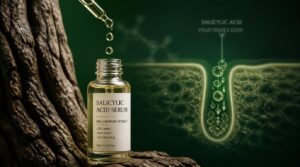
BHAs work differently from AHAs — they’re oil-soluble, which means they don’t just sit on the surface but push through into your pores. Salicylic acid is the star of this category, and it traces its roots back to willow bark. Here’s what makes BHAs worth understanding, broken down by their key characteristics.
Salicylic Acid
Salicylic acid — with the chemical formula C7H6O3 — is the most recognized BHA in skincare, originally sourced from willow bark. Its keratolytic action breaks down the bonds holding dead cells together, helping congested pores clear from within.
- Treats acne, blackheads, and clogged pores
- Carries mild anti-inflammatory properties
- Contraindicated if you have an aspirin allergy
- Available in concentrations usually below 3%
Oil-soluble Exfoliation
What makes BHAs uniquely effective isn’t just the acid itself — it’s the oil-soluble chemistry behind it.
Unlike water-based AHAs, salicylic acid travels through a nonpolar carrier, allowing it to merge with sebum rather than sit on top of it. This lipid film mechanism gives it controlled, even distribution across the stratum corneum, dissolving pore congestion without stripping surrounding skin lipids.
Pore Penetration
That oil-soluble chemistry doesn’t just coat the surface — it drives molecular diffusion directly into the pore canal.
Salicylic acid moves through sebum along a concentration gradient, reaching congestion that water-soluble AHAs can’t access:
- Surface buildup slows penetration depth
- Higher concentration increases diffusion force
- Viscosity affects how fast it spreads
- Consistent use compounds pore-clearing results
Willow Bark Origin
The Salix species — trees like Salix alba (white willow) — carry centuries of medicinal use behind them. Bark harvested from wild-grown willow branches contains salicin, which your body converts to salicylic acid: the oil-soluble Beta Hydroxy Acid driving modern acne treatment.
| Willow Bark Feature | Detail |
|---|---|
| Botanical genus | Salix |
| Common species | Salix alba, Salix fragilis |
| Harvest source | 2–3 year-old branches |
| Key compound | Salicin → salicylic acid |
| Historical use | Fever and pain relief |
Acne-focused Benefits
That salicin-to-salicylic-acid conversion isn’t just chemistry history — it’s what makes salicylic acid the go-to BHA for acne. Being oil soluble lets it slip into clogged pores where water-based acids simply can’t reach.
- Sebum management — reduces excess oil buildup inside the follicle
- Comedone prevention — dissolves blockages before blackheads or whiteheads fully form
- Inflammation reduction — calms redness around active acne lesions
- Post-acne discoloration — accelerates cell turnover to fade lingering dark spots
- Skin texture smoothing — clears dead cells trapped deep within pores
What BHAs Do for Skin

BHAs don’t just work on the surface — they go straight into your pores and get to work where most products simply can’t reach. That oil-soluble nature makes them uniquely suited to tackling the kind of congestion that shows up as breakouts, blocked pores, and persistent shine. Here’s what BHAs actually do for your skin.
Blackheads and Whiteheads
Blackheads and whiteheads both start the same way — sebum and dead skin cells clogging a hair follicle. The difference comes down to air exposure. When a pore stays open, the trapped material oxidizes and darkens. When it closes over, the contents stay pale.
Salicylic acid cuts through that buildup at the source, dissolving comedones from within.
Clogged Pores
Pores don’t clog overnight. Sebum, dead skin cells, keratin buildup, environmental grime, and hormonal oil fluctuations all layer together until the follicle is fully blocked.
Because salicylic acid is oil-soluble, it bypasses the surface and travels into the pore itself — the one place water-based ingredients simply can’t reach — making deep pore cleansing its defining strength.
Excess Sebum
Sebum doesn’t appear out of nowhere. Hormonal triggers, genetic predisposition, stress cortisol, dietary choices, and even environmental humidity all drive your sebaceous glands to overproduce oil.
That’s where salicylic acid earns its place. As an oil-soluble BHA, it dissolves into excess sebum directly, regulating the buildup before clogged pores even form.
Enlarged Pore Appearance
What you see isn’t always what’s actually there. Enlarged pores often look bigger because sebum plugs stretch the follicular walls, and shadows form inside those deeper openings — not because the pore itself has permanently widened.
BHA’s oil-soluble penetration clears that trapped debris, easing the pressure on pore walls. Over time, reduced congestion means less light contrast, and pores simply look smaller.
Acne Inflammation Support
Acne isn’t just a clogging problem — it’s an inflammatory condition. Salicylic acid, the primary BHA, does more than dissolve sebum; it helps modulate cytokine pathway activity, easing the immune signaling that drives inflammatory lesion progression.
That mild anti-inflammatory action means fewer angry, red papules forming. It also helps maintain epidermal barrier function, reducing redness flare-ups without compounding the irritation that aggressive exfoliation can trigger.
Choosing by Skin Type
Your skin type is the most reliable guide when choosing between AHAs and BHAs. What works for oily skin can easily overwhelm dry or sensitive skin, so matching the acid to your skin’s specific needs matters more than following trends. Here’s how each skin type lines up with the right exfoliant.
Dry Skin
Dry skin — clinically known as xerosis cutis — already struggles with compromised stratum corneum hydration, so the last thing it needs is an acid that strips further.
- Choose lactic acid for gentle exfoliation with built-in hydration
- Avoid high-concentration glycolic acid initially
- Support natural moisturizing factors post-exfoliation
- Address skin barrier restoration with a rich moisturizer after
- Limit AHA use to two or three times weekly
Alpha hydroxy acids work best here.
Oily Skin
Unlike dry skin, oily skin has the opposite problem — excess sebum production keeps pores congested and makeup sliding off by midday.
BHA (Beta Hydroxy Acid) is your clearest answer here. Its oil-soluble structure lets it penetrate pores directly, dissolving trapped sebum and debris that cause blackheads.
| Oily Skin Concern | BHA Solution |
|---|---|
| T-zone shine | Regulates sebum output |
| Clogged pores | Dissolves internal congestion |
| Blackhead formation | Clears follicular debris |
| Hormonal oil shifts | Maintains consistent sebum control |
| Makeup wear-off | Reduces surface oiliness |
Acne-prone Skin
When oily skin tips into recurring breakouts, the challenge shifts from shine to something more stubborn.
BHA is oil-soluble, which means it moves through sebum directly into clogged follicles — exactly where acne starts. Hormonal shifts drive sebaceous glands into overdrive, creating the comedones that eventually inflame into papules or pustules.
Target acne-prone skin by addressing:
- Sebum oxidation inside open pores
- Inflammatory lesions caused by bacterial buildup
- Post-breakout hyperpigmentation left behind after healing
Sensitive Skin
Sensitive skin demands a different starting point entirely. When your barrier is already compromised, even mild acids can trigger stinging, burning, or redness — especially on thinner areas like eyelids and cheeks.
Mandelic acid is your safest AHA entry point. Its large molecular size slows penetration, reducing irritation risk. Keep concentrations low, apply every other day, and always follow with SPF.
Combination Skin
Combination skin plays by its own rules — T-zone sebum surges while cheeks stay tight or flaky, and seasonal skin shifts can widen that gap further.
- Map your oily and dry zones before choosing products
- Direct beta hydroxy acids toward the T-zone
- Apply alpha hydroxy acids to drier cheek areas
- Adjust with environmental dryness factors each season
- Track uneven texture week to week
Chemical exfoliants work here — just not the same one everywhere.
AHA, BHA, and PHA Differences
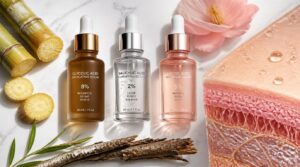
Not all chemical exfoliants work the same way — and knowing the difference between AHAs, BHAs, and PHAs puts you in control of what actually happens to your skin. Each one targets a different layer, suits a different skin concern, and carries its own rules for smart use. Here’s how they break down.
AHA Surface Exfoliation
AHAs work at the skin’s surface by weakening cellular bonds that keep dead skin cells clinging on. Once those bonds loosen, dead cells shed more readily, revealing smoother texture underneath.
Molecular weight matters here — smaller molecules like glycolic acid penetrate deeper into the epidermis, while larger ones like mandelic move more slowly. A pH between 3 and 4 keeps the exfoliation effective without tipping into irritation.
BHA Pore Exfoliation
Unlike AHAs, BHA works beneath the surface. Because it’s oil soluble, it can travel through sebum and penetrate the pore lining itself — a process called lipophilic penetration that water-soluble acids simply can’t replicate.
That reach matters for sebaceous gland cleansing. BHA regulates sebum flow, clears oxidation before blackheads form, and keeps pore lining health intact over time.
PHA Gentle Exfoliation
PHAs — polyhydroxy acids — take a slower path. Their larger molecules don’t rush past the skin barrier; they work at the surface, loosening dead cell buildup without triggering acute stinging.
What makes them distinct is the humectant exfoliation combo. Gluconolactone and lactobionic acid exfoliate while simultaneously drawing moisture in, so skin feels softer after use, not stripped. That’s a chemistry advantage most exfoliants can’t offer.
Sensitive Skin Options
Reactive skin calls for a gentler approach. PHAs lead here, but fragrance-free, low-irritation surfactant formulas matter equally when you’re working with AHAs and BHAs.
- Barrier repair lipids like ceramides
- Fragrance-free cleansers only
- Mineral sunscreen after any exfoliant
- Patch test on your inner arm first
One chemical exfoliant at a time protects skin barrier health and reduces skin irritation.
When to Use Each
Timing shapes how well your skin exfoliants perform against your skin complexion concerns.
| Exfoliant | Best Timing |
|---|---|
| AHAs | Evening application, leave-on |
| BHAs | Evening, leave-on protocols |
| PHAs | Morning or evening |
| Rinse-off acids | Weekly, short contact |
Match your chemical exfoliant to target area selection — AHAs for surface texture on cheeks, BHAs for the T-zone. Start with frequency adjustments to gradually build your tolerance.
Top 5 Chemical Exfoliant Products
Knowing which acid suits your skin is half the battle — the other half is finding a formula that actually delivers. The right product makes a real difference in how your skin reacts to chemical exfoliation. Here are five worth considering.
1. Juice Beauty Green Apple Exfoliating Face Mask
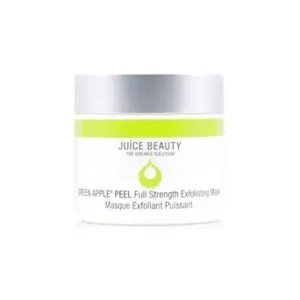
The Juice Beauty Green Apple Exfoliating Face Mask leads with a trio of AHAs — glycolic, lactic, and malic acid — to exfoliate at both surface and cellular levels. Vitamin C and Alpha-Lipoic Acid work alongside the SuperJuice Complex to target dullness and discoloration simultaneously.
Use it just 1–2 nights per week. Sensitive or rosacea-prone skin should skip it. Sun sensitivity increases after use, so daily SPF isn’t optional — it’s the rule.
| Best For | Anyone in their 20s or older looking to smooth skin texture, fade dark spots, and achieve a more radiant complexion without harsh synthetic ingredients. |
|---|---|
| Volume | 60 mL |
| Weight | 2.12 oz |
| Primary Acid | Glycolic, Lactic & Malic Acid |
| Product Form | Exfoliating Treatment |
| Skin Type | All types, 20s+ |
| Key Benefit | Pore minimizing & brightening |
| Additional Features |
|
- Triple AHA blend (glycolic, lactic, and malic acid) exfoliates deeply to improve texture, minimize pores, and reduce the look of fine lines
- Vitamin C and Alpha-Lipoic Acid work together to correct uneven skin tone and dullness
- Vegan, cruelty-free, and free from parabens, sulfates, and synthetic fragrances
- Not suitable for hypersensitive skin or rosacea — may cause redness, tingling, or flushing
- Increases sun sensitivity, making daily broad-spectrum SPF a non-negotiable
- Limited to 1–2 uses per week at night, so results take longer to build up
2. Antioxidant Glycolic Acid Facial Cleanser
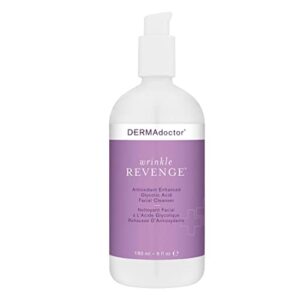
Where the Green Apple mask works in short bursts, this cleanser fits into your daily rhythm. Glycolic acid takes care of surface exfoliation while white tea and pomegranate extracts neutralize free radicals — so you’re exfoliating and protecting simultaneously.
It’s soap-free, oil-free, and fragrance-free, which keeps irritation low enough for twice-daily use. AHAs do increase UV sensitivity, so pairing it with broad-spectrum SPF 30 isn’t negotiable. Sensitive skin should start every other day and build from there.
| Best For | Anyone who wants daily exfoliation with antioxidant protection, especially those targeting dullness, uneven texture, or early signs of aging. |
|---|---|
| Volume | 6.09 fl oz |
| Weight | 6.1 oz |
| Primary Acid | Glycolic Acid |
| Product Form | Exfoliating Cleanser |
| Skin Type | All skin types |
| Key Benefit | Anti-aging & radiance |
| Additional Features |
|
- Glycolic acid exfoliates while white tea and pomegranate extracts fight free radicals — two benefits in one step
- Soap-free, oil-free, and fragrance-free formula is gentle enough for twice-daily use
- Hypoallergenic and non-comedogenic, making it a solid fit for most skin types
- AHAs increase sun sensitivity, so daily SPF 30 is a must — no skipping it
- Sensitive skin may experience mild stinging, especially at first
- The packaging can be tricky to dispense and may be prone to breaking over time
3. Mario Badescu Glycolic Acid Toner, 8 Fl Oz
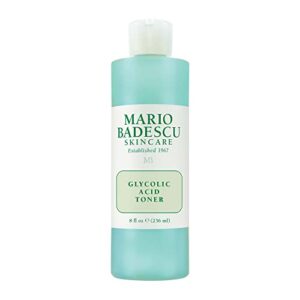
The cleanser covers your morning and evening routine, but a toner works differently — it sits on skin after cleansing rather than rinsing away. Mario Badescu’s alcohol-free glycolic toner lets the acid do its job without the drying effects that alcohol usually introduces.
At 8 fl oz, it pairs glycolic acid with aloe vera and grapefruit extract — hydration and antioxidants alongside exfoliation. Best suited for oily, combination, or congested skin types looking to smooth texture gradually.
| Best For | Those with oily, combination, or congested skin who want to gradually smooth texture, fade discoloration, and brighten their complexion without the harsh drying effects of alcohol-based toners. |
|---|---|
| Volume | 8 fl oz |
| Weight | 9.6 oz |
| Primary Acid | Glycolic Acid |
| Product Form | Exfoliating Toner |
| Skin Type | Oily & Combination |
| Key Benefit | Brightening & tone evening |
| Additional Features |
|
- Pairs glycolic acid with aloe vera and grapefruit extract, so you get exfoliation and hydration in one step
- Helps fade old acne scars, uneven tone, and dullness over time with consistent use
- Preps skin to absorb serums and moisturizers more effectively after cleansing
- Can cause tingling or redness at first, especially for sensitive skin
- Should be avoided on active or broken-out acne, limiting use during flare-ups
- Risk of irritation or barrier disruption if layered with other strong exfoliants or used too frequently
4. Dermalogica Gentle Cream Exfoliant Face Mask
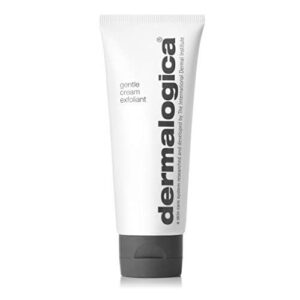
Toners suit daily use, but sometimes your skin needs something that sits longer. Dermalogica’s Gentle Cream Exfoliant Mask takes a different approach — it combines lactic and salicylic acid with fruit enzymes in a cream base, giving both AHA hydration and BHA pore-clearing in one step.
Leave it on for 10 to 15 minutes, twice weekly. Aloe vera keeps irritation minimal, making it workable for sensitive and acne-prone skin without the harshness a straight acid serum can bring.
| Best For | Anyone with sensitive, combination, or acne-prone skin who wants a gentle weekly treatment that exfoliates and hydrates at the same time. |
|---|---|
| Volume | 2.5 fl oz |
| Weight | 3.21 oz |
| Primary Acid | Alpha & Beta Hydroxy Acids |
| Product Form | Exfoliating Mask |
| Skin Type | Sensitive & Combination |
| Key Benefit | Texture & hydration boost |
| Additional Features |
|
- Combines AHA and BHA acids with fruit enzymes for thorough yet gentle exfoliation in one step
- Aloe vera helps calm the skin, making it suitable even for those prone to irritation or breakouts
- Free from gluten, parabens, and animal-derived ingredients, and certified cruelty-free by both Leaping Bunny and PETA
- Not safe to use if you’re already on a medically prescribed exfoliation regimen
- Requires 10–15 minutes per session, so it’s not a quick, rinse-off treatment
- May cause a mild tingling sensation, which could be off-putting for those with very reactive skin
5. Clarifying and Hydrating AHA Toner
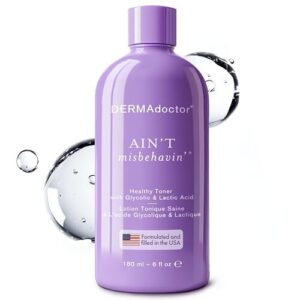
Where the Dermalogica mask goes deep on treatment nights, a daily-use toner covers the maintenance in between. This dual AHA formula — glycolic and lactic acid together — clears oils, impurities, and makeup residue without stripping moisture. Glycolic takes care of the deeper surface exfoliation; lactic keeps hydration intact.
It’s oil-free and non-comedogenic, making it a practical fit for oily, blemish-prone, or combination skin. Use it after cleansing, then let serums absorb into freshly cleared skin.
| Best For | Anyone with oily, blemish-prone, or combination skin who wants a low-maintenance daily toner that exfoliates and hydrates without causing dryness. |
|---|---|
| Volume | 6 fl oz |
| Weight | 9.6 oz |
| Primary Acid | Glycolic & Lactic Acid |
| Product Form | Exfoliating Cleanser |
| Skin Type | Oily & Combination |
| Key Benefit | Smoothing & brightening |
| Additional Features |
|
- Dual AHA formula (glycolic lactic acid) tackles both surface exfoliation and moisture retention at once
- Oil-free and non-comedogenic, so it won’t clog pores or add unnecessary weight to the skin
- Preps skin for better serum absorption by clearing away dead cells and debris
- The dispenser nozzle is slow and awkward, making application frustrating and wasteful
- Can cause burning or irritation, especially for those with sensitive skin
- May need to be neutralized with water or baking soda if skin reacts poorly
Safe AHA and BHA Use
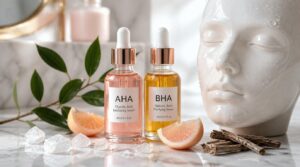
Getting the most from chemical exfoliants comes down to how you use them, not just which ones you choose. A few straightforward habits can mean the difference between glowing skin and an irritated, compromised barrier. Here’s what you need to know to use AHAs and BHAs safely.
For a gentler routine, explore the skin benefits of proper exfoliation and give your barrier time to adjust.
Start Low and Slow
Your skin needs time to adjust to any chemical exfoliant. Begin with once every 2–3 days, using the lowest concentration available — a mild toner rather than a high-strength peel. Patch test first on your jawline and wait 48 hours.
Only increase frequency after 1–2 comfortable weeks, keeping your routine simple: cleanser, moisturizer, sunscreen, and one exfoliant.
Avoid Over-exfoliation
More isn’t better with chemical exfoliants. Stacking glycolic acid and salicylic acid on the same night, or adding retinoids to the mix, pushes your skin past its tolerance fast.
Intense stinging or burning means stop — mild tingling is normal, burning isn’t. Drop frequency before concentration. Let irritation fully clear before reintroducing any acid.
Watch Barrier Damage Signs
Your skin will tell you when chemical exfoliation has crossed a line. Persistent redness lasting 24–48 hours, tightness, flaking, or a sudden spike in sensitivity to products you’ve used for months — these aren’t adjustment phases. They’re signals of barrier damage.
If everything stings and your skin looks dull despite normal cleansing, pause all AHAs and BHAs entirely.
Use Sunscreen Daily
AHAs and BHAs make your skin more vulnerable to UV damage — that’s not a minor footnote, it’s a huge part of using them safely.
- Choose broad-spectrum SPF 30+ to block both UVA and UVB rays
- Apply generously — most people use too little to reach the labeled protection
- Don’t skip on cloudy days; UV rays penetrate overcast skies
- Reapply every two hours outdoors, especially after sweating
Sunscreen isn’t optional here. It’s the finish line.
Pregnancy and Salicylic Acid
Salicylic acid — a BHA — carries a specific caution during pregnancy. The FDA classifies it as Pregnancy Category C, meaning fetal risk can’t be ruled out. Risk depends on dose and absorption, not a blanket ban.
| Factor | Lower Exposure | Higher Exposure |
|---|---|---|
| Concentration | Below 2% topical | Above 2% leave-on |
| Area treated | Small, localized spot | Large skin surfaces |
| Trimester | First or second | Third trimester |
Avoid it if pregnant or breastfeeding.
Frequently Asked Questions (FAQs)
Can AHAs and BHAs be layered together safely?
Yes, but with caution. Cumulative acid exposure rises when you layer both, increasing irritation risk. Alternate application schedules — AHAs one night, BHAs another — let your skin absorb each without compounding barrier stress.
How long before results from chemical exfoliants appear?
Spoiler: your skin isn’t a vending machine. Consistent use over 4–6 weeks lets cell turnover (roughly 28 days) do its work — revealing smoother texture, clearer pores, and real brightening.
Do chemical exfoliants interact with retinol or vitamin C?
Yes — chemical exfoliants can conflict with both retinol and vitamin C. Spacing actives across days, rather than layering same-night, keeps your barrier intact and each ingredient working at full strength.
What concentration is best for first-time users?
Start with 5–10% for AHAs (glycolic or lactic acid) and 5–2% salicylic acid for BHAs. Leave-on formats demand the lower end — your skin barrier needs time to adapt before you push higher.
Should chemical exfoliants be used morning or night?
Night is the safer choice. Your skin is more exposed to UV damage after morning exfoliation, and nighttime skin repair aligns naturally with when exfoliation does its best work.
Conclusion
You don’t need to master every acid at once. The gap between clear, healthy skin and constant guessing usually comes down to one question: what does your skin actually need right now?
That’s where AHA vs BHA chemical exfoliants stop being confusing and start being useful. AHAs smooth the surface. BHAs clear what’s underneath. Pick based on your skin’s behavior—not the buzzword on the label—and you’ll stop chasing results you never quite reach.