This site is supported by our readers. We may earn a commission, at no cost to you, if you purchase through links. This content is for general informational and educational purposes only and is not a substitute for professional medical, dermatological, or nutritional advice.

A thick beard sounds like a blessing until you’re standing in the bathroom at 7 a.m., comb stuck halfway through, wondering how something on your own face defeated you. That coarse, wiry texture isn’t a flaw — it’s just hair with strong opinions and zero patience for neglect.
Most guys attack the problem with trimming scissors and call it a day. That fixes the silhouette for about 48 hours. What actually tames thick, unruly beard hair is a system: the right cleansing routine, daily hydration, proper tools, and a shaping strategy that works with your hair’s grain instead of against it.
Taming a thick unruly beard takes about ten minutes a day once you know what you’re doing. Everything you need is here.
Table Of Contents
Key Takeaways
- Washing your beard two to three times a week — not daily — keeps natural oils intact and prevents the dryness that makes coarse hair harder to manage.
- Applying beard oil to towel-damp hair (not dry, not dripping) maximizes absorption and locks moisture into both the strands and the skin underneath.
- Daily downward brushing with a boar bristle brush, followed by a wide-tooth wooden comb, physically trains thick hair to lie flat over time — no product substitutes for that repetition.
- Neckline placement just above the Adam’s apple, trimmed only on dry hair, is the single structural decision that separates a shaped beard from an overgrown one.
Start With a Clean Beard

Everything starts with a clean foundation. Dirt, oil buildup, and dead skin are working against you every single day. Here’s how to wash and prep your beard the right way.
A proper beard wash routine tackles that buildup at the root, setting the stage for everything else you do to actually work.
Wash Two to Three Times Weekly
Most guys wash their beard every day. That’s actually too much. Two to three times weekly is the sweet spot for beard health and hygiene — frequent enough to clear sweat and product residue, gentle enough to leave your natural oils intact.
Strip those oils too often, and your beard care routine fights itself.
Use Beard Shampoo
Regular soap strips your face bare. Beard shampoo is formulated specifically for coarser facial hair and the sensitive skin underneath — it cleans without destroying your skin’s pH balance.
It pulls out sebum buildup, sweat, and bacteria that cause odor, without leaving your skin tight and flaky.
Scalp shampoo just doesn’t cut it here. Using specialized beard washes helps prevent irritation and dryness.
Condition After Every Wash
Shampoo opens the door — conditioner closes it. Once you’ve washed, your beard hair is clean but also stripped. Beard conditioner rebuilds what the wash takes out.
Apply it after every wash:
- Work it through damp hair, root to tip
- Let it sit for sixty seconds
- Rinse with cool water to seal the cuticle
Coarse hair drinks this up. Softening coarse texture starts here, and skin moisture underneath stays protected from flakes and irritation.
Remove Buildup and Beardruff
Clean hair only stays clean if the skin underneath is clear too. Product residue, sweat, and oil buildup block your beard shampoo from doing its job properly.
For beard dandruff, reach for a wash with zinc pyrithione or tea tree oil. These target the skin, not just the strands. A weekly reset cleanse clears the slate so your oils and balms can actually absorb.
Dry Before Trimming
Wet hair lies flat. Dry hair tells the truth.
Wet hair deceives; only dry hair reveals your beard’s true shape
Pat with a microfiber towel, then let it sit until damp — not dripping. This prevents moisture rebound, where trimmed strands snap shorter once dry.
- Pat, don’t rub — friction lifts cuticles
- Wait until ends stop dripping
- Comb through to check for wet clumps
- Trim only when hair holds its natural shape
Dry hair reveals gaps and flyaways clearly. You won’t overcut what you can actually see.
Soften Beard Hair Daily

A clean beard is just the starting point — keeping it soft is where the real work happens. Coarse, dry hair doesn’t just look rough; it feels rough, and no amount of trimming fixes that. Here’s what to add to your daily routine to change that.
The right tools make all the difference, so knowing exactly what’s inside a beard grooming kit helps you build a routine that actually tackles dryness and coarseness at the source.
Apply Beard Oil Damp
Timing is everything. Apply beard oil when your beard is towel-damp — not dripping, not bone dry. That moisture window lets the oil spread faster and reach the skin underneath.
Dispense 3 to 6 drops into your palm, rub your hands together, then work it through with downward strokes. Follow up with a comb to lock in even coverage.
Hydrate Skin Underneath
The beard is just a passenger. The skin underneath is doing the real work — and if it dries out, you’ll feel it as itch, flake, and tight discomfort.
Humectants like glycerin pull water into the skin’s outer layer. Beard oil locks that moisture in with an occlusive film, cutting water loss before it starts. Healthy skin means softer, more manageable hair above it.
Use Balm for Control
Oil hydrates. Balm holds it all together.
Scoop a pea-sized amount, melt it between your palms, then work it root to tip. That wax component lets you mold direction and lock flyaways down without a greasy finish.
The matte result looks intentional — not overdone. Light-to-medium hold means you can reshape throughout the day without reaching for heavier products.
Deep Condition Weekly
Once a week, deep condition your beard.
Fifteen to 30 minutes with a moisturizing treatment rebuilds elasticity and strength — strands stretch instead of snap. Your porosity level decides how often.
- High porosity: condition twice weekly for better beard hydration
- Low porosity: every 10–14 days prevents limpness
- Apply beard butter or beard balm as your base layer
- Rinse fully — leftover product weighs texture down
Try Growth-supporting Balms
Growth balms do double duty — they soften while actively feeding your follicles. Look for formulas with biotin and nourishing fats like shea butter. These work as emollients, filling gaps between skin cells and coating each strand. The occlusive wax barrier locks in that moisture so it doesn’t evaporate.
Melt a pea-sized amount between your palms, then press it into the roots.
Train Hair With Proper Tools
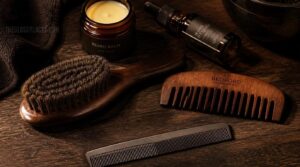
The right tools make all the difference between a wild beard and a controlled one. Your brush and comb do more than just style — they actually teach your hair where to go over time. Here’s what you need in your kit to make that happen.
Use a Boar Brush
A boar bristle brush does more than style — it works the oil you’ve already applied into each strand, from root to tip.
- Stiff bristles reach dense growth and cut down on cheek pouf
- Short downward strokes train hair direction and reduce frizz
- Skin contact at the roots stimulates circulation and loosens buildup
Brush on slightly damp hair for the most even distribution.
Comb With Wide Teeth
The brush controls density — the comb controls separation. Once your oil is worked in, a wide-tooth comb moves through thick growth without yanking hair out by the root. The wider gaps slide past knots gradually, not aggressively.
Wooden combs cut static better than plastic and won’t snag wiry texture. Run it through once to distribute product evenly and settle the shape.
Brush Downward Daily
Once the comb has done its work, the brush takes over. Daily downward strokes train your hair to fall in one direction instead of fanning out randomly.
- Use long, smooth passes from root to tip
- Brush once or twice daily — not more
- Let oil application make strokes glide easier
- Consistent direction reduces frizz and static buildup
That repetition is what actually tames an unruly beard over time.
Detangle Without Breakage
Brushing daily helps, but knots still form — especially in thick beards. When they do, don’t force the comb through. Start at the tips, work upward, and loosen stubborn spots with your fingers first.
A slip-enhancing detangler or light oil reduces friction so the beard comb glides instead of yanks. Divide dense sections and work each one separately. Less force, less breakage.
Reduce Frizz and Static
Frizz is mostly a moisture problem. Beard oil on damp hair coats each shaft and locks hydration in before it escapes.
Follow up with a smoothing balm — a pea-sized amount tames flyaways and adds humidity resistance. For stubborn static, an ionic hair dryer neutralizes charge while aligning strands in one direction. Keep heat low. Dry it fully, and frizz won’t creep back.
Shape The Beard Strategically
Cleaning and softening get your beard ready, but shape is what makes it actually look intentional. A thick beard without structure just reads as overgrown, no matter how soft or well-oiled it is. Here’s how to get the lines right.
Define The Neckline

The neckline makes or breaks your beard shape. Set it just above the Adam’s apple, then curve it outward toward each jaw corner.
- Locate your Adam’s apple
- Place one finger above it
- Trace a shallow curved line outward
- Taper density downward gradually
- Always trim dry for precision
Too low looks heavy. Too high leaves bare neck skin exposed. Get the placement right, then maintain it often.
Trim Flyaways With Scissors

After nailing your neckline, flyaways are next. Brush downward first — stray hairs that poke past the outline become easy to spot.
Grab sharp beard trimming scissors. Snip only what clearly extends beyond the surrounding hair. Work in tiny cuts, not one aggressive slice.
| Step | Tool | Goal |
|---|---|---|
| Spot strays | Boar brush | Make flyaways visible |
| Trim carefully | Sharp scissors | Remove outer frays only |
| Re-check | Wide comb | Catch missed strays |
Scissors beat a trimmer here — more control, less risk of thinning your beard’s bulk.
Fade Sideburns Gradually

Sideburns without a fade look like a hard wall between your beard and your haircut.
Start with a longer guard at the top, then step down one size at a time moving lower. Use short, overlapping strokes upward toward the connection point. Keep both sides identical. Touch it up every one to two weeks before the fade turns patchy.
Keep Chin Length Structured

The chin is where structure lives or falls apart. Always trim dry — wet hair lies longer than it actually sits.
- Mirror angle viewing: check the side profile, not just head-on
- Dry trimming accuracy: only cut what lies naturally
- Chin blending techniques: leave a soft border, no hard step
- Preventing chin pyramiding: keep density even across left, center, right
Clean Edges Precisely

Sharp edges don’t lie. Set your neckline placement just above the Adam’s apple, then use a detail trimmer in short, controlled strokes — never drag it.
Use a comb as a guide to lift hairs to the exact height before cutting. Check both sides in your mirror. After edging, apply a light beard oil to calm irritation and lock the line in.
Control Stubborn Beard Texture

Some beards don’t respond to brushing alone — the texture fights back. Heat and wax are your next line of defense. Here’s how to use them without wrecking what you’ve built.
Blow Dry With Tension
Wet hair stretches — lean into it. Tension blow drying holds a section taut while airflow dries it from root to end. Angle with the grain, not against it.
- Attach a comb attachment for section control
- Detangle before you start drying
- Apply heat protectant first
- Direct airflow from roots to ends
- Work damp, not soaking wet
Less tugging, less frizz.
Use Low Heat Settings
High heat is the enemy of thick beard hair. It dries aggressively, lifts the cuticle, and leaves your beard wiry and rough.
Keep your dryer on low. Hold it 6–8 inches out. Short passes, keep it moving. You want damp-to-dry — not bone-dry — so the hair stays pliable enough to shape without extra heat.
Apply Heat Protectant First
Low heat helps, but it’s not enough on its own. Heat protectant is your real defense.
Towel-dry first — wet hair causes patchy coverage. Then spray or work the product through evenly, hitting the mid-lengths and root area.
Key steps before any heat tool:
- Towel-dry to remove excess water
- Apply protectant to damp, not dripping, hair
- Comb through for even distribution
- Let it settle one to two minutes
Then style.
Wax Unruly Sections
Protectant sets the base. Now beard wax takes care of what heat alone can’t fix.
Warm a pea-sized amount between your fingers until it loosens and spreads. Press it in, then guide — don’t just swipe across the top. Directional styling is the whole point: smooth along the grain, and flyaways stop fighting you.
For a deeper look at technique and timing, this step-by-step mustache wax application guide walks through exactly how grip, heat, and direction work together.
| Wax Type | Hold Strength | Best For |
|---|---|---|
| Beeswax base | Strong | Thick, curly sections |
| Fiber grip wax | Medium-strong | Grip and separation |
| Medium-hold wax | Flexible | Lighter daily control |
| Low-shine wax | Medium | Natural-looking finish |
| High-shine wax | Strong | Slick, polished styles |
Build thin layers. Too much wax and you’re adding residue, not control.
Prevent Beard Bedhead
Most of the damage happens while you sleep. Silk pillowcases cut friction dramatically — cotton grabs and twists beard hairs all night.
Never go to bed with a damp beard. Dry it to about 80 percent, finish with cool air, then add a leave-in conditioner on the ends.
Back sleeping reduces uneven compression. A night wrap locks everything in place.
Frequently Asked Questions (FAQs)
Can diet affect beard thickness and growth rate?
Yes. What you eat builds what grows. Protein and keratin, zinc and follicles, omega-3s, biotin — your diet directly shapes beard density, growth rate, and texture. Feed the follicle right, and results follow.
How does stress impact beard health and texture?
Stress spikes cortisol, which disrupts testosterone and pushes follicles into rest, causing stress-induced shedding, patchiness, and brittle texture. Reduced blood flow starves follicles of nutrients, leaving your beard thin and rough.
Are beard supplements worth taking for coarse hair?
Maybe. Biotin and zinc help most when you’re deficient — not just because your hair is thick. If your diet’s solid, a vitamin spray or beard growth balm will do more, faster.
Does beard color affect how unruly it appears?
Beard color changes how unruly your beard looks — before you touch a single product. Lighter, red-toned hair scatters more light, making flyaways obvious. Darker eumelanin absorbs light, blending strands visually and reducing contrast.
Can genetics limit how tame a beard gets?
Genetics set your ceiling. Follicle density, androgen receptor sensitivity, and inherited curl patterns from keratin gene expression all shape how your beard naturally behaves — no product fully overrides that blueprint.
Conclusion
Studies show men who follow a consistent grooming routine are 60% more likely to stick with it long-term. That consistency is exactly what separates a beard that commands a room from one that just exists on your face.
Learning how to tame a thick unruly beard isn’t about fighting your hair — it’s about understanding it. Clean it. Soften it. Shape it. Ten minutes a day builds the kind of beard that looks intentional, not accidental.