This site is supported by our readers. We may earn a commission, at no cost to you, if you purchase through links. This content is for general informational and educational purposes only and is not a substitute for professional medical, dermatological, or nutritional advice.
Ever notice how a lopsided mustache draws more attention than no mustache at all? One side dips lower, the tips point in different directions, and suddenly that’s all anyone sees. Growing the hair is the easy part. Shaping it, that’s where most guys lose the plot.
Here’s the thing barbers know that clients don’t: symmetry beats length every time. A mustache trimmed a half-inch shorter but perfectly even will always look sharper than a long, uneven one.
Grab your comb and scissors. Follow these mustache shaping and trimming tips, from prep work to daily maintenance, and you’ll get results that hold their shape for weeks.
Table Of Contents
Key Takeaways
- Symmetry matters more than length, so a shorter, even mustache always looks sharper than a longer, uneven one.
- Always trim dry hair, not wet, since wet strands stretch out and trick you into cutting off too much.
- Work from the edges inward and check both sides often, using side angles (not just a straight-on mirror) to catch shadows and gaps.
- Weekly trims paired with daily combing keep your shape looking intentional, since consistency builds a good mustache more than any single trim.
Prepare Your Mustache for Trimming

Before you pick up a single tool, your mustache needs to be clean, dry, and ready to work with. Skipping this step is how guys end up with a lopsided trim they didn’t see coming. Here’s exactly how to get your mustache prepped and primed for shaping.
If you want a step-by-step breakdown before grabbing your scissors, this guide on how to trim a mustache evenly walks you through the process so you don’t end up second-guessing every snip.
Wash and Condition Mustache Hair
Before you touch scissors to whiskers, wash up. Work a dime-sized dab of beard shampoo into your facial hair, massaging in circles to hit the roots and skin, not just the surface hairs. That’s where sebum and dead skin build up.
Follow with beard conditioner, coating each strand for softer, more manageable mustache hairs before trimming. Cleansing and conditioning are foundational to any effective hair care routine, removing residue while restoring moisture for easier detangling and styling.
Rinse Away Product Residue
Now rinse, and don’t rush it. Use lukewarm water and run your fingers through every strand until the slippery feeling is gone.
- Feel for soapy residue on strands
- Test if beard oil absorbs quickly
- Check for oily film pooling
- Try a baking soda rinse for buildup
- Inspect hair under good lighting
Separate hairs as you rinse, this exposes hidden pockets your beard shampoo and conditioner left behind.
Dry Your Mustache Completely
Grab a towel and pat, don’t rub, until no dampness remains. Wet hairs stretch longer, so cutting now means over-trimming once dry.
Give it 8-15 minutes, or use cold air drying to speed things along. Check for dampness by pressing a dry section against your lip. Dry hair trims accurate. Wet hair lies to you.
Comb Hairs Straight Downward
Once dry, pick up a fine-tooth comb and pull it straight down through the mustache, section by section. This is your real hair length assessment, since dry hairs won’t lie to you like wet ones do.
Working right, left, then middle keeps things even and sets up an honest symmetry check before any scissors touch the hair.
Choose Your Desired Mustache Shape
Before you cut a single hair, decide what you’re actually building toward. Look in the mirror and check your face shape against style options: square jaws carry a walrus well, round faces want a pencil or chevron, ovals can wear almost anything.
Ask yourself:
- Does this style match my face shape?
- Can I commit to daily upkeep?
- Does it fit my personality?
Shape and Trim Your Mustache
Now that your mustache is clean, dry, and combed out, it’s time to get to work with the scissors or trimmer. Shaping takes a steady hand and a clear plan, not guesswork. Here’s how I break it down, step by step, to get clean lines and even results every time.
If you’re new to this, working through a beginner’s guide to mustache trimming first can help you avoid common shaping mistakes.
Define The Upper Lip Line
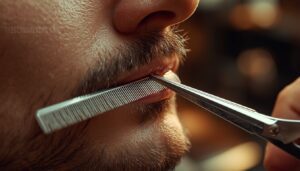
That upper lip line makes or breaks your whole mustache. Comb hairs straight down, then use the comb edge as a barrier at your lip. Snip stray growth with mustache scissors for lip line precision. Keep hair at 2-3mm so you’ve got material to guide clean cuts. This upper lip contouring step sets the foundation for real symmetry.
Trim From Edges Inward

Work your trimming scissors from the outer corners toward the center, then repeat from the opposite side. This perimeter-first approach builds your frame before touching the middle.
Snip tiny sections, comparing sides often. That’s balanced side trimming, and it beats guessing at symmetrical length control halfway through your mustache shaping session.
Reduce Bulk With Combing
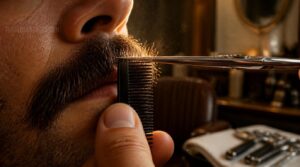
Bulk hides under length, not just in it.
Comb your mustache straight up so hairs stand on end, then snip anything poking past the comb teeth. This comb-guided length control keeps your base volume intact while trimming scissors only remove excess.
Start light, check often. You can always take more off, but you can’t glue hair back on.
Trim light and check often, because you can always cut more but never glue hair back on
Check Symmetry From Both Sides

Straight-on mirrors lie. Turn your head slowly side to side and check the lip line alignment at each angle, since shadows hide gaps a flat view misses.
Compare hair density on both sides, then step back for a full profile check. Match edge distance to your mouth corners. That’s your real symmetry test, not just a quick glance.
Detail Edges and Stray Hairs

Now for the fine work. Comb down again and turn your head side to side, spotting hairs that broke rank.
Grab your trimming scissors for precision trimming on stray hairs, snipping small sections along the perimeter. Switch to a detail trimmer for crisp edge cleanup under your nose.
Merge the edges so they flow into the rest of your groomed mustache, not a harsh line.
Style and Maintain Your Mustache
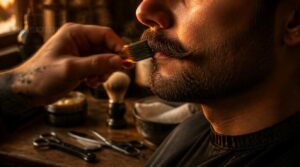
You’ve got the shape down, so now it’s time to make it stick. Styling isn’t a one-and-done job, it’s a habit you build day by day. Here’s what that habit looks like in practice.
Match Styles to Face Shape
Before picking a shape, check your face in the mirror. Compare forehead, cheekbones, and jawline.
- Round face: chevron or angled styles add angularity
- Heart face: fuller styles balance a wider forehead
- Oval face: controls handlebar or chevron with ease
Jawline width matching keeps your mustache shaping proportional, not just trendy.
Train Hairs With Daily Combing
Once you’ve matched a style to your face, lock it in with daily combing. Use a fine-toothed mustache comb at a 45-degree angle, working outward from center. Best time? Right after a shower, hair’s soft then. Add a drop of Vitamin E oil first. Coarse hair needs more pressure, fine hair less.
Consistency trains growth direction.
Use Wax for Shaping
Combing trains direction, but wax locks it in. Scoop a pea-sized amount, rub between fingers until smooth and clump-free, then work it through from roots to tips.
For handlebar curls or crisp lip lines, wax gives you control scissors can’t. It’s solid at room temp, softens with warmth, and holds until you shampoo it out.
Moisturize Hair and Underlying Skin
Wax holds shape, but dry hair still needs care. Massage a few drops of beard oil into your mustache and the skin beneath, working root to tip. Choose fragrance-free, noncomedogenic formulas to avoid irritation.
- Softens bristly hairs
- Prevents dryness under nose
- Restores skin barrier
- Reduces flaking
- Eases combing
Maintain Shape With Weekly Trims
Rarely does a mustache hold its shape without weekly upkeep. Trimming frequency consistency beats sporadic big chops every time.
| Growth Rate | Trim Interval |
|---|---|
| Slow | 10 days |
| Average | 7 days |
| Fast | 5 days |
Adjust based on your growth. Small weekly snips protect shape preservation, avoid uneven cuts, and keep precision trimming manageable instead of a wrestling match.
Top 5 Mustache Trimming Tools
The right tools make all the difference between a clean mustache and a choppy mess. You don’t need a huge kit, just a few solid pieces that handle trimming, detailing, and daily upkeep. Here are my top five picks worth adding to your grooming lineup.
Before diving into the tools, it helps to nail down your ideal style — check out this guide on how to maintain mustache length so you know exactly what you’re working toward.
1. Philips Norelco Multigroom 7000 Trimmer Kit
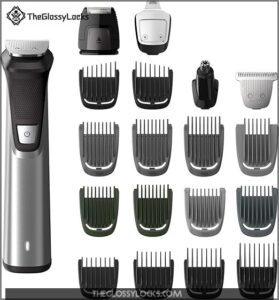
Want one tool that controls your mustache and everything else on your body? The Philips Norelco Multigroom 7000 comes with 23 attachments and DualCut self-sharpening steel blades, no oil needed. It’s shower-friendly, runs up to five hours cordless, and the detail trimmer nails clean lip lines.
Downside: the blade head’s tough to remove, and guards can loosen with heavy use. Still, for guys who want mastery over their whole grooming routine, it’s a solid all-in-one workhorse.
| Best For | guys who want one trimmer to handle beard, head, and body grooming without switching tools. |
|---|---|
| Trimming Use | Beard/head/body trimming |
| Material | Stainless steel blades |
| Portability | Cordless, home use |
| Precision Design | Multiple guide attachments |
| Durability Concerns | Guards loosen over time |
| Price Tier | Premium multi-tool |
| Additional Features |
|
- 23 attachments cover full-body grooming in one kit
- DualCut steel blades trim cleanly without needing blade oil
- Up to 5 hours of cordless runtime, plus wet/dry use in the shower
- Blade head is difficult to remove and can expose fragile parts
- Guards may loosen with extended use
- Not the best choice for close shaves or sensitive areas like underarms or groin
2. Wahl Lithium Pen Detail Trimmer
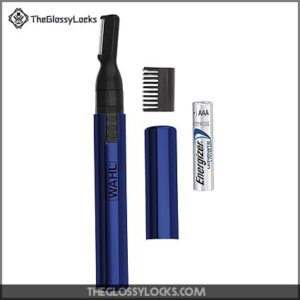
When precision matters more than power, grab the Wahl Lithium Pen Detail Trimmer. This little tool runs on a lithium battery and swaps between a rotary head for fine edges and a precision detail head that cuts hair down to 0.5 mm.
That’s tight enough for crisp lip lines and clean corners. Both heads lock on with a quarter turn, and stainless steel blades clean up fast after every session.
| Best For | Anyone who wants a compact, affordable trimmer for quick nose, ear, and eyebrow touch-ups at home or on the go. |
|---|---|
| Trimming Use | Nose/ear/eyebrow trimming |
| Material | Stainless steel heads |
| Portability | Compact, travel-friendly |
| Precision Design | Adjustable eyebrow guide |
| Durability Concerns | Units may stop working |
| Price Tier | Budget compact |
| Additional Features |
|
- Interchangeable heads cover nose, ear, eyebrow, and neckline trimming in one device
- Rinseable blades make cleanup fast and hygienic
- Compact size with a quarter-turn locking mechanism for easy head swaps
- Some users report units stopping working completely
- Cutting head has been known to break after as little as 30 days of use
- Operation has been described as loud and squealing by multiple users
3. Tweezerman Moustache Scissors 7200-R
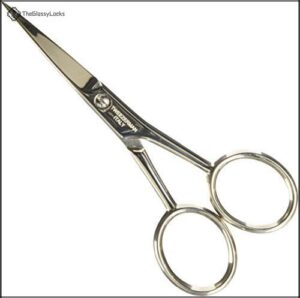
Some jobs call for scissors, plain and simple. The Tweezerman Moustache Scissors 7200-R give you sharp, precision blades built from stainless steel, sized just for upper lip work at about 2.5 inches long and 1.4 ounces.
Large finger loops keep your grip steady during those small, controlled snips near the lip line. Clean the blades after each use, keep them dry, and add a drop of oil to the pivot now and then to stop stiffness from creeping in.
| Best For | Anyone who wants precise, scissor-based control for trimming their mustache and eyebrows rather than using a trimmer. |
|---|---|
| Trimming Use | Mustache/eyebrow trimming |
| Material | Stainless steel blades |
| Portability | Compact, travel-friendly |
| Precision Design | Serrated cutting edge |
| Durability Concerns | Rust within weeks |
| Price Tier | Budget precision tool |
| Additional Features |
|
- Sharp, straight blades deliver precise cuts for facial hair grooming
- Slightly serrated edge grabs fine, stubborn hairs for easier trimming
- Compact design works well for detailed mustache and eyebrow shaping
- Some users report rust forming within just a few weeks of use
- The small size can feel cramped for those with larger hands
- Not suitable for trimming nose or ear hair, as the pointed tips are too sharp for that use
4. JASON Green Stainless Steel Hair Trimming Scissors
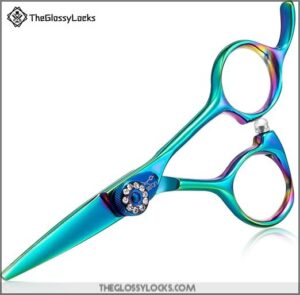
Bigger jobs need a bigger blade, and that’s where the JASON Green Stainless Steel Scissors come in. At 4.5 inches, they’re built for bulk reduction and detail work alike, with an adjustable tension wheel so you can dial in exactly how much resistance you want.
Stainless steel construction keeps them sharp trim after trim. Dry them after cleaning, skip the dishwasher, and add a drop of oil to the pivot point to keep the action smooth.
| Best For | Anyone looking to tackle bangs, mustaches, and other facial hair detail work, plus everyday grooming of nose, ear, and eyebrow hair. |
|---|---|
| Trimming Use | Mustache/facial trimming |
| Material | Stainless steel blades |
| Portability | Handheld, home use |
| Precision Design | Adjustable tension wheel |
| Durability Concerns | Bulky for small hands |
| Price Tier | Mid-range scissors |
| Additional Features |
|
- Stainless steel blades stay sharp and durable trim after trim
- Adjustable tension wheel lets you customize blade resistance to your liking
- Handles coarse hair effectively with minimal effort
- May feel bulky for users with smaller hands
- Finger holes are sized for average adult hands, which can be uncomfortable for some
- Pointed tip requires extra caution to avoid accidental punctures
5. Kent Pocket Beard Comb
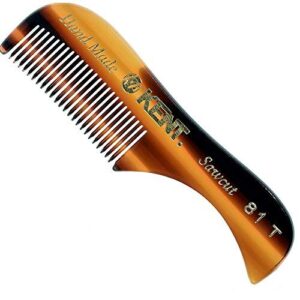
Every good haircut ends with a comb check, and your mustache deserves the same finish. Kent’s pocket comb is hand-cut from cellulose acetate, with saw-cut, hand-polished teeth that glide without snagging even coarse hairs.
Fold it closed and it’s small enough for your wallet, open it up and you’ve got a proper styling tool. Use it wet or dry, before waxing or after a trim, to keep every hair training in the right direction.
| Best For | Guys with mustaches or beards who want a snag-free grooming tool small enough to carry in a wallet for quick daily touch-ups. |
|---|---|
| Trimming Use | Mustache/beard grooming |
| Material | Cellulose acetate |
| Portability | Pocket-sized, daily carry |
| Precision Design | Fine-toothed design |
| Durability Concerns | May be lost easily |
| Price Tier | Premium niche accessory |
| Additional Features |
|
- Saw-cut, hand-polished acetate teeth glide smoothly through facial hair without pulling or snagging
- Compact, foldable design makes it easy to carry in a wallet or pocket for on-the-go styling
- Works well wet or dry, fitting easily into pre-wax or post-trim routines
- Small size makes it less practical for grooming a full, thick beard
- Its tiny dimensions mean it’s easy to misplace or lose
- Some customers feel the price is a bit steep for such a compact tool
Frequently Asked Questions (FAQs)
How often should you wash your mustache?
Aim for 2-3 washes a week with a beard wash, bumping to 3-4 if you’re active or sweat heavy. Daily washing can leave skin flaky at first, so ease in and rinse thoroughly.
Can you trim a wet mustache instead of dry?
Skip it if you can. Wet hair stretches out and looks longer than it really is, so you’ll likely over-trim. Stick to dry mustache hair for accurate length and a cleaner, more predictable shape.
For more control, follow this mustache trimming with clippers guide and start with a longer guard.
What causes uneven or patchy mustache growth?
It’s often just the luck of the draw. Genetics shapes your follicle pattern, hormones like testosterone drive growth, and skin conditions or nutrition gaps can thin things out too.
How long does it take to grow a full mustache?
Give it two to three months for a full, mature mustache, though you’ll see noticeable growth in just 2 to 4 weeks. Genetics and age play a big role, so patience pays off here.
Should you trim before or after showering?
Wet hair looks tamer but cuts wilder: the softer it feels, the easier it hides length. Trim after showering for precision on softened hair, or trim before, then rinse loose clippings away for easy cleanup.
Conclusion
Measure twice, cut once" applies to your face as much as any workshop. Master these mustache shaping and trimming tips and you’ll stop chasing symmetry by accident.
Comb daily, trim weekly, and keep your scissors sharp. Consistency builds the shape, not one lucky trim. Guys who stick with the routine end up with a mustache that looks intentional, not just grown.
Pick up your tools, check both sides, and own the look. That’s the job done right.