This site is supported by our readers. We may earn a commission, at no cost to you, if you purchase through links. This content is for general informational and educational purposes only and is not a substitute for professional medical, dermatological, or nutritional advice.
A lopsided mustache can undo an otherwise clean look faster than anything else on your face. Most guys blame the trimmer, but the real culprit is almost always the prep — wet hair, no comb-through, one careless swipe. The mustache sits dead center on your face, which means every millimeter of unevenness announces itself.
Knowing how to trim a mustache the right way isn’t complicated, but the order of steps matters more than most people realize. Get the foundation right, and the style almost takes care of itself.
Table Of Contents
- Key Takeaways
- Preparing Mustache
- Trimming Mustache Properly
- Choosing Mustache Style
- Trimming for Length and Shape
- Maintaining Mustache
- Frequently Asked Questions (FAQs)
- Are you supposed to trim your mustache above your lip?
- Should you trim your mustache wet or dry?
- What’s the proper way to trim a mustache?
- Should I trim mustache above lip?
- How should a mustache be shaped?
- Should I trim my mustache right under my nose?
- Should your mustache be the same length as your beard?
- Should I brush my moustache down or to the side?
- What mustache style is right for me?
- How do you cut a mustache?
- Conclusion
Key Takeaways
- Always trim on completely dry hair — wet strands clump and stretch, tricking you into cutting more than you mean to, and leaving you with a shorter mustache than planned.
- Prep is where most guys lose the game before they even start — wash, pat dry, and comb through before you touch a trimmer.
- Start with a longer guard to knock down bulk, then drop a size to fine-tune, working in small passes from the outer edges toward the center.
- Maintenance is what separates a sharp mustache from one that just exists — daily combing, beard oil after the shower, and a trim every one to two weeks keeps the shape honest.
For precise control, follow this handlebar mustache trimming guide to shape the ends without sacrificing length.
Preparing Mustache

Before you touch a single hair, getting your mustache ready makes all the difference between a clean result and a patchy mess. A little prep work upfront saves you from the frustration of uneven cuts and length miscalculations.
For a deeper dive into technique and timing, this at-home beard trim guide walks you through every step before the trimmer even comes out.
Here’s what you need to do first.
Washing and Drying Face
Before anything else, give your face a proper reset. A lukewarm rinse — not hot — opens things up without stripping your skin dry.
Work a small amount of gentle cleanser along your upper lip and mustache line, then rinse until every trace of foam is gone. Pat dry using a clean towel — rubbing roughs up the hairs and throwing off your trim.
Then let the air dry method do its job. Wet vs dry trimming isn’t a debate; dry always wins. Trim only when those hairs feel completely moisture-free.
Combing Mustache
Once your face is clean and patted dry, grab a fine-tooth comb — your most underrated grooming tool. Comb type selection matters here: a fine-toothed beard comb gives you real control near the lip line.
Start with detangling techniques — work slowly from the outer corners inward, using light comb pass pressure so you’re not yanking hairs out of place. Then comb it downward to see your true length.
Avoiding comb errors like over-combing or forcing through knots keeps everything even and ready for a clean trim.
Ensuring Mustache is Dry
After combing everything into place, don’t reach for the scissors yet — your mustache needs to be completely dry first. Wet hair clumps and stretches, which throws off your length judgment every time.
Here’s your dry-check routine:
- Towel Press Technique — Press a clean towel firmly against the mustache to pull out moisture without disturbing the shape.
- Low Heat Blowdry — Hold a dryer 6–10 inches away on a cool setting, moving constantly for even drying.
- Dry Brush Inspection — Run a dry comb through; if hairs stick together, you’re not ready yet.
Dry vs. wet trimming isn’t even a debate — dry hair trimming always wins for accuracy.
Trimming Mustache Properly
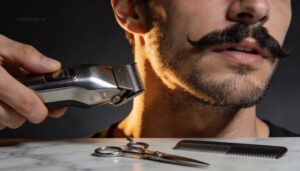
Once your mustache is clean and dry, it’s time to actually trim it — and this is where most guys either nail it or ruin three weeks of growth in thirty seconds.
Start with Guard Selection: use a 4–6mm guard to knock down bulk first. Then drop a size to fine-tune. Always work on dry hair — wet vs dry trimming isn’t a debate; wet hair clumps and lies shorter than it actually is.
- Use Light Pressure and multiple slow passes instead of one heavy swipe
- Make Mirror Angle Checks from the front and both sides after every few snips
- Focus on Edge Blending where your mustache meets your lip line — small scissors handle this better than any trimmer
Choosing Mustache Style

Once the trimming’s done, the next question is: what shape are you actually going for? Your mustache style says a lot, and picking the right one makes all the difference between a look that fits and one that just… sits there.
Just like you’d measure your hair length accurately before a cut, knowing your exact facial proportions helps you commit to a mustache shape that genuinely flatters your face.
Here are some of the most popular styles worth considering.
Handlebar Mustache
The handlebar mustache isn’t just a style — it’s a statement that takes real commitment. Start by letting the ends grow past your mouth corners, giving you enough length to work with.
Wax application is everything here: work a small amount from the tips inward, then sweep outward and twist upward.
Curl training takes patience — dry hair holds shape far better than when wet. A low-heat setting from a blow dryer helps lock the curl in place.
Always finish with a symmetry check from the front.
Chevron Mustache
The chevron mustache is all about controlled fullness — thick, bold, and unapologetically classic. Think of it as a mustache shape guide built around your lip line, with tapered tips that angle outward and a center that stays full rather than flat. Here’s how to nail it:
- Start dry — accurate volume control only happens on dry hair.
- Trim outer edges in small passes, checking symmetry verification from the front and both sides.
- Use wax styling sparingly to define edge definition without flattening the shape.
Keep that width proud and the line clean.
Pencil Mustache
The pencil mustache is precision work — think Clark Gable, not guesswork.
You’re aiming for strict Length Limits: hair sitting between 5 and 10 millimeters, lying flat, never fanning out. Corner Taper matters here, too — let the ends follow your upper lip’s natural curve and stop before they reach your smile lines.
Lip Edge Definition is what separates a sharp pencil mustache from just… thin stubble.
Use a T-blade detailer for clean lip line alignment and Tweezerman scissors for fine adjustments. Your Tool Guard Choices should stay in the low-millimeter range.
Growth Pattern Control through weekly trims keeps the shape honest.
Other Mustache Styles
Beyond the classics, there’s a whole world of styles waiting — each one with its own personality and upkeep rhythm.
- A Walrus Mustache keeps heavy fullness across both sides, trimmed gradually to protect volume
- The Dapper Curtain and Curtain Mustache drape downward from the corners, trimmed after combing straight down
- A Fringe Mustache or Short Cut Mustache stays soft and natural, needing only small snips to even the edges
- Van Dyke pairs a trimmed mustache with a clean-shaven chin
- The handlebar mustache, chevron mustache, pencil mustache, and walrus mustache each demands its own tools and schedule
Pick what fits your face — then commit to the upkeep.
Trimming for Length and Shape
Getting the length right is where the real precision work begins. You’re not just cutting hair — you’re carving out a shape that frames your face.
Here’s how to do it step by step.
Lifting Hairs With Comb
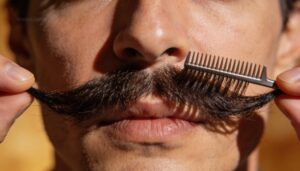
Want crisp, even mustache? It all starts with how you comb your mustache—think of the comb as your sculptor’s chisel.
Grab a fine tooth comb and use a light grip technique to gently lift hairs upward at a slight angle (that’s your Comb Lift Angle). This exposes hidden strays and sets you up for precision.
Work in sections—left, center, right—for true sectional lifting. Dry combing for accuracy is non-negotiable; wet hair lies. Check your lift consistency before every snip.
Here’s a quick guide:
| Comb Type | Key Benefit | Best Use |
|---|---|---|
| Fine tooth comb | Precision lift | Detailed shaping |
| Wide-tooth comb | Gentle detangling | Thick/coarse hair (Wide-tooth Lift) |
| Angled comb | Layer visualization | Handlebar styling |
| Mini pocket comb | On-the-go control | Quick touch-ups |
| Metal comb | Firm alignment | Stubborn, wiry hair |
Trimming to Uniform Length
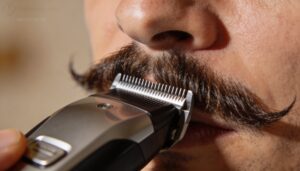
Getting every hair to sit at the same length is where the real craft shows. Start with a dryness consistency check — dry hair doesn’t clump or stretch, so your guard reads the actual length, not a wet illusion.
Begin with a longer guard length strategy for bulk removal, around 5–6mm, then step down gradually. That’s guard length consistency in practice.
Work in sections — left, center, right — because sectioned trimming catches the spots a single sweep misses. Keep steady comb tension control so hairs don’t shift mid-cut. When switching to scissors, scissor guard settings limit how short each pass goes, protecting against accidental gaps.
- Always do a dryness consistency check before your first pass
- Start high on guard length — drop only after checking symmetry
- Use sectioned trimming to catch corners and center separately
- Comb tension control keeps hairs aligned so precision trimming stays accurate
- Clean your trimmer guard between passes for consistent, snag-free cuts
Trimming Above The Lip
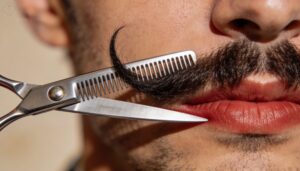
Once every hair sits at an even length, the next test of your skill is the lipline definition — the clean border right above the vermilion edge of your upper lip. Get this wrong, and even a perfectly uniform mustache looks off.
Here’s how to nail it:
- Comb hairs upward so strands hanging below your top lip line become visible, then trim only those.
- Apply scissor angle control — hold blades parallel to your mouth, taking short snips from center outward for balance.
- Do a symmetry check in three angles — front, left, right — mouth relaxed, not smiling.
Stubble guarding matters here too. Keep your edge cleanup passes light near the skin to avoid patchy spots.
Maintaining Mustache

Trimming is just the beginning — what you do after is what keeps your mustache looking sharp day after day. A solid maintenance routine doesn’t have to be complicated, but it does have to be consistent.
Reaching for a tool with an ergonomic acrylic handle design makes those daily touch-ups feel effortless rather than like another chore on your list.
Here’s what you should be doing to keep things in shape.
Applying Beard Oil
Once your trim is done, beard oil is what keeps things looking sharp — not just styled.
Apply 2–3 drops after a shower, warming them between your palms first. Then work the oil in using a massage technique from roots to tips for even facial hair moisturizing.
This prevents both greasiness and dryness.
| Oil Amount | Hair Length | Application Timing |
|---|---|---|
| 2–3 drops | Short | Post-shower, damp |
| 3–4 drops | Medium | Morning routine |
| 6–8 drops | Long/thick | After cleansing |
| 2 drops | Sparse | Bedtime |
| 4–5 drops | Full mustache | Twice daily (dry climates) |
Regular Combing
Oil handled — now let’s talk about the habit that actually keeps your mustache looking intentional every single day.
Comb it daily. It’s that simple, and that’s important. Comb directionality matters more than most guys realize — consistent, outward strokes from center to edge train your hairs to fall where you want them, not where they feel like it.
Here’s how to build it into your morning routine:
- Start dry — fine-tooth comb benefits shine on dry hair, since wet strands clump and bend unevenly.
- Work center-outward using short, controlled passes.
- Use wooden combs for static reduction over plastic alternatives.
- Finish with a quick post‑trim styling check from three angles.
These mustache maintenance tips and mustache grooming techniques cost you about thirty seconds.
Trimming to Maintain Shape
Daily combing keeps things tidy, but shape needs more than a comb — it needs scissors and a plan.
Trim every one to two weeks using these three checkpoints:
- Start with a longer guard for Guard Consistency, then drop down only if needed.
- Work your Edge Cleanup and Lip Boundary from center outward, checking Side Symmetry in three mirror angles.
- Finish Cheek Blending with slight downward snips at the outer corners.
Small passes beat big cuts every time.
Addressing Common Issues
Most common mustache trimming mistakes come down to two things — rushing and wet hair. Dry vs wet trimming methods aren’t equal: damp hair clumps and fools you into cutting too short, which is how overtrimming the center happens.
For patchy unevenness, always check three mirror angles before each snip.
Tackle flyaway control with a fine-tooth comb and targeted scissors, not clippers.
Keep tools clean — tool hygiene prevents bacterial buildup that causes skin irritation.
Trim split ends weekly in small passes, and remember: patience is the sharpest tool you own.
Trim split ends weekly, but remember: patience is the sharpest tool you own
Frequently Asked Questions (FAQs)
Are you supposed to trim your mustache above your lip?
Yes — every hair sitting on your upper lip should be gone.
Keeping that lip line clear prevents food buildup, stays comfortable when you talk, and makes your whole mustache look intentionally shaped rather than just grown out.
Should you trim your mustache wet or dry?
Always trim your mustache dry. Wet hair clumps, hides stray strands, and makes you cut more than intended — leaving you shorter than planned once it dries.
What’s the proper way to trim a mustache?
Start dry, always.
Comb downward to align the hairs, then use mustache scissors or an electric trimmer with proper guard selection. Work outside-in along the lip line, checking symmetry in good lighting as you go.
Should I trim mustache above lip?
Trim your mustache just above the lip line — full stop.
Hairs crossing that boundary catch food crumbs, pull into your mouth mid-sentence, and blur the lip line definition that your whole look depends on.
How should a mustache be shaped?
Comb downward first to map your growth pattern, then work from the outer edges toward the center, trimming along the lip line.
Apply wax for curl control and check symmetry from both sides.
Should I trim my mustache right under my nose?
Yes — neat, precise trimming right under your nose prevents moisture buildup, irritation, and a heavy, unkempt look.
Keep a small nose gap clean, using sharp scissors for better symmetry control and a sharper lip line.
Should your mustache be the same length as your beard?
No, your mustache doesn’t need to match your beard length. Lip coverage, texture contrast, and visual proportion matter more.
Trim for style harmony — let the look guide the length, not the other way around.
Should I brush my moustache down or to the side?
Both directions serve different purposes.
Brush down to assess true length during mustache trimming, then brush sideways for mustache styling — handlebar curls sweep outward, while a natural look flows straight down for clean lip contact control.
What mustache style is right for me?
Choosing the right mustache style comes down to four things: face shape, growth density coverage, lip line fit, and personal style.
Get those right, and the rest falls into place naturally.
How do you cut a mustache?
Start clean, stay controlled, cut carefully.
Dry your mustache completely, comb it downward, then trim along the lip line using scissors or a guarded trimmer — working from the outer edges toward the center.
Conclusion
Like a master painter adding the final brushstrokes, you’ve now refined your mustache to flawlessness. Remember, trimming your mustache isn’t just about looks—it’s about confidence.
With these simple steps on how to trim mustache, you’ll be sporting a well-groomed ‘stache in no time.
Keep it maintained, and it’ll become a defining feature that turns heads.
You’ve got this; now go own that mustache with pride and make it a part of your unique style.