This site is supported by our readers. We may earn a commission, at no cost to you, if you purchase through links. This content is for general informational and educational purposes only and is not a substitute for professional medical, dermatological, or nutritional advice.

Grab the wrong scrub and you could turn a soothing self-care moment into an angry, red mess. That’s the real story behind sugar scrub versus salt scrub: they’re not interchangeable, no matter what the pretty jar labels suggest.
Sugar granules dissolve gently in warm water, while salt crystals stay sharp and jagged, scraping away at your skin long after you’d expect them to soften. One’s built for your lips and face; the other belongs on your heels and elbows.
Pick the wrong one for your skin type, and you’re not exfoliating, you’re irritating. Let’s break down exactly which scrub earns a spot in your shower.
Table Of Contents
- Key Takeaways
- Sugar Scrub Vs Salt Scrub
- What is a Sugar Scrub?
- Sugar Scrub Benefits
- What is a Salt Scrub?
- Salt Scrub Benefits
- Exfoliation Strength Compared
- Best Scrub by Skin Type
- Best Scrub by Body Area
- How Often to Use Each
- Which Scrub Should You Buy?
- Frequently Asked Questions (FAQs)
- What is the healthiest way to exfoliate your skin?
- Do dermatologists recommend sugar scrubs?
- Can diabetics use sugar body scrub?
- Does salt scrub remove blackheads?
- Can you mix sugar and salt in one scrub?
- How long do homemade sugar scrubs stay fresh?
- What causes a scrub to spoil quickly?
- Can over-exfoliation damage your skin barrier permanently?
- Conclusion
Key Takeaways
- Sugar scrubs use fine, fast-dissolving granules that offer gentle exfoliation, making them ideal for sensitive areas like the face, lips, and eczema-prone skin.
- Salt scrubs feature coarse, jagged crystals that provide stronger, longer-lasting abrasion, making them better suited for tough areas like feet, elbows, and knees.
- Choosing the wrong scrub for your skin type or body area can cause irritation, micro-tears, and barrier damage instead of healthy exfoliation.
- Frequency matters: sugar scrubs can be used up to three times a week, while salt scrubs should be limited to once or twice weekly to avoid over-exfoliation.
Sugar Scrub Vs Salt Scrub

Sugar and salt scrubs might sit side by side on the shelf, but they work in pretty different ways once they touch your skin. Knowing what sets them apart can save you from picking the wrong one for your face or feet.
Let’s break down the key differences, best uses, and a quick comparison so you can choose with confidence.
Key Differences
Ever wondered why one scrub feels like silk and the other like sandpaper? It comes down to granule size: sugar dissolves fast for gentle physical exfoliant action, while salt’s coarse, angular crystals stay abrasive longer.
| Feature | Sugar | Salt |
|---|---|---|
| Texture | Smooth, round | Coarse, sharp |
| Dissolves | Quickly | Slowly |
| Best for | Sensitive skin types | Tough, thick skin |
Best Uses
So where should each scrub actually go? Sugar works best on sensitive area care – think lips, face, and eczema-prone patches. Salt shines on tougher zones needing callus removal.
| Scrub | Targeted Skin Zones | Skin Types |
|---|---|---|
| Sugar | Lips, face, arms | Sensitive, dry |
| Salt | Feet, elbows, knees | Oily, resilient |
| Sugar | Legs, hands | Keratosis pilaris |
Quick Comparison
Everything comes down to granule size and dissolving rate. Sugar is small and melts fast, so friction fades quickly. Salt stays coarse and gritty the whole time, giving steadier abrasion. Using comparison tables for products can help you quickly weigh these specific attributes.
| Feature | Sugar / Salt |
|---|---|
| Granule Size | Fine / Coarse |
| Dissolving Rate | Fast / Slow |
| Friction Level | Gentle / Strong |
| Best For | Sensitive / Tough skin |
What is a Sugar Scrub?

A sugar scrub is exactly what it sounds like, but there’s more going on beneath those little granules than you’d think. It’s worth knowing what makes this scrub tick before you rub it on your skin. Here’s what sets a sugar scrub apart, piece by piece.
Granule Texture
Run your fingers over dry sugar and you’ll notice it’s small, round, and smooth—nothing like the jagged shards of salt. Most granules fall in the fine to medium range, around 0.25 to 1.0 millimeter, which gives you gentle exfoliation without scratching delicate skin.
That low surface roughness comes from tighter drying and shrinkage during processing, keeping granules dense, uniform, and soft against your skin.
Dissolving Speed
Ever notice how sugar seems to melt away in the shower? That’s because those small, round grains have less surface area to fight through, so warm water dissolves them fast.
This makes sugar a gentle exfoliation option—less scrubbing time means less friction.
Salt, being coarser, holds its shape longer, giving deeper abrasion wherever you rub it in.
Common Ingredients
A good sugar scrub is really just a few honest ingredients working together. You’ve got the sugar itself (often unrefined cane sugar for extra minerals), a carrier oil like coconut or almond for slip, and sometimes essential oils for scent. Vitamin E shows up often too, protecting those oils from going rancid so your jar stays fresh longer.
Gentle Exfoliation
Softness is the whole point here. Sugar’s small, round granules give you controlled abrasion without scraping, which is why sugar scrubs count as manual exfoliation done in a gentler manner.
| Technique | Why It Matters |
|---|---|
| Damp skin application | Improves slip, spreads product evenly |
| Circular rubbing | Distributes friction, avoids hot spots |
| Minimizing contact time | Limits over-scrubbing |
| Post-exfoliation soothing | Locks in smoother skin texture |
Sugar Scrub Benefits

Now that you know what makes sugar scrubs tick, let’s talk about what they actually do for your skin. There’s more going on here than a nice smell and a soft feel. Here’s what you can expect when you make sugar scrubs part of your routine.
Moisture-friendly Exfoliation
Sugar melts fast under water, which means less friction and more glide against your skin.
That quick dissolve creates humectant magic, pulling moisture in in real-time as it exfoliates. Add coconut oil for extra slip, and you’ve got barrier protection built right into the scrub.
- Reduces water loss during exfoliation
- Leaves skin hydrated, not stripped
- Improves texture without irritation
- Pairs well with soothing additives like aloe
Sensitive Skin Support
If your skin flares up easily, sugar scrubs offer a gentler manner of exfoliation that won’t trigger irritation. Choose fragrance-free formulas and patch test on your forearm first, watching two weeks for reactions.
Pair with barrier-repair ingredients like ceramides or colloidal oatmeal afterward. Identifying your specific triggers—certain oils, added scents—helps you minimize irritants and keep sensitive skin calm and comfortable.
Smoother Body Skin
Ever notice how some scrubs leave a gritty residue behind while others rinse clean? That’s the sugar advantage for overall skin texture improvement.
- Dissolves fully, minimizing leftover friction
- Pairs with oils for lasting hydration
- Balances mechanical exfoliation gently
- Reduces barrier stress over time
- Leaves smoother, calmer skin instantly
Follow with moisturizer while skin’s damp to lock in that smoothness before it fades.
Lip and Hand Care
Your lips and hands take a beating you might not notice until they crack. Lips have a thinner outer barrier, so licking them or catching wind only speeds up moisture loss. Frequent hand washing and sanitizer strip natural oils too.
That’s why sugar scrubs work well here — smooth away rough patches, then seal with balm (look for SPF) and moisturizer, protecting cuticles and preventing windburn.
Natural Humectant Effect
That balm works partly because sugar itself acts as a natural humectant, pulling water into the stratum corneum instead of just sitting on top. In humid air, it draws extra moisture in; in dry conditions, it pulls hydration from deeper layers, reducing transepidermal water loss. The result? Better skin hydration and a genuinely moisturizing feel, without any greasy residue.
What is a Salt Scrub?

If sugar scrubs feel like a gentle hug for your skin, salt scrubs are more like a firm handshake. They’re bolder, grittier, and built for the tougher spots on your body. Here’s what makes a salt scrub tick, piece by piece.
Sugar scrubs feel like a gentle hug, while salt scrubs give your skin a firm, bold handshake
Coarse Crystal Texture
Grab a pinch of salt scrub and you’ll feel it immediately: larger, jagged crystals that hold their shape rather than melting away. These form through slower crystal growth rates, and that granule size directly impacts how rough the texture feels against your palm.
The tactile feedback is bold and gritty, while visible grains create real visual appeal and help fragrance oils cling longer for a stronger scent.
Strong Exfoliation
Those jagged edges aren’t just for show, they’re what makes salt a true deep exfoliation tool. As one of the more intense physical exfoliants, salt scrubs drive mechanical cell turnover, sloughing thick, dead skin fast while boosting microcirculation stimulation for that post-scrub glow.
Just watch for barrier disruption risks and rising transepidermal water loss, especially on compromised skin, since this level of mechanical exfoliation isn’t gentle.
Mineral Content
Ever wonder why salt scrubs feel so mineral-rich? That’s because salt crystals naturally carry calcium, iron, and magnesium, plus trace elements that support enzyme function and skin healing.
These minerals can even influence skin osmosis, drawing out impurities. Quality matters here, since mineral purity testing helps avoid irritants, and soil composition affects how mineral-rich your salt actually is.
Body-only Focus
Why won’t you find salt scrubs in facial care lines? Those coarse crystals are made for tough skin areas like feet and elbows, not delicate facial skin.
Salt scrubs suit body massage benefits beautifully, but they’re too harsh for your face or lips. Save the salt vs sugar scrubs debate for body-only exfoliation, then follow with proper post-scrub body hydration to manage dryness afterward.
Salt Scrub Benefits

Salt scrubs aren’t just about scrubbing away rough skin, they actually work harder for your body in ways you might not expect. From tired feet to sore muscles, this coarse little crystal pulls its weight all over. Here’s what salt can really do for you.
Rough Patch Smoothing
Thick, bumpy skin doesn’t budge without the right kind of friction, and that’s where salt earns its keep. Its coarser texture breaks down rough patches more aggressively than sugar, smoothing skin over two to four sessions.
- Apply with gentle pressure, avoiding harsh scraping
- Use circular motions on patches
- Limit sessions to twice weekly
- Moisturize immediately after to lock in hydration
Consistency matters most for lasting skin renewal.
Foot and Elbow Care
Feet and elbows take a beating daily, from shoes to desk-leaning, which makes them perfect candidates for salt scrub treatment.
| Area | Focus | Key Tip |
|---|---|---|
| Heels | Crack prevention | Moisturize immediately |
| Elbows | Pressure buildup | Gentle circular motion |
| Toes | Hygiene safety | Dry thoroughly, skip moisture between toes |
Diabetic or low-sensation feet? Skip self-treatment entirely and see a professional for callus removal.
Scalp Buildup Removal
Your scalp collects more than you’d think: sebum, product residue, and dead skin cells that build up around the roots over time.
That buildup is exactly why many stylists recommend a fresh wash before your appointment — this guide to washing your hair before a haircut breaks down when it actually matters.
Salt’s coarse crystals excel at mechanical lifting, physically loosening this debris on damp hair before you rinse.
- Apply to wet scalp
- Massage gently
- Target flaky zones
- Rinse thoroughly
- Shampoo after
Sensitive or irritated scalps should skip this exfoliation method entirely.
Massage and Circulation
There’s a reason a good body scrub feels like a mini spa treatment: the massaging motion does real work for your blood circulation. That pressure-and-release rhythm aids lymphatic drainage and even triggers nitric oxide release, helping vessels relax and improve vascular tone.
The result? Better metabolic waste removal and welcome relief for muscle soreness, making salt scrubs a genuine ally for recovery.
Oily Skin Support
Salt scrubs can genuinely help oily or acne-prone skin, since the coarse texture lifts excess sebum and buildup before it clogs pores. That said, always follow with non-comedogenic hydration—lightweight, oil-free moisturizers keep shine balanced without heaviness.
Why it works:
- Removes surface oil
- Helps clear pores
- Prevents clogged pores
- Pairs well with niacinamide or zinc treatments
Exfoliation Strength Compared
Not all exfoliation feels the same, and that’s the whole point when you’re choosing between these two. Texture, dissolving speed, and how much friction your skin can handle all play a role. Here’s what actually sets sugar and salt apart when they hit your skin.
Sugar Feels Gentler

Sugar Scrub Vs Salt Scrub really comes down to friction, and sugar wins on gentleness. Its granules dissolve fast in warm water, creating gentle friction levels that protect your skin barrier. This quick breakdown means less micro-tear risk, especially on sensitive skin. Combined with moisture-retaining properties from added oils, sugar scrubs feel soft, not scratchy, from the very first swipe.
Salt Feels Rougher
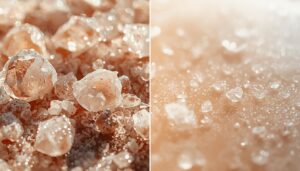
Crystal edge geometry explains why salt feels so much rougher than sugar. Sharp, angular edges drag across skin, hitting more tactile receptors than smooth sugar granules.
- Larger crystal size
- Angular fracture surfaces
- Mineral grit sensation
- Slower breakdown pace
- Sustained abrasive contact
This intensity makes salt scrubs riskier for skin irritation compared to gentler sugar scrubs, especially on delicate areas.
Dissolution Differences

Melting speed explains a lot of that texture gap. Water molecules surround sugar quickly, dissolving it in seconds under warm, agitated water, while salt’s ionic bonds resist breaking apart nearly as fast.
That’s why exfoliating particles from salt scrubs stick around longer on skin, even though larger particle size and slower surface area exposure mean sugar actually melts away first in most kitchen sinks.
Abrasion Risk
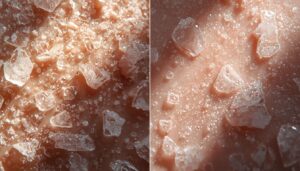
How much scraping is too much? With manual exfoliation, scrubbing pressure and jagged particle shape both raise abrasion risk, especially with salt. Sharper edges dig deeper, increasing epidermal damage depth and microtears in your skin barrier. Cumulative friction from repeated passes adds up fast.
For skin irritation prevention, infection risk factors rise once skin’s compromised, so lighter pressure always wins.
Thick Skin Areas

Your palms and soles aren’t like the rest of your skin. They’ve got a thicker stratum corneum, five layers of epidermal armor instead of four, and serious mechanical stress resistance built right in.
That’s why feet handle salt’s rough edges so well. High sweat gland density and a tough keratinized barrier mean these spots can take exfoliation your face never could.
Best Scrub by Skin Type
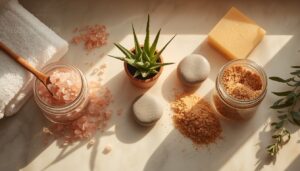
Your skin type plays a big role in deciding which scrub belongs in your shower. What works wonders for one person might leave another red and irritated. Here’s how to match the right scrub to what your skin actually needs.
Sensitive Skin
Sensitive skin flares easily, reacting to irritants, temperature swings, and even stress that other skin types shrug off.
Salt scrubs can worsen this, since their sharp edges cause micro-tears and weaken your barrier function, inviting stinging and redness.
Sugar scrubs are gentler by far, dissolving quickly to limit friction. Stick with sugar on sensitive areas like your face, where reactions show up fastest.
Dry Skin
Dry skin is already running low on lipids and natural moisturizing factors, so it can’t hold water the way healthy skin does. That means faster trans-epidermal water loss and more tightness after washing.
Sugar scrubs are your friend here. They nourish while they exfoliate, pairing beautifully with oils like jojoba to replenish what environmental dryness strips away, without triggering dermatitis flare-ups.
Oily Skin
Got a shiny T-zone by noon? Salt scrubs are worth a look here, since their coarse crystals cut through excess sebum and clear congested pores better than sugar can.
That deeper pore cleansing helps prevent blackheads and reduces acne triggers before they start. Just don’t overdo it, salt can be stripping, so follow up with an oil-free moisturizer to keep texture smooth and makeup lasting longer.
Eczema-prone Skin
Eczema already means a weakened barrier, so salt scrubs are off the table here, they’re simply too harsh.
Sugar scrubs are gentler, but caution still matters:
- Flare-prone knees and elbows
- Easily irritated eyelids
- Itchy, weeping patches
- Reactive wrists and neck
Watch for infection risk on broken skin, and always patch-test first to manage irritant sensitivity.
Keratosis Pilaris
Those goosebump-like bumps on your arms come from keratin plugs blocking hair follicles, often starting in childhood and worsening with seasonal skin changes.
Sugar wins here, hands down. Its fine granules smooth rough skin patches without aggravating follicular bumps, while salt’s sharp edges can worsen irritation.
Since it’s linked to eczema and other associated skin conditions, gentle body scrubs matter most.
Best Scrub by Body Area

Not every part of your body needs the same kind of scrub, and that’s actually good news for your skin. Some areas call for a gentle touch, while others can handle a little more grit. Here’s how to match the right scrub to each spot, from your face down to your feet.
Face and Lips
Ever wonder why your favorite body scrub feels harsh on your lips? Salt’s sharp edges can tear delicate mucosal tissue, so stick with sugar here.
Sugar’s gentle granules dissolve quickly, supporting lip mucosal health while softening rough patches around the vermilion border. Regular gentle exfoliation also keeps your Cupid’s bow crisp, countering the perioral skin aging that blurs natural lip contours over time.
Arms and Legs
Your arms and legs can handle more than your lips ever could, giving you room to experiment with grain size. Sugar dissolves fast for a smoother glide, while salt’s coarser edges linger longer on rough patches like knees.
Scrub gently, though. Over-aggressive rubbing leaves skin feeling tight, so always follow up with moisturizer to lock in hydration.
Hands and Cuticles
Your hands work hard all day, so pick a gentle sugar scrub here rather than salt’s sharper crystals.
Sugar dissolves quickly, easing friction near nail folds and protecting the cuticle barrier from tugging.
Skip scrubbing the cuticle itself, this prevents hangnails and nail perimeter irritation.
Always moisturize right after, since moisture-driven cuticle health keeps skin flexible and smooth.
Feet and Heels
Why do heels get so rough compared to the rest of your body? Because they’re a major plantar pressure point, built with thicker skin to handle daily impact, which leads to dead skin buildup and eventual heel cracks.
- Salt scrubs tackle this thickness best
- Sugar works for milder rough patches
- Always follow with post-scrub hydration
Massaging balm into damp heels locks in moisture and helps prevent cracks.
Knees and Elbows
Ever notice how your knees and elbows get rough no matter how much lotion you use? Constant joint friction and skin stretching cause thickening skin and localized dryness in these spots.
For salt vs sugar scrubs here, go gentler than you think. Try sugar scrub for daily exfoliation and softer skin texture, saving stronger salt scrubs for stubborn buildup—always follow with moisturizer for real joint protection.
How Often to Use Each

Even the best scrub can work against you if you use it too much or at the wrong time. Sugar and salt each have their own rhythm, and your skin will thank you for respecting it. Here’s what you need to know before you reach for that jar again.
Sugar Scrub Frequency
Sugar scrubs work best 1–3 times a week, depending on your skin type and how it reacts. Dry or normal skin does well with once or twice weekly, while oily skin can often handle three sessions.
Keep each session short, just a few minutes with light pressure, and moisturize right after. If redness or tightness shows up, scale back until skin feels calm again.
Salt Scrub Frequency
Salt scrubs pack a stronger punch, so less is more here. Normal skin does well with once a week, while oily skin can often handle twice weekly without trouble.
- Normal skin: once weekly
- Oily skin: up to twice weekly
- Dry skin: once every two weeks
- Sensitive skin: once weekly or less
- Irritated skin: pause and reassess
Watch for redness or tightness, that’s your cue to scale back.
Shaving Safety
Timing matters just as much as pressure when you shave. Skip salt or sugar scrubs right before shaving, then wait a day after: fresh skin is more sensitive to blade sharpness and friction.
Use light pressure control, shave with hair growth direction, and keep skin lubricated. Follow with gentle post-shave care, since freshly shaved skin can’t handle exfoliation yet.
Sunburn Precautions
Freshly exfoliated skin is thinner and burns faster, so sun timing matters more than usual after a scrub.
- Avoid peak UV hours (10 a.m.–4 p.m.)
- Apply broad-spectrum SPF 30+ 15-30 minutes before heading out
- Reapply every 2 hours
- Wear protective clothing
- Watch reflective surfaces like sand or water
Skip scrubbing sunburned skin entirely; salt especially can sting and worsen damage.
Over-exfoliation Signs
Your skin will tell you when it’s had enough, if you know what to watch for. Persistent redness that lingers for hours (not just a quick flush) signals barrier disruption. Add in skin tightness, stinging, or sudden breakout patterns, and it’s time to scale back. These irritation triggers mean manual exfoliation is outpacing your skin’s natural cell turnover and moisture barrier recovery.
Which Scrub Should You Buy?

So how do you actually decide which one to bring home? It really comes down to your skin type, your budget, and how much exfoliating experience you have. Here’s a quick breakdown to help you shop with confidence.
Best for Softness
Reach for sugar scrubs when smooth, hydrated skin is the goal. Their fine granules pair with oils that leave an emollient coating, while glycerin’s humectant moisture retention locks in hydration.
- Silky lips after a gentle buff
- Velvety hands minus tightness
- Soft arms with shea butter enrichment
These texture smoothing agents support real skin nourishment without stripping natural oils.
Best for Rough Skin
Salt scrubs win for calloused area treatment—those coarse crystals tackle rough dead skin on heels, elbows, and knees that sugar just can’t budge.
Their mineral skin benefits (magnesium, potassium) support smoother texture, though they’re stronger on your skin. Pair with a nourishing oil for post-scrub barrier repair, and you’ve got real targeted abrasion methods for tough spots.
Best Beginner Choice
If your skin has never met a scrub before, start gentle. Sugar scrubs are the safer entry point for exfoliation.
- Patch test 24 hours first
- Use once weekly
- Choose fragrance-free oils
- Massage in circular motions
Sugar’s fine granules forgive mistakes salt won’t. That’s why we recommend sugar over salt scrubs for your first skincare routine attempt.
Ingredients to Look For
Humectant selection matters most. Look for glycerin or aloe vera to draw moisture in, plus non-comedogenic oils like jojoba or squalane so pores stay clear.
Natural emollients such as shea butter add lasting softness, while antioxidants like vitamin C fight environmental stress. Barrier-repairing additives, think niacinamide or ceramides, help skin recover fast whether you choose mineral-rich salts or sugar’s gentler exfoliating properties.
Final Buying Recommendation
So how do you decide, once and for all? Grab a scrub that matches your skin type first, then let your budget and body area needs narrow the field.
- Check cost-per-ounce across brands before buying
- Confirm packaging durability and airtight seals
- Scan ingredients for allergens you’re sensitive to
- Research supplier reputation through real reviews
- Look for refillable options to save long-term
When in doubt, sugar wins for beginners.
Frequently Asked Questions (FAQs)
What is the healthiest way to exfoliate your skin?
Slow and steady wins the skin game: light pressure, short strokes, and lukewarm water rinsing protect your barrier.
Minimizing mechanical friction, checking for over-exfoliation signs like redness, and choosing the gentlest natural exfoliant your skin tolerates keeps dermatological health intact.
Do dermatologists recommend sugar scrubs?
Yes, with caveats. Dermatology guidance favors gentle exfoliation over harsh scrubbing, protecting skin barrier health.
Sugar works fine on your body, but facial skin safety concerns mean most pros steer clients toward finer granules and light, careful massage techniques instead.
Can diabetics use sugar body scrub?
Diabetics can generally use sugar scrubs since it stays on the skin’s surface, not affecting blood glucose. The real concern is skin abrasion risks, especially with neuropathy, so scrub gently and moisturize to prevent dryness and infection.
Does salt scrub remove blackheads?
Picture blackheads fleeing your pores like tiny stowaways caught in a storm. Salt’s mechanical exfoliation lifts surface debris, but it’s surface-level only, working the top layer, not deep pore cleaning, so blackheads often return once oil production continues.
Can you mix sugar and salt in one scrub?
Absolutely, blending both grains lets you enjoy customizing grit ratios for balanced exfoliation. Try a 2:1 sugar-to-salt mix with a nourishing carrier oil, mitigating micro-tears while still smoothing rough patches effectively.
How long do homemade sugar scrubs stay fresh?
Stored airtight at cool room temperature, sugar scrubs last 1–2 months, up to 6 refrigerated. Keep hands dry, avoid water contamination, and add vitamin E for extending oil stability in your DIY peppermint sugar scrub or other natural skincare ingredients.
What causes a scrub to spoil quickly?
A single drop of water can turn your scrub into a science experiment overnight. High water activity invites microbial growth fast, while poor packaging seal integrity, oxidized oils, and contamination during use all speed spoilage in natural skincare products.
Can over-exfoliation damage your skin barrier permanently?
Usually not — over-exfoliation causes temporary lipid layer dysfunction and increased transepidermal water loss, not permanent damage. With reduced scrubbing and gentle, barrier-supporting care, microtrauma healing usually restores your skin’s protection within days to a few weeks.
Conclusion
Soft granules that melt away, sharp crystals that hold their edge: that’s the heart of sugar scrub versus salt scrub, and now you know which one your skin is asking for.
Your face and lips want gentleness.
Your heels and elbows want grit.
Read your skin like a map, not a guessing game, and you’ll never grab the wrong jar again.
Smooth skin isn’t luck.
It’s knowing exactly what you’re reaching for, and why.