This site is supported by our readers. We may earn a commission, at no cost to you, if you purchase through links. This content is for general informational and educational purposes only and is not a substitute for professional medical, dermatological, or nutritional advice.
A hyaluronic acid molecule can hold up to 1,000 times its weight in water—yet plenty of dry‑skin sufferers slather one on and still feel tight by lunchtime. The disconnect usually comes down to formula and technique, not the ingredient itself. Molecular weight, layering order, even how damp your skin is at application matter as much as what’s on the label.
I tested dozens of formulas, from $10-an-ounce drugstore finds to peptide‑loaded splurges, to see which ones actually deliver on their promise. Here’s what held up under real-world (and slightly skeptical) scrutiny.
Table Of Contents
- Key Takeaways
- Top 7 Hydrating Serums for Dry Skin
- How Hydrating Serums Help Dry Skin
- Best Ingredients for Lasting Hydration
- Budget Versus Premium Serum Picks
- How to Choose Your Serum
- How to Apply Hydrating Serum
- Frequently Asked Questions (FAQs)
- Is hydration serum good for dry skin?
- What is the best serum for really dry skin?
- What is the best hydrating serum for dry skin?
- Which type of serum is best for dry skin?
- What is the most hydrating thing for dry skin?
- Do vitamin C serums dry skin?
- Can hydrating serums cause breakouts or clogged pores?
- How long before seeing visible hydration results?
- Should pregnant women avoid certain serum ingredients?
- Can hydrating serums be used with retinoids?
- Conclusion
Key Takeaways
- Hyaluronic acid works best when applied to damp skin right after cleansing, since that’s when it binds moisture most efficiently—skipping this step noticeably reduces results.
- Multi-weight hyaluronic acid formulas outperform single-weight ones because they hydrate at multiple skin depths simultaneously, not just the surface.
- A budget serum like Good Molecules (~$10/oz) can genuinely rival premium options when the active ingredient concentration and formulation are solid—price alone isn’t a reliable quality signal.
- Layering your serum before moisturizer (not after) is what actually locks hydration in, since the serum’s humectants need to absorb first so the moisturizer’s occlusives can seal them there.
Top 7 Hydrating Serums for Dry Skin
We tested 15 dermatologist-recommended serums on 17 panelists with genuinely dry, thirsty skin before narrowing things down. Texture, absorption, and real overnight comfort all factored into the final cut. Here’s what actually earned a spot on your shelf.
If your skin needs more than a quick fix, our full breakdown of the best moisturizers for dry skin digs into the ceramide- and lipid-rich formulas that rebuild your barrier from the inside out.
1. La Roche Posay Hyaluronic Serum
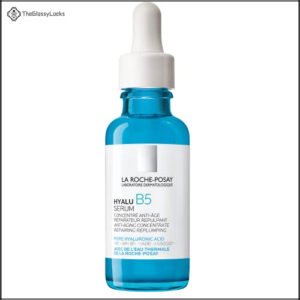
If tight, flaky skin is your everyday battle, La Roche-Posay’s Hyaluronic Serum earns its spot for a reason. Hyaluronic acid pulls water into the skin, while glycerin and panthenol (pro-vitamin B5) lock that moisture in and calm irritation along the way.
The texture absorbs fast, layers cleanly under moisturizer, and won’t pill under sunscreen. It’s gentle enough for daily use, even on reactive skin, though the mild fragrance might give true fragrance-phobes pause.
| Best For | Anyone with dry, tight, or flaky skin looking for a lightweight daily serum that delivers fast-absorbing hydration without disrupting their existing skincare routine. |
|---|---|
| Net Volume | 1.06 oz (30 mL) |
| Skin Type | All skin types |
| Application Time | Morning and night |
| Key Ingredient | Hyaluronic acid + glycerin |
| Fine Line Claim | Plumps fine lines |
| SPF Required | Yes, apply separately |
| Additional Features |
|
- Combines hyaluronic acid, glycerin, and vitamin B5 for deep, lasting hydration and skin-barrier support
- Dermatologist- and allergy-tested, making it safe for sensitive or reactive skin types
- Lightweight, fast-absorbing texture that layers smoothly under moisturizer or sunscreen
- Priced higher than many generic hyaluronic acid serums on the market
- Small 1.06 oz bottle can run out quickly with twice-daily use
- Contains a mild fragrance that may not suit fragrance-sensitive users, and some report pipette breakage
2. Dermalogica Collagen Plumping Serum
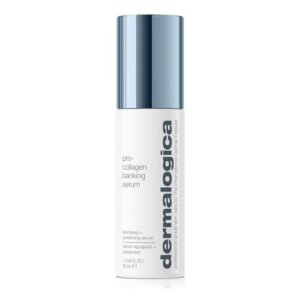
If your skin is crying out for more than just surface-level hydration, the Dermalogica Pro Collagen Banking Serum steps things up.
Its gel-to-serum texture absorbs quickly, delivering polyglutamic acid—which retains more water than hyaluronic acid alone—alongside collagen amino acids and panthenol to support firmness and smooth dry patches.
At $89 for 4.94 oz, it’s a considered investment, but the lightweight finish layers beautifully under moisturizer without heaviness or breakout risk.
| Best For | Anyone with normal to combination skin looking to tackle fine lines and loss of firmness with a lightweight, science-backed daily serum. |
|---|---|
| Net Volume | 4.94 oz (140 g) |
| Skin Type | Normal to combination |
| Application Time | Once or twice daily |
| Key Ingredient | Polyglutamic acid + collagen amino acids |
| Fine Line Claim | Reduces fine lines |
| SPF Required | Yes, apply separately |
| Additional Features |
|
- Contains polyglutamic acid and collagen amino acids that work together to visibly plump skin and support long-term firmness
- Gel-to-serum texture absorbs fast and layers well under moisturizer without feeling heavy or clogging pores
- Antioxidant protection helps guard against free-radical damage that breaks down collagen over time
- At $89, it’s a premium buy that may be hard to justify on a tight budget
- Needs to be paired with a separate moisturizer to get the full hydration benefit
- Not suitable for use around the eyes, which limits application on a common area of concern
3. Lancôme Génifique Anti Aging Serum
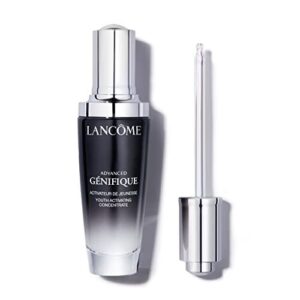
If collagen banking felt like a splurge, Lancôme’s Génifique offers a gentler entry into barrier-supporting hydration.
Its bifidobacterium ferment lysate prebiotic complex works alongside hyaluronic acid and panthenol to keep your skin’s microbiome balanced while drawing in moisture—glycerin and a touch of dimethicone seal it in without feeling heavy.
The fragrance-light, fast-absorbing formula suits normal and combination skin especially well, dispensed via a dropper bottle that controls dosage and limits air exposure, so the product stays stable pump after pump.
| Best For | Anyone with normal to combination skin who wants a gentle, hydrating first step in their routine to support a balanced microbiome and smoother, more elastic-looking skin. |
|---|---|
| Net Volume | Not disclosed |
| Skin Type | All skin types |
| Application Time | Morning and night |
| Key Ingredient | Hyaluronic acid + Bifidus prebiotic |
| Fine Line Claim | Reduces fine lines in 7 days |
| SPF Required | Yes, apply separately |
| Additional Features |
|
- Lightweight, fast-absorbing formula with a barely-there fragrance, so it layers easily under other products
- Bifidus prebiotic complex plus hyaluronic acid helps lock in moisture and support skin’s natural microbiome
- Dropper bottle controls dosage and limits air exposure, keeping the formula stable over time
- May cause mild irritation for very sensitive or allergy-prone skin, so a patch test is recommended
- Doesn’t replace sunscreen, so separate UV protection is still needed
- Results depend on consistent twice-daily use and may vary based on individual skin type
4. Tatcha Dewy Hydrating Serum
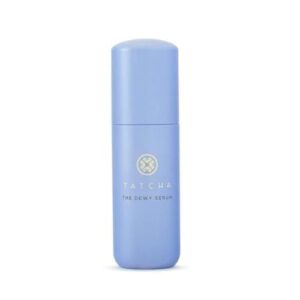
For something dewier than a microbiome boost, Tatcha’s serum leans into glow.
Sodium hyaluronate and squalane pair with a fermented Japanese complex (Uji green tea, Akita rice, Okinawa algae) for a gel-to-milky texture that absorbs into damp skin fast.
The finish is luminous, not greasy—testers noted hours of visible glow.
Apply after Tatcha Essence and before moisturizer. Fragrance-free options exist, but the 1 oz bottle runs small for daily users craving that lit-from-within look.
| Best For | Anyone who wants a dewy, plumped-up glow from their skincare and is okay layering an extra step into their routine for that lit-from-within finish. |
|---|---|
| Net Volume | 1 oz (28 g) |
| Skin Type | All skin types |
| Application Time | Morning and evening |
| Key Ingredient | Hyaluronic acid + squalane |
| Fine Line Claim | Reduces fine lines and texture |
| SPF Required | Yes, especially daytime |
| Additional Features |
|
- Combines gentle lactic acid, hyaluronic acid, and squalane to exfoliate, hydrate, and lock in moisture all at once
- Fermented Japanese complex (Uji green tea, Akita rice, Okinawa algae) gives a luminous, non-greasy finish that lasts for hours
- Layers easily into a routine, going on after essence and before moisturizer to boost everything that follows
- Lactic acid content can increase sun sensitivity, so daytime sunscreen is a must
- May irritate very sensitive or compromised skin, so a patch test is a good idea first
- The 1 oz bottle is on the small side and may need frequent repurchasing for daily use
5. Vichy Mineral 89 Hyaluronic Serum
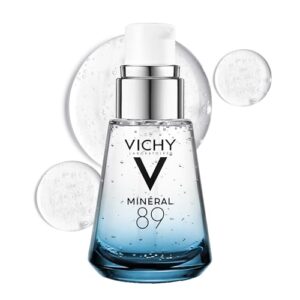
If your serum drawer needs a workhorse rather than a showpiece, Vichy’s Mineral 89 fits the bill. The formula leans on 89% Vichy Thermal Mineralizing Water plus hyaluronic acid, delivering hydration boosts within minutes and up to 24% more moisture after several hours of wear.
At this accessible price point, it’s a great example of how to choose the right skincare set for your skin type without overspending on hype.
It’s fragrance-free, pH-balanced, and gentle enough post-peel. Testers liked the lightweight gel texture—no greasy residue, no fuss. Layer it under moisturizer or SPF, morning or night, for steady barrier support without overcomplicating your routine.
| Best For | Anyone with sensitive or post-procedure skin who wants a no-fuss, fragrance-free serum that delivers steady daily hydration without added effort or irritation. |
|---|---|
| Net Volume | 1.01 oz (30 mL) |
| Skin Type | All skin types |
| Application Time | Daily |
| Key Ingredient | Hyaluronic acid + polyglutamic acid |
| Fine Line Claim | Plumps and hydrates |
| SPF Required | Yes, apply separately |
| Additional Features |
|
- Hyaluronic and polyglutamic acid blend offers both immediate and long-lasting hydration
- Fragrance-free formula is dermatologist-approved and suitable for sensitive skin
- Lightweight, fast-absorbing texture layers easily under moisturizer or SPF
- Contains no SPF, so daytime use still requires separate sun protection
- Small 30 ml bottle may need frequent repurchasing with regular use
- Visible improvements take consistent, long-term use rather than appearing overnight
6. SkinMedica TNS Advanced Serum
Consider this the splurge pick for anyone chasing visible firmness, not just surface hydration. SkinMedica’s dual-chamber bottle mixes a growth-factor blend with a marine-peptide complex right before application, pairing hydrolyzed silk and antioxidant botanicals in a lightweight, fast-absorbing texture.
Testers noticed smoother tone within two weeks of twice-daily use. The catch? At roughly $300 a bottle, plus a pump mechanism prone to dispensing unevenly, it’s a commitment—best reserved for mature, texture-concerned skin ready to invest.
| Best For | Those with mature or texture-concerned skin who want visible firming results and don’t mind paying a premium price. |
|---|---|
| Net Volume | 4 oz (118 mL) |
| Skin Type | All skin types |
| Application Time | Morning and evening |
| Key Ingredient | Growth factors + hydrolyzed silk |
| Fine Line Claim | Reduces fine and coarse wrinkles |
| SPF Required | Yes, apply separately |
| Additional Features |
|
- Dual-chamber system mixes a growth-factor blend with marine peptides fresh at each use
- Lightweight, fast-absorbing texture suits all skin types and layers well under moisturizer or sunscreen
- Visibly improves tone, texture, firmness, and fine lines/wrinkles within about two weeks of twice-daily use
- High price point (around $300 a bottle) makes frequent repurchasing tough
- Dual-pump mechanism can malfunction, dispensing only one chamber’s formula and wasting product
- Contains fragrance, dimethicone, and fibroblast-conditioned media, which may irritate sensitive skin and aren’t vegan-friendly
7. Good Molecules Hyaluronic Serum
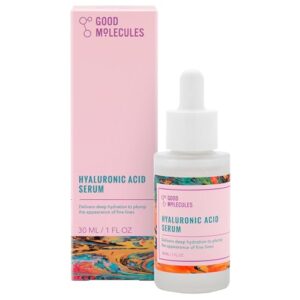
If your budget is tight but your skin is thirsty, Good Molecules Hyaluronic Serum quietly earns its place among serums at three times its price. Its dual-weight hyaluronic acid—working both at the surface and deeper in the epidermis—delivers real plumping, not just temporary slip.
At roughly $10 per ounce, the fragrance-free, vegan formula absorbs fast on damp skin and layers cleanly under moisturizer.
Don’t skip that damp-skin step, though; it genuinely makes the difference.
| Best For | Anyone on a budget who wants a lightweight, no-fuss hydration booster that works across all skin types, including sensitive skin. |
|---|---|
| Net Volume | 1 oz (30 mL) |
| Skin Type | All skin types |
| Application Time | Morning and night |
| Key Ingredient | Dual-weight hyaluronic acid |
| Fine Line Claim | Plumps fine lines |
| SPF Required | Yes, apply separately |
| Additional Features |
|
- Dual-weight hyaluronic acid hydrates at multiple skin layers, visibly plumping fine lines over time
- Fragrance-free, vegan, and cruelty-free formula absorbs quickly and layers cleanly under moisturizer or makeup without pilling
- Gentle enough for all skin types and works for both morning and evening routines
- Must be applied to damp skin to work properly—skipping this step noticeably reduces effectiveness
- The 1 oz bottle can disappear fast with twice-daily use, meaning frequent repurchasing
- Some units have been reported arriving without a tamper-evident seal, which may be a concern for buyers
How Hydrating Serums Help Dry Skin
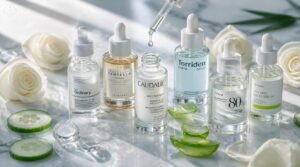
Dry skin isn’t just a comfort issue — it’s a barrier problem, and hydrating serums are built specifically to fix that. The right serum works on multiple levels at once, doing more than your moisturizer alone ever could. Here’s exactly how they help.
Boosts Water Retention
Think of your skin as a sponge — and a hydrating serum as the water that finally fills it. Hyaluronic acid binds up to 1,000 times its weight in water, while polyglutamic acid holds moisture even longer, keeping skin quenched for up to 24 hours. Together, these humectants can boost surface moisture and reduce transepidermal water loss noticeably.
Hyaluronic acid can bind up to 1,000 times its weight in water, keeping skin quenched for up to 24 hours
Practicing strategies such as limit added dietary sodium can reduce water retention, which may improve skin’s appearance.
Plumps Tight, Dull Skin
When skin is dehydrated, it loses its ability to reflect light evenly — leaving you with that flat, tired look no amount of concealer seems to fix. Hydrating serums work by filling intercellular spaces with water-binding molecules like hyaluronic acid, so your skin’s surface becomes visibly plumper and more luminous almost immediately.
Here’s what that plumping effect actually does for dry skin:
- Smooths microtexture so light bounces off more evenly, creating a natural glow
- Restores elasticity, softening the look of fine lines that tighten when skin is parched
- Fills the gaps between skin cells, reducing that papery, pulled feeling
- Delivers an instant dewy finish without heaviness
- Helps skin look refreshed and awake — not just moisturized
The best hydrating serums for dry skin don’t just add water; they hold it there long enough for your complexion to genuinely recover its bounce.
Supports Smoother Texture
Rough, uneven texture is often the first thing dry skin shows — and hydrating serums address it at the source.
Humectants like hyaluronic acid draw water into the stratum corneum, filling micro-crevices and softening surface irregularities, so your skin feels genuinely silky rather than just temporarily coated.
Regular use helps suppress fine dry lines and visibly reduce pore appearance over time.
Improves Moisturizer Performance
Smoother texture is just the beginning — once your skin feels even and receptive, your moisturizer can actually do its job.
Think of a hydrating serum as a primer for moisture retention: it floods the skin with humectants first, creating a hydrated foundation that allows your moisturizer’s occlusives and ceramides to bind more effectively and last noticeably longer through the day.
- Barrier-supporting serums stabilize the stratum corneum before richer creams are applied
- Serum layering maximizes absorption of moisturizing ingredients that follow
- Occlusives in your moisturizer seal in the humectant-delivered hydration more efficiently
- Glycerin and hyaluronic acid attract water that heavier creams then lock in place
- A stable hydration foundation means fewer reapplications and better all-day comfort
Reduces Flaky Appearance
And once your moisturizer is performing at its peak, you’ll notice something else shift: those rough, flaky patches start to fade.
Hydrating dry flakes comes down to replenishment — humectants like glycerin attract water almost instantly, softening surface scaling on the first application, while ceramides and niacinamide quietly rebuild your barrier, delivering dryness relief that keeps skin smooth day after day.
Best Ingredients for Lasting Hydration
Not all hydrating ingredients work the same way—some pull moisture into your skin, others lock it in, and a few do both. The right combination makes the difference between a serum that feels good for an hour and one that actually keeps your skin comfortable all day. Here’s what to look for on the label.
Hyaluronic Acid Weights
Not all hyaluronic acid behaves the same way, and that’s the part most labels skip. High-molecular-weight HA sits on top, forming a surface film that locks in moisture, while low-molecular-weight hyaluronic acid slips deeper for cellular hydration.
- High weight: surface film, instant plumping
- Medium weight: balanced penetration
- Low weight: deep, lasting hydration
- Multi-weight blends: best overall retention
Multi-weight formulas simply work harder for thirsty skin.
Glycerin and Panthenol
Hyaluronic acid gets the spotlight, but glycerin and panthenol do quiet, steady work. Glycerin is the gold-standard humectant, drawing water into the skin across humidity levels.
Panthenol (pro-vitamin B5) calms irritation while smoothing dry patches—great for sensitive skin tolerance.
Together, they create synergistic moisture retention, layering beautifully under richer textures for genuine barrier comfort benefits in hydrating serums.
Polyglutamic Acid Benefits
If hyaluronic acid is the headliner, polyglutamic acid is the understudy quietly stealing the show. This humectant excels at PGA moisture retention, forming a surface film that locks in water and builds environmental stress resilience.
Benefits include:
- Reduces dehydration lines
- Smooths skin texture
- Boosts moisture retention
- Strengthens hydrating serums
For dry skin battling skin hydration loss, that film formation matters more than you’d think.
Ceramides and Niacinamide
Think of ceramides and niacinamide as the repair crew working underneath all that surface hydration.
Lipid barrier repair happens when ceramides fill gaps between skin cells, while niacinamide boosts ceramide synthesis and reduces transepidermal loss. This niacinamide ceramide synergy also promotes skin elasticity and offers genuine redness relief—making it a must in any serious skin barrier repair routine.
Squalane and Peptides
Squalane and peptides are where hydration gets serious.
Plant-derived squalane — sourced from olive or sugarcane — mimics your skin’s natural lipids, sealing moisture in without clogging pores.
Meanwhile, peptide chains signal collagen production, reinforcing the barrier from within.
Together, they deliver non-comedogenic hydration that leaves dry skin noticeably smoother, more supple, and genuinely resilient over time.
Budget Versus Premium Serum Picks
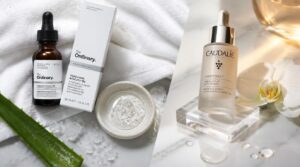
Spending more doesn’t always mean getting more — especially with hydrating serums, where a $10 bottle can genuinely rival a $200 one in the right formulation. That said, price does influence a few real differences worth knowing before you buy. Here’s how budget and premium picks actually stack up across the factors that matter most.
Cost Per Ounce
Price tags on hydrating serums range wildly — from $10 to well over $200 for the same 30 ml bottle. Cost per ounce is your most honest comparison tool: divide total price by fluid ounces.
The Ordinary lands near $10 per ounce, while excluded premium picks averaged $99. Bulk sizes and retailer promotions can meaningfully lower that number.
Ingredient Concentration
A bigger price tag doesn’t automatically mean a higher-potency formula.
Hyaluronic acid in serums commonly runs from 0.1% to 2% — The Ordinary discloses its full 2% concentration, while premium brands sometimes leave you guessing.
What matters most is humectant synergy: pairing glycerin (2–8%) with panthenol and ceramides at functional levels delivers lasting hydration without irritation risk.
Texture and Absorption
Texture tells you a lot — sometimes more than the ingredient list.
Budget serums like The Ordinary lean toward lightweight, water-based formulas that absorb in under 60 seconds, leaving no residue. Premium options often use medium-viscosity emulsions with a silkier slip.
- Budget gels: refreshingly cooling, fast-sinking
- Mid-range: balanced grip and glide
- Premium: velvety, slower absorption without pilling
Packaging and Usability
How a serum feels on your skin matters — but so does how it comes out of the bottle.
| Feature | Budget | Premium |
|---|---|---|
| Dispenser | Dropper or open cap | Airless pump |
| UV Protection | Rarely included | Often standard |
| Materials | Plastic | Recyclable glass |
Airless pump bottles keep formulas stable longer, while ergonomic designs make daily use genuinely smooth.
Best Value Factors
Good packaging sets the stage — but true value goes deeper than the bottle. When comparing hydrating serums, cost per ounce tells a clearer story than sticker price alone.
A budget-friendly option like The Ordinary, at roughly $10 per ounce, can match pricier formulas when active ingredient potency and transparency are strong. That’s your best-value formula.
How to Choose Your Serum
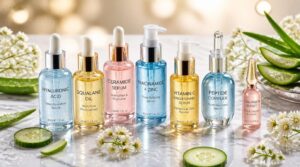
Not all dry skin is dry for the same reason, so the "best" serum really depends on what your skin is dealing with. Maybe you’re battling tightness that won’t quit, redness that flares at the worst times, or just a preference for fragrance-free formulas. Here’s how to match your specific situation to the right pick.
Very Dry Skin
When your skin feels tight, cracks at the knuckles, or flakes, no matter how much lotion you pile on, you’re dealing with real lipid barrier damage, not just seasonal dryness triggers.
Look for multi-molecular-weight hyaluronic acid layered with ceramides and squalane — this combo mitigates transepidermal water loss while calming pruritus.
Dermatologist recommendation: prioritize moisture retention over fragrance or fancy packaging here.
Sensitive Dry Skin
Dry, reactive skin is its own particular challenge — what soothes one person can sting another.
Fragrance and certain preservatives are the most common culprits here, so look for serums labeled fragrance-free with ceramides, glycerin, and panthenol.
- Avoid alcohol-based formulas
- Prioritize ceramide-rich serums
- Check pH compatibility
- Patch test every new product
- Choose minimal, barrier-focused ingredients
Mature Dry Skin
As you age, your skin’s barrier naturally weakens, producing fewer natural oils and retaining less hyaluronic acid — which means moisture escapes faster than younger skin can afford.
| Concern | Key Ingredient | Why It Helps |
|---|---|---|
| Barrier decline | Ceramides + Niacinamide | Rebuilds lipid barrier, reduces water loss |
| Natural oil loss | Squalane | Mimics skin oils, lightweight occlusive seal |
| Elasticity + texture | Peptides | Strengthens collagen, firms over time |
Prioritize multi-weight hyaluronic acid serums alongside gentle cleansing to avoid stripping what little oil remains. The SkinCeuticals HA Intensifier is particularly well-suited here, combining Proxylane and glycans for filler-equivalent volume without heaviness.
Fragrance-free Preferences
If your skin flares at the slightest provocation, fragrance-free skincare isn’t a preference — it’s protection.
Fragrance compounds remain a leading trigger for contact dermatitis, and masking scents hide in "unscented" products too. Check labels for parfum or aroma compounds.
Dermatologists recommend fragrance-free hydrating serums with minimal ingredient decks, avoiding essential oils entirely to keep sensitive, dry skin calm and reactive‑free.
Seasonal Dryness Needs
Once the thermostat clicks on, your skin notices. Indoor heating drops humidity 10–20%, and winter lipid decline leaves ceramides depleted, so transepidermal water loss climbs.
Adjust your routine seasonally:
- Layer humectants with occlusives
- Swap lightweight gels for richer, barrier repair serums
- Watch seasonal sebum shifts
Choosing among the best serums for dry skin means matching winter skincare needs to real seasonal skin changes.
How to Apply Hydrating Serum
Even the best hydrating serum won’t do much if your application technique works against it. A few small habits around timing and layering make a real difference in how much moisture actually sticks around. Here’s what to keep in mind before that bottle becomes part of your routine.
Apply on Damp Skin
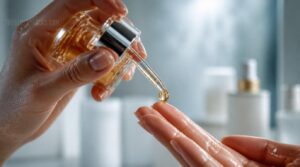
Timing changes everything with hydrating serums. Apply yours right after cleansing, while skin’s still damp, not dripping.
That surface water boosts absorption rate enhancement and gives hyaluronic acid more to bind. Skip the dripping-wet extreme, though—it dilutes actives.
For dry skin craving real moisture retention, this postcleansing window is when humectant binding efficiency peaks, maximizing ideal moisture levels before they evaporate.
Use Before Moisturizer
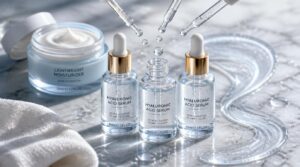
Think of serum and moisturizer as a relay race—order matters. Hyaluronic acid needs to absorb into damp skin first, doing its water-binding work before anything heavier sits on top.
Wait 30-60 seconds, then layer your moisturizer to seal it all in. This sequencing locks hydration where it belongs instead of blocking it at the surface, optimizing your whole routine.
Layer With SPF
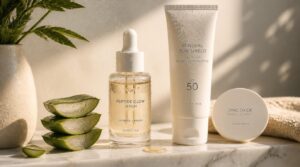
All that hydrating work goes to waste without sunscreen sealing it in. Wait a moment after your serum, then apply a dedicated SPF—not SPF-makeup—since mineral formulas (zinc oxide) layer cleanest over humectants without pilling.
For dry or sensitive skin, choose fragrance-free, gel-based sunscreens; they absorb smoothly, won’t disturb your hydrating layers, and adjust seasonally as your skin’s needs shift.
Avoid Harsh Actives
SPF protects what your serum built—but the wrong ingredients can undo it just as fast.
Skip alcohols and harsh fragrance, both known to spike irritation and weaken barrier reinforcement.
Watch retinoid strength and exfoliating acids, too; they’re worth using, just not stacked carelessly.
When in doubt, go fragrance-free, paired with formaldehyde-safe preservatives, for reliable skin sensitivity soothing.
Morning Versus Night Use
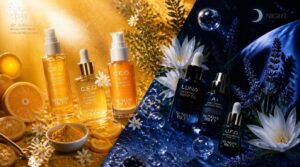
Once you’ve sorted out which actives play nice together, the next question is when to use them. Your skin’s needs shift between AM vs PM, so smart layering matters:
- Mornings: lightweight humectants plus SPF compatibility
- Daytime antioxidant layering shields against UV stress
- Nights: heavier textures for nighttime barrier repair
- Overnight moisture occlusion locks in hydration while you sleep
- Consistent skincare routine layering reinforces your skin barrier long-term
Frequently Asked Questions (FAQs)
Is hydration serum good for dry skin?
Yes — and not just good. Hyaluronic acid grabs water like a sponge, while ceramides lock it in. Dermatologists consistently recommend them for dry skin because they deliver both surface and deep hydration fast.
What is the best serum for really dry skin?
For really dry skin, La Roche-Posay Hyalu B5 leads the pack — it layers two hyaluronic acid weights with vitamin B5 and madecassoside to hydrate deeply while calming that tight, uncomfortable feeling.
What is the best hydrating serum for dry skin?
Before picking a serum, dermatologists agree: multi-weight hyaluronic acid is the industry standard. It binds moisture at every skin depth, repairs your barrier, and keeps dry skin genuinely supple all day.
Which type of serum is best for dry skin?
For dry skin, a water-based hydrating serum packed with humectants like hyaluronic acid or glycerin works best — drawing moisture in while staying lightweight enough to layer comfortably under your moisturizer.
What is the most hydrating thing for dry skin?
Think of your skin as a sponge — it needs both water and something to seal it in. Hyaluronic acid does both, binding up to 1,000 times its weight in water while reinforcing your skin barrier against moisture loss.
Do vitamin C serums dry skin?
Vitamin C serums don’t inherently dry skin, but L-ascorbic acid sensitivity can cause stinging or redness. Derivatives tend to be gentler. High concentrations may trigger irritation, making skin feel tight — not true dryness.
Can hydrating serums cause breakouts or clogged pores?
Yes, they can — but it’s rarely the hyaluronic acid itself. Heavy emollients, pore-clogging additives, or irritating fragrances in the formula are usually to blame.
How long before seeing visible hydration results?
Like a sponge soaking up water, your skin responds fast — surface plumping within hours, reduced tightness by day seven, and stronger barrier hydration at two to four weeks with consistent daily use.
Should pregnant women avoid certain serum ingredients?
If you’re pregnant, skip retinoids, hydroquinone, and salicylic acid leave-on products. Also avoid serums with formaldehyde-releasing preservatives or heavy fragrance — your skin is more reactive, and these ingredients carry real safety concerns.
Can hydrating serums be used with retinoids?
Retinoids and hydrating serums are actually close allies. Hyaluronic acid layering before tretinoin, with panthenol-rich moisturizer on top — a move called sandwiching — cushions irritation and keeps your skin barrier intact.
Conclusion
Dry skin doesn’t have to drain you—finding the right hydrating serum for dry skin is less about luck and more about understanding what your barrier actually needs.
Molecular weight, application order, and ingredient pairing turn a decent formula into a daily ritual that holds.
Whether you’re drawn to a budget-friendly pick or a peptide‑rich splurge, the serums here earned their place through results, not marketing.
Your skin’s thirst? Consider it finally answered.