This site is supported by our readers. We may earn a commission, at no cost to you, if you purchase through links. This content is for general informational and educational purposes only and is not a substitute for professional medical, dermatological, or nutritional advice.

Dry skin isn’t just uncomfortable—it’s a damaged barrier actively losing moisture faster than it can hold it. That tight, papery feeling after washing your face? That’s transepidermal water loss in real time, and a standard moisturizer alone often can’t fix it. The right face oil works differently: it fills microscopic gaps in your skin’s lipid matrix, slowing that moisture escape at the source rather than simply sitting on top.
The best face oils for dry skin aren’t the greasy, pore-clogging formulas that gave oils a bad reputation. Today’s standout options—built around ingredients like squalane, ceramides, and linoleic-rich rosehip—deliver serious barrier repair without the mess. Knowing which ones actually work, and how to use them, changes everything.
Table Of Contents
- Key Takeaways
- How to Choose The Best Face Oil for Dry Skin
- Top 10 Best Face Oils for Dry Skin
- 1. Palmer’s Cocoa Butter Face Oil
- 2. Bio-Oil Scar Stretch Mark Serum
- 3. Cliganic Organic Jojoba Oil for Skin
- 4. The Ordinary Rose Hip Seed Oil
- 5. Ancient Greek Remedy Body Oil
- 6. SheaMoisture Coconut Oil Overnight Face Oil
- 7. Palmer’s Coconut Oil Facial Oil
- 8. Good Molecules Squalane Oil Moisturizer
- 9. CeraVe Skin Renewing Hydrating Serum
- 10. The Ordinary Marula Oil for Skin
- Best Face Oil Ingredients for Dry, Sensitive, or Acne-Prone Skin
- How to Apply Face Oil for Maximum Hydration
- Face Oil Benefits, Mistakes, and Buying Tips
- Frequently Asked Questions (FAQs)
- What is the best oil for dry skin on face?
- What is the best oil for dry aging face?
- Should dry skin use face oil?
- What is the most moisturizing facial oil?
- Can face oils cause breakouts on dry skin?
- How often should I use face oil daily?
- Are expensive face oils worth the extra cost?
- Can pregnant women safely use all face oils?
- Do face oils expire and how long?
- How many drops of face oil should I use?
- Conclusion
Key Takeaways
- Dry skin leaks moisture through microscopic gaps in its lipid barrier, and face oils with linoleic acid, squalane, or ceramides actually fill those gaps rather than just coating the surface.
- Comedogenic rating matters more than marketing claims — oils rated 0–2 (squalane, rosehip, jojoba) hydrate without clogging pores, even on acne‑prone dry skin.
- Always apply face oil to damp skin and layer it between a humectant serum and a moisturizer, so you’re sealing in water rather than just adding oil on top of a dry surface.
- Fragrance — including natural essential oils — is one of the most common triggers of irritation on compromised skin, so fragrance‑free formulas paired with a 48‑hour patch test are non‑negotiable for sensitive or eczema‑prone types.
How to Choose The Best Face Oil for Dry Skin

Not all face oils are created equal, and for dry skin, the wrong pick can leave you just as parched as before. The label alone won’t tell you much — what matters is knowing which ingredients actually do the work. Here’s what to look for before you buy.
If you’re curious how nourishing oils perform across different skin and hair needs, this guide to choosing the best beard growth oil breaks down which natural ingredients truly hydrate versus just sit on the surface.
Barrier-repairing Fatty Acids
When your skin feels perpetually tight and rough, the culprit is often a depleted lipid matrix.
Linoleic acid (an omega-6 fatty acid) fills microscopic gaps in your skin’s outer layer, directly reducing transepidermal water loss — the invisible evaporation that leaves dry skin parched. Oils like rosehip and evening primrose deliver these barrier-repairing fatty acids in noncomedogenic, skin‑compatible forms your barrier actually recognizes.
The Omega‑7 palmitoleic acid found in sea buckthorn oil also boosts cellular regeneration for a healthier barrier.
Squalane, Jojoba, and Rosehip
Think of these three as a dream team.
Squalane mimics your natural sebum, hydrating without greasiness or pore congestion. Jojoba — technically a wax ester — balances oil production while forming a breathable, protective layer.
Rosehip brings vitamins A and C for collagen support and antioxidant defense. Together, they deliver non-greasy hydration and genuine barrier repair in one lightweight blend.
Ceramides for Dry Skin
Squalane and jojoba handle the surface, but ceramides work deeper. As lipid matrix building blocks, they sit within the stratum corneum alongside cholesterol and fatty acids — basically the mortar between your skin cells.
When ceramide levels drop, transepidermal water loss increases, leaving skin tight and flaky.
Look for ceramide species like NP or AP to genuinely restore your moisture barrier.
Fragrance and Irritant Risks
Ceramides protect your barrier from within — but fragrance can quietly undo that work from the outside.
Fragrance ingredients are among the most common triggers of allergic and irritant contact dermatitis, especially on dry or eczema-prone skin where the barrier is already compromised. Even natural essential oils can cause reactions. Whenever possible, choose fragrance-free formulas — and always patch test before committing to full-face use.
Even natural fragrance can trigger contact dermatitis on compromised skin, so choose fragrance-free formulas and patch test first
Non-comedogenic Oil Ratings
Not all face oils are created equal regarding pore-clogging risk. The comedogenic rating scale runs from 0 (won’t clog pores) to 5 (highly likely to).
For dry skin prone to breakouts, stick to oils rated 0 to 2 — think squalane (0), rosehip (1), or jojoba (2).
Even so, patch test first, because individual skin tolerance always has the final say.
Top 10 Best Face Oils for Dry Skin
Here are ten face oils that genuinely deliver for dry skin, chosen for their ingredient quality, skin compatibility, and real-world results.
Each one brings something different to the table — from budget-friendly single-ingredient staples to barrier-repair blends worth every penny.
Let’s take a closer look at what makes each one worth your attention.
From smoky oud to warm amber notes, this guide to the best Arabian perfumes for lasting fragrance breaks down which scents suit your style best.
1. Palmer’s Cocoa Butter Face Oil
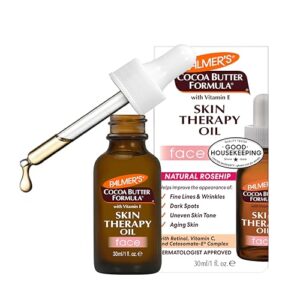
Palmer’s Cocoa Butter Face Oil packs a surprising amount of science into a $7.79 bottle. At its heart, you’re getting a blend of ten plant oils — including jojoba and rosehip — paired with cocoa butter for deep softening and retinol to smooth fine lines over time.
What makes it genuinely useful for dry skin is the Cetesomate-E complex, which delivers vitamin E alongside other skin nutrients. It absorbs quickly without leaving that sticky film some facial oils are known for.
Just keep in mind: retinol increases sun sensitivity, so following up with SPF during the day is non-negotiable.
| Best For | People with dry or mature skin looking for an affordable, lightweight daily face oil that targets fine lines and uneven skin tone. |
|---|---|
| Key Ingredient | Retinol & Cocoa Butter |
| Target Skin Type | Dry, Mature |
| Fragrance-Free | No |
| Absorption Speed | Fast |
| Primary Benefit | Anti-Aging & Hydration |
| Organic/Natural | No |
| Additional Features |
|
- Impressive ingredient lineup for the price — retinol, vitamin C, cocoa butter, and 10 plant oils all under $8
- Absorbs quickly without greasiness, making it easy to layer under makeup or sunscreen
- Tackles multiple concerns at once: hydration, fine lines, and hyperpigmentation
- Retinol means you’ll need to pair it with SPF during the day, adding an extra step
- Too lightweight for anyone who prefers a richer, more occlusive moisturizer
- Some customers have received orders with damaged packaging, like an open or broken pipette
2. Bio-Oil Scar Stretch Mark Serum
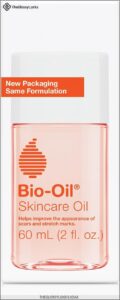
Don’t let the name fool you — Bio-Oil works hard for dry skin, not just scars. Its PurCellin Oil technology thins the formula so it spreads effortlessly and absorbs fast, leaving no greasy film behind.
The real hydration comes from vitamin E, calendula, and lavender oils, which soothe irritation while reinforcing your skin’s moisture barrier. Jojoba rounds things out by balancing hydration without blocking pores.
It’s genuinely multi-purpose: tackle dryness, uneven tone, and stretch marks all at once. For best results, massage it into slightly damp skin twice daily and commit to at least eight weeks.
| Best For | Anyone dealing with dry skin, stretch marks, or scars who wants a lightweight, multi-use oil that absorbs quickly without leaving a greasy residue. |
|---|---|
| Key Ingredient | PurCellin Oil & Vitamin E |
| Target Skin Type | All Skin Types |
| Fragrance-Free | No |
| Absorption Speed | Fast |
| Primary Benefit | Multi-Purpose Moisture |
| Organic/Natural | No |
| Additional Features |
|
- Genuinely multi-purpose — works as a moisturizer, scar treatment, lip balm, cuticle oil, and more
- Fast-absorbing, non-greasy formula thanks to PurCellin Oil technology, making it comfortable for everyday use
- Dermatologist-recommended, cruelty-free, and free from parabens — a clean option that suits all skin types
- The small 2.88 fl oz bottle can disappear quickly if you’re using it head-to-toe, making it pricey to maintain
- Results on older or more severe scarring can be minimal, so expectations need to be realistic
- The scent, while mild, has a dated quality that some people find off-putting
3. Cliganic Organic Jojoba Oil for Skin
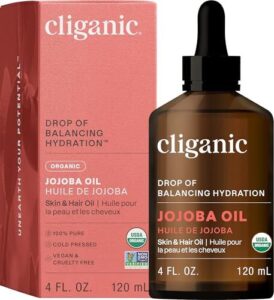
Jojoba oil is one of the few plant oils that genuinely mirrors your skin’s own chemistry. Cliganic’s USDA Certified Organic version keeps things refreshingly simple — one pure, cold-pressed ingredient, no fillers, no synthetic fragrance.
Because jojoba closely resembles human sebum, it absorbs quickly and locks in moisture without leaving that heavy, suffocating feeling. Vitamins E and B support your skin barrier and help calm flaking or irritation over time.
With a comedogenic rating of 2, it’s a safe, lightweight choice for dry skin that’s also prone to breakouts.
| Best For | Anyone who wants a clean, no-fuss moisturizer that works across skin, hair, and nails — especially those with dry or combination skin who prefer organic, single-ingredient products. |
|---|---|
| Key Ingredient | Organic Jojoba Oil |
| Target Skin Type | Dry, Combination |
| Fragrance-Free | Yes |
| Absorption Speed | Fast |
| Primary Benefit | Pure Moisture |
| Organic/Natural | USDA Certified Organic |
| Additional Features |
|
- USDA Certified Organic and completely pure — no fillers, additives, or synthetic ingredients
- Versatile enough to use on your face, hair, scalp, body, and nails
- Lightweight formula absorbs quickly without a greasy or heavy finish
- Needs careful storage away from light and heat, or it can go rancid faster than expected
- Some users have reported seal or pump failures that can lead to leaks or contamination
- Works best as a general moisturizer — won’t tackle specific skin concerns like acne or eczema on its own
4. The Ordinary Rose Hip Seed Oil
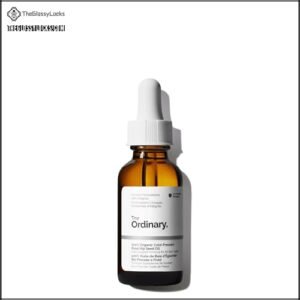
Rosehip seed oil is quietly one of skincare’s most efficient workers. The Ordinary’s version keeps it honest — 100% organic, cold-pressed, and unrefined, so the vitamins A and E stay intact rather than processed away.
Those natural vitamins, paired with omega-3 and omega-6 fatty acids, actively reinforce your skin barrier and support cell turnover, which means softer texture and a more even tone over time.
Apply a few drops to slightly damp skin before your moisturizer at night. With a low comedogenic rating and no added fragrance, it’s a barrier-repairing staple that delivers real results for well under $20.
| Best For | Anyone looking for a simple, no-frills facial oil to hydrate, even skin tone, and reduce fine lines — especially those with sensitive skin or on a budget. |
|---|---|
| Key Ingredient | Rosehip Seed Oil |
| Target Skin Type | All, Sensitive |
| Fragrance-Free | No |
| Absorption Speed | Fast |
| Primary Benefit | Barrier Repair |
| Organic/Natural | 100% Organic |
| Additional Features |
|
- 100% organic and cold-pressed, keeping nutrients like vitamins A, E, and omega fatty acids fully intact
- Lightweight and non-comedogenic, making it suitable for all skin types including sensitive and acne-prone
- Versatile use — works as a standalone treatment or layered into your existing routine before moisturizer
- The natural earthy/fishy scent can be off-putting, especially for fragrance-sensitive users
- Easy to over-apply, which can leave skin feeling greasy and interfere with makeup
- Unrefined oil oxidizes over time, so improper storage or slow use can shorten its effective shelf life
5. Ancient Greek Remedy Body Oil
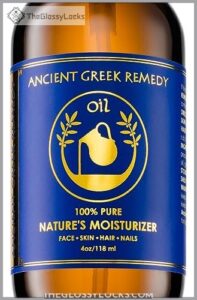
Think of this one as a two-in-one — a face oil and body treatment that earns its place on any dry-skin shelf. Ancient Greek Remedy blends organic jojoba, sweet almond, and olive oils with vitamin E into a 99% organic formula that absorbs quickly without leaving that slick, uncomfortable residue.
Each ingredient pulls real weight. Jojoba mimics your skin’s natural sebum, olive oil delivers deep, lasting hydration, and vitamin E shields the barrier from environmental stress. The natural lavender scent is calming rather than overpowering for most users — though very fragrance-sensitive skin may want to patch test first.
At $14.99 for 4 oz, the value is genuinely hard to beat.
| Best For | Anyone with dry, sensitive, or combination skin who wants a versatile, clean-ingredient oil that works on both face and body. |
|---|---|
| Key Ingredient | Jojoba & Olive Oil |
| Target Skin Type | Dry, Sensitive, Combination |
| Fragrance-Free | No |
| Absorption Speed | Fast |
| Primary Benefit | Deep Hydration |
| Organic/Natural | 99% Organic |
| Additional Features |
|
- Absorbs quickly without greasy residue, making it comfortable for daily use on damp or dry skin
- Genuinely multi-purpose — works as a body moisturizer, facial serum, hair treatment, and even a massage oil
- Hard to beat at $14.99 for a 99% organic, vegan, cruelty-free formula
- The lavender scent is natural but strong — a real drawback if you’re sensitive to fragrance
- Contains almond oil, so it’s not safe for anyone with a tree nut allergy
- Won’t replace sunscreen or targeted treatments for acne or hyperpigmentation
6. SheaMoisture Coconut Oil Overnight Face Oil
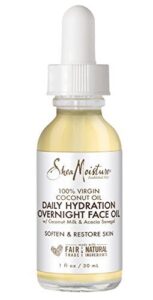
Overnight is when your skin does its best repair work — and SheaMoisture’s Coconut Oil Overnight Face Oil is built around that window.
The formula pairs 100% virgin coconut oil with Fair Trade shea butter, a combination that fills surface gaps and seals in moisture through the night. Coconut oil’s lipid-rich base reduces transepidermal water loss, while shea butter reinforces the barrier so you wake up noticeably softer, not tight or flaky.
At $14.00 for 2.88 oz, it’s an accessible pick. The formula is paraben-, sulfate-, and fragrance-free, making it a smart option for dry or sensitive skin.
| Best For | Dry and sensitive skin types looking for a clean, no-fuss overnight treatment that wakes up softer and more hydrated by morning. |
|---|---|
| Key Ingredient | Coconut Oil & Shea Butter |
| Target Skin Type | Dry, Sensitive |
| Fragrance-Free | Yes |
| Absorption Speed | Overnight |
| Primary Benefit | Overnight Repair |
| Organic/Natural | Natural |
| Additional Features |
|
- Virgin coconut oil and Fair Trade shea butter work together to deeply moisturize and lock in hydration overnight
- Clean formula — free of parabens, sulfates, phthalates, and fragrance — making it safe for even reactive or rosacea-prone skin
- Versatile enough to double as a makeup base, massage oil for gua sha, or beard conditioner during the day
- The natural scent can come across as earthy or "animal-like," which some people find off-putting
- May feel too heavy for oily or acne-prone skin types
- At 2.88 oz for $14.00, regular users will go through it quickly and find the cost adding up over time
7. Palmer’s Coconut Oil Facial Oil
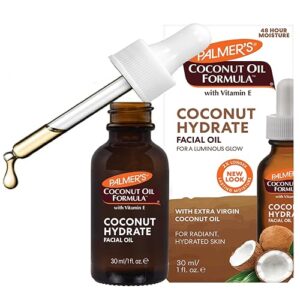
Palmer’s doesn’t stray far from what made the previous pick work — a coconut oil base — but it takes a noticeably different direction with its formula.
The blend pairs Fair Trade extra virgin coconut oil with nine additional plant oils, including jojoba, rosehip, and vitamin E (tocopherol). Jojoba mimics your skin’s natural sebum; rosehip brings essential fatty acids that support cell renewal. Together, they target flakiness and barrier weakness without leaving a heavy residue.
At roughly $10 for 4 ounces, it’s one of the more generous offerings at this price. The formula is free of parabens, sulfates, and mineral oil — and it’s both vegan and cruelty-free, which matters for many shoppers today.
| Best For | Anyone with dry, sensitive, or menopausal skin who wants a lightweight daily facial oil that works well under makeup without breaking the bank. |
|---|---|
| Key Ingredient | Coconut & Rosehip Oil |
| Target Skin Type | Dry, Sensitive, Menopausal |
| Fragrance-Free | No |
| Absorption Speed | Fast |
| Primary Benefit | Daily Moisture |
| Organic/Natural | Natural |
| Additional Features |
|
- Ten-oil blend (including rosehip and jojoba) delivers real hydration while supporting skin barrier repair
- Clean formula — no parabens, sulfates, or mineral oil — and it’s vegan and cruelty-free
- Great value at around $10 for 4 ounces, making it easy to use generously morning and night
- The formula runs thin, so you may need more drops than expected to get full coverage
- The light coconut scent, while mild, could be a dealbreaker for those sensitive to fragrance
- Packaging seals have been reported as occasionally compromised, so it’s worth inspecting the bottle on arrival
8. Good Molecules Squalane Oil Moisturizer
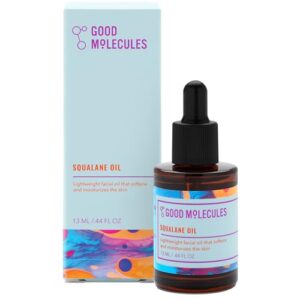
If you want something stripped back and budget-friendly after Palmer’s ingredient-heavy blend, Good Molecules delivers exactly that.
Their Squalane Oil Moisturizer contains one ingredient: 100% olive-derived squalane. That’s intentional. Squalane is a stable, plant-derived hydrocarbon that mimics your skin’s natural oils, helping seal moisture in and reduce water loss without blocking pores. It’s non-comedogenic and fragrance-free, making it a safe pick for dry, sensitive, or acne-prone skin alike.
Because even a single-ingredient moisturizer works best when it fits your overall routine, it helps to match products to your skin type using this guide to effective facial care treatments.
For a richer option that pairs squalane with vitamins B5 and E, this plant-based squalane moisturizing cream review breaks down how added actives can take your hydration routine a step further.
At $8.00 for 13 ml, it’s remarkably affordable. A few drops absorb quickly, leaving a satin — not slick — finish. Use it after your serum, day or night.
| Best For | Anyone with dry, sensitive, or acne-prone skin who wants a simple, no-frills moisturizer that won’t irritate or break the bank. |
|---|---|
| Key Ingredient | Squalane |
| Target Skin Type | Dry, Sensitive, Acne-Prone |
| Fragrance-Free | Yes |
| Absorption Speed | Fast |
| Primary Benefit | Lightweight Moisture |
| Organic/Natural | Plant-Derived |
| Additional Features |
|
- Single-ingredient formula makes it easy to spot the cause of any skin reaction
- Lightweight and fast-absorbing with a non-greasy, satin finish
- Works across multiple uses — face, hair, and nails — for added versatility
- The 13 ml bottle runs out fast if you use it daily
- Lacks any active ingredients, so it won’t address specific concerns like hyperpigmentation or acne on its own
- Can feel slightly oily on the skin if you apply too much at once
9. CeraVe Skin Renewing Hydrating Serum
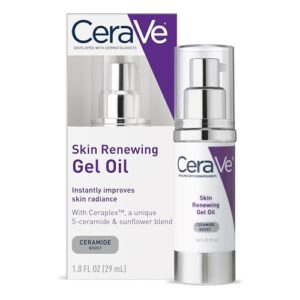
Good Molecules keeps things simple. CeraVe takes a different angle.
The CeraVe Skin Renewing Hydrating Serum ($19.80 for 30 ml) pairs hyaluronic acid with ceramides 1, 3, and 6-II — the same lipids your skin naturally produces — to rebuild the moisture barrier and deliver hydration that holds for up to 24 hours. Niacinamide calms redness, glycerin draws water in, and MVE technology releases moisturizers gradually throughout the day.
It’s fragrance-free and non-comedogenic, absorbs without greasiness, and layers cleanly under moisturizer or sunscreen. Ideal for dry or sensitive skin that needs steady, reliable hydration.
| Best For | Dry or sensitive skin types who want a reliable, no-fuss daily serum that strengthens the skin barrier and keeps hydration going all day. |
|---|---|
| Key Ingredient | Ceramides & Hyaluronic Acid |
| Target Skin Type | Dry, Sensitive |
| Fragrance-Free | Yes |
| Absorption Speed | Fast |
| Primary Benefit | 24-Hour Hydration |
| Organic/Natural | No |
| Additional Features |
|
- The CeraPlex ceramide blend with MVE technology delivers steady, lasting hydration for up to 24 hours without feeling heavy or greasy
- Fragrance-free and non-comedogenic, making it a safe pick for sensitive or reactive skin
- Versatile enough to use alone, under moisturizer, or as a nighttime sealant during colder months
- The 1 oz bottle is on the small side and can disappear quickly if you’re using it morning and night
- May leave a slight oily film on the skin, which can be a drawback for oily skin types
- The metallic bottle finish is prone to chipping, which some users find off-putting
10. The Ordinary Marula Oil for Skin
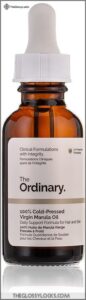
At just $11.40, The Ordinary Marula Oil punches well above its price point. This 100% cold-pressed virgin oil delivers oleic and linoleic fatty acids that actively rebuild your lipid barrier — the protective layer dry skin desperately needs. It’s unrefined, fragrance-free, and surprisingly lightweight for an oil this nourishing.
Apply 3–5 drops to clean, slightly damp skin morning or night. It absorbs within minutes, leaving no greasy film. You can also blend it into your moisturizer for an adapted hydration boost, or use it as a slip agent with gua sha.
| Best For | Anyone with normal-to-dry skin who wants a simple, affordable facial oil that works as a moisturizer booster, makeup prep, or gua sha slip. |
|---|---|
| Key Ingredient | Marula Seed Oil |
| Target Skin Type | Normal to Dry |
| Fragrance-Free | Yes |
| Absorption Speed | Moderate |
| Primary Benefit | Radiance & Hydration |
| Organic/Natural | Organic, Unrefined |
| Additional Features |
|
- Lightweight and non-greasy despite being a rich, nourishing oil
- Extremely versatile — works solo, mixed into moisturizer, or as a facial tool slip agent
- Clean, fragrance-free formula at a price that’s hard to beat
- Absorption can take up to 10 minutes, which may feel slow in a morning routine
- The small bottle runs out quickly if you use it daily or on hair too
- Requires a patch test and shouldn’t be used on broken or irritated skin
Best Face Oil Ingredients for Dry, Sensitive, or Acne-Prone Skin

Not every dry skin concern is the same — a flaky complexion has different needs than skin that’s both dry and breakout-prone. The right face oil ingredients can make or break your routine depending on your specific skin type. Here’s what actually works for each one.
Dry and Flaky Skin
Flaky skin isn’t just uncomfortable — it’s your barrier waving a white flag. Medically called xerosis cutis, this dryness worsens in heated rooms with low humidity, or after hot showers that strip protective oils.
Face oils rich in essential fatty acids refill those gaps, reducing water loss.
If flaking turns raw, cracked, or crusted, see a dermatologist promptly.
Sensitive or Eczema-prone Skin
Eczema-prone skin needs a gentle hand — itch reactivity and inflammation can spiral fast if you reach for the wrong formula. Stick to fragrance-free, noncomedogenic oils like jojoba or squalane, which calm irritation without triggering flares.
Both reinforce your skin’s lipid barrier, cutting transepidermal water loss. Discoloration and cracking ease over time when barrier repair stays consistent.
Acne-prone Dry Skin
Acne-prone dry skin plays both sides against you — your barrier is compromised, yet breakouts still show up. That dryness actually worsens inflammation by letting irritants in more easily.
Choose noncomedogenic oils that hydrate without feeding congestion:
- Squalane for sebum-mimicking hydration
- Jojoba to manage T-zone oiliness
- Rosehip for pore-friendly emollient support
- Ceramide blends for skin barrier repair
Skip fragrance — it’s a guaranteed flare trigger.
Mature Dry Skin
As you age, your skin’s oil glands naturally produce less sebum, leaving your barrier thinner, rougher, and quicker to crack — especially in winter.
For mature dry skin, reach for rosehip or argan oil. Both deliver essential fatty acids that rebuild the lipid barrier, while rosehip’s vitamin A visibly softens texture and plumps the fine lines dryness makes worse.
Combination Skin Dryness
Combination skin plays by its own rules — your cheeks beg for moisture while your T-zone stays perfectly content.
For regional hydration, squalane is your best ally: lightweight enough for oily zones, yet nourishing for dry patches. In winter or air-conditioned spaces, seasonal dryness hits cheeks hardest, so apply a noncomedogenic oil like jojoba there only, leaving the T-zone alone.
How to Apply Face Oil for Maximum Hydration
Even the best face oil won’t do much if you’re using it at the wrong step. Application order and timing make a real difference in how well your skin actually absorbs and holds onto moisture. Here’s what to keep in mind before you start.
Apply Over Damp Skin

Right after cleansing, your skin holds a brief window of surface moisture — and that’s exactly when face oil works hardest for you. Applying 3–5 drops to damp skin reduces friction, so the oil glides evenly instead of clinging to dry patches.
This technique helps seal in that temporary hydration, supporting your skin barrier before the moisture evaporates.
Layer With Moisturizer

Once you’ve applied your serum or hyaluronic acid, don’t skip the moisturizer. Face oil works best sandwiched between a humectant layer and a cream — the oil locks water into your skin, while the moisturizer on top seals everything in, preventing evaporation before it starts.
That final cream layer is what keeps your skin feeling soft hours later, not just right after your routine.
Morning Versus Nighttime Use
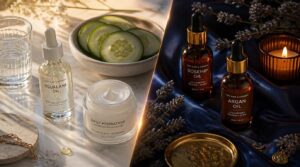
Timing matters more than you’d think. Morning skin runs cooler, making oils feel thicker — stick to lightweight options like squalane and apply just 2–3 drops before sunscreen.
At night, your skin warms up, oils spread more easily, and overnight absorption works in your favor. Richer oils like rosehip or argan can condition dry skin undisturbed for hours while you sleep.
Face Oil Before Sunscreen
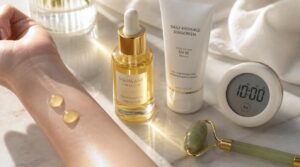
Once your oil absorbs — give it a full ten minutes — sunscreen glides on smoothly without pilling or sliding off.
- Use just 2–3 drops to keep skin from feeling slick
- Pat, don’t rub, so oil absorbs faster
- A thin oil layer creates a dewy, even base for sunscreen
- Lightweight oils like squalane won’t disrupt sunscreen coverage
Patch Testing New Oils
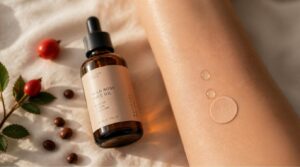
Before committing to a new face oil — especially with dry or reactive skin — a quick patch test protects you from a full-face reaction. Dab 1–2 drops onto your inner forearm or elbow, cover with an adhesive bandage, and leave it on for 24–48 hours. Redness or itching at the patch site means this oil isn’t right for you.
| Reaction Sign | What to Do |
|---|---|
| Redness or swelling | Stop use; avoid this oil |
| Itching or burning | Discontinue; try a lower-comedogenic alternative |
| No reaction after 48 hrs | Safe to apply to your face |
Face Oil Benefits, Mistakes, and Buying Tips
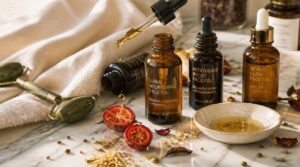
Knowing which face oil to buy is only half the battle — using it right (and storing it properly) makes all the difference for dry skin. There are a few common mistakes that quietly sabotage your results, along with some easy wins most people overlook. Here’s what you need to know before your next purchase.
Hydration Versus Moisture Sealing
Think of hydration and sealing as a two-step lock: humectants like hyaluronic acid first draw water into your skin, while face oils act as the occlusive layer that keeps it there.
Skip either step and you’re losing moisture fast — that’s transepidermal water loss (TEWL) working against you.
Always layer your hydrating serum before your oil for real, lasting results.
Fine Lines and Dullness
When skin loses moisture, light scatters unevenly across rough patches, making fine lines look deeper than they’re. Face oils restore surface smoothness and hydration, helping your skin reflect light more uniformly — that’s instant‑looking radiance.
UV exposure accelerates collagen breakdown, but antioxidant‑rich oils like rosehip actively counteract photoaging.
A well‑hydrated, even surface simply catches light better, softening the appearance of lines and dullness.
Pore-clogging Oil Mistakes
Even dry skin can break out — and coconut oil is often the culprit. Its high lauric-acid content sits heavy on skin, raising clogged-pore risk for acne-prone types.
Hair oils sneak onto your forehead too, adding hidden buildup.
Layering too many products thickens that film further. Don’t assume "natural" means safe — check the comedogenic rating first. Matching one oil to your actual skin type beats chasing pore-clogging myths.
Packaging and Shelf Life
That bottle sitting in direct sunlight? It’s quietly ruining your oil.
Dark amber glass blocks UV light and slows oxidation, while pump dispensers limit air exposure far better than dropper caps.
Store oils between 15–25°C and use within six months of opening.
Cold-pressed oils are especially vulnerable — their nutrients degrade faster once oxygen gets in.
Vegan and Cruelty-free Options
Caring about what goes on your skin matters as much as what goes in your body.
Look for Leaping Bunny or Vegan Society logos — these aren’t just marketing; they require independent audits confirming zero animal testing and no animal-derived ingredients like lanolin or beeswax.
Plant-based oils such as jojoba and rosehip tick both boxes naturally, making ethical hydration surprisingly easy to find.
Frequently Asked Questions (FAQs)
What is the best oil for dry skin on face?
Forget the "miracle in a bottle" myth — your face doesn’t need fairy dust, just sebum mimicry. Jojoba copies it exactly. Rosehip rebuilds your lipid matrix with fatty acids. Squalane locks moisture in, cutting transepidermal water loss fast.
What is the best oil for dry aging face?
Rosehip seed oil is your best bet for dry, aging skin — vitamin A and C fuel collagen synthesis and fade spots. Pair it with sea buckthorn for elasticity, or marula for lightweight lipid barrier restoration without heaviness.
Should dry skin use face oil?
Yes, dry skin absolutely should use face oil. Your lipid barrier depletes over time, letting moisture escape — a process called transepidermal water loss. Face oils act as emollients and occlusives, sealing hydration in and preventing that uncomfortable skin tightness.
What is the most moisturizing facial oil?
Squalane wins for pure moisture retention.
Its triglyceride content mirrors your skin’s natural sebum, balancing occlusive sealing with emollient softness. This combo restores the lipid matrix, slows water loss, and absorbs fast—delivering hydration that actually sinks in, not sits on top.
Can face oils cause breakouts on dry skin?
Certain face oils can trigger breakouts, especially occlusive formulas that trap sebum and bacteria against your skin. Reaction varies by person, but checking the comedogenic rating and choosing fatty acid profiles that mimic sebum, like jojoba, lowers your risk greatly.
How often should I use face oil daily?
For dry or dehydrated skin, once daily — ideally at night — is the sweet spot. Start every other day to let your skin adjust, then build toward morning and night if you need deeper hydration.
Are expensive face oils worth the extra cost?
Not always — and that might surprise you. Jojoba, rosehip, and squalane deliver the same barrier-repairing results at any price point. You’re often just paying extra for luxury packaging and brand storytelling, not effective skin hydration.
Can pregnant women safely use all face oils?
No, not all face oils are safe during pregnancy. Avoid rosemary and tea tree oils — they may affect hormones or trigger contractions. Opt for squalane or jojoba instead, and always patch test first.
Do face oils expire and how long?
Yes, face oils do expire. Most last 6–12 months after opening — richer botanicals like rosehip sooner, stable squalane longer. Rancid smell or texture changes? That bottle’s time is up.
How many drops of face oil should I use?
Start with 2–3 drops for face-only coverage. If you’re extra dry, bump up to 4–5 drops. Always press into damp skin — it spreads further and absorbs faster, preventing greasy buildup.
Conclusion
The theory that face oils make dry skin worse doesn’t hold up once you understand the science. Your barrier isn’t broken beyond repair—it’s missing the right lipids to do its job.
Finding the best face oil for dry skin means matching ingredients to your skin’s actual gaps: squalane for lightweight sealing, rosehip for renewal, ceramides for deep repair.
Get that match right, and your skin stops fighting to hold moisture—and starts keeping it.