This site is supported by our readers. We may earn a commission, at no cost to you, if you purchase through links. This content is for general informational and educational purposes only and is not a substitute for professional medical, dermatological, or nutritional advice.
Most people apply their skincare products in roughly the right order without thinking much about why—and then wonder why their routine isn’t delivering. The problem usually isn’t the products themselves. It’s the sequence, the timing, and a few overlooked mechanics that determine whether your actives penetrate or just sit on the surface doing nothing.
Moisturizer isn’t a finishing step you slap on at the end. It’s a seal. Put it on too early, and you’ve locked your serums out instead of in. Apply it on bone-dry skin, and your humectants have nothing to bind to.
Getting the layering sequence right changes how every product in your routine performs—and this guide walks you through exactly how to do it.
Table Of Contents
- Key Takeaways
- Why Moisturizer Layering Order Matters
- Morning Moisturizer Layering Steps
- Evening Moisturizer Layering Steps
- Layering Moisturizer With Active Ingredients
- Use Vitamin C Before Morning Moisturizer
- Layer Niacinamide Before Moisturizer for Barrier Support
- Apply Hyaluronic Acid Before Moisturizer on Damp Skin
- Use Acne Spot Treatments Before Moisturizer
- Avoid Layering Retinoids With AHA or BHA Exfoliants
- Try The Retinoid Sandwich Method
- Alternate Strong Actives to Prevent Irritation
- Top 5 Products to Layer With Moisturizer
- Common Moisturizer Layering Mistakes
- Frequently Asked Questions (FAQs)
- What is the 3 second rule in skincare?
- Can moisturizer be applied over makeup during the day?
- How does skin type affect moisturizer layering choices?
- Should moisturizer change with the seasons or climate?
- Can you layer two different moisturizers together safely?
- How long should a moisturizer last before replacing it?
- Conclusion
Key Takeaways
- Layering order isn’t a preference—moisturizer seals in your actives, so applying it too early locks serums out before they can penetrate.
- Always apply products thinnest to thickest on slightly damp skin, giving each layer 30–90 seconds to absorb before adding the next.
- Never stack retinoids and AHA/BHA exfoliants in the same session; alternate them on separate nights to protect your skin barrier.
- Signals like pilling, redness, or stinging aren’t cosmetic annoyances—they are your skin telling you that your layering sequence or active combination needs to change.
Why Moisturizer Layering Order Matters
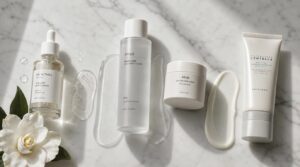
The order you apply your skincare products isn’t just a preference — it actually determines how well they work. Put the wrong thing on first, and you’ve fundamentally blocked everything else from doing its job.
Think of it like layering paint — sequence is everything, and this guide to layering skincare products correctly breaks down exactly what goes on when.
Skincare application order isn’t preference—it determines whether your products actually work
Here’s what to keep in mind regarding layering your moisturizer correctly.
Apply Moisturizer After Serums and Treatments
Moisturizer always goes on after your serums and treatments — not before. Think of it as the seal, not the foundation. This texture hierarchy in cosmetic application matters because layering from thinnest to thickest consistency keeps actives in direct contact with your skin.
Peptide layering, vitamin C, and spot treatments — all of it lands before moisturizer. Lighter formulas absorb first; richer ones lock everything in.
For best absorption, apply serum before moisturizer.
Layer on Slightly Damp Skin for Better Hydration
Timing matters just as much as order. After cleansing, pat your skin dry — but not completely. That slightly damp surface is where humectant activation begins: glycerin and hyaluronic acid latch onto available surface hydration through water binding, pulling moisture into the skin rather than drawing it up from deeper layers.
Damp skin also gives products glide enhancement, spreading your moisturizer evenly without tugging.
Give Each Layer Time to Absorb
Each layer needs a moment to become part of your skin before the next one lands. A rushed routine keeps actives sitting on the surface rather than penetrating where they belong — that’s your Penetration Pause in action.
- Wait until skin feels tack-free (Tack-Free Shift) before adding the next step
- Allow 30–60 seconds between lighter layers; give serums a full 1–2 minutes as an Absorption Buffer
- Watch for pilling — small clumps signal your Settle Interval was too short
- Consistent product absorption through proper layering order importance prevents that frustrating product pilling prevention cycle
Proper layering order importance ensures seamless absorption and eliminates pilling.
Keep Routines Simple to Reduce Irritation
Once your layers are settling properly, the next variable is volume. Minimalist skincare isn’t about cutting corners—it’s a barrier-first approach that actually works.
Stick to a cleanser, one or two fewer actives, and a fragrance-free focus moisturizer.
Consistent timing with the same sequence daily gives your skin a chance to adapt, preventing irritation before it starts.
Morning Moisturizer Layering Steps
Your morning routine sets the tone for how your skin looks and feels all day. Getting the layering order right takes just a few intentional steps — and once it clicks, it becomes second nature.
Here’s exactly how to build your morning routine from cleanser to SPF.
Start With a Gentle Cleanser
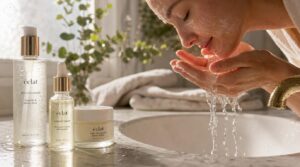
Every effective routine starts before the moisturizer even opens. Your cleanser sets the entire stage — and choosing wrong here undermines everything that follows. Select a pH-balanced formula with mild surfactants like coco-glucoside and hydrating additives such as glycerin or ceramides for barrier support. Match it to your skin type.
Gentle circular motions, thorough rinsing, and a soft pat-dry keep your skin barrier intact and ready.
Apply Hydrating Toner, Essence, or Mist

Once your skin is freshly cleansed, this is your window to flood it with hydration — before any moisture escapes.
- Apply a hydrating toner (Toner pH Balance matters here) while skin is still damp
- Press an essence using Essence Fermentation Power ingredients like fermented extracts or niacinamide
- Use a hydrating mist with Mist Refresh Techniques — spritz, then pat
- Follow layering order guidelines: thinnest first, Layering Without Rinsing between steps
- This Hydration Locking Trick prepares moisturizer absorption greatly
This method ensures optimal hydration retention and product efficacy.
Use Antioxidant Serums Before Moisturizer
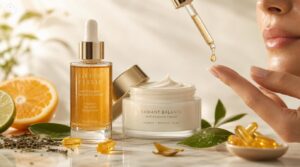
Your antioxidant serum belongs directly after toner—and before moisturizer, full stop. Following the WaterBeforeOil Application Principle and layering order guidelines, this water-based step penetrates cleanly without a cream barrier blocking it. Use the patting technique to press a few drops evenly into slightly damp skin.
| Step | Product | Timing |
|---|---|---|
| 1 | Antioxidant serum | Immediately after toner |
| 2 | Let absorb | 60–90 seconds |
| 3 | Moisturizer | Seal serum in |
Serum absorption timing and pH compatibility both improve when skin is still slightly moist. Allowing 60–90 seconds for absorption optimizes these benefits.
This also strengthens sun protection synergy with your SPF finish—antioxidant protection works alongside sunscreen, never instead of it.
Apply Eye Cream Before Facial Moisturizer
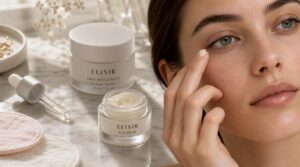
Eye cream goes on before your facial moisturizer—and the reason is straightforward. A pea-sized amount, tapped gently along the orbital bone using gentle patting, lets the formula absorb without competing with a thicker cream layered on top. Lash-line avoidance protects delicate tissue.
Allow a 30–60 second settle pause, then move to moisturizer. Layering order importance here is real: thinner formulas always penetrate first.
Seal Hydration With a Lightweight Moisturizer
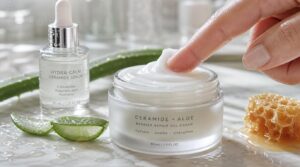
A lightweight moisturizer—built on ceramide enrichment, humectants, and light occlusion—activates the moisture retention mechanism by sealing what your serums delivered. Apply to slightly damp skin, moving lightest to heaviest textures as your layering order importance demands.
Minimalist formulation works best here: one well-chosen gel-cream meets hydration and barrier support strategies efficiently. Seasonal adjustments may call for a slightly richer formula in winter.
Finish With Broad-spectrum SPF 30–50
Sunscreen isn’t optional—it’s the non-negotiable closer to every morning routine. After your moisturizer absorbs, apply a broad spectrum SPF 30–50 as your final step; nothing goes over it.
Mineral vs chemical formulas both work—choose based on your skin type. Tinted sunscreen benefits include reducing white cast while offering real skin barrier protection.
Reapply every two hours outdoors, no exceptions.
Evening Moisturizer Layering Steps
Your evening routine deserves a little more intention than your morning one. At night, your skin shifts into repair mode, so the order you layer products actually changes.
Here’s how to do it right, step by step.
Double Cleanse to Remove Sunscreen and Makeup
Before anything else goes on your skin at night, you need a clean slate — and a single rinse won’t cut it. The Nighttime Double Cleanse works Oil First: an oil-based cleanser dissolves sunscreen and makeup.
Then the Emulsion Technique kicks in — add Lukewarm Water until it turns milky, rinse, then follow with a water-based cleanser for a true Residue-Free Finish.
Rehydrate With Toner or Mist
Once your skin is clean, restore what cleansing took away. A pH Optimizing Toner or hydrating mist resets your skin’s surface and activates humectant power — glycerin and hyaluronic acid draw moisture back in.
This Pre-Serum Hydration step matters for layering order importance: damp skin absorbs what follows more evenly.
Try Micro-Mist Application, then gently pat it in before your moisturizer.
Apply Treatment Serums Before Moisturizer
Now that your skin is prepped, it’s time for treatment serums — and layering order based on texture is everything here. Apply your thinnest, most active formulas first, directly onto slightly damp skin.
Use patting technique rather than rubbing, and watch your serum quantity; too much delays absorption timing and causes pilling when moisturizer follows.
Texture compatibility between products determines how cleanly each layer settles.
Use Retinoids or Exfoliants on Alternate Nights
Once your treatment serums are absorbed, don’t layer both retinoids and exfoliants on the same night. That combination overloads skin and breaks down your barrier fast.
Instead, follow a skin cycling schedule: exfoliation retinoid sequencing across four nights, which keeps both actives effective without the irritation spiral.
Your tolerance-building timeline improves naturally, and recovery night care — focused on barrier repair — gives your moisturizer the best possible base.
Apply Eye Cream After Treatment Serums
Once your treatment serums have fully absorbed, eye cream belongs next—this marks where your nighttime eye routine earns its place. Serum spillover prevention starts with proper layering order importance: apply lighter actives first, then a dedicated eye product.
Use the gentle tapping method along the orbital bone for eye zone hydration. A product compatibility check done right ensures your moisturizer follows, not precedes, this step.
Finish With Night Moisturizer or Barrier Cream
Night moisturizer is your final active layer — and the one that sets the tone for everything your skin does while you sleep. A barrier cream delivers occlusive sealing benefits by slowing water loss through a protective film. The importance of layer order holds here: apply it after serums and eye cream.
For tight or reactive patches, spot-specific barrier application keeps heavier formulas targeted. This ensures concentrated care without overwhelming the entire complexion.
Humectant-occlusive balance and barrier lipid reinforcement work together overnight for real barrier repair. This dual-action approach optimizes skin recovery during rest.
Add Facial Oil After Moisturizer if Needed
Facial oil is optional — but when used correctly, it provides a finishing seal your moisturizer can’t achieve alone. A few drops pressed gently onto skin lock in hydration without disrupting underlying layers.
Follow these essential tips for optimal use:
- Warm 2–3 drops between your palms before pressing onto skin
- Practice spot‑specific oil use on dry patches only if you have oily skin
- Let moisturizer partially absorb first to prevent product pilling
- For oily‑skin adaptation, skip oil entirely on humid nights
- Morning users need shine control: oil before SPF increases slip and reduces makeup‑friendly compatibility
Strategic layering ensures effectiveness: always apply oil after moisturizer for best absorption, and adjust usage based on seasonal humidity and individual skin needs.
Layering Moisturizer With Active Ingredients
Active ingredients are where most layering mistakes happen, and getting the order wrong can cancel out results or trigger irritation. The good news is that each ingredient has a logical place in your routine once you know the rules.
Here’s how to layer your most common actives with moisturizer correctly. Understanding the rules ensures effective application and maximizes benefits while minimizing risks.
Use Vitamin C Before Morning Moisturizer
Vitamin C earns its place as the first active in your morning skincare routine steps — and layer order importance is exactly why. Apply your vitamin C serum on clean, pat-dried skin using the patting application method to minimize irritation. Serum pH balance and vitamin C stability depend on direct skin contact before heavier products.
Follow with moisturizer to lock everything in, then SPF.
Layer Niacinamide Before Moisturizer for Barrier Support
Niacinamide is quietly one of the most multi-functional actives you can add to your routine. Apply it after cleansing and before moisturizer — layer order importance directly impacts how well it works.
- Enhances ceramide synergy to reinforce your skin barrier
- Promotes reduced water loss throughout the day
- Offers soothing inflammation benefits for reactive skin
- pH compatibility makes it safe alongside most actives
Your moisturizer seals everything in.
Apply Hyaluronic Acid Before Moisturizer on Damp Skin
Hyaluronic acid is thirsty — it needs water already on your skin to work properly. That’s the whole logic behind damp skin application. Pat your face dry but leave it slightly moist, then apply two to three drops using the serum patting technique. Follow immediately with moisturizer to lock everything in.
| Step | Detail | Why It Matters |
|---|---|---|
| Dampness definition | Moist, not dripping | Prevents serum dilution |
| Drop dosage | 2–3 drops max | Avoids tackiness, aids layering |
| Absorption timing | Moisturize within 60 seconds | Stops hydration from evaporating |
| Barrier preparation | Lightest to thickest, water before oil | Maximizes hydration and barrier support strategies |
Use Acne Spot Treatments Before Moisturizer
Spot treatment timing shifts slightly from how you handle hyaluronic acid. Apply your spot corrector directly to each blemish right after cleansing, before any other layers. Give it a drying wait period of one to two minutes—enough time to settle without smearing. Then moisturize.
This layering protocol keeps the active targeted, facilitates product compatibility, and lets the cream buffer acne-prone skin without diluting the corrector or spreading irritation.
Avoid Layering Retinoids With AHA or BHA Exfoliants
Retinoids and AHA or BHA exfoliants don’t belong in the same session. Combining them dramatically raises your irritation risk and invites barrier compromise — think redness, peeling, and stinging that sideline your routine for days. Sun sensitivity spikes too.
Instead, follow an alternate day schedule or separate AM/PM usage: acids one night, retinoids the next. Smart retinoid and acid scheduling protects your progress.
Try The Retinoid Sandwich Method
If your skin is new to retinoids, the sandwich method for retinoid buffering is worth trying. This Three‑Step Buffer sequence — moisturizer, retinoid, moisturizer — cushions the active ingredient without eliminating its effect.
- Apply a thin hydrating layer first for Targeted Buffering
- Wait for an Application Pause before adding your retinoid
- Seal with a second moisturizer to reduce dryness and flaking
Note: Low‑Strength Retinoids may show slower results with full sandwiching, but the Early‑Stage Tolerability gains are real.
Alternate Strong Actives to Prevent Irritation
The sandwich method eases you in — but once your skin adapts, alternating strong actives across nights is the smarter long-term move for preventing skin irritation.
| Night | Active Focus |
|---|---|
| Monday | BHA exfoliant |
| Tuesday | Restorative Night Pause |
| Wednesday | Retinoid (Low Dose Intro) |
| Thursday | One Active Focus: niacinamide |
| Friday | Scheduled Active Cycling reset |
Balancing actives with barrier repair during your Tolerance Building Phase keeps skin resilient.
Top 5 Products to Layer With Moisturizer
Knowing the right layering order is only half the equation — the products you choose matter just as much. These five options work especially well when paired with a moisturizer, each targeting a specific skin concern without disrupting your routine.
Here’s what’s worth adding to your shelf.
1. Mario Badescu Drying Lotion
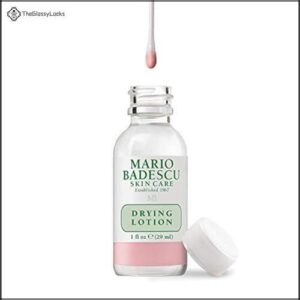
If you deal with occasional breakouts, Mario Badescu Drying Lotion earns its cult status. This bi-phase spot treatment combines salicylic acid, sulfur, and zinc oxide to draw out impurities and dry surface blemishes overnight.
Don’t shake the bottle — dip a clean cotton swab into the pink sediment and dab it directly onto the blemish after cleansing and toning. Apply it before moisturizer on clear skin only, ensuring the treatment works undisturbed until morning.
| Best For | Anyone with oily or acne-prone skin who deals with occasional surface breakouts and wants an overnight spot treatment that actually works by morning. |
|---|---|
| Skin Type | All skin types |
| Cruelty-Free | Yes |
| Vegan | Yes |
| Key Active | Salicylic Acid, Sulfur |
| Fragrance-Free | Yes |
| Net Volume | 1 fl oz (30 mL) |
| Additional Features |
|
- Tackles blemishes fast — the salicylic acid, sulfur, and zinc oxide combo gets to work overnight and you’ll usually see a real difference by morning.
- Clean formula with no sulfates, parabens, or phthalates, and it’s vegan and cruelty-free, so it ticks a lot of boxes for conscious shoppers.
- Works on all skin types and even helps with post-pimple marks and congested pores, not just active breakouts.
- Can dry out or irritate sensitive skin, so if your skin is already compromised, tread carefully.
- Only works on surface-level blemishes — deep cystic acne won’t respond to this.
- Easy to over-apply, which can cause excess dryness or even discoloration on the treated spot.
2. Eadem Milk Marvel Dark Spot Serum
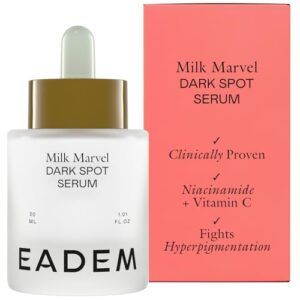
Eadem Milk Marvel Dark Spot Serum is worth serious attention if hyperpigmentation is your main concern. It combines encapsulated vitamin C, niacinamide, and amber algae through what the brand calls Smart Melanin Technology — no hydroquinone or bleach.
Apply it after toning on slightly damp skin, wait for 60 seconds, then follow with moisturizer. The lightweight texture absorbs cleanly without pilling.
At $68 for 1 oz, results take 4–8 weeks, so commit to consistent use before judging efficacy.
| Best For | Anyone dealing with hyperpigmentation or uneven skin tone — especially people with deeper skin tones who want a gentle, fragrance-free option. |
|---|---|
| Skin Type | All skin types |
| Cruelty-Free | Yes |
| Vegan | Yes |
| Key Active | Vitamin C, Niacinamide |
| Fragrance-Free | Yes |
| Net Volume | 1 oz (28 mL) |
| Additional Features |
|
- Uses encapsulated vitamin C, niacinamide, and amber algae — no hydroquinone or bleach, so it’s a gentler route to fading dark spots.
- Lightweight and absorbs fast without leaving a greasy film or pilling under moisturizer.
- Fragrance-free, vegan, and cruelty-free — works for sensitive skin and fits easily into a daily routine.
- At $68 for just 1 oz, it’s a pricier commitment — especially when results can take 4–8 weeks to show up.
- The bottle design makes it hard to get every last drop out; a pump would’ve been smarter.
- Not everyone sees results — a handful of users reported little to no improvement, so it’s not a guaranteed fix.
3. Topicals Faded Dark Spot Brightening Serum
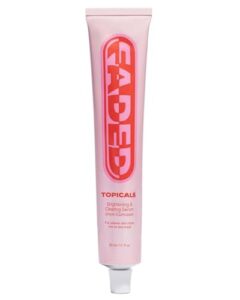
Topicals Faded packs a serious brightening punch for its $38 price point. The formula combines tranexamic acid, kojic acid, alpha arbutin, azelaic acid, and niacinamide — five actives working together to interrupt melanin production from multiple pathways.
Apply it after toning on slightly damp skin, then wait 60 seconds before moisturizer. Start with once weekly to assess tolerance, as mild redness is possible early on.
One real caveat: the sulfur-like odor is noticeable, though it fades within an hour.
| Best For | Anyone dealing with dark spots, post-blemish marks, or uneven skin tone who wants a multi-active brightening serum that works on both face and body. |
|---|---|
| Skin Type | All skin types |
| Cruelty-Free | Yes |
| Vegan | Yes |
| Key Active | Kojic Acid, Niacinamide |
| Fragrance-Free | No |
| Net Volume | 1.7 fl oz (52 mL) |
| Additional Features |
|
- Stacks five brightening ingredients (kojic acid, niacinamide, azelaic acid, and more) to tackle melanin from multiple angles
- Lightweight, non-greasy texture that hydrates without feeling heavy
- Dermatologist-tested, vegan, and cruelty-free — solid peace of mind
- The sulfur-like smell is hard to ignore, even if it does fade within an hour
- Results come slowly, and it can’t compete with prescription-strength options like hydroquinone
- At $38, it’s pricier than a lot of OTC alternatives, and you’ll need to pair it with daily SPF to see real progress
4. Organic Hyaluronic Acid Serum for Dry Skin
Dry skin needs water first — and that’s exactly what this serum delivers. With 1.5% dual-weight hyaluronic acid and vitamin C, it binds moisture at multiple skin depths simultaneously.
Apply it to damp skin right after toning, then follow immediately with your moisturizer to seal everything in. The lightweight gel texture absorbs without tackiness, making it an easy pre-moisturizer step.
Clinical data shows up to 47% fewer visible wrinkles after six consistent weeks.
| Best For | Anyone with dry, sensitive, or mature skin who wants a simple, no-fuss hydration boost that layers well under moisturizer and makeup. |
|---|---|
| Skin Type | All skin types |
| Cruelty-Free | Yes |
| Vegan | Yes |
| Key Active | Hyaluronic Acid, Vitamin C |
| Fragrance-Free | Yes |
| Net Volume | 5.12 oz (145 g) |
| Additional Features |
|
- Dual-weight hyaluronic acid means it hydrates on the surface and deeper down — not just a temporary fix.
- Fragrance-free and dermatologist-tested, so it plays nicely with even the most reactive skin types.
- Clinical results show up to 47% fewer visible wrinkles after six weeks of consistent use.
- Using it alone isn’t enough — you’ll need a moisturizer on top or your skin may feel tight and dry.
- A few users notice a slightly sticky feeling on their hands after applying, which can be annoying.
- At $23 a bottle, results take weeks of steady use, so it’s a commitment before you see the payoff.
5. Clarins Double Anti Aging Serum
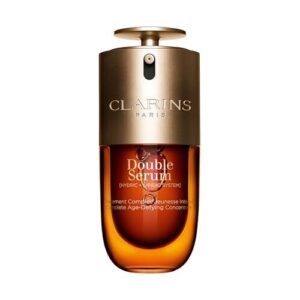
Clarins Double Anti Aging Serum earns its place in a serious routine. Its dual-phase formula — one hydric, one lipidic — delivers 22 plant extracts and acetylated hyaluronic acid exactly where skin needs them most.
Apply two pumps after toning and before your moisturizer, morning or night.
The serum strengthens your moisture barrier, refines pores, and firms visibly within about seven days.
At $95 for 30 mL, it’s an investment — but the patent-protected Epi-Aging Defense Technology backs every drop.
| Best For | Anyone serious about anti-aging who wants one serum that tackles both time and environmental damage — great for all skin types looking for visible firming and hydration within a week. |
|---|---|
| Skin Type | All skin types |
| Cruelty-Free | Yes |
| Vegan | Yes |
| Key Active | Epi-Aging Defense Complex |
| Fragrance-Free | No |
| Net Volume | 1 fl oz (30 mL) |
| Additional Features |
|
- Firms, smooths, and refines pores noticeably fast — most people see a difference in about 7 days.
- Works for all skin types, morning or night, so it fits easily into any routine.
- The patent-protected formula combines 22 plant extracts with hydrating tech that keeps skin moisturized for up to 24 hours.
- At $95 for 30 mL, it’s a real investment that won’t suit every budget.
- Can leave a slightly glossy finish, which might bother people with oily skin or those who prefer a matte look.
- Not safe for the eye area, and buying from third-party sellers risks getting a damaged or fake product.
Common Moisturizer Layering Mistakes
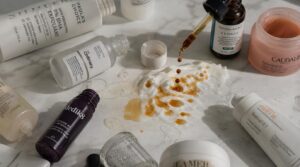
Even a solid routine can quietly work against you if the layering is off. Small missteps — like rushing through steps or stacking too many actives — are more common than you’d think, and they’re usually the reason your skin isn’t responding the way it should.
Here are the mistakes worth knowing about.
Applying Moisturizer Over Unabsorbed Serums
Rushing moisturizer onto skin that’s still visibly wet is one of the most common product layering order mistakes. Tactile readiness cues tell you everything—if the serum feels slick, it isn’t ready.
Skipping micro-layering intervals creates ingredient dilution risks and triggers product pilling, where layers ball up instead of bonding.
Apply lightest to heaviest textures, and always wait for that pressure-free application feel.
Using Too Many Actives in One Routine
Stacking actives feels productive, but Barrier Overload is a real consequence. When retinoids, AHAs, and vitamin C compete in the same session, Cumulative Irritation builds quietly—often before redness becomes noticeable. Active Redundancy adds complexity without results.
Simplify your regimen by choosing one strong active per night. Prioritize Active ingredient compatibility and balance actives with barrier repair to prevent Sensitivity Accumulation and sustain lasting skin barrier protection strategies.
Skipping Moisturizer After Drying Treatments
Skipping moisturizer after a drying spot treatment is a mistake that compounds quickly. Without it, barrier breakdown accelerates, elevated TEWL pulls hydration from deeper layers, and sebum rebound kicks in as your skin overcompensates. That heightened sensitivity makes each subsequent product sting more.
Balancing actives with barrier repair isn’t optional — it’s how you avoid delayed recovery and keep skin barrier protection strategies actually working.
Applying Facial Oil Before Moisturizer
Water before oil, always. Putting face oil before moisturizer disrupts the oil-based vs water-based rule, as oils form a barrier that prevents water-soluble actives from absorbing properly. Your moisturizer needs to have direct skin contact first; oil should follow, using the pressing technique to seal hydration without compromising underlying layers.
For acne-prone skin, seasonal oil use and product texture hierarchy become even more critical. Prioritize lightweight, non-comedogenic formulas, and adjust application frequency based on environmental changes to maintain balance without clogging pores.
Ignoring Pilling, Redness, or Stinging Signs
Your skin talks — pilling, redness, and stinging are its clearest signals. Dismissed irritation signals, like overlooked stinging cues or ignored redness alerts, often point to ingredient irritation risk or poor layering order. Unnoticed pilling effects mean the product is sitting on the surface, not absorbing.
Neglected skin feedback leads to sensitization over time. Adjust your routine before damage compounds.
Frequently Asked Questions (FAQs)
What is the 3 second rule in skincare?
The 3-second rule means applying your hydrating toner or essence while skin is still slightly damp after cleansing — that brief Timing Window maximizes Surface Hydration and facilitates effective Moisture Sealing before water evaporates.
Can moisturizer be applied over makeup during the day?
Yes, but it takes the right formula and technique. Reach for a non-comedogenic, primer-compatible moisturizer, apply it with gentle dabbing motions, and keep the amount minimal to avoid makeup pilling.
How does skin type affect moisturizer layering choices?
Your skin type quietly dictates every layering decision. Oily skin strategy leans toward gel-light; dry skin boost needs richer seals.
Combination zone focus and sensitive skin gentleness shape your moisturizer choices differently than acne-prone seal routines.
Should moisturizer change with the seasons or climate?
Your moisturizer should absolutely shift with the seasons. Humidity-driven texture needs, winter barrier repair, and summer oil control all demand climate-sensitive formulation choices.
Seasonal moisturizer swaps aren’t optional; they’re smart skincare.
Can you layer two different moisturizers together safely?
You can achieve effective skincare, though it’s less about stacking more and more, and more about pairing smart.
Layer lightest to heaviest textures: start with a humectant-rich formula, then apply an occlusive moisturizer.
Always patch test before fully committing to a new routine.
How long should a moisturizer last before replacing it?
Most moisturizers last 6–12 months after opening — check the PAO symbol on the label. Toss it sooner if you notice texture changes, an off smell, or skin reactions.
Conclusion
Like a chef who knows that technique matters more than ingredients, mastering how to layer facial moisturizer with other skincare products transforms what you already own into a routine that actually works. Sequence isn’t a minor detail—it’s the difference between actives that absorb and products that just stack up and stall.
Cleanse, treat, seal. Damp skin, right order, enough time. Follow those fundamentals consistently, and your skin will show the difference.