This site is supported by our readers. We may earn a commission, at no cost to you, if you purchase through links. This content is for general informational and educational purposes only and is not a substitute for professional medical, dermatological, or nutritional advice.

Walk any drugstore aisle and you’ll find fifty bottles promising thicker hair, but only a handful actually change what’s happening at the follicle. Most just coat the strand and hope you don’t notice the shedding underneath. That’s the gap between cosmetic tricks and real hair growth serum science: one hides thinning, the other treats it.
Some formulas carry FDA backing and decades of clinical data behind them. Others lean on botanicals and peptides that show promise but need more scrutiny. Knowing which is which decides whether your money buys results or just a nicer-smelling placebo.
Table Of Contents
- Key Takeaways
- 6 Best Hair Growth Serums Reviewed
- Hair Growth Serum Ingredients That Work
- How to Choose Hair Growth Serum
- How to Apply Hair Growth Serum
- Testing Standards and Expected Results
- Frequently Asked Questions (FAQs)
- What is the best serum for hair growth?
- Do any hair growth serums really work?
- Which one is the best serum for hair growth?
- What are the top 3 hair growth products?
- Are hair serums safe to use during pregnancy?
- Do hair growth serums interact with other medications?
- What happens if you stop using hair serum suddenly?
- How should hair serums be stored for maximum potency?
- Can hair growth serums be used with other treatments?
- Is it safe to use hair growth serum during pregnancy?
- Conclusion
Key Takeaways
- Minoxidil is still the only FDA-approved regrowth treatment, working by boosting blood flow to follicles, but it only works if you stick with it twice daily for at least six months since stopping reverses the gains.
- Ingredients only help if they match your actual cause of hair loss, so saw palmetto and zinc target DHT-driven thinning while rosemary oil and caffeine boost circulation similarly to minoxidil, minus the side effects.
- How you apply a serum matters as much as what’s in it, since targeting thinning zones, using the right drop count for your hair type, and massaging it into a clean scalp all affect whether it actually reaches your follicles.
- Real results take patience, with shedding typically easing by month three, visible density gains by month six, and full stabilization around the twelve-month mark, so judge a serum on months, not days.
6 Best Hair Growth Serums Reviewed
Not every serum on the market earns its price tag, so you deserve a lineup that’s actually been put through its paces.
If you’re unsure where to start, this guide on how to choose the right hair growth serum breaks down exactly what ingredients and results are worth looking for.
Our testers tracked efficacy, texture, and real-world wearability across six standout formulas, from medicated heavy-hitters to botanical blends.
Here’s exactly what made the cut, and why each one belongs on your shelf.
1. Women’s Hair Regrowth Minoxidil Solution
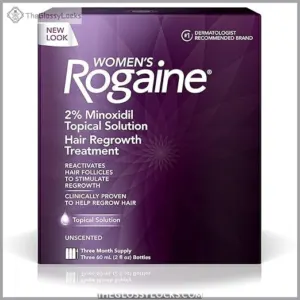
Consider this the standard against which every other bottle on this list gets measured. Women’s Rogaine 2% Minoxidil Solution is the FDA-approved OTC treatment built specifically for female pattern hair loss, backed by over 30 years of dermatologist use.
Each kit ships three 2-ounce bottles, a full three-month supply, applied twice daily to a dry scalp. Minoxidil works as a potassium channel opener, using ethanol and propylene glycol to ferry the active drug into follicles.
Early shedding in weeks four to six is normal and temporary. Real judgment day comes at six months. Skip a dose here and there, and you’re rolling dice with results.
| Best For | Women dealing with hereditary hair thinning who want an FDA-approved treatment backed by decades of dermatologist trust and clinical use. |
|---|---|
| Format | Topical solution |
| Application Frequency | Twice daily |
| Key Ingredient | Minoxidil 2% |
| Scalp Irritation Risk | Possible |
| Best For | Hereditary thinning |
| Non-Greasy Formula | Yes |
| Additional Features |
|
- Clinically proven to regrow hair through five distinct biological mechanisms, with real results by the six-month mark
- Comes as a three-month supply (three 2-ounce bottles), fitting easily into a twice-daily routine
- Unscented formula backed by over 30 years of dermatologist recommendations
- Requires strict, ongoing twice-daily use — skip doses and you risk losing progress, and stopping altogether can reverse regrowth
- May cause scalp irritation, itching, or an initial shedding phase before things improve
- Results aren’t guaranteed; some users see little to no regrowth despite consistent, long-term use
2. Lambdapil Hair Loss Treatment Lotion
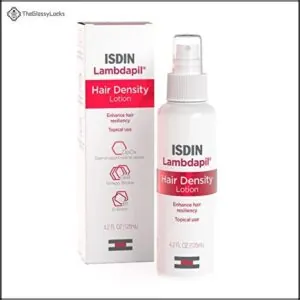
Not every alternative to minoxidil holds up under scrutiny, but Lambdapil does. This Spanish-developed lotion pairs diaminopyrimidine oxide with ginkgo biloba and D-biotin, targeting oxidative stress at the follicle level rather than masking shedding.
The numbers back it up: up to 37% less shedding within three months, with 73% of users reporting denser-looking hair. Nightly application via spray bottle keeps things simple, and the lightweight formula won’t weigh down fine strands. Your wallet might disagree, though.
| Best For | People dealing with thinning hair or minoxidil side effects who want a non-greasy, easy-to-apply nightly treatment for regrowth in areas like the temples. |
|---|---|
| Format | Nightly lotion |
| Application Frequency | Nightly |
| Key Ingredient | Diaminopyrimidine oxide |
| Scalp Irritation Risk | Not noted |
| Best For | Minoxidil intolerance |
| Non-Greasy Formula | Yes |
| Additional Features |
|
- Reduces hair shedding and helps improve density in thinning areas
- Lightweight, non-greasy formula that’s simple to apply nightly
- A solid option for those who can’t tolerate minoxidil-based treatments
- Pricier than many alternatives given the bottle size and how long it lasts
- Customer experiences with long-term results are mixed
- Some users have noticed the product working less well since a recent ingredient change
3. Nutrafol Hair Growth Serum for Women
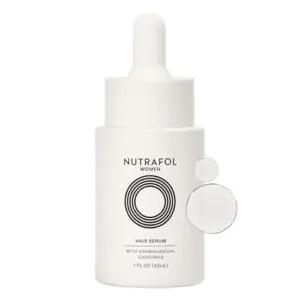
If Lambdapil’s price tag stung a little, Nutrafol’s supplement-brand serum might feel like a gentler entry point, though it’s not cheap either.
Nutrafol built its name on oral supplements, and this serum leans on similar thinking: saw palmetto to modulate DHT, marine collagen peptides for strand strength, plus a tocotrienol complex for scalp support. It’s a formula philosophy borrowed from their capsules, repackaged for topical use.
Dermatologist-recommended and marketed toward women 18 to 44, it’s designed to pair with Nutrafol’s broader "Real Growth Guarantee" system rather than stand alone. Expect gradual, not dramatic, changes. Most users report fuller-looking hair somewhere between three and six months in, provided you’re applying it daily and not skipping days out of forgetfulness.
| Best For | Women 18 to 44 who are already drawn to Nutrafol’s supplement line and want a topical add-on to support a broader hair growth routine rather than a standalone fix. |
|---|---|
| Format | Serum |
| Application Frequency | Daily |
| Key Ingredient | Saw palmetto |
| Scalp Irritation Risk | Possible |
| Best For | Nutrafol users |
| Non-Greasy Formula | Yes |
| Additional Features |
|
- Lightweight, fast-absorbing formula with a precise glass applicator for easy daily use
- Blends saw palmetto, marine collagen peptides, and a tocotrienol complex to target DHT, strand strength, and scalp health
- Dermatologist-recommended and designed to work alongside Nutrafol’s Real Growth Guarantee system
- Results are gradual, often taking three to six months of consistent daily use to notice a difference
- Small bottle size may not stretch through a full month of daily application
- Some users may experience scalp irritation, greasiness, or little to no visible improvement
4. Hair serum for thicker hair
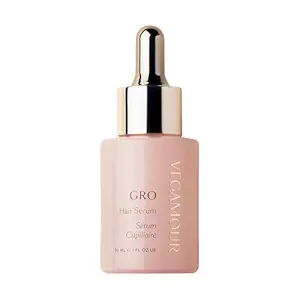
Nutrafol asks for patience. This next pick works faster, at least cosmetically.
Formulated with saw palmetto, zinc, biotin, and panthenol, this pick shows up in our roundup of the best volumizing formulas for fine, thin hair for good reason.
Thickening serums coat each strand within minutes, using plant-based polymers to form a flexible film instead of relying purely on follicle biology. Lightweight, silicone-free formulas won’t weigh down fine hair, and conditioning agents improve combability afterward. It’s less "regrowth treatment," more "instant volume trick," though many formulations still include caffeine or biotin for genuine follicle support. Translation: you get the appearance of thickness now, with legitimate strengthening working underneath.
| Best For | People who want a quick, noticeable boost in hair volume and thickness while still supporting long-term scalp health with nightly use and massage. |
|---|---|
| Format | Serum |
| Application Frequency | Nightly |
| Key Ingredient | Plant-based polymers |
| Scalp Irritation Risk | Possible |
| Best For | Instant volume |
| Non-Greasy Formula | Yes |
| Additional Features |
|
- Coats each strand within minutes for an instant appearance of thicker, fuller hair
- Lightweight, silicone-free formula that won’t weigh down fine hair
- Often includes caffeine or biotin, offering genuine follicle support alongside the cosmetic effect
- Results vary widely between users, with some reporting little to no visible improvement
- Texture and scent experiences are inconsistent, with some noting greasiness or scalp irritation
- Considered pricey by some customers relative to the amount of product and how long it lasts
5. Jasmine Hair Serum for Hydration
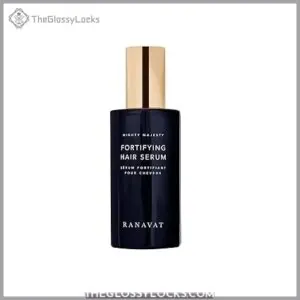
Jasmine does more than smell nice here. This serum leans on humectants that pull moisture into the hair shaft, giving you all-day softness without the greasy film heavier oils leave behind.
The lightweight formula absorbs fast, sealing cuticles so styling and washing don’t strip strands bare. Curl definition holds up better, roots stay balanced, and even color-treated hair gets hydration without fade risk.
Some users report flat results after months of use. If your scalp is dry or itchy, though, this one’s built to soothe that too.
| Best For | This serum is best for people with curly or frizz-prone hair, including kids, who want lightweight hydration without a greasy after-feel. |
|---|---|
| Format | Serum |
| Application Frequency | Daily |
| Key Ingredient | Jasmine humectants |
| Scalp Irritation Risk | Rare |
| Best For | Curly frizz-prone hair |
| Non-Greasy Formula | Yes |
| Additional Features |
|
- Lightweight formula that doesn’t weigh hair down
- Non-greasy texture with a light, luxurious jasmine scent
- Reduces frizz and leaves hair soft, smooth, and easier to manage
- Some users see no real difference even after months of consistent use
- The pump can malfunction and stop dispensing product properly
- A number of customers feel it’s priced higher than the results justify
6. Peptide Serum for Hair Density
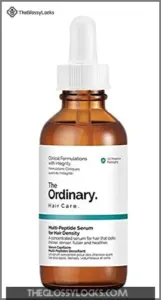
Why do peptide serums feel like the "insider" pick? Because instead of blanket-treating your scalp, they send targeted signals straight to the follicle. This formula pairs copper peptides like GHK-Cu with named actives, not vague "peptide complex" filler, which matters since specific peptides are what actually get studied.
Massage it into clean, dry scalp nightly; it absorbs fast, no greasy residue.
Give it three to four months minimum. Density gains vary by cause, so don’t expect miracles if your thinning stems from something peptides can’t touch.
| Best For | Anyone dealing with hair thinning who wants a targeted, science-backed peptide treatment to add to their nightly scalp routine, especially alongside existing treatments like minoxidil. |
|---|---|
| Format | Serum |
| Application Frequency | Daily |
| Key Ingredient | Copper peptides |
| Scalp Irritation Risk | Possible |
| Best For | General density support |
| Non-Greasy Formula | Mixed feedback |
| Additional Features |
|
- Multi-peptide formula with named actives like copper peptides and Redensyl, rather than vague "complex" fillers
- Lightweight formula that’s easy to apply and absorbs quickly into the scalp
- Can support scalp health by reducing flakiness and irritation, and works well alongside other hair growth treatments
- Results vary widely; some users see little to no change, and a few report increased shedding
- Some people experience temporary scalp sensitivity or irritation
- A number of users notice a slightly greasy feel once the serum dries
Hair Growth Serum Ingredients That Work
Not every ingredient on a serum label earns its spot, so you deserve to know which ones actually move the needle. Some work through decades of clinical backing, while others rely on newer research that’s still catching up to the hype. Here’s what the science actually says about each one.
Minoxidil for Proven Regrowth
Since 1988, minoxidil has been the FDA’s top choice for treating androgenetic alopecia, and it’s still the only proven bet.
It works by triggering blood flow increase to hair follicles, delivering oxygen straight to thinning areas. Expect twice-daily application, a temporary shedding phase around weeks 2-6, and visible regrowth by week 16. Skip a dose long-term, though, and those gains reverse within months. Long-term maintenance isn’t optional here, as minoxidil works by extending the hair growth phase rather than offering a permanent fix.
Rosemary Oil and Caffeine
Rosemary oil isn’t one magic molecule, it’s a cocktail: alpha-pinene, cineole, and camphor, each pulling weight. Studies clock its results near 2% minoxidil, minus the side effects. Caffeine chips in by boosting scalp circulation, jolting sluggish follicles awake.
Together, they’re a legit follicle stimulation combo. Just dilute rosemary first, at 5-10%, or your scalp will stage a protest.
Peptides and Biotin
Short amino-acid chains, that’s all peptides are, snipped from parent proteins and formulated for peptide bioavailability at the follicle.
Nutrafol and similar serums bank on nutrient teamwork, pairing peptides with biotin, a B vitamin cofactor in biotin metabolism.
Translation: biotin feeds keratin production, peptides signal follicle support, and together they target hair thinning prevention alongside real hair density improvement.
Saw Palmetto and Zinc
Think of DHT as the enzyme that shrinks follicles from the inside, and saw palmetto blocks it at the source.
Zinc backs it up, calming inflammation and balancing androgens.
- 320mg saw palmetto, 15-25mg zinc
- Topical beats oral for localized DHT blocking
- Safe for most adults
- Ideal for androgenic alopecia in men and women
Combined, they’re a legit one-two punch against thinning.
Essential Oils for Scalp Health
Saw palmetto and zinc handle the hormonal side, but your scalp’s microbiome needs backup too.
Tea tree oil brings antimicrobial punch against dandruff-causing fungi. Peppermint oil stimulates circulation, while lavender extract calms irritation. Always dilute in a carrier oil like jojoba, never apply undiluted. Patch test first, especially if you’re allergy-prone.
How to Choose Hair Growth Serum

Not every serum is right for every scalp, and picking one blind is how you end up with a cabinet full of half-used bottles. Your hair loss cause, your patience for texture, and your budget all matter just as much as the ingredient list. Here’s what to actually weigh before you commit.
Identify Your Hair Loss Cause
Before buying anything, play detective. Pattern recognition matters: is it patterned thinning, diffuse shedding, or a focal patch?
Check timing, triggers (illness, stress, meds), and scalp symptoms like itching or scaling. A quick self scalp examination plus honest symptom tracking and medical history review tells you whether you’re chasing DHT blocking or something else entirely.
Match Ingredients to Concerns
Once you’ve named the culprit, let the ingredient list do the work.
Hormonal hair loss calls for saw palmetto, a natural DHT blocker, sometimes paired with peptides.
Breakage prevention leans on biotin.
Dry scalp relief wants hydrators, while sensitive scalp care favors gentle spray formats.
General hair thinning solutions? Rosemary oil and caffeine boost circulation and mimic minoxidil’s effects.
Medicated Versus Natural Serums
Once you’ve matched ingredients to concerns, the next fork in the road is regulatory. Minoxidil is a standardized drug, dosed consistently every time. Rosemary oil, saw palmetto, caffeine, and biotin fall under "natural," a marketing term with no fixed definition.
- A lab-measured dropper of minoxidil
- A jar of botanical extracts varying by harvest
- A gentler formula for reactive, sensitive scalps
Standardization means predictability; nature means variability.
Consider Texture and Buildup
Here’s the truth nobody puts on the label: efficacy means nothing if you can’t stand wearing the stuff.
Efficacy means nothing if you can’t stand wearing the stuff
Thick, silicone-heavy formulas ease detangling but build up fast, leaving visible residue by week two.
Lightweight, fragrance-free gels dry quickly, skip the greasy feel, and keep scalp comfort high, which matters when you’re committing to consistent use over three months.
Compare Price and Treatment Length
A twenty dollar serum that needs nine months isn’t cheaper than a sixty dollar one working in three. Calculate price per month, not sticker price.
Multi packs cut costs 10 to 40 percent; subscriptions add another 15.
Match treatment length to your budget and patience level, since cost effectiveness only exists when you actually finish the bottle.
How to Apply Hair Growth Serum
Even the best formula won’t do much if you’re applying it wrong, and that’s a mistake more people make than you’d think. Technique matters here—where you put the serum, how much you use, and what you do afterward all affect whether those active ingredients actually reach your follicles. Here’s exactly how to get it right.
Prepare a Clean, Dry Scalp

Think of your scalp as soil, not a countertop wipe-down. Brush hair first to loosen debris, then rinse with lukewarm water, never hot, before shampooing with a gentle, non-medicated cleanser. Rinse thoroughly (residue irritates). Pat dry gently, no rough toweling.
This scalp cleansing routine removes buildup and rebalances the scalp microbiome, giving serum an uncluttered surface for real follicle stimulation.
Target Thinning Scalp Areas

Blindly slathering serum everywhere wastes product and dilutes results. Identify thinning zones first: check your mid-part, crown swirl, and temples in natural light. Androgenetic thinning often starts at the crown, so focus on crown coverage; postpartum shedding hits temples hardest, so target temples specifically. Monitor part line widening weekly and adjust application focus as patterns shift, maximizing hair density increase where you actually need it.
Use The Recommended Amount
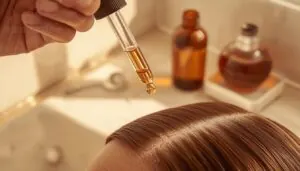
More isn’t better here, it’s just greasier.
Dose by hair type: 6-10 drops for fine hair, 10-15 for medium density, 15-20 for long or thick strands. Sensitive scalps start at 6-8 drops, three times weekly.
Skip the guesswork and use your pipette, distributing evenly across four sections for consistent use and real scalp health improvement.
Massage and Leave Serum In
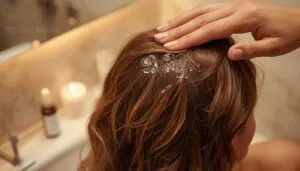
Rub it in like you mean it, this is where the magic happens.
Use fingertip pads (never nails) in small circles, 2-3 seconds per dot, then work each section for about 30 seconds. That single 5-minute massage session boosts scalp circulation for over 20 minutes afterward.
| Massage Length | Frequency | Benefit |
|---|---|---|
| 4-5 min | Daily | Follicle stimulation |
| 5 min | 4-5x/week | Best absorption |
| 3-4 min | 2x daily | Active shedding control |
Don’t rinse. Let it absorb overnight for maximum nourishment.
Avoid Common Application Mistakes
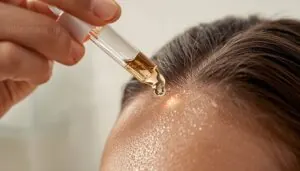
Even a perfect massage routine gets undone by sloppy habits elsewhere. Watch for these:
- Applying to hair, not scalp (dead keratin absorbs nothing)
- Skipping scalp preparation on dirty, product-laden hair
- Guessing at proper dosage instead of measuring drops
- Inconsistent use, which stalls hair follicle stimulation and shedding reduction
Fix these, and your targeted application actually earns results.
Testing Standards and Expected Results
Trust, but verify" isn’t just a Reagan line, it’s basically the motto of good serum testing. Before any product earns a spot on this list, it has to survive a gauntlet of testers, dermatologists, and hair types checking whether the claims hold up. Here’s what actually goes into that process, and what you can realistically expect once the bottle’s in your hands.
Efficacy and Shedding Reduction
Show me the data," you demand, and fair enough. Our testers tracked hair shedding reduction through randomized controlled trials, watching for the transient shedding phase (often peaking week 4, resolving by week 12) that precedes real regrowth.
Serums showing 20%+ shedding reduction and measurable hair density improvement by 12 weeks passed muster, for both hair growth serums for women and men alike.
Texture, Fragrance, and Packaging
Numbers don’t tell you if you’ll actually stick with a serum for twelve months. Texture does.
- Gel formulas absorb fast, no sticky residue
- Fragrance-free options cut irritation risk
- Amber glass with dropper caps protects potency, controls dosing
Lightweight formulas won’t weigh down fine hair, and massaging boosts blood flow to your scalp regardless of scent.
Diverse Hair Type Testing
Does it work on my curl pattern?" That’s the real question, and testing labs finally answer it. A 2,249-person meta-analysis found hair density swings from 225 to 153 hairs/cm² across ethnicities, so ethnic hair variation isn’t cosmetic trivia. Since curl pattern and ethnicity often correlate with porosity too, pairing this data with a hair porosity testing and product guide helps you fine-tune formulas beyond density alone.
Coarse strands absorb differently than fine ones, tightly coiled hair shows 30% more thickness variation, and formulas get tuned accordingly, not as an afterthought.
Dermatologist Evaluation Guidance
Grabbing a serum off the shelf skips a step: a board-certified dermatologist exam, history taking, and possible specialist referral. Real evaluation includes:
- Onset and symptom history
- Full scalp exam
- Trigger identification
- Risk factor review
- Progress tracking with clinical ingredients
Your hair regrowth journey deserves that diagnostic backbone before topical application even starts.
Three-to-Twelve-Month Results
Patience separates winners from quitters here. Early shedding reduction shows by week four; first growth signs emerge months three to six.
| Month | Achievement | Satisfaction |
|---|---|---|
| 3 | Shedding drops | 80% |
| 6 | Density improvement phase | 95% |
| 12 | Thickness progression peaks | Stabilizes |
Long-term stabilization point hits at twelve months. That’s when expert tested, best hair growth serums 2026 topical hair loss treatments prove themselves.
Frequently Asked Questions (FAQs)
What is the best serum for hair growth?
No single winner fits everyone. Minoxidil remains the FDA-approved top choice for proven regrowth, while Nutrafol Hair Serum blends peptides, rosemary oil, and saw palmetto for a gentler, dermatologist-favored, clinical-natural hybrid worth comparing before you commit.
Do any hair growth serums really work?
Yes, when ingredient concentration and consistency line up. Minoxidil delivers proven results; DHT-blockers like saw palmetto and peptides support scalp health too. Realistic expectations matter though, most testimonials show gains only after months of committed, daily use.
Which one is the best serum for hair growth?
Two products keep landing at the top for different reasons: Rogaine Women’s 5% Minoxidil Foam for proven regrowth, and Nutrafol Women’s Hair Serum for gentler, ingredient-synergy support when DHT and inflammation both play a role.
What are the top 3 hair growth products?
Your podium spots: a clinician approved minoxidil solution (the only FDA approved topical treatment out there), a targeted peptide serum like Nutrafol or The Ordinary’s Multi-Peptide, and a physician formulated botanical for consistent, well-rounded results.
Are hair serums safe to use during pregnancy?
Funny how pregnancy makes you paranoid about wine but casual about scalp products. Skip minoxidil and retinoids, since drug-status actives need real scrutiny. Choose fragrance-free, botanical formulas with minimal dermal absorption, and always ask your doctor first.
Do hair growth serums interact with other medications?
Absolutely, if the serum contains minoxidil, spironolactone, or finasteride. Minoxidil drug interactions span 188 meds, including trazodone, prednisone, and bupropion. Scalp absorption via propylene glycol matters too. Confirm with your pharmacist before combining with existing prescriptions.
What happens if you stop using hair serum suddenly?
Like Cinderella’s clock striking midnight, the magic doesn’t last past the deadline. Stop cold turkey and your hair cycle reverses, shedding climbs back up, and follicles quietly lose whatever growth maintenance the ingredients were providing.
How should hair serums be stored for maximum potency?
Stash it somewhere cool, dark, and dry (35°F to 77°F), cap tightened between uses. Skip the bathroom shelf and glovebox; heat, humidity, and light break down actives fast, cutting potency before your dermatologist-tested formula gets a fair shot.
Can hair growth serums be used with other treatments?
Yes. Minoxidil and finasteride pair fine with serums when you follow product application order: cleanse scalp, apply medication, let it absorb, then layer serum. Watch for irritation, and check medication compatibility with your dermatologist before combining actives or devices.
Is it safe to use hair growth serum during pregnancy?
Minoxidil is a no during pregnancy and breastfeeding. Skip it and reach for pregnancy-safe botanical formulas instead, think rosemary oil, natural DHT blockers, fragrance-free options. Always loop in your dermatologist first.
Conclusion
Your follicles don’t care about marketing, they care about mechanism. That’s the whole game.
Minoxidil earns its FDA stamp through decades of data, while peptides and rosemary oil play a slower, supporting role.
The right hair growth serum won’t work overnight, but consistency rewires what your scalp can do. Pick based on your actual cause, not the prettiest bottle. Apply it daily. Give it months. Your hair will tell the rest of the story.