This site is supported by our readers. We may earn a commission, at no cost to you, if you purchase through links. This content is for general informational and educational purposes only and is not a substitute for professional medical, dermatological, or nutritional advice.

Walk into any beauty aisle or scroll through a skincare feed, and you’ll find dozens of serums promising thicker, fuller hair—each claiming to be the answer. But here’s what most people discover the hard way: the wrong formula for your scalp type can stall progress or even worsen shedding.
Hair follicles aren’t one-size-fits-all, and neither are the ingredients that support them. Knowing how to choose the right hair growth serum means understanding what your scalp actually needs—whether that’s DHT-blocking compounds, vasodilators like caffeine, or barrier-reinforcing ceramides—before you spend a cent.
Table Of Contents
- Key Takeaways
- How Hair Growth Serums Work
- Match Serum to Hair Type
- Check Proven Growth Ingredients
- Minoxidil for Clinically Proven Regrowth
- Redensyl for Density and Follicle Support
- Procapil and Saw Palmetto for DHT-related Thinning
- Caffeine for Scalp Circulation and Growth Support
- Peptides for Stronger Hair Anchoring
- Biotin Complexes for Strand Thickness
- Hydrating Ingredients Like Hyaluronic Acid and Ceramides
- Irritating Ingredients to Watch For
- Compare Formula and Packaging
- Top 5 Hair Growth Serums
- Apply Serum for Best Results
- Frequently Asked Questions (FAQs)
- Conclusion
Key Takeaways
- Your scalp type — oily, dry, fine, or chemically treated — should be the first thing you look at before buying any serum, because the wrong formula can stall growth or make shedding worse.
- Ingredients like minoxidil (5%), Redensyl, Procapil, and caffeine have real clinical backing, while most others are just marketing — knowing the difference saves you money and time.
- Consistency beats everything: results take 8 to 16 weeks, and skipping applications leaves some follicles unsupported since they don’t all cycle at the same time.
- If hormonal imbalances, nutritional deficiencies, or scalp conditions are driving your hair loss, no topical serum alone will fix it — that’s when you need a doctor in the conversation.
How Hair Growth Serums Work

Hair growth serums don’t just sit on the surface — they work at the follicle level, which is why the right formula can actually change what you see in the mirror.
That’s especially true for women navigating hormonal shifts, where hair growth serums formulated for women over 50 can make a real difference by targeting follicles at their most vulnerable.
But not all serums do the same job, and knowing the difference matters before you spend a cent. Here’s what’s actually happening when a serum works, and what to expect from yours.
How Serums Support Scalp Health and Follicles
Think of your scalp as fertile ground — neglect it, and nothing grows well. A well-formulated serum works on four levels:
- Barrier Reinforcement — ceramides and hyaluronic acid lock in moisture
- Microbiome Balance — prebiotic ingredients keep scalp ecology stable
- Anti-Inflammatory Action — aloe and niacinamide calm irritation that strangles follicles
- Circulatory Boost — caffeine drives nutrient delivery straight to each hair follicle
Peptides stimulate collagen, supporting follicle structure. This foundation ensures hair-type-specific serum recommendations actually work.
Difference Between Thickening, Shedding Control, and Regrowth
Not all serums chase the same goal. Understanding the difference helps you pick smarter. Hair thinning, hair shedding, and hair regrowth aren’t interchangeable problems — so their solutions aren’t either.
| Goal | Mechanism Focus | What It Does |
|---|---|---|
| Thickening | Hair Shaft Coating | Coats strands for immediate fullness |
| Shedding Control | Scalp inflammation reduction | Normalizes hair cycling |
| Regrowth | Follicle Stimulation | Activates dormant follicles for new density |
| Appearance vs Growth | Cosmetic film-forming | Improves look without affecting follicles |
| Hair type specific serum recommendations | Targeted actives | Matches formula to your thinning pattern |
Why Consistency Matters for Visible Results
Once you’ve matched the right formula to your goal, the next variable is how reliably you use it. Scalp contact has to happen repeatedly because follicles don’t all cycle at the same time — some are resting while others are growing. Missing doses effectively leaves some follicles unsupported.
Consistent serum use matters because:
- Habit formation keeps dosing predictable, reducing missed applications on busy days
- Dose stability prevents over-applying to "catch up," which causes buildup
- Irritation management improves when your scalp adapts gradually rather than reacting to gaps
- Result tracking becomes reliable only when your frequency stays steady week to week
- Hair type specific serum recommendations only work if the formula reaches follicles consistently enough to influence their cycle
Typical Results Timeline: 8 to 16 Weeks
Consistency and patience set the stage — but patience closes the deal. Most people experience an early shedding phase first, which feels counterintuitive but signals follicular activity. The emergence of baby hairs usually begins around weeks 8 to 12.
Before baby hairs emerge, patience must outlast the shedding
The real density improvement window runs from 8 to 16 weeks, where follicle cycle overlap means some hairs begin to respond earlier than others.
Progress tracking every few weeks helps you stay grounded.
When a Serum May Not Be Enough
Choosing the right hair growth serum for your hair type is only half the equation. If hormonal disorders like thyroid dysfunction, nutritional deficiencies such as low iron, or scalp diseases like seborrheic dermatitis drive your hair thinning or treatment needs, no topical hair treatment alone will fix that.
Stress triggers and deeper hair loss causes require medical consultation before follicle health can truly respond.
Match Serum to Hair Type
Not every serum works for every scalp, and that mismatch is often why people give up too soon.
Your hair type, scalp condition, and thinning pattern all point toward a specific kind of formula. Here’s how to match the right serum to what your scalp actually needs.
Best Formulas for Oily Scalps
An oily scalp isn’t just annoying — it can quietly clog follicles and stall growth. The right lightweight formulation changes everything.
Look for these five must-haves:
- Salicylic Acid Exfoliation dissolves excess sebum and buildup at the root
- Clarifying Surfactant Base lifts oil without stripping
- Antimicrobial Sebum Control with zinc pyrithione or ketoconazole
- Buildup-Free Formulation using a non-oily formula that dries clean
- Menthol Refresh Boost for lasting oil control between washes
Best Formulas for Dry or Flaky Scalps
A dry, flaky scalp needs hydration and calm — not more stripping. Build your regimen around Barrier-Boosting Actives like hyaluronic acid and ceramides, plus Soothing Humectants such as panthenol.
Gentle Exfoliants like lactic acid lift flakes without irritation, while Anti-Yeast Agents such as pyrithione zinc address root causes.
Anti-inflammatory oils round out a Low-Buildup Texture, lightweight formulation for lasting scalp health.
These oils also make it a standout pick among hair growth serums safe for color-treated hair, supporting scalp health without compromising your color.
Best Formulas for Fine or Thin Hair

Fine or thin hair demands precision in product selection — the wrong formula can turn flat hair into a limp mess. Stick to lightweight and fast-absorbing formulas built on low-viscosity bases that don’t drag strands down.
Film-forming polymers coat each strand for visible volume, while lightweight emollient mixes and gentle scalp-soothing actives support micro-targeted delivery right at the follicle.
No greasiness, no weight.
Best Formulas for Chemically Treated Hair

Chemical processing strips hair’s internal structure, leaving strands vulnerable to breakage and density loss. Serums built around bond-repair complexes and protein rebuilding help restore that weakened foundation.
Look for cuticle-smoothing agents to reduce frizz and a heat-styling shield if you use hot tools regularly. A scalp irritation barrier also matters for overall hair health.
Lightweight delivery through non-oily formulas and lightweight formulations ensures consistent use without buildup, maintaining scalp and hair integrity.
Best Choices for Crown Thinning

Crown thinning demands precision — not guesswork. Vertex-focused dosing means applying your serum only where density has visibly dropped, not across your entire scalp. For patchy crown targeting, airy gel formulas absorb cleanly without flattening fine strands.
Micro-dose application keeps buildup minimal while maximizing follicle stimulation mechanisms. This method ensures active ingredients penetrate effectively without weighing hair down.
Biotin-peptide blends combined with DHT inhibition ingredients like procapil support hair density where it matters most. These formulations address thinning at its root, promoting healthier regrowth in targeted zones.
When to Choose Lightweight Water-based Serums

Once you’ve zeroed in on your routine, think about how your serum performs throughout your day. If you deal with humidity, sweat, or seasonal shifts, a lightweight and fast-absorbing formula is your most practical choice.
Water-based serums offer excellent layering compatibility under styling products, resist greasy buildup, and ensure travel convenience.
When to Avoid Heavy Oil-based Formulas
Lightweight and fast-absorbing formulas work for most people — but heavy oil-based serums can quietly work against you. If your hair type leans oily or your scalp already produces excess sebum, skip the thick stuff.
Here’s when a non-oily formula makes more sense:
- Scalp acne often worsens with occlusive oils trapping debris near follicles
- Dandruff flare-ups get messier when oils cause flakes to clump rather than lift
- Follicle clogging happens faster when residue mixes with sebum between washes
- Hair weighing down at the roots signals your formula is too heavy
- Irritation overload can occur when oil-rich serums layer over sensitive or reactive scalps
Check Proven Growth Ingredients
Not all serums are created equal, and the difference usually comes down to what’s actually inside the bottle. Some ingredients have solid clinical backing; others are just marketing noise.
Here’s what to look for when you’re scanning that label.
Minoxidil for Clinically Proven Regrowth
Clinical evidence supporting minoxidil use confirms its superiority in the serum market. Its mechanism of action—widening blood vessels and boosting growth factors like VEGF—directly prolongs the hair’s active growth phase.
Concentration matters significantly: 5% outperforms 2% for regrowth.
Adherence challenges and withdrawal effects are critical considerations, as stopping erases results. Response variability also demands patience is non-negotiable.
Redensyl for Density and Follicle Support
If minoxidil feels too aggressive for your scalp, Redensyl offers a gentler path to real density gains. This patented molecular complex — built around dihydroquercetin glucoside, EGCG glucoside, glycine, and zinc — targets outer root sheath cells directly, triggering stem cell activation in dormant follicles.
Here’s what Redensyl actually does for your hair:
- Reactivates follicle stem cells to shift hair from resting into active growth
- Extends the anagen phase while shortening telogen shedding cycles
- Delivers measurable hair density improvement within 8–12 weeks
- Provides anti-inflammatory support that calms scalp micro-inflammation linked to thinning
- Strengthens follicle stimulation and hair follicle strengthening from the root outward
Choosing the right hair growth serum for your hair type often comes down to tolerance — and Redensyl earns its place without irritation.
Procapil and Saw Palmetto for DHT-related Thinning
If androgenetic thinning is your concern, Procapil and Saw Palmetto target the root cause — DHT. Their mechanism of action blocks DHT from binding to follicles, slowing miniaturization over time.
Clinical trial data confirms Procapil works best in combination therapy alongside actives like Redensyl.
For your hair type, look for standardized saw palmetto extract — around 2–3% beta-sitosterol — and a clean safety profile with no harsh irritants.
Caffeine for Scalp Circulation and Growth Support
Caffeine does more than wake you up — it works on your scalp through vasodilation effects, widening small blood vessels to improve scalp circulation and deliver nutrients directly to follicles. It also triggers cAMP signaling inside follicle cells, nudging them toward active growth.
When choosing a hair growth serum, ingredient synergy matters: caffeine paired with Redensyl amplifies results.
Follow dosage guidelines on the label and practice tolerance monitoring if you have a sensitive scalp.
Peptides for Stronger Hair Anchoring
Think of peptides as the scaffolding crew for your follicles. Compounds like Acetyl Tetrapeptide-3 and Biotinoyl Tripeptide-1 work through matrix reinforcement — strengthening the extracellular tissue anchoring each strand at its root. Good peptide technology depends on targeted delivery and peptide stability within the formula.
Synergistic blends that combine multiple peptides boost follicle signaling, making a MultiPeptide serum worth prioritizing when shedding is your main concern.
Biotin Complexes for Strand Thickness
Biotin works by supporting protein synthesis essential for your hair shaft, but form matters. Patented complexes using magnesium biotinate or an inositol arginine complex deliver stronger biotin-keratin synergy than plain biotin alone.
A topical biotin complex can visibly reduce breakage within a thickness and growth timeline of about 12 weeks. When selecting a hair growth serum, scan the ingredient list—biotin’s position indicates its concentration.
Hydrating Ingredients Like Hyaluronic Acid and Ceramides
Scalp hydration isn’t a bonus — it’s foundational.
Hyaluronic acid pulls moisture into the scalp through precise moisture retention mechanisms, while its molecular weight impact determines how deep it penetrates versus how long its surface film formation holds.
Ceramides handle barrier lipid synergy, locking that hydration in and reducing water loss.
Together, they extend hydration layer longevity, keeping follicles in a healthier environment for growth.
Irritating Ingredients to Watch For
Denatured alcohol drying effects can compromise your scalp barrier quickly, and synthetic fragrances — including citrus scent irritants — trigger redness even at low concentrations.
Watch for methylisothiazolinone alerts, a preservative sensitizer linked to contact reactions. Strong acid sensitivity is also real.
Choose paraben-free formulas with clean, compliant ingredients for safer, consistent results.
Compare Formula and Packaging

The right serum formula can make or break your results — even if the ingredients are solid. How a product is made and bottled affects how well it absorbs, how it feels on your scalp, and whether it actually fits into your daily routine.
Here’s what to look at before you buy.
Water-based Serums Versus Oil-based Serums
Choosing between water-based and oil-based serums comes down to your scalp’s actual needs. Water-based formulas win on absorption speed, layering compatibility, and a lightweight, non-oily application feel—smart picks if you’re concerned about buildup risk. Oil-based versions lock in moisture longer but can feel heavier and harder to wash out.
When considering how to choose a hair growth serum, ingredient stability and your scalp type are the deciding factors.
Dropper, Roll-on, Foam, and Spray Applicators
The applicator determines how effectively your serum works. Dosage accuracy, leak prevention, and buildup control all depend on the format you pick.
- Dropper – Precise, targeted delivery for spot treatment.
- Roll-on – Mess-free application with built-in viscosity compatibility.
- Foam – Even coverage with minimal dripping.
- Spray – Wider dispersal, less control.
- Roll-On Applicator Advantage for Mess-Free Application – Sealed ball prevents leaks between uses.
Lightweight Texture for Daily Use
Once you’ve chosen your applicator, the formula’s texture becomes the deciding factor for daily use. A lightweight and fast-absorbing formula delivers a breathable scalp feel without the greasiness that heavier oils leave behind.
Daily serums with quick dry time and slip-free application also offer layering compatibility with other products, preventing build-up that could otherwise clog follicles over time.
Non-greasy Formulas for Fine Hair
Fine hair gets weighed down fast, so your product selection criteria should center on volatile carriers like isododecane that evaporate quickly, leaving no residue. A low lipid load — ideally under 5% — keeps strands from looking flat.
Light humectants like panthenol add moisture without tackiness.
Buildup-resistant, fast-drying textures let you stay consistent daily without sacrificing volume.
Dark Glass Packaging for Sensitive Ingredients
Amber glass packaging isn’t just a branding choice—it blocks UV light, dramatically slowing photo-oxidation that degrades sensitive actives like peptides and vitamin C. This UV shielding directly extends ingredient longevity and shelf life.
Glass is also inert, meaning it won’t interact with formulas. This neutrality ensures product stability and purity, reinforcing reliability.
Such qualities send a quiet but meaningful consumer trust signal, demonstrating a commitment to preservation and quality.
Fragrance-free and Sulfate-free Options
Choosing fragrance-free and sulfate-free serums isn’t just about sensitivity—it’s a smart scalp strategy. Synthetic fragrance avoidance reduces allergen exposure, while sulfate-free lather ensures your cleanser remains gentle enough to support daily serum use.
For fragrance-free stability, always check the ingredient list, not just the front label. This habit prevents hidden irritants from compromising scalp health.
Your hair type plays a critical role: fine or reactive scalps especially benefit from this gentler chemistry, minimizing irritation and maintaining balance.
Price, Bottle Size, and Cost Per Use
Most serums land between $20 and $60 per bottle, but average bottle cost alone doesn’t tell the whole story. A 60 mL bottle at $40 costs less per milliliter than a 30 mL at $30.
Subscription discounts can shave off another 10–15 percent, further reducing long-term expenses. Bulk purchase savings also make clinical-grade options genuinely affordable over time.
Travel size value works for trialing actives before committing to full-sized products, ensuring cost-effective experimentation.
Top 5 Hair Growth Serums
Not every serum earns its spot on the shelf, so this list cuts straight to the ones that actually deliver. Each pick was chosen based on clinically backed ingredients, dermatologist recognition, and real-world results across different hair types.
Here are five worth your attention.
1. Nutrafol Women’s Thickening Hair Serum
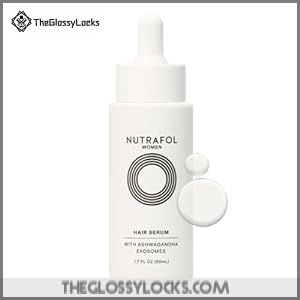
Nutrafol’s Women Thickening Serum is one of the more thoughtfully engineered options on the market. Its patent-pending Ashwagandha Exosome system delivers active ingredients 1,500 times smaller than standard ashwagandha particles — meaning deeper, faster scalp absorption.
Irish Moss Peptides and Pea Sprout Extract work together to support density and strand strength.
At $69 for 1.7 fl oz, it’s a premium commitment, but the lightweight, fragrance-free formula won’t weigh down fine hair.
Most users see meaningful changes around the 90-day mark with daily use.
| Best For | Women experiencing hair thinning who want a clinically backed, plant-based serum they can layer into an existing hair care routine. |
|---|---|
| Price | $69.00 |
| Volume | 1.7 fl oz |
| Application Method | Glass dropper |
| Hair Type | Fine/thinning hair |
| Result Timeline | ~90 days |
| Key Ingredient | Ashwagandha Exosome |
| Additional Features |
|
- Uses a patent-pending Ashwagandha Exosome system that absorbs deeper into the scalp than standard formulas
- Lightweight and non-greasy, so it won’t mess with your style or weigh down fine hair
- Pairs well with other treatments like minoxidil or Nutrafol supplements for a more complete routine
- Results take roughly 90 days to show up, so patience (and consistency) is a must
- The glass applicator is fragile and doesn’t come with a replacement, which is a real risk
- At $69 for 1.7 oz, it runs out faster than you’d hope — especially on larger thinning areas
2. Mielle Rosemary Mint Light Hair Oil
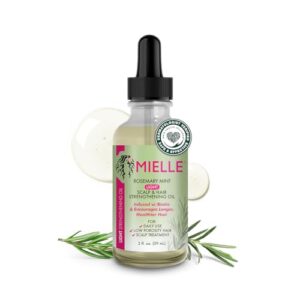
At under $9 for 2 oz, the Mielle Rosemary Mint Light Hair Oil punches well above its price point. Its blend of rosemary, mint, biotin, jojoba, and peppermint oil works to stimulate circulation and ease scalp dryness without leaving a heavy, greasy feeling.
The formula is genuinely lightweight, making it suitable for daily use, protective styles, and silk press looks.
Heads-up: it contains soy and tree-nut derivatives, so check the label if you have sensitivities.
| Best For | Anyone dealing with a dry, flaky scalp or looking to strengthen their strands without weighing hair down — works across all hair types. |
|---|---|
| Price | $8.85 |
| Volume | 2 fl oz |
| Application Method | Direct pour/applicator |
| Hair Type | All hair types |
| Result Timeline | Anecdotal/varies |
| Key Ingredient | Rosemary & Biotin |
| Additional Features |
|
- Lightweight formula that won’t leave heavy residue, even on fine hair
- Packed with scalp-loving ingredients like rosemary, biotin, and peppermint to boost circulation and cut dryness
- Super versatile — use it as a pre-wash treatment, overnight oil, or quick split-end fix
- Contains soy and tree-nut derivatives, so it’s a no-go if you have those sensitivities
- Can feel a bit greasy on the crown at first, especially if you overdo it
- Hair growth claims are anecdotal — don’t expect miracles, just healthier-looking hair
3. Mielle Rosemary Mint Hair Oil
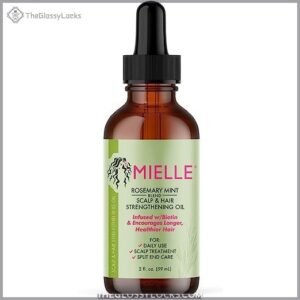
Think of this as the original—the Mielle Rosemary Mint Hair Oil is where the line started. At 2 fl oz, it carries a richer, more concentrated blend of rosemary, castor, jojoba, sweet almond, and grapeseed oils alongside biotin, vitamins D and E, and burdock root extract.
That depth makes it ideal for dry or low-porosity hair craving serious moisture. Just go easy at the roots—this one’s heavier than its lighter sibling and can weigh fine strands down fast.
| Best For | Anyone dealing with a dry, itchy scalp or wanting to boost shine and softness—especially those with dry or low-porosity hair who don’t mind a heavier oil. |
|---|---|
| Price | Not listed |
| Volume | 2 fl oz |
| Application Method | Glass dropper |
| Hair Type | All hair types |
| Result Timeline | Anecdotal/varies |
| Key Ingredient | Biotin & Rosemary |
| Additional Features |
|
- Packed with a rich blend of oils plus biotin, so your scalp and strands get a lot of nourishment in one bottle
- The built-in glass dropper makes it easy to target specific spots like your hairline, brows, or lash line
- Works multiple ways—scalp treatment, split-end fix, leave-in, or styling aid
- The mint and rosemary scent is strong, which can be a dealbreaker if you’re sensitive to fragrance
- Too much at the roots and your hair will look greasy fast—you really have to go easy with it
- Hair growth results aren’t clinically proven; anything you hear about regrowth is based on what users say, not hard science
4. Act Acre Stem Cell Scalp Serum
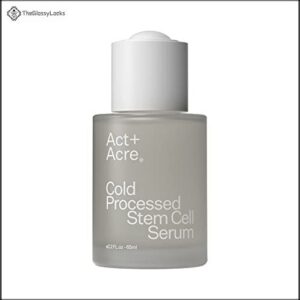
Where the Mielle oils lean heavy and conditioning, Act+Acre’s Stem Cell Scalp Serum goes the opposite direction—lightweight, water-based, and laser-focused on follicle health.
It’s cold-processed under 40°C to preserve active ingredients: 2% apple stem cells, a bamboo and pea sprout blend, hyaluronic acid, and aloe.
A 12-week clinical study showed 90% of participants noticed new hair growth.
At $86 for 2.2 fl oz, it’s a premium pick—but the precision dropper makes every drop count.
| Best For | Anyone dealing with thinning hair or postpartum shedding who wants a clean, lightweight serum that works at the scalp level without weighing hair down. |
|---|---|
| Price | $86.00 |
| Volume | 2.2 fl oz |
| Application Method | Precision dropper |
| Hair Type | Thinning/color-treated |
| Result Timeline | 12 weeks |
| Key Ingredient | Apple Stem Cells |
| Additional Features |
|
- Cold-processed formula keeps active ingredients (apple stem cells, hyaluronic acid) at full strength
- 90% of study participants saw new hair growth after 12 weeks — solid numbers for a topical serum
- Vegan, fragrance-free, and color-safe, so it plays well with pretty much any hair routine
- $86 for 2.2 fl oz is a real investment, especially when results can take the full 12 weeks to show
- The dropper applicator has a reputation for leaking, which can mean wasted product
- Clinical study only had 90 participants, so take those percentages with a little grain of salt
5. Rogaine Men Five Percent Minoxidil Foam
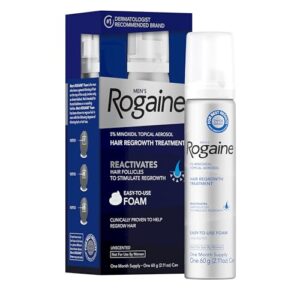
Rogaine delivers clinically proven results with its 5% minoxidil foam, which widens blood vessels and boosts scalp circulation to keep follicles in the growth phase longer.
The Tricho-Prime formula enhances absorption using AHAs and conditioning agents, ensuring your scalp receives maximum benefit.
Apply half a capful twice daily—no rinse is needed. Initial shedding is normal; real regrowth typically appears around 16 weeks with consistent use.
| Best For | Men in the early stages of hair thinning who want a clinically backed, easy-to-use daily treatment that fits into an existing grooming routine. |
|---|---|
| Price | $37.26 |
| Volume | 2.11 fl oz |
| Application Method | Foam cap |
| Hair Type | Thinning hair |
| Result Timeline | Ongoing use required |
| Key Ingredient | 5% Minoxidil |
| Additional Features |
|
- 5% minoxidil is FDA-recognized for regrowing hair, and the foam formula absorbs fast with minimal mess or residue
- Tricho-Prime technology conditions the scalp and uses AHAs to boost absorption, making it gentler than older liquid versions
- Unscented and suitable for sensitive scalps, so it plays well with other hair or scalp treatments
- You have to keep using it indefinitely — stop, and any regrown hair will likely fall out again
- Early shedding is common and can be alarming before results show up around the 16-week mark
- It costs more than generic minoxidil foams, and some users have run into nozzle or packaging issues
Apply Serum for Best Results
Getting the most from your serum comes down to how you use it, not just what’s in it. Even the best formula can underdeliver if applied the wrong way or at the wrong time.
Here’s exactly how to apply it so every drop counts.
Apply to a Clean, Dry Scalp
Your scalp pre-wash routine sets the stage for everything. Wash with lukewarm water, rinse thoroughly, then let your scalp reach an ideal dryness level before applying — water dilutes active ingredients and causes uneven spread.
Use your application parting technique to expose the scalp directly. Do a quick scalp moisture check by touch.
Watch for any immediate irritation after your first few uses.
Use a Few Drops on Targeted Areas
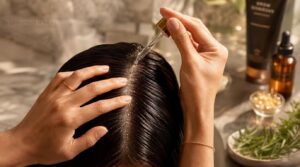
Once your scalp is prepped, less is genuinely more. Use dropper precision to place two or three drops directly along your part line, targeting the thinning zone—not the surrounding hair.
This microdose technique keeps the serum where follicles actually need it. Controlled drop volume prevents pooling and buildup.
Localized scalp treatment beats spreading product everywhere.
Massage for 1–2 Minutes
Two minutes is all it takes to release the full potential of your serum. Using your fingertips, apply quick pressure in small circular motions across the targeted zones—this scalp stimulation drives a microcirculation boost that carries active ingredients deeper into follicle tissue.
Consistent application techniques for scalp serums reduce tension perception while keeping scalp safety front and center. It’s a non-negotiable routine integration step to maximize efficacy and maintain healthy scalp conditions.
Leave The Serum on Until Your Next Wash
Once the massage is done, don’t rinse it off. Active ingredients need continuous scalp contact to work properly. Rinsing early cuts that process short.
Absorption timing matters here: your wash schedule affects how long the serum stays on, so don’t overthink it. Just let it sit.
Residue management is simple—if buildup appears, use less next time.
Use Daily or 2–3 Times Weekly as Directed
Frequency adherence is the quiet engine behind every successful serum routine. Lightweight daily formulas fit naturally into your morning rhythm, while intensive serums follow a weekly application schedule of two to three uses.
Wash-day coordination matters—apply on non-wash days when possible to extend contact time. Miss a day? Just resume normally.
Consistent application frequency, matched to your hair type, drives real results.
Avoid Over-applying to Prevent Buildup
More isn’t better here — your drop quantity matters. Excess serum sits on the surface instead of reaching the follicle, creating buildup indicators like dull roots or dandruff-like flakes.
Adjust your application frequency if that happens, and follow up with a gentle cleaning routine. Consistent, smaller doses boost scalp absorption every time.
Track Shedding, Baby Hairs, and Density Changes
Think of tracking as your personal scalp map. Photograph the same sections weekly — crown, temples, hairline — to catch density shifts you’d otherwise miss.
Note where friction from pillows causes thinning, monitor texture changes in regrowing strands, and watch for baby hairs signaling active regrowth cycles.
Most users see shedding slow within 8–12 weeks of consistent serum use.
Frequently Asked Questions (FAQs)
How to choose hair serum for hair growth?
Start with your scalp type, then check the ingredient list for proven actives like minoxidil or redensyl.
Factor in texture, absorption, and user reviews to narrow down options.
Prioritize affordable choices that match your hair’s needs to ensure both effectiveness and budget-friendliness.
Can hair growth serums be used during pregnancy?
Most hair growth serums aren’t safe during pregnancy. Minoxidil, the key regrowth active, poses fetal risk. Always get medical guidance and choose pregnancy-screened, safer alternatives instead.
Should serums be refrigerated to preserve potency?
Most serums don’t need refrigeration. Preservatives keep water-based formulas stable at room temperature. Cold can trigger separation in oil-based blends. Always follow label instructions — they’re your most reliable storage guide.
Can two serums be layered together safely?
Yes, but carefully. Layering Timing matters — wait 30–60 seconds between each serum.
Always follow the Patch Test Protocol first. Prioritize Compatibility Testing to avoid irritation.
Apply thin layers for Dosage Balance and proper absorption.
Do serums work the same on color-treated scalps?
Color-treated scalps deal with barrier disruption, so scalp sensitivity is real.
Patch test importance can’t be overstated — ingredient penetration and irritation management both shift when your scalp barrier is compromised.
Is it safe to use serum after scalp sunburn?
Wait until the burn fully heals before applying any growth serum. A sunburned scalp is inflamed and vulnerable — active ingredients increase irritation risk.
Use aloe instead, then resume your serum routine once tenderness fades.
Conclusion
The right scalp type, the right active ingredients, the right formula weight—these aren’t small details. They’re the difference between a serum that transforms your hair and one that collects dust on your shelf.
Knowing how to choose the right hair growth serum means you’re no longer guessing at the beauty aisle, hoping something works. You’re making an informed decision backed by biology. That’s not just smarter shopping—that’s taking real ownership of your hair health.