This site is supported by our readers. We may earn a commission, at no cost to you, if you purchase through links. This content is for general informational and educational purposes only and is not a substitute for professional medical, dermatological, or nutritional advice.

You slather on moisturizer twice a day, yet by 3 p.m. your cheeks feel tight again. The problem usually isn’t a lack of hydration. It’s that the water you already applied is escaping through your skin barrier.
That’s where natural skin hydration with facial oils comes in. Oils don’t add moisture. They form an occlusive seal on the surface, locking in the hydration your serums and damp skin already hold, while fatty acids fill the microscopic gaps between skin cells.
The trick is choosing the right oil for your skin type and applying it in the right order. Below, you’ll find the science, the technique, and six oils worth your money.
Table Of Contents
- Key Takeaways
- How Facial Oils Support Skin Hydration
- Choosing Oils for Your Skin Type
- How to Apply Facial Oils Correctly
- Top 6 Facial Oils for Hydration
- Avoiding Breakouts, Irritation, and Common Mistakes
- Frequently Asked Questions (FAQs)
- What is the best natural oil for hydrating my face?
- How do I naturally hydrate my face skin?
- Which oil is best for face hydration?
- Do face oils hydrate the skin?
- How long does facial oil take to absorb?
- Can you mix different facial oils together?
- Should you refrigerate facial oils for storage?
- How much facial oil should you use?
- Can facial oils replace your regular moisturizer?
- Can facial oils replace your daily moisturizer entirely?
- Conclusion
Key Takeaways
- Facial oils don’t add moisture—they form an occlusive seal that slows water loss, so your skin holds onto the hydration your serums and damp skin already provide.
- Matching the oil to your skin type matters: lightweight options like squalane or grapeseed suit oily skin, while richer oils like marula work best for dry or dehydrated skin.
- Apply oil last in your routine, onto damp skin, pressing it in rather than rubbing—this seals in active ingredients and maximizes moisture retention without diluting them.
- Visible barrier repair takes roughly four weeks of consistent use, so give your chosen oil time before judging whether it’s working.
How Facial Oils Support Skin Hydration

Keeping skin hydrated isn’t just about drinking water. Your skin’s outer layer, the stratum corneum, loses moisture constantly through a process called transepidermal water loss. Facial oils slow that process by forming a thin occlusive film on the surface, giving your skin time to hold onto the water it already has.
Timing matters just as much as the products you choose—applying your moisturizer to damp skin within a few minutes of showering, ideally after cleansing with one of these best body washes for dry skin, helps seal in that hydration before it evaporates. If your skin feels flaky or rough before you moisturize, a round with one of these gentle body exfoliators for dry skin helps slough away dead cells so hydration sinks in instead of sitting on the surface.
Facial oils don’t add moisture—they form a thin occlusive film that slows water loss so skin holds onto what it already has
The fatty acids in natural emollients fill microscopic gaps between skin cells, making the barrier more flexible and improving moisture retention over time. That’s why skin barrier function improves with consistent oil use, particularly with facial oils for dry skin.
What oils don’t do is hydrate deeper skin layers. They work at the surface, and that’s exactly where they need to be to effectively reduce moisture loss.
Choosing Oils for Your Skin Type

The barrier works at the surface, and the oil you choose determines whether it backs or disrupts that function.
Oily and acne-prone skin needs noncomedogenic oils rated 0–2, which support sebum balance by mimicking your skin’s natural oils. Heavier oils on oily skin just make things worse.
Here’s a breakdown by skin type:
- Oily skin: Grapeseed or squalane, lightweight with high linoleic acid content
- Dry dehydrated skin: Marula or avocado, oleic-rich oils that strengthen skin barrier function
- Sensitive skin: Jojoba or squalane, fragrance-free and gentle on reactive skin
- Combination skin: Rosehip or jojoba for balance without adding heaviness
Face oils for dry skin are richer and slower to absorb. That’s intentional. They need more barrier support than lighter alternatives offer.
When choosing an oil, keep in mind that comedogenic ratings come from 1970s rabbit ear testing rather than standardized human trials, so they’re a rough guide rather than a guarantee.
How to Apply Facial Oils Correctly
Once you’ve picked the right oil, application technique determines how well it works. Start with clean, damp skin so the oil seals in surface water instead of sitting on dry skin alone. A gentle cleanser for dry skin helps preserve your skin’s natural moisture barrier, so it’s still slightly hydrated when you apply oil.
Follow this order:
- Cleanse thoroughly, removing all sunscreen and makeup residue.
- Apply water-based serums or toners first so they absorb fully.
- Finish with 2–3 drops of oil to lock everything in.
Warm the oil between your palms, then press it on with light pressure rather than rubbing. Pressing helps facial oil absorption without pulling at sensitive areas.
If you want extra hold and definition after the oil, a quick guide to applying beard wax for strong hold walks you through the next step.
Less is more. Excess product transfers to hair and pillowcases and can overwhelm thin skin around your nose. If you use strong actives, apply your oil last so it won’t dilute them, giving you better moisture locking overnight.
A dedicated overnight face oil for sealing tends to be lighter and more breathable than a general-purpose oil, making it easier to use sparingly without compromising hydration.
Top 6 Facial Oils for Hydration
You’ve got the technique down, so now it’s about picking the right oil. The six below cover different skin types, budgets, and concerns, from barrier repair to breakout-prone skin. Each one earns its spot for a specific reason, and I’ll tell you what that is.
1. Plum Beauty Antioxidant Superfood Face Oil
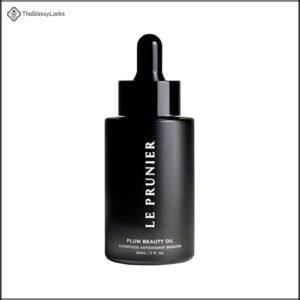
Imagine a plum so ripe it drips, its skin glossy with natural oils. That’s the idea behind Plum Beauty Antioxidant Superfood Face Oil. It uses a proprietary mix of sustainably sourced plum varietals, packed with polyphenols, omega 6 and 9, and pro-vitamins A and E.
You’ll notice it feels weightless. It absorbs fast, won’t clog pores, and it’s vegan and dermatologist approved. Apply 1–3 drops on damp skin, or mix it into your moisturizer. It’s pricey, and some find the scent off-putting, so test first.
| Best For | Anyone with all skin types looking for a lightweight, vegan face oil that soothes irritation and locks in moisture, and who doesn’t mind paying a premium. |
|---|---|
| Volume | 5.6 oz |
| Skin Type | All skin types |
| Hero Ingredient | Plum oil blend |
| Vegan | Yes |
| Non-Comedogenic | Yes |
| Main Benefit | Antioxidant protection & moisture |
| Additional Features |
|
- Rich in antioxidants and polyphenols from sustainably sourced plum varietals, with omega 6 and 9 and pro-vitamins A and E.
- Weightless formula absorbs quickly, won’t clog pores, and is vegan and dermatologist approved.
- Versatile—can be applied alone, mixed with moisturizer or foundation, or used on hair ends.
- Pricier than many comparable face oils.
- The fragrance gets mixed reviews, with some users finding the scent unpleasant.
- Scent and feel may require testing before committing to a full bottle.
2. Youth To The People Superberry Oil
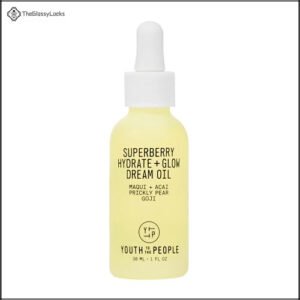
One oil that earns its shelf space is Youth To The People Superberry Oil. It blends prickly pear, maqui, açaí, and goji with squalane, jojoba, and sunflower oil, so you get antioxidants plus fatty acids in one step. It’s vegan, cruelty-free, and dermatologist-tested.
You’ll notice a dewy finish whether you wear it alone, mix it into foundation, or use it as a primer. Apply it to damp skin at night for best results.
At $41.65 for 0.99 ounces, it’s an investment, and some users see hydration without brighter tone.
| Best For | People with dry, dull, or sensitive skin who want a lightweight hydrating oil that works alone, as a primer, or mixed into foundation. |
|---|---|
| Volume | 0.99 oz |
| Skin Type | Dry, dull, sensitive |
| Hero Ingredient | Prickly pear & squalane |
| Vegan | Yes |
| Non-Comedogenic | N/A |
| Main Benefit | Hydration & dewy finish |
| Additional Features |
|
- Blends antioxidant-rich superberries like prickly pear, maqui, açaí, and goji with squalane, jojoba, and sunflower oil for hydration and fatty acids in one step.
- Vegan, cruelty-free (Leaping Bunny certified), dermatologist- and allergy-tested, and free of parabens, phthalates, artificial dyes, and animal-derived ingredients.
- Versatile day or night use with a dewy finish, whether worn alone, mixed with foundation, or applied as a hydrating primer.
- At $41.65 for just 0.99 ounces, it’s pricey enough that some users hesitate to repurchase regularly.
- No official travel-size version is available, making it less convenient for trips.
- Some users report hydration benefits but no visible improvement in skin tone or brightness.
3. The Ordinary Rose Hip Seed Oil
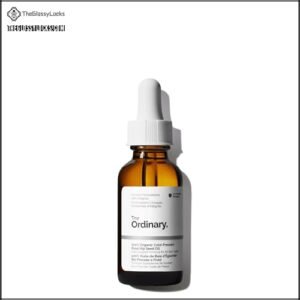
Sourcing rose hip seed oil cold-pressed and unrefined matters, and The Ordinary Rose Hip Seed Oil does both. You get 100% organic oil in a compact 1.06-ounce bottle, rich in linoleic acid that helps repair your skin barrier and lock in moisture.
Expect a strong natural scent from the omega content; that smell isn’t proof of rancidity. Use 2–3 drops on damp skin after serums, patch-test first, and skip broken skin. Store it away from heat and light.
| Best For | Anyone seeking an affordable, organic face oil to hydrate and improve uneven skin tone, especially those comfortable with a strong natural scent. |
|---|---|
| Volume | 1.06 oz |
| Skin Type | All skin types |
| Hero Ingredient | Rosehip seed oil |
| Vegan | N/A |
| Non-Comedogenic | Yes |
| Main Benefit | Skin tone & elasticity |
| Additional Features |
|
- 100% organic, cold-pressed, and unrefined for maximum nutrient retention
- Rich in omega fatty acids that support skin barrier repair and elasticity
- Non-comedogenic and lightweight, suitable for daily use on all skin types
- Has a strong natural scent that some users may find off-putting
- Scent alone can’t confirm freshness, making rancidity hard to judge
- Requires patch testing and shouldn’t be used on broken skin
4. Bio-Oil Scar Stretch Mark Oil
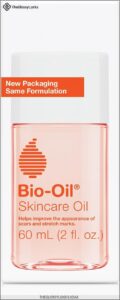
Picture a thin, breathable veil settling over your skin, sealing in moisture while you sleep. That’s the idea behind Bio-Oil Scar Stretch Mark Oil. It blends Vitamin E, Chamomile Oil, and Lavender Oil with the brand’s proprietary PurCellin Oil to soften scars and even out skin tone. The vegan, paraben-free formula is non-comedogenic, but it can feel greasy, so use a few drops on damp skin. Skip it on active acne or open wounds, and patch test first.
| Best For | Anyone looking to fade the appearance of surgical, acne, or pregnancy scars and even out skin tone with a lightweight, plant-based oil. |
|---|---|
| Volume | 2.88 oz |
| Skin Type | All skin types |
| Hero Ingredient | Vitamin E & PurCellin Oil |
| Vegan | Yes |
| Non-Comedogenic | Yes |
| Main Benefit | Scar reduction & hydration |
| Additional Features |
|
- Contains Vitamin E, Chamomile Oil, and Lavender Oil to hydrate and soothe dry, uneven skin
- Vegan, paraben-free, and non-comedogenic formula suitable for face and body
- Helps soften scars and support the skin’s moisture barrier
- Can leave a greasy finish for some users
- Not safe for use on deep or open wounds
- Not recommended for application on active acne
5. COSRX Retinol 0.5% Anti Aging Oil
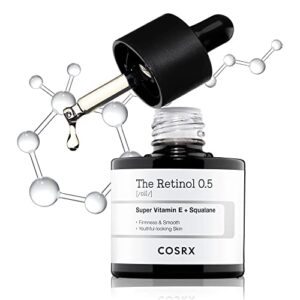
Here’s the paradox: an oil that fights aging while your skin sleeps, yet needs refrigeration like fresh produce. The COSRX Retinol 0.5% Anti Aging Oil blends 0.5% retinol with 91% squalane and Tocotrienol, a potent form of vitamin E. Squalane seals in moisture while retinol speeds cell turnover, softening fine lines over 8–12 weeks.
Start with three uses weekly for two weeks, applying 1–2 pumps to damp skin at night. It’s hypoallergenic, dermatologist tested, and free of parabens and sulfates. You’ll need SPF 30+ each morning, and watch for redness. If your skin reacts, cut back.
| Best For | People with sensitive skin who want to soften fine lines overnight with a gentle, hydrating retinol oil and don’t mind refrigerating it. |
|---|---|
| Volume | 4.59 oz |
| Skin Type | Sensitive-compatible |
| Hero Ingredient | Squalane & retinol |
| Vegan | N/A |
| Non-Comedogenic | N/A |
| Main Benefit | Anti-aging & wrinkle reduction |
| Additional Features |
|
- Combines 0.5% retinol with 91% squalane and Tocotrienol to fight wrinkles while keeping skin moisturized.
- Hypoallergenic and dermatologist tested, with a formula free of parabens, sulfates, and phthalates.
- Improves skin elasticity and radiance, with visible results over 8–12 weeks.
- Requires refrigeration after opening to stay stable, which is unusual for skincare.
- Nighttime use only, with SPF 30 mandatory every morning afterward.
- Initial use is limited to three times per week for the first two weeks, so results take patience.
6. Herbivore Lapis Blue Tansy Oil
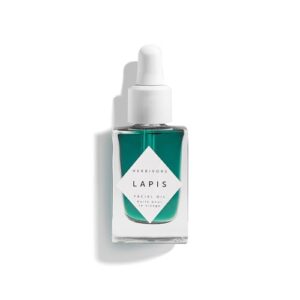
If your skin runs red and reactive, blue tansy deserves a spot on your radar. Herbivore Lapis pairs it with vegan squalane and kukui nut oil, plus azulene, to calm irritation while hydrating.
Apply 4-6 drops to cleansed, toned skin. It absorbs in 1-3 minutes, so you can layer SPF or makeup right after. The finish stays non-greasy, which suits combination and blemish-prone skin.
At $58, it’s an investment. Patch test first, since sensitive skin responses are mixed.
| Best For | People with combination, oily, or blemish-prone skin who want a calming, non-greasy facial oil to reduce redness and hydrate. |
|---|---|
| Volume | 4.66 oz |
| Skin Type | Combination, oily, blemish-prone |
| Hero Ingredient | Blue Tansy & squalane |
| Vegan | Yes |
| Non-Comedogenic | N/A |
| Main Benefit | Redness relief & hydration |
| Additional Features |
|
- Blue tansy and azulene calm irritation and reduce redness
- Non-greasy finish that absorbs in 1-3 minutes, layering well under SPF or makeup
- Vegan, cruelty-free, and sustainably packaged formula
- Priced at $58, which some users find high relative to the 4.66-ounce volume
- Mixed feedback on suitability for sensitive skin
- The scent, described by one user as resembling weed, may be off-putting
Avoiding Breakouts, Irritation, and Common Mistakes

Even a great oil can work against you if you use it wrong. If you have acne-prone skin, check the comedogenic rating first, but don’t trust it blindly. Labels aren’t guarantees, since your follicles react to ingredients, not marketing claims.
Patch test on your jawline for three days. Contact reactions can be delayed, so patience matters here. If you want a more controlled test, dermatologist-grade patch test strips help you isolate reactions without guessing which spot on your face to trust.
Apply your oil after hydrating steps, never onto bone-dry skin. Oils seal moisture in; they don’t add it.
Watch how you layer. Stacking a rich oil over retinoids or strong acids invites skin irritation prevention problems you can’t undo. Change one product at a time so you can identify the real trigger.
For sensitive skin, skip fragranced blends, and avoid thick layers in humid weather, where pore-clogging risk climbs. A lightweight fragrance-free oil for sensitive skin can be especially helpful in summer months, when even mild formulas need careful application.
Frequently Asked Questions (FAQs)
What is the best natural oil for hydrating my face?
A water balloon with a tiny pinhole: that’s your skin without a healthy lipid barrier. Squalane is the best natural face oil for most people, absorbing quickly and mimicking your own sebum without clogging pores.
How do I naturally hydrate my face skin?
Adding oil to your face sounds counterintuitive for skin hydration, but face oils for dry skin actually lock in moisture just like a natural moisturizer, making them an ideal part of any hydrating skincare routine.
Which oil is best for face hydration?
Think of your moisture barrier as a leaky roof. Among the best natural oils, rosehip seed oil repairs it most effectively, delivering fatty acids that strengthen skin hydration without ever feeling heavy on dry skin.
Do face oils hydrate the skin?
Face oils act more like a seal than a sponge. They don’t draw water directly into your skin; they stop what’s there from escaping by forming a thin, protective lipid layer over your moisture barrier.
How long does facial oil take to absorb?
Ironically, the oils people rush to wipe off absorb the quickest. Facial oil absorption varies by formula: jojoba takes 5 to 7 minutes, while heavier oils take up to Damp skin speeds it up.
Can you mix different facial oils together?
Wondering if it’s safe? Yes, you can mix face oils. They’re all lipid-based, so they work as one emollient layer. Just watch total volume to protect your natural skin barrier and support facial oil absorption.
Should you refrigerate facial oils for storage?
A bottle of rosehip oil left on a warm bathroom shelf can quickly turn rancid within weeks. Refrigerating delicate natural oils extends their shelf stability a lot, but more stable options like squalane don’t need it.
How much facial oil should you use?
Start with 2 to 4 drops for your whole face. Oily skin stays at 1 to 2, while dry skin can use up to
Tacky skin after five minutes means you’ve used too much.
Can facial oils replace your regular moisturizer?
Think of facial oils as a locked door, not the water behind it. As occlusive agents, they lock in moisture well, but they simply can’t replace the humectants your skin barrier function depends on daily.
Can facial oils replace your daily moisturizer entirely?
Say you swap your moisturizer for a facial oil and your skin still feels tight by noon. That’s a skin barrier signal: oils lock in moisture but can’t replace the humectants that pull water in.
Conclusion
Studies show it takes about four weeks of consistent routine before skin barrier repair becomes visible. That’s roughly the timeline you need to give natural skin hydration with facial oils a fair chance.
Start with one oil that matches your skin type. Apply it last, onto damp skin, and watch the tightness ease over time. The right oil doesn’t change your skin overnight, but used correctly, it keeps what your skin already has.