This site is supported by our readers. We may earn a commission, at no cost to you, if you purchase through links. This content is for general informational and educational purposes only and is not a substitute for professional medical, dermatological, or nutritional advice.
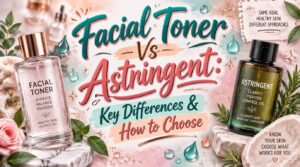
That stinging sensation after applying an alcohol-based astringent isn’t deep cleansing at work. It’s your skin barrier losing its protective acid mantle, as pH climbs from a healthy 4.5 to 6.0 or higher. The facial toner vs astringent difference comes down to more than marketing labels, and choosing wrong can trigger rebound oil, persistent dryness, or post-inflammatory hyperpigmentation in melanated skin.
Toners hydrate with humectants like glycerin and niacinamide. Astringents strip oil with salicylic acid or witch hazel. Your skin type determines which one earns a spot on your shelf, and how to use it without damage.
Table Of Contents
- Key Takeaways
- Facial Toner Vs Astringent: Key Differences
- What Does a Facial Toner Do?
- What Does a Facial Astringent Do?
- Which Product Fits Your Skin Type?
- How to Use Toner or Astringent Safely
- Risks, Contraindications, and Dermatologist Guidance
- Frequently Asked Questions (FAQs)
- Should I use astringent or toner?
- Do dermatologists recommend astringent?
- Should aging skin use a toner?
- Can I use astringent and toner together?
- Can I use toner and astringent together?
- How long after astringent does oil rebound occur?
- Do toners expire or lose effectiveness over time?
- Can astringents be used under makeup daily?
- Are natural or DIY astringents safer than commercial ones?
- Conclusion
Key Takeaways
- Toners restore hydration and support your skin barrier after cleansing, while astringents strip oil using alcohol or salicylic acid — and choosing the wrong one can trigger rebound oil, dryness, or lasting dark spots.
- Alcohol-based astringents push your skin’s pH above its healthy 4.5–5.5 range, weakening the acid mantle and making your barrier more vulnerable to irritation over time.
- For oily or acne-prone skin, a hydrating toner with exfoliating acids outperforms an astringent, since harsh alcohol strips surface oil briefly but causes sebaceous glands to overproduce sebum in response.
- Melanated skin faces the highest risk from astringent overuse, as even mild barrier disruption can trigger post-inflammatory hyperpigmentation that lingers for months.
Facial Toner Vs Astringent: Key Differences
The differences between toners and astringents come down to formulas, ingredients, and how each one interacts with your skin. Knowing what sets them apart helps you choose the right product and avoid unnecessary damage. Here’s what to look at.
If you want a deeper dive into how toners actually rebalance your skin’s pH after cleansing, this breakdown of how facial toner work makes it easy to follow.
Formulas and Active Ingredients
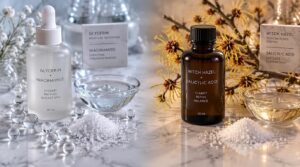
Formulas tell you more than the label does. Toners rely on humectant-rich bases like glycerin and propanediol, often paired with niacinamide or lactic acid. Astringents lean on salicylic acid, witch hazel, or alcohol-based solvents to target oil and texture. Both categories overlap, so don’t skip the ingredients.
| Toner | Astringent |
|---|---|
| Glycerin | Salicylic acid |
| Niacinamide | Witch hazel |
| Propanediol | Alcohol |
| Lactic acid | Polyphenols |
Hydration Versus Oil Control
Those ingredient choices reflect two different goals. Toners focus on water-based hydration, drawing moisture into the outer skin layers. Astringents center on oil control, using a drying effect to manage surface shine.
| Function | Best For |
|---|---|
| Hydration support | Toner |
| Oil control | Astringent |
| Reduce excess oil | Astringent |
| Hydrating dry skin | Toner |
| Drying effect on shine | Astringent |
They’re each built for different outcomes.
Skin Barrier and PH Effects
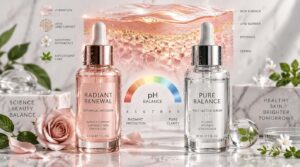
Those drying outcomes come with a cost. Alcohol-based astringents strip the acid mantle, pushing pH levels above the natural 4.5–5.5 range and disrupting barrier lipids. Toners help skin pH restoration, staying closer to your skin’s acidity and aiding skin barrier repair.
If you’re not sure where to start, this guide to the best alcohol-free toner for sensitive skin breaks down which formulas actually support barrier repair.
| Product | pH Range | Barrier Impact |
|---|---|---|
| Toner | 4.5–5.5 | Helps acid mantle |
| Astringent | 6.0–7.0+ | Disrupts barrier lipids |
| Skin | 4.5–5.5 | Baseline protection |
Benefits and Potential Side Effects
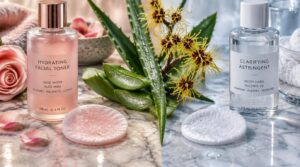
That pH disruption changes what each product actually delivers for your skin type.
| Product | Key Benefit |
|---|---|
| Toner | Hydrates and restores skin barrier pH |
| Astringent | Controls oil but risks dryness |
Toners calm skin sensitivity and support the skin barrier without stripping. Astringents can dry out your complexion with repeated use. Layering either product with exfoliating acids increases your irritation risk a lot.
What Does a Facial Toner Do?

Most people think toner is optional. It’s not. A toner is a water-based leave-on step you apply right after cleansing, before serums and moisturizer. It re-balances your skin’s pH balance, replacing moisture lost during washing.
A hydrating toner does several things at once:
- Delivers humectants like glycerin directly to freshly cleansed skin
- Restores comfortable feel after cleansing strips moisture
- Preps skin surface for better moisturizer absorption
- Smooths superficial texture in the stratum corneum
- Integrates seamlessly into your skincare routine steps
What Does a Facial Astringent Do?
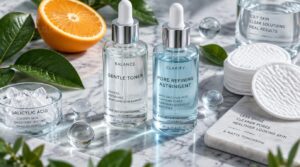
Unlike a toner, a facial astringent is built to address excess oil and visible surface shine. It temporarily tightens skin proteins and reduces the slippery feel of sebum, leaving you with an immediate matte finish. Most formulas are alcohol-based, which speeds up that drying and contracting effect.
If you’d rather skip the harsh alcohol and go the gentler route, a guide to natural skin toners breaks down plant-based options like witch hazel and aloe that still keep shine in check.
Deep pore cleansing isn’t really the primary action here. When salicylic acid is included, it chemically exfoliates inside the pore lining, which is exactly what makes it effective for oily and acne-prone skin.
Which Product Fits Your Skin Type?
You’ve got the basics down, so now it’s about matching the product to your skin. The right choice depends on how much oil you produce and how resilient your barrier is. Below, you’ll find guidance for dry, oily, combination, and melanated skin.
Dry and Sensitive Skin
If your skin feels tight after cleansing, that’s dehydration talking, not cleanliness. For dry skin and sensitive skin, skip alcohol-based astringents entirely. They strip your skin barrier and worsen transepidermal water loss. Choose alcohol-free hydrating toners with glycerin, hyaluronic acid, or aloe vera instead. Milky or essence-based formulas add emollients. Apply right after cleansing to lock in hydration.
For example, an alcohol-free facial toner with sodium hyaluronate and glycerin can rebalance skin without stripping it, making it suitable even for oily or acne-prone skin.
Oily and Acne-prone Skin
Think of your pores like slow drains: excess sebum and dead cells build up fast. For oily and acne-prone skin, a hydrating toner often outperforms an astringent.
Harsh alcohols can strip surface oil briefly, but they’ll trigger rebound sebum production over time. A toner with exfoliating acids keeps pores clearer without damaging your barrier, making acne actives easier to tolerate.
Harsh alcohols strip oil briefly but trigger rebound sebum, so exfoliating-acid toners clear pores without barrier damage
Combination and Aging Skin
Combination aging skin puts you in a difficult position: you need oil control for your T-zone but barrier support for drier cheeks. An astringent takes care of one and worsens the other.
Hydrating toners work better here. They balance moisture without stripping vulnerable areas. As skin ages, recovery slows, so repeated astringent use can trigger rebound dryness, leaving your complexion increasingly uneven.
Melanated Skin Considerations
Melanated skin reacts to irritation differently. When barrier disruption triggers skin inflammation, melanocytes ramp up pigment production, leaving dark marks called postinflammatory hyperpigmentation. Those marks can linger for months.
Alcohol-based compounds are a common culprit. They strip moisture, stress the barrier, and quietly set that cycle in motion. Choose alcohol-free formulas with humectants for skin brightening goals and barrier support.
How to Use Toner or Astringent Safely
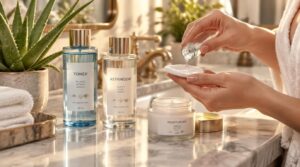
Once you’ve matched the right product to your skin, how you apply it matters just as much. It’s easy to overdose on toner or overdose on an astringent when the routine feels harmless.
- Apply once daily until your skin adjusts
- Use minimal product on a cotton pad
- Avoid layering drying steps back to back
- Follow every application with a moisturizer
- Treat skin irritation as your cue to adjust
For sensitive skin, skin sensitivity care means building tolerance first. Go slow.
Risks, Contraindications, and Dermatologist Guidance
Both toners and astringents carry real risks when used incorrectly. Knowing what to avoid is just as important as knowing what to use. Here’s what dermatologists want you to watch for.
Skin Barrier Risks
When an alcohol-based astringent repeatedly removes surface lipids, your stratum corneum loses what it needs to stay intact. That creates dryness and gradually raises your sensitivity.
A weakened barrier can’t retain skin hydration the way it should. These skin barrier risks don’t feel obvious at first, but they accumulate fast, especially when you’re layering with actives like retinoids or acids.
Inflammatory Skin Contraindications
That compromised barrier also lowers your irritation threshold. If you’re managing eczema, rosacea, or active inflammation, toners and astringents with alcohol, fragrance, or high-strength acids can trigger a flare on sensitive skin.
Inflamed skin tolerates far less. Even ingredients you’d normally handle become risky when your baseline is reactive. Antiinflammatory skincare protocols call for pausing these products until skin stabilizes.
Oil Rebound Concerns
Stripping oil doesn’t regulate it. For oily and acne-prone skin, alcohol-based astringents can trigger the opposite: sebum rebound. When the barrier loses moisture, sebaceous glands compensate by producing excess oil.
In the toner vs astringent debate, formula strength matters. Repeated barrier disruption keeps skin in a reactive cycle. Hydrating toners better support sebum regulation and help avoid that feedback loop.
Hyperpigmentation Risks
Melanated skin faces the highest risk when alcohol-based compounds disrupt the barrier, triggering inflammation that overstimulates melanocytes and leaves behind persistent dark marks.
- Fitzpatrick types III–VI are most susceptible to post-inflammatory hyperpigmentation
- Even mild irritation can activate excess melanin production
- Daily SPF 30+ is essential for skin tone evening and hyperpigmentation prevention
Avoid combining astringents with retinoids or other exfoliants.
Dermatologist Use Guidelines
When you’re unsure which product to use, dermatologist recommendations point to toners as the safer daily choice and reserve a Facial Astringent for oily or acne-prone skin.
Introduce astringents every other day, cap use at twice daily, and always follow with moisturizer.
If you have sensitive skin, skip the astringent vs toner debate entirely and choose a hydrating, alcohol-free formula.
Frequently Asked Questions (FAQs)
Should I use astringent or toner?
It depends on your skin. If you’re dry or sensitive, choose a hydrating toner. If you’re oily or acne-prone, an astringent can help control shine, but use it sparingly to avoid irritation.
Do dermatologists recommend astringent?
Most dermatologists stay selective. They prefer evidence-based actives like salicylic acid or retinoids over astringents. If your oily and acne-prone skin needs oil control, choose gentle, alcohol-free skincare. Burning or peeling means stop.
Should aging skin use a toner?
Ironically, aging skin, which needs hydration most urgently, is often the first skin type told to skip toner entirely. Don’t. A hydrating toner with peptides, ceramides, and hyaluronic acid restores your barrier after every cleanse.
Can I use astringent and toner together?
Yes, but check your formulas first. A hydrating toner paired with a mild astringent is generally fine. If either contains alcohol or strong exfoliating acids, using both products together daily risks irritation and barrier damage.
Can I use toner and astringent together?
Up to 70% of people confuse toners with astringents. You can use them together, but only if the toner is gentle and hydrating and the astringent is mild. Stacking strong actives greatly increases irritation risk.
How long after astringent does oil rebound occur?
The initial tightening from an alcohol-based astringent fades within just a few hours. Oily skin rebound linked to barrier irritation usually builds over days and becomes more noticeable the more frequently you’re applying it.
Do toners expire or lose effectiveness over time?
That toner you’ve had sitting in your bathroom since last winter? It’s probably past its prime. Active ingredients degrade, preservatives weaken, and heat or sunlight can accelerate the damage well before the labeled expiration date.
Can astringents be used under makeup daily?
What does using an astringent as your skin prep for makeup actually cost your skin over time? Alcohol-based formulas break down your barrier, causing dryness, stinging, and flaking that makes foundation look patchy and uneven.
Are natural or DIY astringents safer than commercial ones?
A "natural" label is just packaging. DIY astringents can carry variable acid concentrations, contamination risks, and inconsistent batch strength. What makes any astringent truly safer isn’t its source; it’s knowing its active ingredients and pH.
Conclusion
A client with combination skin swapped a high-alcohol astringent for a glycerin-based toner and reported less midday shine, no tightness, and fewer breakouts within a month. That single swap illustrates the facial toner vs astringent difference more clearly than any ingredient chart.
Know your skin type. Read labels before you buy. Patch-test every new product. The right formula works with your barrier instead of against it, and that’s what makes all the difference long term.