This site is supported by our readers. We may earn a commission, at no cost to you, if you purchase through links. This content is for general informational and educational purposes only and is not a substitute for professional medical, dermatological, or nutritional advice.
You stretch a wet strand between your fingers, and it snaps like overcooked spaghetti. That tiny break tells you more than any mirror can.
Hair damage from chemical treatments starts at the molecular level. Bleach strips melanin and roughens the cuticle. Thioglycolate straighteners cut the disulfide bonds that give hair its strength. Add heat and repeat appointments, and the shaft’s inner structure weakens with every round.
The good news: you can read the warning signs, control the damage, and rebuild strength. Start by spotting what your hair is already telling you, then choose fixes that match the problem.
Table Of Contents
- Key Takeaways
- Signs of Hair Damage From Chemical Treatments
- How Bleaching, Coloring, and Straightening Damage Hair
- How to Care for Chemically Damaged Hair and Prevent Further Breakage
- Top 5 Products for Chemically Damaged Hair
- Frequently Asked Questions (FAQs)
- How to repair damaged hair from chemical treatment?
- How do I know if my hair is chemically damaged?
- How to detox your hair from chemicals?
- What is the best hair treatment for chemically damaged hair?
- How long should you wait between chemical treatments?
- Are natural oils safe to use after chemical treatments?
- Is it safe to swim with chemically treated hair?
- What are signs of an allergic reaction to hair chemicals?
- Can chemically damaged hair fully recover its strength?
- How long does damaged hair take to grow out?
- Conclusion
Key Takeaways
- Bleach, color, heat, and chemical straighteners all break down the disulfide bonds and crack the cuticle, so your hair snaps, frizzes, and loses moisture, and stacking treatments makes it worse.
- You can spot the damage early by checking for split ends, dryness, dullness, a gummy feel when wet, and strands that snap instead of stretching.
- You can stop further breakage by detangling gently, washing less, cutting back on heat, spacing salon treatments four to six weeks apart, and trimming every eight to ten weeks.
- You can rebuild how your hair feels with weekly deep conditioning, bond-building treatments, and protein only when hair feels limp, but the internal damage never fully reverses, so real recovery means growing it out over 10 to 14 months.
Signs of Hair Damage From Chemical Treatments
Strands tell on you when chemical processing goes too far. Watch for split ends that creep upward, plus hair breakage: short, frizzy pieces collecting around your sink.
If you’re noticing these signs, gentle natural hair repair methods can help restore moisture and strength before the damage gets worse.
Feel for dryness and brittleness, a rough, grabby texture from ends to roots. Notice lack of shine, fading color, and frizz that won’t quit. Stretch a wet strand gently. Does it snap fast?
How Bleaching, Coloring, and Straightening Damage Hair
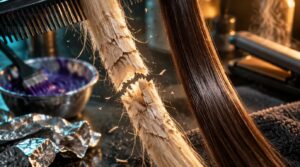
So why does your hair snap? Hair damage from chemical treatments comes down to one thing: your disulfide bonds take the hit.
- Bleach: oxidizes melanin, roughing up the cuticle and cortex.
- Color: strong developer and long processing stress proteins, and repeat sessions widen the damage zone.
- Heat straightening: high temperatures weaken the shaft’s internal structure and crack the surface.
- Chemical straightening: thioglycolates break bonds, leaving hair fragile if neutralizing falls short.
Once the cuticle cracks, moisture escapes and split ends multiply. That’s chemical breakage: brittle fibers failing under a brush stroke. Higher pH, stronger oxidant, longer time, rougher handling? Each one raises the toll. Stack treatments and the damage compounds. Bondbuilding treatments help patch it. Know the cause, own control.
How to Care for Chemically Damaged Hair and Prevent Further Breakage

You know what broke it. Now stop it from breaking again.
Chemical hair damage reacts to gentle handling first. Here’s your short list:
- Detangle gently. Use a wide-tooth comb, start at the ends, and skip brushing soaking-wet hair.
- Wash less. Cleanse two or three times weekly, because porous hair loses moisture fast.
- Air-dry often. Cut high heat, and your fibers stop snapping.
Next, rebuild. Weekly deep conditioning adds slip, so combs glide instead of grab. Add bondbuilding treatments every week or two, then balance them with protein treatments only when hair feels limp and mushy. Stiff and crunchy? Back off the protein.
If you’re planning to color a perm, how soon you can dye your hair after a perm matters, since waiting protects those freshly rebuilt curls from extra damage.
Trim every eight to ten weeks for split ends prevention. Cut the damage off before it travels up.
Top 5 Products for Chemically Damaged Hair
Chemical damage doesn’t have to be your hair’s final chapter. The right formula can help you take back control, one wash at a time. Here are the 5 products worth your shelf space, picked to match what your strands are actually missing.
A good bond-repairing hair treatment rebuilds strength from within, so color and relaxers leave less lasting damage behind.
Chemical damage doesn’t have to be your hair’s final chapter, and the right formula helps you take back control, one wash at a time
1. Apple Cider Vinegar Hair Duo
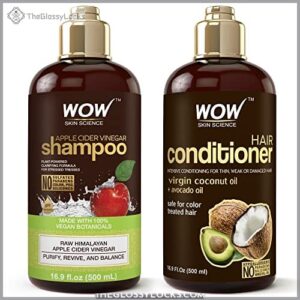
Think vinegar can’t touch chemical damage? You’re half right. The Apple Cider Vinegar Duo doesn’t rebuild broken bonds. It works on the surface, and that’s where you’ll notice it first.
The shampoo and conditioner pair uses acetic acid to dissolve mineral buildup and cleanse your scalp, easing dandruff and itching. You’ll get softer, more manageable hair, and some users stretch the time between washes.
Use it once or twice a week, not daily. Overuse can leave dry, brittle strands, especially on porous, bleached hair, and sensitive scalps may shed more. Patch test first.
One practical note: the bottle lids are stubborn with wet hands, so loosen them before you step in.
| Best For | People with dandruff, itchy scalps, or mineral buildup who want softer, more manageable hair and don’t mind using it just once or twice a week. |
|---|---|
| Product Type | Shampoo and conditioner duo |
| Key Ingredients | Acetic acid (apple cider vinegar) |
| Size | N/A |
| Main Benefit | Softer, more manageable hair |
| Usage Frequency | Once or twice weekly |
| Main Drawback | Dryness, brittleness on porous hair |
| Additional Features |
|
- Helps reduce dandruff and scalp itching
- Leaves hair softer and easier to manage
- May let some users go longer between washes
- Can cause dryness or brittleness, especially on porous or bleached hair
- May increase shedding for people with sensitive scalps
- Bottle lids are hard to open with wet hands
2. Keratin Hair Repair Treatment Set
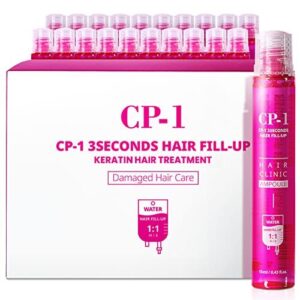
You want a rinse-off mask that works as hard as your damaged strands do? This keratin set delivers 20 individual 13ml packets of hydrolyzed keratin, enriched with collagen and protein, to condition dry and damaged lengths.
Here’s the catch: it’s a water-type mask, so you mix it with water, ideally 1:1, to get a workable texture. Batches vary from watery to thick, so adjust as you go. Expect softer, shinier results that last about a week, which makes weekly use sensible.
Some users report tangling afterward, so detangle before you apply and comb gently while rinsing. Treat it as simple conditioning, not a rebuild.
| Best For | People with dry, damaged hair who want an affordable weekly conditioning treatment and don’t mind mixing it with water first. |
|---|---|
| Product Type | Rinse-off keratin mask |
| Key Ingredients | Hydrolyzed keratin, collagen, protein |
| Size | 20 packets, 13ml each |
| Main Benefit | Softer, shinier hair |
| Usage Frequency | Weekly |
| Main Drawback | Mixing needed, inconsistent texture |
| Additional Features |
|
- Comes with 20 individual 13ml packets, so there’s plenty for regular weekly use
- Hydrolyzed keratin, collagen, and protein condition dry and damaged hair
- Leaves hair softer, smoother, and shinier, with results lasting about a week
- Must be mixed with water, ideally 1:1, to get a workable texture
- Consistency varies between batches, from watery to thick
- Some users report hair tangling after use
3. Elizavecca Cer 100 Hair Treatment
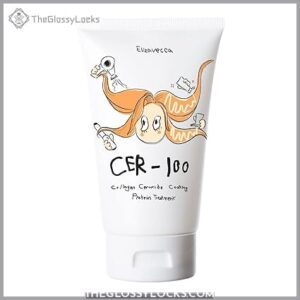
Ceramide fans, meet your budget-friendly match. Elizavecca Cer 100 packs Ceramide 3, collagen, oat protein, and hydrolyzed soy protein into a 100ml tube built for a 5-minute repair. Fried by bleach, heat, or sun? You’ll feel softer, smoother strands after one application, with less frizz and more shine.
It suits all hair types and textures, so you don’t need to overthink it. Apply, wait five minutes, rinse thoroughly. Results vary from person to person, so track how your hair responds.
It’s for external use only, so keep it away from your eyes. If irritation shows up, stop using it right away and rinse well.
If you’re hunting for a cleanser that actually helps with visible pores, this guide to the best face wash for large pores breaks down which formulas clear buildup without drying out your skin.
For a gentler routine that fits your schedule, these skin cleansing techniques for blackheads pair well with salicylic acid and help you stay patient while results build.
| Best For | People with bleached, heat-styled, or sun-damaged hair of any type who want a fast, budget-friendly repair treatment. |
|---|---|
| Product Type | Ceramide repair treatment |
| Key Ingredients | Ceramide 3, collagen, oat and soy protein |
| Size | 100ml tube |
| Main Benefit | Softer, smoother strands, less frizz |
| Usage Frequency | N/A |
| Main Drawback | Results vary by person |
| Additional Features |
|
- Combines Ceramide 3, collagen, oat protein, and hydrolyzed soy protein in one treatment
- Takes only 5 minutes and leaves hair softer and smoother after one application
- Reduces frizz and adds shine, and works for all hair types and textures
- Results vary from person to person
- For external use only, and it must be kept away from the eyes
- May cause irritation for some users, in which case you should stop using it
4. Argan Oil Hair Repair Mask

Oil on bleached hair sounds like a grease trap waiting to happen, right? Not if you use it right. An argan oil hair mask seals lifted cuticles, so moisture retention improves and frizz calms down.
Apply a small amount to damp hair, leave it 5 to 10 minutes, then rinse. Use it once or twice weekly, depending on damage. Hair elasticity improves, so strands bend instead of snap during styling.
If you’re packing light, these travel-friendly hair masks deliver the same strengthening boost in compact, carry-on-ready sizes.
Be realistic, though. Severely damaged hair also needs protein reconstruction, and fine hair can build up residue. Clarify occasionally for lasting hair repair. Keep it on your mid-lengths and ends, never your roots.
| Product Type | At-home bond builder |
|---|---|
| Key Ingredients | N/A |
| Size | 100 mL bottle |
| Main Benefit | Rebuilds bonds, reduces breakage |
| Usage Frequency | N/A |
| Main Drawback | Small size, higher cost |
| Additional Features |
|
5. Olaplex No 3 Hair Perfector
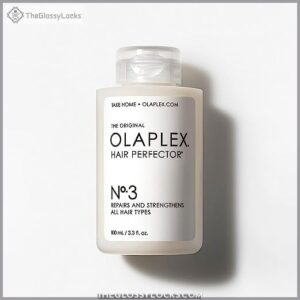
Picture your bleached strands as a bridge with snapped cables. Olaplex No 3 Hair Perfector is the repair crew. This clinically proven bond builder rebuilds all three hair bonds, and the brand says hair feels 3X stronger after one use. Expect less breakage and 90% better smoothness and detangling.
Apply it to damp hair after your chemical service, leave it on 10 to 20 minutes, then rinse and style. Stick to once or twice weekly.
Heads up: the 100 mL bottle runs out fast, costs more per volume, and some people feel dryness. Follow with a moisturizing conditioner.
| Best For | People with bleached, color-treated, or chemically damaged hair who want an at-home bond-repair treatment to cut breakage and improve smoothness. |
|---|
- Rebuilds all three hair bonds, and hair feels 3X stronger after one use
- Reduces breakage and helps prevent future damage
- Improves smoothness and detangling by 90%
- The small 100 mL bottle may need frequent repurchase
- Mixed reports on moisture, with some users experiencing dryness
- Higher cost per volume than standard treatments
Frequently Asked Questions (FAQs)
How to repair damaged hair from chemical treatment?
Stop the bleeding first. Chemical processing means protein loss, cuticle damage and weakened disulfide bonds, so you can’t rebuild overnight.
Start deep conditioning weekly, add keratin therapy, and skip the flat iron. Smoother strands follow.
How do I know if my hair is chemically damaged?
Hair is about 90% protein, so protein loss hurts fast. Spot signs of chemical damage: split ends, hair breakage, gummy wet strands, and high hair porosity. Bleach, relaxers, and perms deplete the cortex and degrade disulfide bonds, which is why chemically treated hair often feels mushy, gummy, and spongy when wet.
Snaps instead of stretching? Your hair’s telling you something.
How to detox your hair from chemicals?
Want a hair detox? Rinse with equal parts water and apple cider vinegar for ten minutes, then use clarifying shampoo.
Follow with deep conditioning to slow protein loss, support cuticle repair, and build hair strength.
What is the best hair treatment for chemically damaged hair?
Your best bet? Bond repair. Olaplex No. 3 targets internal damage, while Deep Conditioning Treatments restore moisture and slip.
Go easy on Protein Treatments, add Hair Oils, book Regular Trims, and always use Heat Protectant.
How long should you wait between chemical treatments?
Give your strands four to six weeks between every salon treatment. Chemical hair damage stacks fast, and cumulative damage never forgives impatience.
Fine hair? Wait eight weeks. Always match your hair type to the right treatment.
Are natural oils safe to use after chemical treatments?
Your strands are roughly 90% keratin. Natural oils are safe after chemical hair damage, but they soften rather than rebuild. Use hair oils sparingly after deep conditioning, patch-test nut oils, and trust hair repair science.
Is it safe to swim with chemically treated hair?
Think a dip won’t hurt? It can. Chlorine breaks disulfide bonds, causing protein loss, raising hair porosity and hurting moisture retention and hair elasticity.
Wet hair first, seal with leave-in conditioner, then rinse straight after.
What are signs of an allergic reaction to hair chemicals?
Is your scalp itching fiercely after color day? Watch for facial swelling, puffy eyelids, an eczema-like rash, blisters, or scalp inflammation.
If symptoms spread beyond the application area, stop using it and see a doctor.
Can chemically damaged hair fully recover its strength?
That miracle mask sounds convincing. But protein loss inside the shaft stays put.
Deep conditioning and protein reconstruction improve feel, yet hair repair science can’t rewind damage. Hair strengthening comes from cutting and growing out.
How long does damaged hair take to grow out?
Your hair grows half an inch monthly, so the hair growth cycle sets the pace. Cuticle repair, protein reconstruction, and moisture retention boost hair shaft strength within weeks, but full grow-out usually takes 10-14 months.
Conclusion
Hair is roughly 90 percent keratin, so every bleach session or relaxer chips away at your structure. That’s why hair damage from chemical treatments isn’t something you ignore and hope fades.
Now you hold the playbook. Spot the warning signs early, space out your appointments, and feed your strands with bonding and protein care. Your hair can’t tell you it’s tired, but it shows you daily. Listen, then act, and you’ll get your strength back.