This site is supported by our readers. We may earn a commission, at no cost to you, if you purchase through links. This content is for general informational and educational purposes only and is not a substitute for professional medical, dermatological, or nutritional advice.
Sensitive skin rarely announces itself politely. It flares after a lotion, stings in cold wind, or leaves rough, red patches where a cleanser caused no trouble.
These reactions often point to a strained skin barrier, not skin that needs treatment. Fragrance, essential oils, surfactants, and overexfoliation can open the door to water loss and irritation, while a formula helps the stratum corneum recover.
Useful calming ingredients for sensitive skin do more than cool redness. They replenish moisture, temper inflammatory signals, and help your skin tolerate life with less discomfort. Knowing which compounds earn trust can make a routine feel steady.
Table Of Contents
Key Takeaways
- A strained skin barrier—not inherently "sensitive" skin—is usually what’s driving reactions like stinging, redness, and flaking, meaning the goal is repair, not just symptom relief.
- Colloidal oatmeal, niacinamide, and centella asiatica are among the most evidence-backed calming ingredients because they actively rebuild the barrier rather than simply masking irritation.
- Fragrance, alcohol denat, and harsh physical exfoliants are among the most common culprits quietly dismantling the barrier you’re trying to protect—even in products marketed for sensitive skin.
- During a flare-up, stripping your routine down to a gentle cleanser, fragrance-free moisturizer, and mineral SPF gives calming ingredients the space to actually work.
Why Sensitive Skin Needs Calming Ingredients

Sensitive skin isn’t just a personality trait—it’s often your skin signaling that something has pushed it past its limits. Before reaching for calming ingredients, it helps to understand what’s actually going on beneath the surface. Here’s what to know about reactive skin and why it behaves the way it does.
Understanding the benefits of a healthy skin barrier can clarify why resilience matters as much as soothing irritation.
Signs of Reactive Skin
Reactive skin doesn’t always announce itself with a rash. Sometimes it’s burning or itching after a product that seemed harmless.
You might see temporary redness and irritation, patches of dryness and flaking, or feel stinging and pain from something as mild as cold air. Bumps and contact reactions signal an overactive inflammatory response that disrupts barrier function. These reactions often stem from a weakened epidermal barrier, which becomes vulnerable to environmental triggers like cold, wind, pollution, and UV exposure.
Common Sensitivity Triggers
Once you know what your skin does, the next question is why. The culprits aren’t exotic. They’re your laundry detergent, your cleanser, or that scented lotion you’ve used for years.
Fragrance and harsh chemicals in skincare, makeup, and household cleaners are top triggers. So are wool and polyester fabrics, which increase friction. Even laundry detergent residue transfers directly to skin.
Compromised Skin Barrier
Those triggers don’t just irritate the surface. They actively weaken the stratum corneum, disrupting barrier function and accelerating transepidermal water loss.
When ceramide production drops, moisture escapes faster than skin can retain it.
A pH imbalance sets in, the microbiome shifts, and your skin becomes increasingly permeable to everyday irritants. Effective barrier repair begins with recognizing how this cycle starts.
Sensitivity Versus Allergies
The cycle of barrier breakdown raises a fair question: is your skin sensitive, or actually allergic? These are not the same thing.
Sensitivity produces stinging or redness within minutes of contact, usually fading once the product is removed. True allergic skin reactions involve your immune system identifying a harmless substance as a threat, sometimes triggering responses far beyond skin redness.
Sensitive skin stings quickly, while a true allergy recruits the immune system against a harmless substance
Best Barrier-Supporting Calming Ingredients
When your barrier is worn down, the right ingredients aren’t just nice to have—they’re what actually move the needle. Some have decades of clinical backing, others carry FDA recognition, but all of them work by reinforcing the skin’s own defenses rather than masking the problem. Here are the ones worth knowing.
Colloidal Oatmeal for Itching

Colloidal oatmeal has calmed itchy, sensitive skin for centuries, and the science backs it up.
Its composition targets your discomfort directly:
- Beta-glucans that attract and hold moisture
- Avenanthramides that reduce skin inflammation
- Proteins and lipids that strengthen your skin barrier
- Starches that calm pruritus quickly
- Anti-inflammatory action that quiets redness and itch
The FDA classifies it as a skin protectant.
Niacinamide for Barrier Support

Niacinamide works quietly but makes a meaningful difference for reactive skin. At 5% to 10%, it upregulates sphingolipid and fatty acid production, triggering a ceramide synthesis boost that drives genuine lipid barrier repair and helps overall water retention.
For a balanced routine, explore dermatologist-recommended skincare products for barrier support featuring ceramides, cholesterol, and fatty acids.
The result is measurably reduced transepidermal water loss. For sensitive skin care, it’s one of the most studied, well-tolerated ingredients you’ll find.
Allantoin for Skin Protection

Allantoin works like a gentle shield. It forms a thin protective film on your skin barrier, blocking environmental irritants and cutting water loss noticeably.
What it does:
- Helps barrier repair after harsh conditions
- Boosts moisture retention in compromised skin
- Soothes redness as a mild anti-inflammatory botanical
- Speeds skin healing and post-procedure recovery
Aloe Vera for Hydration

Aloe vera is nearly all water, roughly 99%, which makes it a uniquely effective water-based soothing agent for reactive, sensitive skin.
Its key polysaccharide acemannan drives real moisture retention. That’s why so many fragrance-free products rely on it as a natural hydration agent. Your skin gets a consistent hydration boost and quiet skin barrier repair in one ingredient.
Centella Asiatica for Recovery
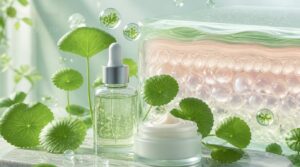
Few ingredients work as deliberately as Centella asiatica when skin needs real recovery. Its triterpenes, including asiaticoside, target multiple wound healing pathways:
- Collagen synthesis to rebuild skin structure
- Inflammation modulation to calm reactive tissue
- Keratinocyte activity balance for epidermal repair
- Angiogenesis stimulation to aid circulation
- Gentle anti-inflammatory action for sensitive skin
That makes it a reliable soothing agent for skin barrier repair.
Best Botanical Ingredients for Sensitive Skin
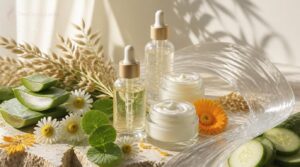
Plants have been soothing irritated skin long before lab-derived actives existed—and some of them hold up remarkably well under modern scrutiny.
The botanicals below each bring something distinct to sensitive skin, whether that’s calming redness, rebuilding dry tissue, or dialing down inflammation at a cellular level.
Here’s what the research actually shows.
Chamomile and Calendula
Few botanicals have earned their place in sensitive skincare quite like chamomile and calendula. Chamomile’s flavonoids and terpenoids work to reduce inflammation when your skin feels reactive.
Calendula flower extract offers its own anti-inflammatory soothing action, with research showing dose-dependent calming effects on irritated skin. Together, they represent a botanical pairing that’s both gentle and genuinely effective for sensitive skin.
Licorice Root and Green Tea
Chamomile and calendula aren’t the only flavonoid-rich botanicals worth your attention.
Licorice root brings glycyrrhizin, a compound with well-documented anti-inflammatory and antiallergic effects, though deglycyrrhizinated extracts tend to be the gentler, safer choice for reactive skin. Pair licorice with green tea’s EGCG antioxidant protection, and you get meaningful help that actively works with your sensitive skin barrier against daily oxidative stress.
Blue Tansy for Redness
Blue tansy works differently. This Mediterranean annual, Tanacetum annuum, produces chamazulene during steam distillation, giving the oil its deep blue color and its anti-inflammatory power.
Chamazulene quiets inflammatory signals at the skin barrier level, visibly calming redness. Potency shifts with the harvest season, so source quality matters. Always mix it into a carrier oil before applying to your skin.
Sea Buckthorn for Repair
Where blue tansy targets inflammation directly, sea buckthorn focuses on rebuilding what’s been lost.
The berry oil, derived from its bright orange fruit, is dense with omega fatty acids that support skin barrier restoration.
Its vitamin antioxidant mix, including vitamins C and E, rounds out the repair work carefully.
For skin that feels consistently depleted, this is a grounding ingredient.
Comfrey for Dryness
Comfrey works differently from sea buckthorn, targeting skin dryness through its mucilage, a naturally slimy compound that coats and softens the skin’s surface barrier.
Topical comfrey comes as creams or soaked cloth wraps. Look for formulas with:
- Standardized extract concentration for consistent, meaningful relief
- Short-term use only, due to pyrrolizidine alkaloid toxicity concerns
- No application on broken or open skin
Choosing Safe Calming Skincare Products

Finding the right products for sensitive skin isn’t just about ingredient lists—it’s about knowing what to look for before anything touches your face. A few key habits can make the difference between a routine that calms your skin and one that quietly keeps it on edge. Here’s what to keep in mind when you’re shopping.
Check Active Ingredient Concentrations
The label tells you more than you might think. Niacinamide works meaningfully at 2-5%, and retinol delivers cellular turnover support starting at 0.25-1%. Going higher doesn’t always mean better results, especially for sensitive skin.
Vitamin C needs between 8-20% to be effective, but beyond that range, irritation risk climbs without added benefit. Concentration matters as much as the ingredient itself.
Choose Fragrance-Free Formulas
Even when a product says "fragrance-free" on the front, that claim doesn’t tell the whole story. "Unscented" and "fragrance-free" aren’t interchangeable. Unscented versions can still use masking fragrance chemicals to cover odors from ingredients like urea.
Scan the ingredient list for "parfum," "aroma," or EU-listed fragrance allergens. On sensitive skin, front-label wording is a starting point, not a guarantee.
Avoid Alcohol and Essential Oils
Scanning for alcohol denat near the top of an ingredient list matters more than you think. Simple alcohols strip intercellular lipids, dismantling the barrier you’re working to protect and triggering trans-epidermal water loss.
Essential oils carry similar risks. Despite their natural origin, compounds like limonene and linalool are common sensitizers. Reach instead for colloidal oatmeal and beta-glucan, which calm without compromising.
Skip Harsh Exfoliating Ingredients
Walnut shell and apricot kernel scrubs feel effective, but their jagged particles create micro-tears that inflame reactive skin. Limit physical exfoliant use to once weekly, and rinse thoroughly after.
For gentle exfoliation alternatives, choose jojoba beads or lactic acid, which clear dead cells without tearing tissue. If redness follows, a cool compress helps regulate skin temperature and ease irritation fast.
Using Calming Ingredients Effectively
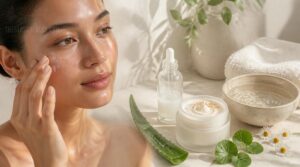
Having the right ingredients is only half the equation—how you use them matters just as much. A thoughtful routine, even a simple one, can make the difference between ingredients that actually calm your skin and ones that just sit on the surface. Here’s how to get the most out of every calming product you reach for.
Cleanse With Lukewarm Water
Water temperature is skin irritation prevention at its most basic.
For sensitive skin, the comfortable bathing range sits around 98-105°F. A quick hand warmth check is enough: water shouldn’t feel hot against your inner wrist.
Five steps for gentle water immersion:
- Run lukewarm water only
- Test with your wrist
- Rinse briefly
- Pat dry
- Seal your skin barrier with fragrance-free products
Apply Soothing Serums First
Apply a soothing serum to clean, dry skin before heavier layers. Think thinnest to thickest: lightweight calming ingredients for skin, such as niacinamide, panthenol, or centella asiatica, should contact your sensitive skin directly.
In your morning routine, cleanse, apply serum, then continue with fragrancefree products. Use a gentle pressing motion rather than rubbing, which can aggravate a vulnerable skin barrier.
Seal With Barrier Moisturizer
After your serum, press in a barrier repair cream while skin is slightly damp. Ceramides, cholesterol, fatty acids, glycerin, and squalane provide lipid matrix support, helping with barrier repair and skin barrier strength.
Occlusive layer formation from dimethicone or petrolatum limits transepidermal water loss, creating a skin hydration lock.
Choose fragrancefree products with soothing agents and moisturizing ingredients when needed.
Wear Gentle Daily Sunscreen
Barrier care works better when you protect it daily. Choose a broad-spectrum SPF 30 or higher, preferably a fragrancefree, pHbalanced mineral formula with zinc oxide; colloidal oatmeal or niacinamide can add comfort.
- Apply 30 minutes before exposure.
- Cover face, neck, and ears.
- Choose water-resistant formulas for sweat.
- Reapply after swimming and every two hours.
This habit helps prevent irritation too.
Simplify Routines During Flare-Ups
Sunscreen protects sensitive skin, but flares call for less. Reduce product count to cleanser, fragrance-free moisturizer, and sunscreen. Shorten application time: cleanse briefly with lukewarm water, then pat dry.
Minimize ingredient exposure and decrease application frequency by pausing actives. Shorten routine duration to 2–4 weeks: reducing skin irritation, supporting skin barrier and skin repair, letting calming ingredients for skin work.
Frequently Asked Questions (FAQs)
What are the best calming ingredients for sensitive skin?
Ironically, fewer calming ingredients for skin often work best: niacinamide helps sensitive skin and the skin barrier.
Use pH-balanced cleansers, anti-redness serums, ceramide-rich moisturizers, fragrancefree skincare, soothing botanical blends, antiinflammatory botanicals, and gentle exfoliation tips.
How to calm hypersensitive skin?
To calm sensitive skin, avoid extreme temperatures, hydrate internally, and practice stress reduction. Use fragrancefree skincare, calming masks, and calming ingredients for skin, including antiinflammatory botanicals. Support your skin barrier and patch test new products.
What ingredient is best for sensitive skin?
No single ingredient is universally best, but colloidal oatmeal consistently ranks among the top-rated soothing ingredients for sensitive skin. Niacinamide, chamomile, and licorice root also effectively target specific concerns like barrier damage and persistent redness.
What calms down irritated skin?
Irritated skin doesn’t need ten products, it needs the right few. Oat, allantoin, and aloe vera work to quiet active inflammation, while a niacinamide barrier boost paired with centella recovery support keeps the skin stable.
Can diet affect sensitive skin flare-ups?
Yes. High sugar intake and excess saturated fat fuel systemic inflammation through the gut-skin connection, gradually weakening your skin barrier. Prioritizing whole food choices over processed options can help sensitive skin flare less often.
Conclusion
Investigate whether your products are quietly working against you. Many people assume sensitive skin is simply a fixed condition, but the barrier can genuinely recover. The right calming ingredients for sensitive skin don’t mask reactions; they address the root stress keeping your skin chronically reactive. Colloidal oatmeal, niacinamide, and centella earn their place through consistent, measurable repair. Simplify. Strip away what irritates. What remains, when chosen carefully, is a routine your skin can finally trust.