This site is supported by our readers. We may earn a commission, at no cost to you, if you purchase through links. This content is for general informational and educational purposes only and is not a substitute for professional medical, dermatological, or nutritional advice.

Your skin does more than sit on the surface—it works around the clock as a living shield, filtering out bacteria, locking in moisture, and signaling when something’s off inside your body. Most people think about skin when something goes wrong: a breakout, a dry patch, or a rash that won’t quit. That reactive mindset means the real story often gets missed.
Healthy skin isn’t a cosmetic goal. It’s a functional one. When your barrier is strong, your hydration is steady, and your habits are consistent, everything from your complexion to your body’s defenses runs more smoothly. The five benefits ahead make that case clearly—and show you exactly what’s worth protecting.
Table Of Contents
- Key Takeaways
- Stronger Natural Skin Barrier
- Better Hydration and Smoothness
- Slower Visible Skin Aging
- Fewer Breakouts and Irritation
- Healthier Skin From Daily Habits
- Frequently Asked Questions (FAQs)
- What are the 7 most important nutrients for healthy skin?
- Does healthy skin mean healthy body?
- What are the benefits of having good skin?
- Does healthy skin make you more attractive?
- What are the benefits of normal skin?
- Why do you need healthy skin?
- How does genetics affect skin aging rates?
- Can certain medications impact skin health negatively?
- What role does pollution play in skin damage?
- How does hormonal changes affect skin appearance?
- Conclusion
Key Takeaways
- Your skin barrier acts as a 24/7 defense system — blocking bacteria, locking in moisture, and maintaining a slightly acidic pH that keeps harmful microbes from taking hold.
- Consistent hydration habits like applying moisturizer to damp skin, using humectants (ingredients that draw water in), and avoiding hot showers directly improve skin texture, elasticity, and glow.
- Daily SPF 30 or higher is non-negotiable — UV rays break down collagen year-round, even through clouds, making sunscreen your most effective anti-aging and skin-preserving tool.
- What you eat, how you sleep, and how gently you cleanse compound over time — nutrients like vitamin C, omega-3s, and zinc build the raw materials your skin needs to repair and stay resilient.
Stronger Natural Skin Barrier

Your skin works hard every single day — and a strong barrier is what makes that possible. When that barrier is healthy, it controls more than you might expect. Here’s what it actually does for you.
For practical tips on maintaining your skin’s barrier, check out this guide to building a daily skin care routine.
Blocks Daily Irritants
Think of your skin barrier as a tightly packed brick wall — corneocytes are the bricks, and a mix of ceramides, cholesterol, and fatty acids acts as the mortar locking everything in place. That structure is what stands between your skin and everything the day throws at it.
When your epidermal barrier is healthy, irritants, allergens, and environmental toxins simply can’t get through easily. A stable lipid barrier strength keeps those threats from reaching the nerve endings underneath — which is exactly why compromised skin stings and reacts to things that wouldn’t normally cause a problem.
The sebum film protection your skin naturally produces also plays a quiet but real role here. Sebaceous glands coat the surface with a thin oily film that slows bacterial growth before it can take hold. Pair that with your skin’s microbiome stability — the community of beneficial microbes living on the surface — and you’ve got a two-layer defense that works around the clock.
pH balance importance ties it all together. Your skin’s surface stays slightly acidic, usually between pH 4 and 6, which keeps barrier enzymes functioning and makes the environment less welcoming to harmful microbes.
Here’s what a strong barrier actually blocks every day:
- Environmental toxins like pollution particles and airborne irritants
- Bacteria and pathogens trying to penetrate the surface
- Allergens that would otherwise trigger redness and itching
- Friction-related irritants from clothing and daily movement
- Harsh chemicals from cleansers that strip the healthy skin barrier
A compromised barrier can lead to excessive water loss and increased skin sensitivity.
Reduces Moisture Loss
Your skin barrier does more than block irritants — it actively holds moisture in. Without a healthy epidermal barrier, water quietly evaporates off your skin all day long through a process called transepidermal water loss.
Ceramides are the key players here. They make up roughly 50% of your stratum corneum and form the lipid sheets that keep water from escaping.
Supports Balanced Skin PH
Your skin’s pH sits naturally between 4 and 6 — slightly acidic by design. This acid mantle stability is what keeps your barrier doing its job properly.
When a harsh cleanser pushes that pH higher, keratinocyte maturation slows, lipid envelope integrity weakens, and your skin becomes easier to irritate. Choosing a pH-balanced cleanser after washing is one of the simplest ways to protect that balance.
Protects Against Bacteria
Your skin doesn’t just sit there looking pretty — it’s running a quiet security operation around the clock. And that pH balance we just covered? It feeds directly into this next layer of protection.
Healthy skin fights bacteria through several overlapping systems working at once. Keratinocytes and sweat glands produce antimicrobial peptides — small proteins that kill bacteria on contact and signal your immune system when something’s wrong. Sebum, the oil your skin naturally produces, creates a surface environment where many harmful bacteria simply can’t thrive.
Here’s what makes it especially clever:
- Continuous shedding — your outer skin cells shed constantly, physically removing bacteria before they can multiply
- Tight junctions — keratinocytes lock together, blocking pathogens from slipping into deeper tissue
- Microbiome competition — commensal bacteria like S. epidermidis occupy space and produce their own antimicrobials, crowding out harmful strains
When your skin barrier stays intact, these systems work together. But barrier damage changes everything. Gaps in tight junctions let bacteria reach deeper layers, and disrupted microbiome balance gives opportunistic pathogens room to establish themselves. That’s why products preserving barrier integrity aren’t just about comfort — they’re actively supporting your skin’s built-in defense network.
Calms Sensitive Skin
Reactive skin isn’t just uncomfortable — it’s your barrier sending a distress signal. When that outer layer is compromised, even mild triggers like temperature changes or tap water can set off stinging, burning, or redness.
A stronger barrier changes that. Ingredients like soothing oat extract and ceramide lipid support work together to strengthen the skin’s structure and quiet that overreaction. Aloe vera delivers cooling aloe benefits on contact, easing heat and discomfort almost immediately. Chamomile and similar anti-redness botanicals help dial down inflammation over time. Choosing fragrance-free formulas removes one of the most common irritation triggers entirely.
The result? Reduced stinging sensations, calmer skin, and a barrier that stops reacting to everything.
Better Hydration and Smoothness

Hydrated skin doesn’t just feel better — it actually works better. When your skin holds onto moisture the right way, you’ll notice real changes in how it looks and feels day to day. Here’s what better hydration and smoothness can actually do for your skin.
If you’re curious about how daily habits support lasting skin hydration, these habit-forming skincare routine tips can make a real difference.
Softer Skin Texture
When your barrier lipids are intact, your skin doesn’t just feel protected — it feels genuinely soft. Ceramide replenishment plays a big role in this. Ceramides fill the spaces between skin cells like grout between tiles, holding moisture in and keeping roughness out. When those levels drop, skin loses water faster and starts to feel dry and uneven — even if you’re moisturizing regularly.
That’s where humectant hydration steps in. Ingredients like hyaluronic acid draw water into the skin and help it stay there, giving your skin a plumper, smoother feel. Applying these on slightly damp skin lets them work even better.
Chemical exfoliation takes care of the surface side of things. AHAs like lactic acid dissolve the bonds holding dead cells together, clearing the buildup that makes skin feel rough. Done consistently — not excessively — this reveals fresher skin underneath and improves how evenly light reflects off your face.
UV damage quietly works against all of this. Sun exposure breaks down collagen density over time, which makes skin feel less firm and look less smooth. Daily SPF isn’t just anti-aging — it’s texture protection.
Less Dryness
Dryness is one of those skin complaints that sneaks up on you — and once it takes hold, a few small habits make all the difference in pushing it back.
Moisturizer timing matters more than most people realize. Applying your moisturizer to damp skin right after bathing gives humectants — water-attracting ingredients like hyaluronic acid and glycerin — something to work with. They pull moisture into the skin, and a cream or ointment on top seals it there.
Here are five practical steps to keep dryness at bay:
- Keep showers to 5–10 minutes using warm, not hot, water to avoid stripping natural oils.
- Pat skin dry gently — rubbing creates friction that worsens dryness.
- Run a humidifier overnight in your bedroom to replace moisture that indoor heating pulls from the air.
- Avoid alcohol-based toners and fragrance-heavy cleansers, which strip the barrier and accelerate water evaporation.
- Choose a cream or ointment over a lotion if your skin feels persistently tight — thicker formulas seal better.
One thing worth doing: check your cleanser. Harsh soaps remove the oils your skin barrier function depends on, making every other step harder. Swap to a fragrance-free, moisturizing gel or non-soap cleanser instead.
Improved Elasticity
Think of your skin like a rubber band. A well-hydrated, nourished rubber band snaps back cleanly — a dry, worn one stretches and stays slack. Your skin works the same way.
Elastin fiber integrity is what lets your skin bounce back after movement, while collagen fiber density gives it the basic structure to resist sagging. When hydration drops, the stratum corneum stiffens, and that natural recoil slows down noticeably.
That’s where humectant water binding does real work. Ingredients like hyaluronic acid draw moisture into the outer layers, keeping the skin pliable and flexible rather than tight. A well-hydrated dermis also means fibroblasts — the cells that build your dermal matrix support — function more efficiently, sustaining both collagen production and elastin over time.
Mechanical skin pliability isn’t just about feeling soft. It reflects how well your skin’s deeper architecture is holding up. Consistent moisturizing and daily SPF both play a role in protecting that architecture — UV exposure is one of the fastest ways to break down the collagen-elastin network beneath the surface.
Skin firmness and skin rejuvenation aren’t overnight results, but daily habits compound. Protect the barrier, keep it hydrated, and the structural proteins underneath have a real chance to do their job.
Healthier-looking Glow
A well-hydrated complexion doesn’t just feel good — it looks different. When your skin holds onto enough moisture, light scatters more evenly across the surface, giving you that natural luminous quality that no highlighter can fully replicate.
Vitamin C and niacinamide are two of the most effective ingredients for getting there. Vitamin C neutralizes oxidative stress that dulls the skin, while niacinamide — used at concentrations as low as 2% — visibly reduces blotchiness and helps create a more even tone over time. Used together in the morning, they work synergistically to defend and brighten.
Apply your antioxidant serum before sunscreen each morning. That pairing gives your skin a real fighting chance against the environmental stressors that quietly build up and steal your glow.
Hydration is the foundation underneath all of it. When moisture levels drop, skin looks flat and tired. Keep it replenished, and the healthier-looking glow follows naturally.
Fewer Rough Patches
Rough patches are usually your skin’s way of signaling that something is off — either the lipid matrix has been disrupted, moisture has escaped, or dead cells have stacked up without shedding properly.
Humectants like glycerin and hyaluronic acid pull water into the outer skin layer, slightly plumping cells so the surface feels softer. Pair them with an occlusive — petrolatum or dimethicone — and you seal that moisture in before it evaporates. Apply both to slightly damp skin right after cleansing for the best result.
Mild chemical exfoliation with lactic or salicylic acid helps clear the buildup that makes skin feel coarse. Don’t overdo it — two to three times a week is enough. Overdoing it strips the barrier and makes roughness worse, not better.
Swap harsh fabrics and hot showers for gentle cleansers and lukewarm water, too. Friction and heat quietly wear down your skin barrier repair progress every single day.
Slower Visible Skin Aging

Healthy skin doesn’t just look good — it actually ages more slowly, and that difference is visible over time. The way you care for your skin today shapes what you’ll see in the mirror years from now. Here’s what that slower aging really looks like in practice.
Fewer Fine Lines
Fine lines don’t appear overnight — they’re the slow result of years of collagen breakdown, UV exposure, and skin that hasn’t been consistently supported. The good news is that a well-built antiaging regimen can visibly slow that process.
Retinoid cell turnover is one of the most reliable tools you have. Retinoids increase collagen production and speed up how quickly your skin sheds and renews its surface cells. That means fresher, thicker skin over time — and fine lines that look less etched in. Start slowly, though. Early use can cause dryness, so every-other-day application helps your skin adjust.
Hyaluronic acid plumping works differently. It draws water into the skin, temporarily softening the look of lines by improving surface fullness. Pair it with peptide structural support — short amino acid chains that signal your skin to maintain its collagen framework — and you’re addressing both surface texture and deeper skin elasticity.
Chemical exfoliation with glycolic or lactic acid also helps by smoothing the uneven outer layer that makes fine lines more noticeable. Don’t overdo it, though — irritated skin can make lines look worse, not better.
Reduced Sun Damage
Slowing fine lines is one piece of the puzzle. The other — and just as visible — is what the sun quietly does to your skin every single day you step outside without protection.
UV rays cause sun damage even through clouds, which means skipping sunscreen on an overcast morning still costs you. A broad-spectrum SPF 30 or higher blocks both UVA and UVB rays, and reapplying every two hours keeps that shield intact — especially if you’re sweating or swimming.
Clothing and shade aren’t backup options. They’re part of the strategy. A wide-brimmed hat and a long-sleeved shirt block UV rays before they ever reach your skin.
Antioxidant skincare benefits go a step further. Vitamin C, for example, neutralizes the free radicals that UV exposure generates, helping slow collagen breakdown and reduce discoloration. Think of it as a second line of defense working underneath your sunscreen.
When damage is already there, retinoids and chemical peels can visibly improve sun-related changes like uneven tone and rough texture. Lightening agents help fade dark spots caused by years of unprotected exposure.
Sun damage prevention is always easier than repair — but both are possible.
Firmer-looking Skin
Protecting your skin from sun damage buys you time — but what keeps skin looking genuinely youthful is what’s happening beneath the surface.
Collagen and elastin are the two proteins doing most of that work. Collagen gives skin its structure and strength, while elastin fibers act like a rubber band — they let skin stretch and then snap back into place. When both are healthy, skin feels taut and resilient.
Three habits that quietly protect this:
- Stay hydrated — well-moisturized skin looks fuller and more resilient
- Exercise regularly — better circulation delivers oxygen and nutrients directly to skin cells
- Pat, don’t rub — harsh friction breaks down collagen over time
Gentle facial handling matters more than most people realize. Patting your skin dry instead of rubbing protects the dermal structure that keeps skin firm.
Better Collagen Support
Collagen is basically your skin’s scaffolding. It gives skin its structure and bounce — and your body can’t build it without the right raw materials in place.
Vitamin C is the key cofactor here. Without it, the enzymes that assemble collagen fibers simply can’t do their job. Your body also relies on specific amino acids — glycine, proline, and lysine — as the actual building blocks of each collagen strand.
Zinc and copper round out the team. Zinc helps the enzyme activity that keeps connective tissue remodeling on track, while copper drives cross-linking — the process that locks collagen fibers together and gives them lasting strength.
If you’re considering a supplement, collagen peptides are the most absorbable form, since they’re already broken into smaller fragments your body can use more readily.
More Even Tone
Uneven tone is one of the quieter signs of skin aging — easy to overlook until it isn’t. Melanin buildup in localized patches, called hyperpigmentation, is the main driver. UV exposure keeps triggering fresh melanin production, which is why daily sunscreen isn’t optional — it stops new spots from forming while existing ones work to fade.
Retinoid cell turnover moves pigmented surface cells out faster, gradually lifting discoloration over weeks of consistent use. Pair that with chemical exfoliation, and you’re clearing away the dull, uneven layer sitting on top — revealing fresher, less pigmented skin underneath without the micro-irritation that scrubbing causes.
Niacinamide earns its place here too. Beyond niacinamide redness relief, it blocks melanin from transferring to surface skin cells, which directly reduces visible dark patches. Vitamin C works alongside it as one of the most reliable antioxidants in brightening — it fights oxidative stress and aids the skin turnover process that keeps your skin complexion looking more uniform.
The goal isn’t perfect skin. It’s a surface that reflects light evenly — and that comes from layering protection, gentle exfoliation, and the right actives consistently.
Fewer Breakouts and Irritation

Breakouts and irritation don’t just happen randomly — they’re usually a sign that something in your routine isn’t working for your skin. The good news is that a few targeted changes can make a real difference in how your skin behaves day to day. Here’s what actually helps keep breakouts and irritation in check.
Balanced Oil Production
Your skin produces oil for a reason — sebum production isn’t the enemy. It protects your barrier and limits water loss. The real problem starts when production goes off-balance.
Compensatory oiliness cycles are a common trap. Strip your skin with a harsh cleanser, and your glands respond by pumping out more oil to recover. The result? Skin that looks greasy and feels tight at the same time.
- Niacinamide helps regulate oil while keeping your barrier intact
- Salicylic acid targets oil-related buildup inside pores without over-drying
- Lightweight gel or lotion textures deliver control without heavy occlusion
Sebum microbiome stability matters here too. Balanced oil levels create a steadier surface environment, which means fewer conditions where acne-linked bacteria thrive.
Keeping skin hydrated is part of oil control, not separate from it. Moisture-oil interaction works both ways — when your skin has enough water, it’s far less likely to compensate with excess sebum.
Cleaner Pores
Think of your pores like tiny drains — they stay clear when nothing clogs the pipe, but when oil, dead skin, and daily grime pile up, pore congestion sets in fast.
Double cleansing methods are one of the most effective ways to address this. An oil-based cleanser goes on first, dissolving sebum, sunscreen, and makeup that water alone can’t lift. A water-based cleanser follows to sweep away whatever remains. Together, they give your skin a genuinely clean starting point — not just surface-clean.
Chemical exfoliant benefits come in once cleansing is consistent. Two acids do the heavy lifting here:
| Acid Type | How It Works |
|---|---|
| Beta hydroxy acid (BHA) | Oil-soluble; penetrates inside pores to dissolve trapped sebum and debris |
| Alpha hydroxy acid (AHA) | Water-soluble; works at the surface to loosen and clear dead skin buildup |
Oil-soluble acids like salicylic acid are particularly useful because they follow the same pathway sebum takes — straight down into the pore lining. AHAs handle surface turnover, which reduces the dead-skin buildup that feeds preventing pore clogging from the outside in.
If your skin runs sensitive, sensitive skin exfoliation doesn’t have to mean skipping acids entirely. Polyhydroxy acids offer a gentler entry point, and starting with lower concentrations two to three times per week lets your skin adjust without tipping into irritation.
Noncomedogenic product choices matter throughout this process too. Even a solid cleansing routine can be undermined by a moisturizer or makeup formula that deposits pore-blocking residue right back onto freshly cleaned skin. Check labels before you buy — oil-free, noncomedogenic formulas keep facial hygiene and sebum control working in the same direction, not against each other.
Reduced Inflammation
Redness that keeps coming back is rarely random — it usually means your barrier is struggling and inflammation has taken hold.
Soothing active ingredients like niacinamide, ceramides, and colloidal oatmeal work by calming the skin’s inflammatory response while rebuilding the barrier that keeps irritants out. Colloidal oatmeal, for instance, quiets the inflammatory proteins that cause itching and redness.
What you eat matters too. Omega-3 fatty acids from salmon, walnuts, and flaxseeds reduce pro-inflammatory signals in the skin at a cellular level, making breakouts and reactive flare-ups less frequent over time. Dietary antioxidants — vitamins C and E, polyphenols — work alongside them to neutralize the free radicals that keep inflammation cycling.
Microbiome health stability plays a quieter but equally real role. A disrupted microbial balance on your skin is closely linked to more reactive, inflamed-looking skin. Gentle cleansing preserves that balance, while harsh products strip it away and leave skin primed to flare.
Noncomedogenic Product Choices
Not every product labeled "noncomedogenic" earns that title — the FDA doesn’t regulate the term, so it’s worth knowing what actually makes a formula pore-friendly.
For acne-prone skin, gel or water-based textures sit lighter on the skin and are far less likely to block pores than thick creams or greasy formulas. When checking ingredient lists, watch for known offenders like coconut oil and isopropyl myristate, which can quietly trigger breakouts even in products marketed as "clean."
Sunscreen is where most people slip up. Mineral options with zinc oxide or titanium dioxide tend to be the safest bet — they sit on top of the skin rather than absorbing into it, and they don’t carry the pore-clogging risk that some chemical filters do. If you want a lightweight oil in your routine, squalane, grapeseed, or hempseed oil are solid alternatives to heavier options like coconut oil.
Before committing to any new topical treatment, patch test on your jawline for 24 hours first. That one small step can save your skin a lot of unnecessary trouble.
Consistent Cleansing Habits
Consistency is the quiet backbone of any daily skincare routine — not the fancy serums or the trending ingredients, but the simple act of showing up for your skin every day.
Use lukewarm water when you cleanse. Hot water pushes your skin’s pH balance off-kilter and spikes water loss, which leaves skin drier after every wash. Apply your cleanser using gentle fingertip pressure in slow, circular motions — no scrubbing, no washcloths. Thirty seconds to two minutes is your ideal cleansing duration; anything longer starts working against you.
Rinse thoroughly to prevent cleanser residue sitting on your skin, then moisturize while still slightly damp. That post-cleansing damp application helps seal in hydration before water evaporates. Double cleansing — an oil cleanser first, then your regular wash — is worth considering if you wear makeup or SPF daily. Twice a day, morning and night, is enough.
Healthier Skin From Daily Habits
Good skin doesn’t come from a single product or a one-time fix. It’s built slowly, through small choices you make every single day. Here’s what actually moves the needle.
Healthy skin is the result of small, consistent daily choices—not a single miracle product or quick fix
Nutrient-rich Foods

What you eat shows up on your skin — sometimes faster than any serum can. Nutrient-rich foods give your skin the raw materials it needs to repair, protect, and renew itself daily.
Antioxidant-rich foods like berries, spinach, and dark chocolate neutralize free radicals that speed up aging. Pair those with omega-3 healthy fat sources — salmon, walnuts, flaxseeds — to keep your lipid barrier strong.
Plant-based proteins from lentils, chickpeas, and tofu supply amino acids your skin uses to build collagen. Fiber from beans and whole grains quietly helps this too, clearing the way for better nutrient absorption. These aren’t separate jobs — they work together.
Quality Sleep

Food fuels your skin, but sleep rebuilds it.
Every night, your body runs quiet repair work — cycling through stages that drive skin cell turnover, calm inflammation, and restore hydration. Skipping that window doesn’t just leave you tired. It leaves your skin visibly behind.
Sleep regularity matters too. Going to bed and waking at consistent times — even on weekends — keeps your melatonin production on schedule.
Daily SPF Protection
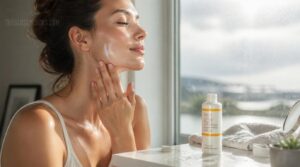
Sleep repairs your skin from the inside. But once morning comes, daily SPF protection takes over — guarding everything that repair work rebuilt.
UV rays don’t clock out on cloudy days. They reach your skin year-round, which means skipping sunscreen on overcast mornings still leaves you exposed.
Reach for a broad-spectrum sunscreen with at least SPF 30. "Broad-spectrum" means it covers both fronts — UVA rays that silently age your skin and UVB rays that cause sunburn.
A few quick habits make the difference:
- Apply about one teaspoon to your face and neck, covering ears too — most people use far less than needed
- Put it on 15 to 30 minutes before heading outside so it has time to set
- Reapply every two hours, and immediately after swimming or sweating
If your day involves a workout or unexpected rain, a water-resistant label matters. Those products are tested to hold up for either 40 or 80 minutes in water — the label will tell you which.
Regular Moisturizing

Sunscreen guards what your skin shows on the outside. Moisturizing protects what keeps it working underneath.
Apply moisturizer to damp skin — right after cleansing, before you fully pat dry. That slight dampness gives humectants (water-binding ingredients like hyaluronic acid and glycerin) extra moisture to grab and hold. The result: softer texture and fewer rough patches over time.
Switch formulas with the seasons. A lighter, water-based moisturizer suits summer, while winter calls for a richer cream that rebuilds your lipid barrier — the fatty layer that seals moisture in.
Gentle Skincare Routine

Your daily skincare routine doesn’t need to be complicated to work. A mild cleanser used once or twice a day — with lukewarm water and light fingertip pressure — removes sweat and grime without stripping your skin’s natural oils. Reach for fragrance-free formulas to keep irritation low, especially if your skin runs sensitive.
Look for ceramides, glycerin, or niacinamide in your products. These barrier-supporting ingredients hold moisture in and keep your skin from feeling tight or reactive after cleansing. Before committing to anything new, patch test first — a small amount behind the ear tells you a lot before your whole face does.
Frequently Asked Questions (FAQs)
What are the 7 most important nutrients for healthy skin?
Think of your skin as a team — and these seven nutrients are its starting lineup: vitamin C, vitamin E, vitamin A, zinc, omega-3 fatty acids, vitamin D, and protein. Each one plays a distinct, non-negotiable role.
Does healthy skin mean healthy body?
Yes — healthy skin often reflects what’s happening inside your body. When your gut, immune system, and nutrient levels are balanced, your skin usually shows it. It’s one of your body’s most honest signals.
What are the benefits of having good skin?
Your skin is your body’s quiet guardian. Good skin health means a stronger barrier, better hydration, fewer breakouts, slower aging, and greater psychological confidence — all working together to protect you from the inside out.
Does healthy skin make you more attractive?
Yes — healthy skin does make you more attractive. Smoother texture, even tone, and natural radiance all signal vitality. People read those cues quickly, and your skin often shapes that first impression before you say a word.
What are the benefits of normal skin?
What does it actually feel like to have skin that just works? Normal skin stays comfortably balanced — not too oily, not too dry — with minimal irritation, fewer breakouts, and a naturally clear, even look that needs little effort to maintain.
Why do you need healthy skin?
Your skin is your body’s first line of defense — shielding you from bacteria, toxins, and UV damage daily. Without it functioning well, even minor irritants can trigger inflammation, discomfort, and deeper health issues.
How does genetics affect skin aging rates?
Your genes quietly set the pace. Lipid synthesis genes, epidermal renewal rates, and collagen remodeling pathways all shape how fast aging signs appear — sometimes faster than sun exposure alone can explain.
Can certain medications impact skin health negatively?
Yes, certain medications can negatively affect skin health. Antibiotics may cause photosensitivity reactions, while some drugs trigger rashes, drug-induced acne, or angioedema. Rarely, medications can provoke autoimmune skin reactions like drug-induced lupus.
What role does pollution play in skin damage?
You can’t control the wind, but you can adjust your sails." Pollution disrupts your skin barrier, triggering oxidative stress and squalene oxidation that accelerates aging. Particulate matter inflammation and ozone’s UV combination quietly degrade collagen while clogging pores.
How does hormonal changes affect skin appearance?
Hormones quietly reshape your skin from the inside out. Estrogen and elasticity go hand in hand — when estrogen drops, skin loses firmness. Cortisol spikes inflame skin, while progesterone shifts oil levels, triggering breakouts.
Conclusion
Some people think healthy skin is just about looking good. It isn’t. Healthy skin works — it defends, regulates, and signals. When your barrier is strong, your body has one less battle to fight.
The real benefits of healthy skin show up in how you feel, how you recover, and how well your skin holds up over time. Start small. Stay consistent. Your skin keeps doing its job — make sure you’re doing yours.