This site is supported by our readers. We may earn a commission, at no cost to you, if you purchase through links. This content is for general informational and educational purposes only and is not a substitute for professional medical, dermatological, or nutritional advice.
A fruit enzyme peel can leave your skin looking brighter by morning, but that same smooth, fresh feeling sometimes comes with a catch. I see this often in clinic: mild redness, stinging, tightness, or dry flakes that catch people off guard because the product sounded gentle.
That’s the tricky part about fruit enzyme peel side effects. Enzymes work on the surface, yet they can still loosen your outer barrier, raise water loss, and stir up irritation, especially if your skin already runs sensitive. Knowing which reactions are expected, which ones signal trouble, and how to lower your risk makes all the difference.
Table Of Contents
- Key Takeaways
- How Fruit Enzyme Peels Affect Skin
- Common Fruit Enzyme Peel Side Effects
- Allergic Reactions to Fruit Enzymes
- Risk Factors for Peel Reactions
- Overuse and Ingredient Interaction Risks
- Side Effect Timeline and Warning Signs
- Top 4 Enzyme Peels and Risks
- Preventing and Managing Peel Side Effects
- Frequently Asked Questions (FAQs)
- What not to do after an enzyme peel?
- Do enzyme peels really work?
- How often should you use an enzyme peel?
- How long does it take to see results from an enzyme peel?
- Are fruit enzyme peels safe during pregnancy?
- Can darker skin tones use enzyme peels?
- When can I wear makeup afterward?
- Are at-home enzyme peels as safe?
- Should I avoid waxing after a peel?
- Conclusion
Key Takeaways
- Fruit enzyme peels are usually gentler than chemical peels, but they can still cause mild redness, stinging, tightness, dryness, flaking, and extra sun sensitivity, especially if your skin is already sensitive or your barrier is weak.
- The biggest safety risks come from allergies to enzymes like papaya, pineapple, or pumpkin, so itching, hives, swelling, trouble breathing, or worsening redness should be treated as warning signs and not brushed off as a normal reaction.
- Your risk goes up if you have eczema, rosacea, recent sun exposure, a damaged skin barrier, fruit allergies, or if you combine peels with retinoids, acids, scrubs, or harsh cleansers.
- The safest way to use these peels is to patch test first, keep use to about once weekly, moisturize well, avoid conflicting actives, wear broad-spectrum SPF 30+ every day, and get medical help for severe or lasting reactions.
How Fruit Enzyme Peels Affect Skin
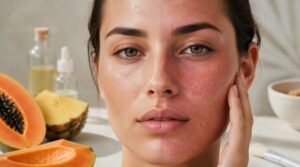
Fruit enzyme peels can leave your skin feeling smoother, but they also change how the surface of your skin behaves for a short time. How your skin reacts depends on your barrier strength, moisture levels, and the formula itself. Here are the main ways fruit enzyme peels affect skin.
If you’re deciding between options for body skin, this guide to enzyme exfoliation vs chemical peels helps explain when gentler is better.
Enzymatic Exfoliation Process
Think of fruit enzymes as precise scissors. Papain or bromelain use protease action to loosen corneodesmosomes and lift dead, keratin rich cells from the stratum corneum. Damp skin improves contact, and formulas usually work best around pH 5 to 7. Airtight, dry packaging helps preserve activity.
Because skin sensitivity varies, do a patch test to screen for allergic reaction risk. Some products describe bromelain potency in GDU, which measures enzyme activity rather than skin compatibility.
Temporary Skin Barrier Disruption
Once enzymes lift dead surface cells, Temporary Skin Barrier Disruption can follow. You may notice Skin Redness and Irritation, tighter skin, and moisture retention loss.
During the first 24 to 72 hours, lipid synthesis begins, helping barrier function recovery. The barrier repair timeline is 7 to 14 days, with Sensitivity to Sun, Dryness and Flaking, and allergy risk briefly rising.
Moisture Loss After Exfoliation
- Moisture Loss After Exfoliation rises as Skin Barrier Function thins.
- Post-exfoliation TEWL increases Skin water evaporation.
- Hydration is Key for Barrier hydration recovery.
- Use Moisture retention strategies and Dehydration prevention methods to limit Dryness and Flaking.
- Apply moisturizer fast, and do a Patch Test first. That stripped, tight feeling is your warning sign that water is escaping faster than usual.
Enzyme Versus Chemical Peel Reactions
That tight, dry feeling frames Enzyme Versus Chemical Peel Reactions.
| Peel | Depth | Reaction |
|---|---|---|
| Enzyme | Surface | Mild |
| Chemical | Deeper | Stronger |
Fruit enzymes loosen dead cells, so Sensitive Skin usually gets milder Enzyme Peel Side Effects, lower Irritation severity levels, and shorter Recovery time differences. Chemical peels create injury, with more Skin barrier impact. A Patch Test helps catch an Allergic Reaction.
Ingredient Strength and Concentration
Potency matters. A fruit peel’s effect depends on active concentration, pH level, and how much working enzyme is really present. Labels are clearer when percentages are listed; otherwise, ingredient order only gives a rough comparison by weight. Dilution lowers strength, and stronger isn’t always better for ingredient efficacy. Patch testing matters if allergic reaction risk or enzymatic activity could trigger irritation.
Common Fruit Enzyme Peel Side Effects
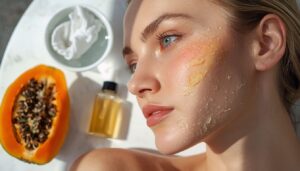
Most fruit enzyme peel side effects are mild, temporary, and easy to spot if you know what to look for. Your skin may react a little as it adjusts after exfoliation, especially if it’s sensitive. Here are the most common changes you can expect after treatment.
Temporary Redness and Irritation
Temporary redness and irritation can look alarming, but they usually fade within hours. Sensitive skin, recent sun, longer wear time, and poor enzyme stability can stretch recovery into 24 to 48 hours.
Cool compresses, bland moisturizer, and barrier repair help. Do a patch test first. If swelling, hives, or worsening redness appears, consider an allergic reaction.
Tingling, Warmth, or Stinging
While mild tingling sensation or warmth can happen during application, these side effects usually reflect a brief nerve sensitivity response as surface skin loosens.
- Tingling often fades quickly.
- Warmth should remain mild.
- Stinging skin reaction or burning may suggest irritation or an allergic reaction.
For burning feeling relief, rinse, cool the skin, and stop use if symptoms keep intensifying afterward.
Skin Tightness and Dryness
After an enzyme peel, your skin can feel strangely snug, like it lost its cushion. Barrier lipid loss lowers moisture retention, so skin hydration drops and dry skin feels more obvious, especially with sensitive skin.
Good aftercare helps. Use occlusive moisturizers plus ingredients with humectant function to ease skin tightness, a common Enzyme Peel Side Effects concern for many people.
Delayed Flaking and Peeling
Think of peeling as a slow reveal, not an instant shed.
Delayed Flaking and Peeling, one of the Enzyme Peel Side Effects, often starts 48 to 72 hours later, peaks near day 3, and settles within a week.
With Skin Sensitivity, papaya may peel slower than pineapple.
Moisturizer and Gentle Skincare make flakes less obvious.
Pain or bleeding is abnormal.
Increased Sun Sensitivity
Increased Sun Sensitivity can show up fast after a peel, because fresh skin has less natural defense.
For posttreatment care, start UV protection that morning: use broadspectrum sunscreen, reapply every two hours, add hats and sleeves, and watch for itchy redness on exposed skin.
With ongoing skin sensitivity, bring back sun slowly once symptoms settle and your barrier feels calm.
Allergic Reactions to Fruit Enzymes
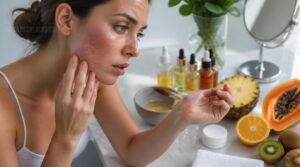
Most fruit enzyme peels are well tolerated, but allergies can happen, especially if your skin is already reactive. Some ingredients are more likely to cause trouble than others, and the signs can range from mild to serious. Here are the fruit enzymes and reaction warning signs to watch for.
Papaya and Papain Allergy
Although Papaya Enzyme peels seem gentle, Papain Allergy can trigger allergic reactions through Papaya contact exposure, especially with Sensitive Skin.
Latex cross reactivity raises risk, so consider Allergy Testing if papaya or latex bothers you.
The Papain symptom pattern includes itching, hives, swelling, and rarely breathing trouble.
Sensitization versus symptoms matters, but any strong Skin Sensitivity deserves caution during use.
Pineapple and Bromelain Sensitivity
Like papaya, Pineapple can irritate or trigger Bromelain Sensitivity, especially in Sensitive Skin. Bromelain allergy symptoms include itching, swelling, hives, flushing, and rarely breathing trouble. Cross-reactivity patterns matter with latex, birch pollen, banana, and apple.
A Patch Test, Skin prick testing, Allergy Testing, or supervised Oral food challenge can clarify risk before any higher strength peel. Concentration sensitivity also counts.
Pumpkin and Pomegranate Reactions
Beyond pineapple, Pumpkin Enzyme can trigger Sensitive Skin reactions fast, because its enzyme protein action breaks down surface keratin. Pomegranate Enzyme is usually calmer, with Inflammatory Reduction and some Pomegranate UV protection, but fruit enzyme interactions still matter.
- Patch test
- Review allergies
- Consider Allergy Testing
- Avoid sunburned skin
- Stop if symptoms appear
Known pumpkin allergy symptoms warrant medical guidance first.
Itching, Swelling, and Hives
After pumpkin reactions, itching may start in 5-15 minutes when mast cells release histamine. Swelling usually settles within 24-48 hours, and hives can drift across skin. Cetirizine may calm symptoms, especially in sensitive skin. If symptoms repeat, allergy testing helps confirm fruit enzyme triggers and guide avoidance. Cool water can ease itching while the reaction fades. Most settle without treatment.
| Sign | Timing | Help |
|---|---|---|
| Hives | 24-48h | Testing |
Severe Allergic Reaction Signs
Recognize Severe Allergic Reaction Signs and anaphylaxis symptoms fast after an enzyme peel:
- Airway narrowing with wheeze, throat tightness, or trouble talking.
- Blood pressure drop with dizziness, collapse, or mental status changes.
- Gastrointestinal distress with vomiting plus hives.
Sensitive skin care and fragrancefree skincare products won’t treat this. Seek emergency help, discuss Patch test and allergy testing.
Risk Factors for Peel Reactions

Not every skin type reacts to a fruit enzyme peel the same way, and a few factors can raise the chance of irritation. Knowing where your skin stands before treatment can help you avoid problems and make safer choices. Here are the main things that can make a peel reaction more likely.
Sensitive or Allergy-prone Skin
Sensitive skin reacts faster because its barrier lipids are often lower, which lets irritants slip in.
If you have fruit sensitivity or frequent skin reactivity, follow a Patch test protocol before any peel.
A Patch test, Allergy testing, Barrier repair, and Fragrancefree skincare products help calm Skin sensitivity and lower risk in Sensitive skin, especially after recent irritation or dryness.
Active Eczema or Rosacea
Fragile skin needs caution. Active eczema or rosacea makes sensitive skin react faster to fruit enzyme peels, raising redness, burning, and longer recovery.
- Rosacea flare triggers can intensify facial stinging and flushing.
- Eczema skin sensitivity weakens skin barrier function.
- Seek dermatological consultation for facial redness management, inflammatory reduction, chronic condition care, and limiting postinflammatory hyperpigmentation during an inflammatory skin response.
Sunburn or Recent Sun Exposure
Fresh sunburn and enzyme peels are a bad mix. Heat and UV already trigger an inflammatory response, so peeling can sting more, dry skin faster, and delay healing.
| Skin | Risk | Do |
|---|---|---|
| Hot | Burn | Cool |
| Red | Flare | Wait |
| Sunny | Darken | SPF |
Stay indoors, cool burned skin, moisturize gently, and use broad-spectrum sunscreen 20 minutes before time, then reapply every two hours.
Damaged Protective Skin Barrier
A Damaged Protective Skin Barrier raises peel risk because the epidermal barrier can’t hold lipids, water, or steady acidity.
In sensitive skin, that means weaker moisture retention, more irritation, and less Environmental stress protection.
Smart skin barrier repair combines Barrier repair methods, Lipid replenishment strategies, pH balance restoration, and Moisture retention techniques before any peel to cut sting and dryness.
Existing Fruit Allergies
If mango makes your mouth itch, a Fruit Enzyme Peel deserves caution. Existing Fruit Allergies raise allergic reaction and skin irritation risk, especially with sensitive skin. These enzymes come from fruit proteins, so prior reactions matter greatly.
- Common allergen fruits
- Cross-reactivity risks
- Symptom severity levels
- Fruit allergy testing
Use Allergy management tips, avoid papaya or pineapple, and patch test first.
Overuse and Ingredient Interaction Risks
Even a gentle enzyme peel can cause trouble if you use it too often or pair it with the wrong products. Small choices in your routine can stress your skin more than you expect. Here are the main risks to watch for next.
Excessive Weekly Peel Applications
Too often, excessive weekly peel applications outpace your skin’s healing. They weaken barrier function, delay barrier repair, and keep an inflammation cycle going, which means more skin irritation, dryness, and recovery disruption.
Over time, pigmentation risks rise, especially after sun exposure. Safe spacing, careful posttreatment care, and professional guidance give your skin time for true inflammation reduction to reset fully.
Retinoids and Exfoliating Acids
Giving skin recovery time also means respecting Retinoids and Exfoliating Acids. A Retinoid-AHA Combination, including AHA and BHA acids or stronger Chemical Peels, can push Skin cell turnover too fast and trigger dryness.
Aim for Exfoliant Strength Balance, use an Alternating Use Schedule, and support Barrier Repair Strategies to improve Sensitive Skin Tolerance, especially if your barrier is already strained.
Scrubs and Harsh Cleansers
Skip scrubs when you’re using fruit enzyme peels. Jagged particles and Excessive pressure raise Microtear formation, Barrier damage, and Water loss, even if Skin texture improvement is the goal.
- Exfoliation should target Dead skin cells, not healthy skin.
- Choose a Gentle exfoliant for Natural skincare.
- Harsh cleansers plus peels magnify irritation.
That rough scrub can undo the peel’s intended benefits.
Breakouts From Barrier Damage
Rough cleansers don’t just irritate, they set up barrier damage acne. When barrier damage raises skin permeability and drives TEWL increase, you lose water, helpful bacteria shift, and Microbiome disruption follows. That can trigger Sebum overproduction and small inflammatory Breakouts within 24 to 48 hours. This Breakout timeline improves faster with bland moisturizer, lower product absorption, and steady inflammation reduction.
Unexpected Skin Pigmentation Changes
When irritation lingers, Hyperpigmentation can follow, and melanin shift patterns may leave darker or lighter marks after a peel.
- UV pigment risk
- Post-inflammatory hyperpigmentation
- Deep dermal pigment
- Sunscreen efficacy limits
Think skin brightening, not aggressive melanin inhibition. Support UV damage repair with strict sun protection, since sunscreen won’t fully fade deep pigment, especially after overuse or recent sun exposure too.
Side Effect Timeline and Warning Signs
After a fruit enzyme peel, it helps to know what reactions are expected and when they should start to settle down. Some changes are brief and mild, while others can be a sign that your skin needs more caution. Here’s what to watch for, from the first few minutes through the next couple of days.
Sensations During Peel Application
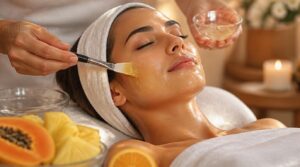
Sensations During Peel Application usually feel mild, not painful. A Tingling sensation and Warmth sensation start quickly as this gentle exfoliant works.
| Feeling | What to expect |
|---|---|
| Tingling | Active enzymes |
| Warmth | Pleasant heat |
| Sensation duration | 10 to 20 minutes |
| Sensation resolution | Ends by treatment finish |
These Enzyme-specific feelings support skin texture improvement in natural skincare and pH balanced skincare for you.
Redness During First Hours
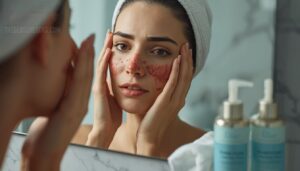
Although temporary facial redness and initial skin flushing can look alarming, mild redness in the first hours is common. An early warmth response with first-hour sensitivity should feel warm, not painful, and usually fades within two to four hours.
Early irritation signs include color, burning, or swelling. Inflammation reduction comes from cool compresses, Aftercare, and AtHome Options for skin sensitivity.
Irritation Lasting 24–48 Hours

If your skin still feels hot, itchy, or sore the next day, your barrier likely needs more time to recover. Mild redness, skin sensitivity, and stinging can linger for 24 to 48 hours as moisture loss and inflammation settle.
Follow aftercare instructions, use a bland moisturizer, avoid heat and active products, and watch for swelling, spreading rash, or worsening pain.
Flaking After Two Days
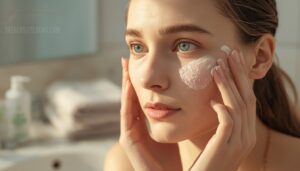
Seeing flakes at day two can feel alarming, but enzyme peels usually cause light, powdery shedding, unlike chemical peels. Flaking often starts near the mouth or nose as dead skin cells lift during exfoliation and skin renewal.
- Dry patches can feel worrying
- Picking can backfire
- Sunscreen protects healing skin
Moisturize, cleanse gently, and keep treatment frequency low.
Persistent or Worsening Symptoms
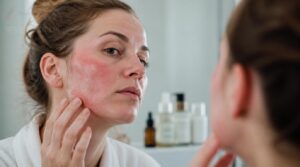
Red flags matter: Persistent or Worsening Symptoms aren’t part of normal recovery. Persistent redness, Prolonged irritation, Extended dryness, Worsening sensitivity, or Delayed healing can signal an Inflammatory Response or deeper Skin Irritation.
Stop all actives, focus on Posttreatment Care, and get Consultation and Professional Guidance if redness turns one-sided, tenderness lasts past day 10, or discharge appears right away.
Top 4 Enzyme Peels and Risks
Enzyme peels may sound gentle, but not every formula feels the same on your skin. Before you use one, it helps to know that ingredient mix, strength, and sensitivity risk can vary from product to product. Here are four well-known enzyme peels and the main risks to keep in mind.
1. ELEMIS Papaya Enzyme Peel Gentle Exfoliant
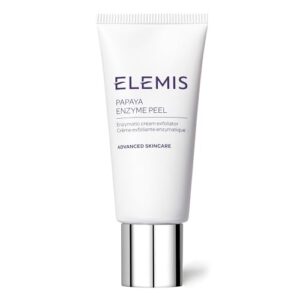
Texture matters with the ELEMIS Papaya Enzyme Peel because its creamy, rinse-off formula feels gentle, yet it still exfoliates with papaya enzymes, papain, and pineapple-derived bromelain.
Most people notice mild tingling, brief redness, or some dryness, especially if their skin is sensitive.
Fragrance, limonene, cinnamyl alcohol, and mint leaf oil raise the chance of irritation or allergy.
Leave it on only 10 to 15 minutes, rinse with lukewarm water, and patch test first if you react easily to fruit enzymes.
| Best For | People with sensitive, mature, or dry skin who want a gentle, spa-like exfoliating mask instead of a harsh scrub or strong acid peel. |
|---|---|
| Exfoliation Type | Enzyme exfoliation |
| Key Enzymes | Papain and bromelain |
| Texture | Cream mask |
| Skin Type | Sensitive, mature, dry |
| Skin Benefits | Soft, smooth, radiant skin |
| Cautions | Possible dryness or minimal results |
| Additional Features |
|
- Uses papain and bromelain for non-abrasive exfoliation that helps dissolve dead skin cells without the rough feel of a scrub.
- Creamy rinse-off mask formula with Bladderwrack and Vitamin E leaves skin feeling soft, smooth, and refreshed.
- Clinically tested results are strong, with 97% of users reporting effective exfoliation without discomfort.
- Premium pricing at USD 52.00 may feel expensive compared with other enzyme exfoliants or acid-based treatments.
- Fragrance, limonene, cinnamyl alcohol, and mint leaf oil may increase the risk of irritation or allergic reaction for sensitive skin.
- Some users report only subtle results or mild dryness, tingling, or redness after use.
2. Bliss Jelly Glow Peel Enzyme Cleanser
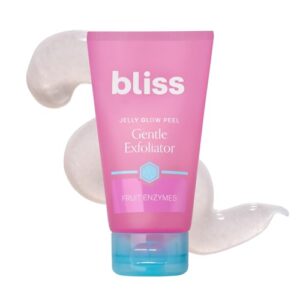
Compared with richer masks, Bliss Jelly Glow Peel feels more like a daily exfoliating cleanser. It uses papaya and pineapple enzymes plus rolling plant cellulose to lift flaky skin without harsh scrubbing, so irritation is usually mild.
You may still notice brief tingling, light redness, or dryness, especially if your barrier is already stressed. Because residue can linger, rinse well, moisturize after, and be careful if you have facial hair or dislike fragranced products, since the geranium scent gets mixed reviews.
| Best For | People with sensitive or dry skin who want a gentle daily exfoliating cleanser that smooths flaky patches without harsh scrubbing. |
|---|---|
| Exfoliation Type | Fruit enzyme exfoliation |
| Key Enzymes | Pineapple and papaya |
| Texture | Gel |
| Skin Type | Sensitive and dry |
| Skin Benefits | Smoother skin and better makeup prep |
| Cautions | Residue and facial hair buildup |
| Additional Features |
|
- Uses papaya and pineapple enzymes with plant-based cellulose to gently remove dry, flaky skin.
- Mild, non-abrasive formula is generally suitable for daily use on sensitive and dry skin types.
- Helps create a smoother base for makeup and improves moisturizer absorption.
- Can leave behind residue, so it may require extra rinsing or cleansing.
- May stick to facial hair, making it harder to remove cleanly.
- Geranium scent and texture consistency get mixed reviews from users.
3. Peter Thomas Roth Pumpkin Enzyme Mask
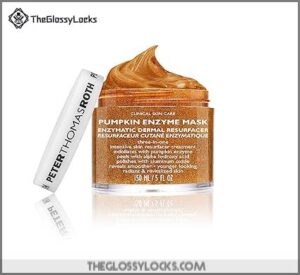
If Bliss feels light, this mask is the stronger cousin. Peter Thomas Roth Pumpkin Enzyme Mask pairs pumpkin enzymes, alpha hydroxy acids, and aluminum oxide crystals, so you get enzymatic, chemical, and physical exfoliation at once.
That triple action can smooth dull skin fast, but it also raises the chance of stinging, redness, dryness, and delayed flaking, especially in sensitive skin. Use a thin layer for three to seven minutes, no more than once or twice weekly, and rinse thoroughly.
| Best For | People with normal, combination, or oily skin who want a stronger exfoliating mask to quickly smooth dull texture, boost glow, and improve the look of fine lines, but who can tolerate a more intense treatment. |
|---|---|
| Exfoliation Type | Enzyme plus physical exfoliation |
| Key Enzymes | Pumpkin enzymes |
| Texture | Facial mask |
| Skin Type | Normal to less sensitive |
| Skin Benefits | Softer texture and glowing complexion |
| Cautions | Stinging, bead residue, eye discomfort |
| Additional Features |
|
- Delivers strong exfoliation through pumpkin enzymes, acids, and fine physical beads for smoother, brighter-looking skin.
- Helps improve skin tone and texture while leaving skin soft, polished, and more radiant after use.
- Can enhance makeup application and help serums and moisturizers absorb more effectively.
- More likely to cause stinging, redness, dryness, or irritation, especially on sensitive skin.
- The exfoliating beads can be hard to rinse off completely and may linger in hair, eyebrows, or around the sink.
- Can feel too harsh for frequent use, so it is best limited to once or twice weekly and used carefully around the eyes and neck.
4. ZO Skin Health Enzymatic Peel 1.7 Fl Oz
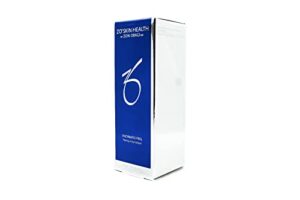
ZO Skin Health Enzymatic Peel takes a different route, using glycolic acid with papain and bromelain, so you get chemical and enzyme exfoliation in one at-home treatment. That can brighten dull, rough skin, but it may sting, dry, or irritate skin that’s already sensitive.
Apply it to clean, dry skin at night, leave it on 1 to 3 hours, and use it only once or twice weekly. Sunscreen matters, since AHAs raise sun sensitivity for about a week afterward.
| Best For | People with normal, combination, or less-sensitive skin who want a stronger at-home exfoliating treatment to help with dullness, rough texture, and visible sun damage. |
|---|---|
| Exfoliation Type | Enzyme plus AHA exfoliation |
| Key Enzymes | Papain and bromelain |
| Texture | Liquid peel |
| Skin Type | Normal to mildly sensitive |
| Skin Benefits | Brighter, softer, smoother skin |
| Cautions | May irritate overly sensitive skin |
| Additional Features |
|
- Combines glycolic acid with papain and bromelain for both chemical and enzymatic exfoliation.
- Helps smooth rough, uneven texture and promote brighter, softer-looking skin with regular use.
- Includes hydrating ingredients like diglycerin, kukui seed oil, and safflower seed oil to support moisture and the skin barrier.
- Can sting, dry out, or irritate overly sensitive skin.
- Requires careful use only once or twice weekly and increases sun sensitivity, so daily sunscreen is important.
- Some users report inconsistent fill levels, and value for the size can feel questionable.
Preventing and Managing Peel Side Effects
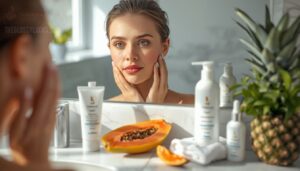
A little planning goes a long way with fruit enzyme peels, especially if your skin reacts easily. Most side effects are mild, but the right habits before and after treatment can make the process much smoother. The steps below will help you lower the chance of problems and know what to do if your skin feels off.
Patch Test 24–48 Hours
Think of it as a seatbelt: Patch Test 24–48 Hours is a Pre-treatment safety step that works as an Allergy detection method and Skin sensitivity check. During this Reaction monitoring period, patch test timing, Inflammatory Response, and Skin Permeability guide PrePeel Skin Assessment, plus Consultation and Professional Guidance, before you treat your full face, especially if you have reactive or allergy-prone skin.
Patch testing 24–48 hours first is your seatbelt against surprise peel reactions
Avoid Conflicting Active Ingredients
With a Fruit Enzyme Peel, avoid conflicting active ingredients. Retinoid vitamin C timing, Niacinamide vitamin C stability, pH incompatibility effects, Enzyme acid interaction limits, and Exfoliation overload risks all matter, so keep vitamin C for morning, retinoids for night, and don’t stack enzyme treatments with chemical peels, especially if you have acneprone skin or use a professional enzyme peel regularly.
Use Fragrance-free Moisturizer
While your skin settles, choose a fragrance-free moisturizer for gentle skin recovery.
- It helps barrier function and improves skin hydration.
- It lowers extra irritation, which helps sensitive skin moisturizing and fragrance-free healing.
- Pick a noncomedogenic moisturiser for post-peel hydration care, posttreatment care, and reliable moisturizer barrier support after exfoliation, when dryness, tightness, or flaking show up.
Apply Broad-spectrum SPF 30+
Freshly peeled skin is more permeable, so daily broad-spectrum SPF 30+ is nonnegotiable. Apply it 15 minutes before sun exposure, use enough for all exposed skin, and reapply every 2 hours, sooner with sweat or water. This simple posttreatment care helps healing during skin cell turnover.
| When | What | Why |
|---|---|---|
| Morning | SPF 30+ | Calm |
| Outside | Reapply | Protect |
| Sweat/swim | More often | Coverage |
Seek Care for Severe Reactions
Severe reactions need fast action. If you get swelling, hives, wheezing, throat tightness, or feel faint after a peel, treat it like anaphylaxis.
- Use your adrenaline injector in the outer thigh.
- Call 999 and say anaphylaxis is suspected.
- Go for hospital monitoring.
See a qualified dermatologist for persistent inflammatory response, and follow aftercare instructions, even if symptoms start to settle.
Frequently Asked Questions (FAQs)
What not to do after an enzyme peel?
Think of your face like wet cement, don’t disturb it. Avoid sun exposure, skip exfoliation methods, refrain heat activities, don’t pick skin, and pause active ingredients until calm, then follow aftercare instructions for several days.
Do enzyme peels really work?
Yes, enzyme peels really work by loosening dead skin cells, supporting skin renewal and a more radiant complexion. Clinical studies, before/after results, and user testimonials suggest Fruit Enzyme Peel formulas offer modest efficacy, not miracles.
How often should you use an enzyme peel?
Use an enzyme peel once a week first, then adjust for skin type tolerance. This peel frequency guide keeps weekly usage limits, aids exfoliation, skin renewal, and keratin breakdown, and helps maintain a radiant complexion.
How long does it take to see results from an enzyme peel?
Most see initial glow immediately, texture within 48 hours, and brightness by day 3 to 7 as skin cell turnover follows exfoliation. Results last 2 to 4 weeks; once a week may reduce acne scars.
Are fruit enzyme peels safe during pregnancy?
Maria, six months pregnant, found papaya enzyme peels generally safe: in pregnancysafe skincare and breastfeedingsafe skincare, pregnancy-safe formulations support exfoliation and brightening, with low skin barrier absorption versus chemical peels, though professional prenatal guidance matters.
Can darker skin tones use enzyme peels?
Darker skin tones can benefit from gentle exfoliation with fruit enzymes because they lift dead skin cells without injury. Skin tone assessment, barrier support care, and SPF help improve skin texture while supporting hyperpigmentation prevention.
When can I wear makeup afterward?
Wait for calm skin, wait for smooth texture, wait for clinical sign resolution. After an Enzyme Peel, makeup can go on immediately if there’s no redness or scaling, otherwise wait 2 to 3 days first.
Are at-home enzyme peels as safe?
An at-home enzyme peel can be safe, but less predictable than professional treatment. Patch test first, use weekly, moisturize, wear SPF 30+, and avoid DIY enzyme peel if sensitive skin or skin irritation flares easily.
Should I avoid waxing after a peel?
Treat freshly peeled skin like bruised velvet: avoid waxing until sensitivity, tightness, flaking, and redness are gone. Give barrier recovery several days, then resume with gentle post-peel care and standard waxing aftercare to prevent irritation.
Conclusion
Know your skin, know your triggers, know when to stop. Most fruit enzyme peel side effects are mild and short-lived, but skin that’s burning, swelling, or staying red is asking for a different plan, not more product.
Patch test first, moisturize well, and protect fresh skin with daily SPF. A good peel should leave your skin clearer, not quieter in its distress, and that distinction matters more than a bright glow by the next morning.