This site is supported by our readers. We may earn a commission, at no cost to you, if you purchase through links. This content is for general informational and educational purposes only and is not a substitute for professional medical, dermatological, or nutritional advice.

Two clients can walk into your treatment room with the same complaint, dull, tired-looking skin, and need completely different solutions. One’s skin barrier is compromised and screaming for gentleness. The other can handle some controlled irritation to trigger real change underneath.
That’s the heart of the enzyme exfoliation vs chemical peel debate. Enzymes like papain work like tiny scissors, snipping dead surface cells without touching your skin’s pH. Chemical peels dissolve those bonds outright, penetrating deeper for lasting results.
Knowing which approach matches your skin’s needs, not just your patience level, makes all the difference in choosing right.
Table Of Contents
- Key Takeaways
- Enzyme Exfoliation Vs Chemical Peel: Key Differences
- How Enzyme Exfoliation Works
- Chemical Peel Types and Strengths
- Best Peel for Your Skin Concerns
- Results, Downtime, Risks, and Costs
- Choosing and Using Peels Safely
- Frequently Asked Questions (FAQs)
- What is the difference between enzyme peel and chemical peel?
- Are enzyme exfoliating good for the face?
- Are enzyme peels worth it?
- How often should you do an enzyme peel?
- Can you combine enzyme peels with retinol safely?
- Are enzyme peels safe during pregnancy or breastfeeding?
- How do peels compare to microdermabrasion for exfoliation?
- Can peels be used on body skin, not just face?
- What ingredients should never be layered with peels?
- Conclusion
Key Takeaways
- Enzyme peels gently digest surface keratin without touching your skin’s pH, making them ideal for sensitive, dry, or barrier-compromised skin that needs zero downtime.
- Chemical peels dissolve bonds deeper into the skin, from the papillary dermis to the reticular dermis, delivering longer-lasting results but requiring recovery time ranging from days to weeks.
- Matching the treatment to your specific concern matters most: enzymes suit dullness and mild texture issues, while acids like salicylic, glycolic, or TCA target acne, pigmentation, deep wrinkles, and scarring.
- Safe results depend on avoiding overlapping strong actives like retinoids or vitamin C right after a peel, and on always following up with broad-spectrum sunscreen to protect freshly exfoliated skin.
Enzyme Exfoliation Vs Chemical Peel: Key Differences
Enzyme exfoliation and chemical peels both promise smoother, brighter skin, but they get there in very different ways. Understanding those differences puts you in control of choosing the right treatment for your skin, not just guessing. Here’s what actually sets these two approaches apart.
If you’re curious how fruit-derived enzymes gently dissolve dead skin without disrupting your barrier, this breakdown of how enzyme peels work is a great place to start.
Exfoliation Mechanism
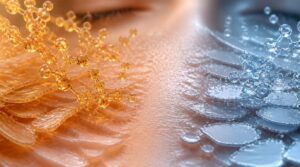
Peel your skin’s story back and you’ll find two very different scripts at work. Proteolytic enzymes like papain digest keratin bonds directly; AHAs dissolve them chemically, working best near pH 4.5-5.5. This gentler route works because enzymatic exfoliation of dead cells removes buildup without disrupting the skin’s natural pH balance.
| Enzyme Peel | Chemical Peel |
|---|---|
| Digests keratin | Dissolves bonds |
| Gentle, targeted | Broader reach |
| Low irritation | Variable intensity |
| Papain, bromelain | Glycolic, lactic |
| Surface-only action | Deeper penetration |
Skin Penetration Depth
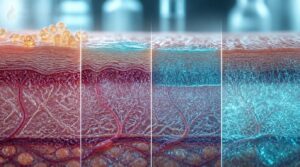
Think of depth as a ladder. Enzymes stall at the stratum corneum (15-20 micrometers), their 20-60 kDa size too bulky to pass through cell membranes. Chemical peels climb higher.
| Peel Type | Depth Reached |
|---|---|
| Superficial | 10-25 micrometers |
| Medium | Papillary dermis, 45-100 micrometers |
| Deep | Reticular dermis, 400-600 micrometers |
Molecular weight and concentration drive this penetration rate, expanding your exfoliation spectrum.
Treatment Intensity

Depth explains where a peel goes, but intensity explains how it feels getting there. Gentle enzyme action rarely passes mild warmth, even at higher concentrations, while acids climb steadily.
| Type | Sensation | Tolerance |
|---|---|---|
| Enzyme Peel | Warming | 2-3 |
| Superficial Peels | Mild sting | 4-5 |
| Medium Peels | Noticeable burn | 6-7 |
Gradual intensity buildup keeps surface renewal rate steady without overwhelming sensitive skin.
Expected Results

Warmth aside, what actually shows up in the mirror? Enzyme sessions deliver Glow and Smoothness almost instantly, boosting hydration within 48 hours. Chemical peels build Long-Term Results through collagen stimulation.
| Peel Type | Result Timeline |
|---|---|
| Enzyme | Immediate, fades in weeks |
| Superficial | Days to months |
| Medium/Deep | Months to years |
Immediate Results favor enzymes; lasting Tone Evenness favors acids.
Downtime Comparison

If your calendar rules your skincare choices, Downtime is where the two treatments really split.
Enzyme peels need zero Recovery Time, makeup goes on the next morning, and lunch-break Activity Resumption is realistic.
| Peel Type | Healing Period | Side Effects |
|---|---|---|
| Enzyme | 0 days | Minimal |
| Superficial | 3-7 days | Mild flaking |
| Medium/Deep | 2-6 weeks | Redness, crusting |
Sun Protection and gentle Aftercare matter regardless of Skin Sensitivity.
For a deeper dive into building a soothing post-shave routine, this guide on shaving your face at home walks through moisturizing and sun-safe habits step by step.
How Enzyme Exfoliation Works
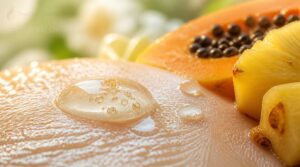
Enzyme exfoliation might sound simple, but there’s real science behind why it works so gently. From the fruit-derived enzymes doing the heavy lifting to who should actually reach for this option, you’ll want to know the specifics before adding it to your routine. Let’s break down exactly what’s happening on your skin, layer by layer.
Common Fruit Enzymes
Your peel probably comes from your fruit bowl.
Papain (papaya) brightens and fades dark spots. Bromelain (pineapple) works as an anti-inflammatory, great for rosacea-prone skin. Ficin (fig) offers gentler exfoliation for sensitive types. Kiwi’s actinidin and pumpkin enzyme, rich in vitamins A and C, round out these Natural Fruit Enzymes nicely!
Surface-Level Keratin Breakdown
Here’s the science in plain terms: keratin is tough, disulfide-bonded protein, resistant to most enzymes. But proteolytic enzymes like papain aren’t generic, they’re keratinases with real protease specificity for aging corneocytes. This triggers keratin hydrolysis and corneocyte loosening at the surface only. Since enzymes can’t penetrate living tissue, exfoliation stays superficial, gentle, effective, and limited strictly to buildup sitting on your skin’s outermost layer.
Enzyme Peel Benefits
What do you actually get from all that surface-level activity? Real, visible payoff. An Enzyme Peel delivers Gentle Exfoliation, Skin Brightening, Texture Improvement, and Pore Clarifying, all while protecting your barrier.
Expect these three wins:
- Smoother, brighter skin texture
- Clearer, refined pores
- Improved product absorption
No harsh acids, no compromised Barrier Protection, just consistent, reliable Exfoliation your skin welcomes weekly.
Ideal Skin Types
Who’s this gentle method best for? Almost everyone, honestly.
Sensitive Skin and rosacea-prone types thrive here, along with Dry Skin needing relief without stripping. Oily Skin benefits too, since enzymes clear buildup without triggering extra oil production. Combination skin gets balanced care across zones, while Normal Skin stays maintained and healthy. It’s genuinely adaptable care.
Treatment Limitations
Every tool has its ceiling. Enzymes work only within the top 15-20 micrometers of skin, so collagen stimulation or deep scarring stays out of reach. Their large molecular size (well above the 500 Dalton threshold) keeps them from penetrating further, and they’re temperature-sensitive, losing potency once mixed.
Fruit allergies also matter, patch test if papaya or pineapple sensitivity is a concern before booking your session.
Chemical Peel Types and Strengths
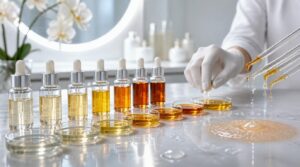
Chemical peels aren’t a one-size-fits-all treatment; each type works at a different depth and intensity to solve different skin concerns.
Knowing which acid does what, and how strong it goes, puts you in the driver’s seat when choosing a peel.
Here’s a breakdown of the main types you’ll come across, from the mildest to the most intense.
AHA Chemical Peels
Alpha hydroxy acids, or AHAs, are the workhorses of glycolic acid peels. Professional strengths run 30-50%, at-home versions 3-10%. pH near 2.0 delivers full potency, causing visible frosting. Non-self-neutralizing acids need sodium bicarbonate to stop activity, usually after 2-5 minutes at 30% strength. Tolerated across Fitzpatrick I-VI, though rosacea-prone skin needs lower concentrations and longer intervals.
- Deeper penetration than other AHAs
- Fastest cell turnover results
- Effective for all skin tones
BHA Chemical Peels
Where glycolic works broadly, salicylic acid goes straight for oily zones. This BHA is oil soluble, letting it slip into sebum-filled pores to dissolve buildup and clear blackheads. It’s the go-to for acne-prone, congested skin.
| Concentration | Frequency | Best For |
|---|---|---|
| 0.5-2% | Daily | Maintenance |
| 2-5% | Weekly | Active breakouts |
| Above 5% | Professional only | Deep congestion |
TCA Medium Peels
Salicylic acid clears pores, but TCA reaches deeper. At 25-35% concentration, medium peels remove the epidermis and hit the papillary dermis, sparking real collagen remodeling. Frosting confirms proper depth. Recovery runs 3-5 days.
- Melasma lightens within sessions
- Acne scars shrink measurably
- Fine wrinkles soften as collagen rebuilds
- Combination peels lower TCA strength needed
Phenol Deep Peels
If TCA feels intense, phenol is a different league entirely. This is the strongest peel available, penetrating the reticular dermis using phenol-croton oil formulations mixed fresh by your physician.
Expect sedation plus local anesthesia, sectional application with true frosting, and a neutralizing rinse after. Recovery stretches 4-6 weeks, with risks like cardiotoxicity, scarring, and pigment changes demanding strict aftercare.
At-Home Versus Professional Strength
Not every acid you buy off a shelf matches what your esthetician uses. Regulatory caps keep at-home glycolic near 10%, while clinics reach 70%. Salicylic tops out at 2% for consumers versus 15%+ professionally.
Contact time matters too, home applications sit for seconds, professional layers stay longer under trained supervision, allowing deeper, safer penetration and immediate neutralization if irritation strikes.
Best Peel for Your Skin Concerns
Now that you know how each method works, the real question is which one fits your skin. The right choice comes down to your specific concerns, whether that’s sensitivity, breakouts, dullness, dark spots, or deeper texture issues. Here’s how to match your skin’s needs to the peel that’ll actually deliver results.
Sensitive or Dry Skin
If your skin flares up at the slightest provocation, gentle wins every time. Choose an enzyme peel with natural fruit enzymes like papain over harsher acids, they break down dead cells without stripping your barrier. Skip hot showers, cleanse gently, and follow with a fragrance-free, hydrating moisturizer while skin’s still damp. That’s genuine barrier support, not just exfoliation.
Acne and Congested Pores
Oily, breakout-prone skin needs a chemical peel, not gentle enzymes. Salicylic acid dissolves into pores, dissolving oil plugs causing acne and blackheads.
Effective sebum regulation techniques include:
- BHA peels every 2-4 weeks
- Oil-free, non-comedogenic products
- Consistent pore clearing routines
This congestion prevention strategy beats occasional breakout treatment options, since regular exfoliation frequency keeps pores genuinely clear long-term.
Dullness and Rough Texture
That flat, tired look staring back in the mirror usually comes down to one culprit: dead cell accumulation slowing your natural glow.
That flat, tired look in the mirror is usually just dead cells dulling your natural glow
Enzyme peels offer gentle resurfacing for surface buildup removal without irritation. For rougher texture, chemical peels with AHAs dissolve bonds deeper.
Weekly exfoliation frequency plus proper hydration and texture support brings brighter skin within days.
Pigmentation and Sun Damage
Sun spots don’t fade on their own, they need targeted hyperpigmentation treatment. Melanin production control matters here: melanocytes overproduce pigment after UV exposure or inflammation.
For post-inflammatory hyperpigmentation and mild sun damage reversal, AHAs like glycolic acid encourage cell turnover and even out skin tone. Deeper melasma or sun damage often calls for medium-depth chemical peels reaching the basal layer where melanocytes live.
Wrinkles and Acne Scars
Fine lines call for gentle enzyme wrinkle smoothing, while true depth (deep grooves, boxcar scars) needs a chemical peel for real collagen stimulation.
- Mild wrinkles: enzyme peel
- Boxcar scars: TCA medium peel
- Rolling scars: deep phenol peel
- Surface dullness: weekly enzymes
- Severe photodamage: deep peel
Choose depth by severity, not preference.
Results, Downtime, Risks, and Costs
Choosing between these two exfoliation methods isn’t just about what they do for your skin, it’s also about what you’re willing to trade for those results. Some treatments work fast but ask more of your recovery time, while others take it slow and easy. Here’s what you can expect once you factor in results, healing, and what it’ll actually cost you.
Immediate Versus Long-Term Results
Since patience isn’t every client’s strong suit, let’s talk timing. Enzyme peels give quick smoothing lasting 2-4 weeks. Light chemical peels sustain radiance 2-3 months, medium peels 3-6 months, deep peels 2-5 years.
| Peel Type | Immediate Results | Long-Term Results |
|---|---|---|
| Enzyme | Immediate glow | 2-4 weeks |
| Medium Chemical | Smoothness | 3-6 months |
| Deep Chemical | Minimal at first | 2-5 years |
Redness, Flaking, and Irritation
Timing tells you how long results last, but what about the process itself? Redness and flaking come from barrier disruption, your skin’s outer defense loosening as dead cells lift away. Sensitive skin flares fastest.
- Tight, itchy patches that make you second-guess your routine
- Flushed cheeks that feel like sunburn without the sun
- Rough texture that undoes weeks of glow
Gentle aftercare calms irritation before it escalates.
Typical Recovery Times
How long until you’re back to normal? It depends entirely on which peel you chose.
Enzyme treatments need zero downtime, just gentle cleansing for a day or two.
Light peels bounce back in 3-5 days.
Medium peels demand 1-2 weeks of visible peeling.
Deep peels? Plan on 4-6 weeks of real healing before you see final results.
Treatment Frequency
Recovery time tells you when your skin looks normal again, but treatment frequency is what actually builds results.
Enzyme peels forgive weekly use, even more in summer. Chemical peels ask for patience: light versions every 3-4 weeks, TCA every 4-6 months. Match the schedule to your skin’s sensitivity, not your impatience, and adjust seasonally as your barrier changes.
Cost and Accessibility
Budget matters as much as skin type. At-home peels run $20 to $155, while in-office treatments span $75 for superficial sessions to $3,000 for deep peels. Regional costs vary wildly, California averages $83, New Jersey $1,008. CareCredit financing and spa memberships ease professional pricing. Enzyme peels offer easier accessibility online, no prescription, no appointment required.
Choosing and Using Peels Safely
Picking the right peel is only half the job, using it correctly matters just as much. A few smart habits keep your skin safe while you get real results. Here’s what you need to know before your next treatment.
Match Strength to Skin
Your skin type sets the ceiling for peel strength, not your patience level. Fitzpatrick I-II tolerates deeper phenol work, while Type III-VI needs gentler acids like mandelic to avoid hypopigmentation.
Sensitive or reactive skin? Start with Enzyme Peel options before graduating to Superficial Peels. Oily, resilient skin can often handle Medium Peels sooner, but always match acid sensitivity to your actual tolerance, not your goals.
Professional Versus At-Home Treatments
Once you know your skin type and target strength, the next question is who’s holding the applicator.
Professional supervision means real-time monitoring, treatment customization, and immediate adjustments if irritation flares. At-home kits now often include virtual Dermatologist Consultation, but recovery monitoring still falls on you.
- Professional: precise, faster results
- At-home: budget-friendly, gradual
- Both: require honest skin assessment
Cost effectiveness matters, but so does safety.
Avoid Combining Strong Actives
More isn’t always better, especially with actives. Layering a retinoid after enzyme treatment, or acid after enzyme, invites over-exfoliation and irritation. Skip vitamin C serums post-peel too.
PHA pairs safely with enzymes, but salicylic-lactic combos exceed safe limits for most skin types. Whether you’re using over-the-counter peels or in-office peels, restraint prevents unwanted side effects.
Follow Proper Peel Aftercare
The peel itself is only half the treatment, aftercare finishes the job.
- Cleanse gently with hands only, no washcloths
- Moisturize often with fragrance-free, panthenol-based formulas
- Skip actives like retinoids for 5 days
- Never pick peeling skin, let it shed naturally
- Avoid hot water and steam for several days
Recovery time varies, but respecting your skin barrier prevents setbacks.
Wear Daily Broad-Spectrum Sunscreen
Think of sunscreen as the non-negotiable final step, not an optional add-on. Fresh exfoliated skin is more prone to photosensitivity, so choose SPF 30 or higher with broad-spectrum UVA/UVB coverage.
| Feature | Why It Matters |
|---|---|
| SPF 30+ | Filters ~97% UVB |
| Water resistant | Sweat/swim protection |
| Reapply 2 hrs | Maintains coverage |
| Broad-spectrum | Blocks aging UVA |
Reapply consistently!
Frequently Asked Questions (FAQs)
What is the difference between enzyme peel and chemical peel?
Picture ripe papaya softening in the sun versus a glass of fizzing acid solution. That’s the main split: enzyme action digests keratin proteins gently at the stratum corneum, while chemical acids dissolve bonds deeper, triggering stronger renewal and photosensitivity.
Are enzyme exfoliating good for the face?
Yes, for most skin types! Enzyme exfoliants offer gentle exfoliation, supporting barrier protection while brightening dull, flaky skin. Their surface-level action makes them safe for sensitive skin, though daily use still isn’t necessary since natural cell turnover already controls shedding.
Are enzyme peels worth it?
Worth it isn’t about drama, it’s about consistency. For cost effectiveness, weekly use, gentle sensitivity safety, and easy maintenance ease, an Enzyme Peel earns its keep, delivering quick brightening results without the downtime of Superficial Peels.
How often should you do an enzyme peel?
Most skin types do well with enzyme peels once or twice weekly; sensitive or dry skin should stretch that to every 2-4 weeks. Keep sessions to 5-15 minutes and let results build gradually across multiple treatments.
Can you combine enzyme peels with retinol safely?
Think of retinol as revving your skin’s engine, an enzyme peel then works fine on top, but only with a retinol pause period first: stop retinol 3-5 days beforehand, choose low enzyme peel strength, and get professional supervision.
Are enzyme peels safe during pregnancy or breastfeeding?
Generally considered gentler than acid-based options, since surface-only enzyme peel absorption limits systemic exposure.
Still, hormonal skin sensitivity varies, so confirm ingredient safety with your OB-GYN, checking for pregnancy skin tolerance and breastfeeding ingredient safety before adding one to your routine.
How do peels compare to microdermabrasion for exfoliation?
Sanding wood smooths the surface; dissolving varnish reaches deeper layers.
Microdermabrasion physically buffs the epidermis, while chemical peels chemically dissolve bonds at varying depths. Microdermabrasion needs no downtime, whereas chemical peels require recovery time depending on strength and frequency.
Can peels be used on body skin, not just face?
Body exfoliation options extend well beyond your face, covering the neck and hands plus legs, back, and arms.
Chemical peels create controlled skin damage for deeper smoothing, while enzyme peels offer gentler surface smoothing across body skin.
What ingredients should never be layered with peels?
One combo can undo weeks of progress overnight: retinoids, benzoyl peroxide, vitamin C, and multiple acids.
Skip mechanical scrubs too.
Layering actives invites overexfoliation, burning, and barrier damage, always patch test and separate strong ingredients from peel days.
Conclusion
Picture your skin as a garden. Some beds need a gentle rake, others need deeper tilling before new growth breaks through. That’s the real lesson behind enzyme exfoliation vs chemical peel: gentleness and intensity aren’t rivals, they’re tools suited to different jobs.
Enzymes tend the surface with a light hand. Peels dig deeper, resetting what lies beneath. Choose based on what your skin actually needs, not what sounds trendy.
Master that, and healthy, radiant skin stops being luck and starts being skill.