This site is supported by our readers. We may earn a commission, at no cost to you, if you purchase through links. This content is for general informational and educational purposes only and is not a substitute for professional medical, dermatological, or nutritional advice.

Fruit on your face sounds like a kitchen accident. But that’s the idea behind enzyme peels.
Papaya, pineapple, kiwi. Each one carries natural enzymes that eat away dead skin cells, no scrubbing needed. No harsh acids either.
Clients ask me all the time: how do enzyme peels work, and why do they feel so gentle compared to chemical peels? The answer comes down to biology. These enzymes target keratin proteins, the tough stuff holding dull, flaky skin in place, and dissolve them without touching what’s underneath.
Once you see the mechanism, the results make sense.
Table Of Contents
- Key Takeaways
- Enzyme Peels Break Down Dead Skin Proteins
- Fruit Enzymes Power The Exfoliation Process
- Moisture Activates Enzyme Peel Action
- What Happens During an Enzyme Peel?
- How Enzyme Peels Improve Skin
- Which Skin Types Benefit Most?
- Enzyme Peels Versus Chemical Peels
- How to Use Enzyme Peels Safely
- Frequently Asked Questions (FAQs)
- Do enzyme peels really work?
- How often should you use an enzyme peel?
- What not to do after an enzyme peel?
- How long does it take to see results from an enzyme peel?
- How often should professional enzyme peel treatments be scheduled?
- Can enzyme peels be combined with facial massage tools?
- Do enzyme peels help with clogged pores over time?
- Are enzyme peels safe during pregnancy or breastfeeding?
- How long do results from an enzyme peel last?
- Conclusion
Key Takeaways
- Enzyme peels use fruit-based proteins like papain, bromelain, and actinidin to gently dissolve dead skin cells without touching your skin barrier underneath.
- Unlike chemical peels that dig deep and change your skin’s pH, enzyme peels stay surface-level, working just 15-20 micrometers into the outermost layer, which means less irritation and faster recovery.
- Water activates the enzymes, so your peel formula needs proper moisture to work, and rinsing with lukewarm water stops the process once your treatment time is up.
- Most skin types benefit from enzyme peels once or twice a week, but sensitive, dry, or mature skin should stick to a gentler schedule while always following up with moisturizer and sunscreen.
Enzyme Peels Break Down Dead Skin Proteins
Enzyme peels work differently than scrubs or acids. There’s real science behind that smooth, glowing result. Here’s what actually happens to your skin.
Enzymes gently dissolve dead skin cells without irritation, making them a smart pick if you’re also exploring gentle ways to reduce forehead wrinkles without harsh chemicals.
Proteolytic Enzymes Target Keratin
Your skin’s outer layer is mostly keratin, a tough, fibrous protein held together by disulfide bonds. That’s why regular soap can’t touch it.
Proteolytic enzymes work differently. Fruit enzymes act like tiny keratinase scissors, snipping peptide bonds with real precision. This breaks keratin down into amino acids, gently, without harsh scrubbing. It’s the same logic behind industrial keratin processing, just gentler on your face. Industrial applications rely on enzymatic keratin hydrolysis methods that use targeted protease activity to break down keratin’s structure efficiently.
Loosening Bonds Between Corneocytes
Once keratin fibers get snipped, your skin cells still need to let go of each other. That’s where corneodesmosomes come in, tiny protein "rivets" holding cells together.
Papain and bromelain break these bonds apart, weakening cellular junctions at their heart.
- Stubborn dullness, finally releasing
- Rough patches, softening away
- Tired skin, ready to renew
- Dead cells, losing their grip
- Fresh skin, waiting underneath
Dead Cells Slough Away
Once those rivet-like bonds break, dead cells finally lose their grip. This is gentle desquamation, the natural exfoliation process your skin was built for.
| Stage | What Happens | Timeframe |
|---|---|---|
| Bonds loosen | Corneocytes separate | Minutes |
| Cells release | Dead skin sheds | During rinse |
| Renewal begins | Fresh cells surface | Days after |
No scrubbing needed. Your skin does the work, revealing what’s underneath.
Surface-Only Exfoliation
Here’s something worth knowing: an enzyme peel never reaches past the stratum corneum, your outermost dead layer. Protease action stays put on the surface, breaking down keratin without digging deeper.
That’s the whole point. Fruit enzymes loosen corneocyte bonds gently, so cell turnover speeds up naturally. Even sensitive skin tolerates this kind of shallow exfoliation just fine.
Skin Barrier Preservation
Your barrier stays untouched during a proper enzyme peel. That’s the real win here.
Ceramides, cholesterol, and fatty acids form your lamellar structure, and enzymes leave that lattice alone.
- Ceramide moisture retention stays intact
- pH balance protection remains steady
- Transepidermal water loss prevention holds strong
- Barrier lipid synthesis keeps working
Always patch test first, especially with sensitive skin. Gentle exfoliation shouldn’t cost you barrier health.
Fruit Enzymes Power The Exfoliation Process

Not all fruit enzymes work the same way. Each one brings its own strength to the table. Here’s what makes five popular options stand out.
Papain From Papaya
Papaya is the real workhorse behind most enzyme peels. The enzyme comes from latex in unripe fruit, and it’s called papain.
Papain breaks down proteins gently. It helps faster cell turnover and calms sensitive skin.
| Fact | Detail |
|---|---|
| Source | Unripe papaya latex |
| Type | Cysteine protease |
| Use | Topical peels |
| Benefit | Gentle exfoliation |
| Feel | Soft, smooth skin |
Bromelain From Pineapple
Pineapple gives us bromelain, and it’s actually a whole enzyme mix, not just one player.
This same enzymatic action makes bromelain popular in exfoliating skincare, working much like the surface-level renewal you’d get from comparing waxing and shaving methods for smoother skin.
It includes thiol enzymes that cut proteins at precise points. That’s the real engine behind enzymatic exfoliation.
Bromelain also brings anti-inflammatory perks. Great for sensitive skin that flares easily.
Fruit versus stem sources? They differ slightly. Either way, bromelain helps steady cell turnover.
Pumpkin Enzyme Blends
Think pumpkin pie meets skincare science. Pumpkin enzymes work through proteolytic activity, breaking peptide bonds while delivering a antioxidant mix of vitamins A, C, and E.
This cooperation boosts cell turnover and calms skin.
What pumpkin enzyme blends offer:
- Beta carotene for collagen support
- Vitamin C derivatives fading dark spots
- Zinc for acne-prone skin
- Hyaluronic acid for moisture delivery
- Gentle exfoliation, no scrubbing needed
Sensitive skin tolerates it beautifully.
Actinidin From Kiwi
Kiwi brings actinidin, a cysteine protease that’s the main enzyme in this fuzzy fruit. It’s gentle enough for sensitive skin, yet still breaks down protein bonds effectively.
Actinidin activates with moisture, kickstarting exfoliation fast. It helps cell turnover while offering hydration, so your enzyme peel feels calming, not stripping. A soft option for reactive or easily irritated skin types.
Ficin From Figs
Last but not least, figs. Ficin comes from fig tree latex, and it’s a cysteine protease just like papain.
It works well matched to your skin’s natural pH, so it fits right into a gentle facial. Ficin is also commercially standardized, meaning quality stays consistent across enzyme peel products using fruit enzymes for exfoliation, even on sensitive skin.
Moisture Activates Enzyme Peel Action
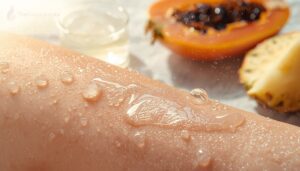
Enzymes don’t work alone. They need one key ingredient to switch on. Here’s how moisture makes the whole process happen.
Water Triggers Enzyme Activity
Here’s a secret: your enzyme peel is asleep until water shows up. Hydration activates enzymes, binding to their active sites and switching on exfoliation. Dry enzymes can’t touch dead skin.
Your enzyme peel stays asleep until water arrives, awakening it to switch on exfoliation
Why water matters:
- Unlocks water binding sites
- Maintains protein shape
- Aids water-protein interactions
- Keeps water levels balanced
That’s enzyme moisture dependence in action, fueling real cell turnover.
Product Moisture Supports Activation
Your enzyme peel formula isn’t just enzymes floating around. It’s built with water-based carriers that keep things active from the moment you apply it.
That moisture enhances activity, helping fruit enzymes stay stable and ready to work. Without it, exfoliation stalls before it even starts, and your skin barrier stays untouched, dead cells and all.
Treatment Time Affects Intensity
More time on your skin means more work getting done. That’s basic dose response: longer contact time, more dead cells broken down.
But longer isn’t always better. Push past your product’s window and irritation risk climbs fast. Redness, stinging, that’s your skin telling you exfoliation depth has gone too far for safe use.
Rinsing Stops Enzymatic Action
So how do you actually stop the action? Rinsing does the job, and it works two ways at once.
Water shifts your skin’s pH toward neutral, which halts enzyme activity. It also physically lifts enzymes off your skin. Use lukewarm water, follow your product’s timing, and rinse fully. That’s how you protect your pH balance and lock in safe exfoliation.
What Happens During an Enzyme Peel?
So what actually happens once you sit down for a peel? It’s a simple process, start to finish. Here’s what to expect, step by step.
Cleansing and Skin Preparation
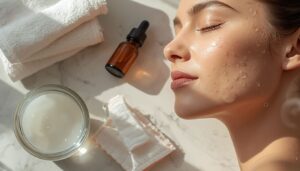
Clean skin makes all the difference here.
Start with a double cleanse. First pass removes makeup and oil. Second pass, using a gentle cleansing gel, clears pore-clogging residue.
A light degreasing solution follows, stripping excess sebum without touching your skin barrier. Pat dry, don’t rub.
Always patch test 24 hours ahead. It’s a small step that saves you real irritation later.
Even Product Application
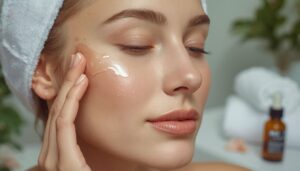
Once your skin’s prepped, application is where technique really counts.
Use 2-3 pumps for full face coverage, working forehead to chin in sequential zones. Spread with clean fingertips or a mask brush, keeping the layer thin and even, about the thickness of a coat of nail polish. Avoid pooling near folds. Skip the eyes and lips.
Typical Treatment Time
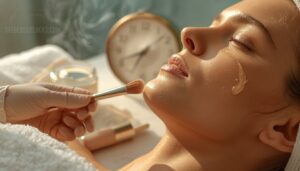
So how long does this actually take? A full professional session runs 30 to 45 minutes, sometimes 60 for stronger formulas.
The enzymes themselves need 10 to 20 minutes of contact time to work through keratin buildup. Sensitive skin gets shorter windows, around 3 to 5 minutes. Oily or mature skin often needs 12 to 20 minutes for real results.
Expected Tingling and Warmth

Warmth is normal. Most people feel mild tingling for five to ten minutes, peaking mid-treatment.
It varies by enzyme:
- Papain: gentle warmth
- Bromelain: prickly tingling
- Pumpkin: steady warmth
- Kiwi: longer-lasting tingle
- Fig: mild, barely-there
Sensitive skin feels it more. That’s why a patch test matters before your first enzyme peel.
Rinsing The Peel Away
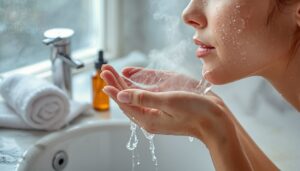
Time’s up, rinse it off. Lukewarm water works best, never hot or icy cold.
Use gentle rinsing, no scrubbing. You’re washing away dead skin cells, not scrubbing them out.
Pat dry, don’t rub. Rubbing irritates the freshly exfoliated stratum corneum.
Skip cleanser for now. Apply moisturizer, then sunscreen if you’re heading outside. Sun protection matters most right after your peel.
How Enzyme Peels Improve Skin
Enzyme peels do more than exfoliate. They actually change how your skin looks and feels over time. Here’s what you can expect to see.
Brighter-Looking Complexion
Ever notice how tired skin looks almost dusty? That’s dead cells stealing your shine.
Enzyme peels clear that dull layer fast. Papain breaks down melanin clusters while calming pigment production, fading dark spots over weeks.
Bromelain adds its own light reflection boost, so skin looks polished, not flat. Together, they deliver real radiant skin glow and a more even skin tone, no harsh scrubbing required.
Smoother Skin Texture
Glow is one thing. Smoothness is another, and enzymes handle both.
Dead skin cells shed unevenly on their own, leaving rough patches. Enzymes break those bonds so cells release one by one, not in clumps. That gives you uniform shedding and real surface smoothness.
Run a finger across treated skin after rinsing. Softer already. That’s skin renewal working fast, no scrubbing needed.
Clearer-Looking Pores
Pores hold onto sebum and dead skin. That’s where blockages start.
An enzyme peel works deep cleansing action into pore openings, dissolving debris before it hardens into blackheads.
Benefits show up fast:
- Pore size reduction
- Sebum regulation
- Blackhead prevention
- Pore tightening
- Smoother skin texture
Acne-prone skin responds especially well. Less buildup means fewer clogs, and pores simply look clearer.
More Even Skin Tone
Uneven patches and dark spots fade with regular sessions. Surface melanin breaks down through oxidation, lightening pigment by up to 32%.
| Timeline | What You’ll See |
|---|---|
| 1 week | 67% notice more even tone |
| 2-4 weeks | Cumulative brightening builds |
| Ongoing | Consistent schedule locks in results |
Fruit enzymes do the heavy lifting here, targeting hyperpigmentation without harsh exfoliation or downtime.
Better Skincare Product Absorption
Once tone evens out, absorption gets a boost too. Clearing away the stratum corneum’s dead layer means serums soak in instead of sitting on top.
That’s the real payoff: gel formulas sink in faster, cream masks penetrate deeper, and moisture activation boost gets skin ready like thermal water prep would. Liposome delivery systems work even better on freshly exfoliated skin, all while your skin barrier stays protected and aftercare stays simple.
Which Skin Types Benefit Most?
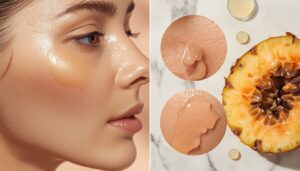
Not every peel works the same for every face. Your skin type actually decides how well enzyme peels perform. Here’s what to know before you pick one for yours.
Sensitive and Reactive Skin
Your skin flares up fast, and scrubs make it worse. That’s why enzyme peels work so well here.
They skip harsh scrubbing and calm TRPV1 channels instead, easing sting before it starts. No histamine spike, no redness spiral.
Natural exfoliation protects your skin barrier while removing dead cells gently. Pair with ceramide-rich aftercare, and you’ll rebuild strength, not trigger it.
Acne-Prone and Oily Skin
Since acne-prone skin makes 59% more oil, oily zones need real pore cleansing, not just a rinse.
Enzyme peels offer sebum regulation and clear buildup without stripping your barrier.
- Gel formulas suit oily texture
- Papain and bromelain fight bacteria
- Anti-inflammatory benefits calm breakouts
- 3x weekly frequency works for oily skin
Regular enzyme peel use helps gentle exfoliation while keeping hydration balance intact.
Dry and Dull Skin
Flaky patches and that tight, papery feeling? An enzyme peel can help.
Gentle exfoliation clears dead cells causing dullness, while hydration boosters like hyaluronic acid soften texture underneath.
Ficin from figs helps moisture retention without stripping oils. Pair with a rich cream after for real skin barrier repair. Your dull complexion brightens fast, and flaky skin relief usually shows within days, not weeks.
Mature and Uneven Skin
By your mid-20s, collagen drops about 1% a year. After 40, that decline speeds up fast.
Enzyme peels won’t reverse time, but they help:
- Cell turnover speeds up, revealing fresher skin
- Texture smooths as buildup clears away
- Tone evens out over consistent use
- Fibroblast activity gets a gentle wake-up call
Pair with hydration for real results.
Choosing Gel or Cream Formulas
Gel or cream? It comes down to your skin type match.
Gel formula wins for oily or acne-prone skin. Faster absorption, matte finish, easier application in a thin layer.
Cream formula suits dry, tight skin better. Richer finish comfort, protective feel.
| Formula | Best For | Finish |
|---|---|---|
| Gel | Oily/Acne-prone | Matte |
| Cream | Dry/Tight | Rich |
| Gel-cream mix | Combination | Balanced |
Either is safe to use during exfoliation.
Enzyme Peels Versus Chemical Peels
Enzyme peels and chemical peels both exfoliate, but they don’t work the same way. Knowing the difference helps you pick the right one for your skin. Let’s break down how they compare.
Surface Versus Deeper Exfoliation
Think of your skin as a stack of layers. Enzyme peels only touch the very top, working 15-20 micrometers deep into the stratum corneum.
Chemical peels go further. Superficial versions hit the upper epidermis, medium peels reach the dermis, and deep peels penetrate 400-600 micrometers. Enzymes stay surface-only since their molecules can’t cross intact cell membranes.
Enzymes Versus Exfoliating Acids
Depth isn’t the only difference. It comes down to how each one works.
Enzymes break down keratin in dead skin cells, no pH change needed. Acids exfoliate by lowering skin pH to dissolve the "glue" holding cells together.
That’s why enzyme peels feel gentler. Your skin barrier stays calm and intact, even with a fruit acid working nearby in your routine.
Downtime and Irritation Differences
Recovery time tells the real story. Enzyme peels need 0-2 days, often with zero peeling. Chemical peels run 1-21+ days, depending on depth.
Irritation level follows the same pattern. Redness after enzyme peels fades in hours. Chemical peels can cause swelling, stinging, and days of visible peeling, especially for sensitive skin types.
Best Uses for Each Peel
So which peel fits your skin? Match the tool to the job.
- Enzyme peel for sensitive, dry, or acne-prone skin needing gentle upkeep
- Chemical peel for deep pigmentation or scarring
- Papain calms reactive skin
- Bromelain controls oily breakouts
- Pumpkin and kiwi improve texture, figs lock in moisture
Enzymes maintain, chemical peels correct. Know your goal first.
Dual-Action Peel Considerations
Want both worlds? Dual-action peels combine enzymes with AHAs or BHAs for enzyme acid teamwork, five times faster than enzymes alone.
Application duration stays short, just 5-10 minutes. This fits combination or oily skin types best.
Recovery protocol calls for daily sunscreen and gentle moisturizer. For treatment sequencing, use enzyme-only peels monthly between quarterly chemical sessions.
How to Use Enzyme Peels Safely
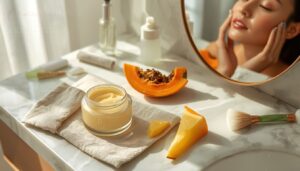
Enzyme peels are gentle, but that doesn’t mean you skip the rules. A few smart habits keep your skin safe and your results consistent. Here’s what you need to know before you start.
If you’re unsure whether your skin needs a gentle boost or something stronger, this enzyme exfoliation vs chemical peel comparison breaks down which option actually fits your concern.
At-Home Versus Professional Strength
Not all enzyme peels pack the same punch. Professional-grade peels use higher concentrations and lower pH (1.0-2.5) for faster results, while at-home versions stay gentler (pH 3.0-3.5).
- Professional: 3-8 minute sessions, immediate neutralization
- At-home: 10-20 minute contact time
- Professional: visible results in 24-48 hours
That gap explains why estheticians can achieve in one visit what takes weeks at home.
Frequency by Skin Type
Your skin type sets the pace. Sensitive skin does best every two to three weeks, gentle formulas can go biweekly. Acne-prone skin tolerates weekly sessions. Dry skin needs two to three weeks between treatments. Mature skin thrives on biweekly care. Gel formulas suit twice-weekly use; creams work best weekly. Always follow label directions first.
Actives to Avoid Temporarily
Timing matters just as much as the peel itself. Give it 24 to 48 hours before retinol, glycolic, lactic, or salicylic products touch your skin again.
Vitamin C needs longer, up to four weeks for L-ascorbic acid. Skip physical scrubs for 48 to 72 hours too. Your skin’s rebuilding itself. Let it work.
Hydration and Daily Sunscreen
Fresh skin needs backup. After an enzyme peel, your barrier is a little more vulnerable, so hydration matters more than usual.
Reach for a moisturizer with hyaluronic acid or ceramides. Then apply broad-spectrum sunscreen, SPF 30 minimum, daily. Reapply every two hours outdoors.
Dry indoor air makes this worse. Low humidity pulls moisture straight out of freshly exfoliated skin.
Frequently Asked Questions (FAQs)
Do enzyme peels really work?
Beauty myths come and go, but this one holds up. Clinical trials show 91% of users see clearer, calmer skin after just one enzyme peel, with visible smoothing, brighter tone, and safer results than harsh chemical exfoliation.
How often should you use an enzyme peel?
Once or twice weekly works best for most skin types. Watch skin tolerance closely, stick to a consistent weekly schedule, and take break cycles if irritation shows up. Aftercare timing matters too, always follow with sunscreen.
What not to do after an enzyme peel?
Want your glow to last? Skip harsh cleansers, sun exposure, and strong actives for a few days. Moisturize promptly, use clean towels, and apply sunscreen daily. Your skin’s still healing, even without visible peeling.
How long does it take to see results from an enzyme peel?
You’ll likely spot a first session glow right away, skin looks brighter within minutes. But real change, smoother texture and even skin tone, builds gradually.
Stick with a weekly improvement timeline, several sessions in, for lasting cell renewal and hydration.
How often should professional enzyme peel treatments be scheduled?
Spacing matters more than speed here. Most professional sessions run every 1-2 weeks, letting skin recover fully. Gentle formulas can stretch to every 2-4 weeks. Your esthetician adjusts cadence based on skin type and downtime response.
Can enzyme peels be combined with facial massage tools?
Skip the tool during dwell time. Enzyme peels need gentle handling, not pressure. Save facial massage for after rinsing, once skin is calm. That timing protects your barrier and keeps natural enzymes working the way they’re meant to.
Do enzyme peels help with clogged pores over time?
Slow and steady wins the race. With consistent peel usage, natural enzymes lift dead skin cells and surface buildup, leading to gentle surface exfoliation, clogged pores reduction, and better pore visibility improvement over time.
Are enzyme peels safe during pregnancy or breastfeeding?
Generally yes, since enzymes stay on the skin’s surface with low absorption risk. Still, pregnancy raises skin sensitivity. Always patch test first, avoid broken skin, and skip formulas with added acids like salicylic acid.
How long do results from an enzyme peel last?
That fresh glow? It’s temporary, not permanent. Since enzyme peels only exfoliate surface cells, brightening fades as new skin builds up. For lasting smooth texture, stick to a consistent schedule, roughly every 2-3 weeks, paired with good aftercare.
Conclusion
One client swapped harsh scrubs for papaya enzyme masks and saw calmer, brighter skin in two weeks. That’s how do enzyme peels work in real life: gentle protein breakdown, not aggressive stripping. Your skin barrier stays intact while dullness fades away.
Think of enzymes as patient little editors, removing what’s dead and leaving healthy cells alone. Start slow, stay consistent, and protect your results with daily sunscreen.
Skin renewal isn’t magic. It’s biology, done right, working quietly in your favor every single day.