This site is supported by our readers. We may earn a commission, at no cost to you, if you purchase through links. This content is for general informational and educational purposes only and is not a substitute for professional medical, dermatological, or nutritional advice.
Your sunscreen may be doing its protective job while contributing to bumps along your jawline, hairline, or cheeks. That doesn’t mean sun protection is the enemy. It means the formula, the way it sits on your skin, and what happens after a humid commute or workout can matter.
So, can sunscreen cause breakouts on skin? In some people, yes: rich oils, waxes, water-resistant films, and friction can trap sebum in follicles, while irritation can look like acne. You don’t need to choose between clear skin and UV protection. Identifying the trigger, adjusting application, and cleansing can break the cycle.
Table Of Contents
- Key Takeaways
- Yes, Sunscreen Can Cause Skin Breakouts
- Which Sunscreen Ingredients May Clog Pores?
- Choose Sunscreen for Acne-Prone Skin
- Apply Sunscreen Without Triggering Acne
- Treat Breakouts Without Skipping Sunscreen
- Frequently Asked Questions (FAQs)
- Why does my sunscreen make me breakout?
- How to get rid of sunscreen acne?
- Should I skip sunscreen if I have acne?
- Can sunscreen cause acne?
- Can expired sunscreen make acne worse?
- How soon do sunscreen breakouts appear?
- Can sunscreen trigger fungal acne flare-ups?
- Should face and body sunscreens be different?
- Does sunscreen under makeup increase breakout risk?
- Conclusion
Key Takeaways
- Sunscreen can contribute to breakouts when a heavy or irritating formula, sweat, heat, friction, and incomplete cleansing combine to block follicles or inflame skin.
- Burning, stinging, and diffuse redness soon after application suggest irritation, whereas true acne usually develops over days as defined clogged pores, papules, or pustules.
- For acne-prone skin, choose a lightweight, fragrance-free, broad-spectrum SPF 30+ formula that you tolerate well, and patch-test new products before daily use.
- Keep your morning routine simple, let layers dry before sunscreen, cleanse thoroughly every evening—especially after water-resistant products—and see a dermatologist if breakouts persist after changing formulas.
Yes, Sunscreen Can Cause Skin Breakouts
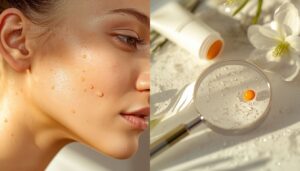
Yes, sunscreen can contribute to breakouts, although the formula is rarely the only factor. Your skin type, climate, application habits, and cleansing routine all influence how your pores respond. The most common mechanisms to think about are:
For practical tips, this guide to deep skin hydration at home can help support a balanced, less congested complexion.
Sunscreen can contribute to breakouts, but skin type, climate, application, and cleansing habits often determine the real risk
Follicular Occlusion Traps Sebum
Heavy sunscreen residue and comedogenic ingredients can create follicular occlusion, especially when sebum output is high. The process is straightforward:
- Sunscreen residue coats the pore.
- Sebaceous duct obstruction slows sebum flow.
- Dead keratinocytes form a keratin plug.
- Sebum buildup distends the follicle.
- Trapped lipids sustain the pore-clogging cycle.
This blockage can disrupt the skin barrier and initiate microcomedones over time.
Irritation Versus True Acne
Not every post-sunscreen bump is acne. Irritant reactions trigger redness and a burning or stinging sensation within minutes, without forming true comedones. True inflammatory acne develops more gradually, rooted in pilosebaceous obstruction and sebum accumulation. Knowing which you’re dealing with determines whether you need to swap your formula or treat the root cause. Research shows that acne vulgaris search interest consistently exceeded that of other inflammatory skin conditions like psoriasis and rosacea over a 15-year period, reflecting how widespread concern about acne truly is.
| Feature | Irritation vs. True Acne |
|---|---|
| Onset | Appears within minutes of application; acne takes days to form |
| Primary sensation | Burning or stinging vs. pressure or pain in deeper nodules |
| Lesion type | Diffuse redness and rash vs. defined comedones, papules, or pustules |
| Location pattern | Broad contact zone vs. follicle-dense regions like the T-zone |
| Resolution | Clears with product removal vs. persists without targeted acne treatment |
Sweat, Heat, and Friction
When sunscreen meets sweat during exercise or heat exposure, the combination disrupts thermal regulation balance in ways that worsen breakouts. Sweatouts. Sweat trapped beneath occlusive formulas can’t evaporate efficiently, limiting the body’s cooling capacity and raising friction heat buildup on contact zones. That warm, moist environment is exactly where acne mechanica develops, even with a noncomedogenic label on the bottle.
Product Buildup From Poor Cleansing
Poor cleansing compounds what sweat already starts. Product buildup from poor cleansing keeps pores blocked long after sunscreen appears dry.
- Skipping evening sunscreen removal lets sebum and sunscreen accumulate overnight
- Cleansing residue buildup from surfactant skin retention increases ingredient reactivity
- Incomplete pore cleansing makes even noncomedogenic formulas with a low comedogenicity score problematic
- Double cleansing dismantles layered product accumulation reliably
Who Faces Higher Breakout Risk
Skin doesn’t lie about its vulnerabilities. Acne-prone and barrier-impaired skin top the risk list, but T-zone dominant and seborrheic skin types also struggle with most sunscreen textures. Teenage hormonal changes and menstrual cycle fluctuations raise sebum output considerably, compounding any occlusive load. Humid climate exposure, outdoor exercise sweat, and occupational oil contact convert even lightweight formulas into reliable pore-blockers.
Support your barrier with humid-weather skin hydration tips for acne-prone skin that avoid adding unnecessary pore-clogging weight.
| Risk Factor | Skin Type Most Affected | Primary Trigger |
|---|---|---|
| Teenage Hormonal Changes | Oily / Acne-Prone | Elevated sebum amplifies occlusion |
| Outdoor Exercise Sweat | T-Zone Dominant | Sweat pushes product into follicles |
| Humid Climate Exposure | Sensitive / Barrier-Impaired | Heat accelerates ingredient migration |
Which Sunscreen Ingredients May Clog Pores?
Not all sunscreen ingredients play nicely with acne-prone skin, and the culprits aren’t always obvious from the label.
Some formulations rely on oils, waxes, esters, and chemical filters that can quietly block pores or trigger inflammation with repeated use.
Here’s a closer look at the ingredient categories most likely to cause problems.
Heavy Oils and Rich Butters

Heavy oils and rich butters can turn a protective sunscreen film into a follicular traffic jam. Coconut oil and cocoa butter, each comedogenicity score 4, commonly trap sebum; shea butter scores 3–4, while palm oil feels dense. Watch for:
- coconut oil
- cocoa butter
- lanolin
- isopropyl myristate
Mineral oil residue can retain these ingredients in pores. Cetyl alcohol may compound congestion.
Waxes and Occlusive Emollients
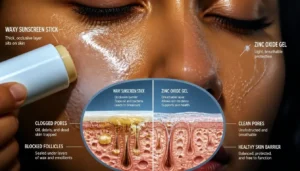
Although waxes protect dry skin, occlusive layering effect can promote follicle occlusion where oil and sweat accumulate.
| Attribute | Practical takeaway |
|---|---|
| Wax texture balance | Thick feels sealed |
| Emollient-wax cooperation | Raises comedogenicity score |
| Stick formulation tips | Use on dry spots |
| Cream vs stick feel | Cream spreads; sticks persist |
| noncomedogenic labeling | Not a guarantee |
Favor zinc oxide gel instead.
Problematic Esters and Fatty Alcohols
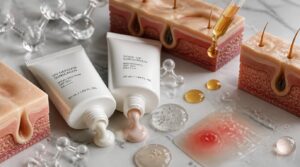
Some silky sunscreen bases can be a pore-clogging trap. Ester comedogenicity is highest with isopropyl myristate, while ester spreadability can leave residue buildup.
- Avoid coconut oil derivatives.
- Watch lanolin.
- Cetyl alcohol provides fatty alcohol texture.
- A fatty alcohol emulsifier is usually lower risk.
- Dimethicone may feel occlusive.
Your reaction depends on formula concentration and layering, rather than the ingredient alone.
Chemical Filters and Skin Sensitivity
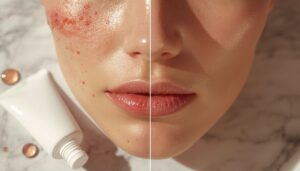
Chemical filters don’t inherently clog pores, but skin sensitivity can mimic inflammatory acne. In barrierimpaired skin, reactive filters or supporting solvents may provoke stinging, itch, redness, or small papules within hours to days.
Watch the timing. True comedones develop gradually; chemical irritant timing is often faster. Choose fragrance-free formulas, patch-test first, and reduce friction from sweat, masks, and heavy sunscreen application technique.
Non-Comedogenic Labels Aren’t Guarantees
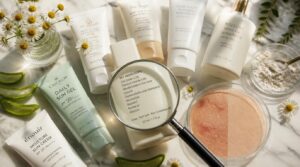
- Check Comedogenicity Risk 15.
- Patch-test.
- Favor lighter textures.
- Cleanse nightly.
- Keep routine consistency.
Use the 7Step BreakoutProof Application Protocol; skin sensitivity factors can still cause irritation and acneiform lesions.
Choose Sunscreen for Acne-Prone Skin
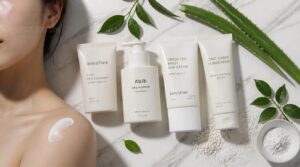
The right sunscreen should protect your skin without adding unnecessary pore-clogging or irritant exposure. For acne-prone skin, texture, filter type, and wear conditions all matter. Use these criteria to narrow your options.
Lightweight Gels and Fluid Lotions
Texture matters. Lightweight Gels and Fluid Lotions give acne-prone skin a hydration boost through water-soluble humectants, including glycerin and hyaluronic acid, rather than a dense oily film.
Choose an oilfree sunscreen, gel sunscreen, or fluid lotion sunscreen with an oil-free formula, non-greasy texture, fast absorption, and weightless finish. A noncomedogenic sunscreen can still irritate you, so patch-test before daily use.
Mineral Versus Chemical Filters
The filter category matters less than the complete formula. Mineral Sunscreens use zinc oxide or titanium dioxide, protect UVA/UVB immediately, and may suit reactive skin, but thicker bases can increase occlusion.
- Zinc oxide fluid for oily skin
- Chemical sunscreens for lighter wear
- Broad-spectrum SPF 30+
- Stable, water-resistant formula
- Patch-test tolerance
Both FDA-approved options protect skin barrier protection; choose the formula that helps sebum regulation.
Fragrance-Free Options for Sensitive Skin
A lightweight mineral or chemical formula can still sting or inflame reactive skin if it contains fragrance allergens. Choose fragrance-free sunscreen with broad spectrum protection, then confirm the ingredient list lacks parfum, fragrance, aroma, and essential oils.
“Unscented,” hypoallergenic formula, and dermatologist tested don’t guarantee this. Prioritize glycerin, colloidal oatmeal, or aloe for sensitive skin soothing and barrier support.
Water-Resistant Formulas for Active Lifestyles
Choose a waterresistant formula for activity. Sweat resistance testing, friction durability standards, water immersion protocols assess protection. Film-forming polymers and anhydrous formulation benefits improve adhesion yet feel richer.
For acne-prone users, use sweat waterresistant, reefsafe formulas cautiously. Sunscreen Use and Acne A DoubleBlind Randomized Controlled Trial shows tolerance. Sunscreen reapplication tips: follow labeled 40- or 80-minute intervals; reapply after toweling.
Apply Sunscreen Without Triggering Acne

Technique matters as much as the formula you choose. The goal is to maintain reliable UV protection without creating an overly occlusive routine or aggravating active lesions. Use the following application and removal practices to keep sunscreen compatible with acne-prone skin.
Layer With Acne Treatments Correctly
Apply treatment actives to clean, fully dry skin, then allow serum absorption before the next step. Layer from light to heavy: salicylic acid or benzoyl peroxide first, moisturizer next, sunscreen last.
For retinoid and sunscreen layering, use the retinoid at night. In the morning, wait before moisturizer, moisturize dry zones only, and patch test new products. Double cleansing belongs in your evening routine.
Avoid Excessive Product Layering
Too many layers create occlusive overload, trapping sebum, sweat, and residue beneath sunscreen. Cleanse before layering, then keep your morning routine lean:
- Use one treatment, not several competing actives.
- Choose water-based, lightweight products; reserve rich creams for dry areas.
- Use the pea dime method, then blotandreapply rather than stacking formulas.
At night, double cleansing removes sunscreen buildup before pores become congested.
Let Each Skincare Layer Dry
After cleansing, pat skin dry, then let each treatment set until it no longer feels slick or tacky. Let each skincare layer dry for about 30 to 60 seconds before the next product.
This surface-readiness check improves layer adhesion, limits product pilling, and reduces transfer into sunscreen’s protective film. Avoid rubbing. If you need more coverage later, blotandreapply, then double cleansing each evening.
Choose Lightweight Reapplication Formats
Lightweight Reapplication Formats prevent the midday buildup that often turns sunscreen into an occlusive layer.
- Powder sunscreen formats absorb oil, but use several passes.
- Spray sunscreen formats suit makeup, though Sweat Waterresistant options matter outdoors.
- Stick sunscreen formats target the nose, forehead, and cheeks precisely.
- Cushion compact formats offer coverage; Setting spray SPF supplements protection.
Keep Travelsize Essentials Noncomedogenic, preferably an Oilfree Formula.
Cleanse Thoroughly Every Evening
Cleanse thoroughly every evening to remove sunscreen, oil, sweat, makeup, and bacterial debris before they settle into follicles. Use lukewarm, not hot, water, which limits barrier stress. For water-resistant or heavily layered products, double cleanse: first dissolve the film, then use a fragrance-free, pH 4.5–5.5 cleanser.
This consistency matters most for acneprone skin and sunscreen for sensitive skin.
Treat Breakouts Without Skipping Sunscreen
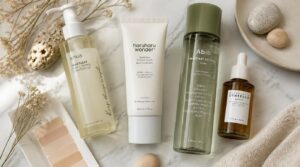
A breakout after sunscreen doesn’t mean you should leave your skin unprotected.
Stopping the likely trigger while keeping your routine calm and consistent usually gives skin the best chance to recover.
Use the following steps to clear active lesions without increasing sun-related inflammation or dark marks.
Stop The Suspected Formula
Begin a formula elimination trial: stop suspected sunscreen for two weeks, use hats and shade, and add nothing new. This ingredient isolation test creates a baseline observation phase for Sunscreen and Breakouts Causes.
Track SebumSensitivity Index SSI, particularly if Tzone dominant. Maintain barrier support focus during the skin recovery period.
In Dermatologist Fixes 2026, comedogenicity testing methods guide careful confirmation.
Simplify Your Skincare Routine
After your elimination trial, simplify product steps. Prioritize essential products: sunscreen, a gentle cleanser, and moisturizer only where needed.
This helps reduce skin triggers and minimize routine layers. For Tzone dominant or seborrheic skin, record your SebumSensitivity Index SSI.
Consistent daily habits make Sunscreen and Breakouts Causes easier to identify, a main principle in Dermatologist Fixes 2026, without needless residue.
Use Gentle Acne Treatments
Once your routine is stripped back, start low, go slow with acne treatment. Patch test first, then use a low-strength benzoyl peroxide cream or gel once daily; it reduces surface bacteria, comedones, and inflammation.
Avoid harsh scrubs. Choose acnesafe skincare with soothing ingredients, monitor skin response, and increase frequency gradually. Keep your fragrancefree sunscreen, preferably dermatologist tested, hypoallergenic, and providing broad spectrum protection.
Prevent Dark Marks From Worsening
While breakouts settle, prevent postinflammatory hyperpigmentation from becoming a problem. Use fragrancefree SPF 30+ sunscreen with broad spectrum protection and niacinamide in sunscreen, and maintain daily sunscreen reapplication every two hours outdoors and after sweating.
Avoid peak sun, 10 a.m. to 2 p.m., use consistent coverage, and support skin barrier repair with acnesafe moisturizers and gentle skin handling.
When to See a Dermatologist
Protecting dark marks matters, but persistent skin changes deserve evaluation. When to see a dermatologist: recurring acne, treatment-resistant conditions, unexplained rashes, or breakouts that continue after ingredient auditing and simplified care.
Seek assessment for suspicious moles, especially lesions that change size, color, shape, itch, or bleed. A dermatologist can distinguish follicular acne from skin barrier disruption and offer dermatologist fixes.
Frequently Asked Questions (FAQs)
Why does my sunscreen make me breakout?
Your sunscreen may trigger follicular occlusion from comedogenic, occlusive emollients, inflammation from filters, or sweat-induced buildup. Product layering and poor cleansing residue can worsen skin barrier disruption, especially in oily, acne-prone, or sensitive skin.
How to get rid of sunscreen acne?
Treat your skin like a congested doorway: remove sunscreen, adjust cleansing routine, choose non-comedogenic products, use gentle exfoliation methods, apply spot treatment, and maintain hydrating moisturizer balance. These fixes address acne causes and prevent breakouts.
Should I skip sunscreen if I have acne?
Don’t skip sunscreen. Choose a lightweight, non-comedogenic broad-spectrum formula, ideally mineral zinc oxide, to limit acne flare triggers while preserving skin barrier protection and preventing post-acne dark marks.
Audit ingredients and cleanse thoroughly nightly.
Can sunscreen cause acne?
Clear protection can coexist with clogged pores: sunscreen may aggravate acne when a comedogenic texture traps sebum or irritates skin. Match formula to acne type, patch-test, support barrier repair and sebum regulation, and consult dermatologist.
Can expired sunscreen make acne worse?
Yes. Expired sunscreen degradation can make acne worse when formula stability loss creates irritation triggers and spreading problems. Residue buildup can worsen breakouts and acne flare mechanisms. For sunscreen safety, stop it and prioritize ingredient auditing.
How soon do sunscreen breakouts appear?
Annoyingly, your skin may object before you’ve decided, despite product claims: irritation can appear within hours to a day, while comedogenic breakouts emerge after several days, accelerated by sweat, heat, friction, or incomplete nightly cleansing.
Can sunscreen trigger fungal acne flare-ups?
Sunscreen can aggravate Malassezia yeast overgrowth when occlusive sunscreen films, sweat-induced follicle irritation, or residual product buildup persist.
Fungal acne versus bacterial acne requires skin type classification; non-comedogenic label limitations and comedogenic ingredients can still trigger breakouts.
Should face and body sunscreens be different?
Like shoes for roads, face and body sunscreens should differ: choose noncomedogenic, lightweight mineral or chemical daily-wear formulas for oily, acne-prone facial skin; use moisturizing coverage for UV exposure. Texture and reeffriendly ingredient variations matter.
Does sunscreen under makeup increase breakout risk?
Under makeup, breakout risk rises when heavy sunscreen, silicone-rich primer, and comedogenic foundation trap sweat in humid conditions. Choose non-comedogenic layers, favor lightweight mineral or chemical fluids, and double-cleanse nightly to prevent residue buildup.
Conclusion
The proof is in the pudding: can sunscreen cause breakouts on skin? For some people, yes, but the culprit is usually formula fit, residue, heat, or friction, not sun protection itself.
Choose a lightweight, nonirritating formula, apply it over compatible treatments, and remove it completely at night.
If lesions persist after a two-to-four-week product change, seek dermatologic evaluation.
Clearer skin and consistent UV defense can, and should, coexist, with an individualized routine as intended daily.